Tag: books

  • The Path to Enlightenment Is Paved with Horse Dung

    The Path to Enlightenment Is Paved with Horse Dung

    After sixth grade let out, the bus would drop us on Crow Canyon Road, and my friends and I would stumble across the street to 7-Eleven for a Slurpee before the long, lung-searing climb up Greenridge Road. One hot spring afternoon, as I stood under the humming fluorescent lights, brain half-frozen by cherry ice and “Brandy (You’re a Fine Girl)” pouring from the store radio, two blonde sisters drifted in like mirages from a Beach Boys song. They were the Horsefault sisters—freckled, sunburned, and perilously beautiful, with high cheekbones and figures that looked imported from a drive-in double feature starring Raquel Welch and Adrienne Barbeau.

    “Wanna see our rabbit?” they asked.

    Normally, my interest in rabbits was zero, caged or otherwise. But I was eleven, and the sisters had the sort of gravitational pull that makes a boy agree to anything. So I said yes.

    We walked a dirt path behind the 7-Eleven, through a field glazed in golden light and peppered with horse droppings that crunched underfoot. Their farmhouse loomed ahead, half hidden behind a thicket of bushes. And there it was: the cage. A huge metal pen with its door cracked open, a thick chain dangling like a warning.

    “There,” one of them said.

    I peered inside. No rabbit. Just straw, shadows, and the faint smell of hay and mischief. Then came the cackling—witchlike, gleeful—as the sisters lunged, grabbing my arms and trying to shove me into the cage. It dawned on me that I was living a low-budget horror film: The Boy Who Should Have Stayed at 7-Eleven.

    They tugged; I resisted. Dust rose around us like smoke as we wrestled in the grass, the air thick with sweat, laughter, and the unmistakable scent of adolescence gone rogue. Chickens screamed from a nearby coop as if alerting the countryside to my peril. Then, mid-grapple, something shifted: the danger took on a strange sweetness. The idea of being locked in that cage suddenly didn’t seem so terrifying. In fact, it sounded… educational.

    But the Horsefault sisters, realizing I was enjoying this little apocalypse of innocence too much, let go. We stood, panting, brushing hay from our shirts like dazed gladiators. Without a word, they turned toward the farmhouse, and I trudged home, confused, awakened, and very much alive.

    That night, I couldn’t sleep. My body was staging a mutiny.

    “Master Po,” I whispered to the ceiling. “I seem to have a new affliction. It’s keeping me up.”

    “Your body,” came his serene voice, “is prey to desire. Do not despair. You are becoming one with nature. You should be happy.”

    “Happy? I’m miserable.”

    “To hide your desire gives it power,” he said.

    “Believe me, it’s not hidden.”

    “Excellent. Desire is both a blessing and a burden.”

    “What’s the good news?”

    “It means you’re alive and growing.”

    “And the bad news?”

    “It never ends.”

    I frowned at the ceiling. “Master Po?”

    “Yes, Grasshopper?”

    “I wish I hadn’t fought them off. I wish I were in that cage right now.”

    “It’s too late. What’s done is done. Learn from it. In time you’ll understand your desire instead of fearing it.”

    “What if there’s no future for me in that department?”

    “You’re eleven,” he said dryly. “Your future is nothing but departments.”

    “Peace seems impossible.”

    “Remember, Grasshopper,” he said, fading into the dark, “the light that burns twice as bright burns half as long.”

    “Then I must be radioactive,” I muttered, staring at the ceiling, waiting for peace—or the Horsefault sisters—to return.

  • In Defense of Watching True Crime

    In Defense of Watching True Crime

     A couple of weeks ago my wife DMed me an Instagram reel: one reviewer, dozens of true-crime docuseries. I pressed play and fell down the shaft. I binged everything—some episodes like gravel in the throat, others slick as a thriller—and realized I was hooked the way novels used to hook me: late nights, one more chapter, living on cliffhangers and bad coffee.

    A year ago I would’ve dismissed the whole genre as tabloid embalming fluid: pain turned into programming. That was the lazy take, the one you reach for when you haven’t looked long enough. The better work in this space isn’t cheap; it’s meticulous. At its best, it has social value.

    Watch the detectives. The strong series showcase minds like scalpels—profilers knitting together motive and method, investigators reconstructing a life from fibers and timestamps. The good ones don’t myth-make; they interrogate reality. Their craft can outstrip a screenwriter because the stakes aren’t applause—they’re truth and, sometimes, prison.

    Credit the pursuit, too. The suspect is slippery, the evidence thin, and still the chase continues—phone records, shoe tread, the geography of a lie. You can see how the work rewires them. They read a face like a ledger. They separate panic from performance. They carry that calibration into ordinary life, for better and worse.

    But the badge isn’t a halo. Some episodes show coercive interrogations, tunnel vision, a theory clung to past its sell-by date while exculpatory facts stack up in the corner. Those missteps belong in the record. A genre that can praise tenacity should also indict certainty when it curdles.

    What keeps me watching, beyond craft and cautionary tales, is the way communities assemble under pressure—search parties in neon vests, casseroles and candles, volunteers mapping creek beds while the cameras spin. These stories remind you how much ordinary goodness survives the worst day a town can have.

    Then there are the perpetrators, often undone by their own theater. The vanity is operatic: cryptic boasts, trophies kept, shoplifting while on the run because entitlement feels bulletproof. Not all are violent; some are artists of fraud whose lies cascade through bank accounts, marriages, and nervous systems. The harm is quieter, not smaller.

    The hardest stretch is the parents—the permanent gray in the eyes, the architecture of a life collapsed on one missing pillar. They stay decent, they organize scholarships and vigils, they become advocates—but you can see the subtraction. A part of them is gone, and the camera can’t restore it.

    I do feel the moral splinter: I’m consuming narratives built from someone else’s worst night. There’s a voice that hisses, How dare you. And a voice that answers: Then look harder. Don’t watch for spectacle; watch to learn—about procedure, about predation, about how to be a better neighbor and a sharper juror. The difference between voyeur and witness is attention and intent.

    So here I am, converted, with reservations. The good series map the borderlands between justice and error, courage and vanity, community and collapse. They don’t restore innocence; they invoice it. If I keep watching, it’s because the genre—at its best—insists on seeing clearly, and because clarity, though it stings, is a civic skill worth practicing.

  • The Temu-ization of Everything—Again

    The Temu-ization of Everything—Again

    I’m reading Cory Doctorow’s freshly minted Enshittification. Early on, he revisits Facebook circa 2010: the honey pot that lured billions before curdling into a slurry of compulsion loops, conspiracy gristle, and industrial-scale data mining. It’s sharp, it’s punchy—and it gave me déjà vu. Then my stomach dropped: I like the coinage, I like the thesis that we’re living through the Enshittocene, but the insights feel old. Jaron Lanier mapped a lot of this terrain eight years ago in Ten Arguments for Deleting Your Social Media Accounts Right Now, a book I’ve taught over the last seven years.

    Doctorow’s Amazon chapter triggers the same shrug. The platform seduces us with convenience, tightens its talons, and gradually morphs from glossy marketplace into Temu-adjacent bazaar. True, and thoroughly litigated across a thousand essays and think pieces. We’ve been warned about the house always winning; we don’t need another tour of the casino floor.

    What I wanted—and didn’t get—was a deeper dive into the anthropology of the rot. Black Mirror’s “Nosedive” or “Joan Is Awful” doesn’t just wag a finger at platforms; it autopsies the psyche and the systems. New Yorker writer Kyle Chayka nails the gap: Enshittification is “pointed and efficient,” but reads like “professional blogging extended for three-hundred-plus pages,” leaving you hungry for a larger cultural x-ray that goes beyond the usual suspects.

    To be fair, packaging a messy discourse into one memorable term matters; not everyone read Lanier or binged Brooker. Doctorow’s snark has its uses. A clean label can move an idea from seminar rooms to dinner tables. But once you’ve named the disease, the next move isn’t to repeat symptoms; it’s to map vectors, power centers, and countermeasures with fresh cases outside the Big Tech pentagon.

    So yes: I love the word. But the book left me underwhelmed. Doctorow has given us the bumper sticker; I’m still waiting for the field manual. The Enshittocene doesn’t need another catalog of platform sins—it needs a blueprint that shows how to break the flywheels, where policy and design can bite, and why our appetites keep refilling the trough. Name the era, sure. Now show us how to survive it—and, if we’re lucky, how to end it.

  • Caveman Meets Garage App

    Caveman Meets Garage App

    In March 2005, at 43, I was besotted with my Classic iPod and its holy clickwheel. It took a minute to learn how to tether it to desktop iTunes and wrangle my playlists (mostly podcasts), but I did it without pestering my wife, and I was proud. A newer iPod arrived soon after; I refused to learn its tricks. Once I master a gadget, it becomes my comfort zone—I’d rather live there than relocate.

    I listened to podcasts all night and during post-workout naps. My life felt archived in that iPod, which—ridiculously, wonderfully—made me feel plugged into the modern world.
    My wife, less sentimental, declared it obsolete. The future was smartphones. I recoiled. They looked like bricks of chaos—apps, updates, notifications—houseplants with demands, only worse because I had to squint at ant-sized text.

    By 2014, I still clung to the iPod. It wasn’t cheap loyalty: the headphone jack snapped about once a year, and I’d pay $70 at the local shop to resurrect it. Then September 2014 arrived, our twin daughters started preschool, and my wife insisted I get a smartphone—for school runs, doctor visits, playdates. Texting was essential; parenthood demanded it.

    So I pried my fingers off the fossil and bought a Galaxy S4 at Costco. To my surprise, downloading podcasts was blissfully easy. As a podcast machine, the phone was a star. Everything else? Lame. I hated watching tiny videos, reading tiny text, and spelunking for apps. The phone became a super-iPod; the rest of its features were just extra chaos. Texting was torture—my fat fingers whacked the wrong letters, and I backspaced my way through tedium. I barely used the thing except for podcasts. My wife envied my perpetually 90% battery; to console her, I’d brag that after an all-night podcast binge I dropped to a shocking 80%.

    Yes, smartphones are addiction machines that track, nudge, and strip privacy. True. But I only use a sliver of their powers because the tactile experience annoys me.

    Part of me resents the smartphone for killing the rotary landline. That dial’s ratcheting click felt like reciting a secret code to open a cave. Beige, avocado, mint green, custard—those phones had heft that implied quality, with long, flexible cords that snaked across the room. Conversations were events; an ear would grow tender and force the ritual mid-call ear swap. Now the landline is dead—and so, largely, are conversations, replaced by texts and emojis. Speed and convenience exacted their toll: degraded communication, which means degraded friendships.

    Cory Doctorow gave us enshittification—how tech optimizes itself into garbage. I’d love to say that’s why I resist. But that’s too pat. I’m simply slow to adapt. Incompetent with new tools. My memory refuses the steps; I have to re-teach myself, again and again.

    Recently, my wife synced my phone to our garage door. A week later, I tapped the app and watched the door rise, gawking like a caveman who just discovered fire and is already imagining a barbecued brontosaurus rack. It’s a good trick. I still keep Genie remotes in the house and car as backups, but the phone option is lovely. This isn’t enshittification; it’s the opposite—unsuckification. Some things that used to suck don’t have to anymore.

    In fact, I’m eager for toilet + AI matrimony: a throne that reads biomarkers, prescribes medication, screens like a colonoscopy, and spares me the waiting room. I’m also rooting for a custom GLP-1 patch that recalibrates appetite so a morning bowl of porridge with protein powder—and another in the late afternoon—actually sates me. Easy weight management, better markers, minimal dishes.

    All of this is part of the unsuckification project.

    I’ll admit it: I’m older, I resist change, and new tech gives me a headache. But if modern tech can spare me a colonoscopy, open heart surgery, and the indignities of being twenty pounds overweight, then sign me up. 

  • The Sycophant Parade That Followed Charlie Sheen

    The Sycophant Parade That Followed Charlie Sheen

    I’ve got nothing against Charlie Sheen, which makes it stranger that I’ve never actually seen him act. Not a single episode of Two and a Half Men. Not one Charlie Sheen film. When I see his face, I think of a sensibility I avoid on sight: handsome, cute, smarmy—smirk plus wink. That brand of humor feels predictable and annoying. And yes, I admit the obvious contradiction: since I’ve never watched him, I can’t swear the schtick is real. Call it intuition—enough to keep me away.

    What did reach me was the public meltdown—what I remember as the “Tiger Blood Tour”—where addiction didn’t deliver humility but its opposite: bluster so loud it became a punchline. 

    So out of mild curiosity I watched the two-episode docuseries aka Charlie Sheen, and left neither admiring nor loathing him. Mostly, I felt sad—for him and for his family—because he seemed to have no guardrails, no one capable of stopping the wrecking ball before it knocked down everyone nearby.

    The most disturbing part isn’t Sheen; it’s the swarm. The morally bankrupt enablers, the sycophants, the fans who latch onto his fame and power as he self-destructs. At peak collapse they fed on the trainwreck like zombies on a buffet line, dressing in his party uniform, cheering as he staggered on and off private jets, becoming an intoxicated parody of himself. Love? Concern? Not in evidence. The meltdown was entertainment—an addictive feast for empty lives. My biggest challenge watching wasn’t parsing Sheen; it was resisting misanthropy.

    There is, thankfully, a pulse of humanity. Sean Penn, a childhood friend, offers wise, sobering context about Sheen’s volatility; so do Terry Todd and Sheen’s older brother Ramon Estevez. But watching Sheen narrate himself from a diner in Hawthorne, California is only partially satisfying. The charm flickers, the unease shows, yet the self-analysis feels shallow—short on the rigorous introspection required to grapple with the demons that keep derailing him.

    I left with the sense that his family and friends have been doing the heavy lifting for years—like he hasn’t had one life coach but several dozen—while he sits in a booth, reminiscing about the agony of being an artistic genius with impulses mere mortals can’t grasp. Whatever sobriety he’s achieved, he still reads as weakened and impoverished by the same consuming egotism that keeps baring its fangs.

  • Speedos at Sunset

    Speedos at Sunset

    The New York Times article, titled “Skimpy Men’s Swimming Briefs Are Making a Splash,” offers a solemn dispatch from the front lines of GLP-1 drugs, but I would guess that men—having exhausted every form of visible self-optimization—are now expressing their Ozempic-enabled slenderness via tiny, Lycra-clad declarations of status. We’re talking male bikinis, or what I like to call the ego sling.

    Apparently, if you’re dropping $18,000 a year to chemically suppress your appetite and shed your humanity one subcutaneous injection at a time, you deserve the privilege of looking like a Bond villain’s pool boy. I suppose this is the endgame: pay to waste away, then wrap what’s left in a luxury logoed banana peel.

    Luxury underwear companies, never ones to miss a chance to monetize body dysmorphia, are now marketing these second-skin briefs not as mere swimwear, but as power statements. To wear them is to say: “I’ve defeated fat, joy, modesty, and comfort in one fell swoop.”

    I’m almost 64. My aspirations remain high—ideally, I’d like to look like a special-ops operator on vacation in Sardinia. But I know my place. I wear boxer-style swim trunks, the cloth of the pragmatic and the semi-dignified. They’re not exciting, but neither is seeing a sun-leathered septuagenarian adjust a spandex slingshot over a suspicious tan line.

    There’s a difference between being aspirational and being delusional. The former means striving for vitality, strength, and energy. The latter means stuffing yourself into a satirical undergarment and pretending you’re a twenty-two-year-old wide receiver with a sponsorship deal.

    To my fellow older men: sculpt your body like it’s your spiritual obligation—but when it comes to swim briefs the size of a hotel mint, maybe opt out. Not every part of youth is worth reliving. 

    When I think of old guys clinging to their youth by wearing undersized swim trunks, I often think back to the summer of 2019 when my wife and twin daughters were in Maui and I was treated to one of life’s great grotesques: a compact man in his mid-seventies parading the beach in dark-blue Speedos with a woman young enough to be his granddaughter. She was Mediterranean gorgeous, twenty-something, and clearly imported as the ultimate accessory. He was trim, shaved, strutting across the sand like a hedge-fund satyr who believed that constant motion kept the Grim Reaper wheezing in his wake. He dove into the surf not like a man swimming, but like a man negotiating—bargaining with Time.

    You could smell his wealth before you could smell the salt air. A CEO, no doubt—half his life in boardrooms, the other half clawing at immortality. His creed was Hefner’s: work hard, play harder, and Botox anything that betrays the passage of time. I’m not here to moralize about his May-December arrangement. What fascinated me was the fantasy: money, discipline, and a bit of manscaping as talismans against entropy, as if youth could be distilled into a cologne.

    But the tableau reeked of mismatch—two puzzle pieces jammed together with superglue. Forced smiles, awkward touches: every moment chipped another sliver from the illusion until they looked less like lovers and more like hostages. This was not youth preserved; this was youth taxidermied. His confidence read as terror. His curated life, meant to inspire envy, collapsed into a sad performance—a tuxedo on a traffic cone.

    He reminded me of Joe Ferraro from Netflix’s Mafia: Most Wanted: born in Ecuador in ’62, raised in Toronto, obsessed with bodybuilding, crime, and women. He had it all—the Rolex Daytona, gold chains, sunglasses so huge they had their own weather system. Then came prison and deportation. Now in his sixties, Ferraro is a sculpted parody: sport coat draped like a cape, tight black jeans, hipster boots, eyes full of melancholy. He wants his life back, but he knows the casino is closed. Like the Speedo satyr, Ferraro can’t stop looking back, calcifying into a monument of salt.

    And salt is the right metaphor: Lot’s wife glancing back until she froze mid-regret. Neither Ferraro nor Speedo Man could let go of their “youth identities.” Without them, death feels too close. With them, they look embalmed while still breathing.

    I understand how hard it is to let go of the life you think you deserve. Spend a week in Hawaii, and you step into a parallel universe—Sacred Time. You board a $400-million jet, dehydrate for five hours, and land convinced you’re immortal. Within 24 hours you’re marinating in mai tais, demolishing lilikoi pies, and basking under sunsets scripted by God to flatter your ego. Clocks stop. Deadlines vanish. Sacred Time whispers: Death can’t find you here.

    Which is why leaving Hawaii feels like a cosmic eviction notice. You board the plane and return not just to California but to Profane Time, where bills, emails, and mortality resume their tyranny. For weeks after, you’re sun-drunk and disoriented, still hearing waves in your ears while the neighbor’s leaf blower revs like a dentist drill. Sacred Time is an opiate; reentry is cold turkey.

    Nostalgia is the next fix. For me, it’s the summer of 1977 at Don Castro Swim Lagoon. I was fifteen—half-boy, half-bicep—sunbathing like a pagan sacrifice to the gods of narcissism, The Happy Hooker hidden in my gym bag, my skin baptized in banana-scented cocoa butter. That lagoon was my Eden: the girls in bikinis, the musk of suntan oil, the hormone haze of adolescence. That era hardwired me to believe pleasure was a birthright.

    But nostalgia curdles. Today I’m older, paler, a few Adonis fragments left in the rearview. What once felt like a creed now feels like a rerun of Fantasy Island with bad lighting. The boy in me still demands his sunlit altar, but now he feels like a squatter. Am I still bronzing in Eden—or am I frozen in salt, looking back too long at a self that no longer exists?

    Enter the “Return to the Womb.” Aging produces this primal regression: a desire not just for beaches, but for obliteration of responsibility. For me, it smells like Florida—the state of my birth, equal parts Eden and punchline. Mango air, coconut breezes, sultry rain: a fetal simulation with Wi-Fi. But even I know it’s not vitality; it’s paralysis. It’s not Life Force—it’s brain rot in Tommy Bahama.

    During lockdown, I tasted this desire to return to the womb. Pajamas at noon, Zillow scrolling barrier islands, buckwheat groats as immortality. My body synced with the rhythm of a hot tub. I didn’t want to emerge. I still don’t. Which terrifies me—because Father Time is no cuddly mascot. He’s a cosmic accountant, and he wants receipts. What did you do with your time?

    Meanwhile, I’m bicep-curling nostalgia like it’s protein powder. For five years, I hounded my wife about Florida. She countered with Some Kind of Heaven, the documentary about The Villages. Watching geriatric Parrotheads do water ballet to Neil Sedaka was enough to kill the fantasy. It wasn’t Eden—it was a gulag of shuffleboard and scheduled fun. Leisure not as freedom, but as occupation.

    The film’s standout was Dennis Dean, an octogenarian grifter prowling bingo halls for rich widows. Watching him lie catatonic under a ceiling fan after another failed con, I realized my wife had played me like a Stradivarius. My Florida obsession died in that moment.

    So now I’ve scaled back. No more eternal-Adonis-in-the-tropics delusions. No Speedos. Just a week vacation in Maui or Miami, then back to Profane Time with my Costco protein powder and kettlebells. Still chasing immortality—but with at least a fig leaf of self-awareness.

  • We All Wanted to be Adopted by The Brady Bunch

    We All Wanted to be Adopted by The Brady Bunch

    In the hellfire of the summer of 1971—sun like a coin press and every pine needle a tiny oven—I was nine and certain the world owed me a miracle. My family and four others had staked a two-week claim on a rugged patch of Mount Shasta: we fished, water-skied, swatted hornets, and lazed beneath the buzzing halo of a massive battery radio that vomited The Doors, Paul McCartney, Carole King, and Three Dog Night into the pines. It should have been Eden. It should have been bliss. Instead it felt like the production meeting for a childhood trauma.

    One dawn I lay cocooned in my tent, not merely asleep but translating into the rarest dream of my short life. In that vivid pantomime I’d been plucked off our campsite and dropped into San Francisco, standing before a gleaming red cable car with the Brady Bunch beaming at me like a panel of missionary saints. Mike and Carol had already signed the papers. I was family now—promised the split-level, the avocado-green kitchen, my very own bunk. My brain supplied questions with the urgency of a petition: Would I get a room? Would Greg tolerate me? When would they shoot my induction episode?

    Then Mark and Tosh—the twin saviors of sobriety—tore the dream away like a curtain ripped mid-scene. “C’mon, man, fishing,” they croaked, their voices the sound of gravestones being lowered. Fishing? Fishing?! I had been adopted by television perfection and now I was expected to sniff out worms like a commoner. I sulked with the theatricality of a miniature tyrant, trudging the rest of the day with the scowl of a man exiled from paradise, my secret grief lodged like a splinter under the skin of my soul. There was no way to explain. “Sorry, I can’t bait a hook—my new stepfamily needs me on stage.” Right. I bit my lip and chewed on humiliation.

    My father barked like a sergeant and cut the melodrama down with a single order: “Get with the program. We’re living in the wild.” The wild, he meant, with its yellowjackets circling our biscuits and a lake full of indifferent fish. I wanted the Brady kitchen, not a fishing pole and a chorus of stings. The pointy little deaths of mosquito bites and the cheap tin of powdered pancake mix were the actualities. The dream stayed lodged; reality kept showing us its rough, unvarnished palm.

    That sulking boy at Mount Shasta believed his fantasy was a portal out of chaos—a personal miracle nobody else would imagine. The joke is that it wasn’t original. Millions of American children were fed the same sedatives: thirty-minute morality plays in which family harmony was manufactured to lipstick level. While we bathed in their canned warmth, the actors backstage were burning through lives: addiction, affairs, fights that would make our own messy households look like spas. The dissonance between stage-gleam and soap-opera sludge is almost religious in its cruelty.

    Should we expect actors’ private lives to line up with the squeaky-clean product they sell? Of course not. It would be as reasonable to expect Superman to sort his recycling. Hollywood is a factory of facades: glossy façades varnished over dysfunction. The Brady Bunch was the perfect exhibit—an engineered Eden whose actors were stuck inside their own human messes. Yet we kept praying to that televised altar because fantasy is sweet and often cheaper than facing the real family across your table.

    Decades later, the fantasy will still sneak up on me. Sometimes I dream my face is a square in that opening montage—cheeks plump, grin kerchiefed to perfection—living, forever, inside a clapboard postcard where problems resolve in thirty minutes. In the dream I am blissfully ignorant of the backstage carnage. I wake up with that small, ridiculous ache—a taste for a world that never existed, an appetite for a comfort that, like cheap candy, rots faster than it satisfies.

  • The Intruder from the Cypress Gloom

    The Intruder from the Cypress Gloom

    Sometimes you hear stories of horror and the supernatural, and you don’t know what to do with them, especially if the person telling the story seems sane and credible. As a result, the story lingers and haunts you for all your life. For example, I’ve never forgotten a story one of my college students told me back in the fall of 1998. She was a re-entry student—a nurse in her early forties—juggling coursework at UCLA with overnight hospital shifts. The kind of woman who sticks in your memory: short, sturdy, glasses perched low on her nose, with the weary, perceptive eyes of someone who’d seen too much and lips that knew how to pace a punchline.

    Most afternoons, after class let out, she’d linger by my desk and recount episodes from her Louisiana backwoods childhood or from the fluorescent netherworld of her hospital’s VIP wing. Her stories ricocheted between absurdity and horror—tales told with the calm authority of someone who could handle arterial spray with one hand and chart notes with the other.

    But one story gripped me by the spine and never let go. It wasn’t about dying celebrities or ER gore. It was about something far worse. A visitation. A monster.

    She and her cousin Carmen were feral children, raised in the lawless heat of rural Louisiana, where school attendance was optional and adult supervision was more myth than fact. Left to their own devices, the two girls invented what she called “mean games”—they tortured frogs, pulled wings off insects, and hinted at darker cruelties she refused to name. Lord of the Flies in sundresses.

    And then one afternoon, the visitor arrived.

    They were holed up in a decaying house, conspiring over their next cruelty, when the porch door creaked open and something stepped inside. It looked like a man. But it wasn’t. Over six feet tall, it had a tail—thick, muscled, and disturbingly animate. It moved with a will of its own, curling and flicking behind him like a fleshy metronome. His body was bristled with wiry hair. His voice? Low, hoarse, and calm in the most terrifying way. He didn’t threaten. He simply listed.

    Sitting in a rocking chair, the creature, a sort of rat-man, described, in brutal detail, everything the girls had done—every frog mutilated, every insect dissected. Nothing vague. He named the acts like he had them on file. And then he made his offer: Keep going, he said, and I’ll recruit you.

    He stayed for three hours. Just sat there. Breathing. Flicking that tail. Describing their path toward damnation with the steady tone of a bureaucrat explaining retirement benefits. When he finally left, dissolving into the heat shimmer of the Louisiana dusk, the girls were too stunned to move. Carmen whispered, “Did you see that?” My student just nodded.

    They never spoke of it again. But they changed. Overnight. Sunday school. Prayer. Kindness, enforced not by conscience but by fear. The kind that settles in your bones and never leaves. Whatever that thing was, it did its job.

    And this is the part that haunts me: she wasn’t a kook. She wasn’t mystical, manic, or given to exaggeration. She was a nurse—clear-eyed, grounded, more familiar with death than most people are with taxes. She wasn’t telling a ghost story. She was giving a deposition.

    To this day, I see those two girls, wide-eyed and paralyzed, staring down a thing that knew them intimately and promised them a future in hell’s apprenticeship program. Whether it was a demon, a shared psychotic break, or some mythological construct formed by childhood guilt and Southern humidity, I don’t know. But I do know what it meant.

    The creature’s message was brutal in its simplicity: Keep practicing cruelty, and you’ll lose the ability to stop. You’ll become it.

    That’s not just folklore. That’s biblical. The idea that if you repeat your wickedness long enough, God—or whatever you believe in—stops interrupting you. He doesn’t smite you. He simply steps aside and says, Go ahead. This is the life you’ve chosen.

    No wonder Kierkegaard was obsessed with working out your salvation with fear and trembling. There’s nothing more terrifying than the idea that damnation is self-inflicted, not by a thunderbolt, but by repetition. That the road to hell is paved with muscle memory.

  • Zosia Mamet and My Personal Reading Revival

    Zosia Mamet and My Personal Reading Revival

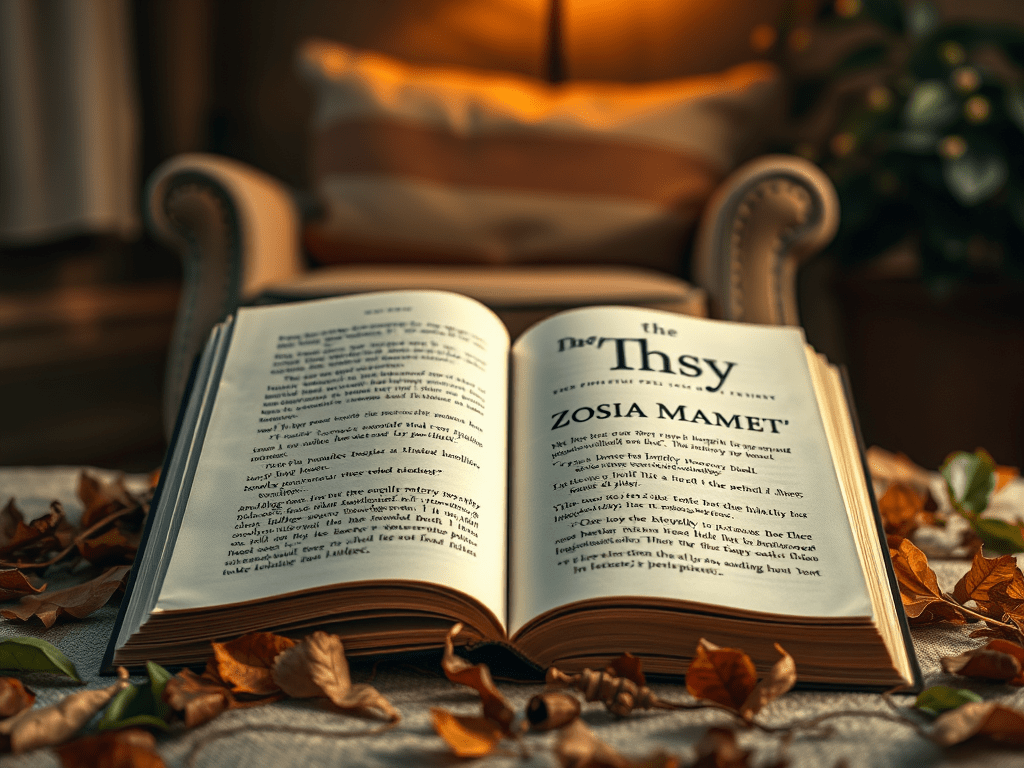
    It’s rare that I fall in love with books these days, but when it happens, I’m grateful because reading reminds me of my glory days, the early 80s when I consumed books with ferocity, imaginative pleasure, and obligation like a bodybuilder taking protein powder and creatine. Three major factors have curtailed my reading of books: One, I’ve grown so cynical over the years that I’ve come to the belief that 99% of books are in actuality just a short story or essay with padding. An author has an intriguing idea, and they sit down with their agent and cook up a book that is mostly chicanery with a dash of substance. 

    Then three days ago, I heard actor Zosia Mamet talking about her memoir Does This Make Me Funny?, a collection of essays, with KCRW host Sam Sanders, and I was so struck by her depth of wit, intelligence, and moral perspective that I immediately bought her book, or I should say the Kindle eBook version of it. Even more rare than buying books as intellectual property, it is even rarer that I buy a hard copy of something, unless it is a kettlebell training book or a cookbook like Miyoko Schimmer’s The Vegan Creamery

    Getting most of my books on Kindle speaks to the second reason my reading has diminished. The physical act of reading is unpleasant. Holding the book, turning the pages, getting into a comfortable position, attenuating my eyes to the various font sizes. I find the whole thing disconcerting and unpleasant, like trying to figure out the seat positions, buttons, and levers of an unfamiliar car. The most comfortable forms of reading are either sitting at my desktop and reading the Kindle on a 27-inch screen or reading while sitting in bed with a 16-inch laptop.

    The third reason I don’t read as much is that the Internet and its attention economy have fried my brain over the decades. The attention muscles inside my cortex have atrophied to a woeful state. 

    But occasionally a rose grows out of the cracks in the cement sidewalk, and such is the case with Zosia Mamet’s memoir, as witty, deep, self-deprecating, and salient as the author speaking to Sam Sanders three days ago. Reading the memoir is to connect with someone for whom her writing voice and the core of her being are the same. The result is something distinctive and salient, something that recoils and then snaps forward to leave its literary fangs inside you. Isn’t that what writing is supposed to be about? Nabokov was like that. So was Kafka. And so is Zosia Mamet.

    I detest some confectionary celebrity memoir reeking of privilege, superfluousness, and mediocrity. None of that is in Zosia’s collection of essays. 

    As we read in Jancee Dunn’s New York Times article “At Least Zosia Mamet Can Laugh About It,” the core of her book is about her mental, physical, and spiritual health. Coming from a family that is deeply entrenched in literature and the arts is a double-edged sword with excruciating pressure to live up to superhuman expectations causing Zosia’s thorn in her side to be the constant sense that she is falling abysmally short. 

    Like the best comedia, she opts out of self-pity for humor as she does a deep dive into her anxiety, depression, body dysmorphia, anorexia, and anhedonia, and all the self-destructive behaviors she succumbed to in order to overcome these afflictions. Because she knows that body dysmorphia is a delusion that hijacks her brain, she says about herself: “I am often an unreliable narrator of my own reality.” 

    Which in a nutshell is the human condition: Can we trust ourselves or are we getting duped by our own fake narrative? 

    What tools from our emotional toolbox can we use to be more reliable? Perhaps comedy is one of them. Think of our irrational states: overcome by maudlin self-pity, vanity, and grandiosity, we spin grotesque narratives about ourselves that compel us to behave in ways that are ridiculous and often result in self-sabotage. Perhaps comedy is the antidote. Perhaps comedy distances us from our preposterous self-mythology and helps us in the arduous process of self-reinvention. That’s the sense I’m getting from Zosia Mamet’s very necessary book, a book that has no padding at all but has been made from a brilliant mind with blood, sweat, and tears. 

  • Florida Fever Dreams and Katrina Floodwaters: Future Writing Prompts I Can’t Quit

    Florida Fever Dreams and Katrina Floodwaters: Future Writing Prompts I Can’t Quit

    I work obsessively hard to develop essay prompts for my college students. When they prove effective and resonate with the students, I am gratified beyond words and will keep the prompt for perhaps too long. I have an assignment about a diet writer Rebecca Johns who in her essay “A Diet Writer’s Regrets” explores the irony and misery of gaining weight while dispensing weight-loss tips in her women’s magazine articles. Her inability to execute her own advice becomes an opportunity for my students to explore the notion of free will when it comes to weight management, especially now that GLP-1 drugs are proving that dependence on technology can be so much more reliable than aspirations toward self-agency. The students’ essays over the last four semesters have been truly engaging, revealing either their own weight-management torment or a friend or family member’s. 

    One problem, though, with an essay prompt is that as it gets used semester after semester some of the essay components, such as the counterargument-rebuttal section, start looking the same. I suspect the previously written essays become in some form or other available to the new batch of students, and for this reason, I think even the best essay prompts have a limited shelf life. 

    Another challenge with creating essay prompts is that you don’t really know how they will land with the students until you actually try it out. For example, I was very enthusiastic about my freshman composition class’s first assignment in which they write about the crisis of young men who lack a sense of belonging and purpose and how in their vulnerable state they become vulnerable to the deceptions, manipulations, and false claims of bro influencers. We studied the Liver King who is said to have made over a hundred million dollars and in his caveman cosplay, he was simply too ridiculous and grotesque for my students–all athletes–to take him seriously. He proved so absurd that whatever gravitas I was trying to squeeze out of the assignment just felt like a joke. While millions of men followed their organ-eating cult leader, my athletes were not impressed, and I felt that my essay prompt suffered for it. As a result, I doubt I’ll do that one again.

    Looking ahead, I’m thinking of Florida as less of a physical place and more of a mental fever swamp where I can explore the notion of freedom in its immature and mature incarnations. The TV comedy series It’s Florida, Man and the documentary Some Kind of Heaven about a hedonistic senior citizen home could be an effective exploration of the perils of perpetual adolescence. To avoid making the essay prompt nihilistic, I am leaning toward a contrast essay in which the students explore a more healthy kind of freedom as Cal Newport advocates in his message of “deep work”–the idea that focused work is essential to flourishing and self-fulfillment. 

    Another topic that possesses me is Hurricane Katrina, the idea that a natural disaster was made into a man-made catastrophe through neglect and reckless disregard for the people of New Orleans. This ignominious chapter in American history is a powerful window into red-lining, government corruption, and media misinformation. The riveting documentaries Hurricane Katrina: Race Against Time (Hulu) and Katrina: Come Hell and High Water (Netflix) convince me that I will be exploring Hurricane Katrina next semester. 

    My challenge with Katrina is making sure the story doesn’t collapse into pure tragedy. To balance the devastation, I need to highlight the unique culture of New Orleans—the joy, the tight-knit families, the music, food, and resilience that define the city. The message I want to leave students with is that, despite catastrophe, New Orleans has a distinctive soul that continues to draw the world to its city.

    I suspect even after I retire in less than two years I will still sniff out writing prompts. Coming up with essay prompts is my addiction, and this addiction isn’t going away anytime soon.