Tag: books

  • Beauty Without Performance: The Quiet Legacy of The Sundays

    Beauty Without Performance: The Quiet Legacy of The Sundays

    Harriet Wheeler and David Gavurin of The Sundays gave the world my favorite song of all time: “You’re Not the Only One I Know.”
    I didn’t just fall for that song — I tumbled headfirst into their entire body of work across three albums, each one a quiet masterclass in melancholy and grace. I saw them live twice, but the 1990 show at Slim’s in San Francisco left a scar on my heart that never quite healed. Somewhere between the ringing guitars and Harriet’s bittersweet voice, I understood something about beauty that hurt — the way only true beauty can.
    I bought a Sundays T-shirt that night, and decades later, my teenage daughter wears it like a badge of honor as if carrying the torch for a band she never saw but somehow still feels.

    Wheeler and Gavurin, true to form, refused to play the roles we demanded of them.
    After making their brief, brilliant splash on the music scene, they disappeared — not in disgrace, but in quiet triumph.
    No messy social media fade-outs. No tragic reunion tours at casino amphitheaters. Just two people choosing domestic obscurity over the ceaseless meat grinder of public performance.
    Rumor has it Harriet became a schoolteacher. I hope that’s true. There’s something magnificent about the idea of her trading in the spotlight for a chalkboard, living in the kind of real, unperformed life that fame devours.

    Meanwhile, their fanbase — myself included — obsessed for years, combing through blogs and Reddit threads for any sign of a comeback that never arrived.
    But the more I think about it, the more I admire Wheeler and Gavurin’s refusal to extend the brand of themselves indefinitely.
    The same beauty that made their music shimmer with timeless sadness likely steered them away from the terminal exhibitionism that seems to consume so many artists.
    Their art wasn’t a ladder to fame — it was a lifeboat out of it.

    They should know this much:
    The same Sunday’s T-shirt I once wore to death now lives on, worn proudly by my daughter, proof that real magic — the kind you don’t sell, the kind you don’t explain — doesn’t need an encore.

  • Obscurity Without Shame: The Enduring Beauty of the Trash Can Sinatras’ “Obscurity Knocks”

    Obscurity Without Shame: The Enduring Beauty of the Trash Can Sinatras’ “Obscurity Knocks”

    It was 1990, and there I was — strutting down Hollywood Boulevard with my girlfriend, a walking cliché in a secondhand leather jacket, pretending to be too jaded for the tourists but secretly hoping to be discovered by a roving talent scout. We ducked into some grim little shrine to adolescent misery, shopping for Smiths T-shirts and anything else that might broadcast our manufactured melancholy.

    That’s when the store’s sound system offered up “Obscurity Knocks” by the Trash Can Sinatras — a song I was too full of myself to recognize as a direct warning shot.
    At the time, I was a preening, would-be screenwriter and novelist, drunk on my own imaginary press clippings, convinced that obscurity was a fate reserved for lesser mortals. I didn’t realize that the bright, bittersweet melody washing over those racks of ironic despair was, in fact, my personal horoscope: You, sir, will toil unseen. You will remain a hidden draft in life’s file cabinet. And — shocking plot twist — it will not kill you.

    Decades later, “Obscurity Knocks” still sits at the top of my all-time favorites list, not because it flatters ambition, but because it gently demolishes it.
    It’s a hymn to living for the work itself, to making peace with invisibility, to resisting the cheap, sugary high of external validation.

    It is one of those rare songs that manages to be both wistful and liberating at once — a graceful acceptance letter to a life lived outside the gravitational pull of fame. Far from being a bitter anthem of failure, it’s a clear-eyed celebration of choosing the harder, more honest road: living for one’s art rather than living off it.

    At first listen, the jangly guitars and breezy melody almost betray the lyrical gravity beneath. The music is light, but the words carry the weight of a reckoning. The narrator stands at the border between youthful ambition and mature resignation, surveying the life he has actually lived versus the life he once imagined. And yet, there is no rage, no tantrum, no grasping for lost relevance. Instead, there is something far healthier and more beautiful: an elegy without self-pity, a conscious decision to stay faithful to the things that matter.

    The song’s real bravery lies in its refusal to dress obscurity up as defeat. It suggests that real integrity means loving what you do even when the spotlight points elsewhere — when the record deals dry up, when the critics stop caring, when the audience forgets. In an era addicted to metrics — clicks, likes, views — “Obscurity Knocks” remains a defiant refusal to reduce one’s life to a scoreboard.

    Mortality hums quietly underneath the entire track. It’s not explicit, but it’s there, felt in the weariness behind certain lines, the subtle wear and tear of a life measured not by trophies but by quieter, richer achievements: loyalty to craft, private joy, the bittersweet pleasure of simply carrying on. It accepts the inevitable fading without collapsing into nihilism.

    There is longing, yes — the song aches with it — but it’s a clean, unsentimental kind of longing. It isn’t the longing for public adoration or manufactured relevance; it’s the deeper human longing to matter, to create something true before the clock runs out. In this way, “Obscurity Knocks” isn’t just about a music career. It’s about the universal experience of learning to live meaningfully in a world that will not give you a standing ovation for it.

    The Trash Can Sinatras don’t rage against the dying of the light; they tip their hats to it, shrug, and keep playing. And in that shrug, that beautifully unvarnished acceptance, they find a kind of glory that fame could never offer.

    Do the Trash Can Sinatras have a song more beautiful than “Obscurity Knocks”? Technically, yes — but only one, and finding it is like trying to locate the Holy Grail in a used CD bin. It’s a B-side called “My Mistake,” a painfully perfect little anthem about a young fool so drunk on love he trips over his own heart like it’s a barstool in a dark room.

    It’s a song that captures, with ridiculous precision, the exquisite humiliation of thinking you’re the protagonist in a grand romance when you’re actually just a blip on someone else’s radar — a mistake you won’t stop making until life has finished sanding the delusions off your bones.

    Postscript:

    After writing this post, I felt compelled to listen to “Obscurity Knocks” on YouTube and someone asked in the comment section: “Any other songs like this?” I answered: “Yes, ‘My Finest Hour’ by The Sundays.”

  • Velvet Fists: Sentimentality, Violence, and the Lie of the Crappy Love Song

    Velvet Fists: Sentimentality, Violence, and the Lie of the Crappy Love Song

    In the early ’90s, screenwriter Dennis Potter—whose haunting 1980 film Blade on a Feather once grabbed my imagination by the throat—sat across from Charlie Rose, passionately defending one of humanity’s most derided cultural artifacts: the “crappy love song.”

    Potter’s argument was simple and oddly noble:
    In a world where we grovel like pigs at the trough of materialism, even the cheesiest love ballad points, however clumsily, toward something higher—a yearning for transformative love, the kind that rattles the soul and redeems our miserable existence.
    And that, Potter insisted, should be celebrated, not sneered at.

    I see his point.
    But I can’t quite choke it down.

    What happens when the music is even crasser than life itself?
    Forgive the offense, but Kenny G springs to mind—a man whose saxophone emits what can only be described as the ambient soundtrack of lobotomized love.
    Millions swoon to his treacly squeals, convinced they’re tasting transcendence.
    But what they’re really swallowing is sentimentality in its most lethal form: syrupy, infantilizing, and vaguely unhinged.

    While I love Potter for wanting to defend the human need for transcendent emotion, I can’t ignore the underlying rot.
    These “crappy love songs,” much like Kenny G’s ambient anesthesia, often peddle not real love, but an emotionally stunted counterfeit—sentimentality, a soft mask stretched tight over something far uglier.

    Sentimentality terrifies me because it is not benign.
    It is childish emotion weaponized.
    It is the refusal to mature, to engage with the complicated ambiguities of real love, real pain, real life.
    And because these stunted feelings are defended with the ferocity of a cornered child, sentimentality often harbors its dark twin: violence.

    Saul Bellow, with his characteristic unsparing clarity in Herzog, nailed it:
    It’s the most sentimental people who are the most violent.

    Why?
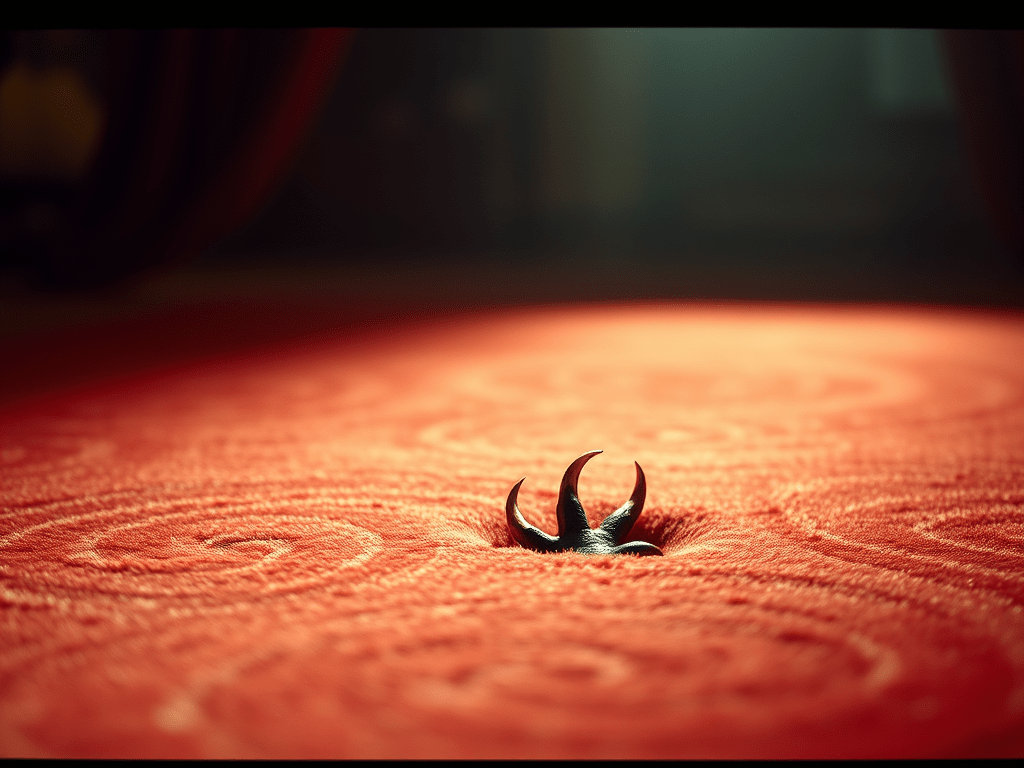
    Because sentimentality is a velvet carpet stretched precariously over a tiger’s claw.
    It’s the illusion of sweetness clinging desperately to a subterranean rage—the rage of people who cannot tolerate having their fragile, maudlin dreams challenged.
    To question sentimentality is to trigger a defensive violence, a panicked fury at the idea that real adulthood demands something sterner, braver, and infinitely less sweet.

    So no, Dennis Potter, I can’t fully join you in your defense of the crappy love song.
    Because too often, beneath that soaring key change and saccharine lyric, I hear not the longing for transcendent love—
    but the faint, snarling growl of a soul that refuses to grow up.

  • Streamberry, Self-Loathing, and the Algorithmic Abyss: How “Joan Is Awful” Skewers the Curated Life

    Streamberry, Self-Loathing, and the Algorithmic Abyss: How “Joan Is Awful” Skewers the Curated Life

    In Black Mirror’s “Joan Is Awful,” Charlie Brooker offers more than a dystopian farce—he serves up a wickedly accurate satire of the curated lives we present online. It’s not just Joan who’s awful. It’s us. All of us who’ve filtered our flaws, outsourced our personalities to engagement metrics, and whittled ourselves down to algorithm-friendly avatars. The episode doesn’t critique Joan alone—it roasts the whole rotten architecture of social media curation and shows, with brutal clarity, how the pursuit of digital perfection transforms us into insufferable parodies of our former selves.

    First, let’s talk about performance. Joan, like any good social media user, lives her life as if auditioning for a role she already occupies—one shaped not by authenticity but by optics. She performs “relatable misery,” complete with awkward office banter, fake smiles, and passive-aggressive salad orders. Social media rewards this pantomime, demanding we be palatable, aspirational, and vaguely miserable all at once. The result? A version of ourselves designed to please an audience we secretly resent. Joan is what happens when your curated self becomes the dominant narrative—when branding overtakes being. Her AI-generated counterpart doesn’t misrepresent her; it distills her curated contradictions into a grotesque caricature that somehow feels… accurate.

    Second, there’s the fact that Joan—like all of us—is under constant surveillance. In Joan Is Awful, it’s not just the NSA snooping in the background—it’s the entire viewing public, binge-watching her daily descent into algorithm-approved degradation. This is what we’ve signed up for with every “I accept” click: to become content, voluntarily and irrevocably. Our data, behaviors, and digital crumbs are fed into the algorithmic sausage grinder, and what comes out is a grotesque mirror held to our worst instincts. The AI Joan is not a stranger; she’s the monster we’ve been molding through every performative tweet, selfie, and humblebrag. In a world where perception is currency, she’s our highest-valued coin.

    Then comes the psychological shrapnel: identity fragmentation. Joan can no longer tell where she ends and Streamberry’s Joan begins, just as many of us can’t quite remember who we were before the algorithm gave us feedback loops in the form of likes, retweets, and dopamine pings. This curated self isn’t just a mask—it becomes the default setting. The dissonance between public persona and private truth breeds an existential malaise. Joan’s real tragedy isn’t that her life is on TV—it’s that she’s lost the plot. She’s a passenger in her own narrative, outsourced to a system that rewards spectacle over substance.

    Let’s not forget the moral rot. Watching your AI double destroy your reputation while millions tune in might seem horrifying—until you remember we do this willingly. We doomscroll, rubberneck scandals, and serve our digital idols on platters made of hashtags. Joan, sitting slack-jawed in front of her TV, is no different from us—addicted to her own collapse. It’s not the horror of exposure that eats her alive; it’s the realization that her own worst self is exactly what the algorithm wanted. And that’s what it rewarded.

    Ultimately, Joan Is Awful is a break-up letter with social media—if your ex were a manipulative narcissist with access to all your personal data and a flair for psychological torture. Escaping the curated self, as Joan tries to do, is like fleeing an abusive relationship. You know it’s toxic, you know it’s killing you—but part of you still misses the attention. The episode doesn’t end with a triumphant reinvention; it ends with Joan in fast food purgatory, finally unplugged but still wrecked. Because once you’ve sold your soul to the algorithm, the buyback price is steep.

    So yes, Joan is awful. But only because she reflects what happens when we let the curated life take the wheel. In the Streamberry age, we aren’t living—we’re streaming ourselves into oblivion. And the worst part? We’re giving it five stars.

  • Kleptobite

    Kleptobite

    When I was six years old in 1968, I lived for a year with my grandparents in Belmont Shore. One day after school, a distraught neighbor, a 79-year-old widow named Mrs. Davis, said she locked herself out of her house. Could she borrow me to climb through her bedroom window and unlock the front door for her? With my grandmother’s approval, I did just that. I pretended to be a cat burglar, slithered through the ajar window, and walked through her house. With great curiosity, I examined the interior of the living room.  The floor was covered with a plush, floral-patterned rug. The centerpiece of the room was a large, floral-patterned couch. It was flanked by two wingback chairs, upholstered in a velvety red fabric. Each chair had a lace doily draped over the backrest. A coffee table with spindly legs sat in front of the couch, its surface crowded with an assortment of knickknacks: a porcelain figurine of a ballerina, a small crystal bowl filled with wrapped candies, and a couple of framed photos. The walls were adorned with family portraits, framed cross-stitch samplers, and a large, oval mirror with a gold frame. A grandfather clock ticked methodically in the background, its pendulum swinging with a steady rhythm that made me feel lost in time. Something came over me. Being alone, I felt possessed with a transgressive spirit, and I lifted the candy jar’s lid and, even though I disdained hard candy, I stuffed a butterscotch candy in my pocket before opening the front door for Mrs. Davis. I felt guilty for my act of theft because Mrs. Davis proclaimed me to be her newly-minted hero and handed me a crisp one-dollar bill, which I would later spend on Baby Ruth and Almond Joy Bars. I had difficulty sleeping that night. I worried that Mrs. Davis might feel inclined to take inventory of her candies and discover that one was missing, prompting her to demote me from hero to villain. My career as a thief had come to a quick end. On the other hand, I had a glimpse of what it was like to be a superhero entering houses and saving people in distress. I convinced myself that my career as Superman was just beginning. 

    My act of thievery points us to the lexicon term: Kleptobite–the act of stealing a food item not for its flavor or nutritional value, but purely for the electric thrill of transgression. A Kleptobite is less about appetite and more about theater—the petty larceny of a Werther’s Original lifted like a crown jewel, the pilfered peppermint filched under the nose of a trusting septuagenarian, not for the tongue, but for the adrenaline. Often committed in plush-carpeted living rooms with doilies and ticking clocks, this culinary crime wave is fueled by a cocktail of boredom, childhood hubris, and vague superhero delusions. Side effects include guilt-induced insomnia, paranoia about candy audits, and overcompensating acts of heroism.

  • The Cake and the Crumbs: A Toddler’s Origin Story of Maximalust

    The Cake and the Crumbs: A Toddler’s Origin Story of Maximalust

    I was a bright-eyed two-year-old growing up in the surreal surroundings of VA housing in Gainesville, Florida. My home, a repurposed army barracks known as Flavet Villages, was nestled near an alligator swamp where the air was thick with the smell of low-tide alligator dung, a stench so potent it could knock out a grown man. Yet, amidst this pungent atmosphere lay an enchanting routine: visiting a Mynah bird perched on the same tree branch in a nearby forest. This mystical bird, almost a local deity, engaged in nightly conversations with my father and me, its wisecracking voice echoing in the twilight. On my second birthday, my father, ever the hero, carried me on his shoulders for our evening visit to the Mynah bird. As we journeyed through the swampy landscape, the scent of celebration wafted from our small apartment, where my mother was busily preparing birthday decorations. In the distance, the melancholic tune of “Bali Ha’i” drifted from a neighbor’s radio, adding a cinematic touch to our adventure. We returned home, greeted by the excitement of neighbors and the promise of birthday cake. The neighbor’s child, a frail wisp of a boy who looked like he might be blown away by the next strong gust of wind, sat in his high chair, a throne of pity contrasting starkly with my robust presence. I, the towering giant of toddlers, was presented with a slice of cake so large it could double as a life raft. The cake, an Everest of chocolate decadence, was all mine to conquer. Then, I glanced at the poor child beside me. His mother, apparently convinced he was a baby bird rather than a human toddler, meticulously pinched off cake crumbs and fed them to him out of the palm of her hand. Each crumb, delivered with the precision of a jeweler setting a diamond, highlighted the stark disparity between my cake feast and his crumb diet. My eyes widened in disbelief. Was this real? Was I witnessing a Dickensian nightmare unfold at my birthday party? My horror magnified as I chewed through my colossal slice of cake, each bite a triumphant celebration of my toddlerhood. Meanwhile, the other child nibbled at his crumbs, a tragic figure resigned to his fate. In my young mind, the situation escalated to epic proportions. I envisioned myself as a benevolent king, feasting on a banquet, while the other boy was a destitute peasant, scrabbling for scraps in my opulent court. That moment, seared into my memory, became a symbol of the great injustices of the world. How could a child, on my birthday no less, be subjected to such cruel cake inequity? The image of his mother, delicately inserting crumbs into his mouth, haunted me like a ghost of birthdays past. It was as if I had witnessed the greatest travesty of my young life, a Shakespearean tragedy played out in frosting and crumbs. Years have passed, and many birthdays have came and went, but the memory remains vivid. I have tasted many cakes since then, each one a reminder of that fateful day when I first encountered true pity. In my exaggerated recollection, the event has grown more fantastical. The crumbs have became smaller, my cake slice grander, and the emotional weight of that moment ever heavier. So here I stand, a veteran of countless birthday celebrations, carrying with me the bittersweet lesson that not all cake experiences are created equal. And perhaps, in my heart of hearts, I’ve learned to savor every slice of cake with the gratitude of one who knows that somewhere, someone might be living on crumbs.

    The deeply embedded, early-life memory resulted in the belief that more food is always better—more validating, more righteous, more deserved. Born in toddlerhood and fed by birthday cakes the size of rafts, Maximalust is not just a craving—it’s a worldview. It equates abundance with virtue and scarcity with shame. It’s the toddler id that sees a normal portion and thinks, “Who hurt you?” It’s the pathology that makes buffets feel like moral high ground and crumbs like moral failure. Maximalust is the primal belief that to be loved is to be laden with frosting.

    In addition to Maximalust, I discovered the notion of Crumbpassion–the emotional dissonance that arises when your plate is Mount Olympus and theirs is a cautionary tale. It is not kindness—it’s existential discomfort wrapped in frosting empathy. The crumb-fed child becomes a Dickensian ghost, a living allegory of restraint, and you, the overfed protagonist, must reckon with the unfairness of cake distribution and your own frosting-fueled privilege.

    Together, Maximalust and Crumbpassion form a tragicomic framework of early appetite mythology—a toddler’s origin story of food, power, and pity that lives rent-free in your adult relationship with dessert.

  • I Am My Own Audiobook: A Washed-Up Reader’s Redemption Arc

    I Am My Own Audiobook: A Washed-Up Reader’s Redemption Arc

    After four decades of teaching college writing, I now find myself plagued by a humiliating truth: my reading habits have withered into something more decorative than devout. In my twenties, I devoured two books a week like a literary piranha. Now, I manage a limp 30-minute bedtime reading session before drooling onto the page like a narcoleptic bookworm. Call it aging, call it digital distraction, or—as I like to tell myself in moments of flattering delusion—call it undiagnosed ADHD. Whatever the cause, my reading stamina has become a cautionary tale.

    If I want to do anything resembling real, rigorous reading, I’ve learned to prop myself between two 27-inch screens like a cyborg monk: one monitor displaying the sacred text, the other open to Google Docs so I can take notes, argue with myself, and shame my inner skimmer into paying attention. This is not pleasure reading. This is performance reading—a controlled environment designed to bully my mind into staying in the room. If a book so much as looks at me funny, I’ll click over to email.

    But something strange has happened: I’ve become a better listener than reader. I now “read” through Audible with more duration and intensity than I’ve mustered with paper in years. Especially with nonfiction, the audiobook format feels less like cheating and more like a form of literary intravenous drip—direct, efficient, and oddly intimate. That’s why a recent blurb in The New Yorker caught my eye: Peter Szendy’s Powers of Reading: From Plato to Audiobooks isn’t just an academic tour through literary history—it’s a philosophical rebranding of the audiobook experience.

    Szendy resurrects a long-lost distinction between two roles: the reader (the person decoding text) and the readee (the listener, the audience of the reading). Since antiquity, he notes, most literature wasn’t read—it was heard. We were, for most of human history, listenees. Silent, solo reading is a relatively recent phenomenon, and yet we’ve somehow crowned it the gold standard of literary engagement. Szendy isn’t buying it. In fact, he argues for the emancipation of the readee—a manifesto that practically throws confetti over the return of orality via Audible.

    And here’s the kicker: even when we read to ourselves, we’re still listenees. We are listening to our own interior narration. We are, in essence, narrating to ourselves. Szendy suggests that when we read, we play both roles: the voice and the ear, the actor and the audience. And when we listen to a book, we are doing something ancient, dignified, and sacred—not some degraded, dumbed-down version of real reading.

    So yes, maybe I’m a fallen reader, a man who used to crush Dostoevsky before breakfast but now requires high-tech scaffolding just to get through a paragraph. But thanks to Szendy, I can now see myself as a kind of restored readee—part monk, part machine, part audiobook in human form. Not a failure of attention, but a return to tradition. And if my bedtime ritual now sounds more like a podcast than a prayer, well… Plato probably would’ve approved.

  • Out of the Sunken Place: Literacy, Identity, and Resistance in American Media and History: A College Essay Prompt

    Out of the Sunken Place: Literacy, Identity, and Resistance in American Media and History: A College Essay Prompt

    Essay Prompt:

    In Jordan Peele’s Get Out, the “Sunken Place” is a haunting metaphor for racial oppression, psychological erasure, and the paralysis of learned helplessness. In Childish Gambino’s “This Is America,” we witness the chaos and spectacle that distract from—and contribute to—that same systemic dehumanization. Across both works, the Sunken Place is not just a cinematic device—it is a chilling representation of the Black American experience under white supremacy, media manipulation, and cultural exploitation.

    Meanwhile, in Narrative of the Life of Frederick Douglass and Spike Lee’s movie Malcolm X, we see two historical figures who not only diagnosed their own versions of the Sunken Place but fought like hell to escape it—and to pull others out with them. Both men confront the dehumanizing force of racism, the danger of false identity imposed by the dominant culture, and the urgent need for self-definition through education, oratory, and rhetorical power.

    Your Task:

    Write a well-structured, argumentative essay in which you compare and analyze how the Sunken Place operates as a metaphor for racial oppression in Get Out and “This Is America,” and then examine how Frederick Douglass and Malcolm X function as heroes because they:

    • Identified and articulated the psychological and cultural dimensions of the Sunken Place,
    • Used literacy and self-education to transform their consciousness and identity,
    • Embraced self-reinvention to reject the roles society had written for them,
    • And wielded rhetoric, public speech, and writing as tools of resistance and uplift.

    Your Essay Should:

    • Develop a clear thesis that connects all four texts and takes a position on why Douglass and Malcolm X are essential in the larger conversation about the Sunken Place.
    • Use specific evidence from the film Get Out, the music video “This Is America,” Narrative of the Life of Frederick Douglass, and Spike Lee’s Malcolm X.
    • Analyze how self-reinvention and literacy act as tools of resistance in both historical and contemporary contexts.
    • Explore the power of rhetoric and performance—whether in speeches, writing, or visual media—as a means of disrupting oppression.
    • Consider how media, identity, and oppression intersect across the past and present.

    Length: 1,700–2,000 words

    Format: MLA, double-spaced, 12-point Times New Roman

    Sample 9-Paragraph Essay Outline: Out of the Sunken Place

    I. Introduction

    • Hook: A striking image or quote from Get Out or Douglass’s memoir that captures the feeling of being silenced, erased, or controlled.
    • Context: Briefly introduce the concept of the Sunken Place and how it serves as a metaphor for racial oppression in both modern media and historical reality.
    • Thesis: Jordan Peele’s Get Out and Childish Gambino’s “This Is America” depict the Sunken Place as a form of psychological and cultural imprisonment, while Frederick Douglass and Malcolm X represent heroic resistance through literacy, self-reinvention, and rhetoric—tools they used to break free from the false identities imposed by a racist society and to help others escape as well.

    II. Paragraph 1: The Sunken Place as Metaphor in Get Out

    • Analyze the concept of the Sunken Place in Peele’s film as a visual and psychological metaphor for helplessness, erasure, and loss of agency.
    • Discuss how the character of Chris embodies this forced subjugation.
    • Connect the visual metaphor to systemic racism and cultural silencing.

    III. Paragraph 2: Spectacle and Distraction in “This Is America”

    • Analyze how Childish Gambino’s video presents Black suffering behind the mask of American entertainment and spectacle.
    • Examine the use of chaos, dance, and violence as metaphorical distractions from systemic oppression.
    • Connect to the Sunken Place as a cultural state where truth is obscured by media performance.

    IV. Paragraph 3: Douglass Diagnoses and Escapes the Sunken Place

    • Show how Douglass identifies slavery not just as physical bondage but as psychological erasure.
    • Analyze how literacy becomes his path out of the Sunken Place.
    • Use key moments from the memoir (e.g., learning to read, confrontation with Covey).

    V. Paragraph 4: Malcolm X and the Power of Self-Reinvention

    • Explore how Malcolm X’s transformation (Malcolm Little → Detroit Red → Malcolm X) illustrates his escape from imposed identity.
    • Discuss how the prison-to-platform arc parallels Douglass’s journey.
    • Emphasize the role of reading, writing, and faith in his transformation.

    VI. Paragraph 5: Literacy and Rhetoric as Weapons of Resistance

    • Compare how both men use writing and oratory as tools of liberation.
    • Show how speeches, autobiographies, and essays were used to expose racism and awaken others.
    • Draw parallels to how modern media (like Get Out) also aims to awaken.

    VII. Paragraph 6: Counterargument & Rebuttal

    • Acknowledge the claim that historical figures and modern entertainers operate in fundamentally different spaces.
    • Rebut by showing that both use performance and storytelling to fight cultural amnesia and reclaim Black identity.

    VIII. Paragraph 7: Synthesis of Past and Present Resistance

    • Tie together the works: How Douglass and Malcolm X laid the rhetorical groundwork that Peele and Gambino build on.
    • Emphasize the continuity of struggle and evolution of the Sunken Place.

    IX. Conclusion

    • Reaffirm the thesis with renewed emphasis.
    • Reflect on what it means to escape the Sunken Place in today’s cultural landscape.
    • End with a powerful final thought about the ongoing power of education, identity, and resistance.

  • Bloodlust or Civic Ritual? The Moral Dilemma of Watching Football

    Bloodlust or Civic Ritual? The Moral Dilemma of Watching Football

    In his Guardian column, American football is too dangerous, and it should be abolished,” David Bry doesn’t just critique the sport—he indicts its audience. Football, he argues, is not merely unsafe; it’s immoral. He anticipates the backlash to this charge and admits, with self-deprecating honesty, that he’s no moral saint himself—he still eats foie gras, knowingly prioritizing his pleasure over a duck’s suffering. But to him, there’s a moral line between indulging in ethically murky cuisine and consuming a sport that rewards the destruction of human bodies for mass entertainment. If he values human life more than duck life, he cannot, in good conscience, support a game that feeds off head trauma and early death.

    Bry insists the game can’t be meaningfully reformed. The violence is not incidental—it’s structural. Helmets and rule changes may offer cosmetic fixes, but the fundamental problem lies in the collisions themselves: the brain, he writes, “sloshes around and smashes against its bone casing.” No amount of tweaking can erase that brutal fact. While his friend Todd defends the freedom of adults to play if they choose, Bry shifts the focus from the players to the fans. The deeper immorality, he claims, lies not on the field but in the stands and living rooms, where audiences cheer and fund the spectacle that maims its participants.

    This position challenges evolutionary theorists like Jonathan Gottschall, who argue that violent sports are hardwired into us. From his view, sports like football are not moral failures, but social adaptations—ritualized combat that establishes hierarchies and offers a controlled outlet for natural male aggression. If we don’t have football, we’ll invent some other surrogate for the same primal thrill.

    And here lies the moral paradox: If we are biologically inclined to enjoy violence in symbolic form, can we still be held ethically accountable for watching it? Or does evolutionary determinism become a convenient alibi that masks complicity? Is football a barbaric indulgence we should outgrow—or a necessary safety valve that prevents worse outcomes?

    This tension gets at the philosophical core of the football debate. Are we morally responsible for what we watch, or are we acting out ancient instincts that override reason and empathy? If Bry is right, we’re sanitized Romans in bleachers, watching men destroy themselves for our pleasure. If Gottschall is right, those same bleachers might be the only thing keeping us from something darker, something more chaotic, something even harder to justify.

    Ultimately, the question is not whether football is violent—we know it is—but whether our appetite for it can be governed by ethics or will simply reinvent itself in another uniform, another arena, another “acceptable” outlet. Are we spectators or just better-dressed predators?

  • The Gospel of Manuscriptus Rex: Confessions of a Failed Novelist and Reluctant Exorcist

    The Gospel of Manuscriptus Rex: Confessions of a Failed Novelist and Reluctant Exorcist

    In my quest to diagnose the writing demon that refuses to release me from its grip, I turned to Why We Write: 20 Acclaimed Authors on How and Why They Do What They Do, edited by Meredith Maran. In her introduction, Maran paints a bleak portrait of the literary life: writers waking before dawn, shackling themselves to their craft with grim determination, all while the odds of success hover somewhere between laughable and nonexistent.

    She lays out the statistics like a funeral director preparing the bereaved: out of a million manuscripts, only 1% will find a home. And if that doesn’t crush your soul, she follows up with another gut punch: only 30% of published books turn a profit. Clearly, materialism isn’t the primary motivator here. Perhaps masochism plays a role—some deep-seated desire for rejection that outstrips the mere thrill of self-rejection. Or maybe it’s just pathology, an exorcism waiting to happen.

    For those unwilling to embrace despair, Maran brings in George Orwell’s “four great motives for writing”: egotism, the pleasures of good prose, the need for historical clarity, and the urge to make a political argument. Sensible enough. No surprises.

    Where things get interesting is Joan Didion’s take. Didion, never one for sentimentality, strips the writer’s motives bare: “In many ways writing is the act of saying I, of imposing oneself upon other people, of saying listen to me, see it my way, change your mind. It’s an aggressive, even hostile act.”

    Reading that, my eyes lit up with recognition. Didion had just sketched Manuscriptus Rex in perfect detail—the secret bully, the compulsive brain-hijacker who isn’t content to write in solitude but needs to occupy the minds of others, to install his worldview in their most private spaces.

    Terry Tempest Williams, on the other hand, writes to confront her ghosts, a sentiment that deeply appeals to me. The idea of the writer as a haunted creature, forever pursued by stories that demand exorcism, feels not only true but inescapable.

    But here’s the kicker—Maran makes it clear that the twenty writers in her book aren’t failures like me. They’re not Manuscriptus Rexes, howling into the void. No, they are the anointed ones, welcomed by publishers with open arms, bathed in the golden light of editorial gratitude.

    And yet, they didn’t land on Mount Olympus by accident. They fought. They clawed their way up, word by painful word, which means they have something to teach—not just to their fans but to me, a self-aware Manuscriptus Rex still trying to understand what, exactly, makes him tick.

    There is no shortage of delicious tidbits in Why We Write. Isabel Allende talks about the necessity of writing like a growing tumor that has to be dealt with or will simply grow out of control. She adds that even if she begins with a germ of an idea, the book has a life of its own. It grows from her unconscious obsessions and preoccupations, so that in the beginning she has not yet discovered what story she is going to tell. Also, she is a writer of ritual and routine. Every January seventh is the day before she starts writing a new book. She gathers all her materials in her “little pool house,” which she uses as her office. It is her sacred space to work, just “seventeen steps” from her home. 

    The idea of having two separate spaces—one for writing, one for everything else—fascinates me. It reminds me of something Martin Amis once told Charlie Rose: he needed to be a writer because toggling between the world of the novel and the earthly world created a kind of necessary duality, a parallel existence where imagination could thrive. For someone wired for storytelling, living between those two realities wasn’t just a luxury—it was a survival mechanism.

    At home, Isabel Allende straddles two universes, one sacred, the other profane. And it calls to mind the lesson my college fiction professor, N.V.M. Gonzalez, drilled into us: a fiction writer must know the difference between sacred and profane time.

    A great writer conducts these two temporal forces like an orchestra. Sacred time—mythic, timeless, symbolic—stretches beyond the clock, charging pivotal moments with fate, destiny, and the weight of history. It’s the crossroads where a single decision echoes through eternity. Profane time, by contrast, is the ticking metronome of daily existence—the coffee that goes cold, the unpaid bills, the search for a parking spot.

    A great novel moves between the two—one moment steeped in cosmic significance, the next trapped in the drudgery of real life. A character might wrestle with divine purpose—but that won’t stop their Wi-Fi from cutting out mid-revelation.

    Allende enters her writing enclave in a state of terror and exhilaration, grappling with ideas—some brilliant, some best left in the trash bin—while navigating stress, disappointment, and suspense. Her process feels high-stakes, and really, what is life without high stakes? A slow, numbing descent into low expectations, inertia, and existential boredom—a fate worse than failure.

    Maybe writing addiction is just the relentless drive to keep the stakes high. Without it, life shrinks into a provisional existence, where survival boils down to the next meal, the next fleeting pleasure, the next song that momentarily sends a tingle up your spine—a desperate Morse code from the universe to confirm you’re still alive.

    The writers in this book all share the same unshakable compulsion to write. For them, writing isn’t just a craft; it’s therapy, oxygen, a way to make sense of chaos. They write because they can’t not write—because failure to do so would send them spiraling into an existential crisis too dark to contemplate. Writing gives them self-worth, wards off insanity, and serves as the only acceptable coping mechanism for their undying curiosities. It isn’t a choice—it’s a chronic condition.

    These successful authors write relentlessly, enduring the agony of writer’s block, self-loathing, and the horror of their own bad prose, all while clawing their way toward something better. And while I share their compulsions, I lack their stamina and focus. Reading about Isabel Allende’s fourteen-hour writing binges was my moment of clarity: I am not a literary gladiator. These novelists can paint vast landscapes of story without crapping out halfway. I, on the other hand, am a wind-sprinter—a lunatic exploding off the starting block, only to collapse in a gasping heap a hundred yards later, curl into the fetal position, and slip into a creative coma.

    And this, I suspect, is the great torment of Manuscriptus Rex—an insatiable hunger to write the big book, clashing violently with a temperament built for sprints, not marathons. This misalignment fuels much of my artistic misery, my chronic dissatisfaction, and my ever-expanding graveyard of unfinished masterpieces.

    Still, whatever envy and despair I felt reading about these elite warriors of the written word, this book offered a cure—I will never again attempt a novel unless divine intervention forces my hand. I’ve seen too many of my failed attempts, the work of a man pretending to be a novelist rather than one willing to endure the necessary rigor. But I do have another calling: identifying unhinged, demonic states in others.

    Like a literary taxidermist, I want to capture these wild, self-destructive compulsions, mount them for display, and present them with maximum drama—not for amusement, but as cautionary tales. This is my work, my rehabilitation, the writing I was meant to do. And unlike novel-writing, it actually feels like a necessity, not a delusion.