Tag: books

  • The Illusion of Variety: Why All My Watches Look the Same

    The Illusion of Variety: Why All My Watches Look the Same

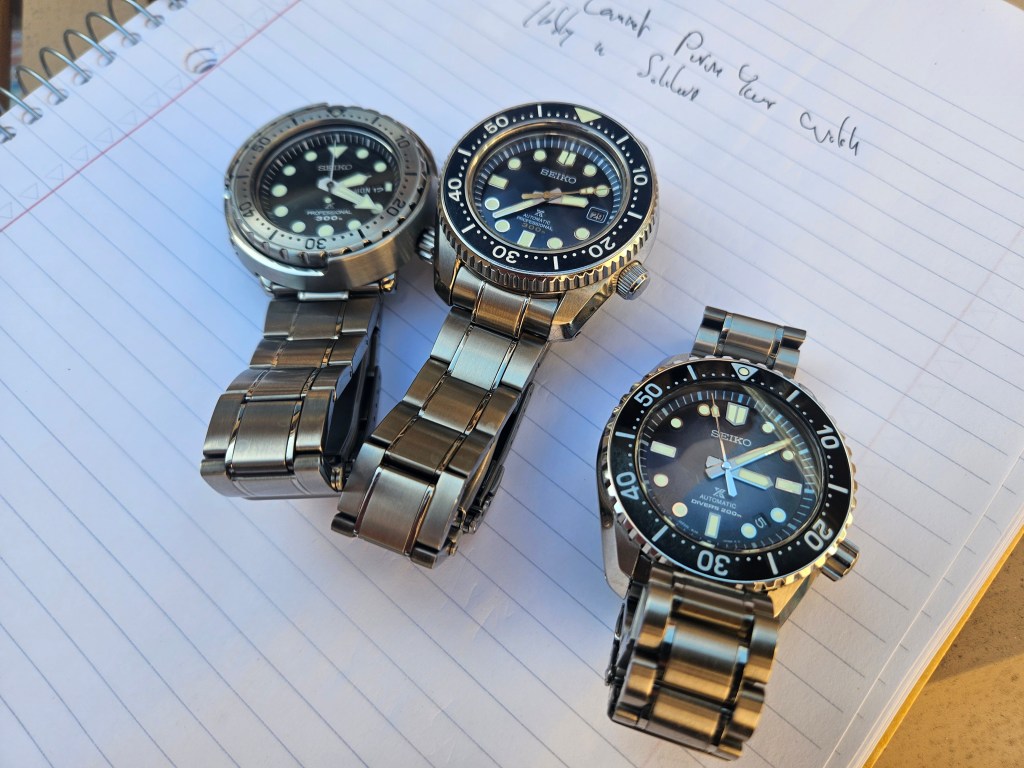
    My wife looks at my watch box and delivers her verdict with the efficiency of a forensic accountant: they’re all the same. Dark dials. Rotating bezels. Nuclear lume. Rubber straps. To her, I don’t own a collection—I own nine copies of the same idea. A redundancy with slightly different logos.

    I protest, of course. This one has a warmer dial tone. That one wears thinner. The other has superior bezel action and lume that could guide aircraft at night. To me, each piece has a personality, a purpose, a place in the rotation. But the uncomfortable truth remains: they are all divers. I am not merely a watch enthusiast. I am a subtype addict. Once the diver aesthetic locked onto my brain, every future desire began passing through that single filter.

    The roots of this pathology go back to childhood, where my mother enabled my early training in the Illusion of Variety. My diet revolved around Cap’n Crunch in all its alleged diversity: plain, Crunch Berries, Peanut Butter, plus the rebranded cousins—Quisp, Quake, King Vitamin—each promising novelty while delivering the same sugar-coated destiny. I approached these cereals with the seriousness of a sommelier comparing vintages, convinced I was exploring nuance while eating the same bowl under different costumes. It was freedom without risk, choice without change. A sugary Groundhog Day.

    Looking back, the pattern is obvious. I didn’t want options; I wanted reassurance disguised as options. Real variety carries danger—the possibility of regret, mismatch, or disappointment. Sameness offers safety. Familiar shapes, familiar flavors, familiar outcomes. Bliss with guardrails.

    That same psychology now lives in my watch box. Different brands, different cases, different shades of black—but always the same architecture, the same toolish language, the same emotional terrain. To outsiders, monotony. To me, refinement.

    This is the Category Fixation Loop: the moment a collector discovers the one design language that feels right and thereafter interprets every new desire through that narrow lens. The hobby doesn’t expand; it tunnels. Each purchase feels like exploration, but the geography never changes.

    On one level, my watches are identical. On another, they are infinitely different. The contradiction is the point. Variety, safely contained inside sameness—the Cap’n Crunch strategy, now rated to 200 meters.

  • Romance vs. Readiness: The $5,000 Watch Identity Test

    Romance vs. Readiness: The $5,000 Watch Identity Test

    If you had five thousand dollars to spend on a watch, would you buy a Tudor Black Bay or an apex G-Shock? Take a breath. This isn’t a trap. It’s a diagnostic. The question isn’t about taste, brand, or even watches. It’s about which story you want time to tell you when you look at your wrist.

    Because this isn’t a comparison. It’s a philosophical knife fight.

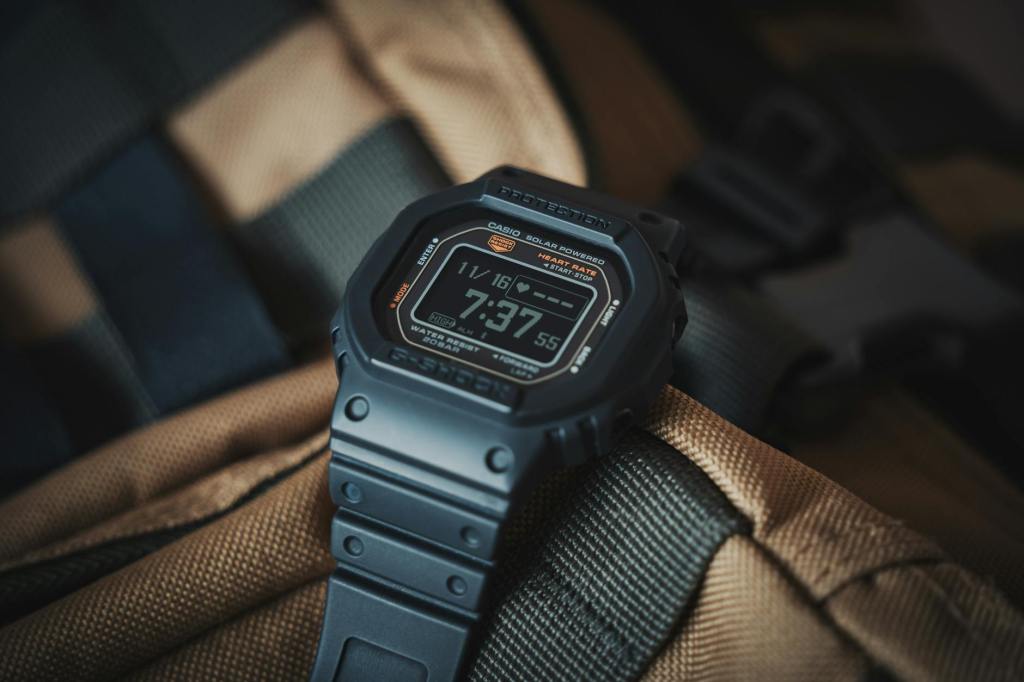
    What you’re buying with an MR-G is not nostalgia, prestige, or a century-old founder with a heroic mustache. You’re buying engineering density. The case is forged from exotic alloys—multi-layer titanium, Cobarion, DAT55—hardened, coated, and sealed like something designed to survive atmospheric reentry. The surfaces are finished with Zaratsu polishing, the same distortion-free technique used on high-end mechanical pieces, except here it’s applied to something that actually deserves the word precision.

    Inside, sentimentality has been removed for weight savings. Solar power eliminates battery anxiety. Multi-Band 6 pulls atomic time out of the sky. Bluetooth or GPS keeps it aligned with the planet. Perpetual calendar. Shock resistance. Magnetic resistance. Water resistance. This is not jewelry. This is equipment.

    In the real world, the result borders on the unsettling. The watch is essentially never wrong. It requires almost no maintenance. You don’t protect it; it protects itself. Decades pass. Nothing breaks. Nothing drifts. Nothing needs attention. Emotionally, the message is clear: you are wearing aerospace hardware. The subtext isn’t romance. It’s operational readiness.

    A Swiss mechanical watch lives in a different universe entirely.

    Here, you’re paying for inefficiency elevated to art. Hundreds of miniature parts dance together, powered by springs and friction, keeping time the way humans kept time before electricity. The movement is decorated with Geneva stripes, anglage, perlage—beautiful flourishes that improve nothing and mean everything. A large portion of the price isn’t metal or labor. It’s heritage, mythology, brand gravity, and the comforting knowledge that your purchase occupies a recognized tier in the luxury food chain.

    In practical terms, the performance is charmingly mediocre. The watch may gain or lose several seconds a day. Every five to ten years, it will require a service that costs the price of a respectable vacation. It’s durable, but not indestructible. You don’t live in it. You care for it. You wind it. You set it. You worry about it.

    And that’s the point.

    A Swiss mechanical watch is a tiny opera on your wrist. It hums with history and human effort. It suggests a world where time was slower, tools were permanent, and craftsmanship mattered more than optimization. It is gloriously unnecessary and emotionally persuasive. It doesn’t promise control. It promises meaning.

    The G-Shock, by contrast, does not care about your inner life.

    It assumes the world is hostile, gravity is inevitable, and precision is non-negotiable. Solar-powered. Atomically synchronized. Shockproof. Magnet-resistant. Overqualified for your most dangerous mission, which today will likely involve email, errands, and a conversation about air fryers. Where the Swiss watch whispers, “I honor tradition,” the G-Shock states, “Systems nominal.”

    One is a mechanical heirloom from a civilized past.
    The other is a wrist-mounted survival platform from a future that expects competence.

    This is the Romance–Reliability Divide: the tension between loving the poetry of imperfection and choosing the comfort of absolute performance. One approach treats timekeeping as an experience to be savored. The other treats it as a problem to be solved.

    There is no correct answer.

    But there is one mistake: not realizing which philosophy you’re buying when you open your wallet.

  • The G-Shock Exemption Doctrine: Why Some Watches “Don’t Count”

    The G-Shock Exemption Doctrine: Why Some Watches “Don’t Count”

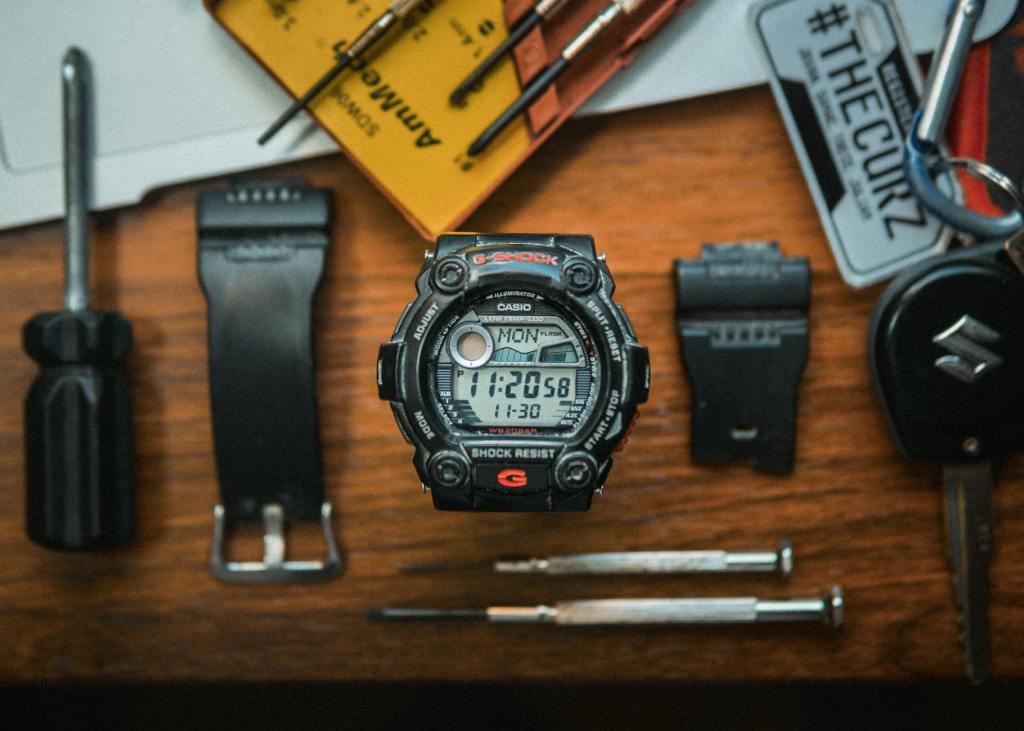
    I have friends in the watch community who insist that “G-Shocks don’t count.” When they tally their collections, the squares and Frogmen are quietly left off the ledger. This is the G-Shock Exemption Doctrine—the unwritten rule that allows a collector to treat a G-Shock not as a watch, but as equipment, like a flashlight or a multi-tool. By this accounting magic, the collection remains disciplined, curated, respectable—untainted by the bulky, indestructible contraption sitting in the sock drawer, waiting for duty.

    The doctrine creates a bright border. On one side: mechanical divers, chronographs, heirlooms, objects of taste and tradition. On the other: the G-Shock. Yes, it tells time. But in the same way a Swiss Army knife contains scissors—it’s almost beside the point. To call a G-Shock a watch, in their view, is like calling a tricycle a bicycle. It operates in a different category of the brain, one less concerned with heritage and more concerned with survival, utility, and the quiet thrill of overcapacity.

    The psychology isn’t new. In the mid-1970s, the same reverence surrounded Texas Instruments calculators. They didn’t just crunch numbers; they conferred identity. The kid holding one wasn’t merely doing math—he was running systems. The G-Shock carries the same voltage. Atomic time. Solar charging. World time. Shock resistance. It doesn’t just tell you the hour; it implies operational readiness. You are synchronized, optimized, prepared—never mind that your most hazardous assignment today is grading essays or standing in line for almond milk. Press a button, and disorder yields to data. The fantasy is intoxicating: beneath the ordinary exterior lives a man quietly managing advanced capabilities.

    And the appeal goes deeper. The G-Shock is engineered for soldiers, divers, and field operators. It speaks not only to the analytical mind but to the tactical imagination. This is the fusion of Intellectual Man and Action Man—the spreadsheet warrior who is also, at least psychologically, deployment-ready.

    That’s the real divide. Mechanical watches point backward—to history, romance, and the comforting gravity of tradition. The G-Shock points forward. It belongs to the future, a small armored console strapped to the wrist, promising that whatever comes next, you will be ready for it.

  • The Man Who Lost His Mind Watching Himself Lose It

    The Man Who Lost His Mind Watching Himself Lose It

    The Man Who Lost His Mind to Watches.

    It’s a good title. It has the faint whiff of Russian absurdism about it—the kind of story Gogol might have written if he’d traded overcoats for dive bezels. And why not lose your mind to watches? In literature, men have unraveled over less. But absurdity only works when it rests on a bedrock of truth. So what truth does this title expose?

    First, let’s dispense with denial. There exists an entire subculture of men who have, in fact, lost their minds to watches. A device whose primary function is to tell the time becomes an object of longing, analysis, acquisition, liquidation, reacquisition, and emotional weather. Madness doesn’t arrive dramatically. It waits patiently in the wings while the enthusiast compares lume, case finishing, and bracelet tolerances.

    Should we be surprised? Not at all. Civilization is a museum of fixation. People lose their minds over limited-edition sneakers, boutique fountain pens, vintage Bordeaux, carbon-fiber bicycles, custom keyboards, Japanese denim, tactical knives, collectible toys, and canvas tote bags that signal the correct cultural tribe. Watches are merely one exhibit in the larger gallery of beautifully engineered distractions.

    As Jim Harrison observed, the danger of civilization is that you will waste your life on nonsense. The watch obsessive understands this perfectly. That’s the problem. He knows the spreadsheets, the forum debates, the late-night listings, and the ritualized buying and selling produce more regret than joy. The clarity is there. The behavior remains.

    And this is where the story turns.

    Because the true obsession is no longer the watches.

    Once awareness enters the room—once the collector recognizes the irrationality of his own pattern—a second, more corrosive fixation takes hold. He begins monitoring himself. Judging himself. Auditing every impulse. Each purchase is followed not just by buyer’s remorse, but by a darker thought: What is wrong with me?

    The watches become secondary. The real object of attention is his own perceived unraveling.

    Shame enters. Then melancholy. Then a low-grade anxiety that hums beneath every browsing session: Am I losing control? Am I wasting my life? Is this what I’ve become?

    At this point, the original title is no longer accurate.

    The man did not lose his mind to watches.

    He lost his mind watching himself lose his mind.

    This is Meta-Obsession Syndrome: the recursive condition in which the collector becomes more consumed by analyzing, fearing, and diagnosing his own obsession than by the objects that started it. The hobby no longer drives the anxiety. Self-surveillance does. The enthusiast becomes both patient and examiner, actor and critic, compulsive buyer and moral prosecutor.

    And here lies the cruel irony.

    The watches may occupy the wrist.
    But the real mechanism now running nonstop is the mind—tracking, measuring, and condemning itself in real time.

    The second obsession is always worse than the first.

  • From Disco Peacock to Tool Watch Puritan

    From Disco Peacock to Tool Watch Puritan

    Let’s stop pretending.
    Society trains you to show off.

    The instinct is ancient, social, and embarrassingly persistent. We preen, we posture, we curate. Most of us never really leave adolescence—we just upgrade the props.

    I know this because I spent decades marinating in a culture of spectacular bad taste.

    In junior high, I came of age during the full fever of the Disco Era. I wore Angel Flight bell bottoms, polyester paisley shirts, puka shells, gold chains, and mesh tank tops that left very little to the imagination and even less to dignity.

    Wardrobe was only the beginning.

    I studied dance the way a law student studies case law. I memorized the moves of Gladys Knight and the Pips’ backup singers. I practiced the Funky Robot. I absorbed choreography from Soul Train like a sponge soaking up hair spray.

    The effort paid off. First place at the Earl Warren Junior High Friday Night Dance Contest.

    Applause, it turns out, is a powerful drug.

    Dancing wasn’t enough. I moved on to Olympic weightlifting and, by thirteen, ranked number one in the nation. But then my mother accidentally bought me Pumping Iron, confusing bodybuilding with weightlifting.

    That book changed everything.

    Why chase numbers when you could chase admiration?

    I pivoted to bodybuilding. By 1981, I was runner-up in Mr. Teenage San Francisco. In high school, I kept dumbbells in my car trunk. Before going into restaurants, I’d do a quick parking-lot pump session, then walk inside with my chest inflated like a parade balloon.

    Any visual gains were usually canceled out by flop sweat.

    Still, the pattern was set: life as performance.

    Fast forward to 2008. A forty-six-year-old man stands in Las Vegas, staring at a massive U-Boat watch.

    Same kid. Same posture. Same need to be seen.

    I might have stayed on Show-Off Road indefinitely, but in 2011—one year into fatherhood of twin girls—something shifted. My wife and I were sitting in a parenting class at a community center. While other parents discussed sleep schedules, I looked down at my 52mm Invicta Subaqua.

    The lume was terrible.

    This detail, which had never bothered me before, suddenly felt like a moral failure. A diver that couldn’t glow? Fraud. Deception. Civilization in decline.

    That irritation metastasized into obsession.

    Within months, I sold all fifty-five Invictas and replaced them with the kings of illumination: Seiko.

    The transformation felt profound. I had moved from oversized spectacle to serious tool watches. No more costume jewelry. No more peacocking. Now I was a man of function. Utility. Purpose.

    I told myself I had matured.

    In reality, I had entered a new phase: Functional Virtue Signaling—using tool watches not just for capability, but as quiet evidence of seriousness, restraint, and anti-flash credibility.

    The performance didn’t end.

    The costume just changed.

    Yes, I was grateful for the transition. Tool watches brought discipline. They rewarded substance over spectacle. But the deeper truth remained: I was still hunting. Still scanning. Still chasing the next piece of steel salvation.

    Addiction had simply traded sequins for lume.

    And yet, a real tool watch does teach one enduring lesson.

    Ostentation is hollow.

    Flash fades. Scale becomes absurd. Attention moves on.

    Function endures.

    For the watch obsessive, a true tool watch is less a status object than a reminder—a quiet lantern in the cave—warning that the urge to impress is the oldest and most expensive disease in the hobby.

  • The Watch Obsessive’s Imaginary Audience

    The Watch Obsessive’s Imaginary Audience

    Every watch obsessive has asked himself the question.

    If I were on television tonight, what would I wear?

    Not what would he say. Not whether he would be interesting, articulate, or memorable.

    No—the real question is the watch.

    Would it be bold or understated? Steel or titanium? Something iconic enough to signal taste, but restrained enough to suggest confidence? Would the case slip cleanly beneath the cuff? Would the host notice? Would the camera catch the glint at just the right angle?

    And most important: would the watch help create the impression—the myth—that this was a man worth watching?

    There is, of course, a problem with this line of thinking.

    He is not going on television.

    No producer is outside his house. No late-night booker is reviewing his résumé. There is no green room. No makeup artist. No segment titled Author and Cultural Commentator Discusses Bezel Alignment.

    And yet the fantasy persists.

    After decades of watching politicians, actors, and financial pundits subtly brandishing their wrists on camera, the association is burned in: television is the natural habitat of the watch. The wrist, after all, was built for close-ups.

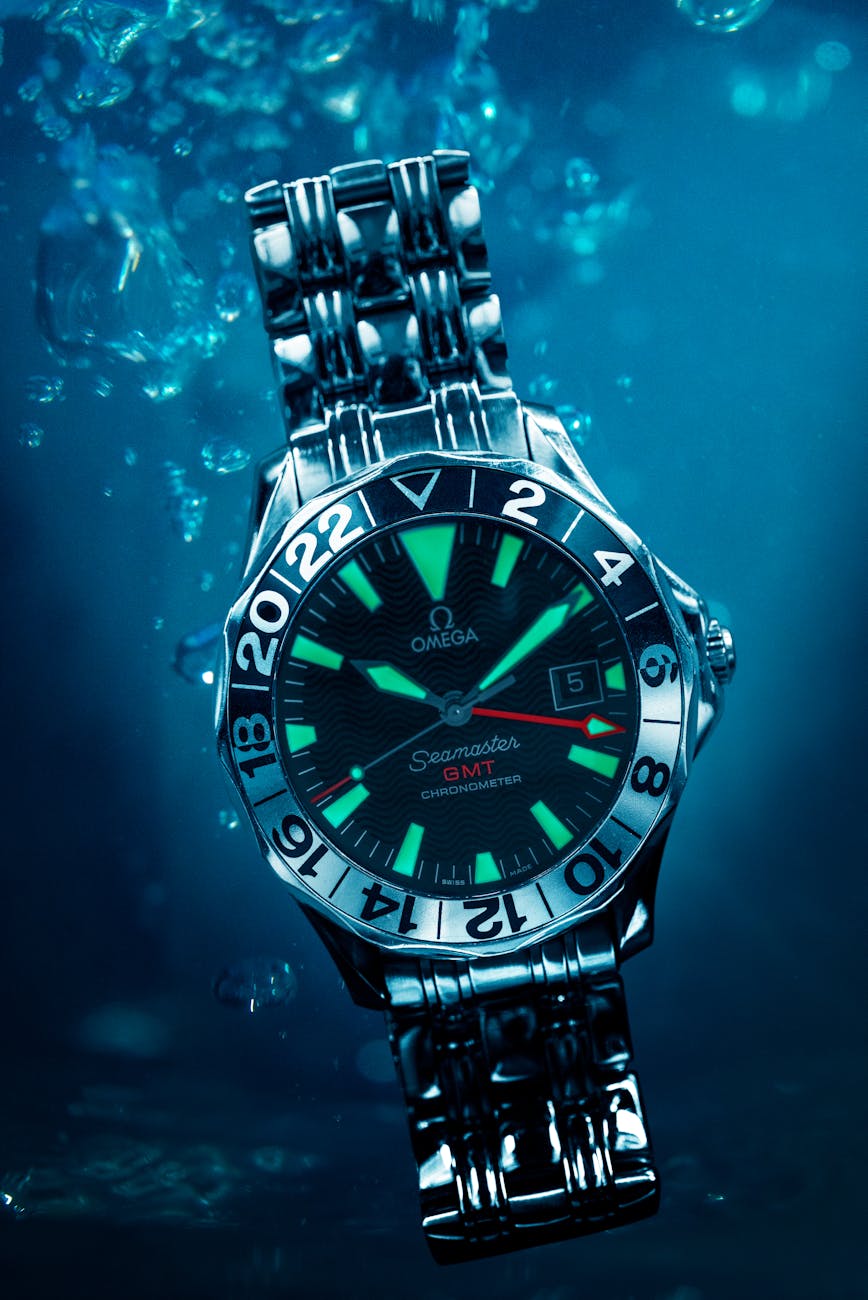
    Soon a strange dissatisfaction sets in. Wearing a watch in ordinary life begins to feel incomplete. The object has no audience. No lighting. No narrative context. A diver at the grocery store. A GMT at the dentist. A chronograph while buying paper towels.

    The stage is missing.

    And still, he plans.

    This is Broadcast Readiness Syndrome—the quiet, persistent conviction that one must remain camera-ready at all times, because a moment of sudden visibility might arrive without warning. Today a faculty meeting. Tomorrow: a viral clip. Tonight, obscurity. Tomorrow, perhaps, Colbert.

    He knows this is irrational. He reminds himself daily.

    You are not on television.
    No one is looking.
    Relax.

    The logic changes nothing.

    The watches are still chosen with an imaginary audience in mind. The cuff is still adjusted. The wrist is still rotated, ever so slightly, as if a camera might be hiding near the coffee machine.

    Then comes the dream.

    He is backstage. The suit is perfect. The lights are warm. The host smiles and gestures him toward the chair. The band plays a tasteful sting.

    He sits.

    The conversation begins.

    Halfway through the first answer, he glances down.

    His wrist is bare.

    No watch.

    This is the true nightmare of the watch obsessive—not public embarrassment, not a failed joke, not an awkward interview.

    Exposure without branding.

    And he wakes up, heart racing, already thinking about what he’ll wear tomorrow.

    Just in case.

  • Life Inside the Watch Relapse Cycle

    Life Inside the Watch Relapse Cycle

    For the watch obsessive, the most seductive experience is not the purchase.
    It’s the quiet and the possibility that his addiction is over.

    Every so often, something strange happens. The mind clears. The forums go unread. The YouTube algorithm loses its grip. The collection—miraculously—feels complete. No gaps. No missing category. No late-night searches for “best travel GMT under $5,000.”

    For a few fragile days, he wonders:

    Is this it?
    Am I… cured?
    Is this what normal people feel like?

    This state—call it Horological Remission—can be triggered by real life intruding. A demanding project at work. A family crisis. A trip to Maui where the ocean is more compelling than ceramic bezel technology. Or simple immersion in a good show—say, Fallout, where Walton Goggins and Kyle MacLachlan are busy navigating the apocalypse while, for once, the obsessive is not thinking about lug widths.

    During these rare intervals, he lives like a civilian. He checks the time without evaluating the watch. He moves through the day unaccompanied by reference numbers. He almost forgets that the phrase “micro-adjust clasp” exists.

    Hope appears.

    It never lasts.

    Because the obsession does not disappear. It waits.

    Somewhere in the unconscious lives the Octopus—patient, silent, its tentacles coiled around the deeper circuitry of attention. All it needs is a spark. A visual. A passing image. A drop of lighter fluid.

    Maybe it’s a scene in Homeland. A lean operative checks his watch. The obsessive leans forward.

    That looks like a Mudman.

    Now the cascade begins.

    Model number search.
    Variant comparison.
    Sapphire or mineral?
    Then: Full Metal series.
    Then: silver vs. black.
    Then: forum threads debating coating durability in “real-world tactical conditions,” most of which involve typing at a desk.

    This is Trigger Cascade—the rapid cognitive chain reaction in which a single exposure detonates into hours of research, comparison, and low-grade acquisition planning.

    Meanwhile, Homeland continues.

    The obsessive has no idea what’s happening.

    He cannot explain the plot, the characters, or the geopolitical stakes. But he now possesses a working knowledge of shock resistance standards across three generations of G-Shock metallurgy.

    This condition is known as Narrative Displacement Syndrome: the loss of engagement with the original activity as attention is hijacked by watch research, resulting in the peculiar outcome of knowing the reference number but not the story.

    At some point, awareness returns.

    He looks up from his phone. The episode is over. The room is quiet. Ten browser tabs glow like evidence.

    The Octopus has him again.

    In that moment, he experiences Relapse Lucidity—the painful clarity of recognizing the pattern while continuing to scroll.

    He may even feel cinematic about it. Like Charlton Heston on the beach at the end of Planet of the Apes, shaking his fist at the ruined monument of his attention span.

    You maniacs! You did it!

    Then another thought appears, calm and practical:

    If this is a relapse, should someone be filming me as I do my Charles Heston impersonation? And if that’s the case, should I be wearing the Black Bay… or the Planet Ocean?

    And just like that, the cycle resets.

  • The Psychology of Watch Regret

    The Psychology of Watch Regret

    Many watch obsessives suffer from a peculiar torment: they cannot live with a certain watch—and they cannot live without it.

    I know men who have bought, sold, and rebought the same Seiko Tuna a dozen times. Some have done the same dance with the MM300. The watch leaves. Relief follows. Then memory begins its quiet revision. The flaws soften. The virtues glow. Soon the search begins again.

    If you stay in this hobby long enough, you may find yourself performing the same ritual.

    First comes infatuation. The watch arrives. For a few weeks it feels inevitable, permanent, right. Then something shifts. It wears too large. Too heavy. Too shiny. Too common. The magic drains out. Now the watch feels like a mistake that must be corrected immediately.

    You list it on eBay. You price it aggressively. You take the loss. You feel lighter, cleaner, restored.

    Three months later you’re browsing photos of the very same model.

    This time it looks perfect.

    You buy it back at full price.

    The cycle repeats. Sell low. Buy high. Repeat until the watch has cost you the price of a small used car. Some collectors eventually place the piece in a safe—not for protection from thieves, but from themselves.

    There is a darker variation.

    You sell the watch. Regret arrives. You go looking for it again.

    But now it’s gone.

    No listings. No used examples. No inventory anywhere. The watch has slipped into the market’s shadow, and your memory transforms it into something mythic. You dream about it. You refresh search pages like a man checking hospital monitors. You wake up with the emotional intensity of a breakup and the soundtrack of the Chi-Lites playing somewhere in your head.

    Have you seen her?

    This condition has a name: The Acquisition Reversal Loop—the compulsive pattern in which a collector sells a watch to escape dissatisfaction, only to experience renewed desire and repurchase the same model, often at repeated financial loss.

    The loop is not about watches. It is about unstable desire.

    A healthy hobby is supposed to add pleasure and structure to your life. The Acquisition Reversal Loop does the opposite. It erodes judgment. Preferences become volatile. Decisions become emotional. The collector begins to resemble a child—grabbing, rejecting, reclaiming, and insisting that this time the object will finally make everything right.

    This is not enthusiasm. It is regression.

    At this point the watches are no longer possessions. They are orbiting objects in a private gravitational field of anxiety and impulse.

    And when a hobby turns into a system that repeatedly empties your wallet, disturbs your peace, and overrides your judgment, it is no longer a pastime.

    It is a small, well-lit prison.

    The question is no longer which watch to buy.

    The question is how—and whether—you intend to leave.

  • The High Isn’t the Watch–It’s the Rabbit Hole

    The High Isn’t the Watch–It’s the Rabbit Hole

    One of my favorite pastimes is watching YouTube comparison videos of the Toyota Camry vs. the Honda Accord. I’m not shopping for a car. I don’t need a car. I may never buy another car. 

    But these videos? They soothe the savage beast inside of me. They go down like a smooth bourbon, with notes of ABS braking and a smoky finish of fuel economy.

    While others go to YouTube to meditate or do yoga, I fall into the hypnotic cadence of two grown men comparing rear-seat legroom and infotainment systems with the solemnity of Cold War negotiators. 

    I’m riveted. Parsing the pros and cons of these two sedans gives me a focus so intense it borders on religious ecstasy. I study engine specs like they’re verses from Leviticus. My concentration sharpens, my anxiety fades. I am, for a brief and blissful moment, free.

    And then it hits me: I don’t want the car. I want the focus. The Camry and Accord are just placeholders in the temple of obsession.

    This revelation sheds light on my watch obsession. It helps me realize that acquiring a watch in most cases is a bitter letdown. A $3,000 watch on the wrist is like a Tinder date at Denny’s: out of place and super embarrassing. 

    I’ve worn $5,000 watches while taking my daughters to YogurtLand and I’ve said to myself, “Dude, you’ve lost the plot.”

    How did I get here with expensive watches that I wear when I’m buying pretzels and diet soda at Target?

    And then I realize. The same drive to focus on Camry-Accord comparisons is the same drive that makes me do “timepiece research.”  Watching my fellow timepiece obsessives drool over bezels and lume shots is the real high. That’s what lights me up. That’s what gets the adrenaline surging through my veins. 

    So as watch obsessives, we need to understand that, even more than watches, we are addicted to focus. We are afflicted with Focus Addiction–the true dependency hiding beneath consumer desire: the craving for intense, narrowing concentration that drowns out modern life’s chaos, even if it must be chemically replicated through YouTube reviews and lume shots.

    I’ve spent years confusing consumer acquisition with personal transformation. Getting this thing or that thing will change me inside. I want to be courageous, dignified, courteous, disciplined, fit, and healthy. A watch can’t redeem me. It can’t make me whole. It can’t make me the person I wish I were. Not once have I ever put a new watch on my wrist, gave my wife a wrist shot, and said, “Look, honey, I’ve achieved a metamorphosis.”

    She’ll just look at me and say, “Dude, clean the leaves out of the rain gutters.”

    The material thing in my hands is a letdown because what I really want is the chase and the intense focus. The glorious plunge down a rabbit hole lined with brushed stainless steel and leather-wrapped dashboards. My consumerism isn’t about consumption—it’s about cultivating a state of intense obsession that drowns out the shrieking absurdity of modern life.

    So no more mistaking adrenaline for fulfillment. No more clicking “Buy Now” hoping for transcendence in a shipping box. 

    I’ll keep researching. That’s my Prozac. That’s my monastery. 

    But buying something has proven to be a fool’s errand. And if doing so-called research inflames my consumer appetites, then I should probably put my foot on the brakes when it comes to the research because it can be a prelude to making a purchase I don’t want to make.

    Let me give you an analogy. Let’s say you’re back in high school and you’re at the high school dance, but your girlfriend isn’t there because she’s on a ski trip. While bored at the dance, your ex shows up. She looks more beautiful than you remember her. She approaches you and asks you to dance. “Nothing will happen,” she says. “It will be completely innocent.” You dance with her and something happens. 

    That’s what watch research is like. You tell yourself the research is innocent. You’re just reading forums. Watching a video or two. Maybe checking inventory. 

    But then you wake up and you’re shopping at Target with a $5,000 watch on your wrist and you feel both embarrassed and ashamed.

    Doing research on watches is like having that dance with your ex-girlfriend: Something is going to happen. And it’s not going to be pretty. 

    Have a wonderful day, everyone. Don’t forget to smash that Like button of your soul.

  • How Watch Collectors Lie to Themselves About “Finding Their Style”

    How Watch Collectors Lie to Themselves About “Finding Their Style”

    I recently made a YouTube video arguing that a man should not chase variety in his watch collection but instead find his signature style and whittle his hoard down to a tasteful few. Like a monk with only one robe. Or a chef with one good knife. Or a middle-aged guy who knows that buying yet another GMT won’t fix his marriage.

    Now, did I believe what I was saying? Not entirely. I was, to be honest, talking myself off the ledge. It was a kind of public self-hypnosis: say it enough times on camera, and maybe I’ll stop buying watches I never wear. But I’ll admit—the thought experiment was stimulating, like sniffing ammonia salts just to feel something. Most commenters agreed, saying peace of mind only arrived after purging the herd. But not all. Some insisted that a large, diverse collection brings them genuine joy. Fair. Not everyone needs to live like a horological monk.

    Still, I enjoyed making the video. It felt like intellectual calisthenics for the soul, even if it didn’t convert me.

    One viewer, the formidable “Captain Nolan,” asked a deceptively simple question that demands more than a quick reply:

    “How can you discover your identity without trying watches in every category—divers, pilots, field watches, dress, digital, mechanical, quartz, and so on?”

    By “identity,” he means your taste. What fits your lifestyle, your aesthetic, your internal brand. A fair question. And at first, I answered like a smug adolescent. I said, “You know what you like the same way I knew Raquel Welch was the apex of female beauty when I was nine. One glance. No need to watch Love American Style reruns or thumb through Vogue. Case closed.”

    But that answer is glib. And idiotic. Taste in watches—unlike adolescent lust—is not a hormonal thunderclap. It’s a process.

    So here’s the grown-up answer: yes, you do need to try different styles, just like trying on jackets at Nordstrom. Some are flattering, some make you look like a Bulgarian hitman. It’s tactile. Visceral. And wildly expensive. To really figure out your taste, you may end up spending $5,000 to $10,000 just to land in the right neighborhood. You might call this the Fitting Room Narrative—the idea that trying on a wide range of watches will help you find the “real you.”

    It sounds rational. Comforting, even. But I don’t believe in it.

    The problem is the human brain. It’s not a spreadsheet. It’s a haunted house full of desires, delusions, and marketing fumes. So let me propose a more honest theory: Fever Swamp Accretion–the uncontrolled phase of acquisition in which watches multiply faster than self-awareness. Purpose is retroactively assigned; sanity is postponed.

    Here’s how it works:

    You fall headfirst into the hobby. You start buying watches the way a toddler grabs Halloween candy. You buy microbrand divers, G-Shocks, Speedmasters, and maybe a Rolex or two if your credit limit allows it. You tell yourself each one serves a “purpose.” You start spending a grand a month, easy. Over ten years, you’ve spent more than most people do on therapy. And God knows you need therapy.

    Eventually, the collection metastasizes. Dozens of watches, each one representing a temporary high. You stop wearing half of them. You obsess over straps, bezels, lume. Your identity fuses with your hobby. You’re no longer a man who wears watches; you’re a man being worn by them.

    Then comes the collapse: financial strain, marital tension, the vacant stare of a man wondering why he owns three identical Seikos. Maybe you go through a breakup or foreclosure. Maybe your friends stage an intervention. Maybe your dog leaves you. Think about that. Your watch obsession got so bad your dog abandoned you. 

    You finally tap out. Sell the collection. Keep three. Or two. Or one. You tell yourself you’re “cured.”

    Except… maybe you’re not. Maybe, like Bell’s palsy or a bad ex, the obsession lies dormant. All it takes is one random trigger—a stressful day, a YouTube thumbnail, a flash sale—and you relapse. Buy a Sinn. Then a Squale. Then you’re back in the swamp.

    Why do we cling to the Fitting Room Narrative when it’s so obviously false? Because it has a tidy structure. A clean arc. Beginning, middle, resolution. We’re narrative junkies. We want our Luke Skywalkers to finish Jedi school and never regress. 

    Same with watch collectors. We want the Watch Ninja to overcome his demons and live a Zen life with a single Grand Seiko. If he relapses, we unsubscribe. He becomes a punchline. Another Liver King of horology.

    Still don’t believe me? Consider Pete Rose. In the ‘70s, he was “Charlie Hustle,” the human embodiment of work ethic. But zoom out, and the myth crumbles. Pete wasn’t disciplined—he was compulsive. He gambled, lied, betrayed friends. The man was a walking cautionary tale wrapped in a Cincinnati Reds jersey.

    Or take Sedona. Supposedly a spiritual vortex. In reality, a commercialized fever dream of overpriced crystals, green juice, and pseudo-mystical hokum. You arrive expecting transcendence and leave with a maxed-out credit card and lower back pain from a “chakra realignment.”

    We love myths because they sell. But real life is more complicated. Messier. Less flattering.

    So I could tell you a satisfying tale about finding my “true self” through curating a humble collection of retro divers and minimalist field watches. I could wrap it all up with a bow. But I won’t. Because that would be fiction.

    And honestly, haven’t we had enough of that?