
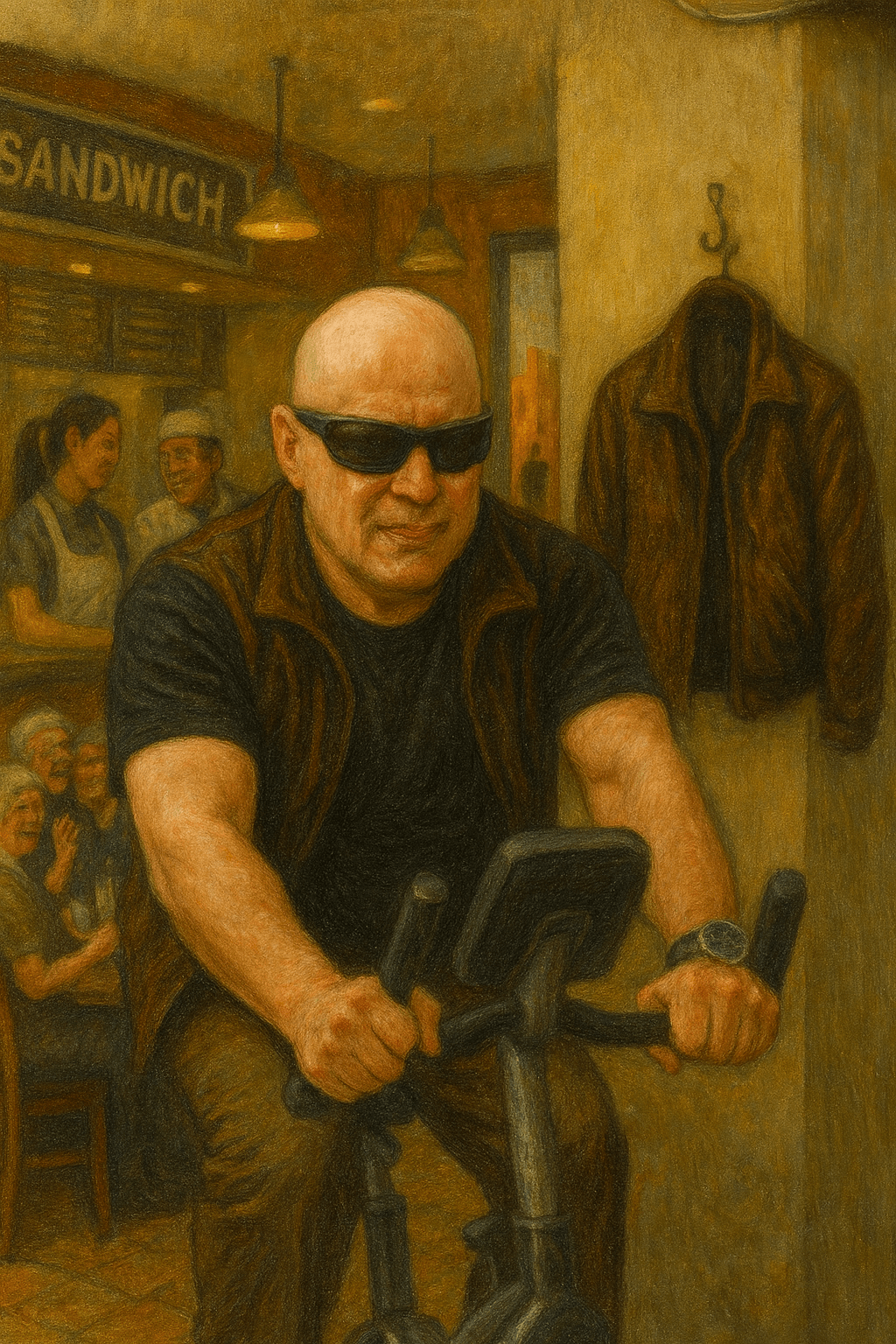
I was having dinner with my father—his post-divorce steak ritual on a patio that smelled faintly of smoke, charred meat, and newfound freedom. He’d bought a barbecue, a secondhand sofa, and the kind of wine that announces you’re single again but not destitute: red zinfandel in a tumbler. He cut into his steak with the swagger of a man who believed he’d successfully rerouted his son from the city dump to the university.
“So,” he said, spearing a chunk of meat, “what are you thinking about majoring in?”
My conversations with Master Po had me leaning toward philosophy and religion—the twin pillars of spiritual unemployment. “I think I’ll study philosophy or religion,” I said.
He froze mid-chew. “Why in the hell would you want to do a thing like that?”
“To study the search for meaning.”
He swallowed, wiped his mouth, and took a long gulp of zinfandel. “Don’t waste your time.”
“Meaning is a waste of time?”
He smiled the way only a man twice-divorced and freshly cynical can smile. “Let me tell you a story.”
He launched into a parable that sounded suspiciously homemade.
A young man goes to the beach and asks God to reveal the meaning of life. God, ever the trickster, tells him the secret is written on one of the thousands of rocks scattered across the shore. The young man groans—it could take forever. God shrugs: “That’s not my problem.”
So the man begins his search. Years pass. The tide rises and falls, civilizations collapse, and still he flips rocks like a man looking for lost keys in eternity’s junk drawer. When he’s old, leathery, and alone, he looks up at the sky and cries, “God, I’ve searched my whole life and found nothing! Every rock is blank. I’ve sacrificed joy, friendship, and everything good in the name of this search!”
God looks down and says, “That’s right, you dumb shit. Now die.”
When my father finished, he leaned back, self-satisfied, the smoke haloing his head like the ghost of a cigar.
“Where did you hear that story?” I asked.
He grinned. “I just made it up.”
“Just now?”
“Damn right. For your benefit.”
“My benefit? What’s the moral?”
“One, that God doesn’t give a shit. Two, that there is no meaning. And three, that you’d better not waste your college education searching for it.”
Later that night, lying in bed, I consulted my spiritual mentor, Master Po, the philosopher of the leaky-roof dojo.
“Master Po,” I said, “my father believes that searching for meaning is pointless.”
“Your father is right, Grasshopper,” he said serenely. “The Way defies all grasping. Meaning is the mirage on the horizon—pursue it, and you will die of thirst. Better to drink from the river as it passes through your hands than try to hold it. For the river flows on… to the sea.”
I thought about this while staring at the ceiling fan spinning in lazy circles. My father had God saying, “Now die.”
Master Po preferred rivers and metaphors.
Somewhere between them, I decided, was college.







 Cinemorphosis