Tag: christianity

  • The Artist and the Fundamentalist

    The Artist and the Fundamentalist

    In The War of Art, Stephen Pressfield argues that the artist flourishes only within a civilization wealthy and stable enough to afford “the luxury of self-examination.” Such a culture gives artists the freedom to create because it believes in human progress. It assumes that, however flawed humanity may be, those flaws can gradually be overcome. Art and humanism therefore become inseparable. The artist is sustained by the conviction that mankind is moving forward, and art is both evidence of that progress and one of its engines.

    I grew up dimly aware that my family and their friends subscribed to this liberal humanist vision. I found it comforting. I accepted its assumptions without much reflection because they made the world seem orderly and hopeful. Yet I cannot honestly say I embraced its ideals. My ambitions were narrower. The world’s problems belonged to someone else. My concern was building a pleasant kingdom for myself. Beyond the walls of that kingdom, humanity would simply have to fend for itself.

    Only later did I recognize what Pressfield sees as the shadow cast by humanism. Opposing it is not merely pessimism but fundamentalism.

    Fundamentalism begins with the conviction that human beings are too fallen, too corrupt, and too powerless to redeem themselves. Salvation cannot come through gradual human improvement; it must arrive through divine revelation or absolute doctrine. That revelation may come through Moses, Jesus, Muhammad, Karl Marx, or any other figure invested with unquestionable authority. If Pressfield were writing today, he might extend the list to include secular gurus whose followers seek not merely advice but complete personal transformation.

    Regardless of the prophet, the psychology remains the same. Fundamentalism grows from humiliation, alienation, and the longing for certainty, belonging, purpose, and power. The believer attaches himself to a leader whose doctrine promises nothing less than total metamorphosis. On this point, Pressfield’s analysis closely parallels that of Eric Hoffer in The True Believer, who argued that mass movements flourish among people desperate to escape the burdens of individual identity.

    History provides familiar examples. Pressfield notes that Hebrew fundamentalism intensified during the Babylonian captivity. White Christian fundamentalism expanded in the American South after Reconstruction. Germans embraced the mythology of the Master Race following the national humiliation of World War I. The particulars differ, but the emotional architecture remains remarkably consistent.

    At the heart of every fundamentalism lies a fear of freedom.

    Freedom sounds exhilarating until one remembers what it demands. To be free is to risk failure. It is to lose the comforting structures of tribe, clan, village, and inherited identity. As Pressfield writes, freedom often produces “the dislocation and emasculation experienced by the individual cut free from the familiar and comforting structures of the tribe and the clan, the village and the family.”

    The fundamentalist recoils from this uncertainty. He does not want the open horizon of modernity. He wants the closed gate of certainty. He retreats into an imagined golden age where moral boundaries are fixed, identities are unquestioned, and every problem has already been solved. As Pressfield puts it, he “gets back to basics. To fundamentals.”

    In this sense, modernism and humanism become close allies. Both assume that humanity can shape its future, define itself, and allow individuals to flourish according to their own talents and choices. Fundamentalism, by contrast, turns its face toward the past. Its paradise always lies behind it.

    This explains why Pressfield concludes that fundamentalism and art are fundamentally incompatible. “Fundamentalism and art are mutually exclusive. There is no such thing as fundamentalist art.”

    Art thrives on ambiguity, exploration, imagination, and discovery. Fundamentalism demands certainty, conformity, and obedience. The artist creates. The fundamentalist polices. Where the artist opens possibilities, the fundamentalist narrows them. His creative energies are redirected toward destruction—not necessarily of buildings alone, but of ideas, books, institutions, and people perceived as threats to the sacred order.

    No figure occupies the fundamentalist imagination more completely than Satan.

    His greatest creative act is the continual reinvention of evil itself. Satan may appear as rock music, fantasy novels, Hillary Clinton, Bill Gates, Oprah Winfrey, Hollywood, secret cabals, lizard people, transgender ideology, vaccines, or universal healthcare. The names change with the generation, but the psychological function remains constant. Evil must always have a face. The fundamentalist spends so much time imagining Satan that he develops an almost obsessive fascination with the very force he claims to despise.

    Pressfield’s concept of Resistance appears in both worlds, but it assumes opposite meanings.

    For the artist, Resistance is the inner force that tempts one toward laziness, distraction, and fear instead of disciplined creation. For the fundamentalist, Resistance becomes temptation toward sin. His response is not artistic labor but deeper immersion in sacred texts, ritual, and ideological action. His mission is not to create a better future but to restore a purified past in which everyone submits to the same moral code.

    Humanists may believe in God, but they see themselves as collaborators rather than passive subjects. They become, in Pressfield’s phrase, “co-creators,” working alongside the divine to improve the world while allowing individuals to flourish according to their unique gifts. The fundamentalist regards that very freedom as rebellion. Individual autonomy becomes apostasy.

    Humanism flourishes where societies enjoy prosperity, stability, and hope. Fundamentalism flourishes where humiliation, scarcity, and inequality convince people that freedom has failed them. Under those conditions, many become willing to exchange liberty for certainty, even if certainty demands submission to an oppressive vision of the past.

    For Pressfield, the struggle to produce art therefore becomes more than a personal discipline. It becomes a civilizational duty. Art enlarges human freedom. It nourishes the forces that move civilization forward while starving those that would drag it backward into fear and absolutism.

    Yet the deepest battle is never merely political. It is internal.

    Pressfield concludes with an observation that echoes across philosophy and theology alike: “The paradox seems to be, as Socrates demonstrated long ago, that the truly free individual is free only to the extent of his own self-mastery. While those who will not govern themselves are condemned to find masters to govern over them.”

    These final lines remind me of Paul. In Romans, Paul confesses that he cannot master himself. He longs to do what is right, yet repeatedly finds himself doing the very thing he hates. His will is divided. His moral resources are exhausted. Left to himself, he cannot overcome his own depravity and must therefore throw himself upon the mercy of Christ.

    At first glance, Paul’s confession resembles the psychology Pressfield attributes to the fundamentalist. Both begin with an acknowledgment of human brokenness and the inadequacy of individual willpower. But the resemblance may end there.

    Pressfield’s fundamentalist flees freedom because it terrifies him. Unable to bear uncertainty, he surrenders his judgment to an authoritarian doctrine that promises absolute certainty, rigid purity, and the restoration of a mythical golden age. His faith expresses itself through conformity, ideological warfare, and the relentless identification of enemies. He seeks salvation by submitting to external authority and demanding that others do the same.

    Paul’s theology points in another direction. His surrender is not to an ideology but to grace. Rather than claiming moral superiority, Paul begins by confessing his own moral bankruptcy. Rather than condemning outsiders, he first indicts himself. The transformation he seeks is not the recovery of a glorious past but the creation of a new heart. His dependence on God is meant to produce humility rather than triumphalism, compassion rather than self-righteousness, and freedom from sin rather than domination over other people.

    Yet the distinction remains difficult to untangle.

    Does Paul’s doctrine of grace ultimately liberate the individual, or does it still require the surrender of autonomy that Pressfield warns against? Can genuine freedom ever arise from admitting one’s inability to save oneself? Or does every appeal to divine authority contain the seeds of authoritarianism? Is Pressfield correct that self-mastery is the highest form of freedom, or is Paul correct that true freedom begins only when we acknowledge the limits of self-mastery and accept grace?

    These questions haunt me during both my waking and sleeping hours. I have not resolved them. I suspect I may never fully resolve them. But the struggle itself—the struggle to understand freedom, discipline, grace, and human flourishing—has become one of the defining pursuits of my life.

  • The Unlived Life

    The Unlived Life

    In The War of Art, Steven Pressfield compresses an entire philosophy of life into a sentence worthy of Blaise Pascal: “Most of us have two lives. The life we live, and the unlived life within us. Between the two stands Resistance.” On its surface, the book is about writing—showing up every day, overcoming procrastination, and producing meaningful work. In reality, it is about something much larger. It is about the tragedy of the human condition. Every person carries within himself an unrealized version of who he might have become, yet too often that person dies unborn. Resistance is the invisible executioner. It persuades us that tomorrow is a better day to begin, that comfort is wiser than sacrifice, that another hour of distraction is harmless, and that our highest calling can safely wait until after one more episode, one more dessert, one more purchase, one more excuse. By the time we recognize the fraud, life has become a museum of abandoned intentions. We discover, to our horror, that our greatest betrayal was not committed against other people but against ourselves.

    Pressfield has no patience for sentimental psychology. He describes Resistance as “the most toxic force on the planet,” adding with characteristic mischief that it causes more misery than poverty, disease, and erectile dysfunction. Hyperbole, yes—but purposeful hyperbole. He wants to jolt the reader into recognizing that Resistance is not ordinary laziness. It is a corrosive force that slowly deforms the soul. It shrinks ambition into routine, courage into rationalization, and discipline into negotiation. Left unchecked, it transforms gifted people into spectators of their own lives. They spend decades curating plans they never execute, polishing dreams they never inhabit, and congratulating themselves for intentions that never survive contact with reality.

    What makes Pressfield so compelling is that he refuses both fashionable nihilism and fashionable indulgence. He rejects the existential shrug that declares life meaningless and equally rejects the consumerist gospel that happiness consists of maximizing pleasure. His ethic is austere. Work matters. Discipline matters. Routine matters. Character matters. Most of all, contribution matters. Your life is not private property to be squandered in self-absorption. It belongs, at least in part, to your family, your friends, your community, and the civilization that shaped you. The image that repeatedly comes to my mind is not one from Pressfield but from Superman. Before Kal-El leaves Krypton, his father, Jor-El, entrusts him with a mission: become a light to a world wandering in darkness. Pressfield issues a similar summons. Your vocation is not self-expression. It is illumination.

    This is why The War of Art feels less like a productivity manual than a spiritual manifesto. Pressfield believes we inhabit a battlefield. He calls the enemy Resistance. He calls our higher nature “genius,” borrowing the ancient Roman idea of an inner guiding spirit that is “holy and inviolable.” Whatever name one gives it, the struggle is unmistakable. There is a force drawing us upward toward courage, creativity, and service, and another dragging us downward toward vanity, distraction, and decay. Resistance rarely announces itself dramatically. It works with exquisite subtlety. It whispers rather than shouts. It convinces us that procrastination is prudence, that entertainment is recovery, and that comfort is wisdom. By the time we recognize the deception, entropy has already advanced. We find ourselves wandering in the woods, uncertain how we lost the path home.

    It is here that Pressfield’s vision begins to overlap strikingly with Christianity. His ideas emerge from a broad stream of Western thought that includes Christianity, Plato, the Stoicism, Romantic notions of genius, Jungian psychology, and the mythic Hero’s Journey. Like Christianity, he believes human beings possess a higher vocation continually frustrated by an internal adversary. Like Christianity, he portrays life as a form of spiritual warfare in which unseen forces contend for the human soul. Like Christianity, he rejects radical individualism, insisting that our gifts exist not merely for self-fulfillment but for service.

    Yet Pressfield ultimately parts company with Christian theology in significant ways. Christianity locates humanity’s highest calling in communion with God, and its deepest tragedy in alienation from Him. Transformation comes through grace as well as discipline. Pressfield, by contrast, places his faith in professionalism, habit, and relentless labor. His highest authority is not God but genius—the inner creative spirit that summons each person toward his vocation. Accordingly, his greatest catastrophe is not separation from God but dying with one’s best work still trapped inside. His universe is fundamentally vocational; Christianity’s is fundamentally theocentric.

    That distinction leaves me with a question I cannot confidently answer. Can the devout Christian and the devoted disciple of Pressfield ultimately arrive at the same destination? Can both escape the wide road of self-indulgence and find the narrow road that leads to genuine human flourishing? I honestly do not know.

    I often think of religions and philosophies as insurance companies. Thousands of offices line the boulevard, each promising protection against humanity’s oldest anxieties. Every one claims to offer security for the soul. Every one publishes its own policy, exclusions, deductibles, and fine print. Christianity itself contains competing agencies. Universalists, Catholics, Calvinists, Orthodox Christians, and countless Protestant traditions disagree about the terms of coverage while affirming they represent the same Provider. In Mere Christianity, C. S. Lewis argues that there is, ultimately, one true household of faith beneath those denominational rooms. I continue to wrestle with whether reality resembles Lewis’s vision of one enduring house or whether human beings, in good faith, may arrive at the same destination by different roads. It is one of the questions that has haunted me for decades, and I suspect it will continue to do so long after I have finished reading Steven Pressfield.

  • Your Appetite Has a Billion-Dollar Opponent

    Your Appetite Has a Billion-Dollar Opponent

    You have argued that carrying thirty extra pounds is more than a physical condition. It is the outward symptom of a deeper spiritual disorder you have called Comfort Entrenchment—the gradual surrender of discipline as convenience, abundance, and self-indulgence become so routine that sacrifice begins to feel unnatural. There is truth in that diagnosis, but perhaps you have been a bit too eager to appoint yourself both defendant and judge. Before you sentence yourself to moral failure, remember something you taught your own critical thinking students last semester. Together you examined essays by people who devoted years to losing weight and keeping it off. They were not gluttonous caricatures or spiritually bankrupt weaklings. They were conscientious, intelligent, hardworking people who counted calories, exercised faithfully, and still watched the scale drift stubbornly upward. Their stories complicate the comforting fantasy that every overweight person simply lacks willpower.

    The missing piece is that your struggle does not occur in a vacuum. You are fighting inside an economic system that earns staggering profits by encouraging people to overconsume. The modern food industry has elevated temptation into an applied science. Teams of chemists, food scientists, marketers, and behavioral psychologists labor over formulas that maximize sweetness, saltiness, richness, aroma, and mouthfeel with the precision of engineers tuning a Formula One engine. The goal is not merely to satisfy hunger but to persuade you that one bite deserves another, and another after that. The supermarket is not simply a place where food is sold; it is a battlefield where billions of dollars have been invested in making your restraint less likely to succeed.

    That reality does not absolve you of responsibility, but it does redefine the contest. Your weight is shaped by both an internal struggle and an external one. Internally, you wrestle with Comfort Entrenchment—the habits, rationalizations, and appetites you have cultivated over decades. Externally, you confront an industry that has become astonishingly adept at exploiting precisely those vulnerabilities. Success therefore requires an immense cognitive burden. Every shopping trip, restaurant menu, convenience store, office celebration, and late-night craving demands another conscious decision. It is little wonder that so many intelligent and disciplined people eventually surrender. They are not merely battling themselves; they are competing against an industry that never sleeps and whose annual budget dwarfs their resolve.

    None of this should become an alibi. The last thing you need is a sophisticated excuse for another slice of carrot cake. But neither should you indulge the opposite illusion—that the contest is simple and every failure proves moral bankruptcy. Wisdom lies somewhere between self-exoneration and self-condemnation. Recognize Comfort Entrenchment for the enemy it is, but recognize your other adversary as well: a food culture meticulously designed to keep you consuming. Only by understanding both fronts of the war can you devise effective countermeasures. The first step toward victory is not pretending the battlefield is fair. It is seeing the battlefield clearly.

  • Comfort Entrenchment

    Comfort Entrenchment

    You did not wake up one morning thirty pounds overweight the way you might wake up with the flu. Excess weight is not an event; it is the visible symptom of a long psychological and spiritual decline. For years you cultivated self-indulgence as though it were a birthright, choosing comfort over discipline so consistently that the choices accumulated into a second nature. The result is damage that extends beyond the body. Your appetites have colonized your habits, weakened your resolve, and dulled your capacity to endure hardship. You must therefore confront an uncomfortable truth: you suffer from Comfort Entrenchment—the gradual process by which repeated indulgence in convenience, pleasure, and ease becomes so normalized that discomfort feels intolerable and self-discipline appears unnatural. Over time, luxuries masquerade as necessities, and every sacrifice feels like an injustice.

    If there is consolation, it is that Comfort Entrenchment is hardly your private affliction. It has become one of the defining maladies of modern civilization. Even people of admirable character struggle against it. Consider the journalist Elizabeth Bruenig, a self-described Christian, who remarked during Mike Pesca’s final episode of Not Even Mad that she fears for her soul because each day she falls painfully short of Christ’s command to feed the poor and relinquish worldly comfort. She described herself as “an indoor housecat,” a metaphor of remarkable precision. The indoor housecat is well fed, safe, comfortable, and utterly unequipped for the rigors of the wild. It has traded resilience for security. Comfort Entrenchment performs the same quiet exchange upon us.

    It is no accident, then, that our culture has rediscovered Stoicism with such enthusiasm. Bookstores overflow with translations of Marcus Aurelius and Seneca. YouTube channels, podcasts, and newsletters preach voluntary discomfort, discipline, and resilience to audiences hungry for something they can scarcely name. Beneath the fascination with Stoicism lies a widespread intuition that modern life has made us too comfortable for our own good. We sense that our conveniences have become our captors, that the comforts designed to serve us have quietly assumed command. The popularity of Stoicism is therefore not merely an intellectual trend. It is a collective attempt to recover the toughness that Comfort Entrenchment has steadily eroded.

    The good news is that you have correctly diagnosed the disease. Most people never do. The bad news is that diagnosis alone changes nothing. There is no book, podcast, supplement, or inspirational slogan capable of delivering you from this condition. The cure is older and harsher than modern self-help literature cares to admit. You will have to surrender comforts you have mistaken for necessities. You will have to embrace hunger, fatigue, inconvenience, and delayed gratification rather than flee from them. You will have to pass through the fire instead of walking around it. There is no shortcut because the very habits that imprisoned you must be dismantled one sacrifice at a time. Only then will Comfort Entrenchment begin to loosen its grip, allowing you to recover not merely a healthier body but a stronger mind and a more integrated soul.

  • My Friend Leo and the Mystery of the Good Life

    My Friend Leo and the Mystery of the Good Life

    One of my deepest regrets is that I spent too much of my youth believing my life belonged entirely to me. My guiding assumption was simple: no one would tell me how to live. My purpose was to maximize my own pleasure, satisfy my own desires, and remain largely indifferent to everyone else’s concerns. It was the moral logic of consumer culture: pursue your happiness, avoid breaking the law, pay your bills, and you’ve fulfilled your obligations.

    I eventually discovered that this philosophy is far less harmless than it appears.

    A life organized around self-indulgence inevitably spills over onto other people. It makes us impatient with inconvenience, dismissive of others’ needs, and blind to the quiet opportunities for generosity that present themselves every day. We become the center of our own private universe, with everyone else relegated to supporting characters. The damage is often subtle rather than spectacular, but it is damage nonetheless. A narcissistic life does not merely impoverish the self; it leaves everyone around it slightly diminished as well.

    Selfishness is easy because it is our default setting. Left to our own devices, we naturally drift toward comfort, appetite, vanity, and self-justification. That is one reason I find myself drawn to the moral traditions of Judaism and Christianity. Both insist upon a profoundly counterintuitive claim: your life is not your possession. It is a gift entrusted to you for the benefit of others. Meaning is discovered not by gratifying every impulse but by cultivating goodness, practicing service, and accepting the humbling truth that fulfillment arrives only after the ego relinquishes its throne. Paradoxically, by surrendering yourself, you find yourself. By enthroning yourself, you begin the slow process I have elsewhere called Gollumification—the gradual shrinking of the soul under the weight of its own appetites.

    Yet I cannot persuade myself that religion is the only path to such a life.

    Over the years I have known people whose moral seriousness seems almost entirely independent of religious belief. One of my students, originally from Hungary, was raised by atheist parents. Nevertheless, they instilled in their daughter a remarkable sense of integrity, discipline, humility, and social responsibility. She carries herself with a maturity that cannot be reduced either to religious doctrine or to secular ideology. Her character suggests that moral formation can emerge from devoted parents who treat virtue not as theology but as a way of life.

    Then there is my friend Leo, whom I have known for twenty-five years. To my knowledge, he is not religious, yet he embodies many of the virtues that religious traditions hold up as ideals. He loves his wife deeply. He delights in his three children. He never misses one of their games or school events, not out of obligation but because he genuinely wants to be there. He works tirelessly, not to accumulate status or luxury, but to give his family security and opportunity. He does not complain. He does not seem enslaved by addiction or restless consumption. He possesses an enthusiasm for ordinary life that feels almost inexhaustible.

    What impresses me most is that Leo never performs his goodness. He does not advertise his virtues, lecture others about morality, or congratulate himself for living well. His life is his argument. Watching him, I often have the impression that decency is simply woven into the fabric of his character. He seems to have found the narrow road almost instinctively, without theology serving as his guide. That reality leaves me genuinely puzzled. If the narrow road can be discovered apart from religion, then the relationship between faith and virtue is more mysterious than I once believed. Leo remains one of the strongest arguments against any simplistic claim that morality depends entirely upon religious belief.

    I am not built the way Leo appears to be. My own temperament is far more susceptible to vanity, distraction, and what I call Gollumification. Left unexamined, I drift toward self-absorption with alarming ease. That is why spiritual questions continue to exert such power over me. They are not abstract philosophical puzzles but practical necessities. I need habits, disciplines, and ideas that continually pull me away from myself. Perhaps if my instincts naturally inclined toward generosity, as Leo’s seem to, religion would occupy far less space in my imagination. But because I know the creature I am capable of becoming, I cannot stop asking whether there exists a truer way to live than the one my default setting so eagerly proposes.

  • Against the Inner Gollum

    Against the Inner Gollum

    One of the defining songs of my adolescence was Earth, Wind & Fire’s “Devotion.” Like Marvin Gaye’s “What’s Going On,” it is suffused with the exuberance and spiritual energy of Black Gospel. Listening to these songs hints at the transcendence many people seek in church: the paradox of finding yourself by losing yourself in a purpose greater than your own appetites. This is devotion in its richest sense—not self-expression but self-transcendence.

    That vision stands in stark contrast to the modern creed of radical individualism, which teaches that personal desire is its own moral authority. Under this doctrine, adulthood becomes an endless extension of adolescence, each new appetite demanding satisfaction, each boundary inviting transgression. We congratulate ourselves for “being authentic” while quietly cultivating our inner Gollum—small, ravenous, and consumed by the fantasy that the next indulgence will finally bring contentment. Instead, the result is often loneliness, nihilism, and despair.

    How we resist that inner Gollum, and what it means to devote ourselves to something larger than ourselves, lies at the heart of the human condition. Religion has traditionally answered those questions by directing us toward a pure heart, integrity, reverence, gratitude, and love—love of our Creator, for those who believe, and love of our fellow human beings. Whether one accepts its theological claims or not, religion insists that character is formed not by indulging every desire but by disciplining desire in service of a higher good. The promise that feeding our inner Gollum will make us happy has always been one of civilization’s most seductive—and most enduring—lies.

    The more difficult question concerns the source of that higher good. Does authentic devotion require submission to an orthodox religious tradition, or can spirituality detached from doctrine cultivate the same moral depth? Are we mistaking recreational spirituality for genuine devotion? Is morality grounded in divine command, or does it emerge through human evolution and social cooperation—what atheist philosopher Elizabeth Anderson calls “reciprocal claim making,” the process by which societies negotiate mutual obligations and gradually construct moral authority?

    No figure looms larger over that debate than Jesus. Whatever one’s theological commitments, his rhetorical originality and moral imagination have made him one of history’s most enduring voices on the nature of goodness. Nearly two thousand years later, we remain captivated by his life, teachings, and identity. That continuing fascination lies at the center of Adam Gopnik’s essay “We’re Still Not Done With Jesus,” which examines one of the great questions of biblical scholarship: Are the Gospels fundamentally historical memories of an extraordinary teacher, or are they literary creations shaped by the conventions and mythic imagination of the Greco-Roman world?

    Adam Gopnik observes that the Gospels are not books written by someone so much as stories told to someone. In discussing Elaine Pagels’ Miracles and Wonder, he places her within the tradition of historical Jesus scholarship, which treats the Gospels not as straightforward biographies but as “palimpsests of lore, legend, and propaganda.” I encountered a similar sensibility in Emmanuel Carrère’s genre-defying The Kingdom, where history, memory, faith, and literary imagination continually overlap. From this perspective, narratives such as the Virgin Birth are understood less as eyewitness reports than as adaptations of familiar Greek and Hellenistic literary motifs.

    Gopnik extends this argument to the Passion and Resurrection. He notes that visions of the risen Jesus resemble what psychologists today might describe as bereavement experiences. The disciples believed they had encountered their crucified teacher after his death, while Paul, who never met Jesus during his lifetime, grounded his apostleship in explicitly visionary encounters. For Gopnik, these experiences need not be dismissed as fraudulent; rather, they belong to recognizable patterns of religious experience that recur throughout history.

    Nor, Gopnik argues, were the Gospel writers simple village storytellers faithfully recording local memories. Drawing on Robyn Faith Walsh’s The Origins of Early Christian Literature, he portrays them as educated authors who belonged to “a small, erudite upper crust.” Their writings reveal literary sophistication, weaving together a rich latticework of Greek rhetorical forms, biblical allusions, and inherited traditions. As Gopnik memorably puts it, “Their writings bear all the marks of that sharp-elbowed circle and none of the gentle gatherings of group memory.”

    Within this literary world, Jesus emerges alongside familiar Hellenistic figures—magi, sages, miracle workers, and wise tricksters. Walsh observes that many of these protagonists defeat their opponents through clever repartee, aphorisms, and parables. Gopnik is not arguing that Jesus is simply another fictional hero. Rather, he suggests that the evangelists employed literary conventions already familiar to their audiences in order to elevate Jesus into a figure of universal significance.

    To illustrate the point, Gopnik offers an unexpected comparison. Spike Lee’s Malcolm X, he argues, mythologizes Malcolm in much the same way that the Gospel of Mark mythologizes Jesus. Both works transform historical figures into larger-than-life moral symbols by drawing upon established literary traditions. Mythmaking, in this sense, is not necessarily deception; it is one of humanity’s oldest methods of expressing truth.

    Neither Gopnik nor Pagels reduces Christianity to a cynical fabrication dressed in Greek clothing. On the contrary, both regard it as one of civilization’s greatest imaginative syntheses. Christianity fused Jewish expectation, Greek literary culture, Roman history, and profound moral insight into a vision that continues to resist simple explanation.

    At the heart of that synthesis lies a startling reversal of ordinary assumptions about power. Paul declares, “When I am weak, then I am strong.” The Christian ideal does not glorify domination but humility, sacrifice, service, and love. To embrace weakness voluntarily, to endure insults and suffering while loving one’s enemies, represented, as Gopnik observes, “a way of thinking about power and suffering with little precedent in the ancient world.”

    That inversion has always appeared absurd. Indeed, its apparent absurdity became one of Christianity’s greatest philosophical attractions. Søren Kierkegaard famously argued that faith requires a leap beyond the limits of reason. Gopnik, however, remains skeptical of this move, joking that Kierkegaard’s understanding of faith comes perilously close to George Costanza’s comic principle that something cannot really be true unless it seems impossible to believe.

    Where Gopnik expresses his deepest reservations is over the doctrine of substitutionary atonement—the claim that God’s justice required the sacrificial death of Christ before humanity could be reconciled to Him. He recalls literary critic William Empson’s horror at “a cosmos ruled by an irrational deity whose rage toward humanity can be placated only by his son’s torture and death.” In contemporary Christianity, Gopnik observes, many believers quietly emphasize Jesus’ teachings on compassion, forgiveness, and service while giving comparatively little attention to doctrines such as eternal damnation or substitutionary atonement.

    More literal forms of Christianity, Gopnik suggests, often arise from a longing for certainty in a world defined by ambiguity and historical change. Humanism offers no final authority; it evolves, stumbles, corrects itself, and remains vulnerable to human weakness. Religion promises something different: an authoritative moral order anchored beyond history. Yet, Gopnik argues, every human authority eventually disappoints, producing an endless cycle of certainty, doubt, reform, and renewed certainty.

    Even so, he concludes that Christianity cannot simply be dismissed. The human hunger for love, moral purpose, and certainty has ensured its enduring power. Those who reject its theological claims would do well to understand why millions continue to find within it a compelling account of what it means to be human.

    Perhaps those who cannot embrace Christianity will seek devotion elsewhere—in another religious tradition, in Viktor Frankl’s search for meaning, or in Steven Pressfield’s conviction that disciplined artistic creation is itself an act of service to humanity.

    Whatever path one chooses, one conclusion seems difficult to escape.

    Living for your inner Gollum is not enough.

    Human beings require devotion to something greater than themselves.

  • The Wrinkled Prune

    The Wrinkled Prune

    In 1989, I became infatuated with a Pennsylvania band called The Ocean Blue, especially their haunting song “Drifting, Falling.” Naturally, I needed the CD. For reasons that now escape me, I decided to buy it at one of the strangest retail establishments I have ever entered: a Northern California gift shop called The Wrinkled Prune.

    How do I describe The Wrinkled Prune?

    It would be easier to describe what it didn’t sell.

    The store trafficked in novelty candies, decorative soaps, greeting cards, party supplies, imported chocolates, whimsical knickknacks, coffee mugs with forgettable slogans, scented candles, stuffed animals, and dozens of miscellaneous objects whose sole purpose seemed to be occupying shelf space until someone bought them out of mild confusion.

    But merchandise wasn’t the real mystery.

    The real mystery was this:

    Why did The Wrinkled Prune exist?

    And why on earth would anyone give a store that name?

    The answer begins with the owner.

    I attended high school with him. I’ll call him T. He drifted around the popular crowd, but never as one of its genuine members. He functioned more like its court jester—the lovable mascot whose chief social responsibility was to laugh at himself before everyone else could. Slightly overweight and perpetually goofy, T possessed a remarkable gift for turning his own awkwardness into entertainment. Whenever something struck him as funny—which was often—he erupted into volcanic laughter. His entire body convulsed. His fists clenched. He bounced on the balls of his feet while his thick black hair flopped wildly in every direction like a malfunctioning wind-up toy.

    Most people recoil from ridicule.

    T converted it into currency.

    After graduation, however, he seemed directionless. His father, a successful businessman, apparently decided that if purpose wouldn’t find his son, perhaps purpose could be purchased. So he bought T a gift shop.

    One afternoon I wandered inside. T stood behind the counter surrounded by several employees—all attractive young women in their late teens. I couldn’t help imagining the father’s reasoning. Maybe ownership would transform his son into a businessman. Maybe responsibility would attract confidence. Maybe confidence would attract a girlfriend. Parents have financed stranger dreams.

    In retrospect, The Wrinkled Prune felt like high school extended by other means.

    The name itself was a form of self-parody. A prune occupies an unfortunate place in the cultural imagination. It conjures wrinkles, old age, constipation, nursing homes, and the slow betrayal of the human body. Throughout adolescence T had made himself the punchline. Why stop now? Why not build an entire business around the joke?

    Unfortunately, self-awareness is not a business model.

    The Wrinkled Prune hemorrhaged money. Within a year it vanished, leaving behind little more than an unforgettable name and my copy of The Ocean Blue. I don’t know what became of T. He always struck me as fundamentally decent—a man less interested in success than in being liked. I hope life eventually showed him more kindness than high school had.

    But I have never forgotten that store.

    In fact, I think nearly all of us carry around some version of The Wrinkled Prune.

    What I’m describing is the vanity project: an enterprise undertaken less because the world needs it than because its creator needs the world to notice it. It is a monument to the self disguised as a public service. In the pre-digital age, vanity projects usually belonged to the wealthy. A millionaire financed an independent film no one watched, published an autobiography no one requested, endowed a museum wing bearing his name, or commissioned an oversized oil portrait in which he appeared to possess the moral gravity of Abraham Lincoln. Vanity required substantial capital.

    Today, vanity has been democratized. For the price of a webcam, microphone, and broadband connection, anyone can launch a podcast, livestream for six hours to an audience of twelve, or begin every video with the solemn declaration, “People have been asking me…” when no such people exist. The internet has transformed vanity from a luxury reserved for aristocrats into a subscription service available to anyone with Wi-Fi. Fortunately, not every podcast, YouTube channel, or livestream is a vanity project. Some genuinely educate, entertain, or enrich public life. The defining question is not whether anyone is watching, but whether the creator would continue producing the work if no one were.

    The desire beneath all this is perfectly human. We want to matter. We want to belong. We want to participate in the conversation instead of watching it through the window. But the digital age has turned belonging into branding. We are encouraged to cultivate audiences instead of friendships, niches instead of curiosities, and identities narrow enough for algorithms to categorize. We are constantly reminded to “find our lane,” as though a human being should resemble a freeway exit.

    I am hardly exempt.

    For fifteen years I maintained a YouTube channel devoted primarily to watches. On its best days, it attracted thousands of viewers. Yet over time I noticed an uncomfortable truth: every new video fueled the very obsession I claimed to be examining. At sixty-four, I have reached the stage of life where accumulation should be giving way to simplification. Instead, the algorithm quietly whispered, “Buy another watch. Make another video.”

    Occasionally I wandered away from watches and made videos about other subjects that interested me.

    The algorithm responded with majestic indifference.

    Business was slow.

    No one wandered into The Wrinkled Prune.

    That lesson was difficult but valuable. Unless you possess genuine expertise or offer something distinctive, a channel devoted to miscellaneous fascinations resembles a gift shop selling decorative soaps, imported candy, birthday balloons, and novelty coffee mugs under one bewildering roof. You are not building an audience. You are stocking shelves. Your vanity insists that the world needs one more opinion. The world politely walks past your front window.

    Eventually, The Wrinkled Prune closes.

    Does this mean we should silence ourselves? Stop writing? Abandon every attempt to contribute?

    Not at all.

    Life unfolds in seasons. There are years when your voice resonates widely and years when almost no one hears it. Neither condition should define your worth. During quieter seasons, remain curious. Read deeply. Listen carefully. Accumulate wisdom rather than followers. If, in time, you discover something genuinely worth saying that improves another person’s life, speak. If not, there is dignity in remaining silent.

    Just don’t open The Wrinkled Prune.

  • Why Communities Prefer Scapegoats to Self-Examination (college essay prompt)

    Why Communities Prefer Scapegoats to Self-Examination (college essay prompt)

    Sources

    Use Weapons, Shirley Jackson’s “The Lottery,” and at least two outside sources.

    Length

    1,200 words minimum

    Assignment

    Both Weapons and Shirley Jackson’s “The Lottery” depict communities confronted by fear, uncertainty, and social dysfunction. In both works, people search for explanations when confronted with suffering. Yet rather than critically examine themselves, their values, or the systems they inhabit, they often seek simpler solutions: preserving familiar assumptions, defending established customs, and identifying convenient targets for blame.

    As a result, innocent individuals become scapegoats while deeper problems remain unresolved.

    At the center of both works are characters who appear to reinforce the beliefs and behaviors of their communities. Old Man Warner in “The Lottery” fiercely defends tradition, while Aunt Gladys in Weapons exercises influence through manipulation, vanity, and control. However, neither character acts alone. Their power depends upon a community willing to accept their assumptions and participate in harmful social rituals.

    In a well-developed essay, analyze how Weapons and “The Lottery” explore the relationship between conformity, scapegoating, and self-deception. Consider whether both works suggest that communities often prefer familiar lies to uncomfortable truths. Ultimately, evaluate what these works reveal about the human tendency to preserve harmful systems rather than confront the deeper causes of social problems.

    Questions for Consideration

    You do not need to answer every question, but they may help guide your analysis:

    • Why do communities often seek scapegoats during periods of fear or uncertainty?
    • What psychological comfort do traditions and social rituals provide?
    • When does tradition become an obstacle to justice or truth?
    • How do ordinary people become complicit in harmful systems?
    • What roles do Old Man Warner and Aunt Gladys play in sustaining the beliefs of their communities?
    • How do fear, tribal loyalty, and groupthink influence decision-making?
    • What do both works suggest about the dangers of refusing self-examination?
    • Why are innocent people often sacrificed to preserve social stability?

    Counterargument Requirement

    Some readers might argue that traditions, social norms, and communal rituals are necessary because they provide stability, identity, and social cohesion. Without shared customs, communities can become fragmented and directionless.

    Address this argument.

    Then evaluate how Weapons and “The Lottery” distinguish between traditions that strengthen communities and traditions that perpetuate injustice, cruelty, or self-deception.

    Sample Thesis Statements

    Thesis 1
    Although Weapons and “The Lottery” take place in very different settings, both argue that communities often protect familiar beliefs and social rituals even when those practices produce injustice and suffering.

    Thesis 2
    Both works suggest that scapegoating is attractive because it allows communities to avoid confronting deeper problems within themselves.

    Thesis 3
    Through their portrayals of conformity, fear, and collective self-deception, Weapons and “The Lottery” reveal that the greatest threat to a community is often its unwillingness to examine its own assumptions.

    Thesis 4
    Old Man Warner and Aunt Gladys are influential not because they possess 

    Why Weapons and “The Lottery” Work So Well

    Both works are fundamentally about:

    • Collective guilt
    • Scapegoating
    • Social conformity
    • Moral cowardice
    • Communities protecting themselves from self-examination
    • The weaponization of consensus

    In both stories, the community desperately wants an explanation for its suffering.

    The explanation must:

    • Be simple.
    • Be emotionally satisfying.
    • Preserve the group’s self-image.

    The real enemy is not a monster.

    The real enemy is a community’s refusal to confront itself.

    That is exactly why Old Man Warner and Aunt Gladys feel comparable. Both are defenders of a diseased social order. They differ in personality, but they perform similar functions.

    What Makes the Comparison Rich

    One of the most interesting comparisons is that both works ask:

    What happens when a community becomes more invested in maintaining a narrative than discovering the truth?

    That question can sustain an entire essay.

    In fact, I think the strongest thesis isn’t about tradition.

    It’s about narrative preservation.

    Both communities preserve comforting narratives even when those narratives require innocent people to suffer.

  • Give Us This Day Our Daily Bread (a short story)

    Give Us This Day Our Daily Bread (a short story)

    When I was five years old and living at the Royal Lanai apartments in San Jose, one of my favorite television shows was Daniel Boone. I was fascinated by Boone’s coonskin cap, especially the raccoon tail dangling from the back. To my young mind, it was the height of frontier elegance. Any man bold enough to wear a dead raccoon as a fashion accessory had to possess uncommon wisdom and imagination. Surely such a man knew secrets unavailable to ordinary people.

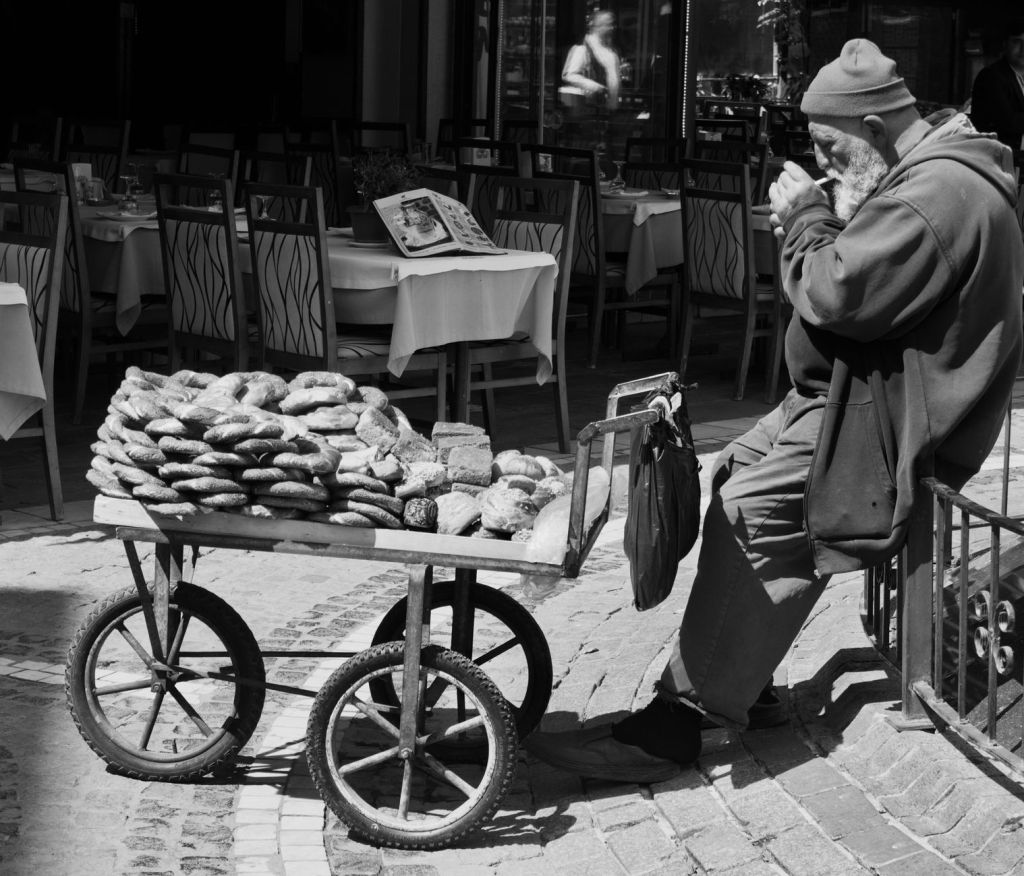
    One episode lodged itself permanently in my memory. In it, a destitute man lived alone in the wilderness, gaunt with hunger and desperation. A passerby took pity on him and handed him a loaf of bread. The starving man stood beneath a tree and immediately tore into it. He chewed with the ferocity of a man rescued from the edge of extinction. As he ate, he repeated a single word over and over:

    “Bread.”

    “Bread.”

    “Bread.”

    The word became a prayer, a hymn, a declaration of gratitude. Watching him, I was struck by a revelation that only a child could find astonishing: this man’s happiness came from something as simple as a loaf of bread.

    The next day, life provided me with an opportunity for field research.

    My mother and I had gone shopping at a local plaza. Returning to the car, we loaded our groceries into the back seat, including a fresh loaf of sourdough bread. Before we left, my mother remembered seeing some white divinity and black licorice in a candy store and decided to run back inside.

    “I’ll wait in the car,” I said.

    The moment she disappeared, I launched my experiment.

    I reached into the grocery bag, tore off a chunk of sourdough, and stuffed it into my mouth. Then I began repeating the sacred word from Daniel Boone.

    “Bread.”

    Another bite.

    “Bread.”

    Another bite.

    “Bread.”

    I was trying to recreate the miracle I had witnessed on television. I wanted to understand what it felt like to be so hungry that a loaf of bread seemed like heaven itself. I wanted to know what true satisfaction felt like.

    Nearly sixty years later, I still remember that moment.

    Something about the image continues to haunt me: the idea of profound hunger meeting simple nourishment. No luxury. No extravagance. No abundance. Just an honest need met by an honest gift.

    The proposition remains irresistible.

    The older I get, the more I understand that the episode was never really about bread.

    It was about hunger.

    The famous biblical phrase tells us that “man does not live by bread alone.” Physical hunger is only one of our appetites. Even when our stomachs are full, our mortgages paid, our homes comfortable, and our refrigerators stocked, we remain restless creatures. We hunger for purpose. We hunger for belonging. We hunger for love, friendship, meaning, beauty, and transcendence.

    We hunger for forms of bread that cannot be purchased at a bakery.

    Music is one of those forms.

    I think of “There Is a Light That Never Goes Out,“ one of The Smiths’ most beautiful songs. The narrator is starving for connection. Home does not feel like home. It feels confining, lonely, and emotionally barren. He longs to escape into the world and find kindred souls who possess the warmth and vitality missing from his life. He dreams of a surrogate family, a tribe of fellow travelers who might finally make him feel understood.

    He does not know where such people are.

    He only knows he needs them.

    His longing saturates every line of the song. Beneath the wit and melancholy is a desperate appetite for belonging. He is emotionally famished.

    In that sense, he is not so different from the starving man beneath the tree in Daniel Boone.

    Both are hungry.

    Both are waiting.

    Both are searching for the thing that will finally satisfy them.

    The difference is that one seeks a loaf of bread while the other seeks companionship, love, and meaning.

    Yet the emotional experience is remarkably similar.

    A starving man dreams of bread.

    A lonely man dreams of friendship.

    And when either finally receives what he has been seeking, the response is the same. Gratitude. Relief. Fullness.

    For a brief and precious moment, the hunger stops.

    Solitude is another form of hunger.

    My mother, who struggled with clinical depression throughout her life, would sometimes disappear from the world for days at a time. She would retreat to her bedroom, pull the covers around herself, and consume novels with the same urgency that the starving man in Daniel Boone consumed his loaf of bread. Page after page disappeared into her imagination. The stories fed something that ordinary life could not. Friends would call. Invitations would come and go. My mother often chose the company of books instead. She possessed a strong reclusive streak.

    I inherited some of it.

    At times, I feel the same longing for friendship and belonging that animates “There Is a Light That Never Goes Out.” I understand the desire to find kindred spirits and become part of something larger than oneself. Yet I also understand the opposite impulse. Like my mother, there are days when I want nothing more than to be left alone with my podcasts, my kettlebell workouts, and my piano compositions. A quiet room can feel as nourishing as a crowded gathering. Solitude, when freely chosen, can be its own loaf of bread.

    Hunger takes many forms. Some people ache for companionship. Others ache for silence. Most of us spend our lives moving back and forth between the two, never fully satisfied by either and always searching for the proper measure of both.

    Perhaps religious hunger is the greatest hunger of all.

    I experienced it while watching the 1978 Superman movie. I was a teenage bodybuilder then, full of grandiose dreams and the conviction that I was destined for some undefined greatness. Sitting alone in a dark theater, I watched Superman’s father prepare his son for his mission on Earth. He explained that humanity was a lost and fallen people, wandering in confusion and ignorance. Then came the line that pierced me:

    “They only lack the light to show the way.”

    As those words echoed through the theater, something happened to me. A wave of emotion surged through my body. It felt as if a bright light had been switched on somewhere deep inside me. I began to shake. Tears streamed down my face. I was overwhelmed by a feeling I could neither explain nor resist.

    What moved me was not Superman’s strength. It was his purpose.

    For the first time, I recognized a hunger that had been living inside me all along. I wanted to be a light in the world. I wanted my life to matter. I wanted to help people find their way through confusion, loneliness, and despair. I had no idea how such a calling could be fulfilled. I only knew that the desire burned within me with an intensity I had never experienced before.

    Looking back, I think I was discovering another form of bread.

    Not the bread that fills the stomach, but the bread that nourishes the soul.

    Perhaps this is what people mean by the bread of life: the longing to serve something greater than oneself, to become useful to others, and in that act of service to discover who one truly is. The deepest hunger is not merely to consume. It is to contribute. It is to find a purpose worthy of devotion and, in pursuing it, become fully alive.

    This is not the bread I was raised on.

    I grew up on an entirely different diet of the soul. The culture around me taught that hunger was not a condition to be understood or disciplined but celebrated. Desire was treated as a virtue. Appetite was regarded as a compass. If you wanted something intensely enough, pursuing it was assumed to be an act of authenticity.

    The lesson was repeated everywhere—in movies, television, music, magazines, and the casual conversations of adults. Fulfillment lay just beyond the next indulgence. The good life consisted of feeding every craving and treating restraint as a form of deprivation.

    In that world, desire itself became the bread.

    Longing was not something to transcend but something to obey. Hunger was not a signal pointing toward a deeper need; it was the need. The object of desire mattered less than the pursuit itself. We were taught to trust our appetites, follow our impulses, and regard self-denial with suspicion.

    Most of all, I was taught that carnal desire was the bread of life—that somewhere in the pursuit of pleasure, admiration, conquest, and sensual gratification lay the secret to happiness.

    It took me many years to discover that some forms of bread fill you only long enough to make you hungry again.

    This is not the bread I grew up on. I grew up on a different kind of bread entirely. I was taught that hunger was a good thing and that satisfying that hunger was even better. I was taught that desire itself was the bread. I was taught that carnal lust was the bread of life. 

    I grew up in the 1960s and 1970s, an era that treated recreational sex not merely as pleasure but as a pathway to transcendence. Television, movies, music, magazines, and bestselling novels all sang from the same hymnal. Liberation was the new gospel. Desire was the new sacrament. Happiness, we were told, awaited those bold enough to cast aside restraint and pursue every appetite without apology.

    The adults around me absorbed the message. My parents and their friends attended parties where alcohol flowed freely, clothes disappeared, and the soundtrack from Hair supplied the liturgy. Men’s magazines sat openly on living room coffee tables like decorative centerpieces. Nobody hid them. Nobody seemed embarrassed. They were advertisements for a particular vision of the good life.

    As a teenage boy with raging hormones and a vivid imagination, I absorbed the lesson completely.

    The images and stories convinced me that fulfillment lay in becoming a brazen sexual adventurer. I wanted the muscular body, the effortless charm, the magnetic confidence. I wanted admiration. I wanted conquest. What I did not understand was love. I knew little about devotion, sacrifice, responsibility, or the quiet dignity of caring for another person. Society’s vision of transcendence involved acquiring experiences, not serving people. Other human beings existed primarily as supporting characters in the drama of one’s own desires.

    The consequences of such a worldview are predictable. When people become instruments for self-gratification, hurt feelings, disappointment, alienation, and moral confusion inevitably follow. The bill always arrives, even if it arrives years later.

    Yet even after I grew older and recognized the folly of that outlook, a small part of that younger self remained alive inside me. The fantasy did not simply disappear. It lingered like an old song whose melody still occasionally drifts through the mind. The grand vision of endless Bacchanalian delights never entirely surrendered the stage.

    The challenge became learning not to romanticize it.

    There is a temptation to keep looking backward, to imagine that fulfillment was hiding somewhere in those abandoned fantasies. But looking backward can become its own form of captivity. The story of Lot’s wife endures because it captures a permanent human weakness. We long for the places we have outgrown. We become attached to identities that no longer serve us. We mistake fixation for vitality.

    In reality, selfishness, entitlement, and obsession are forms of death. They narrow the soul. They reduce the world to a mirror.

    I suspect this realization is familiar to anyone who has spent time in an addiction recovery program. Every day counselors sit across from people trying to understand the forces that shaped them decades earlier. The challenge is not simply breaking a habit. It is excavating an entire philosophy of life. Somewhere beneath the addiction lies a vision of happiness that proved incapable of delivering what it promised.

    The task of replacing that vision must be overwhelming.

    I cannot speak for addiction counselors. I can only speak from experience.

    A life devoted to unrestrained hedonism eventually exhausts itself. Chaos has a seductive glamour when viewed from a distance, but living inside it is another matter entirely. The endless pursuit of stimulation becomes tiring. The pursuit of novelty becomes repetitive. What initially feels like freedom gradually resembles bondage.

    Eventually reality intervenes.

    You have a career.

    You have a spouse.

    You have children.

    You have obligations and people who depend on you.

    Maintaining a double life becomes increasingly difficult. You cannot simultaneously inhabit the stable world of family and responsibility while pursuing the perpetual turbulence of adolescent fantasy. Domesticity and satyrhood occupy different planets.

    The older I became, the more I understood that fear has its proper place. Not fear of pleasure itself, but fear of the destruction that follows when pleasure becomes life’s highest value. The consequences are not merely moral. They are practical. Relationships fracture. Finances collapse. Trust evaporates. Even those fortunate enough to avoid financial ruin often leave behind a trail of emotional wreckage.

    Such people are not role models.

    They are cautionary tales.

    The challenge, then, is not merely abandoning an old identity. It is discovering a new one.

    The philosopher Kierkegaard wrote that hope is like finding a new garment. I have always loved that image. A garment shapes how we present ourselves to the world. It signals who we believe ourselves to be.

    When the costume of the satyr no longer fits, something else must take its place.

    That search becomes the next great adventure.

    Not the search for another thrill.

    Not the search for another conquest.

    The search for a life worth inhabiting.

    Sometimes we are too blind, too impatient, or too preoccupied with our ambitions to recognize that the heavenly garment is already draped across our shoulders. We spend years searching for a destiny, an identity, a purpose, convinced that fulfillment lies somewhere beyond the next horizon. Only much later, looking back across the decades, do we realize that we were already wearing the very garment we sought. We simply lacked the wisdom to recognize it.

    I am one of those people.

    As I write this at sixty-four, I find myself looking back to the age of twenty-seven. The year was 1989. It was my final week in Oakland. My belongings were packed into boxes. My future hovered before me in a haze of excitement and uncertainty. I was preparing to leave Northern California for the desert, where I had accepted a full-time position teaching college writing. The move felt momentous, as though I were crossing not merely a few hundred miles of highway but an invisible border between one life and another.

    Before making the four-hour drive through the furnace heat of an August afternoon, I took my car in for service. While mechanics disappeared beneath the hood, I wandered through the loose ends of my final days in Oakland. I had no idea I was standing on the threshold of the life I was meant to live. At twenty-seven, I believed my real story had not yet begun. Looking back now, I can see that it already had.

    This is the story of a day when I was exactly the person I was supposed to be and was too oblivious to recognize it.

    Hungry for lunch while my car was being repaired, I walked to a nearby food court. It occupied an industrial corner of Oakland where the landscape seemed engineered to extinguish hope. Warehouses, loading docks, chain-link fences, and cracked asphalt stretched toward the horizon. The building itself looked less like a place to eat than an aircraft hangar awaiting condemnation.

    Inside, a dozen small eateries lined the walls beneath humming fluorescent lights that washed everything in a pale, exhausted glow. The air smelled of frying oil, grilled meat, bleach, and diesel exhaust. Most of the customers were laborers in reflective vests and steel-toed boots. They sat alone at scarred tables, staring into burritos, chow mein, and paper cups of coffee with the vacant gaze of people whose workday was only half over. No one lingered. No one laughed. The entire place felt like a refueling station for the worn-down and overworked—a temporary shelter before they returned to the machinery, noise, and concrete waiting outside.

    I ordered a combo plate. I no longer remember what it was exactly—chicken and rice perhaps, or some equally forgettable meal. While waiting for my order, I bought a large glass of cold orange juice.

    I was about to take my first sip when a commotion near one of the counters caught my attention.

    A young man, about my age, was struggling to remain upright. He was tall and painfully thin, dressed in faded jeans and a blue T-shirt. His face was pale. His legs trembled beneath him. He explained that he had just sold blood so he could afford something to eat and now felt as though he might pass out.

    An older man behind a Greek food counter looked at me and said, “Give him your orange juice.”

    Without hesitation, I carried the glass over.

    The young man began to sink toward the floor. I slipped an arm around him and held him as he dropped to one knee. With my other hand, I lifted the orange juice to his lips.

    He drank.

    I can still see his eyes.

    Nearly thirty-eight years later, I remember them with startling clarity.

    What struck me was not merely hunger. I had seen hungry people before. What I saw in that moment was a profound loneliness, a depth of sadness and wanting that went far beyond the need for food. This was a man who needed more than calories. He needed kindness. He needed dignity. He needed someone—anyone—to care whether he existed.

    As I held him, I knew instantly that the combo plate I had ordered would never be mine.

    It belonged to him.

    What I did not know at the time was that I was wearing the garment I had been searching for all along.

    I did not know that fulfillment had arrived quietly and without fanfare.

    I did not know that for a brief moment I was exactly the person I was meant to become.

    At twenty-seven, I still believed happiness would arrive through achievement, adventure, romance, status, or some future version of myself that was stronger, wiser, and more accomplished. Yet in that forgotten food court, surrounded by tired workers and fluorescent lights, none of those things mattered.

    What mattered was lowering myself to help another person.

    What mattered was service.

    What mattered was love.

    The bread we hunger for most is rarely the bread we imagine. We spend years chasing appetites, ambitions, pleasures, and identities, believing they will finally satisfy us. All the while, the deeper hunger waits patiently beneath them.

    The daily bread is not merely what sustains the body.

    It is what enlarges the soul.

    Whenever I hear the words, “Give us this day our daily bread,” I do not think of loaves, bakeries, or even hunger.

    I think of the sadness in that young man’s eyes.

    And I remember the afternoon when, without realizing it, I found the nourishment I had been seeking all along.


  • There Is a Bread That Never Goes Out

    There Is a Bread That Never Goes Out

    When I was five years old and living at the Royal Lanai apartments in San Jose, one of my favorite television shows was Daniel Boone. I was fascinated by Boone’s coonskin cap, especially the raccoon tail dangling from the back. To my young mind, it was the height of frontier elegance. Any man bold enough to wear a dead raccoon as a fashion accessory had to possess uncommon wisdom and imagination. Surely such a man knew secrets unavailable to ordinary people.

    One episode lodged itself permanently in my memory. In it, a destitute man lived alone in the wilderness, gaunt with hunger and desperation. A passerby took pity on him and handed him a loaf of bread. The starving man stood beneath a tree and immediately tore into it. He chewed with the ferocity of a man rescued from the edge of extinction. As he ate, he repeated a single word over and over:

    “Bread.”

    “Bread.”

    “Bread.”

    The word became a prayer, a hymn, a declaration of gratitude. Watching him, I was struck by a revelation that only a child could find astonishing: this man’s happiness came from something as simple as a loaf of bread.

    The next day, life provided me with an opportunity for field research.

    My mother and I had gone shopping at a local plaza. Returning to the car, we loaded our groceries into the back seat, including a fresh loaf of sourdough bread. Before we left, my mother remembered seeing some white divinity and black licorice in a candy store and decided to run back inside.

    “I’ll wait in the car,” I said.

    The moment she disappeared, I launched my experiment.

    I reached into the grocery bag, tore off a chunk of sourdough, and stuffed it into my mouth. Then I began repeating the sacred word from Daniel Boone.

    “Bread.”

    Another bite.

    “Bread.”

    Another bite.

    “Bread.”

    I was trying to recreate the miracle I had witnessed on television. I wanted to understand what it felt like to be so hungry that a loaf of bread seemed like heaven itself. I wanted to know what true satisfaction felt like.

    Nearly sixty years later, I still remember that moment.

    Something about the image continues to haunt me: the idea of profound hunger meeting simple nourishment. No luxury. No extravagance. No abundance. Just an honest need met by an honest gift.

    The proposition remains irresistible.

    The older I get, the more I understand that the episode was never really about bread.

    It was about hunger.

    The famous biblical phrase tells us that “man does not live by bread alone.” Physical hunger is only one of our appetites. Even when our stomachs are full, our mortgages paid, our homes comfortable, and our refrigerators stocked, we remain restless creatures. We hunger for purpose. We hunger for belonging. We hunger for love, friendship, meaning, beauty, and transcendence.

    We hunger for forms of bread that cannot be purchased at a bakery.

    Music is one of those forms.

    I think of “There Is a Light That Never Goes Out,“ one of The Smiths’ most beautiful songs. The narrator is starving for connection. Home does not feel like home. It feels confining, lonely, and emotionally barren. He longs to escape into the world and find kindred souls who possess the warmth and vitality missing from his life. He dreams of a surrogate family, a tribe of fellow travelers who might finally make him feel understood.

    He does not know where such people are.

    He only knows he needs them.

    His longing saturates every line of the song. Beneath the wit and melancholy is a desperate appetite for belonging. He is emotionally famished.

    In that sense, he is not so different from the starving man beneath the tree in Daniel Boone.

    Both are hungry.

    Both are waiting.

    Both are searching for the thing that will finally satisfy them.

    The difference is that one seeks a loaf of bread while the other seeks companionship, love, and meaning.

    Yet the emotional experience is remarkably similar.

    A starving man dreams of bread.

    A lonely man dreams of friendship.

    And when either finally receives what he has been seeking, the response is the same. Gratitude. Relief. Fullness.

    For a brief and precious moment, the hunger stops.

    Solitude is another form of hunger.

    My mother, who struggled with clinical depression throughout her life, would sometimes disappear from the world for days at a time. She would retreat to her bedroom, pull the covers around herself, and consume novels with the same urgency that the starving man in Daniel Boone consumed his loaf of bread. Page after page disappeared into her imagination. The stories fed something that ordinary life could not. Friends would call. Invitations would come and go. My mother often chose the company of books instead. She possessed a strong reclusive streak.

    I inherited some of it.

    At times, I feel the same longing for friendship and belonging that animates “There Is a Light That Never Goes Out.” I understand the desire to find kindred spirits and become part of something larger than oneself. Yet I also understand the opposite impulse. Like my mother, there are days when I want nothing more than to be left alone with my podcasts, my kettlebell workouts, and my piano compositions. A quiet room can feel as nourishing as a crowded gathering. Solitude, when freely chosen, can be its own loaf of bread.

    Hunger takes many forms. Some people ache for companionship. Others ache for silence. Most of us spend our lives moving back and forth between the two, never fully satisfied by either and always searching for the proper measure of both.

    Perhaps religious hunger is the greatest hunger of all.

    I experienced it while watching the 1978 Superman movie. I was a teenage bodybuilder then, full of grandiose dreams and the conviction that I was destined for some undefined greatness. Sitting alone in a dark theater, I watched Superman’s father prepare his son for his mission on Earth. He explained that humanity was a lost and fallen people, wandering in confusion and ignorance. Then came the line that pierced me:

    “They only lack the light to show the way.”

    As those words echoed through the theater, something happened to me. A wave of emotion surged through my body. It felt as if a bright light had been switched on somewhere deep inside me. I began to shake. Tears streamed down my face. I was overwhelmed by a feeling I could neither explain nor resist.

    What moved me was not Superman’s strength. It was his purpose.

    For the first time, I recognized a hunger that had been living inside me all along. I wanted to be a light in the world. I wanted my life to matter. I wanted to help people find their way through confusion, loneliness, and despair. I had no idea how such a calling could be fulfilled. I only knew that the desire burned within me with an intensity I had never experienced before.

    Looking back, I think I was discovering another form of bread.

    Not the bread that fills the stomach, but the bread that nourishes the soul.

    Perhaps this is what people mean by the bread of life: the longing to serve something greater than oneself, to become useful to others, and in that act of service to discover who one truly is. The deepest hunger is not merely to consume. It is to contribute. It is to find a purpose worthy of devotion and, in pursuing it, become fully alive.