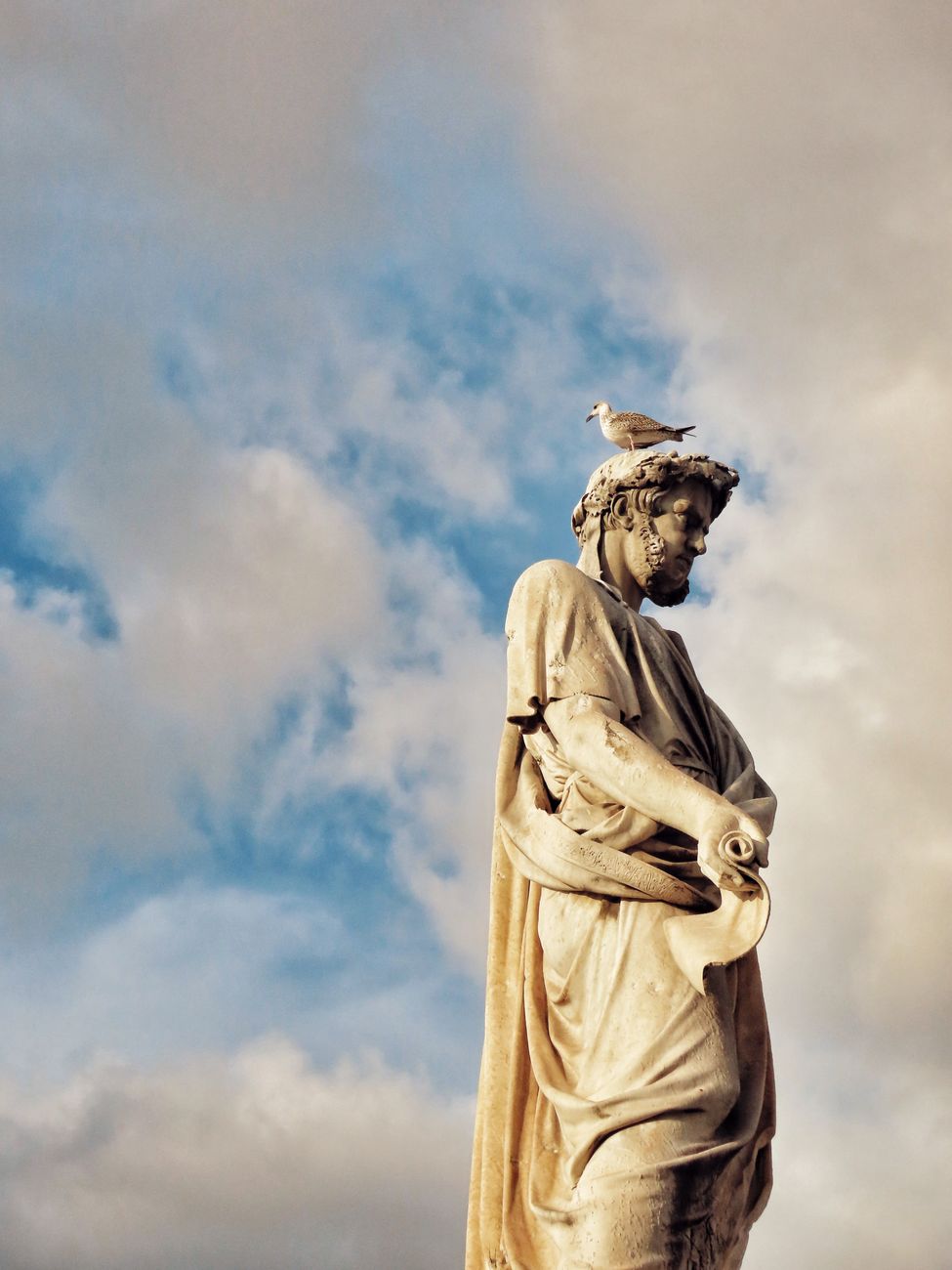
In The War of Art, Steven Pressfield compresses an entire philosophy of life into a sentence worthy of Blaise Pascal: “Most of us have two lives. The life we live, and the unlived life within us. Between the two stands Resistance.” On its surface, the book is about writing—showing up every day, overcoming procrastination, and producing meaningful work. In reality, it is about something much larger. It is about the tragedy of the human condition. Every person carries within himself an unrealized version of who he might have become, yet too often that person dies unborn. Resistance is the invisible executioner. It persuades us that tomorrow is a better day to begin, that comfort is wiser than sacrifice, that another hour of distraction is harmless, and that our highest calling can safely wait until after one more episode, one more dessert, one more purchase, one more excuse. By the time we recognize the fraud, life has become a museum of abandoned intentions. We discover, to our horror, that our greatest betrayal was not committed against other people but against ourselves.
Pressfield has no patience for sentimental psychology. He describes Resistance as “the most toxic force on the planet,” adding with characteristic mischief that it causes more misery than poverty, disease, and erectile dysfunction. Hyperbole, yes—but purposeful hyperbole. He wants to jolt the reader into recognizing that Resistance is not ordinary laziness. It is a corrosive force that slowly deforms the soul. It shrinks ambition into routine, courage into rationalization, and discipline into negotiation. Left unchecked, it transforms gifted people into spectators of their own lives. They spend decades curating plans they never execute, polishing dreams they never inhabit, and congratulating themselves for intentions that never survive contact with reality.
What makes Pressfield so compelling is that he refuses both fashionable nihilism and fashionable indulgence. He rejects the existential shrug that declares life meaningless and equally rejects the consumerist gospel that happiness consists of maximizing pleasure. His ethic is austere. Work matters. Discipline matters. Routine matters. Character matters. Most of all, contribution matters. Your life is not private property to be squandered in self-absorption. It belongs, at least in part, to your family, your friends, your community, and the civilization that shaped you. The image that repeatedly comes to my mind is not one from Pressfield but from Superman. Before Kal-El leaves Krypton, his father, Jor-El, entrusts him with a mission: become a light to a world wandering in darkness. Pressfield issues a similar summons. Your vocation is not self-expression. It is illumination.
This is why The War of Art feels less like a productivity manual than a spiritual manifesto. Pressfield believes we inhabit a battlefield. He calls the enemy Resistance. He calls our higher nature “genius,” borrowing the ancient Roman idea of an inner guiding spirit that is “holy and inviolable.” Whatever name one gives it, the struggle is unmistakable. There is a force drawing us upward toward courage, creativity, and service, and another dragging us downward toward vanity, distraction, and decay. Resistance rarely announces itself dramatically. It works with exquisite subtlety. It whispers rather than shouts. It convinces us that procrastination is prudence, that entertainment is recovery, and that comfort is wisdom. By the time we recognize the deception, entropy has already advanced. We find ourselves wandering in the woods, uncertain how we lost the path home.
It is here that Pressfield’s vision begins to overlap strikingly with Christianity. His ideas emerge from a broad stream of Western thought that includes Christianity, Plato, the Stoicism, Romantic notions of genius, Jungian psychology, and the mythic Hero’s Journey. Like Christianity, he believes human beings possess a higher vocation continually frustrated by an internal adversary. Like Christianity, he portrays life as a form of spiritual warfare in which unseen forces contend for the human soul. Like Christianity, he rejects radical individualism, insisting that our gifts exist not merely for self-fulfillment but for service.
Yet Pressfield ultimately parts company with Christian theology in significant ways. Christianity locates humanity’s highest calling in communion with God, and its deepest tragedy in alienation from Him. Transformation comes through grace as well as discipline. Pressfield, by contrast, places his faith in professionalism, habit, and relentless labor. His highest authority is not God but genius—the inner creative spirit that summons each person toward his vocation. Accordingly, his greatest catastrophe is not separation from God but dying with one’s best work still trapped inside. His universe is fundamentally vocational; Christianity’s is fundamentally theocentric.
That distinction leaves me with a question I cannot confidently answer. Can the devout Christian and the devoted disciple of Pressfield ultimately arrive at the same destination? Can both escape the wide road of self-indulgence and find the narrow road that leads to genuine human flourishing? I honestly do not know.
I often think of religions and philosophies as insurance companies. Thousands of offices line the boulevard, each promising protection against humanity’s oldest anxieties. Every one claims to offer security for the soul. Every one publishes its own policy, exclusions, deductibles, and fine print. Christianity itself contains competing agencies. Universalists, Catholics, Calvinists, Orthodox Christians, and countless Protestant traditions disagree about the terms of coverage while affirming they represent the same Provider. In Mere Christianity, C. S. Lewis argues that there is, ultimately, one true household of faith beneath those denominational rooms. I continue to wrestle with whether reality resembles Lewis’s vision of one enduring house or whether human beings, in good faith, may arrive at the same destination by different roads. It is one of the questions that has haunted me for decades, and I suspect it will continue to do so long after I have finished reading Steven Pressfield.


Leave a Reply