Tag: education

  • The Copy-Paste Generation and the Myth of the Fallen Classroom

    The Copy-Paste Generation and the Myth of the Fallen Classroom

    There is no ambiguity in Ashanty Rosario’s essay title: “I’m a High Schooler. AI Is Demolishing My Education.” If you somehow miss the point, the subtitle elbows you in the ribs: “The end of critical thinking in the classroom.” Rosario opens by confessing what every honest student now admits: she doesn’t want to cheat with AI, but the tools are everywhere, glowing like emergency exits in a burning building. Some temptations are structural.

    Her Exhibit A is a classmate who used ChatGPT to annotate Narrative of the Life of Frederick Douglass. These annotations—supposed evidence of engaged reading—were nothing more than “copy-paste edu-lard,” a caloric substitute for comprehension. Rosario’s frustration reminds me of a conversation with one of my brightest students. On the last day of class, he sat in my office and casually admitted that he uses ChatGPT to summarize all his reading. His father is a professor; he wakes up at five for soccer practice; he takes business calculus for fun. He is not a slacker. He is a time-management pragmatist surviving the 21st century. He reads the AI summaries, synthesizes them, and writes excellent essays. Of course I’d love for him to spend slow hours with books, but he is not living in 1954. He is living in a culture where time is a scarce resource, and AI is his oxygen mask.

    My daughters and their classmates face the same problem with Macbeth. Shakespeare’s language might as well be Martian for a generation raised on TikTok compression and dopamine trickle-feeds. They watch film versions of the play and use AI to decode plot points so they can answer the teacher’s study questions without sounding like they slept through the Renaissance. Some purists will howl that this is intellectual cheating. But as a writing instructor, I suspect the teacher benefits from students who at least know what’s happening—even if their knowledge comes from a chatbot. Expecting a 15-year-old to read Macbeth cold is like assigning tensor calculus to a preschooler. They haven’t done their priors. So AI becomes a prosthetic. A flotation device. A translation machine dropped into a classroom years overdue. To blame AI for the degradation of education is tempting, but it’s also lazy. We live in a society where reading is a luxury good and the leisure class quietly guards the gates.

    In the 1970s, I graduated from a public high school with literacy skills so thin you could read the room through them. I took remedial English my freshman year of college. If I were a student today, dropped into 2025 with those same deficits, I would almost certainly lean on AI just to keep my head above water. The difference is that today’s students aren’t just supplementing—they’re optimizing. They tell me this openly: over ninety percent of my students use AI because their skills don’t match the workload and because, frankly, everyone else is doing it. It’s an arms race of survival, not a moral collapse.

    Still, Rosario is right about the aftermath. She writes: “AI has softened the consequences of procrastination and led many students to avoid doing any work at all. There is little intensity anymore.” When thinking becomes optional, students drift into a kind of algorithmic sleepwalking. They outsource cognition until they resemble NPCs in a glitching video game—avatars performing human imitation rather than human thought. My colleagues and I see it, semester after semester: the fade-out, the disengagement, the slow zombification.

    Colleges are scrambling to respond. Should we police AI with plagiarism detectors? Should we ban laptops and force students to write essays in composition books under watchful eyes like parolees in a literary halfway house? Should we pretend the flood can be stopped with a beach towel?

    Reading Rosario’s lament about “cookie-cutter AI arguments,” I thought of my one visit to Applebee’s in the early 2000s. The menu photos promised ambrosia. The food tasted like something engineered in a lab to be technically edible yet spiritually vacant. Applebee’s was AI before AI—an assembly line of flavorless simulacra. Humanity gravitates toward the easy, the prepackaged, the frictionless. AI didn’t invent mediocrity. It merely handed it a megaphone.

    Rosario, clearly, is not an Applebee’s soul. She’s Michelin-level in a world eager to eat microwaved Hot Pockets. Of course her heart sinks when classmates settle for fast-food literacy. I want to tell her that if she were in high school in the 1970s, she’d still witness an appetite for shortcut learning. The tools would be different, the essays less slick, but the gravitational pull toward mediocrity would be the same. The human temptation to bypass difficulty is not technological—it’s ancestral. AI simply automates the old hunger.

  • Artificial Intelligence and the Collapse of Classroom Thinking (college essay prompt)

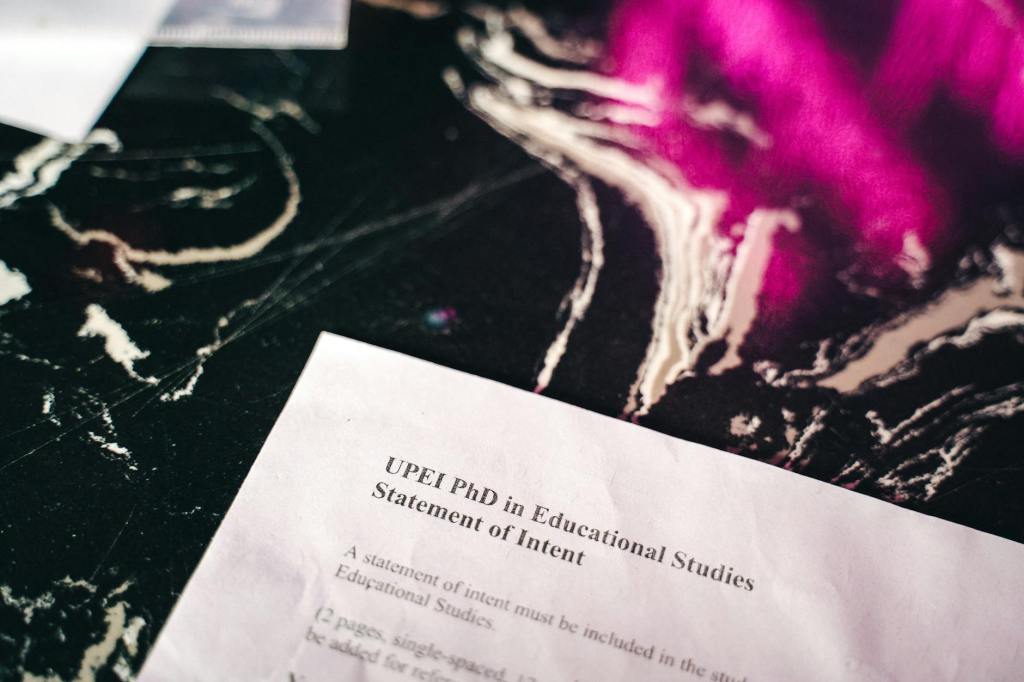
    Artificial Intelligence and the Collapse of Classroom Thinking (college essay prompt)

    Artificial intelligence now drafts thesis statements, outlines arguments, rewrites weak prose, and gives students a shortcut past the cognitive struggle that learning used to require. Some critics warn that AI corrodes motivation, weakens mastery, and turns students into spectators of their own minds. Others argue that AI is merely revealing the truth we refused to confront: that modern education was already driven by templates, disengagement, and shallow assessment long before ChatGPT arrived. Still others suggest the two forces interact in a feedback loop—an educational system already limping is now asked to carry a technological weight it cannot bear.

    Write an argumentative essay in which you address the following question:

    To what extent is AI responsible for the erosion of student learning, and to what extent does it merely amplify the structural weaknesses already embedded in contemporary education?

    Your position may argue that:

    • AI is the primary driver of decline,
    • systemic failures are the primary driver,
    • or both forces interact in a way that cannot be separated.
      This is not a binary assignment—your task is to map the relationship between these forces with precision and evidence.

    Assigned Readings

    You must use at least four writers from the following list as central sources in your essay.
    You may also draw from additional credible sources.

    Critics who argue AI is damaging education

    1. Ashanty Rosario — “I’m a High Schooler. AI Is Demolishing My Education.”
    2. Lila Shroff — “The AI Takeover of Education Is Just Getting Started.”
    3. Damon Beres — “AI Has Broken High School and College.”
    4. Michael Clune — “Colleges Are Preparing to Self-Lobotomize.”

    Writers who shift the crisis away from AI

    1. Ian Bogost — “College Students Have Already Changed Forever.”
    2. Tyler Austin Harper — “The Question All Colleges Should Ask Themselves About AI.”
    3. Tyler Austin Harper — “ChatGPT Doesn’t Have to Ruin College.”
    4. John McWhorter — “My Students Use AI. So What?”

    Your Essay Must Include the Following Components

    1. Analyze one critic who argues AI is corrosive.

    Choose one writer who describes how AI erodes motivation, mastery, identity, intellectual struggle, or authentic thinking.
    Identify the mechanism of harm:
    How does AI disrupt learning—and where, exactly, does the breakdown occur?

    2. Analyze one writer who shifts blame away from AI.

    Choose a writer who argues that the crisis originates in curriculum design, academic culture, standardized writing templates, disengagement, or institutional inertia.
    Explain their diagnosis:
    What was broken before AI entered the classroom?

    3. Develop your own argument that maps the relationship between these forces.

    Your task is to explain how AI and the educational system interact.
    Does AI accelerate a decline already underway?
    Does it expose weaknesses the system refuses to address?
    Or does it create problems the system is too brittle to manage?
    Define the threshold:
    When does AI function as a constructive learning tool, and when does it become a crutch that erases struggle and depth?

    4. Include a substantial counterargument and rebuttal.

    Address the strongest opposing viewpoint—not a caricature—and respond with evidence and reasoning.

    Requirements

    • Minimum of 4 credible sources (MLA)
    • At least 4 assigned essays
    • MLA Works Cited
    • An essay that argues, rather than summarizes

    Guiding Question

    What kind of intellectual culture emerges when AI becomes normal—and who (or what) is ultimately responsible for shaping that culture?

  • Confessions of a College Writing Instructor in Transition

    Confessions of a College Writing Instructor in Transition

    Yesterday morning at the college, I ran into the Writing Center director and asked whether AI had thinned out the crowds of students seeking help. To his surprise, the numbers were down only slightly—less than ten percent. I told him I’m retiring in three semesters and have no idea what the job of a writing instructor will look like five years from now. He nodded and said what we’re all thinking: we’re in the middle of a technological tectonic shift, and no one knows where the fault lines lead.

    When I got home, I realized that when I meet my students face-to-face in Spring 2026, I’ll need to level with them. Something like this:

    Hello, Students.

    I won’t sugarcoat it. Writing instructors are in transition, and many of us don’t quite know our role anymore. We’re feeling our way through the dark. To pretend otherwise would be less than honest, and the one thing we need right now is credibility. 

    In this class, you’ll write three essays—each roughly two thousand words. The first examines GLP-1 drugs like Ozempic and the messy question of free will in weight management: are we outsourcing discipline to pharmaceuticals? The second explores our dependence on emerging technologies that claim to build new skills while quietly eroding old ones—a process known as de-skillification. The final essay tackles ultra-processed foods and the accusation that eating them is a form of self-poisoning. We’ll examine that claim in a world where food technology, especially for people on GLP-1 medications, promises affordability, convenience, and enhanced nutrition. All three assignments orbit the same theme: technology’s relentless disruption of daily life.

    And speaking of disruption, we need to talk about large language models—ChatGPT, Gemini, Claude, Llama, and whatever else arrives next Tuesday. It’s obvious that students are already using these tools to write and edit their work. Many of you have used them throughout high school; for you, AI isn’t cheating—it’s normal.

    I don’t expect you to avoid these tools. They’re part of being a functioning human in a rapidly changing world. The real question isn’t whether you use them, but how. If you treat them like wish-granting genies spitting out essays on command, you’ll produce communication with all the nuance of an emoji—slick, shallow, and dead on arrival. If you use AI for quick-and-dirty summaries, your brain will soften like a forgotten banana. But if you treat these tools as collaborators—writers’ room partners who help you brainstorm, clarify arguments, test counterarguments, and refine your prose—then you’re not just surviving college, you’re evolving.

    College is where you learn to use tools that shape your professional future. But it’s also where you sharpen the questions that determine how you live: Why am I here? What does it mean to live well? Those aren’t academic abstractions; they’re the spine of adulthood. You can’t separate your ambitions from your identity.

    AI can’t give you a soul. It can’t recall your first heartbreak, your deepest disappointment, or the electricity of a song that arrived at exactly the right moment. But it can help you articulate experience. It can help you think more clearly about who you are, how you plan to work, and how to live with an intact conscience.

    The critical thinking and communication skills we practice in this class exist for that purpose—and always will.

  • Did AI Break Education—Or Did Education Build the Perfect Tool for Its Own Collapse?

    Did AI Break Education—Or Did Education Build the Perfect Tool for Its Own Collapse?

    Argumentative Essay — 1,700 words

    Artificial intelligence has become the student’s quiet collaborator: it drafts essays, outlines arguments, rewrites weak prose, and produces thesis statements on command. Some critics insist this shift is catastrophic. They claim AI doesn’t just save time—it dissolves motivation, short-circuits difficulty, and converts students into passive operators of synthetic thought.

    Others argue AI merely reveals a truth we’ve avoided: education was already transactional, disengaged, and allergic to authentic inquiry. If a five-paragraph essay can be mass-produced by a bot in seconds, perhaps the problem was never the bot.

    Write an argumentative essay in which you take a position on the real source of the crisis.
    Your essay must answer the following question:

    Is AI dismantling human learning, or is AI a symptom of a system already committed to shallow thinking and assessment-by-template?

    To build your case:

    1. Analyze one critic who sees AI as corrosive.
      Choose one of the writers who frames AI as eroding motivation, mastery, identity, or intellectual development.
      Identify the mechanism of harm:
      How does AI damage learning? Where does the breakdown actually occur?
    2. Contrast them with one writer who shifts the blame elsewhere.
      Choose a writer who argues the deeper crisis is structural, cultural, or pedagogical.
      Show how they reframe the problem:
      Is the issue curriculum design? Academic culture? Literacy itself?
    3. Define the threshold.
      Explain when AI becomes a tool that enhances learning versus a crutch that annihilates it.
      Avoid yes/no binaries—demonstrate how context, assignment design, or student agency changes outcomes.
    4. Include a counterargument–rebuttal section.
      Address the strongest argument against your own position, then respond with evidence and reasoning.
      This should not be a token gesture—it should be the opponent you would actually fear.

    Requirements

    • Minimum 4 credible sources (MLA)
    • At least 2 of the writers listed below must appear as central interlocutors
    • Works Cited in MLA format
    • Your essay must argue, not summarize

    Your mission is not to repeat what the authors said but to confront the deeper question:
    What kind of intellectual culture emerges when AI becomes normal—and who is responsible for shaping it?

    List of Suggested Sources

    Critics who argue AI is damaging education

    1. Ashanty Rosario — “I’m a High Schooler. AI Is Demolishing My Education.”
    2. Lila Shroff — “The AI Takeover of Education Is Just Getting Started.”
    3. Damon Beres — “AI Has Broken High School and College.”
    4. Michael Clune — “Colleges Are Preparing to Self-Lobotomize.”

    Writers who reinterpret the crisis

    1. Ian Bogost — “College Students Have Already Changed Forever.”
    2. Tyler Austin Harper — “The Question All Colleges Should Ask Themselves About AI.”
    3. Tyler Austin Harper — “ChatGPT Doesn’t Have to Ruin College.”
    4. John McWhorter — “My Students Use AI. So What?”
  • The Rotator Cuff, the Honda Dealership, and the Human Soul

    The Rotator Cuff, the Honda Dealership, and the Human Soul

    Life has a way of mocking our plans. You stride in with a neat blueprint, and the universe responds by flinging marbles under your feet. My shoulder rehab, for instance, was supposed to be a disciplined, daily ritual: the holy grail of recovering from a torn rotator cuff. Instead, after one enthusiastic session, both shoulders flared with the kind of throbbing soreness reserved for muscles resurrected from the dead (though after walking home from Honda, it occurred to me that my right shoulder soreness is probably the result of a tetanus shot). So much for the doctor’s handouts of broomstick rotations and wall flexions. Today, the new fitness plan is modest: drop off the Honda for service, walk two miles home, and declare that my workout. Tomorrow: to be determined by the whims of my tendons and sore muscles.

    Teaching is no different. I’ve written my entire Spring 2026 curriculum, but then I read about humanities professor Alan Jacobs—our pedagogical monk—who has ditched computers entirely. Students handwrite every assignment in composition books; they read photocopied essays with wide margins, scribbling annotations in ink. According to Jacobs, with screens removed and the “LLM demons” exorcised, students rediscover themselves as human beings. They think again. They care again. I can see the appeal. They’re no longer NPCs feeding essays into the AI maw.

    But then I remembered who I am. I’m not a parchment-and-fountain-pen professor any more than I’m a pure vegan. I am a creature of convenience, pragmatism, and modern constraints. My students live in a world of laptops, apps, and algorithms; teaching them only quills and notebooks would be like handing a medieval knight a lightsaber and insisting he fight with a broomstick. I will honor authenticity another way—through the power of my prompts, the relevance of my themes, and the personal narratives that force students to confront their own thoughts rather than outsource them. My job is to balance the human soul with the tools of the age, not to bury myself—and my students—in nostalgia cosplay.

  • Has AI Broken Education—or Did We Break It First?

    Has AI Broken Education—or Did We Break It First?

    Argumentative Essay Prompt: AI, Education, and the Future of Human Thinking (1,700 words)

    Artificial intelligence has entered classrooms, study sessions, and homework routines with overwhelming speed. Some commentators argue that this shift is not just disruptive but disastrous. Ashanty Rosario, a high school student, warns in “I’m a High Schooler. AI Is Demolishing My Education” that AI encourages passivity, de-skills students, and replaces authentic learning with the illusion of competence. Lila Shroff, in “The AI Takeover of Education Is Just Getting Started,” argues that teachers and institutions are unprepared, leaving students to navigate a digital transformation with no guardrails. Damon Beres claims in “AI Has Broken High School and College” that classrooms are devolving into soulless content factories in which students outsource both thought and identity. These writers paint a bleak picture: AI is not just a tool—it is a force accelerating the decay of intellectual life.

    Other commentators take a different approach. Ian Bogost’s “College Students Have Already Changed Forever” argues that the real transformation happened long before AI—students have already become transactional, disengaged, and alienated, and AI simply exposes a preexisting wound. Meanwhile, Tyler Austin Harper offers two counterpoints: in “The Question All Colleges Should Ask Themselves About AI,” he insists that institutions must rethink how assignments function in the age of automation; and in “ChatGPT Doesn’t Have to Ruin College,” he suggests that AI could amplify human learning if courses are redesigned to reward original thinking, personal insight, and intellectual ambition rather than formulaic output.

    In a 1,700-word argumentative essay, defend, refute, or complicate the claim that AI is fundamentally damaging education. Your essay must:

    • Take a clear position on whether AI erodes learning, enhances it, or transforms it in ways that require new pedagogical strategies.
    • Analyze how Rosario, Shroff, and Beres frame the dangers of AI for intellectual development, motivation, and classroom culture.
    • Compare their views with Bogost and Harper, who argue that education itself—not AI—is the root of the crisis, or that educators must adapt rather than resist.
    • Include a counterargument–rebuttal section that addresses the strongest argument you disagree with.
    • Use at least four credible sources in MLA format, including at least three of the essays listed above.

    Your goal is not to summarize the articles but to evaluate what they reveal about the future of learning: Is AI the villain, the scapegoat, or a tool we have not yet learned to use wisely?

  • Does AI Destroy or Redefine Learning?

    Does AI Destroy or Redefine Learning?

    Argumentative Essay Prompt: The Effects of AI on Education (1,700 words)

    Artificial intelligence has raised alarm bells in education. Critics argue that students now rely so heavily on AI tools that they are becoming users rather than thinkers—outsourcing curiosity, creativity, and problem-solving to machines. In this view, the classroom is slowly deteriorating into a culture of passivity, distraction, and what some call a form of “communal stupidity.”

    In his Atlantic essay “My Students Use AI. So What?” linguist and educator John McWhorter challenges this narrative. Instead of treating AI as a threat to intelligence, he examines the everyday media consumption of his tween daughters. They spend little time reading traditional books, yet their time online exposes them to sophisticated humor, stylized language, and clever cultural references. Rather than dulling their minds, McWhorter argues, certain forms of media sharpen them—and occasionally reach the level of genuine artistic expression.

    McWhorter anticipates objections. Books demand imagination, concentration, and patience. He does not deny this. But he asks whether we have elevated books into unquestioned sacred objects. Human creativity has always existed in visual, auditory, and performative arts—not exclusively on the printed page.

    Like many educators, McWhorter also acknowledges that schooling must adapt. Just as no teacher today would demand students calculate square roots without a calculator, he recognizes that assigning a formulaic five-paragraph essay invites AI to automate it. Teaching must evolve, not retreat. He concludes that educators and parents must create new forms of engagement that work within the technological environment students actually inhabit.

    Is McWhorter persuasive? In a 1,700-word argumentative essay, defend, refute, or complicate his central claim that AI is not inherently corrosive to thinking, and that education must evolve rather than resist technological realities. Your essay should:
    • Make a clear, debatable thesis about AI’s influence on learning, creativity, and critical thinking.
    • Analyze how McWhorter defines intelligence, skill, and engagement in digital environments.
    • Include a counterargument–rebuttal section in which you address why some technologies may be so disruptive that adapting to them becomes impossible—or whether that fear misunderstands how students actually learn.
    • Use evidence from McWhorter and at least two additional credible sources.
    • Include a Works Cited page in MLA format with at least four sources total.

    Your goal is not to simply summarize McWhorter, but to weigh his claims against reality. Does AI open new modes of literacy, or does it train us into passive consumption? What does responsible adaptation look like, and where do we draw the line between embracing tools and surrendering agency?

    Building Block 1: Introduction Paragraph:

    Write a 300-word paragraph describing a non-book activity—such as a specific YouTube channel, a TikTok creator, an online gaming stream, or a subreddit—that entertains you while also requiring real engagement and intellectual effort. Do not speak in broad generalities; focus on one example. Describe what drew you to that content and what makes it more than passive consumption. If you choose a subreddit, explain how it operates: Do members debate technical details, challenge arguments, post layered memes that reference politics or philosophy, or analyze social behavior that demands you understand context and nuance? If you choose a video or stream, describe how its pacing, humor, visual cues, or language force you to track patterns, notice subtle callbacks, or recognize sarcasm and satire. Show how your brain works to interpret signals, anticipate moves, decode cultural references, or evaluate whether the creator is being sincere, ironic, or manipulative. Explain how this activity cultivates cognitive skills—pattern recognition, strategic thinking, language sensitivity, humor literacy, or cultural analysis—that are not identical to reading but still intellectually substantial. Then connect your experience to John McWhorter’s argument in “My Students Use AI. So What?” by explaining how your engagement challenges the assumption that screen-based media turns young people into passive consumers. McWhorter claims that digital content can sharpen minds by exposing viewers to stylized language, comedic timing, and creative expression; show how your chosen activity illustrates (or complicates) this point. Conclude by reflecting on whether the skills you are developing—whether from decoding layered Reddit discussions or following complex video essays—are simply different from the skills cultivated by books, or whether they offer alternative paths to intelligence that schools and parents should take seriously.

    Building Block 2: Conclusion

    Write a 250-word conclusion in which you step back from your argument and explain what your thesis reveals about the broader social implications of online entertainment. Do not summarize your paper. Instead, reflect on how your analysis has changed the way you think about digital media and your own habits as a viewer, gamer, or participant. Explain how your chosen example—whether a subreddit, a content creator, a gaming channel, or another digital space—demonstrates that online entertainment is not automatically a form of distraction or intellectual decay. Discuss how interacting with this media has trained you to interpret tone, decode humor or irony, follow complex narratives, or understand cultural signals that are easy to miss if you are not paying attention. Then consider what this means for society: If students are learning language, timing, persuasion, and nuance in digital environments, how should teachers, parents, and institutions respond? Should they continue to treat online entertainment as a threat to literacy, or as an alternate path to it? Draw a connection between your growth as a thinker and the larger question of where intelligence is cultivated in the 21st century. End your paragraph with a reflection on how your relationship to digital media has changed: Do you now view certain forms of online entertainment as trivial distractions, or as unexpected arenas where people practice rhetorical agility, cultural awareness, and cognitive skill?

  • Inside the 2026 Spring Semester: Stupidification, Katrina, and the Myth of the Self-Made Man

    Inside the 2026 Spring Semester: Stupidification, Katrina, and the Myth of the Self-Made Man

    3 Essay Assignments for my Freshman Composition and Critical Thinking Classes, Spring 2026 Semester

    Freshman Composition Class

    Essay1: How Black Mirror Imagines the Stupidification of Social Media

    This essay prompt asks you to write a 1,700-word argumentative essay analyzing how the Black Mirror episodes “Joan Is Awful” and “Nosedive” portray the digitally intensified “stupidification” Jonathan Haidt describes in “Why the Past 10 Years of American Life Have Been Uniquely Stupid.” Your goal is to take a clear, debatable position on whether these episodes exaggerate social-media anxieties or accurately reflect the psychological and social pathologies shaping online life. In a 200–250 word introduction, you must define “stupidification” using Haidt’s key ideas—such as the Babel metaphor, outrage incentives, the collapse of shared reality, identity performance, and tribal signaling—and then connect these concepts to one concrete example from your own life or observations. End your introduction with a focused thesis evaluating how effectively the two episodes illuminate the realities of social-media-driven stupidity.

    Essay 2: Hurricane Katrina: Natural Disaster or Man-Made Catastrophe?

    This essay prompt asks you to write a 1,700-word argumentative essay on the claim that Hurricane Katrina was less a natural disaster than a national failure. Drawing on the documentaries Hurricane Katrina: Race Against Time and Katrina: Come Hell and High Water, along with Clint Smith’s “Twenty Years After the Storm” and Nicholas Lemann’s “Why Hurricane Katrina Was Not a Natural Disaster,” you will analyze how government neglect, weak infrastructure, racial inequity, and media distortion contributed to the catastrophe. These works reveal a fourfold betrayal—red-lining, unprepared institutions, delayed aid, and harmful narratives—that left New Orleans, especially its Black communities, vulnerable and abandoned. Your essay should evaluate how systemic issues of race, class, and policy exacerbated the disaster while also exploring how families, neighborhoods, and cultural identity fostered resilience. Ultimately, you will consider what Katrina teaches us about justice, responsibility, and the human cost of institutional failure.

    Essay 3: The Myth of the Self-Made Man

    Many commentators, institutions, and public narratives present Frederick Douglass as the quintessential “self-made man,” using his rise from slavery to argue that personal discipline and individual grit are enough to overcome oppression. Write an essay analyzing why Douglass is framed this way: What political, cultural, or ideological purposes does this simplified narrative serve, and what parts of Douglass’s life and writing does it erase? Then, drawing on one or more of the following—Get Out, Black Panther, The Evolution of the Black Quarterback, and ALLENIV3SON—argue how these works challenge the myth that individual effort alone is sufficient to escape a modern form of the “Sunken Place.” Use evidence from Douglass and your chosen texts, address at least one counterargument, and provide a reasoned rebuttal.

    Critical Thinking Class

    Essay 1: Shame as Entertainment: The Myth of Moral Fitness in The Biggest Loser

    With 70 percent of Americans now overweight or obese, it’s no wonder the nation is obsessed with weight loss. That obsession fuels a vast industry of diets, influencers, and reality shows, none more infamous than The Biggest Loser. The series, which became the subject of the three-part docuseries Fit for TV: The Reality of The Biggest Loser, reveals how television turned the suffering of overweight people into prime-time entertainment. Contestants were pushed, shamed, and humiliated under the guise of “motivation.” The so-called fitness experts preached self-discipline, grit, and moral purity, but what they really offered was a cocktail of cruelty and pseudoscience disguised as inspiration. In a 1,700-word essay, analyze how the abuse documented in Fit for TV exposes the deeper myths behind weight loss culture. Drawing on Fit for TV, Julia Belluz and Kevin Hall’s essay “It’s Not You. It’s the Food,” and Rebecca Johns’s “A Diet Writer’s Regrets,” develop an argument that answers this question:

    What is intrinsically abusive about the gospel of self-discipline in weight loss, and how does this ideology blind us to the systemic causes of obesity while offering a hollow sense of meaning through influencers and their heroic panaceas? Your essay must include a counterargument and rebuttal section and a Works Cited page in MLA format with at least three sources.

    Essay 2: Ozempification and the Age of De-Skilling

    This essay prompt asks you to write a 1,700-word argumentative essay on whether dependence on AI always harms human skill—or whether, in some cases, it can be “bad but worth it.” Drawing on Kwame Anthony Appiah’s “The Age of De-Skilling,” you will use his distinctions between corrosive de-skilling, “bad but worth it” de-skilling, and unacceptable forms of de-skilling to evaluate how AI affects our thinking, creativity, and agency. You must take a clear position on whether AI meaningfully frees us for deeper work or mostly dulls our abilities and trains us into passivity. Your essay should distinguish between lazy reliance on AI and intentional collaboration with it, include a counterargument–rebuttal section, and incorporate an example of Ozempification—the growing cultural pattern in which people outsource effort, discipline, or agency to an external system, becoming passive “users” rather than active participants—from a Black Mirror episode such as “Joan Is Awful,” “Nosedive,” or “Smithereens.” You are required to use at least three sources in MLA format, including Appiah.

    Essay 3: The Whole Truth About Ultra-Processed Foods

    Using Olga Khazan’s “Avoiding Ultra-Processed Foods Is Completely Unrealistic,” Dhruv Khullar’s “Why Is the American Diet So Deadly?” and Julia Belluz and Kevin Hall’s “It’s Not You. It’s the Food” as your central texts, write a 1,700-word argumentative essay analyzing whether ultra-processed foods deserve their reputation as the villain of modern nutrition. Evaluate the claim that the only truly healthy diet is one built exclusively on whole foods.

    In your essay, define what counts as “whole,” “processed,” and “ultra-processed,” and analyze how clear or meaningful these categories actually are. Then examine the real-world constraints shaping American diets, including economics, time, geography, marketing, and systemic inequities. How realistic is it for the average eater to avoid ultra-processed foods altogether? What trade-offs—financial, cultural, and practical—shape people’s choices?

    As part of your argument, consider how emerging tools like GLP-1 medications or AI-guided meal planning may influence how we define “healthy eating.” Do these tools expand options for overwhelmed consumers, or push us toward a future where food becomes less cultural and more optimized?

    Your essay must include one counterargument–rebuttal section and an MLA Works Cited page with at least four sources.

  • The Age of Academic Anhedonia

    The Age of Academic Anhedonia

    I started teaching college writing in the 80s under the delusion that I was destined to be the David Letterman of higher education—a twenty-five-year-old ham with a chalkboard, half-professor and half–late-night stand-up. For a while, the act actually worked. A well-timed deadpan joke could mesmerize a room of eighteen-year-olds and soften their outrage when I saddled them with catastrophically ill-chosen books (Ron Rosenbaum’s Explaining Hitler—a misfire so spectacular it deserves its own apology tour). My stories carried the class, and for decades I thought the laughter was evidence of learning. If I could entertain them, I told myself, I could teach them.

    Then 2012 hit like a change in atmospheric pressure. Engagement thinned. Phones glowed. Students behaved as though they were starring in their own prestige drama, and my classroom was merely a poorly lit set. I was no longer battling boredom—I was competing with the algorithm. This was the era of screen-mediated youth, the 2010–2021 cohort raised on the oxygen of performance. Their identities were curated in Instagram grids, maintained through Snapstreaks, and measured in TikTok microfame points. The students were not apathetic; they were overstimulated. Their emotional bandwidth was spent on self-presentation, comparison loops, and the endless scoreboard of online life. They were exhausted but wired, longing for authenticity yet addicted to applause. I felt my own attention-capture lose potency, but I still recognized those students. They were distracted, yes, but still alive.

    But in 2025, we face a darker beast: the academically anhedonic student. The screen-mediated generation ran hot; this one runs cold. Around 2022, a new condition surfaced—a collapse of the internal reward system that makes learning feel good, or at least worthwhile. Years of over-curation, pandemic detachment, frictionless AI answers, and dopamine-dense apps hollowed out the very circuits that spark curiosity. This isn’t laziness; it’s a neurological shrug. These students can perform the motions—fill in a template, complete a scaffold, assemble an essay like a flat-pack bookshelf—but they move through the work like sleepwalkers. Their curiosity is muted. Their persistence is brittle. Their critical thinking arrives pre-flattened. 

    My colleagues tell me their classrooms are filled with compliant but joyless learners checking boxes on their march toward a credential. The Before-Times students wrestled with ideas. The After-Times students drift through them without contact. It breaks our hearts because the contrast is stark: what was once noisy and performative has gone silent. Academic anhedonia names that silence—a crisis not of ability, but of feeling.

  • My Fifth-Decade Crisis in the Writing Classroom

    My Fifth-Decade Crisis in the Writing Classroom

    My students lean on AI the way past generations leaned on CliffsNotes and caffeine. They’re open about it, too. They send me their drafts: the human version and the AI-polished version, side by side, like before-and-after photos from a grammatical spa treatment. The upside? Their sentences are cleaner, the typos are nearly extinct, and dangling modifiers have been hunted to the brink. The downside? Engagement has flatlined. When students outsource their thinking to a bot, they sever the emotional thread to the material.

    It’s not that they’re getting dumber—they’re just developing a different flavor of intelligence, one optimized for our algorithmic future. And I know they’ll need that skill. But in the process, they grow numb to the very themes I’m trying to teach: how fashion brands and fitness influencers weaponize FOMO; how adolescent passion differs from mature purpose; how Frederick Douglass built a heroic code to claw his way out of the Sunken Place of slavery.

    This numbness shows up in the classroom. They’re present but elsewhere, half-submerged in the glow of their phones and laptops. Yesterday I screened The Evolution of the Black Quarterback—a powerful account of Black athletes who faced death threats and racist abuse to claim their place in the NFL. While these stories unfolded onscreen, my student-athletes were scrolling through sports highlights, barely glancing at the actual documentary in front of them.

    I’m not the kind of instructor who polices technology like a hall monitor. Still, I’m no longer convinced I have the power to pull students out of their world and into mine. I once believed I did. Perhaps this is my own educational Sunken Place: the realization that attention capture has shifted the center of gravity, and I’m now orbiting the edges.

    I’ve been teaching writing full-time since the 1980s. For decades, I believed I could craft lessons—and a persona—that made an impact. Now, in my fifth decade, I’m not sure I can say that with the same certainty. The ground has moved, and I’m still learning how to stand on it.