Tag: faith

  • A Torn Rotator Cuff Is an Eviction from Paradise

    A Torn Rotator Cuff Is an Eviction from Paradise

    A torn rotator cuff turned me into a petulant adolescent in a sixty-four-year-old body. I stomped around the house muttering, “I don’t want to be sixty-four. I want to be sixteen.” My mind went backwards, desperate for the simpler theology of youth. I remembered the golden afternoon my father drove me to San Francisco to see the 1977 premiere of Pumping Iron. Arnold Schwarzenegger was more than a bodybuilder; he was a secular god of eternal optimism and immortal sinew, a bronze statue come alive to assure troubled boys like me that discipline and a protein shake could conquer the universe.

    I inhaled that movie like scripture. Mike Mentzer became my Saint Paul; Arnold was my Messiah. I tanned religiously at the beach, layering banana-coconut oil on my chest like a fragrant magical elixir. After a workout, my pecs and biceps ballooned into two radiant promises of self-confidence. I would come home euphoric, still buzzing from the iron. My mother, who had only known me as a brooding kid with a permanent rain cloud, once looked at me and asked, “Did you fall in love? You look so happy.”

    I had fallen in love—with iron. Pumping iron was my El Dorado, my personal Fountain of Youth. I borrowed my motto from a forgotten champion in Strength & Health: “As long as God gives me the power to breathe, I will work out to my dying days.”

    But what happens when God stops lending you the breath you need? What happens when the garage—my sanctuary, my temple of kettlebells and dumbbells—becomes forbidden terrain? A torn rotator cuff is an eviction notice from paradise. Suddenly, I wasn’t a mystic of muscle—I was a sixty-four-year-old with a crippled shoulder. I pitied myself like a toddler denied candy.

    The nostalgia was seductive. I wanted to crawl back through time to the late seventies and wrap myself in the cinematic glow of Pumping Iron. But nostalgia is the Devil’s lure. Lot’s Wife looked back once, and the universe crystallized her into a shaker of driveway salt. If I kept staring at the past I’d become the same: frozen, brittle, lifeless. Moving forward was no longer inspirational—it was survival.

    Phil Stutz, in his book Lessons for Living, makes the same argument without biblical theatrics. To be fully alive, he says, you must move forward. His chapter “Just an Illusion” is a scalpel to the throat of consumer culture: reality is struggle, pain, and constant work. But the culture we live in insists that happiness is an on-demand product—a smoothie of ease, dopamine, and perpetual comfort. If you don’t have it, the problem is you.

    This illusion is comically persistent. We spend our lives chasing it like gamblers who “almost won last time.” We train harder, earn more, buy more, upgrade constantly—believing that one more paycheck, one more gadget, one more dollar will finally transport us to the utopia of optimized living. It never arrives. We try again. The illusion endures.

    The media parades its demigods to keep the fantasy alive. They are beautiful, wealthy, self-assured, and cosmically adored. Their bodies are perfect; their futures are certain; their Instagram bios glow like prophecy. They live outside Stutz’s five brutal facts of reality, and so they are not human—they are hallucinations.

    And here I was, injured and marinating in the opposite myth: I am not the optimized self. My shoulder is a wreck. Therefore, I am a loser. The recovery will be incomplete. It will be permanent. I will never be whole again. Therefore, why go on?

    This is the psychological trap of real injury. It does not simply hurt the body—it hacks the mind. It whispers doom so convincingly that you start to believe your life is a long prologue to defeat. My rotator cuff isn’t just testing the limits of my shoulder; it’s testing the limits of my mental durability. And some days, I fear I am failing the exam.

  • That One Last Reservation Before the World Ends

    That One Last Reservation Before the World Ends

    Last night I dreamed I lived in a buried Eden—an immense underground forest strung with posh restaurants and spa resorts like jewels on a necklace. Rumors crept through the crowd that thunder was coming, that the floodgates of heaven were warming up their rotator cuffs. No one cared. They feasted, drank, and posed for selfies beneath glowing lanterns as if the apocalypse were a pretentious wine critic whose opinion they could safely ignore.

    Their denial infected me. I booked a table at a celebrated outdoor tiki restaurant where fire torches hissed and thatched huts leaned like gossiping debutantes. The maître d’ was Ari Melber, no longer the news anchor who dissected politics but a hospitality messiah who now curated flaming cocktails. He remembered me with a kind, almost pastoral smile. We bantered as if I hadn’t abandoned his television show months ago, when the news began to feel like surgery performed by angry interns armed with steak knives.

    On my way back into the mob, I spotted Werner Herzog: prophet of bleakness, birder of human despair, now loitering like an omniscient owl. His gaze locked on the bright orange watch strapped to my wrist. He coveted it with a seriousness usually reserved for glacier panoramas. I handed it over without hesitation—it was cheap costume jewelry, a gift I had held onto only out of politeness. Now I’d at least have a noble story: “Herzog wanted it.” Who could argue with that?

    Then the heavens decided to audition for God’s wrath. Thunder cracked, lightning flared, and rain attacked with the ferocity of a SWAT raid. The revelers lost their composure and scattered. Higher ground. We needed higher ground. We sprinted into an all-girls parochial school. The hallways smelled like chalk, fear, and cafeteria cheese. Teenage girls sobbed as some faceless authority commanded them to abandon their duffel bags and place them in a nursery filled with empty cribs. They laid their bags into those cribs like mothers relinquishing newborns. The sound of their crying was medieval.

    Water kept hammering the roof. The underground city was a sinking ship without a captain. My pulse was quiet—too quiet. Some part of me had already accepted the ending. That’s when Herzog returned. I glanced at my wrist and discovered a new watch there—brown, joyless, like a UPS truck. I offered it to him the way a man gives tribute to an impatient god. He accepted, now wearing orange and brown on a single limb, comforted by trinkets in the face of annihilation.

    If doom was coming for us all, then let it. I’d shaken hands with Ari Melber. He’d greeted me with the authenticity of a priest who still believes the liturgy. If anyone deserved restaurant success in a drowned world, it was him. A flood could wash away our bodies, but the memory of an affable maître d’ was buoyant enough to float.

  • Heroes and Living Dead: What Douglass and Chekhov’s Nikolai Teach Us About the Meaning of a Good Life

    Heroes and Living Dead: What Douglass and Chekhov’s Nikolai Teach Us About the Meaning of a Good Life

    College Essay Prompt

    We often assume that the pursuit of freedom and happiness is a universal human impulse, shared across eras, cultures, and personal histories. Yet the paths individuals take toward those goals can be radically different, and those differences reveal whether one’s concept of happiness liberates or destroys. Few figures illustrate this divide more clearly than Frederick Douglass and Nikolai Ivanovitch from Anton Chekhov’s short story “Gooseberries.” Douglass’s character and trajectory embody a moral code that turns hardship into purpose: through literacy, community, courage, and a refusal to internalize oppression, he transforms enslavement into a platform for human dignity—not only for himself, but for others. By contrast, Nikolai pursues a narrow, adolescent fantasy of happiness, one built not on self-growth or empathy but on domination, comfort, and the myth of personal entitlement. His life becomes a grotesque parody of fulfillment—an existence of empty pleasures, self-deception, parasitic dependence, and spiritual decay beneath the veneer of material abundance.

    In a 1,700-word essay, analyze how Douglass’s journey to freedom stands as a model of healthy, ethical happiness while Nikolai’s descent exposes a warped, toxic version of happiness rooted in narcissism and self-indulgence. Your essay should do the following:

    1. Compare the moral foundations of Douglass and Nikolai’s pursuits.
      Explain how Douglass’s “Bushido-like” moral code—discipline, responsibility, representation, courage, and community—shapes his identity and empowers those around him. Contrast this with Nikolai’s rejection of accountability, his obsession with land ownership, and his willingness to deplete others—emotionally, financially, and spiritually—to maintain his fantasy of contentment. Discuss how each man’s vision of freedom manifests in their treatment of other people.
    2. Analyze the role of community vs. isolation in each character’s development.
      Douglass’s path is paradoxically individual and communal: he cultivates internal strength, but he locates freedom in solidarity—those who teach him to read, abolitionists who elevate his voice, and the enslaved people whose suffering he speaks for. Meanwhile, Nikolai constructs a private empire that excludes others, even the brother who once supported him. Consider how their relationships either amplify or erode their humanity.
    3. Examine the symbolic images of transformation and degradation.
      Use key passages from Douglass’s Narrative to show how literacy, speech, political action, and public representation transform him from an enslaved boy into a moral and political leader. Then show how Nikolai’s physical and spiritual decay—his swollen body, the petty rituals of comfort, the stagnant gooseberries—reflect the collapse of his inner self. Avoid plot summary; instead interrogate how each author uses these symbols to define what “freedom” looks like in practice.
    4. Discuss how each figure embodies or violates a healthy definition of happiness.
      What does Douglass’s version of happiness require? Effort, growth, sacrifice, connection, and the willingness to uplift others even when it hurts. What does Nikolai’s version require? Exploitation, avoidance of reality, refusal to change, and the delusion that comfort equals fulfillment. Describe how a life built on purpose creates meaning, while a life built on selfish gratification becomes spiritually unlivable.
    5. Address at least one counterargument.
      Consider why Nikolai might be appealing to some readers. Isn’t his dream of having a small estate, comfort, and peace understandable? Why might some view Douglass’s path as impossibly heroic—too demanding, too painful, or too noble for the average person? Engage with these viewpoints seriously, and rebut them using evidence from the texts.
    6. End with a conclusion that points to broader implications.
      Connect your contrast to the world we live in now. What do Douglass and Nikolai teach us about modern definitions of success, happiness, and the “good life”? Can happiness exist without social responsibility? Does personal freedom become toxic when it is purchased at the expense of others? Ask yourself what moral code has the power to sustain a person—and why some forms of comfort inevitably rot the soul.

    Your essay should not merely compare two characters; it should interrogate the meaning behind their choices. You are ultimately making an argument about what counts as real freedom and real happiness. Your goal is to show that the paths we choose do not simply determine the lives we build—they determine the kind of people we become.

  • Self-Pity Is Its Own Sunken Place

    Self-Pity Is Its Own Sunken Place

    I’d been teaching Jordan Peele’s Get Out to my college students for six years—long enough to map every dark corner of the Sunken Place, that abyss where shame, paralysis, and despair fuse into one mute scream. It’s the emotional equivalent of being duct-taped to a chair while your soul tries—and fails—to clear its throat.

    The film, of course, locates the Sunken Place in a specific American ecosystem: those well-meaning liberals who talk like allies but behave like landlords of Black pain. They distribute microaggressions with the confidence of people handing out hors d’oeuvres at a garden party, all while enjoying the fruits of a system engineered to elevate them and drain everyone else. But Peele has insisted, in interviews and on stages, that the Sunken Place isn’t confined to racial oppression. For him, the first Sunken Place arrived in childhood, sitting slack-jawed in front of the TV. He felt like an NPC long before that acronym took over the internet—passive, programmed, invisible—while the creators on the screen radiated life, wit, and agency. He wanted to join them, and he did: stand-up, sketch comedy, screenwriting, filmmaking, cultural canonization. The man refused to stay sunken.

    After half a decade of teaching Peele’s masterpiece, a disquieting thought dawned on me: I wasn’t immune to the Sunken Place either. I had my own trapdoors. Too much internet bickering left me feeling hollow. My appetite—always several sizes larger than my actual caloric needs—dragged me downward. My talent for being obnoxious, selfish, and occasionally unbearable didn’t help. Neither did the small carousel of addictions and compulsions I’ve wrestled like a part-time zookeeper tending unruly beasts. Some days the labor of managing myself left me feeling like a broken machine, grinding out self-pity by the pound.

    Then I noticed something worse: self-pity is its own Sunken Place. It feeds on the original misery and creates a second pit under the first. And if you’re not careful, a third pit opens beneath that one. Before long, you’re living like a subterranean nesting doll of despair—each layer a reaction to the last—buried so deep you need spelunking gear just to find your own pulse.

    One morning, while playing piano, I drifted into one of my indulgent daydreams. I imagined myself back in the early 1980s, performing a private recital at the Berkeley wine shop where I used to work. In my fantasy, the customers lounged around me, gently swirling their glasses as my music washed over them. When I finished, they begged for encores—one, then another—until their brains were so marinated in endorphins that they thanked me for resurrecting their spirits from the doldrums. It was a pleasing vision, a warm hand pulling me briefly out of the Sunken Place.

    But after the fantasy evaporated, something clearer emerged: the way out—my way out, and maybe everyone’s—has nothing to do with grand performances or imaginary applause. The escape hatch begins with rejecting the velvet-lined coffin of self-pity and recognizing that everyone else is fighting their own Sunken Place too. And if I could help lift someone else out of their emotional quicksand, I might just rescue myself in the process.

    The final irony? I realized it wouldn’t be the piano that helped me do this. It would be humor. I could expose my flaws like specimens under bright light—my misfires, my vanities, my slapstick disasters—and let people laugh at them. Not cruelly, but with the relief that comes from recognizing themselves in another person’s foolishness. If my folly made someone else ease up on their own self-condemnation and offer themselves a small measure of grace, then maybe that, at long last, would be my encore.

  • Sam Harris Has Tea with a Christian Nationalist

    Sam Harris Has Tea with a Christian Nationalist

    Sam Harris has always been a curious kind of mystic—one who believes in meditation, not miracles; consciousness, not creeds. He seeks transcendence without theology, a spiritual depth unburdened by institutional clutter. Religion, he concedes, sometimes gestures toward the same inner world he explores, but it arrives dragging a freight train of dogma, myth, and moral detritus.

    That distaste for organized faith didn’t stop Harris from sitting down with one of its most unyielding champions: Doug Wilson, a self-described “Christian nationalist” pastor out of Moscow, Idaho. Wilson is the sort of man who makes the Bible sound less like scripture and more like federal law. He calls himself a scriptural absolutist, affirms the Apostles’ Creed word for word, believes the earth is 6,000 years old, defends the Old Testament’s death penalties for Sabbath violators, and dreams of a Reformed Presbyterian theocracy—America governed by divine fiat and fossilized certainty.

    When Wilson argued that moral relativism was America’s undoing, Harris did not interrupt. The pastor warned that tolerance would rot the nation from within—imagining a slippery slope from pluralism to polygamy, from open borders to moral anarchy. Harris listened quietly, allowing Wilson to build his own cathedral of logic brick by brittle brick.

    Throughout the conversation, Harris stayed composed, probing only occasionally—asking about the justice of eternal damnation, or how exactly divine law handles marriage beyond the traditional mold. His restraint was surgical. He wasn’t there to score points; he was there to let the argument reveal itself.

    At one point, Wilson lamented that secular institutions had failed us. Oddly, Harris seemed to nod—at least internally. They shared a disappointment in modernity’s moral anemia, though their prescriptions could not be more opposed. Harris seeks meaning through reason and mindfulness; Wilson seeks it through submission and authority.

    By the end, no one converted anyone. Harris didn’t embrace theocracy, and Wilson didn’t abandon it. But something subtler occurred: civility. Wilson, almost startled, thanked Harris for his respect and good manners—an acknowledgment that such conversations usually end in shouting.

    So what did Harris accomplish? He held a mirror to theocratic ambition without breaking it. By letting Wilson speak freely, he illuminated the growing movement that longs for a Christianized state—a homegrown version of moral authoritarianism dressed as righteousness. Harris didn’t win an argument; he revealed the landscape of the battlefield.

  • The Fig Jam of Eden and the Gospel According to Dr. Phil

    The Fig Jam of Eden and the Gospel According to Dr. Phil

    Last night I dreamed my in-laws owned a house in Southern California—a suburban Eden fenced off from the infernal sprawl. The garden was lush to the point of parody: fig trees drooping with purple abundance, vines heavy with mysterious nectar fruits that looked genetically engineered for temptation. But paradise had its fine print. Poison ivy twined through the arbor like a legal clause in a lease with the devil. My in-laws, wounded by this horticultural betrayal, decided to sell the house and flee to the coast where they had found an obscure yet appealing city. As they packed, they shared a final sacrament: crackers smeared with their last batch of fig jam. It was obscenely delicious, the kind of sweetness that feels like divine mockery—Eden’s exit tax.

    My story in the dream wasn’t so upbeat. While they escaped to ocean breezes, I was sentenced to return to the California desert, a spiritual exile with a vague rap sheet. My sin was unnamed but apparently grave enough to require rehabilitation by Dr. Phil.

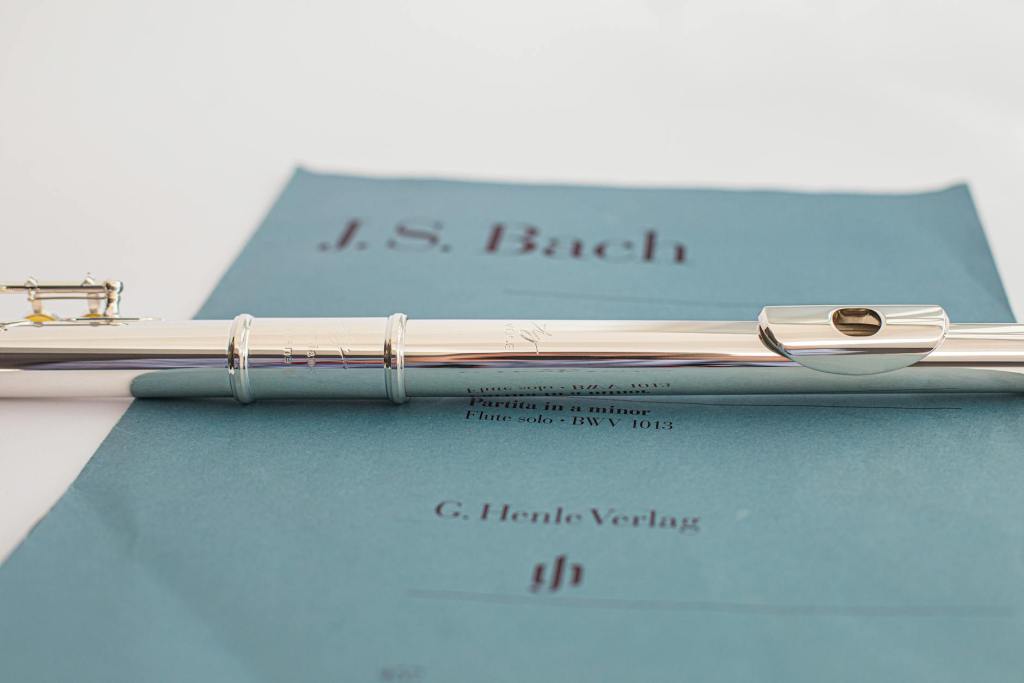
    At the studio, Dr. Phil strutted out like a Texan oracle with a talk-show budget. Each of us received a set of mystical props: a rock, a book, a flute, and a seashell. We were told to sniff them and describe their scent. The trick, he said, was that every smell meant something different to everyone. At the end of the show, he’d reveal the “real” smell and, somehow, this revelation would transform our lives.

    When my turn came, I inhaled the objects furiously—nothing. No salt, no cedar, no note of redemption. Just the hollow scent of my own frustration. Instead of passing them on, I hoarded them. Soon they piled around me like the debris of a failed experiment: rocks, shells, books, flutes—my life rendered as an archaeological dig of bad habits.

    Dr. Phil raised an eyebrow, that signature look of televised concern. “I hear you’re a professor—a smart man,” he said. “But you’re disorganized. You need to get your act together.”

    I looked at the clutter choking the floor and saw the metaphor laid bare. My possessions were my sins: chaos, indecision, intellectual hoarding, spiritual mildew. I woke knowing the dream’s diagnosis—my life had become a dumpster fire disguised as scholarship. It was time to clean house, inner and outer.

  • The Trilemma, the Mythmaker, and the Mad Apostle

    The Trilemma, the Mythmaker, and the Mad Apostle

    C.S. Lewis is famous for the “trilemma” he poses to frame the true nature of Jesus. He argues you have three choices: Jesus is claiming to be God because he is insane. Jesus is claiming to be God but knows this claim to be untrue but says so with malevolent intent because he is devilishly dishonest. Or Jesus’ claim to be God is true. Lewis argues that the common fourth scenario is not permitted in this trilemma: You can’t say Jesus is a nice guy with wisdom that encourages all to be wise and to love each other. I call this the “Hippy Jesus” scenario. 

    While I see Lewis’ insight and honesty in not having a patronizing view of Jesus and the high-stakes claims he makes about salvation and living an abundant life, I’m not so sure the trilemma is that unique or groundbreaking. The trilemma applies to all competing religions, which make their claims to being different from their competition and the “best” of all of them. Either these religions and their advocates are crazy, cynical, or telling the truth. 

    The same goes for St. Paul. Either he was a madman, a lying cynic, or a truth-teller. 

    Reading Hyam Maccoby’s The Mythmaker: Paul and the Invention of Christianity, it’s clear that Maccoby sees Paul as both mad and cynical, a conniving narcissist with grand ambitions to head a religious movement regardless of how many people he has to step on. Much of Maccoby’s book is speculation and personal interpretation: Paul was not really a Pharisee. Paul remade Jesus from a champion for political liberation to an otherworldly figure. Jesus, a Pharisee himself, would have been offended by Paul’s notion of a divine Christ title when Jesus saw the Christ title to be a royal title, a “god-king,” that defined his Jewishness. Paul absolved the Romans from all blame for Jesus’ execution and placed it all on the Jews. The Pharisees had sympathy for Jesus and the Nazarenes in general and would not have persecuted them. This is an antisemitic myth in the New Testament designed to create a new religion based on misrepresentation. Paul’s rhetoric is so flawed that he is a hack whose epistles lack the trademark style of Pharisee training.

    The unity between Paul and the early Jerusalem church portrayed in Acts is a “sham.” The New Testament is made by authors who have given up on the Jews and are writing for a new audience–gentiles–therefore, the writings are aimed at “the anathematization of the Jews.” He argues that there is solid evidence of a competing Christianity in the first few centuries, that of the Ebionites, a theology free from the poison of Paul. 

    Maccoby’s critics have pointed out that much of the book is speculation and lacks conventional scholarly credibility. Additionally, they observe that Maccoby, ironically writing in a Pauline persona, has acrimony for Paul, builds a villain-like character, and then contorts and cherry-picks evidence and speculation to put flesh and bone on his character, who is more of a literary creation than a historical figure. In Maccoby’s view, Paul is not a truth-teller. In the context of the trilemma, Paul is a mix of a madman and conniving liar and mythmaker. 

    I have mixed feelings about Maccoby’s book. Part of me sees the speculation free of scholarly evidence and fictive elements in Maccoby’s writing, but one thing remains convincing: Christianity as a supercessionist religion. By replacing Judaism, Christianity must be looked at in terms of the trilemma: Either its writers are sincere albeit mad, they are fibbing and fabricating with a grand ambition in mind, or they are telling the truth. 

    To examine Paul in the context of the trilemma becomes most compelling in Maccoby’s final chapter, “The Mythmaker.” Maccoby writes that Paul is not so much a thinker whose writings give us definitive notions of free will, predestination, original sin, and the trinity; rather, Paul “had a religious imagination of the highest order” and is less a theologian and more of a “mythologist.” Consumed by his religious imagination, Paul was surely sincere in many of his writings. But of course the unconscious can play games on all of us. The unconscious has its own agenda to unfold wish fulfillment and satisfy deeply rooted needs for validation, love, and even power. 

    Whereas Maccoby sees Jesus as someone who wanted to fulfill his role in the Jewish religion, Paul saw Jesus differently: someone who conformed to the new religion that spun from Paul’s frenzied, often brilliant imagination. Just as Hamlet is a creation of Shakespeare, Jesus is a creation of Paul.  

    Paul has written a new story that the world has never seen in the form of a Pauline myth that is “the descent of the divine saviour.” Maccoby writes: “Everything in the so-called theology stems from this: for since salvation or rescue comes from above, no efficacy can be ascribed to the action or initiative of man.” We must abandon all other hope for the salvation of mankind and look only to the saviour who has descended to rescue us. 

    The Descending Saviour myth contains “narrative elements.” We live in a binary world of Above and Below, Light and Darkness. We live in a dark hellscape and must be rescued. The human condition is depraved. We are prisoners to sin and darkness and must be saved from the powers of Evil. We cannot, like Sam Harris, meditate and live a life of contemplation because such contemplation will cause us to surrender more to the evil inside of us. Harris’ solitary meditations may be a road to divinity for him, but for Paul, they pave a road to hell. 

    According to Maccoby, Paul’s myth causes the story about Adam and Eve’s expulsion from Paradise to be an extreme, binary view of sin that deviates from “its traditional Jewish exegesis.”  

    Paul’s extreme views cause him to see sex as a morbid affliction and he is incapable of celebrating sex as part of a fulfilling and healthy life and can only see sex through a prism of pinch-faced hostility and skepticism.  

    In Paul’s myth, Paul himself is a conduit for divine messages and visions and his writings are presented to us with the imprimatur of God. In contrast, the Old Testament is a downgrade: not written by God but curated by angels. In this comparison, Paul is superior to Judaism. In Maccoby’s view, Paul’s self-aggrandizement amounts “to wholesale usurpation of the Jewish religio-historical scheme.” 

    The Jewish way to salvation was for all of humanity to work on expunging “the evil inclination” discussed by the prophet Ezekiel. In the Pauline way, only a rescuer from above can remove this evil inclination. But Maccoby writes that the solution to sin and evil is more sophisticated and subtle than Paul can understand, perhaps because he is so absorbed by his own religious imagination. What Paul cannot understand is this: The rabbis say in the Mishnah: “Better is one hour of repentance and good works in this world than the whole life of the world to come; and better is one hour of repentance and good works in this world than the whole life of the world to come; and better is one hour of bliss in this world to come than the whole life of this world.” Such a view requires a balanced view of the human condition, but Paul, in Maccoby’s eyes, is too consumed by “adolescent despair and impatience for perfection” (Paul sounds an awful lot like me in this regard). Rabbis argue that the point of life is to struggle, and this struggle is more important than the reward. But Paul is not in this camp: “For Paul, the reward has become the indispensable substitute for the struggle, which he regards as hopeless and, therefore, pointless.”

    Maccoby rejects Paul’s salvation by faith model. You don’t just become a believer and enjoy instant salvation like Tang mixed with water. Maccoby writes: “People who are supposed to be ‘saved’ behave, unaccountably, just as badly as before they were saved, so that law has to be reintroduced to restrain them. Also, there are always logically minded people to say that if they are ‘saved,’ all behaviour that happens to appeal to them (such as sexual orgies or murder) in the confidence that nothing they do can be wrong. In other words, by being ‘saved,’ people may behave worse instead of better.” 

    According to Maccoby, Pauline’s mythmaking was born from “adolescent despair and impatience.” In his scramble to come up with a religion to satisfy his psychological needs, Paul combined Gnosticism, mystery religions of human sacrifice known as blood cults, and Judaism. These were the three major tools in Paul’s religious toolbox that he jerryrigged a new religion that would dominate the world. In borrowing from Judaism, Paul took the idea of the promises to a chosen people by making it so the Jews were no longer chosen but the gentiles. This brilliant maneuver made Christianity more appealing and marketable. 

    The most damning criticism Maccoby has of Paul’s new religion is the accusation that Paul is the chief author of antisemitism, “which eventually produced the medieval diabolization of the Jews, evinced in the stories of the ‘blood libel’ and the alleged desecration of the Host.” Paul referred to the Jews as the “sacred executioner.” He also writes that the Jews “are treated as enemies for your sake.” 

    Antisemitism is integral to the Paul’s greatest “fantasist” element of mythmaking: deifying Jesus and making his death “into a cosmic sacrifice in which the powers of evil sought to overwhelm the power of good, but, against their will, only succeeded in bringing about a salvific event. This also transforms the Jews, as Paul’s writings indicate, into the unwitting agents of salvation, whose malice in bringing about the death of Jesus is turned to good because this death is the very thing needed for the salvation of sinful mankind.” In Paul’s new religion, he showed that his mythmaking contained “an incentive to blacken the Jewish record in order to justify the Christian take-over of the Abrahamic ‘promises.’”

    Maccoby argues that Paul’s new religion has been a mixed bag: “The myth created by Paul was thus launched on its career in the world: a story that has brought mankind comfort in its despair, but has also produced plentiful evil.” 

    In this view, how do we assess the trilemma in evaluating Paul? Maccoby says Paul produced his religion out of “despair and agony,” which is to say from the torment of his inner being, a contrast to the Christian belief that Paul was animated by divine messages and visions. Paul’s “character was much more colourful than Christian piety portrays it; his real life was more like a picaresque novel than the conventional life of a saint. But out of the religious influences that jostled in his mind, he created an imaginative synthesis that, for good or ill, became the basis of Western culture.” Therefore, Paul is partly mad, a man consumed by his religious despair, and partly power-hungry, a man who seeks to create a new religion to assuage his torment and to universalize his sense of despair and salvation so the rest of the world can share in it. 

    Is Maccoby’s portrait of Paul convincing? Currently, my take is this: We have to take some of Maccoby’s judgments more seriously than others. Some narratives and psychological portrayals of Paul seem like mythmaking on Maccoby’s part. Perhaps Christianity is more complex and mysterious and less conspiratorial than Maccoby wants us to believe. But perhaps there are conflicting agendas in the making of Christianity and the Jews were unfairly portrayed. Perhaps in this regard, Maccoby is on to something and has contributed much in the way we see how religions are made and how antisemitism was born. 

  • Against Mythmaking 

    Against Mythmaking 

    In The Mythmaker: Paul and the Invention of Christianity, Hyam Maccoby doesn’t treat Paul as a saintly architect of faith. Instead, he brands him a slick opportunist — a theological con artist who sidelined Jesus’ Jewish disciples and reinvented the movement to glorify himself. In Maccoby’s telling, Paul isn’t the earnest apostle of Sunday school murals; he’s a résumé-padding religious entrepreneur with a flair for self-promotion.

    Luke, author of Acts, doesn’t escape scrutiny either. To Maccoby, Luke plays the role of breathless publicist, polishing Paul into a heroic Hollywood lead — all charisma, no contradictions, halo firmly secured with narrative glue.

    Yet as I reread Maccoby, I can’t ignore the irony: in exposing Paul’s myth-making, Maccoby may be engaged in his own. If Luke sculpted Paul into a glowing protagonist, Maccoby chisels him into a grand villain — less apostle, more Bond antagonist with holy stationery.

    My relationship with Paul is messier than either portrait. At times he reads like a puffed-up moralist enthralled by his own authority; at other moments, he achieves startling spiritual clarity — like his definition of God as self-emptying love in Philippians. Myth-making, whether heroic or malicious, flattens figures like Paul into cardboard cutouts, sanding down the contradictions that make real people aggravating, compelling, and occasionally profound.

    So while Maccoby offers a seductive, neatly packaged explanation for Christianity’s break from Judaism — Paul scheming his way to divine stardom — it feels too tidy. Real history rarely sticks to clean villain-hero binaries. 

    My life would be defined by resolution and an ability to move on if I could see Paul that way Maccoby does, but before I can toss Paul into the narcissist bin and slam the lid, I have to admit that Maccoby — like Luke — might be seduced by narrative neatness. Paul’s letters show someone less like a cartoon schemer and more like a man painfully aware of his own weakness, insecurity, and failure. If he were a megalomaniac mastermind, he was spectacularly bad at the role: beaten, jailed, mocked, shipwrecked, chronically ill, and constantly sparring with congregations who treated him not like a guru but like the world’s most irritating substitute teacher. His theology isn’t the product of a slick PR machine; it reads like a bruised mystic wrestling with power, ego, and surrender. 

    You can see it in Paul’s grudging boasts, his trembling confessions, and his moments of ecstatic humility — that strange mix of cosmic ambition and self-annihilation that marks someone grappling with God, not angling for a corner office. 

    It may be comforting to imagine Paul as either saint or sociopath, but the textual record points to something far more inconvenient: a brilliant, exasperating, self-contradicting human being who stumbled toward transcendence while dragging his flaws behind him like rattling tin cans tied to a wedding bumper.

    In any event, I shall continue rereading Maccoby. His strident reaction to Paul continues to fascinate me.

  • Thou Shalt Remember That Unsolicited Advice Is a Sacred Path to Humiliation

    Thou Shalt Remember That Unsolicited Advice Is a Sacred Path to Humiliation

    It was junior year, and I was inspecting the high school football team’s weight room—a dank temple of testosterone and tobacco spit. As a self-anointed expert (and Junior Olympic Weightlifting champion, lest anyone forget), I felt entitled to critique everything: the dumbbell selection, the ergonomics, the hygiene, the very air of the place. The floor looked like it had been carpeted with sunflower shells and Copenhagen runoff.

    I had just begun my sermon on the spiritual poverty of their equipment when the team’s starting linebacker, Erik Simonson—a slab of muscle with the conversational subtlety of a freight train—paused mid–military press. His gray-blue eyes locked on me like radar.

    “Is someone paying you to be an asshole,” he said evenly, “or are you doing volunteer work?”

    The weight room erupted. Even I laughed, because the line was perfect—surgical in its cruelty, poetic in its timing. But laughter has an aftertaste, and when I got home that night, the sting of public mockery still clung to me. I turned to my spiritual advisor, Master Po.

    “Master Po,” I said, “why did I invite that kind of humiliation? My criticisms were valid.”

    “Grasshopper,” he said, sipping tea with an aggravating serenity, “you must not go through life believing people crave your opinions. You are not a paid social commentator, though I know your heart yearns to be one.”

    “But weren’t my criticisms legitimate?” I persisted.

    “Legitimacy,” said Po, “is irrelevant. The truth is like chili powder—best applied sparingly. Even those who beg for feedback rarely mean it. They desire flattery dressed as honesty. Therefore, you must learn the art of selective silence. Speak briefly, and when possible, not at all.”

    I sighed. “But I love the sound of my own voice.”

    Po smiled the smile of a man who’s been disappointed by many students before me. “Yes,” he said, “but what sounds like sweet music to your ears may strike others as the shriek of ignorance, emotional poverty, and uninvited arrogance.”

    The next day, I returned to the weight room and said nothing. The linebackers grunted and lifted. I stood in silence, spiritually enlightened and socially intact—a monk in a monastery of iron plates.

  • Thou Shalt Not Seek Meaning Where Only Rocks Dwell

    Thou Shalt Not Seek Meaning Where Only Rocks Dwell

    I was having dinner with my father—his post-divorce steak ritual on a patio that smelled faintly of smoke, charred meat, and newfound freedom. He’d bought a barbecue, a secondhand sofa, and the kind of wine that announces you’re single again but not destitute: red zinfandel in a tumbler. He cut into his steak with the swagger of a man who believed he’d successfully rerouted his son from the city dump to the university.

    “So,” he said, spearing a chunk of meat, “what are you thinking about majoring in?”

    My conversations with Master Po had me leaning toward philosophy and religion—the twin pillars of spiritual unemployment. “I think I’ll study philosophy or religion,” I said.

    He froze mid-chew. “Why in the hell would you want to do a thing like that?”

    “To study the search for meaning.”

    He swallowed, wiped his mouth, and took a long gulp of zinfandel. “Don’t waste your time.”

    “Meaning is a waste of time?”

    He smiled the way only a man twice-divorced and freshly cynical can smile. “Let me tell you a story.”

    He launched into a parable that sounded suspiciously homemade.

    A young man goes to the beach and asks God to reveal the meaning of life. God, ever the trickster, tells him the secret is written on one of the thousands of rocks scattered across the shore. The young man groans—it could take forever. God shrugs: “That’s not my problem.”

    So the man begins his search. Years pass. The tide rises and falls, civilizations collapse, and still he flips rocks like a man looking for lost keys in eternity’s junk drawer. When he’s old, leathery, and alone, he looks up at the sky and cries, “God, I’ve searched my whole life and found nothing! Every rock is blank. I’ve sacrificed joy, friendship, and everything good in the name of this search!”

    God looks down and says, “That’s right, you dumb shit. Now die.”

    When my father finished, he leaned back, self-satisfied, the smoke haloing his head like the ghost of a cigar.

    “Where did you hear that story?” I asked.

    He grinned. “I just made it up.”

    “Just now?”

    “Damn right. For your benefit.”

    “My benefit? What’s the moral?”

    “One, that God doesn’t give a shit. Two, that there is no meaning. And three, that you’d better not waste your college education searching for it.”

    Later that night, lying in bed, I consulted my spiritual mentor, Master Po, the philosopher of the leaky-roof dojo.

    “Master Po,” I said, “my father believes that searching for meaning is pointless.”

    “Your father is right, Grasshopper,” he said serenely. “The Way defies all grasping. Meaning is the mirage on the horizon—pursue it, and you will die of thirst. Better to drink from the river as it passes through your hands than try to hold it. For the river flows on… to the sea.”

    I thought about this while staring at the ceiling fan spinning in lazy circles. My father had God saying, “Now die.”
    Master Po preferred rivers and metaphors.
    Somewhere between them, I decided, was college.