Tag: family

  • Everyone Has an Origin Story. Here Is Mine

    Everyone Has an Origin Story. Here Is Mine

    The Road Trip That Made You Possible

    Everyone has an origin story. You are no exception. Yours begins with your father. Without your father’s sheer audacity and competitive determination, you wouldn’t even be here today. Long before you were a glint in his eye, your father was locked in a battle of epic proportions—an all-out, no-holds-barred contest for the affections of your eighteen-year-old mother. And this wasn’t just any competition. His rival? None other than John Shalikashvili, future United States General and Chairman of the Joint Chiefs of Staff. Their battlefield? The smoky, beer-soaked bar scene of Anchorage, where the stakes were higher than a highball glass during happy hour.

    Their duel for your future mother’s heart took a brief Christmas ceasefire when Shalikashvili retreated to his tactical command center in Peoria, Illinois, while your father returned to Hollywood, Florida, to soak up some sunshine and plot his next move. But as he lounged by the pool, your father realized that victory in this romantic Cold War required swift and decisive action. So he cut his vacation short, crammed himself into a cream-colored 1959 Morris Minor—a vehicle that looked like it had been assembled from the Island of Misfit Toys, complete with a coat hanger for an antenna and door handles barely clinging on by the grace of duct tape—and embarked on the most high-stakes road trip of the 20th century.

    Halfway through this odyssey, the car’s fuel filter decided to go on strike, leaving your father stranded in the middle of nowhere. When the local auto parts store couldn’t supply a replacement, your father—who would later perform engineering miracles at IBM—pulled off a MacGyver-level feat of mechanical wizardry. Armed with nothing but a prophylactic and a paperclip, he fashioned a makeshift fuel filter that was equal parts creative desperation and mechanical blasphemy. This duct-taped miracle kept the fuel pump from either flooding the engine or abandoning ship entirely, depending on its mood.

    Driven by the urgency of love and the fear of losing ground to Shalikashvili’s brass-polished charm, your father powered through the journey, ignoring his growling stomach like a man possessed. Subsisting on loaves of bread devoured like a feral squirrel, he soldiered on, skipping meals because, who needs food when you’re racing against the clock to prevent a military coup over your future wife?

    After a ferry ride that probably felt like crossing the River Styx, your father finally arrived in Anchorage, a full forty-eight hours before Shalikashvili could swoop in with his military swagger and irresistible authority. Nine months later, you were born, the ultimate trophy in this love-struck arms race.

    Even before you took your first breath, your father’s victory over Shalikashvili imparted some crucial life lessons: The competition is fierce, and life is a zero-sum game where you’re either a winner or a nobody. To survive, you must find a competitive edge, and if you ever get complacent, rest assured, someone will move in on your turf faster than you can say “ranked second.”

    As a teenage bodybuilder obsessed with becoming Mr. Universe, opening a gym in the Bahamas, and silencing your critics, you often thought about bodybuilding great Ken Waller stealing Mike Katz’s shirt before a competition in the movie Pumping Iron. Something as trivial as a missing shirt could send your opponent into a tailspin, disrupt his focus, and rattle his confidence like a cheap shaker bottle. Like Mr. Universe Ken Waller, your father taught you that power is a road paved with relentless cunning, ruthless strategy, and a healthy dose of underhanded shenanigans. 

    But underneath the shenanigans and Machiavellian flair, your father taught you one core truth: sweat more than everyone else. Out-hustle, out-grind, outlast. In his gospel, sweat wasn’t just effort—it was currency. The person who left the biggest puddle won. 
  • Barbells and Boundaries

    Barbells and Boundaries

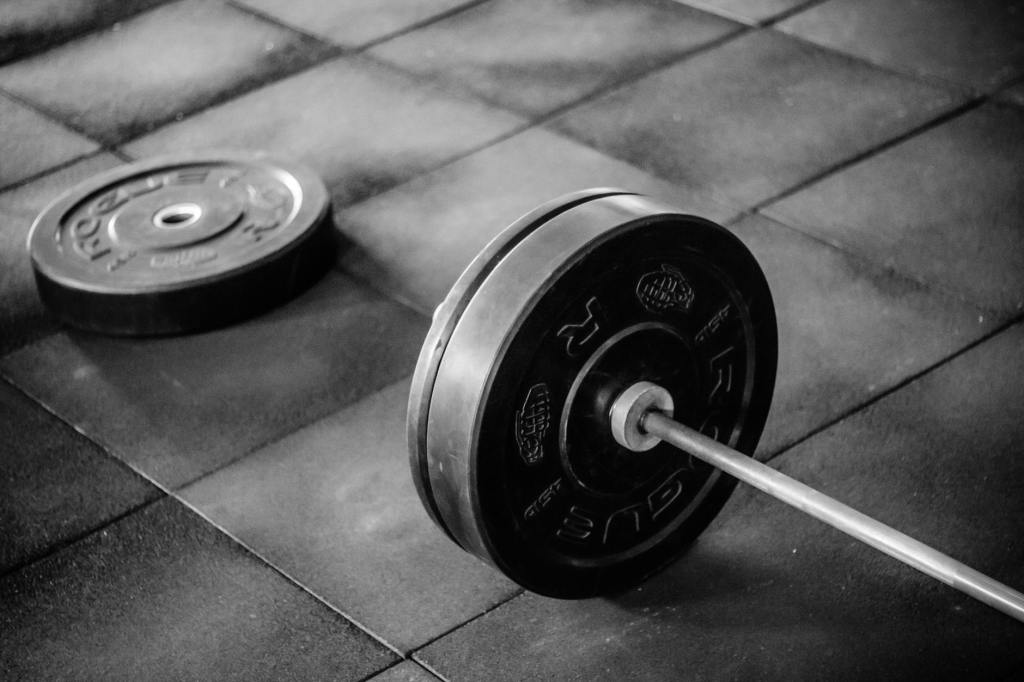
    Late one Saturday afternoon, you were marooned in your bedroom, held hostage by the epic saga playing out in your kitchen. Paul Bergdorf, a plumber with the emotional subtlety of a freight train, had been battling the kitchen sink since morning. His oversized toolbox had exploded across the linoleum floor like a mechanical crime scene. Every few minutes, you heard a grunt or a thud, the sounds of a man locked in mortal combat with ancient pipes.

    Your mom strolled into your room with a face that mixed gratitude with a romantic optimism that always smelled like a warning.
    “It’s so nice of him to do this,” she said.
    “What’s that supposed to mean?” you asked.
    “He’s not charging me.”
    “Of course he is.”
    “No, he’s a friend.”
    “He’s not your friend, Mom. You just met him.”
    “His name is Paul Bergdorf. One of my girlfriends introduced me to him.”
    “This isn’t going to end well.”
    “Keep your voice down.”

    Right then, Bergdorf bellowed from the kitchen, proudly declaring that the sink had been fixed. Your mom hurried away. You stayed in your room, knocking out reverse barbell curls while watching through the sliding glass door that connected your room to the atrium. Beyond that was the kitchen, where Bergdorf stood like a sweaty gladiator, wiping his greasy mitts on a rag. He looked like a bloated baby trying to cosplay as a man: massive belly, oil-streaked jeans, beat-up boots, and that tragic attempt at a combover. His blue eyes were permanently glazed, his nose red and bulbous like a squashed tomato, and the house now reeked of his sweat mingled with low-grade cologne.

    He turned the faucet on, then off, proudly displaying his handiwork. “Now before I go,” he said, puffing out his chest, “I just want to say—I may not be the best-looking guy around, but I can grill a damn good steak. I’m talking big, thick, juicy slabs of meat. How about joining me next weekend for a barbecue?”

    “That’s very nice, but no thanks,” your mom said, her tone firm.

    Your forearms burned from the 50 reverse curls, but you kept going, switching to wrist curls as if preparing for battle.

    “I’ll get us some prime steaks,” he pressed on. “You won’t believe how tender they’ll be.”

    “Thanks again, but I’m busy.”

    “All I ask is one chance to serve up the most delicious barbecued steak you’ve ever had.”

    “No, really. I’m not available.”

    “Just pick any weekend,” he insisted, “and I’ll deliver a steak you’ll never forget.”

    Your forearms were bulging. That was it. You dropped the barbell, stormed down the hall, past the dining room, and burst into the kitchen like a SWAT team with a moral objection.

    “How many times does she have to say no?” you demanded.

    “Hey, let’s cool it,” Bergdorf replied, raising his hands. “I was just asking your mom out. I fixed the sink. It’s the least I could do.”

    “If you want to volunteer your plumbing skills, great. But fixing a drain doesn’t entitle you to date privileges.”

    “I just wanted to make her a steak!”

    “Okay, we get it. You’re a steak wizard. Good for you. Now pack up your tools and get the hell out.”

    You towered over him, finger pointed at the front door like an Old Testament angel. Bergdorf glared, shoved his tools into the truck, slammed the door, and roared off, trailing a plume of driveway dust behind him.

    Your mom just stood there, stunned.
    “You scared him away,” she said.
    “Next time, let’s just pay the plumber.”

  • Nicknames Are a Life Sentence

    Nicknames Are a Life Sentence

    You sat in the soaked bleachers of Canyon High on a rainy Friday night, the stadium lights casting a sickly greenish-yellow haze across the field. The Canyon Cougars were facing off against the Hayward Farmers, but all eyes were on their freshman linebacker phenom, Jack Del Rio—part football player, part demigod in cleats.

    Next to you, Liz huddled under a massive umbrella. Between the two of you sat a bag of popcorn that had long since surrendered to the rain, each kernel tasting like soggy regret.

    Off to the side, you noticed the girl they called the Tasmanian Devil. She was marooned on a solitary slab of bleacher, her jacket soaked, mascara melting like the villain in a low-budget horror flick. No umbrella, no allies, just rain and raw adolescence.

    “Tasmanian Devil’s got that look,” you said to Liz, chewing a kernel that crumbled into sadness on your tongue.

    “What look?” she asked.

    “The one that says she knows her life is a steaming pile of crap.”

    Liz nodded slowly. “Poor thing.”

    “Do we even know her real name?” you asked.

    She gave a small shrug.

    “Exactly. She’s been sentenced to that nickname for life. Might as well tattoo it on her forehead.”

    As the game dragged on, the rain lightened into a mist, coating everything in a kind of apocalyptic glow. The crowd buzzed as Del Rio took the field, and a man behind you barked, “That kid’s going pro, you mark my words.”

    You leaned toward Liz. “Jack Del Rio and the Tasmanian Devil—two trains, opposite tracks. One’s off to glory, the other’s derailing into a swamp.”

    “We could invite her over,” Liz offered.

    You waved like a deranged game show host. “Need an umbrella? Want to join us?”

    She shook her head. Her eyes stayed on the ground. Her jacket soaked through like a sponge left in a car wash.

    “At least you tried,” Liz said with a sympathetic smile.

    You shifted the conversation. “You mad at your dad?”

    “No,” you said, surprising even yourself. “If anything, I’m relieved. There’s less tension now. No more walking on eggshells.”

    Liz nodded. “After my dad left, my mom never dated. She’s allergic to men. She’s got this fortress of piano recitals, farmer’s markets, and gin rummy with Grandma. Her friend circle is basically a man-repellent sorority.”

    You sighed. “I’m dreading my mom dating. She’s too nice, too open. Men could run circles around her.”

    “You can’t control everything,” Liz said.

    “There’s this awful book called How to Pick Up Girls! It’s like a predator’s playbook. If some sleazeball uses that on her, I swear I’ll Hulk out.”

    Liz laughed. “You can’t be a bouncer at your own house.”

    You squared your shoulders. “Watch me.”

  • The Cinnamon Apocalypse

    The Cinnamon Apocalypse

    You shaved with your father’s vintage Gillette Super Speed razor and immediately sliced the tip of your chin. A small crimson droplet formed—a blood-signed pact with manhood. You showered, scrubbed away the dried blood, threw on jeans, and topped it off with your prized Larry Csonka Miami Dolphins jersey.

    When you stepped into the living room, your mother was parked on the couch, Carly Simon lamenting through the speakers as she ate raw hamburger meat with Lawry’s Seasoned Salt, her fingers slick and red like she’d just committed a low-grade crime. She stared forward with the calm of someone contemplating Earth’s pending expiration date.

    “Mom, can’t you cook that?” you asked, half-gagging, half-pleading.

    Without looking at you, she speared another bloody hunk and took a bite.

    Then came the honk. You bolted outside to find Gutierrez in his orange Karmann Ghia, a discount rock star with his bushy sideburns. Susan Bowman, the blonde British exchange student, sat next to him. Crammed in the back were Rick Galia, Cheryl Atkins, and Liz Murphy, packed tighter than socks in a suitcase.

    “I can’t fit,” you said.

    “No problem,” Galia said. “Cheryl and I will get in the trunk.”

    “You can’t be serious.”

    “We’re creating a mobile make-out den. McMahon, close the trunk.”

    You did.

    In the back seat with Liz, you caught the scent of strawberries and ginger from her hair and cinnamon gum on her breath. She looked like a holiday ornament come to life in her green sweater. Your hands were sweating like you were mid-squat with a barbell.

    You thought about that puberty film in biology—the one where a guy lifts his arms to reveal industrial-grade sweat stains. Not helpful.

    At the pizza parlor, you all hit the salad bar and settled in. Galia whipped out a wad of cash like a game show host. “Dinner’s on me.”

    Turns out his dad’s shark-bitten surfboard sold for two grand. You doubted the story until you remembered Galia could sell sand at the beach.

    You hated the pizza, said so, and earned your first dose of “Greenridge snob” accusations.

    Afterward, at the theater, Shampoo was sold out. So was The Apple Dumpling Gang. You all opted for One Flew Over the Cuckoo’s Nest, but had 40 minutes to kill.

    Truth or Dare began. Your confession? You had a cousin who dated Ginger from Gilligan’s Island. Weak. Then came the bionic beach vision fantasy. Stronger, but still humiliating.

    Liz, amused, asked if your muscles were bionic too and squeezed your bicep. You were melting inside.

    In the theater, she rubbed her boot against the metal chair in front of her. The sticky sound made you want to crawl into the floorboards. She did it again.

    “Please stop,” you whispered.

    She grinned. “Conditioning.”

    The other couples were busy kissing. You were busy dying inside.

    After the movie, you all piled back into the car. Cheryl sat on Galia’s lap. Gutierrez drove you home.

    Outside your Eichler house, you turned to Liz and mumbled something about a good time. She responded by popping her gum and planting a cinnamon tsunami of a kiss on you.

    And that’s when you snapped.

    With a caveman scream, you launched upward, tearing through the convertible’s soft top like a hormone-fueled jack-in-the-box. You stood half-exposed above the car as the others gawked in stunned silence.

    “What the hell, McMahon?” Gutierrez shouted.

    “I don’t know. I think I’m stuck.”

    Liz was laughing like a lunatic. Neighbors came out filming. A Great Dane named Thor barked in chaos.

    Then your dad appeared with a flashlight and a robe that looked like it had survived Woodstock. “Jeff?”

    “Unfortunately.”

    “I’ve got a hacksaw.”

    He sawed you free. You climbed out, brushed off the canvas bits, and said, “I’ll pay the deductible.”

    Gutierrez waved it off. Galia said the kiss must’ve been nuclear.

    You retreated to your room, tried to decompress with bodybuilding magazines, and realized your mouth still tasted like cinnamon.

  • The Gospel of Squats

    The Gospel of Squats

    In seventh grade, while your father was off playing superhero in the Peace Corps—presumably saving the world one mosquito net at a time—you were marooned in Nairobi, Kenya. Your days were spent juggling soccer balls with local kids whose knees seemed invincible, bonding with mood-swinging chameleons, and trying to convince yourself that your Action Man dolls (the British knockoff of G.I. Joe) were more than just inert plastic with bad articulation. When the dolls failed to deliver, you escaped into glossy American sports magazines, fantasizing about transforming your spaghetti frame into the hulking majesty of Reggie Jackson or Greg Luzinski. You didn’t realize it yet, but you were becoming a social alien—an unintentional exile from your former Bay Area self, the human equivalent of a chameleon stuck on a disco strobe.

    Coming back to California in 1974 to attend Earl Warren Junior High felt like being dropped into a strange new planet where bad perms and bell-bottoms were considered high fashion. When kids talked about “doobies,” you imagined something slimy from the ocean depths, and “bong” sounded like an unfortunate percussion instrument. Naturally, you said all this out loud. Your classmates—high-functioning experts in pot, Zeppelin, and humiliation—saw you for what you were: a clueless alien with a warped pop culture radar. “This kid thinks a bong is a wind chime” became your unofficial welcome-back slogan.

    Enter Lou Kruk, your P.E. teacher: part demigod, part drill sergeant, part Baywatch extra. He stood over six feet tall with the torso of an ice cream cone, mahogany tan legs bursting out of gym shorts so tight they could’ve been airbrushed. His lion-like hair, aviator sunglasses, and windbreakers gave him the aura of a man who taught dodgeball by day and raced Porsches by night. He did, in fact, drive a Porsche. He also owned a sailboat. And his girlfriend looked like a magazine ad for champagne and yacht clubs.

    Kruk’s voice thundered like Wolfman Jack having a meltdown, and he blasted Herb Alpert & The Tijuana Brass while ordering you to deadlift your body weight. During one rope climb session in the cafeteria, he interrupted class to verbally annihilate a group of bullies with a monologue worthy of a Greek tragedy. “He’s already in the gutter! You want to put your boot on his head too?” The bullies melted. You, meanwhile, silently vowed to name your first child Lou.

    On day one of Olympic Weightlifting, Kruk preached the gospel of the front squat. Feet flat, butt to the floor—no exceptions, no mercy. You took this commandment personally. You practiced until your glutes sang hymns of soreness. Your squats got so deep they could’ve hit oil. And when Kruk pointed to you as the Platonic ideal of squat form, the gym practically knelt.

    Eventually, you were powering through front squats with 200 pounds like they were grocery bags. The day you nailed a dozen reps at 225, the entire gym went silent. You weren’t lifting; you were levitating. Your thighs bloomed into grotesque botanical wonders. 

    Soon, you were squatting everywhere. At your locker. In algebra. As goalie during PE soccer games (to your teammates’ horror, as balls flew by into the net). You became known as “Squats,” and also “Thunder Thighs,” titles you wore like medals pinned to your hypertrophic quads. You didn’t care about ridicule anymore. You were a squat apostle, a zealot for quad dominance in the 148-pound class, where you snatched and clean-and-jerked like an adolescent Hercules hopped up on whey and divine purpose.

    You basked in Kruk’s approval like a reptile soaking up solar validation. His nods, his booming laughter—they were your sacraments. You became an unsolicited preacher, spreading the word of the front squat like a sidewalk prophet. For you, the squat wasn’t just exercise. It was theology. It was identity. It was the key to everything: confidence, masculinity, self-worth. Every rep was a sermon. Every deep descent into the squat rack brought you closer to the divine.

  • The Road Trip That Made You Possible: An Origin Story

    The Road Trip That Made You Possible: An Origin Story

    Everyone has an origin story. You are no exception. Yours begins with your father. Without your father’s sheer audacity and competitive determination, you wouldn’t even be here today. Long before you were a glint in his eye, your father was locked in a battle of epic proportions—an all-out, no-holds-barred contest for the affections of your eighteen-year-old mother. And this wasn’t just any competition. His rival? None other than John Shalikashvili, future United States General and Chairman of the Joint Chiefs of Staff. Their battlefield? The smoky, beer-soaked bar scene of Anchorage, where the stakes were higher than a highball glass during happy hour.

    Their duel for your future mother’s heart took a brief Christmas ceasefire when Shalikashvili retreated to his tactical command center in Peoria, Illinois, while your father returned to Hollywood, Florida, to soak up some sunshine and plot his next move. But as he lounged by the pool, your father realized that victory in this romantic Cold War required swift and decisive action. So he cut his vacation short, crammed himself into a cream-colored 1959 Morris Minor—a vehicle that looked like it had been assembled from the Island of Misfit Toys, complete with a coat hanger for an antenna and door handles barely clinging on by the grace of duct tape—and embarked on the most high-stakes road trip of the 20th century.

    Halfway through this odyssey, the car’s fuel filter decided to go on strike, leaving your father stranded in the middle of nowhere. When the local auto parts store couldn’t supply a replacement, your father—who would later perform engineering miracles at IBM—pulled off a MacGyver-level feat of mechanical wizardry. Armed with nothing but a prophylactic and a paperclip, he fashioned a makeshift fuel filter that was equal parts creative desperation and mechanical blasphemy. This duct-taped miracle kept the fuel pump from either flooding the engine or abandoning ship entirely, depending on its mood.

    Driven by the urgency of love and the fear of losing ground to Shalikashvili’s brass-polished charm, your father powered through the journey, ignoring his growling stomach like a man possessed. Subsisting on loaves of bread devoured like a feral squirrel, he soldiered on, skipping meals because, who needs food when you’re racing against the clock to prevent a military coup over your future wife?

    After a ferry ride that probably felt like crossing the River Styx, your father finally arrived in Anchorage, a full forty-eight hours before Shalikashvili could swoop in with his military swagger and irresistible authority. Nine months later, you were born, the ultimate trophy in this love-struck arms race.

    Even before you took your first breath, your father’s victory over Shalikashvili imparted some crucial life lessons: The competition is fierce, and life is a zero-sum game where you’re either a winner or a nobody. To survive, you must find a competitive edge, and if you ever get complacent, rest assured, someone will move in on your turf faster than you can say “ranked second.”

    As a teenage bodybuilder obsessed with becoming Mr. Universe, opening a gym in the Bahamas, and silencing your critics, you often thought about bodybuilding great Ken Waller stealing Mike Katz’s shirt before a competition in the movie Pumping Iron. Something as trivial as a missing shirt could send your opponent into a tailspin, disrupt his focus, and rattle his confidence like a cheap shaker bottle. Like Mr. Universe Ken Waller, your father taught you that power is a road paved with relentless cunning, ruthless strategy, and a healthy dose of underhanded shenanigans. 

    But underneath the shenanigans and Machiavellian flair, your father taught you one core truth: sweat more than everyone else. Out-hustle, out-grind, outlast. In his gospel, sweat wasn’t just effort—it was currency. The person who left the biggest puddle won. 

  • Watch Island: Where Grown Men Click Bezels and Call It Meaning

    Watch Island: Where Grown Men Click Bezels and Call It Meaning

    After twenty years tumbling down the horological rabbit hole, I’ve come to one conclusion: the watch hobby is a paradoxical fever dream held together by delusion, desire, and just enough self-awareness to laugh before crying.

    If Alec Baldwin’s mantra in Glengarry Glen Ross was “Always be closing,” then the watch nerd’s version is: “Always be laughing at yourself.” Because let’s be clear—none of this is serious. And yet, it’s also deathly serious. That’s the contradiction we live in: a tension between cosplay and existential weight.

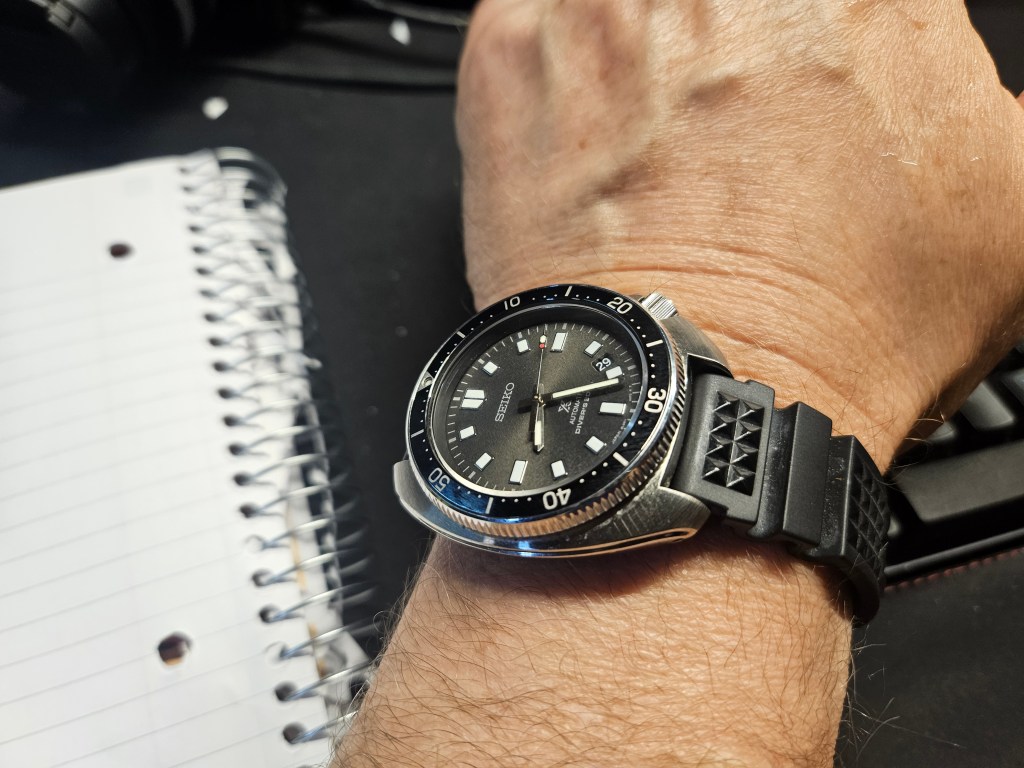
    At its core, watch collecting is elaborate roleplay. Grown men strapping on wrist-bound fantasies, each timepiece a character costume in a rotating lineup of imaginary lives. We cosplay as deep-sea divers, fighter pilots, Arctic explorers, NASA engineers, rugged survivalists, or minimalist monks of Japanese restraint. We don’t just wear watches. We become them. Just as fans dress as superheroes at Comicon, we show up to Bezel-Palooza with Seikos and Sinns, flexing our sapphire crystals and ceramic inserts like badges of forged identity.

    And don’t get me started on the straps. We favor models named after desserts: waffles, chocolate bars, and tropic vanilla-scented rubber. We’re just high-functioning children in the horological wing of Willy Wonka’s Chocolate Factory. But instead of licking the wallpaper, we post lume shots under moody lighting and argue about clasp tolerances.

    It’s cosplay for the emotionally overcommitted.

    But the strangest contradiction? For something so clearly un-serious, we treat our collections with a kind of medical gravity. The annual “State of the Collection” post feels like a cholesterol screening—an attempt to gauge whether we’re healthy, balanced, evolving, or simply delusional. We don’t just love watches. We debate the proper ways to love them. We agonize over whether we’re rebuying the Willard out of longing or self-sabotage. We assign spiritual weight to which dial shade of blue best reflects our soul.

    This isn’t just madness. It’s structured madness. With forums.

    We are a niche tribe of adult males—many of us husbands, some of us fathers—who transform into Man-Babies the moment we utter the words “bezel action” or “ghost patina.” Our wives, bless them, want no part in our obsessive monologues about case thickness and end-link articulation. To them, we are overgrown children clinging to our G.I. Joes and Tinker Toys, slowly sprouting donkey ears like Pinocchio and Lampwick on Watch Island, while they look on with bemused pity.

    We know we’re ridiculous. That’s the beautiful tragedy. And still, we dive deeper. Because in a world that often lacks identity, silence, and meaning, we find it in brushed stainless steel and micro-adjust clasps.

    And yes—we’re probably overdue for an intervention.

  • “This Is the Other Place”: Twilight Zone Parenting and the Parking App of Doom

    “This Is the Other Place”: Twilight Zone Parenting and the Parking App of Doom

    Of all the Twilight Zone episodes that have taken up residence in my psyche, none clings more tenaciously than “A Nice Place to Visit.” A petty crook named Rocky Valentine gets gunned down during a botched robbery and wakes up in what appears to be paradise. He’s greeted by Pip, a genial, rotund guide played by Sebastian Cabot, who grants him everything his larcenous heart ever wanted: money, women, luck, luxury. No struggle, no stress. Every desire fulfilled on command.

    At first, Rocky revels in this frictionless dreamscape. It’s Vegas without losing streaks, heaven without requirements. But gradually, pleasure without purpose curdles into a thick, syrupy dread. He realizes that gratification without resistance is just another form of punishment. Bored out of his mind and desperate for meaning, Rocky pleads with Pip to send him “to the other place.”

    Pip laughs and delivers the gut punch: “Heaven? Whatever gave you the idea that you were in Heaven, Mr. Valentine? This is the other place!” And then, with glee, Pip cackles like the well-fed devil he is.

    Which brings me to paid parking.

    There is a hell, and it lives in the infrastructure of modern urban parking. It’s a realm of QR codes, license plate entries, and apps that want your soul—or at least your email and billing zip code. Some kiosks accept coins, others demand smartphone apps, two-step verification, and an MFA code just to stand still without being ticketed. My wife, tech-literate and cool-headed, usually handles this logistical hellscape while I loiter nearby, pretending to study the map of downtown like it’s a sacred text.

    But this week she’s out of town at a teaching convention, and I’m taking our twin daughters to Laguna Beach. This means I have to drive, find a parking structure, and—here’s the true horror—navigate the digital rigmarole of paid parking without her guidance. The thought of it has me sweating harder than Rocky in his silk suit.

    The absurd part? It’s not the traffic, the tides, or the teenagers that unnerve me. It’s the parking meter. The existential shame of standing in front of a digital payment kiosk, poking at it like a confused ape while my daughters wait patiently (or impatiently) beside me. I don’t fear the unknown. I fear looking like an idiot in front of my kids.

    But here’s the deeper, darker realization: this is just a symptom. My wife, through years of effort and mental load, has become the de facto logistics commander of our household. She knows which airport lines move faster. She’s the one strangers approach at terminals, sensing her Jedi-level calm. Meanwhile, I shuffle behind her like an NPC in a bad video game—directionless, frictionless, practically translucent.

    Frictionless living has a cost. It breeds detachment. It robs you of engagement, resilience, and presence. And like Rocky Valentine, I’ve grown too used to being served instead of showing up.

    Ironically, I’m obsessed with watches—those exquisite tools designed to remind you where you are in time. And yet, I’ve spent years drifting, distracted, floating outside the dial. It takes a solo day trip with my daughters—an hour drive, some shopping, a good lunch, and possibly a tantrum or two—to pull me back into the present.

    When my wife heard about my plan, she said, “You don’t know how happy this makes me.” And I believed her. She wasn’t just relieved that I was giving her a break. She was glad to see me step into the friction. To stop spectating and start parenting in real time.

    No, I don’t want to be Rocky. I don’t want a life where every parking spot is perfect, every line is short, and every meal arrives on time. I want the chaos. I want the curveballs. I want the real thing.

    Even if it means downloading the stupid parking app.

  • Demoted Dad: A Suburban Fall from Instructional Grace

    Demoted Dad: A Suburban Fall from Instructional Grace

    This morning, mid-swing in a blissful kettlebell session in my garage—a sacred temple of sweat, steel, and solitude—I glanced out to see a domestic drama playing out on the asphalt stage of my street.

    There he was: a dad in safari shorts and a floppy bucket hat, walking ten feet behind his five-year-old son, who was waging war with a two-wheeled bike. The boy had the wild energy of someone determined to conquer balance through sheer will. He fell. Got up. Fell again. But on the third tumble, he’d had enough. He plopped down in the middle of the road like a pint-sized union striker, arms crossed, lips pursed, radiating silent defiance. He wasn’t hurt. He was done.

    The dad—poor man—begged him to rise. Pleaded. Offered bribes, probably. But the child had entered the iron-willed resistance phase that all seasoned parents recognize: the Sit-In of Doom.

    I considered emerging from my kettlebell cave to offer peace offerings. Coffee for the dad. Lemonade for the boy. Something to cut the tension. But reason—and David French’s podcast on the masculinity crisis—pulled me back into my dungeon. I resumed my Turkish Get-Ups as the father stood in the street, trying to lead someone who refused to be led.

    Thirty minutes passed.

    When I looked again, the scene had shifted.

    Now the father was on his own bike, trailing behind his son and wife. The boy, steadier now, was pedaling confidently while the mother jogged beside him, holding the handlebars like a Secret Service agent shielding the President. The boy beamed, triumphant. The mother wore a face that said, without saying a word, “This is how it’s done.”

    And the father?

    He wore the same sullen expression his son had half an hour earlier. He looked demoted. Not from fatherhood, but from a very specific rank: Lead Bike Instructor.

    He was now an observing sidekick. A support staffer. An unpaid intern in his own household. Whether he’ll regain his instructor’s license remains to be seen, but one suspects the road back will involve bureaucratic hoops, penance, and perhaps a formal review board chaired by his wife.

    Such is the quiet theater of suburbia—played out between fallen bikes, bruised egos, and the eternal struggle for parental credibility.

  • Solitude Is My Boyfriend (And He Doesn’t Snore)

    Solitude Is My Boyfriend (And He Doesn’t Snore)

    In her essay “Same Life, Higher Rent,” Meghan Daum compares her life in 1997 to her life in 2017 and reaches a deflating, oddly liberating conclusion: nothing has changed. At 47 and freshly divorced, she’s more or less the same person she was at 27. Still single. Still chasing deadlines. Still drinking coffee, poking at takeout sushi, and trying to keep multiple Word docs open on her MacBook while ignoring the siren song of Twitter and low-stakes Amazon purchases.

    There is one glaring difference: her rent has skyrocketed and her cognitive bandwidth has shriveled. She estimates she’s lost 70% of her brainpower to the Digital Distraction Era. So yes—same life, dumber brain, higher rent. It’s a Nabokovian joke with a Billy Collins twist: Picnic, Lightning, but with Seamless orders and browser tabs.

    Like her earlier essay “The Broken-In World,” Daum doesn’t frame divorce as failure but as an act of radical return. Not regression—recognition. The performance is over. She’s stopped cosplaying as someone else’s version of a wife. The single life isn’t a punishment or a holding pattern—it’s her set point. The gravitational center she was orbiting all along.

    Coordinating a calendar with another adult, she admits, feels like a hostage negotiation. She loves living alone. She loves eating whatever she wants, whenever she wants, without anyone asking if they should defrost chicken. She can travel at the drop of a hat without shoving someone else’s life off balance. She’s not anti-love. She just refuses to bulldoze her rhythms for the sake of joint Costco runs.

    Post-divorce, she’s dated—kind, smart, well-meaning men—but none of them stood a chance against the one lover she can’t quit: solitude. She rarely goes on second dates. She doesn’t need romantic sabotage. She’s got peace and a dog. Who needs more?

    And let’s be clear: this position wasn’t won in a raffle. She fought for it. Marriage, divorce, reinvention. She earned this life through blood, paperwork, and self-inventory. She’s not about to crawl back into the foxhole of emotional compromise.

    Reading Daum, I’m reminded of a perfectly-cut line from Rodney Dangerfield: “You’re born a certain way and that’s it. You don’t change.” I think about that more than I should. At 63, I’m not all that different than I was at six. Moody, brooding one day. Goofy and loud the next. There’s a streak of isolato in me too. My family tolerates it. They let me take naps and skip amusement park trips that sound like air-conditioned nightmares.

    I’m probably not a perfect husband. But we make it work—me and this life. Me and my Daum-ian disposition. The marriage lasts, not because I’ve changed, but because we’ve all made our peace with who I am. And who I’ve always been.