Tag: family

  • Death by Clean-and-Jerk: a TV Tragedy

    Death by Clean-and-Jerk: a TV Tragedy

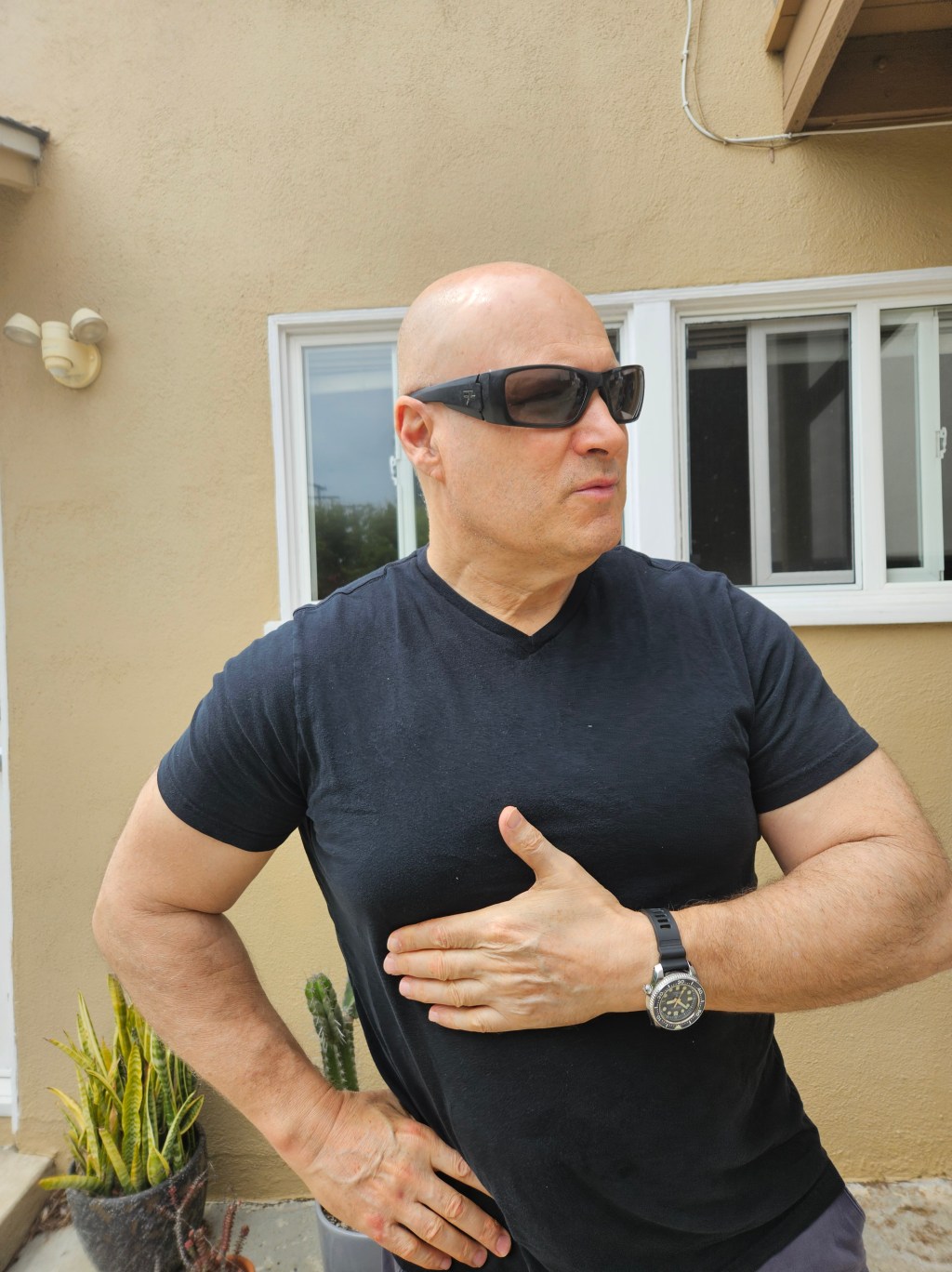
    In the span of five minutes yesterday, I managed to destroy not one but two Samsung QLED smart TVs, each a 55-inch, three-year-old, $700 reminder of my own idiocy.

    Samsung Number One had been sulking in the bedroom, untouched for a week. I had banished it there after splurging on a $1,500 LG OLED for the living room. Last night I flicked it on and found half the screen swallowed in black vertical lines, like a funeral shroud. The culprit? Most likely my own heroic attempt to hoist it solo onto a dresser—an Olympic clean-and-jerk without the chalk or the applause. The impact probably jarred the LCD panel, cracking delicate circuits invisible to the eye but fatal to the image. Maybe a ribbon cable came loose from the T-Con board, which can sometimes be reseated if you’re the kind of person who enjoys performing surgery with tweezers and a magnifying glass. I am not. That Samsung was escorted to my office, where it joined the growing eWaste Waiting Area, a sort of graveyard for gadgets that lost their duel with me.

    Undeterred, I marched into my daughter’s room for Samsung Number Two—the TV I’d lent her after moving things around the previous week. She was at Knott’s Berry Farm with her friends, which seemed like a merciful stroke of timing. My plan: reclaim the Samsung, and let her inherit the old 43-inch LG, a relic from 11 years ago that weighs twice as much as the newer, bigger Samsungs.

    But hubris is a loyal companion. Samsung Number Two sat high on her dresser, and I went at it like a gorilla in a hurry. I spread my arms wide to span its edges, but my right thumb betrayed me—it dug into the panel with a sickening crackle, leaving a dent in the digital flesh. In a feat of magical thinking, I told myself, “The panel probably bounced back.” Reality arrived the moment I powered it on: fresh black lines stood exactly where my Hulk thumb had pressed, like a signed confession of my clumsiness.

    Two lessons were carved into my soul in those catastrophic five minutes. First, modern TVs are absurdly fragile, delicate to the point of parody compared to their beefy ancestors. Second, I am unspeakably stupid.

    Now I must cram two cadaverous Samsungs into my car for their last ride to the eWaste center and figure out how to replace my bedroom screen. My daughter, surprisingly pliant, agreed to keep the old LG. As for my bedroom, I’m buying cheap: a $259 Roku 50-incher with deliberately low expectations. And from now on, I will follow the Prime Directive of Television Handling: any set larger than 40 inches must be carried upright by two people, no exceptions. This is not a powerlifting meet. There is no medal stand. A modern TV is a wafer-thin, brittle-screened diva.

    So: velvet gloves. And no grunting.
  • How The Monkees Taught Me That the Intellectual Can Beat the Bodybuilder and Inspired a Song

    How The Monkees Taught Me That the Intellectual Can Beat the Bodybuilder and Inspired a Song

    October 16, 1967, was a victory for the writers of cynicism. It was the day I learned the universe doesn’t give a damn. This was the day the veil was lifted. I was five, just shy of my sixth birthday, watching The Monkees, blissfully unaware that my entire worldview was about to be wrecked. The episode? “I Was a 99-lb. Weakling.” The plot? Micky Dolenz, the Monkee I admired most, gets metaphorically pancaked by Bulk, a human monument of muscle played by Mr. Universe Dave Draper. Bulk was no ordinary gym rat; he was a colossus in Speedos, the prototype Schwarzenegger. Worse, he stole Brenda, the beach goddess, right out from under Micky’s nose.

    Micky, desperate to win her back, did what any of us would: he signed up for Weaklings Anonymous. Their solution? Hoisting weights the size of small cars and downing fermented goat milk curd—an elixir I can only assume tasted like liquid despair. He even sold his drum set, jeopardizing the band’s future, all to build enough brawn to challenge Bulk.

    And for what? Brenda, fickle as fate, had a sudden epiphany—muscles were passé. She ditched Bulk for a scrawny intellectual buried in Remembrance of Things Past. Apparently, Proust’s multivolume exploration of memory and ennui was hotter than biceps.

    There, in front of my Zenith TV, I watched Micky’s heart crumple, and with it, mine. The moral of the story was clear and soul-crushing: hard work guarantees nothing. You could sacrifice, sweat, and sip goat curd until you resembled a Greco-Roman statue, only to find the universe had other plans—plans that favored nerds with library cards.

    The Monkees changed everything. The show taught me the brutal truth of irony: things don’t go the way as planned. I didn’t have the word for irony as a five-year-old, but I could feel it sending an existential chill through my bones. 

    As the decades passed, I finally processed that childhood memory into a piano song I wrote, titled “The Heartbreak of Micky Dolenz”:

  • Last Car Syndrome

    Last Car Syndrome

    I was nearly sixty-four, four decades of teaching college writing having corroded whatever patience I once had, and I found myself drowning in self-disgust. My life, once measured in lectures and essays, had narrowed to a single, grotesque question: Camry or Accord? I fretted over it as if I were choosing a confession—Catholic or Presbyterian—with my eternal soul dangling over the dealership lot. The absurdity didn’t escape me. I had real problems: blood markers creeping upward, a rotator-cuff tear ruining kettlebell workouts, bedrooms that needed painting, twin daughters who needed driver’s training, retirement forms stacked like little gravestones, and the scramble to joint bank accounts so my younger wife wouldn’t face probate nightmares. And yet I could not stop watching YouTube reviews and refreshing Reddit threads that compared the new Camry to the Accord.

    I vacillated like a madman.

    Driving to pick up the girls from high school, I’d spot an Accord and sigh: “Ah, the Accord EX-L in Canyon River Blue. Very peaceful. Not a bad car to die in.” A second voice—practical, bored—would snap back, “It’s a car, not a coffin, dummy!” So I’d argue with myself: “But this will be the last car I ever buy. Surely it is my Death Car.” “God, you’re morbid! How can I live with you? Get away from me!”

    The next day I’d see a Camry SE in Heavy Metal and melt. “Look how it fits that color—everything’s right. Under thirty-three K and it feels Lexus-adjacent.” My inner realist would applaud the improvement: “At least you’re not talking about death. Progress.” Then the skeptic: “But the Accord is quieter. I need quiet. And the Accord dealership is walking distance—drop it off, walk home. That’s handy.” Followed by doubt: “Wait—people say the new Accord looks like a Ford Taurus. Can I live with that kind of ridicule?”

    It went on and on. My wife learned to read my posture: the slight slump, the hand rubbing the back of my neck—the tell that I was about to launch into Camry-Accord hell. She would cut me off before I even opened my mouth: “Stop right there, buster. I don’t want to hear it. Just make your damn decision!”

    For a while I wallowed alone in the torment.

    Then one morning I woke up and declared I didn’t need a car at all. I’d driven, on average, three thousand miles a year for the last decade—hardly the mileage of a man who needed a shiny new vehicle. The decision felt radical: my daughters could take the older Accord, my wife the newer one, and I’d borrow a car when necessary. No purchase. No shiny new vehicle gathering dust like a suburban reliquary in the garage. Why buy something to admire between piano practice and Netflix binges? I told myself the choice was genius. 

    But after snacking on a virtuous bowl of buckwheat groats with unsweetened soy milk, banana slices, pumpkin seeds, cinnamon, and a dash of manuka honey, the energizing snack snapped me out of my delusion.. Suddenly the whole farce of my deliberation looked naked: I was suffering from Last-Car Syndrome: the unconscious understanding that in my mid-sixties, my next car purchase was essentially my Death Car, so I avoided the purchase like I avoided death. 

    Fortified by my power breakfast, I stood up, chest puffed like a man claiming moral clarity, and barked at the ceiling, “Who am I kidding? I’m buying a new car. I deserve it.”
    So now it’s only a scheduling question—six months from now, or next week.

  • The Camera, the Angel, and the Mantra

    The Camera, the Angel, and the Mantra

    Last night I dreamed I was drifting up the coast with my twin daughters, sermonizing like a broken record: There is a physical world and there is a spiritual world. I said it so often I sounded like a street preacher who’d lost his pamphlets but kept his conviction.

    We stopped at a retreat, the entrance nothing more than a ladder plunging into a meadow. Down we went, rung by rung, my mantra trailing after us like incense: physical and spiritual, spiritual and physical.

    In the meadow stood an angelic blonde, late teens, all halo and camera gear, fiddling with a tripod as if she were about to capture the resurrection. Beside her was her younger brother, a sweet kid who instantly bonded with my daughters—proof that love doesn’t check the itinerary before showing up.

    I told the angelic sister this was an inconvenient day for romance, since we were traveling north to find the rest of our family. Still, watching affection bloom like an invasive weed, I conceded we might linger a little longer. My daughters, I suggested, could teach her brother the finer points of philosophy, relationships, and all the grand illusions we adults mistake for wisdom. She nodded, grateful, and asked where we were headed. I repeated: north, always north.

    Her camera squatted in the grass, looking familiar—something from an earlier chapter of the dream, mediocre at best. I bit my tongue rather than insult her equipment, repeating inwardly my refrain: The world is both physical and spiritual.

    Meanwhile, my daughters and the boy turned the ladder into a playground, climbing and descending until their thighs grew visibly muscular—an anatomical exclamation point underscoring my point. The body is flesh, the soul is fire, and the dream was happy to remind me of both.

  • The Death Car Dilemma: How One Man Escaped the Camry-Accord Abyss

    The Death Car Dilemma: How One Man Escaped the Camry-Accord Abyss

    At nearly 64, with four decades of college writing instruction corroding his patience, Aiken Riddle found himself drowning in self-disgust. His life, once measured in lectures and essays, had shrunk to a tormenting question: Camry or Accord? He obsessed over the choice as though he were deciding between Catholicism and Presbyterianism, his eternal soul dangling in the balance. The absurdity wasn’t lost on him. He had genuine problems—blood markers creeping north, a torn rotator cuff ruining kettlebell workouts, rooms that needed paint, twin daughters who needed driver training, retirement forms stacked like gravestones, and joint bank accounts to secure before death turned his finances into a probate nightmare for his younger wife. Yet he couldn’t stop watching the YouTube videos and Reddit pages comparing the new Camry and Accord. 

    He vacillated like a madman.

    One day while driving to his twins’ high school to pick them up, he would see an Accord and would say to himself with a sigh, “Ah, the Accord EX-L in Canyon River Blue. A very peaceful color. Not a bad car to die in.” Then another voice would say, “It’s a car, not a coffin, dummy!” Then he’d retort: “But this will be the last car I ever buy. Surely, it is my Death Car.” Upon which he’d rebuke himself, “God, you’re morbid! How can I live with you? Get away from me!”

    Then the next day while picking up his girls from their school, he’d see a Camry SE in Heavy Metal and would say, “Ah, the Camry seems to be made for that color. Everything fits perfectly. Plus for under thirty-three K, I’m getting a taste of Lexus.” Upon which his other self would say, “At least you’re not talking about death. That’s an improvement.” Then he would say, “But the Accord is a quieter ride. I need quiet. Plus, the Accord dealership is walking distance away. I can drop off the Accord and walk home. That tips the advantage to Accord. But, wait, people are saying that the new Accord body style looks like an old Ford Taurus. Can I live with such ridicule?”

    Over the ensuing days, he would go back and forth. It reached the point that his wife could tell by his body language that he was about to talk about his Camry-Accord dilemma and she would interrupt him even before he opened his mouth: “Stop right there, buster! I don’t want to hear it. Just make your damn decision!”

    So he was alone in his torment. 

    One day he woke up and said he didn’t need a car. He calculated that for the last decade he had only driven three thousand miles a year. That hardly merited getting himself a new car. The decision was final: His daughters would take the old Accord and he’d give the newer one to his wife. He would simply borrow their cars when he needed them. 

    The decision was genius. He would not be less obliged to drive when he felt his driving skills had compromised over the last decade. He was by nature a recluse. His decision to not buy a car helped his cause. Why spend forty thousand dollars so I can behold a rarely-driven car in my garage before returning to the living room to play the piano or watch Netflix?

    He learned that sometimes a decision is not either/or. There is sometimes another option, and not getting anything can be the best one of all.  

  • The Lobster That Lifted Kettlebells

    The Lobster That Lifted Kettlebells

    Last night, I slipped into a dream where I was less man and more detective cliché: trench coat, team at my side, the whole noir package. We prowled the tiled underworld of a health club, where women lay dead in the shower stalls. The air carried a rank perfume—pungent, briny, unmistakable. It was the signature of our quarry, The Alligator Man, a serial killer who apparently marinated in fish guts before slaughter.

    Our trap was absurd but effective. We laced another health club’s showers with his own scent, as if baiting him with eau de swamp monster. Sure enough, the predator slithered into the stall, and I lunged. But instead of the hulking brute I expected, I clutched a young, handsome man, small enough to vanish in a crowd. His boyish face said innocent; his stench said otherwise. I locked eyes with him and announced, with grim satisfaction, that he was evil—and that evil was about to rot in a cell forever.

    Then, with dream logic’s usual whiplash, I found myself at a holiday party with my family. My wife had crafted me a lobster costume: claws for hands, a scarlet exoskeleton, and a hat shaped like a boiled crustacean’s head. I looked like a seafood platter at a masquerade ball. I ate cake while dodging feline landmines—the hosts’ cats had redecorated the house with cat mess. The carpet was stained with these “accidents.” With cake fork in hand, I declared this exhibit A for my lifelong “no pets policy.”

    The party oozed past midnight into the pale gray of morning. Bored stiff and craving endorphins, I trudged home. Still zipped inside my lobster suit, I cranked up a kettlebell workout in the living room. My claws clacked as I swung iron, the sweat pooling beneath my polyester shellfish skin.

    Headlights swept across the window. My wife and twin daughters walked in. I assumed they, too, had abandoned the litter-box bacchanal. She spotted me mid-squat, lobster claws snapping, and didn’t so much as flinch. I worried she’d rage over my soaking her handmade costume in salt and sweat. Instead, she simply yawned, brushed past my lobster theatrics, and announced she was going to bed. Evil had been vanquished, cats had soiled carpets, and the lobster workout was apparently just another Tuesday in her world.

  • The Influenza of the Mind

    The Influenza of the Mind

    Last week, one of my teen daughters caught a cold. She shrugged it off with the stoicism of a soldier, and I barely noticed she was sick. Then my wife came down with it five days ago. It hit her harder, but she still managed to run errands, wrangle housework, and conquer the Everest of six laundry baskets stuffed with clothes that needed folding.

    Then there was me. Yesterday, after my afternoon nap, I felt aches and pains and immediately began writing my obituary. Sprawling out on the couch in the living room, I put on the docuseries The Kingdom on ESPN but had to close my eyes, then take another nap because I was “so unwell.” 

    Convinced I was succumbing to something sinister, I staggered into the kitchen and cooked dinner. The salmon, broccoli, and rice all came out overcooked—not because I was incapacitated, but because I was deep into Internet articles about PFAS “forever chemicals.” Nothing like a side of toxic paranoia with your charred protein.

    My family tolerated the burnt offering, attributing it to my alleged illness. But once I slumped onto the couch after dinner to watch Below Deck, I went full opera tenor: sighs, groans, complaints, the whole libretto of impending doom. My family, unimpressed, mocked me. “Illness always makes me morbid and lugubrious,” I explained, as if quoting from a Victorian diary.

    My daughters laughed. My wife rolled her eyes: “Here we go. The man flu.” I thought about citing research suggesting men actually suffer more with the flu, but even I knew I’d already overshared.

    “Maybe you’re just tired,” my wife said. “Maybe you shouldn’t work out tomorrow.”

    I declared that one missed workout would cause my muscles to shrivel like neglected houseplants. “I’m doomed,” I muttered, then retreated to bed before nine like a bereft invalid.

    This morning, I awoke braced for catastrophe—a full-blown cold, a fever, the Grim Reaper at my door. Instead, I felt…fine. Perfectly fine. My wife and daughter had been right. I wasn’t sick. I was just tired.

    The truth is, when I sense illness creeping in, I go from zero to tragic opera in seconds. I suffer from Influenza of the Mind, a performance illness that turns me into a paranoid man-baby. Last night’s theatrics were not the noble struggle of a fading patriarch, but the wailings of a melodramatic hypochondriac in need of nothing more than eight hours of sleep.

  • Classroom Playback: What a Football Player Taught Me About the Hedonic Treadmill

    Classroom Playback: What a Football Player Taught Me About the Hedonic Treadmill

    I’m starting a series I’m calling The Classroom Playback, where I revisit conversations from class discussions and reflect on how they challenged my assumptions. More often than not, I’ve found it isn’t the instructor who does the teaching—it’s the students. This is my first installment.

    I teach a college writing class to the athletic department—an eclectic mix of football bruisers, soccer strikers, volleyball hitters, and water polo warriors. Two days ago, in the context of an essay that addresses a generation of young men who don’t work or study but play computer games in their bedrooms, I introduced the concept of the hedonic treadmill, the cruel little loop in which humans adapt to pleasure until the buzz wears off and they need to crank the dial higher, faster, and louder, until finally the machine spits them out, exhausted and miserable.

    To make the point vivid, I shared a story from a former student. His older brother had dropped out of college, moved back in with mom, and made a religion out of lying in bed. His life consisted of Netflix marathons on a laptop, constant texts to his girlfriend, and a bong glued to his lips. A self-sedated sloth with Wi-Fi.

    So I asked my athletes, “Does this guy sound happy to you?”

    One of the football players, a psychology major with a grin as wide as the end zone, shot up his hand and said, absolutely—this guy was living the dream. No responsibilities, no alarms, no essays. Everyone, he insisted, would be content to live such a life.

    My jaw dropped. A psychology major dazzled by the ecstasy of permanent adolescence? I reminded him—gently but with a sharp edge—that life demands connection, structure, and purpose if humans are to flourish. Without it, the brain rots. He smiled, nodded, and conceded my point. But the nod was polite, the smile indulgent. I wasn’t sure I had actually shaken his conviction that the guy with the bong had cracked the code.

    After the football player declared his envy for the bong-hugging bed-dweller texting his girlfriend, I scanned the room and realized my grand metaphor had belly-flopped. My hedonic treadmill example didn’t land, to use modern parlance. What I intended as a cautionary tale of mental rot registered instead as a spa brochure: Netflix, weed, and endless texting looked less like disintegration and more like a vacation package.

    With fifteen weeks left in the semester, I’ve had to remind myself of two things. First: I can’t demolish their fantasies in one lesson. The hedonic treadmill requires repeat assaults, examples from all angles, until they feel—not just know—the despair of a life without meaning. Clearly, Bong Boy failed to deliver the emotional punch.

    Second: these kids belong to the “I’ll Never Buy a House” Generation. Their skepticism is hardwired. To them, the fantasy of collapsing in bed with Netflix and THC isn’t just laziness; it’s an antidote to the endless hustle culture they know they’ll never escape.

    Therefore, my football player presented me with a lesson: As an instructor, I can’t be myopic and teach ideas such as the hedonic treadmill from a limited point of view. I have to see things through my students’ eyes. 

    I’m close to sixty-four. My students are nineteen. If I want to reach them, I need to remember the golden rule of teaching—or sales, or persuasion of any kind: know your audience, speak to their anxieties, and try to see life through their eyes. Otherwise, you’re not a communicator—you’re just an old, out-of-touch crank with a lecture.

    I want to thank my football player for opening my eyes and reminding me that the classroom is instructional for both instructors and students alike. 

  • No Age Is for Cowards: Worry as Full-Time Employment

    No Age Is for Cowards: Worry as Full-Time Employment

    When I was six, my Grandma Mildred came to visit us at the Royal Lanai apartments in San Jose. This was around 1967. Like any neurotic little kid, I peppered her with endless questions about an upcoming event. Most of them revolved around food: what would we eat, would there be enough, and what if the deviled eggs ran out? Eventually, Grandma sighed and told me, “You worry too much.”

    Really? Another thing to worry about? Thanks, Grandma. Now I could add “chronic worrying” to my list of anxieties. Would it turn me into a puddle like the Wicked Witch? Would I self-destruct under the sheer weight of my own nerves?

    Flash forward fifty-eight years. Spoiler: I still worry like a professional. My bandwidth jams up with the dumbest obsessions—like finding the right rubber strap for my Seiko diver. I’ll lose sleep and dive so deep into Internet rabbit holes you’d think I was chasing doctorates in linguistics and ophthalmological physics simultaneously.

    Food isn’t any easier. Reading How Adam Smith Can Change Your Life, I encountered Hillel’s famous line: “If I am not for myself, who will be for me? If I am only for myself, who am I?” Roberts added that anyone who would sacrifice millions of lives to save a finger is “a monster of inhuman proportions.” Cue existential panic: If I chow down on Greek yogurt and whey protein while ignoring the industrial torture of animals, what kind of person does that make me?

    That question dredged up a memory. Years ago, while doing valet duty at my twins’ school, I chatted with Lucianna, a Brazilian parent. She told me about growing up on her uncle’s dairy farm, where calves were torn from their mothers so humans could have their milk. She remembered the calves wailing all night, a sound so haunting she’s sworn off dairy for life. Her story still rings in my ears.

    So here I am, designing my new plant-based meal plan: buckwheat groats, tofu, tempeh, nut butter, soy milk, a stack of supplements, and protein powder. I’m ready to begin. But, of course, my inner worry machine kicks in:

    • What about my omnivore family? My tofu will feel like an accusation on their dinner table.
    • What about my friends and relatives? I’ll be dismissed as a moral buzzkill, banished to the Lonely Dungeon.
    • What about vacations? Hunting for vegan options in Miami or Oahu will turn relaxation into reconnaissance.
    • What about protein and Omega-3s? My muscles will wither, my brain will curdle, and I’ll be left a vegan husk.
    • What about cheating? What if, in a moment of weakness, I scrape a lemon-pepper shrimp into my mouth while clearing plates? Then I’ll hate myself, because I’ll have violated both my morals and my macros.

    And so the worrying goes. Yet maybe this is the point. Doing the right thing rarely comes gift-wrapped in comfort. It comes with sweat, tension, and plenty of struggle.

    My grandfather once told me when he was eighty and drowning in doctor visits: “Old age is not for cowards.” I’ll amend that. No age is for cowards. Living—really living—means confronting fears, fighting cowardice, and resisting the bondage of compulsive worrying. And if anyone has the secret sauce for escaping this mental hamster wheel, I’m all ears.

  • The Terrarium of the Gods

    The Terrarium of the Gods

    Last night I dreamed I was prowling for beachfront property in the dead of night when I stumbled upon a terrarium the size of several football fields—an absurd, glass-walled Eden under artificial light. Some plots were shameless cons, swindler specials dressed up with tacky lawn ornaments and fake palm trees. Others, however, had loamy, dark soil that practically hummed with fertility. Over the PA system, an NPR announcer’s warm, soporific voice guided prospective dreamers like me, pointing out which plots were worth my attention.

    I claimed a plot perfect for herbs, tomatoes, and peaches, imagining future harvests under this climate-controlled dome. Then I set off to find my family, who were dining on the rooftop of a nearby hotel, high above the night and the surf. When I arrived, they were lit with merriment, clinking glasses with friends, laughter rolling across the table like a tide.

    Leo, a family friend with the generosity of a man who’s just inherited a brewery, pressed a frosty glass stein of amber beer into my hand. I’m not much of a beer drinker, but curiosity won, and I took a long pull. It was cold, crisp, and shockingly delicious—like a liquid reprieve from all earthly woes. Before I could savor the moment, a teenage boy with only the flimsiest link to Leo snatched the stein from my hand and drained it with feral efficiency. I seethed but swallowed my annoyance.

    Leo, undeterred, promised reinforcements: more beer, plus sandwiches from “the downstairs stash.” He led me to a cold-storage room the size of a cathedral. Inside, shelves groaned under the weight of sandwiches—no ordinary deli fare, but hand-crafted masterpieces assembled by World Series legends of the 1970s. Every sandwich bore a tag in looping script: Dave Winfield. Reggie Jackson. Willie Stargell. Dave Parker. Jim “Catfish” Hunter. Preserved by refrigeration so perfect, the bread seemed freshly baked, the lettuce still crisp, as though the ballplayers had just stepped away from the cutting board.

    We loaded up on sandwiches and pitchers, returned to the rooftop, and feasted under the city lights. The beer was endless, the view intoxicating. For a fleeting moment, I felt like I had not only bought the best plot in the terrarium but inherited the whole ridiculous world.