Tag: family

  • Streamberry, Self-Loathing, and the Algorithmic Abyss: How “Joan Is Awful” Skewers the Curated Life

    Streamberry, Self-Loathing, and the Algorithmic Abyss: How “Joan Is Awful” Skewers the Curated Life

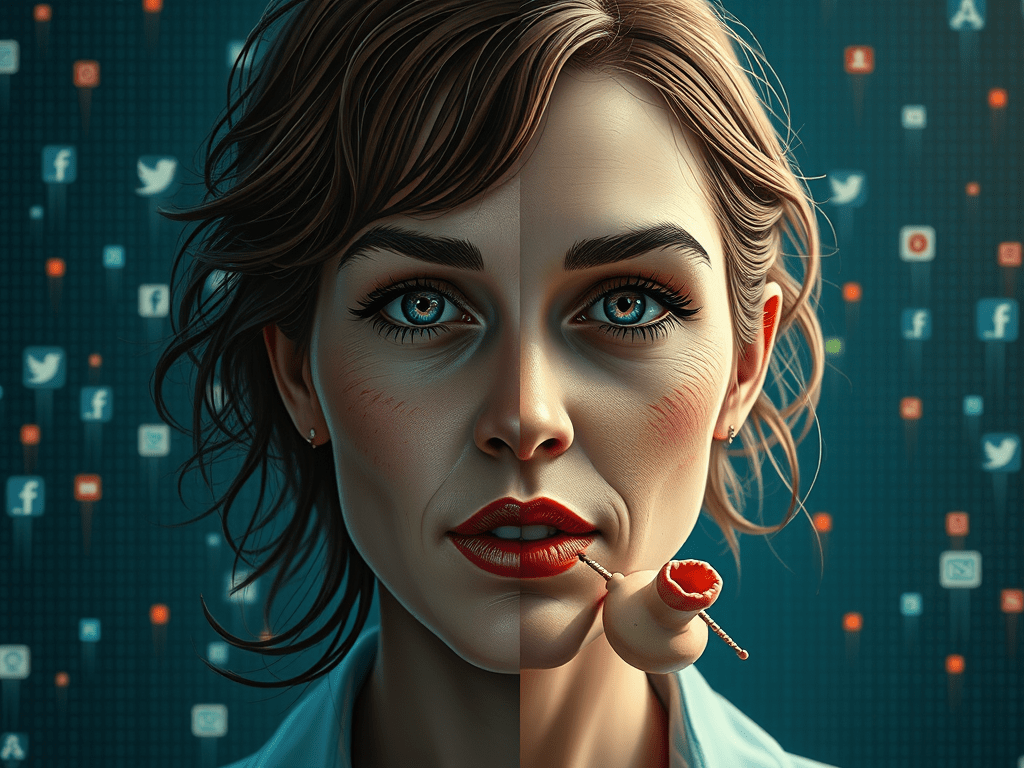
    In Black Mirror’s “Joan Is Awful,” Charlie Brooker offers more than a dystopian farce—he serves up a wickedly accurate satire of the curated lives we present online. It’s not just Joan who’s awful. It’s us. All of us who’ve filtered our flaws, outsourced our personalities to engagement metrics, and whittled ourselves down to algorithm-friendly avatars. The episode doesn’t critique Joan alone—it roasts the whole rotten architecture of social media curation and shows, with brutal clarity, how the pursuit of digital perfection transforms us into insufferable parodies of our former selves.

    First, let’s talk about performance. Joan, like any good social media user, lives her life as if auditioning for a role she already occupies—one shaped not by authenticity but by optics. She performs “relatable misery,” complete with awkward office banter, fake smiles, and passive-aggressive salad orders. Social media rewards this pantomime, demanding we be palatable, aspirational, and vaguely miserable all at once. The result? A version of ourselves designed to please an audience we secretly resent. Joan is what happens when your curated self becomes the dominant narrative—when branding overtakes being. Her AI-generated counterpart doesn’t misrepresent her; it distills her curated contradictions into a grotesque caricature that somehow feels… accurate.

    Second, there’s the fact that Joan—like all of us—is under constant surveillance. In Joan Is Awful, it’s not just the NSA snooping in the background—it’s the entire viewing public, binge-watching her daily descent into algorithm-approved degradation. This is what we’ve signed up for with every “I accept” click: to become content, voluntarily and irrevocably. Our data, behaviors, and digital crumbs are fed into the algorithmic sausage grinder, and what comes out is a grotesque mirror held to our worst instincts. The AI Joan is not a stranger; she’s the monster we’ve been molding through every performative tweet, selfie, and humblebrag. In a world where perception is currency, she’s our highest-valued coin.

    Then comes the psychological shrapnel: identity fragmentation. Joan can no longer tell where she ends and Streamberry’s Joan begins, just as many of us can’t quite remember who we were before the algorithm gave us feedback loops in the form of likes, retweets, and dopamine pings. This curated self isn’t just a mask—it becomes the default setting. The dissonance between public persona and private truth breeds an existential malaise. Joan’s real tragedy isn’t that her life is on TV—it’s that she’s lost the plot. She’s a passenger in her own narrative, outsourced to a system that rewards spectacle over substance.

    Let’s not forget the moral rot. Watching your AI double destroy your reputation while millions tune in might seem horrifying—until you remember we do this willingly. We doomscroll, rubberneck scandals, and serve our digital idols on platters made of hashtags. Joan, sitting slack-jawed in front of her TV, is no different from us—addicted to her own collapse. It’s not the horror of exposure that eats her alive; it’s the realization that her own worst self is exactly what the algorithm wanted. And that’s what it rewarded.

    Ultimately, Joan Is Awful is a break-up letter with social media—if your ex were a manipulative narcissist with access to all your personal data and a flair for psychological torture. Escaping the curated self, as Joan tries to do, is like fleeing an abusive relationship. You know it’s toxic, you know it’s killing you—but part of you still misses the attention. The episode doesn’t end with a triumphant reinvention; it ends with Joan in fast food purgatory, finally unplugged but still wrecked. Because once you’ve sold your soul to the algorithm, the buyback price is steep.

    So yes, Joan is awful. But only because she reflects what happens when we let the curated life take the wheel. In the Streamberry age, we aren’t living—we’re streaming ourselves into oblivion. And the worst part? We’re giving it five stars.

  • The PreSnackalithic Era

    The PreSnackalithic Era

    In the Before Snack Times of the early 70s, we didn’t have helicopter parents hovering over us, micromanaging our every move with a suffocating schedule of dance classes, gymnastics, karate, swim lessons, math tutors, writing coaches, soccer practices, chess clubs, computer coding, mindfulness meditation, and Ashtanga Yoga. We didn’t have smartphones tracking us like we were secret agents with microchips implanted in our necks. For the entire day, our parents had absolutely no clue where we were or what we were up to. We’d saunter off after breakfast, either on foot or aboard our trusty bicycles, and were expected to return only by dinner. During that endless stretch of freedom, we’d navigate through construction sites strewn with lumber, nails, electrical wires, and bottomless ditches, all of which screamed, “Adventure awaits!” We gravitated toward mud, streams, and rivers like moths to a flame, setting up wooden ramps to perform Evel Knievel-level stunts over bodies of water. The messier and more perilous the terrain, the more irresistible it became. These hazardous playgrounds were usually bordered by rusty barbed-wire fences and “Do Not Enter” signs, which not only failed to deter us but ignited our rebellious spirits to trespass with even more gusto. Inside these danger zones, we’d be chased by furious steers, territorial cows, and muscle-bound guard dogs. Occasionally, a disgruntled landowner would fire warning shots at us with a pellet gun, a token gesture that barely fazed us. In the ravines behind our homes, we crafted forts, swung from vines, ignited firecrackers, and leaped into piles of poison oak. We encountered black widows, rattlesnakes, bobcats, coyotes, and even the occasional mountain lion. After a day of flouting every conceivable health and safety code, we’d trudge home at night, our bodies caked in filth, bruises, and scratches. But our parents, bless their oblivious hearts, never inquired about our whereabouts or escapades. As long as we took a bath and cleaned up, they were content to feed us hearty helpings of turkey pot pies, meatloaf, chili, and tacos. They knew we needed the energy to wake up the next morning and dive headfirst into another day of mayhem. Back then, we had little time for snacking. Our days were filled with wilderness adventures, where our imaginations ran wild. This level of playfulness, chaos, and enchantment is as extinct as the dinosaurs in today’s Snack Age, where parents meticulously micromanage their children’s activities and pacify their appetites with chips, juice boxes, chocolate chip granola bars, fruit rolls, and Happy Meals.

    Before Snack Times is sometimes referred to as the PreSnackalithic Era–the rough-and-tumble epoch of the early 1970s when childhood ran on chaos, sunburns, and a single daily meal of meatloaf or tacos—long before the rise of the Snack Age. In the PreSnackalithic Era, children roamed unsupervised like feral philosophers, fueled not by organic apple slices or protein-packed squeeze pouches, but by sheer mischief and an occasional stolen sip from a warm garden hose. Helmets were for astronauts, schedules were a myth, and sustenance came only when the streetlights flickered on and the meatloaf hit the table. Snack culture had not yet risen from the primordial ooze, and the only “mindfulness” was making sure you didn’t get bitten by a rattlesnake while building a fort in a construction site. Parents parented with the laissez-faire wisdom of, “If he’s not home by dinner, we’ll worry.” And worry they rarely did.

  • Kleptobite

    Kleptobite

    When I was six years old in 1968, I lived for a year with my grandparents in Belmont Shore. One day after school, a distraught neighbor, a 79-year-old widow named Mrs. Davis, said she locked herself out of her house. Could she borrow me to climb through her bedroom window and unlock the front door for her? With my grandmother’s approval, I did just that. I pretended to be a cat burglar, slithered through the ajar window, and walked through her house. With great curiosity, I examined the interior of the living room.  The floor was covered with a plush, floral-patterned rug. The centerpiece of the room was a large, floral-patterned couch. It was flanked by two wingback chairs, upholstered in a velvety red fabric. Each chair had a lace doily draped over the backrest. A coffee table with spindly legs sat in front of the couch, its surface crowded with an assortment of knickknacks: a porcelain figurine of a ballerina, a small crystal bowl filled with wrapped candies, and a couple of framed photos. The walls were adorned with family portraits, framed cross-stitch samplers, and a large, oval mirror with a gold frame. A grandfather clock ticked methodically in the background, its pendulum swinging with a steady rhythm that made me feel lost in time. Something came over me. Being alone, I felt possessed with a transgressive spirit, and I lifted the candy jar’s lid and, even though I disdained hard candy, I stuffed a butterscotch candy in my pocket before opening the front door for Mrs. Davis. I felt guilty for my act of theft because Mrs. Davis proclaimed me to be her newly-minted hero and handed me a crisp one-dollar bill, which I would later spend on Baby Ruth and Almond Joy Bars. I had difficulty sleeping that night. I worried that Mrs. Davis might feel inclined to take inventory of her candies and discover that one was missing, prompting her to demote me from hero to villain. My career as a thief had come to a quick end. On the other hand, I had a glimpse of what it was like to be a superhero entering houses and saving people in distress. I convinced myself that my career as Superman was just beginning. 

    My act of thievery points us to the lexicon term: Kleptobite–the act of stealing a food item not for its flavor or nutritional value, but purely for the electric thrill of transgression. A Kleptobite is less about appetite and more about theater—the petty larceny of a Werther’s Original lifted like a crown jewel, the pilfered peppermint filched under the nose of a trusting septuagenarian, not for the tongue, but for the adrenaline. Often committed in plush-carpeted living rooms with doilies and ticking clocks, this culinary crime wave is fueled by a cocktail of boredom, childhood hubris, and vague superhero delusions. Side effects include guilt-induced insomnia, paranoia about candy audits, and overcompensating acts of heroism.

  • Chewtality

    Chewtality

    Every morning during my teenage years, I’d stagger out of bed and make my daily plea to the heavens: “God, please grant me the confidence and self-assuredness to ask a woman on a date without suffering from a full-blown cerebral explosion.” And every morning, God’s response was as subtle as a sledgehammer to the forehead: “You’re essentially a walking emotional landfill, a neurotic mess doomed to wander the planet bereft of charm, romantic grace, and any semblance of healthy relationships. Get used to it, buddy.” And thus commenced my legendary odyssey in the land of perpetual non-dating.

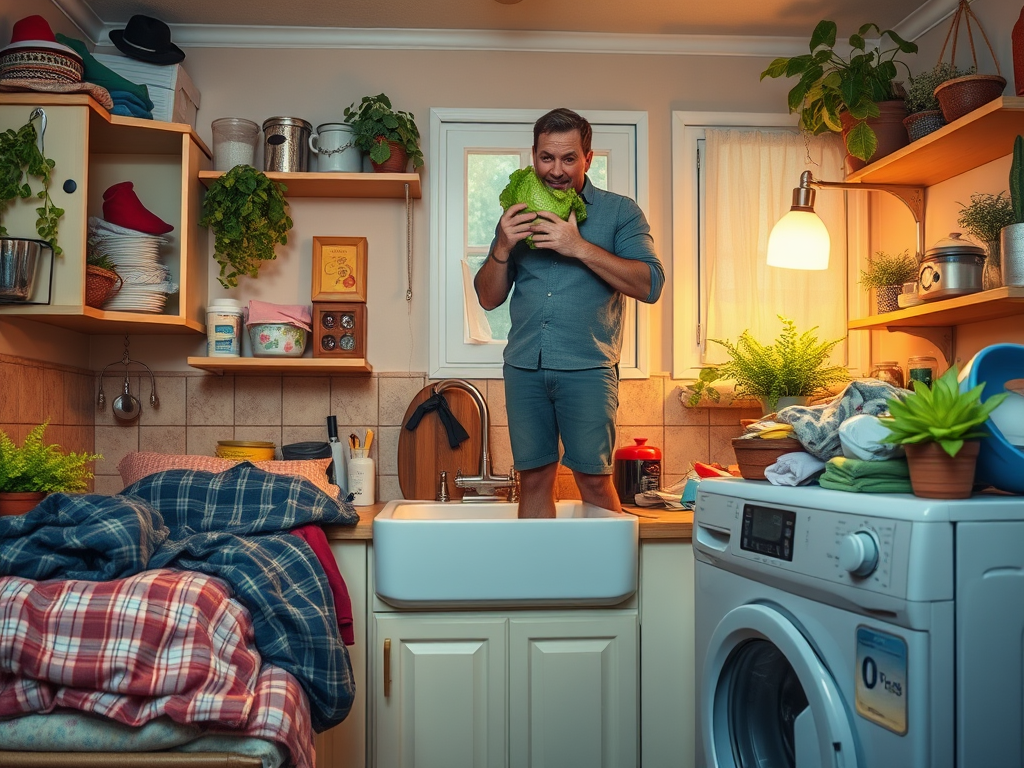
    This was not the grand design I had envisioned. No, the blueprint was to be a suave bachelor, just like my childhood idol, Uncle Norman from The Courtship of Eddie’s Father. At the ripe age of eight, I watched in awe as Uncle Norman demonstrated his revolutionary kitchen hack: why bother with dishes when you can devour an entire head of lettuce while standing over the sink? He proclaimed, “This way, you avoid cleanup, dishes, and the pesky inconvenience of sitting at a table.” In that glorious moment, I was struck with a revelation so profound it reshaped my entire existence. The Uncle Norman Method, as I would grandiosely dub it, became my life’s guiding principle, my personal beacon of satisfaction, and the defining factor of my existence for decades.

    Channeling my inner Uncle Norman, I envisioned a life of unparalleled convenience. My bed would be perpetually unmade because who needs sheets when you have a trusty sleeping bag? I’d never waste time watering plants—plastic ones were far superior. Cooking? Please. Cereal, toast, bananas, and yogurt would sustain me in perpetuity. My job would be conveniently located within a five-mile radius of my house, and my romantic escapades would be strictly zip code-based. Laundry? My washing machine’s drum would double as my hamper, and I’d simply press Start when it reached capacity. Fashion coordination? Not a concern, as all my clothes would be in sleek, omnipresent black. My linen closet would be repurposed to stash protein bars, because who needs linens anyway?

    I’d execute my grocery shopping like a stealthy ninja, hitting Trader Joe’s at the crack of dawn to dodge crowds, while avoiding those colossal supermarkets that felt like traversing a grid of football fields. 

    Embracing the Uncle Norman Way wasn’t just a new approach to dining; it was a radical overhaul of my entire lifestyle. The world would bow before the sheer efficiency and unadulterated convenience of my new existence, and I would remain eternally satisfied, basking in the glory of my splendidly uncomplicated life.

    Of course, it didn’t take long for my delusion to expand into a literary empire—or at least, that was the plan. The world, I was convinced, desperately needed The Uncle Norman Way, my magnum opus on streamlining life’s most tedious inconveniences. It would be part manifesto, part self-help guide, and part fever dream of a man who had spent far too much time contemplating the finer points of lettuce consumption over a sink. Each chapter would tackle a crucial element of existence, from the philosophy of single-pot cooking (aka, eating directly from the saucepan) to the art of strategic sock re-wearing to extend laundry cycles. I even envisioned a deluxe edition featuring tear-out coupons for discounted plastic plants, a fold-out map of the most efficient grocery store layouts, and, for true devotees, a companion workbook to track their progress toward the ultimate goal: Maximum Laziness with Minimum Effort™.

    Naturally, I imagined its meteoric rise to cultural dominance. Talk show hosts would marvel at my ingenuity, college professors would weave my wisdom into philosophy courses, and minimalists would declare me their messiah. Young bachelors, overwhelmed by the burden of societal expectations, would turn to my book in their darkest hour, finding solace in the knowledge that they, too, could abandon the tyranny of dishware and lean fully into sink-based eating. The revolution would be televised, one head of lettuce at a time.

    Uncle Norman’s “system” introduced me to Chewtality–the ruthless prioritization of caloric input over culinary pleasure, a lifestyle doctrine where taste, ambiance, and social norms are discarded like expired salad dressing. It’s the stoic efficiency of consumption that transforms meals into mechanical refueling sessions, often while hunched over a sink, shirtless, chewing with the urgency of a man on parole from dignity.

    Rooted in the gospel of Uncle Norman, Chewtality celebrates the unsentimental art of eating for sustenance and speed. Why savor when you can shovel? Why sit when you can hover? Why use plates when God invented hands and the stainless steel basin? This isn’t just a meal strategy—it’s a worldview: one where the blender pitcher is a chalice, the saucepan is a throne, and the lettuce head is both entree and ideology.

    In its highest form, Chewtality produces a false sense of superiority—an unshakable belief that your Spartan choices signify enlightenment, when in reality, you’ve just spent dinner crouched over the sink eating raw spinach like a raccoon with a library card.

  • The Curse of the Shamewich

    The Curse of the Shamewich

    I remember the day well. I was six years old as I trudged to Katherine R. Smith Elementary in San Jose, California, with three boys who would’ve made excellent talent scouts for the smell police. Usually, a Hostess Fruit Pie or pink Sno Ball made lunch a bright spot in my otherwise bleak existence, but not today. Today, the stench of rotten tuna wafting from my Captain Kangaroo lunch box was so potent it could’ve been classified as a biological weapon. My companions, gagging and accusing me of harboring a dead sea creature, demanded an explanation.

    Finally, I surrendered. We stopped in a field separating the Stop & Go Market from the school, and I opened the lunch box. There it was: the festering tuna sandwich, now a slimy, mayonnaise-coated abomination that had broken free from its plastic baggie and redecorated the inside of my lunchbox like a Jackson Pollock painting from a nightmare. We stared in horror at the black tuna juices, streaks of inky malevolence, and chunks of something unholy smeared all over the tin pail’s lining.

    “How could you eat that?” one boy asked, his voice a mix of pity and revulsion. I shrugged, resigned to my fate. It was my lunch, after all. So, I closed the lunch box, sealing the miasma inside, and we continued our grim march to school. I placed my lunch box alongside everyone else’s in the designated coat closet, a ticking olfactory time bomb among the innocent.

    Then came the Duck-and-Cover Drill. We crawled under our desks, awaiting the end-of-the-world announcement from the principal. But instead of nuclear annihilation, Mrs. Corey and the entire class were assaulted by a stench so vile it made everyone question their will to live. “Who brought a dead creature into my classroom?” she demanded, her forehead crinkling, nostrils flaring. Students squeezed their noses and made mock gagging noises, adding to the apocalyptic ambiance.

    The boys I’d walked to school with pointed at my lunch box, the source of the olfactory Armageddon. Mrs. Corey approached it like a bomb disposal expert, slowly opening the lid to reveal the horror within. She gazed at the contents as if she had just uncovered a portal to the underworld. “Did your mom pack this?” she asked, her voice tinged with disbelief and horror.

    I nodded. Mrs. Corey winced, a look of cosmic condemnation crossing her face, as if my entire bloodline was responsible for this culinary atrocity. She closed the lunch box with a finality that suggested she was sealing away a great evil, handed it to the teacher’s aide to place outside, and announced that my food was unfit for consumption. She then solicited volunteers to donate a part of their lunch to me, the pariah of the playground.

    Too mortified to eat, I sat on my blanket, avoiding the curious and horrified stares of my classmates. My appetite was dead, much like the tuna that had ruined my day. I remained on my blanket, and imagined I looked like David Draper in that Monkees episode. Rather than be a pathetic figure in need of charity, I would be a vision of glory and strength, the focal point of everyone’s admiration. My fantasy of walking like a Skyscraper among the Shacks of Mediocrity at the beach was interrupted by my stomach growling in protest at the cruel hand fate had dealt me.

    Little did I know, I had been cursed by the Shamewich–the deep, haunting sense of culinary disgrace one feels when a packed lunch goes rancid, rogue, or just plain weird—and becomes the epicenter of public ridicule. A Shamewich isn’t always a sandwich, but it’s always a moment—a sensory trauma in which your identity is temporarily replaced by the aroma of failure.

    It’s the rank stench of black tuna juice wafting from your Captain Kangaroo lunchbox. It’s the entire class gagging under their desks while your lunch gets escorted out like a radioactive crime scene. A Shamewich is not just what you eat—it’s who you become in the eyes of your peers: the one whose mother packed a biohazard in bread.

    Symptoms include:

    • Desire to sink into the floor or self-immolate
    • Permanent suspicion of mayonnaise
    • Fantasies of reinvention as a muscle-bound hero from The Monkees
    • Never bringing tuna to school again unless you’re ready to own the nickname “Fish Bomb”

    A Shamewich leaves an emotional stain long after the mayonnaise has been wiped clean. It’s not just a bad lunch—it’s a rite of passage.

  • Chocotrickery

    Chocotrickery

    When I wasn’t honing my superhero powers, I was a rock star—at least in the hallowed halls of Katherine R. Smith Elementary. Every Friday during Show and Tell, I transformed into Micky Dolenz from The Monkees. I strutted into Mrs. Gilarde’s kindergarten class in my emerald green corduroy flares, aka the “Monkees pants,” ready to dazzle. My friends and I performed the “Theme Song” with such confidence that we shunned instruments, relying solely on the raw, unfiltered power of our vocals. The girls’ ear-piercing screams nourished my hungry self-esteem. Show and Tell Fridays became my therapy, where I reveled in the adoration of my screaming fans. I’d come home giddy, the shrieks of the girls still ringing in my ears like a symphony of validation. Exhausted from the grueling demands of being a five-year-old rock god, I devoured snacks like a tiny, ravenous beast. Oscar Mayer liverwurst sandwiches on Wonder Bread, meatloaf sandwiches drowning in ketchup, grilled cheese oozing butter, Rice Krispy Squares, Hostess berry pies, and Ovaltine-laced milk by the gallon—all disappeared down my gullet.

    Ah, Ovaltine. Marketed as a nutritional elixir but clearly a placebo in a milkshake’s clothing—a clever ruse setting the stage for future food gimmickry. They could’ve sold me anything with that chocolatey lie, and I’d have believed it was manna from heaven. Looking back, my daily ritual of inhaling these calorie bombs was a prelude to a life of chasing comfort in sugary deceit and processed delights.

    Ovaltine introduced me to Chocotrickery–the food industry’s sleight of hand in disguising dessert as “nutritional fuel” for growing kids—most notoriously embodied in the form of chocolate milk powder like Ovaltine, Nesquik, or other faux health elixirs disguised as academic performance enhancers and muscle juice for tiny rock stars.

    Chocotrickery is the corporate wizardry that convinced millions of children (and their exhausted, hopeful parents) that dumping sugar-cocoa dust into milk transformed it into a brain-boosting, bone-fortifying superdrink. In reality, it was more like chocolate frosting in liquid drag.

    Children caught in the throes of Chocotrickery didn’t just drink a beverage—they drank the fantasy: that they’d grow taller, smarter, cooler, and possibly even become Micky Dolenz if they stirred it long enough. It’s the original bait-and-sip scheme, the gateway to a lifetime of falling for healthwashed comfort foods wrapped in the sparkle of cartoon endorsements and pseudo-scientific promises.

    Chocotrickery is how nostalgia tastes when it’s spiked with glucose and lies.

  • How 60s TV Gave Us Kibblelust

    How 60s TV Gave Us Kibblelust

    As a kid in the 1960s, I was utterly mesmerized by the tantalizing dog food commercials on TV. Gaines-Burgers, those succulent patties that looked like ground hamburger, and Gravy Train nuggets, which magically transformed into rich, brown gravy with just a splash of water, had my salivary glands working overtime. It was clear that the advertisers had one devious goal: to make dog food so visually appealing that even humans would crave it. And did they succeed.

    I marched up to my dad one day, eyes wide with canine envy, and declared that I wanted to be a dog just so I could savor these advertised delicacies. His face twisted in confusion, then horror, and then a resignation that only a parent can truly master. Determined to cure me of my bizarre wish, he whisked me off to a local bistro and ordered me a French Dip with au jus sauce.

    As the sandwich arrived, dripping with savory goodness, my dad leaned in and asked, “So, how do you like your French Dip?”

    I took a bite, my taste buds doing a happy jig, but instead of expressing my appreciation like a normal human child, I couldn’t resist. I let out a guttural growl, dropped to all fours, and began scratching an imaginary itch with my hind leg, much to the mortification of my father and the bewilderment of the bistro patrons.

    Dad’s face turned a shade of crimson that would have made a ripe tomato jealous. He sighed deeply, clearly questioning his life choices, while I continued my canine performance, convinced that I had discovered the next best thing to Gravy Train. It was then that I realized: the allure of dog food had turned me into a French Dip-devouring, itch-scratching spectacle of childhood absurdity.

     The irrational, often childhood-onset hunger triggered by the hyper-curated presentation of pet food in commercials—particularly dog food stylized to look more appetizing than anything in your pantry. Kibblelust is not mere curiosity; it’s a visceral craving born from the fantasy that somewhere, out there, dogs are eating better than you are.

    Sufferers of Kibblelust may experience symptoms such as food envy toward canines, a desire to bark in public, or in extreme cases, dropping to all fours in a bistro after biting into a French Dip, convinced it’s the closest a human will come to Gravy Train transcendence.

    This condition typically begins with 1960s-70s advertising campaigns involving burger-shaped meat slabs and gravy-generating pellets and is usually cured by a parent’s panicked intervention and a stern lesson in food hierarchy.

    Kibblelust represents the first great betrayal of consumer trust: when you realize advertisers are not above making animal food look better than human cuisine—and you fell for it.

  • The Cake and the Crumbs: A Toddler’s Origin Story of Maximalust

    The Cake and the Crumbs: A Toddler’s Origin Story of Maximalust

    I was a bright-eyed two-year-old growing up in the surreal surroundings of VA housing in Gainesville, Florida. My home, a repurposed army barracks known as Flavet Villages, was nestled near an alligator swamp where the air was thick with the smell of low-tide alligator dung, a stench so potent it could knock out a grown man. Yet, amidst this pungent atmosphere lay an enchanting routine: visiting a Mynah bird perched on the same tree branch in a nearby forest. This mystical bird, almost a local deity, engaged in nightly conversations with my father and me, its wisecracking voice echoing in the twilight. On my second birthday, my father, ever the hero, carried me on his shoulders for our evening visit to the Mynah bird. As we journeyed through the swampy landscape, the scent of celebration wafted from our small apartment, where my mother was busily preparing birthday decorations. In the distance, the melancholic tune of “Bali Ha’i” drifted from a neighbor’s radio, adding a cinematic touch to our adventure. We returned home, greeted by the excitement of neighbors and the promise of birthday cake. The neighbor’s child, a frail wisp of a boy who looked like he might be blown away by the next strong gust of wind, sat in his high chair, a throne of pity contrasting starkly with my robust presence. I, the towering giant of toddlers, was presented with a slice of cake so large it could double as a life raft. The cake, an Everest of chocolate decadence, was all mine to conquer. Then, I glanced at the poor child beside me. His mother, apparently convinced he was a baby bird rather than a human toddler, meticulously pinched off cake crumbs and fed them to him out of the palm of her hand. Each crumb, delivered with the precision of a jeweler setting a diamond, highlighted the stark disparity between my cake feast and his crumb diet. My eyes widened in disbelief. Was this real? Was I witnessing a Dickensian nightmare unfold at my birthday party? My horror magnified as I chewed through my colossal slice of cake, each bite a triumphant celebration of my toddlerhood. Meanwhile, the other child nibbled at his crumbs, a tragic figure resigned to his fate. In my young mind, the situation escalated to epic proportions. I envisioned myself as a benevolent king, feasting on a banquet, while the other boy was a destitute peasant, scrabbling for scraps in my opulent court. That moment, seared into my memory, became a symbol of the great injustices of the world. How could a child, on my birthday no less, be subjected to such cruel cake inequity? The image of his mother, delicately inserting crumbs into his mouth, haunted me like a ghost of birthdays past. It was as if I had witnessed the greatest travesty of my young life, a Shakespearean tragedy played out in frosting and crumbs. Years have passed, and many birthdays have came and went, but the memory remains vivid. I have tasted many cakes since then, each one a reminder of that fateful day when I first encountered true pity. In my exaggerated recollection, the event has grown more fantastical. The crumbs have became smaller, my cake slice grander, and the emotional weight of that moment ever heavier. So here I stand, a veteran of countless birthday celebrations, carrying with me the bittersweet lesson that not all cake experiences are created equal. And perhaps, in my heart of hearts, I’ve learned to savor every slice of cake with the gratitude of one who knows that somewhere, someone might be living on crumbs.

    The deeply embedded, early-life memory resulted in the belief that more food is always better—more validating, more righteous, more deserved. Born in toddlerhood and fed by birthday cakes the size of rafts, Maximalust is not just a craving—it’s a worldview. It equates abundance with virtue and scarcity with shame. It’s the toddler id that sees a normal portion and thinks, “Who hurt you?” It’s the pathology that makes buffets feel like moral high ground and crumbs like moral failure. Maximalust is the primal belief that to be loved is to be laden with frosting.

    In addition to Maximalust, I discovered the notion of Crumbpassion–the emotional dissonance that arises when your plate is Mount Olympus and theirs is a cautionary tale. It is not kindness—it’s existential discomfort wrapped in frosting empathy. The crumb-fed child becomes a Dickensian ghost, a living allegory of restraint, and you, the overfed protagonist, must reckon with the unfairness of cake distribution and your own frosting-fueled privilege.

    Together, Maximalust and Crumbpassion form a tragicomic framework of early appetite mythology—a toddler’s origin story of food, power, and pity that lives rent-free in your adult relationship with dessert.

  • Harry Potter and the Chamber of Dental Horrors

    Harry Potter and the Chamber of Dental Horrors

    My journey with claustrophobia is not a quirk. It is a full-blown, sweat-drenched neurological prison riot. And nowhere does this disorder stage a more operatic coup than in two places: the dentist’s chair and the bowels of Universal Studios, Studio City.

    Let’s start with the latter—a cautionary tale that should be printed on the back of every park map. I should never have stepped foot in that glorified mall of overpriced grease traps and postmodern carnival barkers wearing epaulets, who reeked of mothballs and dashed dreams. But I did it—for my twin daughters. For my wife. For the illusion that fatherhood sometimes requires nobility.

    The fatal mistake? Boarding the Harry Potter and the Forbidden Journey ride, a title that now feels like prophecy. After a Kafkaesque hour in line, I was shoehorned into a toddler-sized aircraft seat, and then came the final insult: a steel bar clamped down on my chest like it was sealing me into a medieval torture rack. My 52-inch ribcage was not consulted. My lungs issued an immediate protest.

    As the ride lurched forward into a black tunnel engineered by Satan himself, I realized I was not going to survive. I began pleading, then shrieking for them to stop the ride—a desperate man reduced to primal terror. Mercifully, the passengers next to me joined in my hysteria, and their collective outcry finally penetrated the headset of some underpaid engineer who ground the machine to a halt. A stoic security guy with a Secret Service haircut approached as I peeled myself out of the deathtrap.

    “You want to debrief me in the trauma tent?” I muttered, trying to laugh through the ash cloud of my dignity.

    Fast-forward to a few weeks later: I’m back in another chamber of horrors—Dr. Howard Chen’s dental office. A kind, soft-spoken man, Dr. Chen has the patience of a monk and the eyes of someone who’s seen too much. During a routine procedure, he inserted a rubber bite block into my mouth—also known as the Mouth Prop from Hell. It jammed my jaw open, restricted my ability to swallow, and in seconds, transported me back to that Potter ride with its clamping harness and tunnel of doom.

    I shot up from the chair, peeled off my flannel shirt like it was doused in napalm, and stood hyperventilating while sweat poured down my face like I’d just run the Boston Marathon with a fever.

    Dr. Chen asked gently, “Are you going to be okay, Jeff?”

    “I can’t have this rubber thing in my mouth,” I gasped, holding it like it was radioactive.

    He removed it. Deep breaths. Back in the chair. We finished the procedure bite-block free, no further incidents—except for my lingering shame.

    My visits to Dr. Chen are a multisensory assault. I am what polite society would call a “super smeller.” What that means in a dental context is that I’m stewing in a noxious stew of clove oil, latex gloves, glutaraldehyde, and ghostly wafts of tooth dust from patients past. Throw in the sound of Neil Diamond warbling over the speakers and it becomes less a cleaning and more a ritualistic descent into madness.

    Every visit turns existential. I begin contemplating my soul, my legacy, and the probability that I’ll die while getting a fluoride rinse. It’s the only time I think about the afterlife more than I do during a colonoscopy—and that includes the part when they say, “You may feel a little pressure.”

    To his credit, Dr. Chen is a saint. He accommodates all my neuroses, never rushes me, and tries to soothe me with words that sound like Buddhist proverbs run through a dental insurance filter. “Let the Sonicare do the work,” he tells me. “But I don’t trust it,” I reply. “Then you must learn to trust.” “But I am a man of doubt.” “That, Jeff,” he says, “is obvious.”

    At my most recent appointment, he warned me of potential decay under an old filling. “We may need to do a root canal.” I responded like a man learning he’d tested positive for eternal damnation.

    “What can I do to stop this?”

    “Cut the sugar. Don’t brush like you’re sanding drywall.”

    “So what you’re saying is, I’m threading the needle here.”

    “Basically, yes.”

    “Doctor, I crave absolutes.”

    “Join the club.”

    Dr. Chen’s resignation to life’s uncertainty is what keeps me coming back. That, and the knowledge that no other dentist could possibly endure the psychological obstacle course that is my biannual cleaning.

    After my last visit, dazed from polishing paste and light dental trauma, I left the office only to nearly reverse my car into a black SUV. The horn blast nearly cracked my molars. As I sat there recovering, I looked up and saw Dr. Chen watching me from behind the blinds—no longer smiling, but staring with the flat, weary eyes of a man who had just confirmed what he’d long suspected: his patient was, in fact, completely insane.

    And he was right.

  • Field-Testing FOMO: A Preteen Cautionary Tale

    Field-Testing FOMO: A Preteen Cautionary Tale

    One warm California afternoon in the spring of 1973, after sixth-grade classes had spit us out like a bad punchline and the school bus rumbled off down Crow Canyon Road, my friends and I embarked on our sacred post-school ritual: a pilgrimage to 7-Eleven to score a Slurpee before the long, punishing hike up Greenridge Road. Inside that fluorescent-lit temple of artificial flavors, “Brandy (You’re a Fine Girl)” crackled from the tinny store radio, bouncing off racks of bubble gum, jerky, and preteen dreams.

    That’s when the Horsefault sisters burst through the door like a blonde tornado.

    They were tall, freckled, sunburned Valkyries from the far reaches of suburban myth—bohemian chaos in halter tops. One was an eighth grader; the other, a high school sophomore with the kind of don’t-care confidence that could collapse a twelve-year-old boy’s worldview with a single sideways glance. They lived in a crumbling farmhouse behind the store, surrounded by the ghosts of chickens and a rumored pony.

    “Wanna see a rabbit in a cage?” the younger one asked, her grin full of bad intentions and orthodontic defiance.

    I didn’t care about rabbits. I cared about girls who looked like they had stepped out of a beer commercial set in a wheat field. And so I followed, fully aware I was marching into a trap and fully unable to care.

    The promised rabbit, of course, was a fiction. There was only a rusted cage yawning open like a rural Venus flytrap and the pungent perfume of hay, alfalfa, and whatever was left of last week’s poultry. The ambush was swift. The sisters descended with whoops and laughter, a feral tag team of dusty mischief trying to stuff me into the iron cage like I was tomorrow’s 4-H exhibit.

    I fought back. I was stocky, wired with sixth-grade testosterone and Charles Atlas dreams. We tumbled in the grass in a chaotic montage of limbs, dust, and feathers—a scene less like a flirtation and more like a deleted sequence from Deliverance if Deliverance had a laugh track.

    Eventually they gave up, giggling, breathless, their cheeks streaked with dirt and conquest. I bolted through the field, leaving behind my Slurpee and what might’ve been the preamble to an adolescence worth bragging about.

    But here’s the thing: they never kissed me.
    They never flirted. Never winked or smirked in that conspiratorial way older girls sometimes do when they’re letting you in on a secret you can’t yet handle. They tried to lock me in a cage and laughed when they couldn’t. That was it.

    And that—not the dirt, not the missing rabbit, not the poultry apocalypse—is what still lingers decades later: the almost. The sense that something wild and electric passed me by, and I walked away not transformed but merely dirty.

    That was my first real encounter with FOMO—before the word existed, before social media turned it into a lifestyle disorder. The regret wasn’t that I was almost caged. It was that I didn’t emerge with a story soaked in danger and romance. I didn’t get the wink. I didn’t get the kiss. I didn’t get them.

    I went home and turned on the TV to find Barbara Eden cooing in her harem pants, still radiant, still unattainable, still safely contained in her bottle. And I realized that day: I didn’t want to summon Jeannie. I wanted to be summoned—chosen, winked at, whispered to. But the Horsefault sisters were not granting wishes. They were disrupting ecosystems and giving boys premature nostalgia.

    And I, poor idiot, had missed my moment.