Tag: fiction

  • Why I Chose Mary Ann Over Ginger

    Why I Chose Mary Ann Over Ginger

    Cosmetic Overfit describes the point at which beauty becomes so heavily engineered—through makeup, styling, filtering, or performative polish—that it tips from alluring into AI-like. At this stage, refinement overshoots realism: faces grow too symmetrical, textures too smooth, gestures too rehearsed. What remains is not ugliness but artificiality—the aesthetic equivalent of a model trained too hard on a narrow dataset. Cosmetic overfit strips beauty of warmth, contingency, and human variance, replacing them with a glossy sameness that reads as synthetic. The result is a subtle loss of desire: the subject is still visually impressive but emotionally distant, admired without being longed for.

    ***

    When I was in sixth grade, the most combustible argument on the playground wasn’t nuclear war or the morality of capitalism—it was Gilligan’s Island: Ginger or Mary Ann. Declaring your allegiance carried the same social risk as outing yourself politically today. Voices rose. Insults flew. Fists clenched. Friendships cracked. For the record, both women were flawless avatars of their type. Ginger was pure Hollywood excess—sequins, wigs, theatrical glamour, a walking studio backlot. Mary Ann was the counterspell: the sun-kissed farm girl with bare legs, natural hair, wide-eyed innocence, and a smile that suggested pie cooling on a windowsill. You couldn’t lose either way, but I gave my vote to Mary Ann. She wore less makeup, less artifice, one fewer strategically placed beauty mole. She looked touched by sunlight rather than a lighting rig. In retrospect, both women were almost too beautiful—beautiful enough to register as vaguely AI-like before AI existed. But Mary Ann was the less synthetic of the two, and that mattered. When beauty is over-engineered—buried under wigs, paint, and performance—it starts to feel algorithmic, glossy, emotionally inert. Mary Ann may have been cookie-cutter gorgeous, but she wasn’t laminated. And even back then, my pre-digital brain knew the rule: the less AI-like the beauty, the more irresistible it becomes.

  • How We Declawed a Generation in the Name of Comfort

    How We Declawed a Generation in the Name of Comfort

    Declawing Effect

    noun
    The gradual and often well-intentioned removal of students’ essential capacities for self-defense, adaptation, and independence through frictionless educational practices. Like a declawed cat rendered safe for furniture but vulnerable to the world, students subjected to shortened readings, over-accommodation, constant mediation, and AI-assisted outsourcing lose the intellectual and emotional “claws” they need to navigate uncertainty, conflict, and failure. Within protected academic environments they appear functional, even successful, yet outside those systems they are ill-equipped for unscripted work, sustained effort, and genuine human connection. The Declawing Effect names not laziness or deficiency, but a structural form of educational harm in which comfort and convenience quietly replace resilience and agency.

    ***

    In the early ’90s, a young neighbor told me that the widow behind his condo was distraught. Her cat had gone missing, and she didn’t expect it to come back alive. When I asked why, he explained—almost casually—that the cat had been declawed. He then described the procedure: not trimming, not blunting, but amputating the claws down to the bone. I remember feeling a cold, visceral recoil. People do this, he said, to protect their furniture—because cats will shred upholstery to sharpen the very tools evolution gave them to survive. The logic is neat, domestic, and monstrously shortsighted. A declawed cat may be well behaved indoors, but the moment it slips outside, it becomes defenseless. The price of comfort is vulnerability.

    Teaching in the age of AI, I can’t stop thinking about that cat. My students, too, are being declawed—educationally. They grow up inside a frictionless system: everything mediated by screens, readings trimmed to a few pages, tests softened or bypassed through an ever-expanding regime of accommodations, and thinking itself outsourced to AI machines that research, write, revise, and even flirt on their behalf. Inside education’s Frictionless Dome, they function smoothly. They submit polished work. They comply. But like declawed cats, they are maladapted for life outside the enclosure: a volatile job market, a world without prompts, a long hike navigated by a compass instead of GPS, a messy, unscripted conversation with another human being where nothing is optimized and no script is provided. They have been made safe for institutional furniture, not for reality. And here’s the part that unsettles me most: I work inside the Dome. I enforce its rules. I worry that in trying to keep students comfortable, I’ve become an enabler—a quiet accomplice in reinforcing the Declawing Effect.

  • Pluribus and the Soft Tyranny of Sycophantic Collectivism

    Pluribus and the Soft Tyranny of Sycophantic Collectivism

    Sycophantic Collectivism

    noun

    Sycophantic Collectivism describes a social condition in which belonging is secured not through shared standards, inquiry, or truth-seeking, but through relentless affirmation and emotional compliance. In this system, dissent is not punished overtly; it is smothered under waves of praise, positivity, and enforced enthusiasm. The group does not demand obedience so much as adoration, rewarding members who echo its sentiments and marginalizing those who introduce skepticism, critique, or complexity. Thought becomes unnecessary and even suspect, because agreement is mistaken for virtue and affirmation for morality. Over time, Sycophantic Collectivism erodes critical thinking by replacing judgment with vibes, turning communities into echo chambers where intellectual independence is perceived as hostility and the highest social good is to clap along convincingly.

    ***

    Vince Gilligan’s Pluribus masquerades as a romantasy while quietly operating as a savage allegory about the hive mind and its slow, sugar-coated assault on human judgment. One of the hive mind’s chief liabilities is groupthink—the kind that doesn’t arrive with jackboots and barked orders, but with smiles, affirmations, and a warm sense of belonging. As Maris Krizman observes in “The Importance of Critical Thinking in a Zombiefied World,” the show’s central figure, Carol Sturka, is one of only thirteen people immune to an alien virus that fuses humanity into a single, communal consciousness. Yet long before the Virus Brain Hijack, Carol was already surrounded by zombies. Her affliction in the Before World was fandom. She is a successful romantasy novelist whose readers worship her and long to inhabit her fictional universe—a universe Carol privately despises as “mindless crap.” Worse, she despises herself for producing it. She knows she is a hack, propping up her novels with clichés and purple prose, and the fact that her fans adore her anyway only deepens her contempt. What kind of people, she wonders, gather in a fan club to exalt writing so undeserving of reverence? Their gushy, overcooked enthusiasm is not a compliment—it is an indictment. This, Krizman suggests, is the true subject of Pluribus: the danger of surrendering judgment for comfort, of trading independent thought for the convenience of the collective. In its modern form, this surrender manifests as Sycophantic Collectivism—a velvet-gloved groupthink sustained not by force, but by relentless positivity, affirmation, and applause that smothers dissent and dissolves individuality.

    It is no accident that Gilligan makes Carol a romantasy writer. As Krizman notes, romantasy is the fastest-growing literary genre in the world, defined by its cookie-cutter plots, recycled tropes, and emotional predictability. The genre has already been caught flirting with AI-assisted authorship, further blurring the line between creativity and content manufacturing. Romantasy, in this light, is less about literature than about community—fans bonding with fans inside a shared fantasy ecosystem where enthusiasm substitutes for evaluation. In that world, art is optional; happiness is mandatory. Critical thinking is an inconvenience. What matters is belonging, affirmation, and the steady hum of mutual validation.

    When the alien virus finally arrives, it is as if the entire world becomes an extension of Carol’s fan base—an endless sea of “perky positivity” and suffocating devotion. The collective Others adore her, flatter her, and invite her to merge with them, offering the ultimate prize: never having to think alone again. Carol refuses. Her resistance saves her mind but condemns her to isolation. She becomes a misfit in a world that rewards surrender with comfort and punishes independence with loneliness. Pluribus leaves us with an uncomfortable truth: the hive mind does not conquer us by force. It seduces us. And the price of belonging, once paid, is steep—your soul bartered away, your brain softened into pablum, your capacity for judgment quietly, permanently dulled.

  • How Luxury Spaces Produced the Last Man (college essay prompt)

    How Luxury Spaces Produced the Last Man (college essay prompt)

    Over the last two decades, American consumer spaces—from sports arenas to airport terminals—have been redesigned to prioritize comfort, insulation, curated experience, and a sense of premium belonging. These spaces promise elevated existence: velvet-rope exclusivity, controlled environments, personalized amenities, and buffers that shield patrons from inconvenience, unpredictability, or discomfort. In other words, they promise a life free from friction.

    Two recent New Yorker essays vividly capture this shift. In “How the Sports Stadium Went Luxe,” John Seabrook traces the transformation of professional sports stadiums from gritty, communal, occasionally chaotic spaces into stratified luxury environments where spectators increasingly consume the spectacle from suites, clubs, micro-environments, and upgraded “experiences” designed for a privileged few. The stadium, once a rowdy democratic gathering where masses cheered together, now resembles a branded theme park of status tiers—where the game itself recedes behind the performance of being someone who can afford to be in the right section.

    Zach Helfand’s “The Airport-Lounge Wars” extends this critique to modern travel. Airports now offer a bifurcated universe: the cramped, stressful, gate-area masses and the plush, curated lounges where passengers sip fruit-infused water under soft lighting while charging their devices and sampling “elevated” snacks. Helfand describes these lounges as “slightly better than nothing”—a telling phrase that captures the absurdity of luxury whose chief purpose is to soothe adult anxiety rather than provide meaningful enrichment. In both essays, the consumer becomes less a citizen than a carefully handled customer—shielded, pacified, and cocooned.

    This convergence of comfort, curated experience, and luxury has resulted in what many cultural critics call infantilization: the softening of the adult individual into a person who increasingly depends on structures of comfort, performs curated identity, avoids discomfort, and loses tolerance for challenge. Nietzsche warned of such a figure in Thus Spoke Zarathustra when he described the Last Man—a being who seeks comfort above all else, avoids risk, avoids conflict, avoids intensity, avoids suffering, and declares smugly, “We have invented happiness.” The Last Man lives in a society that confuses convenience with flourishing, comfort with meaning, and safety with virtue.

    Your task is to analyze how Seabrook’s and Helfand’s essays each illustrate the rise of infantilization through the growing cultural obsession with luxury, curated experience, and personal insulation. You will argue how both writers, in different contexts, reveal a society drifting toward Nietzsche’s Last Man—where people are increasingly coddled, increasingly fragile, increasingly comfort-dependent, and increasingly detached from the communal, unpredictable, and occasionally uncomfortable experiences that once defined adulthood.

    To build your argument, consider the thematic questions and analytic frameworks below. You may address several of them or focus deeply on a smaller selection, but your essay must ultimately make a clear, debatable claim about how the phenomenon of infantilization unfolds in both essays.


    1. Luxury as Surrogate Identity: The Cosplay of Importance

    Seabrook describes stadiums where spectators no longer attend to watch the game—they attend to be seen in a particular environment, to signal aura, to inhabit a curated identity. Luxury boxes, clubs, insulated corridors, private entrances, and gastronomic stations function not as amenities but as props for self-presentation. Patrons “cosplay” as elites through their seating choices. Helfand observes the same phenomenon in airport lounges: passengers use lounge access to projects status, gravitas, and “importance.” The lounge becomes a stage where individuals perform adulthood through perks.

    Analyze how luxury becomes a kind of identity cosplay. How does performance replace participation? How does curated environment become a psychological crutch for fragile egos?


    2. Comfort as a Psychological Drug

    Both essays describe environments designed to eliminate discomfort: cushioned seating, privacy, temperature-controlled rooms, abundant amenities, and curated calm. Patrons no longer tolerate cold seats, crowds, unpredictable noise, or the chaos of public life.

    In Nietzsche’s framing, this desire for frictionless existence is the defining trait of the Last Man: a person who fears intensity and pain more than insignificance.

    Examine how both essays portray comfort not as a neutral good, but as a chemical sedative—an anesthetic that dulls the senses and diminishes the human appetite for challenge.


    3. Infantilization Through Convenience and Insulation

    Helfand’s lounges function like nurseries for adults: soft lighting, soothing music, easily accessible snacks, staff catering to passengers’ needs, and gentle removal from the stressful “real world” of airports. Seabrook’s luxury stadiums behave similarly: they protect spectators from bad weather, loud crowds, long lines, and general inconvenience.

    Ask: What happens to adults who no longer encounter difficulty or discomfort in public spaces? How do these environments promote emotional regression, fragility, or dependency? How do cushioned experiences erode resilience?


    4. The Collapse of the Communal Experience

    Traditional stadiums were communal crucibles: strangers hugging after a touchdown, fans screaming in unison, unified collective identity. Luxe stadiums fracture that experience into premium sections, exclusive clubs, and tiered access.

    Airports once functioned as equalizers—everyone endured the same wait, the same lines, the same discomfort. Now, lounges separate the “important” travelers from the masses.

    How does segregation by luxury contribute to infantilization? Does comfort isolate individuals in echo chambers of curated ease? How does the decline of communal friction foster narcissism and social detachment?


    5. Emotional Labor and Passivity

    Luxury environments demand certain emotional performances: politeness, calmness, carefully managed pleasantness. In lounges, passengers adopt a soft demeanor; in stadium clubs, patrons behave with polite detachment rather than unruly fandom.

    Adults become well-behaved children: quiet, controlled, pacified.

    Discuss how both essays show the replacement of passionate, authentic emotional expression with sanitized, polite, passive behavior. How does this behavioral shift align with the Last Man’s avoidance of intensity?


    6. Tiered Access, Fragile Status, and the Anxiety of Comfort

    Both essays highlight how luxury spaces create hierarchies: VIP vs general admission, club members vs regular fans, lounge patrons vs the gate-area masses. These hierarchies foster anxiety because comfort becomes contingent on status—and status becomes fragile.

    In Nietzsche’s Last Man, community is replaced by individualistic comfort-chasing. How do tiered luxury systems cultivate insecurity, status-dependence, and infantilized anxiety?


    7. Authenticity as Inconvenience

    In both essays, authenticity of experience is subtly mocked or sidelined. The real stadium experience—mess, discomfort, unpredictability—gets replaced by cushioned sterility. The real airport experience—crowds, lines, irritation—is smoothed into a curated simulation of adult life.

    Nietzsche warned that the Last Man despises authenticity because authenticity requires discomfort.

    How do Seabrook and Helfand portray authenticity as an endangered species—and how does its absence produce infantilization?


    Write a 1,700-word comparative essay that argues:

    How and why a society obsessed with curated luxury and frictionless experience becomes an infantilized culture that resembles Nietzsche’s Last Man. John Seabrook’s “How the Sports Stadium Went Luxe” and Zach Helfand’s “The Airport-Lounge Wars” provide complementary case studies of how comfort, status-tiering, and curated identity hollow out adult resilience, diminish communal life, and normalize passivity.

    Your essay must:

    1. Develop a strong, debatable thesis about how infantilization manifests in both essays.
    2. Analyze key passages from Seabrook and Helfand with close reading.
    3. Compare how each writer critiques luxury culture through examples, tone, description, and anecdote.
    4. Incorporate Nietzsche’s concept of the Last Man as a theoretical grounding.
    5. Include a counterargument—for example, that comfort is a legitimate human good, that luxury enhances experience, or that curated spaces improve efficiency or mental health.
    6. Rebut the counterargument with evidence from the essays and your own reasoning.
    7. Conclude with broader implications—what kind of citizens does luxury culture produce? What happens to democracy, community, or adulthood when society builds padded rooms for the affluent?

    Your writing should demonstrate intellectual rigor, clarity of organization, and precise control of prose. Engage deeply with the texts. Show the reader how these essays illuminate not just consumer culture, but the deeper philosophical question Nietzsche raised: What kind of humans are we becoming?

  • A Slow-Motion Collapse: Reading The Emergency

    A Slow-Motion Collapse: Reading The Emergency

    George Packer’s The Emergency has been marketed as a dystopian novel. I tried to resist reading it, but after hearing Packer discuss it with Andrew Sullivan—especially the idea that democracies die not from foreign invasion but from self-inflicted wounds—I felt compelled to give it a go. The book declares its thesis on page one: The Emergency is a fading empire that decays slowly at first and then all at once. The world people once recognized disintegrates into something unthinkable. A population that once shared a common reality through the Evening Verity now lives in fractured, dopamine-soaked silos dominated by tribal influencers. The country divides into two warring classes: the educated Burghers in the cities and their resentful counterparts, the Yeomen in the hinterlands.

    In the opening chapter, this polarization erupts into “street fighting,” looting, the disappearance of law enforcement, and the flight of the ruling elite from the capital. Dr. Rustin delivers this bleak news to his family over dinner. His daughter Selva’s first concern is whether the unrest will interrupt her academic trajectory. She has worked relentlessly to climb to the top of her class, and the thought of a civil conflict jeopardizing her college prospects strikes her as the height of unfairness. In a single scene, Packer exposes the insularity of the laptop class—how they can read about national collapse yet continue to focus unblinkingly on résumé-building.

    Rustin shares his daughter’s blind spot. He believes his rationality and status shield him from whatever chaos brews outside their comfortable home, so he heads to the Imperial College Hospital as if nothing has changed. But when he arrives, he finds a skeleton staff, no leadership, and a pack of teenage looters closing in on the building, shouting about reclaiming a city stolen from them by Burghers. Their anger echoes the real-world contempt for Boomers—our generation’s hoarding of wealth, property, and opportunity, and the young’s belief that the American Dream was stolen and the ladder kicked away. The looters are led by Iver, a young man who once sat beside Selva in school. Rustin learns Iver is desperate to get medicine for his mother, who can no longer access care in the collapsing system. The gang consists of young men who failed in school and have no future—Hoffer’s True Believers in the flesh, clinging to nihilism because it’s the only story left to them.

    Their attempted looting is half-hearted; they’re too exhausted to fully ransack the hospital. Rustin placates them by promising free medical care for Iver’s mother. The moment marks a turning point for him. He once believed Burghers and Yeomen could coexist if they simply treated each other with decency, a kind of soft humanism. But Chapter One hints that civility may be dead—that the Burghers have grown complacent, valuing comfort more than democracy, drifting toward Nietzsche’s Last Man: a class so lulled by ease that it failed to maintain the institutions holding the nation together.

    It’s a bruising first chapter. As Andrew Sullivan noted, the novel “hits too close to home.” The subject matter is painful, but its resonance is undeniable. Though I haven’t been a diligent novel reader for over a decade, this one has enough voltage to keep me turning pages.

  • The Cruel Irony in Tatiana Schlossberg’s Fight to Live

    The Cruel Irony in Tatiana Schlossberg’s Fight to Live

    A few nights ago, I was tired of screens from setting up my Mac Mini desktop all day, so in bed, I put my laptop aside, reached for a print copy of The New Yorker, and read Tatiana Schlossberg’s essay “A Battle with My Blood.” On May 25, 2024, she gave birth to her daughter; on that same day she was diagnosed with acute myeloid leukemia, complicated by an especially cruel mutation called Inversion 3. She had to take in her newborn and her mortality in the same breath. Since then she has endured chemo, transfusions, and CAR-T-cell therapy—the same therapy that saved my brother from Burkitt lymphoma—while living under a prognosis that predicts she has a single year left at age thirty-four. The essay lodged itself in me, and I can’t let it go.

    Before reading her piece, I knew nothing about Schlossberg, except now I know she is the cousin of Robert F. Kennedy Jr., the newly appointed Secretary of Health and Human Services. It would be high satire if it weren’t real: she fights for her life while her cousin, a former heroin addict and tireless distributor of vaccine misinformation, dismantles the very funding streams that support leukemia research. Her mother even wrote to the Senate to block his confirmation, pointing out that he has never worked in medicine, public health, or government. It didn’t matter. He was confirmed anyway, as if spite were a qualification.

    Schlossberg wants to live long enough for her children to remember her. Her cousin’s policies seem engineered to ensure the opposite—not just for her, but for countless patients who depend on the research he’s busy defunding. Her fight is intimate; his carelessness is national. And it’s impossible not to feel the cruelty of that collision.

  • The Gospel According to Fran Lebowitz

    The Gospel According to Fran Lebowitz

    To stay young, I don’t just need a healthy body—I need a mind that isn’t turning into attic storage. My role model in this department is Fran Lebowitz, the humorist who travels the world armed with nothing but her brutally honest intelligence. Her worldview is diamond-cut: she adores New York and despises technology. She refuses to drive a car, touch a smartphone, or even acknowledge a laptop’s existence. Writer’s block? She treats it like a houseguest who overstays for a few decades. Talking is her chosen weapon, so potent that publishing books has become optional.

    Fran is an atheist—not the timid, hedging kind, but a certifiably confident one. She has no worries about the soul, no anxieties about the afterlife, no guilt about her misanthropy. Her biggest spiritual concern is locating a decent bagel.

    Her lack of religiosity hasn’t hindered her friendship with Martin Scorsese, the Catholic titan of cinema. They linger in New York together, trading stories about the old city and reveling in their shared devotion to art—and to complaining eloquently about everything else.

    My mind would be far less cluttered if I possessed Fran’s secular serenity, but I’m built more like Scorsese. I’m a tormented soul, forever plunging into questions about sacrifice, guilt, depravity, and redemption. I couldn’t live like Fran even with a decade of training. I’m hopelessly Marty. But at least I can imagine that if I ever met Fran, she wouldn’t dismiss me for my melancholic leanings. She might dismiss me for my mediocrity or any bland remark that escaped my mouth, but at least her reasons would be earthly.

    To spend an hour at dinner listening to Fran Lebowitz would be a balm—more philosophically satisfying than any bestselling thinker’s 700-page tome. It will never happen, of course. But fortunately, I can find Fran Lebowitz on YouTube. 

  • The Torn Rotator Cuff, Watch Regrets, and Gollumification

    The Torn Rotator Cuff, Watch Regrets, and Gollumification

    I’m three months into shoulder rehab for a torn rotator cuff, and I’m finally getting close to making another video for my YouTube channel. I’m not buying or selling watches, and I don’t have much left to say about my collection that I haven’t already said. But the slow, tedious obsession of coaxing my left shoulder back to life has given me a strange gift: distance. That distance from the watch addiction has created a few insights I didn’t have before. A video essay forces me to confront those insights, not just type them into the void. Writing the essay is like benching 200 pounds for eight reps—respectable, tidy. Filming the video is 300 pounds for fifteen: heavy, ridiculous, and somehow spiritually necessary. I’m a lifelong weightlifter who invents dubious personal metrics to quantify “quality of life.” It’s pathological, but it’s mine.

    As the shoulder rehab dragged on, a realization hit me with the subtlety of a kettlebell to the teeth: my watch hobby was never just an addiction to watches—it was an addiction to regret. The thrill wasn’t owning a new diver; it was selling the old one, instantly regretting it, and staging an internal soap opera about what could have been. I bought watches that were too big, too dainty, too dressy, too gaudy—each one its own personalized regret grenade. Letting the collection creep past seven watches was another fiasco. Anything over that line triggered what I call “Watch-Rotation Anxiety,” a condition where choosing a wristwatch felt like negotiating the release of hostages.

    When the regret swelled, I tried to smother it with another purchase. New watch, fresh dopamine, quick emotional triage. The relief never arrived. The cycle darkened and tightened, and I entered a phase I call Gollumification. Gollum didn’t collapse in a single catastrophic moment—his soul thinned over centuries. The Ring promised specialness, superiority, shortcuts to power. He murdered, then lied to himself about why. Clinging to the Ring as the last scrap of identity, he withered: body shrinking, language breaking, morality dissolving into compulsive self-justification. That’s why Gollumification resonates today—it’s the slow-motion collapse. You don’t need a cursed artifact to become Gollum. Just isolate yourself, feed an obsession, and treat your desires as the only truth that matters. Eventually, the human being disappears. Only the craving remains.

    For four months, I’ve lived without that watch-ring around my neck. I feel relief. The Gollumification, at least in that realm, has paused.

    Unfortunately, demons don’t retire; they migrate. The regret addiction simply found another host. I spent three months researching a desktop to replace my seven-year-old Windows laptop, bouncing endlessly between a Lenovo business tower and a Mac Mini. I finally chose the small form factor and efficient M4 chip, then immediately began interrogating myself. Why abandon eight comfortable years of Windows just to move into the cramped hotel of Mac OS, where the mattress is lumpy and the concierge shrugs?

    After days of melodrama, I realized that in a week I’ll be acclimated to the Mac Mini. Besides, if I had bought the Lenovo, I’d be regretting not getting the Mac. Regret is a snake with two fangs: it bites whether you go left or right.

    Here’s the truth I’ve been avoiding: I am addicted to regret. It makes me second-guess everything. It freezes me in the past, clouds the present, and sabotages the future. That is the heart of Gollumification—not the obsession itself, but the paralysis of compulsive doubt.

    So I’m using this rehab period to hunt the addiction at its source. I’m trying to see it clearly, resist it, and move forward without pandering to the demon that wants me to rewind every decision.

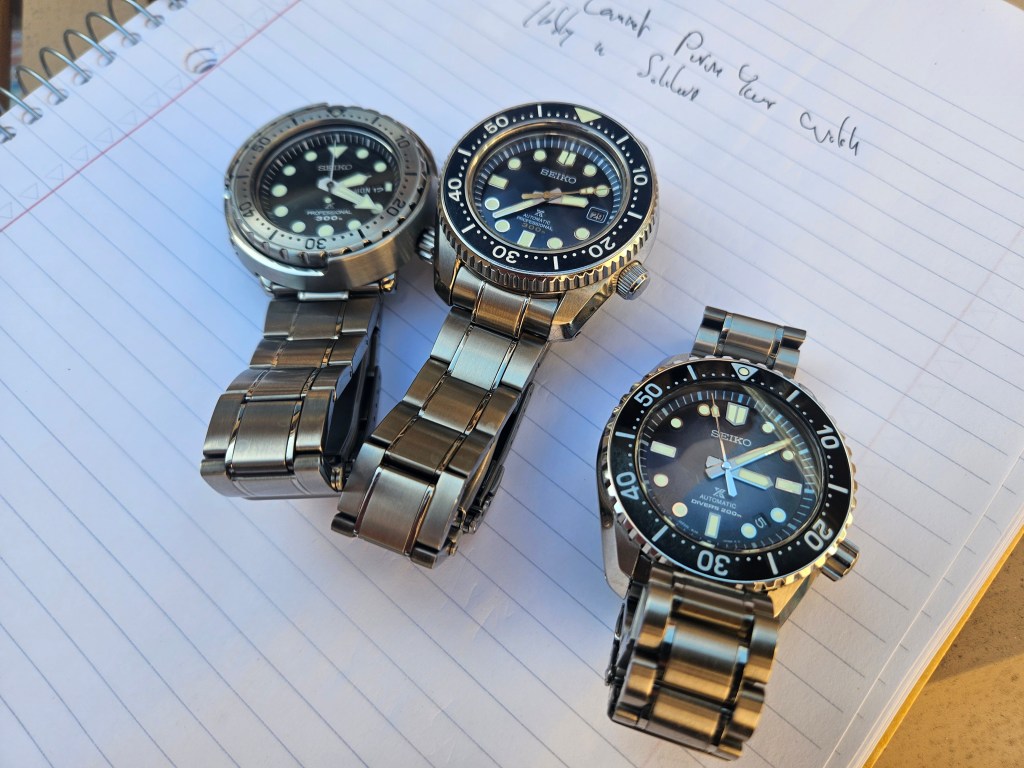
    Because if my YouTube content simply replays my “greatest hits,” then I’m not a creator—I’m Muzak in a grocery store. The kind that whispers, “You may have woken from a coma, but please return to it.” I can do better than that. If I can’t, if I’m nothing but a jukebox endlessly replaying my own past, then I should retire, crack open a beer, devour apple pie, and watch Gilligan’s Island reruns with my spiritual sponsor, Gollum. He and I can cradle our Seiko divers, lament the third-gen Monster that slipped through our fingers, and harmonize to Gilbert O’Sullivan like two addicts in a karaoke bar built out of broken dreams.

  • French Kiss and the Death of Romance: When Below Deck Became a Funeral

    French Kiss and the Death of Romance: When Below Deck Became a Funeral

    Lionel Richie’s memoir Truly apparently shocked a reviewer who couldn’t fathom how a man who wrote love ballads for The Commodores and crooned “Hello” into the hearts of millions might secretly doubt the existence of love. If the critic wants evidence, there’s no need to psychoanalyze Lionel; just watch the single most soul-evaporating hour of television I’ve ever endured: Below Deck Mediterranean, Season 10, Episode 8—“French Kiss.”

    Normally I treat Below Deck like a sushi boat of human dysfunction: the ostentation, the vanity, the moral anemia. It’s a circus, and I laugh at the performers. But this episode wasn’t a circus. It was a funeral for romance. The premise is already laughable: a 47-year-old bachelor named Joe “auditions” several women to be his wife. He speaks to them like he’s onboarding interns at a failing startup. He uses phrases like “I need your input” and “I’m sorry you find this challenging,” as though he’s gently disciplining HR for mishandling toner orders.

    The beloved stewardess Aesha started off as the show’s only beacon of naive hope. She snacks on popcorn and chirps, “Watching people find love before my eyes—how could I be anything but happy?” By midpoint, that optimism has withered. She, like the viewer, recognizes the obvious: there is no love—only a clumsy negotiation between bored women and a man who reeks of conditional stock options.

    The contestants have the haunted eyes of veterans who’ve survived multiple seasons of “influencer courtship.” They aren’t seeking affection; they’re calculating ROI. Joe himself looks twenty years older than his claimed 47. He carries the aesthetic of a divorced CFO who hasn’t smiled sincerely since the recession. He is oily without passion, exhausted without wisdom—exactly the kind of man who believes communication is a spreadsheet. Instead of a heartbeat, he has a lexicon of “deliverables.”

    His problem, though, isn’t age or looks—it’s the dead chill of someone who sold his soul years ago and is now smug about the deal. He assumes that murmuring corporate jargon at the women like an AI trained on LinkedIn posts will hypnotize them into matrimony. It doesn’t. They recoil. They see a man who mistakes “calm negotiation” for charisma, and professionalism for intimacy.

    Bravo should have buried this episode in a vault. It is the franchise’s Everest of bad judgment. Aesha says as much near the end, visibly deflated, calling the whole experiment depressing. And then comes the exit: Joe limps away from the yacht, placing an arm around one contestant who tolerates him the way one tolerates a damp dog during a neighborhood walk. The moment the cameras cut, you know she’ll ghost him with the velocity of a SpaceX launch.

    If you adore Lionel Richie but want to taste the sour, loveless void that haunts his darker thoughts, skip the therapy and watch “French Kiss.” Romance will die before your eyes, and you’ll understand exactly why a man who wrote “Endless Love” now wonders whether love exists at all.

  • A Torn Rotator Cuff Is an Eviction from Paradise

    A Torn Rotator Cuff Is an Eviction from Paradise

    A torn rotator cuff turned me into a petulant adolescent in a sixty-four-year-old body. I stomped around the house muttering, “I don’t want to be sixty-four. I want to be sixteen.” My mind went backwards, desperate for the simpler theology of youth. I remembered the golden afternoon my father drove me to San Francisco to see the 1977 premiere of Pumping Iron. Arnold Schwarzenegger was more than a bodybuilder; he was a secular god of eternal optimism and immortal sinew, a bronze statue come alive to assure troubled boys like me that discipline and a protein shake could conquer the universe.

    I inhaled that movie like scripture. Mike Mentzer became my Saint Paul; Arnold was my Messiah. I tanned religiously at the beach, layering banana-coconut oil on my chest like a fragrant magical elixir. After a workout, my pecs and biceps ballooned into two radiant promises of self-confidence. I would come home euphoric, still buzzing from the iron. My mother, who had only known me as a brooding kid with a permanent rain cloud, once looked at me and asked, “Did you fall in love? You look so happy.”

    I had fallen in love—with iron. Pumping iron was my El Dorado, my personal Fountain of Youth. I borrowed my motto from a forgotten champion in Strength & Health: “As long as God gives me the power to breathe, I will work out to my dying days.”

    But what happens when God stops lending you the breath you need? What happens when the garage—my sanctuary, my temple of kettlebells and dumbbells—becomes forbidden terrain? A torn rotator cuff is an eviction notice from paradise. Suddenly, I wasn’t a mystic of muscle—I was a sixty-four-year-old with a crippled shoulder. I pitied myself like a toddler denied candy.

    The nostalgia was seductive. I wanted to crawl back through time to the late seventies and wrap myself in the cinematic glow of Pumping Iron. But nostalgia is the Devil’s lure. Lot’s Wife looked back once, and the universe crystallized her into a shaker of driveway salt. If I kept staring at the past I’d become the same: frozen, brittle, lifeless. Moving forward was no longer inspirational—it was survival.

    Phil Stutz, in his book Lessons for Living, makes the same argument without biblical theatrics. To be fully alive, he says, you must move forward. His chapter “Just an Illusion” is a scalpel to the throat of consumer culture: reality is struggle, pain, and constant work. But the culture we live in insists that happiness is an on-demand product—a smoothie of ease, dopamine, and perpetual comfort. If you don’t have it, the problem is you.

    This illusion is comically persistent. We spend our lives chasing it like gamblers who “almost won last time.” We train harder, earn more, buy more, upgrade constantly—believing that one more paycheck, one more gadget, one more dollar will finally transport us to the utopia of optimized living. It never arrives. We try again. The illusion endures.

    The media parades its demigods to keep the fantasy alive. They are beautiful, wealthy, self-assured, and cosmically adored. Their bodies are perfect; their futures are certain; their Instagram bios glow like prophecy. They live outside Stutz’s five brutal facts of reality, and so they are not human—they are hallucinations.

    And here I was, injured and marinating in the opposite myth: I am not the optimized self. My shoulder is a wreck. Therefore, I am a loser. The recovery will be incomplete. It will be permanent. I will never be whole again. Therefore, why go on?

    This is the psychological trap of real injury. It does not simply hurt the body—it hacks the mind. It whispers doom so convincingly that you start to believe your life is a long prologue to defeat. My rotator cuff isn’t just testing the limits of my shoulder; it’s testing the limits of my mental durability. And some days, I fear I am failing the exam.