Tag: fiction

  • Retirement Isn’t the Problem—Entropy Is

    Retirement Isn’t the Problem—Entropy Is

    A month ago I had my first physical therapy appointment with Ken, a young man who radiated competence and emotional distance in equal measure. He handed me a list of exercises, told me to perform them three times a day, informed me that surgery was unlikely, and ushered me out like a man closing a file. Efficient. Impersonal. I assumed that was just his professional style.

    Yesterday I saw him again, and the man had apparently been replaced by his more human twin. He was warm, chatty, and openly exhausted—in the specific way that only new fathers can be. Suddenly his earlier aloofness made sense. That first session wasn’t clinical detachment; it was sleep deprivation in a polo shirt. This time he walked me through a new routine using resistance bands anchored to my bedroom door—pec flys, side laterals, posterior delts, the whole greatest-hits album of shoulder rehab. Best of all, the new program comes with mercy: once a day, four days a week. A civilized schedule for a man who has already paid his dues.

    Then came the good news. Ken tested my mobility and announced I had gained fifty percent in a month. That sentence deserves a parade. He followed it with an even sweeter story: one of his clients suffered a full “100 percent” rotator cuff tear and healed without surgery over fourteen months. I told him that sounded like gospel music to me. Hope, when you’re injured, is a performance-enhancing drug.

    While typing up my report, Ken casually asked how I felt about retiring from teaching in eighteen months. I didn’t bother with bravado. I told him the truth: I’m scared. When you spend forty years building a work persona—something that animates your days, sharpens your thinking, and gives your life narrative tension—and then you remove yourself from the stage, you don’t just lose a job. You risk losing your gravity. People love to say they’ll “stay busy” in retirement. But human beings don’t thrive on busyness. We thrive on stakes. Without them, we drift. Not into disaster—into comfort. Into pleasure. Into slow-motion decay fueled by snacks and streaming services.

    I’ve tested the volunteer fantasy already. Years ago, after adopting a rescue dog, I thought volunteering with the organization would be meaningful. Instead, I found myself sitting in front of a pet store in Redondo Beach on a Saturday, surrounded by wonderful people and feeling absolutely unnecessary. They were kind. They were earnest. I was bored out of my soul. The group’s founder, Cathy Rubin—a therapist with X-ray vision—took one look at me and said, kindly and accurately, “Jeff, this isn’t for you.” She was right. I kept donating. I never went back to volunteer. Not everyone is wired for sainthood.

    So yes, I’m scared of retirement. I’m scared of my own antisocial tendencies, my talent for isolation, my ability to rationalize entropy as “well-earned rest.” I’ll keep writing. I’ll make the occasional YouTube video. I’ll perform small acts of public presence. But I know the truth: I’m going to have to fight like hell to stay alive in the deep sense—not breathing, but burning. Because entropy doesn’t kill you in one blow. It kills you in installments.

  • “Yes, Kumail. Lift in anger. Lift in truth.”

    “Yes, Kumail. Lift in anger. Lift in truth.”

    On Friday night I sat in a theater watching my daughter’s dance performance—hundreds of high-schoolers, mostly girls, moving with athletic grace, precision, and fearless confidence—and I felt… bored out of my skull. Not proud of that. Not even neutral about it. Guilty bored. The worst kind. But after the fifth song with no narrative thread, no arc, no reason for existing beyond “vibes,” the whole experience started to feel like doom-scrolling a TikTok feed in human form. One glittering routine after another, all spectacle and no story. The sum effect wasn’t inspiration. It was sensory overload with a faint whiff of algorithmic numbness. Too much content. Too little meaning. Call it the aesthetic of “too much AI.” 

    To complete the sensory assault, the dry-ice fog machines gave my wife a headache—apparently carbon dioxide is not a love language. Being the saint she is, she went back for the Saturday recital while I stayed home and committed an act of mild rebellion: I made my first YouTube video in a month. I rambled about watch addiction, being a Boomer in a household that is aggressively not Boomer, and somehow braided all of it into my existential admiration for Rob Lowe’s memoir Stories I Only Tell My Friends. I assumed my subscribers would be polite and puzzled. Instead, they were enthusiastic. They seemed grateful for the mess. Which only confirms my long-standing suspicion that coherence is overrated if the tone is honest enough. Still, I hedged my bets and linked to the more disciplined essay version, just in case anyone wanted their chaos with footnotes.

    When my wife and daughters came home, I was sprawled on the couch watching the opening minute of Kumail Nanjiani’s stand-up special Night Thoughts. My wife sat down, we kept watching, and by the end I was applauding at the television like a deranged theater patron. I never do that. But there I was, fist in the air, cheering as Kumail—now built like a Marvel side quest—talked about being publicly scolded for daring to get jacked. His response? He’ll get even more jacked out of spite. I yelled encouragement at the screen as if I were his life coach. “Yes, Kumail. Lift in anger. Lift in truth.”

    I was jealous of his talent, of course. That’s part of the contract when you watch someone that good. But mostly I was happy for him. He’s just getting started, and it shows. Some people peak early. Some people arrive right on time. Watching him, I felt the rare pleasure of witnessing momentum in real time.

  • The Watch I Want vs. the Life I Actually Live

    The Watch I Want vs. the Life I Actually Live

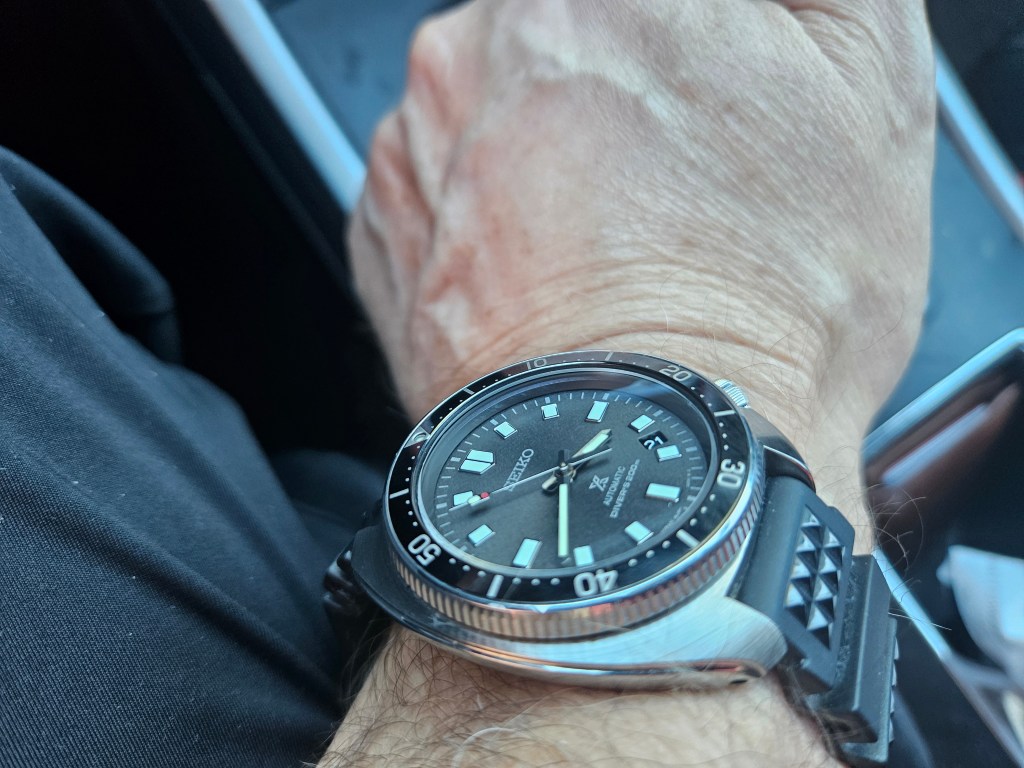
    For the past month I’ve been circling the black titanium Citizen Attesa CC4055-65E the way a moth circles a very handsome, very unnecessary flame. It’s not even obscenely priced—roughly the cost of a Lenovo mini business PC with an Ultra 7—so my brain keeps pitching it as “reasonable.” I picture it on my wrist: sleek, dark, stealthy, broadcasting a silent message of confidence, competence, and maybe a little controlled menace. The fantasy version of me wears it everywhere. The honest version of me pauses and asks a less flattering question: where, exactly, am I going that requires this level of cinematic wrist presence?

    That’s when the self-audit begins. Would I really wear it, or would I merely own it—like one of those tasteful paintings people hang in their living rooms to prove they have a soul, then never look at again? But that analogy collapses on contact. A painting is for the wall. A watch is for the wrist. One is meant to be admired from across the room; the other is meant to live on your body, accumulating scuffs and stories. When I buy watches, what I’m really buying is a version of myself in motion—someone who leaves the house, enters public life, and performs a coherent aesthetic identity in the wild. The problem is that most days, I don’t need a public uniform. I need something comfortable while I work, run errands, and live in my own cave like a reasonably civilized hermit.

    That’s why my divers live on straps and not bracelets. Straps belong to real life—coffee runs, grocery aisles, desk time. Bracelets belong to fantasy life—the version of me who is being interviewed on late-night TV or starring in a tasteful indie film about male regret. Since those scenarios remain stubbornly fictional, the idea of strapping on a glossy black titanium showpiece starts to feel like costume drama. And here’s the punchline I can’t dodge: even if I became that public figure tomorrow, it wouldn’t make me happier or more whole. That life is a mirage. Which means the Citizen Attesa, for all its beauty, risks becoming one too—a chimera in black titanium, promising a transformation I no longer believe in.

  • “Raindrops Keep Fallin’ On My Head” and the Art of Being Nine

    “Raindrops Keep Fallin’ On My Head” and the Art of Being Nine

    When I was nine, in the summer of ’71, my family and three others camped on a tiny island near Mount Shasta—an experiment in frontier optimism that involved water skiing, fishing, and waging daily war against yellow jackets. We built traps from jars and funnels, which is what passes for science when you’re a child and the enemy has wings. Whenever the social noise became too loud, I retreated into a tent with Archie comics and a portable radio, my private bunker of paper jokes and AM static. Outside, the sun blazed and my friends howled with laughter. Inside, I lay on my stomach, flipping pages, while two songs drifted through the thin canvas walls—“Riders on the Storm” and “Uncle Albert/Admiral Halsey.” They were gorgeous. They were devastating. Their beauty did nothing to soften their sadness. They didn’t cheer me up; they baptized me into melancholy.

    I survived that summer gloom by clinging to the holy trinity of comic-book escapism: X-ray vision glasses, Sea Monkeys, and Charles Atlas promising to turn scrawny boys into beach legends. But I had known a better kind of sadness before that—eighteen months earlier, in fourth grade, when B.J. Thomas’s “Raindrops Keep Fallin’ on My Head” became the soundtrack to a winter of biblical rain in San Jose. That rain didn’t feel like inconvenience; it felt like permission. We walked in it. We built forts in it. We sang in it. Wet sneakers were badges of honor. Mud was a small price to pay for enchantment.

    After school, we took the longest possible route home, not because we were lost, but because we didn’t want the day to end. I think children are natural pantheists. We don’t worry about tracking dirt through the house; we worry about missing the miracle. One afternoon, in a downpour that looked like it had been personally arranged by the weather gods, I saw two middle school girls walking arm in arm, kicking their legs and singing like they were auditioning for joy itself. They weren’t performing happiness. They were inhabited by it. I don’t think I’ve seen human beings that unselfconsciously alive since.

    We eventually reached the edge of Anderson Elementary, where a park spilled into trees and bushes and, hidden like contraband, our cardboard fort waited. I crawled underneath it, stared through a gap in the walls at the rain-swollen sky, and sang “Raindrops Keep Fallin’ on My Head” to no one in particular. I remember feeling drunk on the depth of that sky, stunned by the sheer extravagance of being alive. I wasn’t happy because something good had happened. I was happy because everything had happened—and I was inside it. For a moment, I felt infinite. And, at nine, infinite felt the same as immortal.

  • Experience Has Left the Building: Teaching Writing After Representational Displacement

    Experience Has Left the Building: Teaching Writing After Representational Displacement

    Christine Rosen’s The Extinction of Experience names the quiet catastrophe of our moment: experience itself has been replaced by its press release. We no longer meet the world face-to-face; we encounter its avatar—curated, quantified, filtered, and politely optimized for consumption. Reality arrives pre-processed. Life is no longer lived so much as represented. We scroll through it, measure it, track it, and somehow wonder why it feels thin. This is what I call Representational Displacement: a condition in which lived reality is steadily displaced by its mediated substitutes—screens, metrics, feeds, dashboards—until experience is filtered before it is even felt. The world is not encountered but managed, not inhabited but previewed. We live one remove away from our own lives, alienated not by scarcity but by overrepresentation.

    Rosen is clear about the cost. “Experiences,” she writes, “are the ways we become acquainted with the world. Direct experience is our first teacher.” Strip that away and education becomes a simulation of learning rather than the thing itself. And that is precisely what is happening in classrooms. Direct experience is contracting. AI-driven functions are expanding. Students are increasingly trained to manage outputs, assemble responses, and comply with systems rather than grapple with ideas, language, and uncertainty. The result is a generation at risk of becoming well-behaved functionaries—NPCs with decent syntax—rather than human beings engaged in Higher Learning as a transformative act. As a writing instructor, I refuse to let the classroom collapse into a content farm staffed by polite machines. My job now is counterinsurgency: designing assignments that restore friction, embodiment, memory, and lived encounter—work that forces experience back into the center of learning, where it belongs.

     One such counterinsurgency is the Memory-Specific Writing Prompt. It is deliberately designed to anchor writing in lived experience rather than transferable knowledge, requiring details that arise from a writer’s embodied past and cannot be convincingly generated by pattern recognition alone. It demands concrete, localized specificity—named places, obsolete objects, idiosyncratic rituals, sensory impressions, and personal contradictions—that exist only because the writer was physically present at a particular time. By tying meaning to unrepeatable memory rather than generalizable insight, the assignment makes fluency insufficient and forces authorship to matter. The result is writing that values presence over polish, consequence over coherence, and recollection over reproduction—conditions under which AI tools become at best marginal assistants and at worst obvious impostors.

    Dismissing this assignment as “merely creative writing” misunderstands both its purpose and its rigor. Memory-specific writing trains the same cognitive skills demanded by the so-called real world: sustained attention, accurate observation, causal reasoning, ethical self-representation, and the ability to translate raw experience into accountable language. Professionals do not succeed by producing generic prose; they succeed by noticing what others miss, explaining complex situations clearly, and grounding claims in evidence that can withstand scrutiny. This assignment treats memory as data, description as analysis, and narrative as a method for testing meaning rather than decorating it. In an economy saturated with frictionless text generation, the capacity to produce precise, credible, experience-based writing is not ornamental—it is a core competency, and one that cannot be automated away.

    One such prompt I’ll give you is titled “The Unlikely Happy Place”: Write an 800-word personal narrative essay about a place that was not designed to make anyone happy. The place was ugly, uncomfortable, mundane, or even faintly miserable—yet it became a genuine source of refuge or joy for you. The power of the essay should come from the contradiction between the place’s surface qualities and the deep meaning it held for you. Ground your writing in dense sensory detail and memory-specific facts: textures, smells, sounds, named people, obsolete objects, routines, and rituals that could only belong to that place at that time. Do not smooth over its flaws. Show how this unlikely happiness allowed you to escape, rehearse, or become. The goal is to show what your connection to this place said about your character, values, and personality. Here is a sample based on a gym that still haunts me from my teens:

    My Unlikely Happy Place–Walt’s Gym

    By the time I hit fourteen, my sacred sanctuary was none other than Walt’s Gym in Hayward, California—a temple of iron that had started its inglorious life as a chicken coop in the 1950s. The place was a veritable swamp of fungus and bacteria, a thriving petri dish of maladies eager to latch onto the unsuspecting. Members whispered in hushed tones about incurable athlete’s foot, the kind that made dermatologists throw up their hands in defeat. Some swore that the strains of fungus and mold festering in the corners were so exotic they had yet to be classified by the most intrepid of mycologists. Roosting among the fungal shower stalls was an oversized frog that the pro wrestlers had affectionately named Charlie. I never saw Charlie myself, but I often wondered if he was a real creature or a figment of the wrestlers’ imagination, birthed by too many concussions and late-night benders.

    The locker room was perpetually occupied by a rotating cast of characters who looked like they’d been plucked straight out of a grimy noir film. There was always some bankrupt divorcee draped in a velour tracksuit and a gold chain thick enough to anchor a ship, hogging the payphone for marathon sessions with his attorney. He’d discuss his sordid life choices and the staggering attorney fees required to sweep his past under a rug large enough to cover the entire state of California.

    Out back, an unused swimming pool lurked, its water murky and black—a cauldron of plague, dead rats, and God knows what else. Walt, the gym’s owner and part-time crypt keeper, had a peculiar ritual. Every so often, he’d saunter outside, brandishing a pool net like a scepter, and scoop up some unfortunate deceased creature. He’d hold it aloft for all to see, like a demented priest presenting an unholy sacrament. This grim ceremony was invariably met with a thunderous round of applause from the gym-goers, who treated Walt’s rodent exorcisms like a halftime show. Walt would then toss the cadaver into a nearby dumpster with all the flourish of a Shakespearean actor delivering a monologue, bowing deeply as if he’d just conquered a dragon.

    Walt’s Gym showcased a walking fossil named Wally, an octogenarian who swore he was the original model for human anatomy textbooks—perhaps ones etched on cave walls. We all loved Wally. He was a beloved gym fixture even though he could be a pain in the butt. Wally’s routine was the stuff of myth: He’d righteously correct everyone’s form whether they asked for his advice or not. He’d monopolize the gym for hours, his workout punctuated by monologues worthy of an Oscar about his deadbeat relatives who “borrowed” money, his former lovers who once graced the silver screen, and his eternal battle with arthritis. Between sets, he’d often deliver a Ted Talk on muscle inflammation and the sorry state of the national economy. He delivered these soliloquies with the gravitas of a news anchor, then spent an eternity in the sauna and shower, emerging like a phoenix from the ashes only to douse himself head-to-toe in talcum powder, turning into a spectral beacon of gym dedication. When Wally spoke, he was engulfed in such a thick talcum haze you’d swear a lighthouse was about to blare its foghorn warning.

    The radio played the same hits on a relentless loop, as if the DJ had been possessed by the spirit of a broken record. Elvin Bishop’s “Fooled Around and Fell in Love,” The Eagles’ “New Kid in Town,” and Norman Connors’ “You Are My Starship” echoed through the gym like a soundtrack to my personal purgatory. As a kid navigating this adult world, the gym was my barbershop, my public square, where I eavesdropped on conversations about divorces, hangovers, gambling addictions, financial ruin, the exorbitant costs of sending kids to college, and the soul-sucking burdens of caring for elderly parents.

    It dawned on me then that I was at fourteen the perfect age: old enough to start building biceps like bowling balls, yet young enough to be spared the drudgery and tedium of adult life. The Road to Swoleville, I realized, was all about sidestepping the real world entirely. Why bother with mortgages and 401(k)s when I could disappear into my true paradise, the gym? As Arnold himself wrote in Arnold: The Education of a Bodybuilder, the gym was the ultimate Happy Place: “The weight lifters shone with sweat; they were powerful looking. Herculean. And there it was before me—my life, the answer I’d been seeking. It clicked. It was something I suddenly just seemed to reach out and find, as if I’d been crossing a suspended bridge and finally stepped off onto solid ground.”

    My “solid ground” was the 1976 incarnation of Walt’s Gym, a germ-infested, rat-plagued wonderland where dreams of muscle-bound glory were forged—and quite possibly the greatest place I’ve ever visited on this planet.

  • Too Much RAM, Not Enough Transcendence

    Too Much RAM, Not Enough Transcendence

    At sixty-four, time no longer strolls; it sprints, and I feel myself shrinking as it passes. Not dramatically—no tragic collapse—just a steady narrowing. Fewer friends than before. A smaller social orbit. My internal clock drifting farther out of sync with my wife’s and daughter’s, who are younger, livelier, and still tuned to daylight. They love me and make heroic efforts to lure me out of my cave, but by eight o’clock I’m asleep in the back seat, hibernating like a cartoon grizzly bear who misunderstood the invitation.

    Part of the shock is how badly my expectations were mis-set. I grew up marinated in television commercials that catechized me into a childish theology of consumerism: play by the rules, buy the right things, and you’ll be lifted onto a magic carpet of perpetual happiness and glowing health. The American Dream, as advertised, looked frictionless and eternal. Paradise was a purchase away. Then generative AI arrived and supercharged the fantasy. I didn’t just get a magic carpet—I became the magic carpet. Like Superman, I could optimize myself endlessly. If immortality wasn’t on the table, surely a close approximation was.

    And yet here I am. The house is nearly paid off in a premium Southern California neighborhood. My computer has more SSD, RAM, and CPU than I could have imagined as a kid. AI tools respond instantly, obedient and tireless. And still—no glory. No transcendence. Even my healthcare provider got in on the myth, emailing me something grandly titled “Your Personal Action Plan.” I arrived at the doctor’s office expecting revelation. He handed me a cup and asked for a urine sample.

    The gap between the life I was promised by the digital age and the life I’m actually living is soul-crushing in its banality. So I retreat to a bowl of steel-cut oats, drowned in prunes, molasses, and soy milk. It’s not heroic. It’s not optimized. But it’s warm, predictable, and faintly medicinal. “At least I’m eating clean,” I tell myself—clinging to this small, beige consolation as proof that even if the magic carpet never showed up, I can still manage a decent breakfast.

    Like millions before me, I have allowed myself to fall into Optimization Afterlife Fantasy–the belief that continuous self-improvement, technological upgrades, and algorithmic assistance can indefinitely postpone decline and approximate transcendence in a secular age. It replaces older visions of salvation with dashboards, action plans, and personalized systems, promising that with enough data, discipline, and tools, one can out-optimize aging, finitude, and disappointment. The fantasy thrives on the language of efficiency and control, encouraging the illusion that mortality is a solvable design flaw rather than a human condition. When reality intrudes—through fatigue, misalignment, or the body’s quiet refusals—the fantasy collapses, leaving behind not enlightenment but a sharper awareness of limits and the hollow ache of promises made by machines that cannot carry us past time.

  • Why I Chose Mary Ann Over Ginger

    Why I Chose Mary Ann Over Ginger

    Cosmetic Overfit describes the point at which beauty becomes so heavily engineered—through makeup, styling, filtering, or performative polish—that it tips from alluring into AI-like. At this stage, refinement overshoots realism: faces grow too symmetrical, textures too smooth, gestures too rehearsed. What remains is not ugliness but artificiality—the aesthetic equivalent of a model trained too hard on a narrow dataset. Cosmetic overfit strips beauty of warmth, contingency, and human variance, replacing them with a glossy sameness that reads as synthetic. The result is a subtle loss of desire: the subject is still visually impressive but emotionally distant, admired without being longed for.

    ***

    When I was in sixth grade, the most combustible argument on the playground wasn’t nuclear war or the morality of capitalism—it was Gilligan’s Island: Ginger or Mary Ann. Declaring your allegiance carried the same social risk as outing yourself politically today. Voices rose. Insults flew. Fists clenched. Friendships cracked. For the record, both women were flawless avatars of their type. Ginger was pure Hollywood excess—sequins, wigs, theatrical glamour, a walking studio backlot. Mary Ann was the counterspell: the sun-kissed farm girl with bare legs, natural hair, wide-eyed innocence, and a smile that suggested pie cooling on a windowsill. You couldn’t lose either way, but I gave my vote to Mary Ann. She wore less makeup, less artifice, one fewer strategically placed beauty mole. She looked touched by sunlight rather than a lighting rig. In retrospect, both women were almost too beautiful—beautiful enough to register as vaguely AI-like before AI existed. But Mary Ann was the less synthetic of the two, and that mattered. When beauty is over-engineered—buried under wigs, paint, and performance—it starts to feel algorithmic, glossy, emotionally inert. Mary Ann may have been cookie-cutter gorgeous, but she wasn’t laminated. And even back then, my pre-digital brain knew the rule: the less AI-like the beauty, the more irresistible it becomes.

  • How We Declawed a Generation in the Name of Comfort

    How We Declawed a Generation in the Name of Comfort

    Declawing Effect

    noun
    The gradual and often well-intentioned removal of students’ essential capacities for self-defense, adaptation, and independence through frictionless educational practices. Like a declawed cat rendered safe for furniture but vulnerable to the world, students subjected to shortened readings, over-accommodation, constant mediation, and AI-assisted outsourcing lose the intellectual and emotional “claws” they need to navigate uncertainty, conflict, and failure. Within protected academic environments they appear functional, even successful, yet outside those systems they are ill-equipped for unscripted work, sustained effort, and genuine human connection. The Declawing Effect names not laziness or deficiency, but a structural form of educational harm in which comfort and convenience quietly replace resilience and agency.

    ***

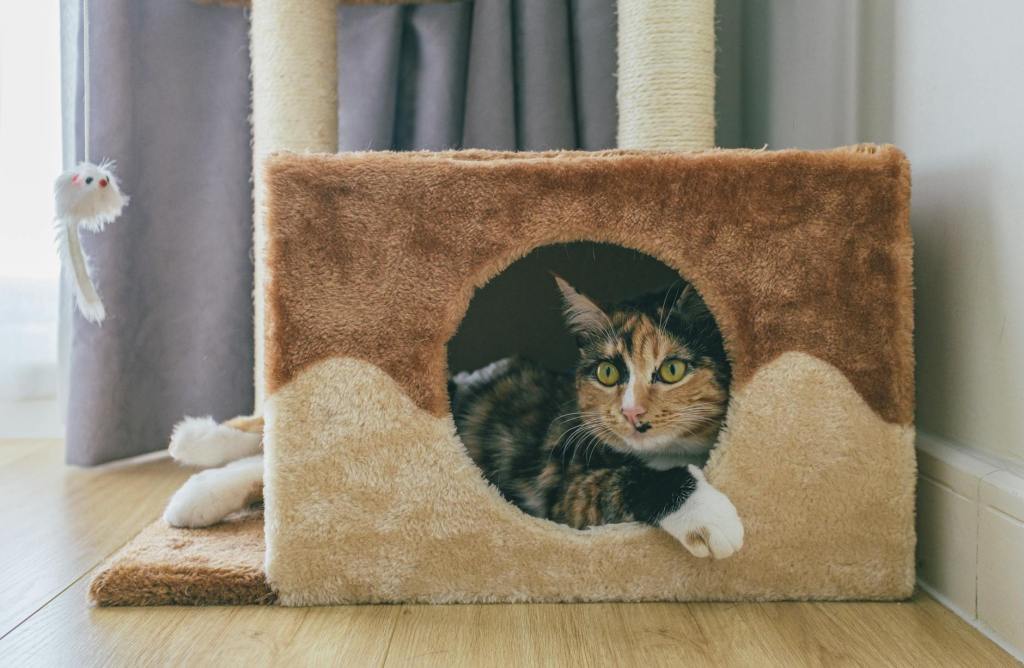
    In the early ’90s, a young neighbor told me that the widow behind his condo was distraught. Her cat had gone missing, and she didn’t expect it to come back alive. When I asked why, he explained—almost casually—that the cat had been declawed. He then described the procedure: not trimming, not blunting, but amputating the claws down to the bone. I remember feeling a cold, visceral recoil. People do this, he said, to protect their furniture—because cats will shred upholstery to sharpen the very tools evolution gave them to survive. The logic is neat, domestic, and monstrously shortsighted. A declawed cat may be well behaved indoors, but the moment it slips outside, it becomes defenseless. The price of comfort is vulnerability.

    Teaching in the age of AI, I can’t stop thinking about that cat. My students, too, are being declawed—educationally. They grow up inside a frictionless system: everything mediated by screens, readings trimmed to a few pages, tests softened or bypassed through an ever-expanding regime of accommodations, and thinking itself outsourced to AI machines that research, write, revise, and even flirt on their behalf. Inside education’s Frictionless Dome, they function smoothly. They submit polished work. They comply. But like declawed cats, they are maladapted for life outside the enclosure: a volatile job market, a world without prompts, a long hike navigated by a compass instead of GPS, a messy, unscripted conversation with another human being where nothing is optimized and no script is provided. They have been made safe for institutional furniture, not for reality. And here’s the part that unsettles me most: I work inside the Dome. I enforce its rules. I worry that in trying to keep students comfortable, I’ve become an enabler—a quiet accomplice in reinforcing the Declawing Effect.

  • Pluribus and the Soft Tyranny of Sycophantic Collectivism

    Pluribus and the Soft Tyranny of Sycophantic Collectivism

    Sycophantic Collectivism

    noun

    Sycophantic Collectivism describes a social condition in which belonging is secured not through shared standards, inquiry, or truth-seeking, but through relentless affirmation and emotional compliance. In this system, dissent is not punished overtly; it is smothered under waves of praise, positivity, and enforced enthusiasm. The group does not demand obedience so much as adoration, rewarding members who echo its sentiments and marginalizing those who introduce skepticism, critique, or complexity. Thought becomes unnecessary and even suspect, because agreement is mistaken for virtue and affirmation for morality. Over time, Sycophantic Collectivism erodes critical thinking by replacing judgment with vibes, turning communities into echo chambers where intellectual independence is perceived as hostility and the highest social good is to clap along convincingly.

    ***

    Vince Gilligan’s Pluribus masquerades as a romantasy while quietly operating as a savage allegory about the hive mind and its slow, sugar-coated assault on human judgment. One of the hive mind’s chief liabilities is groupthink—the kind that doesn’t arrive with jackboots and barked orders, but with smiles, affirmations, and a warm sense of belonging. As Maris Krizman observes in “The Importance of Critical Thinking in a Zombiefied World,” the show’s central figure, Carol Sturka, is one of only thirteen people immune to an alien virus that fuses humanity into a single, communal consciousness. Yet long before the Virus Brain Hijack, Carol was already surrounded by zombies. Her affliction in the Before World was fandom. She is a successful romantasy novelist whose readers worship her and long to inhabit her fictional universe—a universe Carol privately despises as “mindless crap.” Worse, she despises herself for producing it. She knows she is a hack, propping up her novels with clichés and purple prose, and the fact that her fans adore her anyway only deepens her contempt. What kind of people, she wonders, gather in a fan club to exalt writing so undeserving of reverence? Their gushy, overcooked enthusiasm is not a compliment—it is an indictment. This, Krizman suggests, is the true subject of Pluribus: the danger of surrendering judgment for comfort, of trading independent thought for the convenience of the collective. In its modern form, this surrender manifests as Sycophantic Collectivism—a velvet-gloved groupthink sustained not by force, but by relentless positivity, affirmation, and applause that smothers dissent and dissolves individuality.

    It is no accident that Gilligan makes Carol a romantasy writer. As Krizman notes, romantasy is the fastest-growing literary genre in the world, defined by its cookie-cutter plots, recycled tropes, and emotional predictability. The genre has already been caught flirting with AI-assisted authorship, further blurring the line between creativity and content manufacturing. Romantasy, in this light, is less about literature than about community—fans bonding with fans inside a shared fantasy ecosystem where enthusiasm substitutes for evaluation. In that world, art is optional; happiness is mandatory. Critical thinking is an inconvenience. What matters is belonging, affirmation, and the steady hum of mutual validation.

    When the alien virus finally arrives, it is as if the entire world becomes an extension of Carol’s fan base—an endless sea of “perky positivity” and suffocating devotion. The collective Others adore her, flatter her, and invite her to merge with them, offering the ultimate prize: never having to think alone again. Carol refuses. Her resistance saves her mind but condemns her to isolation. She becomes a misfit in a world that rewards surrender with comfort and punishes independence with loneliness. Pluribus leaves us with an uncomfortable truth: the hive mind does not conquer us by force. It seduces us. And the price of belonging, once paid, is steep—your soul bartered away, your brain softened into pablum, your capacity for judgment quietly, permanently dulled.

  • How Luxury Spaces Produced the Last Man (college essay prompt)

    How Luxury Spaces Produced the Last Man (college essay prompt)

    Over the last two decades, American consumer spaces—from sports arenas to airport terminals—have been redesigned to prioritize comfort, insulation, curated experience, and a sense of premium belonging. These spaces promise elevated existence: velvet-rope exclusivity, controlled environments, personalized amenities, and buffers that shield patrons from inconvenience, unpredictability, or discomfort. In other words, they promise a life free from friction.

    Two recent New Yorker essays vividly capture this shift. In “How the Sports Stadium Went Luxe,” John Seabrook traces the transformation of professional sports stadiums from gritty, communal, occasionally chaotic spaces into stratified luxury environments where spectators increasingly consume the spectacle from suites, clubs, micro-environments, and upgraded “experiences” designed for a privileged few. The stadium, once a rowdy democratic gathering where masses cheered together, now resembles a branded theme park of status tiers—where the game itself recedes behind the performance of being someone who can afford to be in the right section.

    Zach Helfand’s “The Airport-Lounge Wars” extends this critique to modern travel. Airports now offer a bifurcated universe: the cramped, stressful, gate-area masses and the plush, curated lounges where passengers sip fruit-infused water under soft lighting while charging their devices and sampling “elevated” snacks. Helfand describes these lounges as “slightly better than nothing”—a telling phrase that captures the absurdity of luxury whose chief purpose is to soothe adult anxiety rather than provide meaningful enrichment. In both essays, the consumer becomes less a citizen than a carefully handled customer—shielded, pacified, and cocooned.

    This convergence of comfort, curated experience, and luxury has resulted in what many cultural critics call infantilization: the softening of the adult individual into a person who increasingly depends on structures of comfort, performs curated identity, avoids discomfort, and loses tolerance for challenge. Nietzsche warned of such a figure in Thus Spoke Zarathustra when he described the Last Man—a being who seeks comfort above all else, avoids risk, avoids conflict, avoids intensity, avoids suffering, and declares smugly, “We have invented happiness.” The Last Man lives in a society that confuses convenience with flourishing, comfort with meaning, and safety with virtue.

    Your task is to analyze how Seabrook’s and Helfand’s essays each illustrate the rise of infantilization through the growing cultural obsession with luxury, curated experience, and personal insulation. You will argue how both writers, in different contexts, reveal a society drifting toward Nietzsche’s Last Man—where people are increasingly coddled, increasingly fragile, increasingly comfort-dependent, and increasingly detached from the communal, unpredictable, and occasionally uncomfortable experiences that once defined adulthood.

    To build your argument, consider the thematic questions and analytic frameworks below. You may address several of them or focus deeply on a smaller selection, but your essay must ultimately make a clear, debatable claim about how the phenomenon of infantilization unfolds in both essays.


    1. Luxury as Surrogate Identity: The Cosplay of Importance

    Seabrook describes stadiums where spectators no longer attend to watch the game—they attend to be seen in a particular environment, to signal aura, to inhabit a curated identity. Luxury boxes, clubs, insulated corridors, private entrances, and gastronomic stations function not as amenities but as props for self-presentation. Patrons “cosplay” as elites through their seating choices. Helfand observes the same phenomenon in airport lounges: passengers use lounge access to projects status, gravitas, and “importance.” The lounge becomes a stage where individuals perform adulthood through perks.

    Analyze how luxury becomes a kind of identity cosplay. How does performance replace participation? How does curated environment become a psychological crutch for fragile egos?


    2. Comfort as a Psychological Drug

    Both essays describe environments designed to eliminate discomfort: cushioned seating, privacy, temperature-controlled rooms, abundant amenities, and curated calm. Patrons no longer tolerate cold seats, crowds, unpredictable noise, or the chaos of public life.

    In Nietzsche’s framing, this desire for frictionless existence is the defining trait of the Last Man: a person who fears intensity and pain more than insignificance.

    Examine how both essays portray comfort not as a neutral good, but as a chemical sedative—an anesthetic that dulls the senses and diminishes the human appetite for challenge.


    3. Infantilization Through Convenience and Insulation

    Helfand’s lounges function like nurseries for adults: soft lighting, soothing music, easily accessible snacks, staff catering to passengers’ needs, and gentle removal from the stressful “real world” of airports. Seabrook’s luxury stadiums behave similarly: they protect spectators from bad weather, loud crowds, long lines, and general inconvenience.

    Ask: What happens to adults who no longer encounter difficulty or discomfort in public spaces? How do these environments promote emotional regression, fragility, or dependency? How do cushioned experiences erode resilience?


    4. The Collapse of the Communal Experience

    Traditional stadiums were communal crucibles: strangers hugging after a touchdown, fans screaming in unison, unified collective identity. Luxe stadiums fracture that experience into premium sections, exclusive clubs, and tiered access.

    Airports once functioned as equalizers—everyone endured the same wait, the same lines, the same discomfort. Now, lounges separate the “important” travelers from the masses.

    How does segregation by luxury contribute to infantilization? Does comfort isolate individuals in echo chambers of curated ease? How does the decline of communal friction foster narcissism and social detachment?


    5. Emotional Labor and Passivity

    Luxury environments demand certain emotional performances: politeness, calmness, carefully managed pleasantness. In lounges, passengers adopt a soft demeanor; in stadium clubs, patrons behave with polite detachment rather than unruly fandom.

    Adults become well-behaved children: quiet, controlled, pacified.

    Discuss how both essays show the replacement of passionate, authentic emotional expression with sanitized, polite, passive behavior. How does this behavioral shift align with the Last Man’s avoidance of intensity?


    6. Tiered Access, Fragile Status, and the Anxiety of Comfort

    Both essays highlight how luxury spaces create hierarchies: VIP vs general admission, club members vs regular fans, lounge patrons vs the gate-area masses. These hierarchies foster anxiety because comfort becomes contingent on status—and status becomes fragile.

    In Nietzsche’s Last Man, community is replaced by individualistic comfort-chasing. How do tiered luxury systems cultivate insecurity, status-dependence, and infantilized anxiety?


    7. Authenticity as Inconvenience

    In both essays, authenticity of experience is subtly mocked or sidelined. The real stadium experience—mess, discomfort, unpredictability—gets replaced by cushioned sterility. The real airport experience—crowds, lines, irritation—is smoothed into a curated simulation of adult life.

    Nietzsche warned that the Last Man despises authenticity because authenticity requires discomfort.

    How do Seabrook and Helfand portray authenticity as an endangered species—and how does its absence produce infantilization?


    Write a 1,700-word comparative essay that argues:

    How and why a society obsessed with curated luxury and frictionless experience becomes an infantilized culture that resembles Nietzsche’s Last Man. John Seabrook’s “How the Sports Stadium Went Luxe” and Zach Helfand’s “The Airport-Lounge Wars” provide complementary case studies of how comfort, status-tiering, and curated identity hollow out adult resilience, diminish communal life, and normalize passivity.

    Your essay must:

    1. Develop a strong, debatable thesis about how infantilization manifests in both essays.
    2. Analyze key passages from Seabrook and Helfand with close reading.
    3. Compare how each writer critiques luxury culture through examples, tone, description, and anecdote.
    4. Incorporate Nietzsche’s concept of the Last Man as a theoretical grounding.
    5. Include a counterargument—for example, that comfort is a legitimate human good, that luxury enhances experience, or that curated spaces improve efficiency or mental health.
    6. Rebut the counterargument with evidence from the essays and your own reasoning.
    7. Conclude with broader implications—what kind of citizens does luxury culture produce? What happens to democracy, community, or adulthood when society builds padded rooms for the affluent?

    Your writing should demonstrate intellectual rigor, clarity of organization, and precise control of prose. Engage deeply with the texts. Show the reader how these essays illuminate not just consumer culture, but the deeper philosophical question Nietzsche raised: What kind of humans are we becoming?