In my early teens in the 1970s, I toured the waterbed revolution like a true believer. Friends, neighbors—everyone seemed to have one, and after test-driving these vinyl oceans, I became convinced that a waterbed would deliver me into a life of unimaginable luxury, decadent pleasure, and deep, undisturbed sleep. Reality had other plans.
I badgered my parents into buying me one, fully expecting a nirvana of relaxation. Instead, I got a glorified swamp. The temperature was either scalding lava or Arctic frost, the thin vinyl leaked like a punctured raft, and the whole thing smelled like a frog orgy in a Louisiana bayou. Worse, any movement triggered an equal and opposite reaction, as if I were engaged in battle with some unseen aquatic force.
The final insult? A biblical flood. One morning, my leaking disaster destroyed the floorboards, turning my bedroom into a post-hurricane FEMA zone. My dreams of floating into the future of sleep innovation had instead capsized, and I was left with the cold, hard truth: the quest for the ultimate bed would have to begin anew.
Of course, I couldn’t let this tragedy go undocumented. Some people move on—I, on the other hand, have a compulsion to turn every misadventure into a cautionary tale.
I blame my childhood TV habits. I was obsessed with The Adventures of Rocky and Bullwinkle, particularly the history lessons from Mr. Peabody and Sherman. With their time-traveling escapades, they examined history through Mr. Peabody’s smug brilliance, making sense of human folly. I can picture them now, entering their time machine, visiting me as my waterbed catastrophe unfolds, and filing the entire debacle under “Lessons in Bad Decision-Making.”
For me, this is what writing is—a time machine, a way to travel through memory, make sense of chaos, and leave behind an indelible mark. It’s a compulsion, an illness, a disease.
Trying to understand this affliction, I turned to Anne Lamott for rehabilitation. Bird by Bird: Some Instructions on Writing and Life is mercifully free of false hope. A veteran of countless writing workshops, Lamott tells her students the truth: writing will not bring peace, joy, or serenity. Instead, their lives will be a mess—ruin, hysteria, bad skin, unsightly tics, financial catastrophe—but not peace of mind.
And yet, she urges them to embrace the suffering, because to suffer for writing is a privilege—a sign that they have “finally arrived.”
Translation: Writing isn’t a craft. It’s a storm you never escape from, a bad investment you refuse to cut loose, a waterbed that just won’t stop leaking—but you keep lying on it anyway.
To take up writing is to choose obsession—to engage with ideas, people, and the world with an intensity otherwise unattainable. The alternative? A life of flatline existence, tranquilized and convalescent, a kind of slow-motion death. Writing is a self-inflicted challenge, a constant state of creative warfare, but that’s the point. You’ve chosen a mission as high-stakes as Vikings raiding distant shores because you’re not content to sedate yourself with the comfort of a reliable, unchallenging routine.
Yes, you can walk away, consume food, entertainment, and dopamine-rich distractions, and let your mind dissolve into cultural sludge. But the price of that escape is worse than the struggle—an existence marked by vapidity, emptiness, and a soul-draining sense of futility.
I was reminded of this during a conversation with a Trader Joe’s cashier about her twenty-four-year-old daughter. At nineteen, the girl dropped out of college during COVID and never returned. Now she works at a dispensary, detached and listless, selling products to customers just as zoned out as she is. A perfect circle of disengagement.
Writing is the opposite: an act of defiance against entropy—a way to make discoveries, clarify the chaos, and refine that clarity into a persona and a voice that matters. Once you get a taste of this life, there is no going back.
Lamott puts it best: writing is like milking a cow—”the milk is so rich and delicious, and the cow is so glad you did it.” Her goal is not just to teach writing but to make sure that once you’ve milked the cow, you’ll never want to stop.
I never wanted to stop. Writing isn’t the problem—staying in my lane is.
I don’t want to burden my wife, friends, or unsuspecting literary agents with yet another unreadable novel, churned out from a delusional obsession, an addiction, a brain warp induced by too many readings of A Confederacy of Dunces. Some might say I should write for therapy, keep a journal for mental hygiene, treating my office like a literary spa where I purge the toxins from my overactive brain.
That’s not how I operate.
Writing only feels real if I imagine other people reading it. To write only for myself feels repulsive, deranged—what philosophers call solipsism, where the self becomes the only reality. If I’m the only audience, then I might as well be shouting into a void, a lunatic locked in a room, talking to no one but his own reflection.
And yet, there’s something almost hopeful in my need for an audience. Strip away the ego factor, and what remains is connection—the belief that words should travel, that they should land inside someone else’s head and stir something awake. For all my curmudgeonly tendencies, I’m no misanthrope. In my darkest moments, I still believe that deep human connections—through writing, music, and art—prove that we haven’t entirely given up on each other.
I think of George Carlin, who, for all his nihilistic rants, never hid in a cave. He famously said that being born is like getting a front-row ticket to the freak show—but instead of watching in silence, he grabbed a mic and talked about it for hours.
I can’t write for no one. The thrill of writing is imagining that someone, somewhere, is reading.
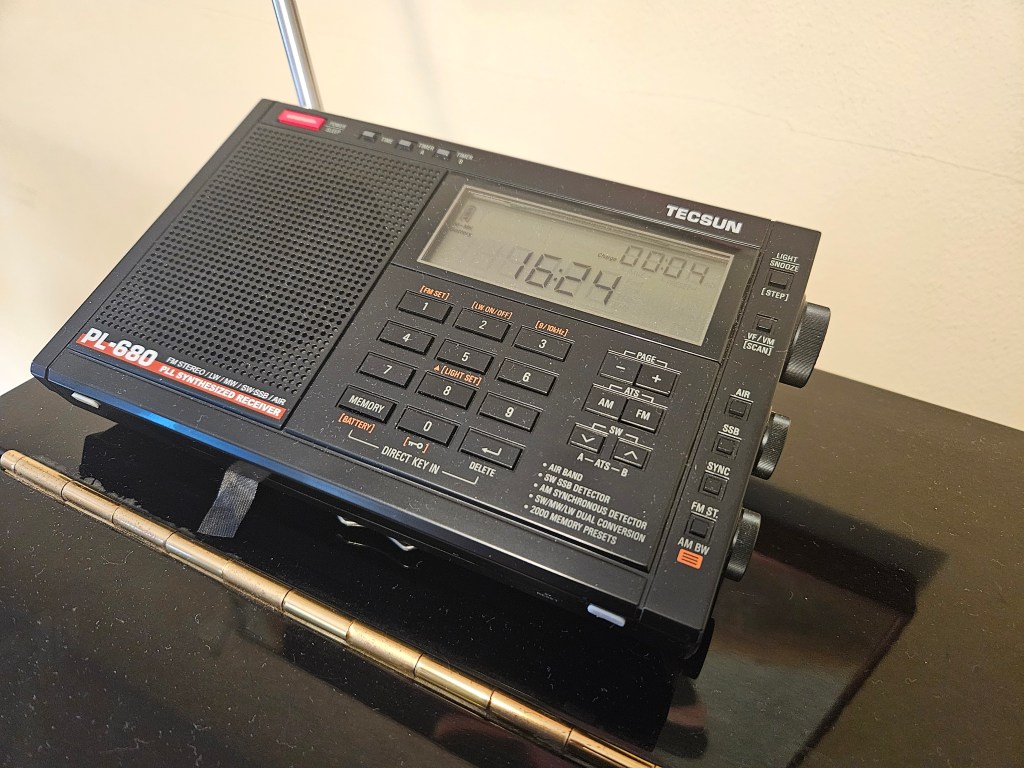
Last night, I listened to Dvořák’s Sixth Symphony on the radio, and it felt electric. Had I streamed it alone, the experience would have been diminished—background noise rather than something shared. Knowing that thousands of others were listening at the same moment made the music more alive, more urgent.
I can’t tell if this compulsion to share my stories is a normal human impulse or the delusion of a narcissist. I want people to know about my misadventures, my catastrophes, my brief flirtations with transcendence. I want people to see history the way I saw it, the way I lived it. I believe in marking things down for posterity, but I also suspect that if I don’t immortalize my past in print, it might evaporate into the void like it never happened at all.
Lurking beneath all this is a deeper fear—that something essential to our humanity is slipping away. So I climb into Mr. Peabody’s time machine and set the dial to the summers of 1975 through 1979, when my family and a small army of friends made the annual pilgrimage to Pt. Reyes Beach. Johnson’s Oyster Farm was our temple, and its truck beds overflowed with what seemed like an infinite supply of oysters. From noon to sunset, we ate like gods in exile—barbecued oysters drowning in garlic butter and Tabasco, bottomless baskets of garlic bread, and colossal slabs of moist chocolate cake.
Ignoring the ominous great white shark warnings, we punctuated our feasting with reckless dives into the waves, emerging from the ocean with our pecs glistening in the sunlight, ready for another round of oysters. In the summer of ’78, I decided not to ride home with my parents. Instead, I hitched a ride in the back of a stranger’s truck, surrounded by a ragtag group of new acquaintances—full-bellied, sun-dazed, and staring up at the stars with our glazed lizard eyes, swapping wild stories like ancient mariners.
And here’s the thing: nobody took a single picture. There were no selfies, no curated posts to induce FOMO, no frantic attempts to manufacture nostalgia in real time. We were too deep inside the moment to think about how it might look on a screen later. Today, we don’t experience moments—we package them for consumption.
And maybe that’s why I can’t not write about it. I can’t store my stories in some damp, echoing cave, streaming them to an audience of one. I need them broadcasted, carried on the airwaves, felt in real time by others.
My disease is incurable.