Tag: fitness

  • Diary of a Shoulder That Tried to Kill Me

    Diary of a Shoulder That Tried to Kill Me

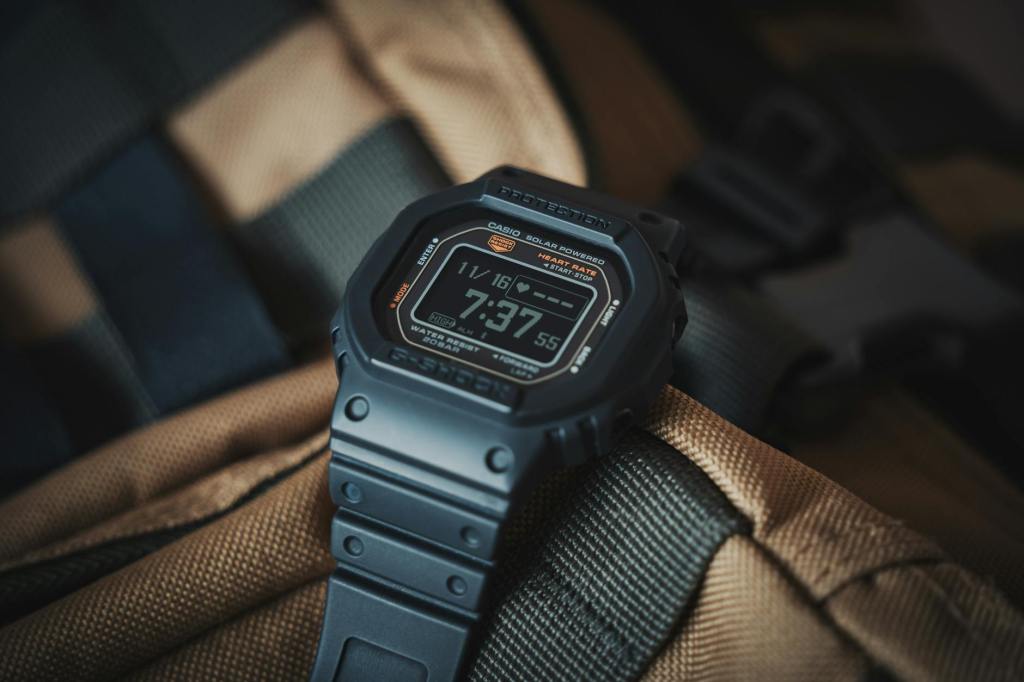
    I posted a YouTube video confessing that my torn rotator cuff cured me of my watch addiction. I braced for scolding: “How dare you upload non-watch content?” I imagined angry horology fanatics clutching diver bracelets and pearl-clutching over my betrayal. Instead, the algorithm delivered mercy. The view count was business as usual. The comments, however, were a grim roll call of the maimed.

    They arrived like pilgrims to a shrine of damaged shoulders. Chronic pain veterans, many of them familiar names from the watch trenches, sent dispatches: stalled healing timelines, depression so thick it sits on your chest, isometric training as penance, and farewell notes to heavy lifting. A few newcomers drifted in, summoned by the wretched deltoid-algorithms that sort humanity into suffering tribes.

    Every story hit the same grim notes: rage, dread, self-pity, and nihilism. There it was again, that quiet void whispering, “Nothing matters anymore.” Nihilism is simply the rotator cuff of the soul—an internal tear that immobilizes you far longer than the physical one.

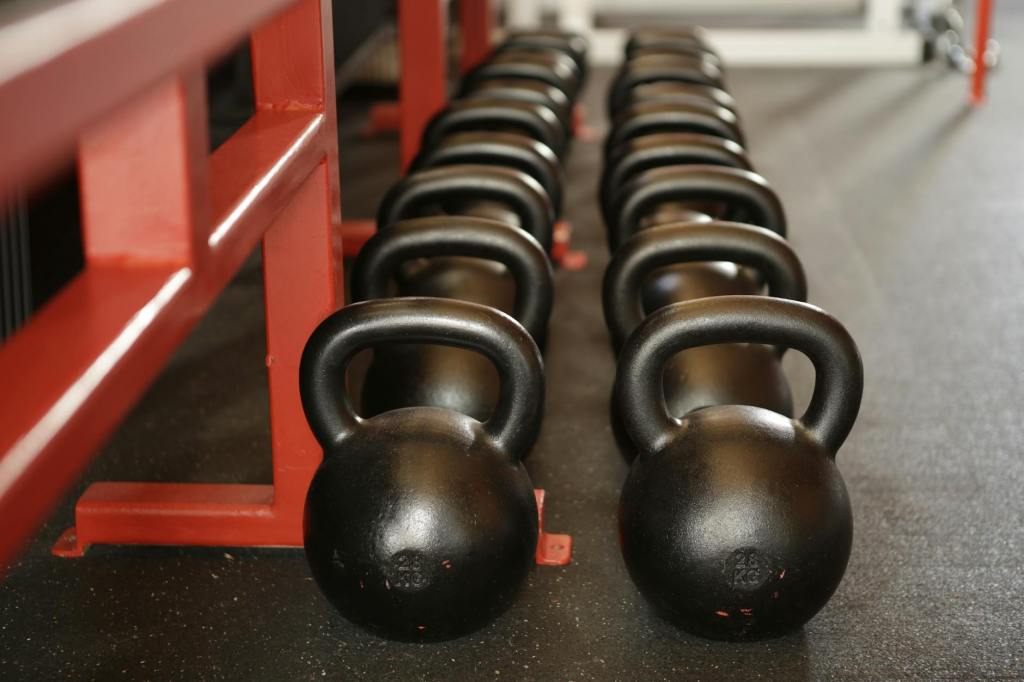
    I haven’t officially become a miserablist. Not yet. I still haunt my garage gym like a stubborn ghost. Goblet squats, double-hand swings, straight-leg deadlifts. Russian twists. A triceps exercise called Skull-crushers—named because the kettlebell would slam into your forehead if you lose focus for half a second. I use a twenty-pounder. I’m vain, not suicidal. My push-ups are a sort of prayer: on my knees, arms tucked like a sphinx, rising slowly as if coaxing life back into my triceps.

    This morning I feel a good soreness in my triceps, the soreness that whispers, “You’re still in the game.”

    Yesterday, mid-workout, two revelations hit me like kettlebells to the temple. First, the smoking gun: the injury didn’t come from ordinary training. It came from that medieval torture move known as the “lawnmower row.” You lean over and yank the kettlebell skyward like you’re trying to start a balky Briggs & Stratton. I blocked that memory for weeks—like someone trying to forget a bad romance.

    Second, I realized the injury was gentler in its early days. I know this because I still did “around-the-worlds”: passing a 70-pound kettlebell around my body in clockwise and counterclockwise orbits like a makeshift solar system. Yesterday, with a much lighter bell, I could barely scrape a half-circle before my left shoulder screamed mutiny. I didn’t just injure myself—I worsened it with the zeal of a true believer.

    So this December  of 2025 becomes a tightrope: train enough to fend off atrophy and rigidity, but not so much that the rotator cuff tears in half like wet parchment. This is the gospel of injury: moderation, humility, and the patience of a monk.

    If I were naïve enough to trust the publishing industry, I might dream of spinning this into a 70,000-word memoir. A blockbuster chronicling not only the physical agony but the psychological descent into pain-induced existentialism. The masses would see themselves in it. I might become rich. I might become famous. And yet, between two futures—a healthy shoulder and obscurity, or torn rotator cuff and celebrity cripple memoirist—I’d take the intact tendon every time. I’d rather be an anonymous man in a quiet garage than a limping prophet of pain and book deals.

  • How a Torn Rotator Cuff Tried to Break Me

    How a Torn Rotator Cuff Tried to Break Me

    A rotator cuff injury is an affront to the human desire for control. You follow instructions and protocols to avoid injury and get stronger, but the pain reminds you that you can’t control the trajectory of recovery. Complete rest could be its own disaster. You’re choosing between two bad options.

    Not only do you lose control of your body in ways you never imagined—you can’t optimize.

    If you’re an exercise buff who struggles with weight and is waiting for affordable versions of GLP-1 drugs, as I am, the compromises forced by a shoulder injury are disconcerting.

    My workout on November 29, with kettlebells integrated with shoulder rehab exercises, was not encouraging. My shoulder felt worse afterward. When the Motrin wore off and I woke up at two in the morning, I could tell the training had aggravated it. I began thinking about giving up the Farmer’s Walk with a 45-pound kettlebell in each hand. Perhaps that was too much. My entire training life has been a process of eliminating one exercise after another.

    With my shoulder still aggravated from the workout, on November 30 I decided to try my Schwinn Airdyne again, but this time I wouldn’t use my left arm to row the lever. I would rest my hand on it and rely mostly on my legs. The problem was psychological. Using my arms fully, I had burned 600 calories in about 50 minutes—probably more, since the calorie monitor doesn’t calculate body weight, and several forums claim that an hour on an air bike burns around 1,000 calories. Not using my arms would reduce my output, which, in a gamified world, is demoralizing. Still, even without using my arms, the calorie burn would exceed that of walking the neighborhood for an hour while worrying about stray dogs and car fumes.

    Exactly a week before—on the day my Airdyne workout was followed by nerve pain shooting down my left arm—I burned 600 calories in 52 minutes, which comes to 11.54 calories per minute. A week later, three days after seeing the doctor, I tried the Airdyne again with a significant disadvantage: I couldn’t row with my left hand. During the session, I protected my shoulder with three strategies. I rested my hand on the lever with no pushing or pulling; I gripped my towel with the left hand while my right arm did the rowing; or I grabbed the towel draped over my neck with both hands. Not surprisingly, I didn’t burn as many calories as the week before. I burned 601 in 57 minutes, which was 10.54 calories per minute. My calorie-burn efficiency was down 9.5 percent.

    Despite the significant drop in efficiency, the experiment was half successful: I still reached my goal of 600 calories.

    The real test remained: an hour after the workout, how would my shoulder feel?

    I showered, ate lunch, did some mild isometrics for my shoulder, and did not experience the shooting nerve pain I had a week earlier, so perhaps I was in the clear with the Airdyne provided I don’t row with my injured side.

    I would take this minor victory. The last three months I felt insulted by the difficulty in wrapping a towel around my waist, taking off a sweat-soaked tank top, putting on a belt, closing the driver-side car door, reaching for something in the back of the fridge, and using my left hand to soap my right armpit. Being able to burn 600 calories on the Airdyne was a sweet morsel of consolation. 

    In this war with a rotator cuff injury, I was willing to take whatever tiny victories I could get. 

    A small expression of gratitude might help my morose disposition and the self-pity that I had indulged in over the last three months. If I ever were to write and publish a book on my ordeal, I would probably title it Shoulder, Interrupted: How a Torn Rotator Cuff Tried to Break Me

  • Hope in the Form of a Lab Coat

    Hope in the Form of a Lab Coat

    For three months I slogged through shoulder pain armed with nothing but a self-diagnosis and stubborn pride. I refused to see a doctor. Why submit myself to some exhausted clinician who’d never lifted a kettlebell in his life and would prescribe the usual pablum—ice, rest, and advice I could have gotten from the comments section of Wikipedia?

    Then something happened that forced a reckoning. To compensate for the kettlebell exile, I doubled down on the Schwinn Airdyne—hour-long sessions of fan-bike misery that combine pedaling with lever rowing. I felt no pain… until a week before Thanksgiving. After a brutally satisfying session, a nerve fired down my arm like a live wire. The message was unmistakable: I had graduated from “irritation” to “we’re-squeezing-your-spinal-cord-for-fun.” Something was pinched, something was furious, and it was no longer optional.

    I made a YouTube video to announce the cosmic irony: my watch addiction was cured, but the cure was a torn rotator cuff. The floodgates opened. Dozens of comments poured in from people who had endured surgeries, magnets, injections, cortisone cocktails, or endless physical therapy. One old friend emailed: ten years of chronic pain, zero recovery, restricted motion for life. The road, it turns out, is paved with hope and ends in a ditch.

    It was clear: I didn’t need more voices, I needed data. I called Kaiser and booked an appointment. Someone would see me the day before Thanksgiving.

    That afternoon I met Dr. Cherukuri, a woman in her late thirties with the energy of someone who actually likes her profession. She examined my shoulder, commented that the bulge was visible even through my T-shirt, pressed around the joint, put me through a series of movements, and diagnosed left rotator cuff syndrome with left biceps tendinopathy. She ordered X-rays and an ultrasound and, pending results, believed three months of rehab could put me back together.

    She put me on Motrin three times a day for two weeks to bring the inflammation down—enough to make rehab possible. She also agreed I should continue kettlebell work for muscle maintenance. A doctor who understands the importance of preserving muscle mass? I nearly wept. The catch was predictable: no chest or shoulder presses, no biceps curls. My hypertrophy would be confined to legs, glutes, traps—maybe some trickle-down gains from rehab exercises if the gods were kind.

    She handed me a list of movements, which I combined with ones I learned from YouTube: cow-cat yoga pose, broomstick flexion, wall push-ups, wall flexion, forearm planks, plank shoulder taps, narrow-position knee push-ups, light dumbbell rotations, and more. Anything that required me to lift my arms overhead or behind me felt like sticking my shoulder into a hornet nest.

    The mandate was fifteen minutes of rehab every day. On kettlebell days, I’d slip the movements between lifts three days a week. The other four days were rehabilitation only—an entire week built around mending the wounded joint.

    Psychologically, the appointment was a relief. First, the diagnosis proved I wasn’t a lunatic or some melodramatic malingerer. Second, I needed structure. I needed a plan, a weapon—something to push against instead of drifting through pain, anxiety, and the unknowable. When I’m saddled with a problem, I don’t need platitudes; I need targets and artillery. Seeing the doctor was the moment I picked up a rifle instead of a white flag.

    But I was still blind. I had no idea how severe the tear was, whether rehab would work, whether I could heal without surgery, or how to navigate the distress of shoulder pain so sharp that turning my steering wheel wrong or sliding a backpack strap across my arm sent shockwaves that lingered for minutes.

    Going to a doctor was a necessary first step. But I still knew nothing. All I understood was how much I still needed to know if I hoped to climb out of this hole. The thirst for clarity, for diagnostic certainty, became my new obsession—one that bulldozed my watch addiction.

    My YouTube followers were devastated.
    “We need you back, bro. We need you to commiserate with us about the watch madness.”

    God bless them. They needed me to get better—not only for me, but for them, so we could suffer together in peace.

  • Anatomy of a Rotator Cuff Meltdown

    Anatomy of a Rotator Cuff Meltdown

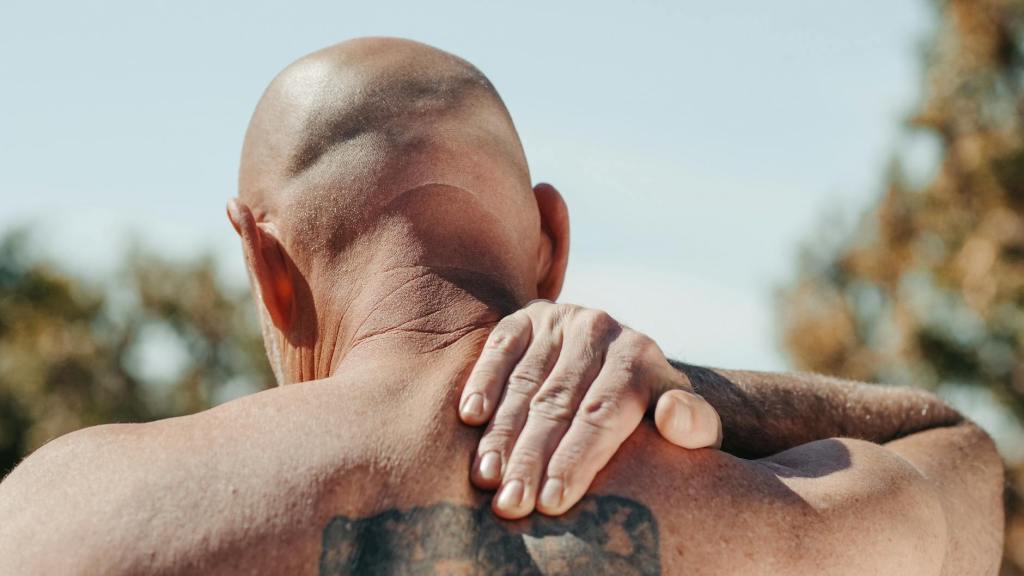
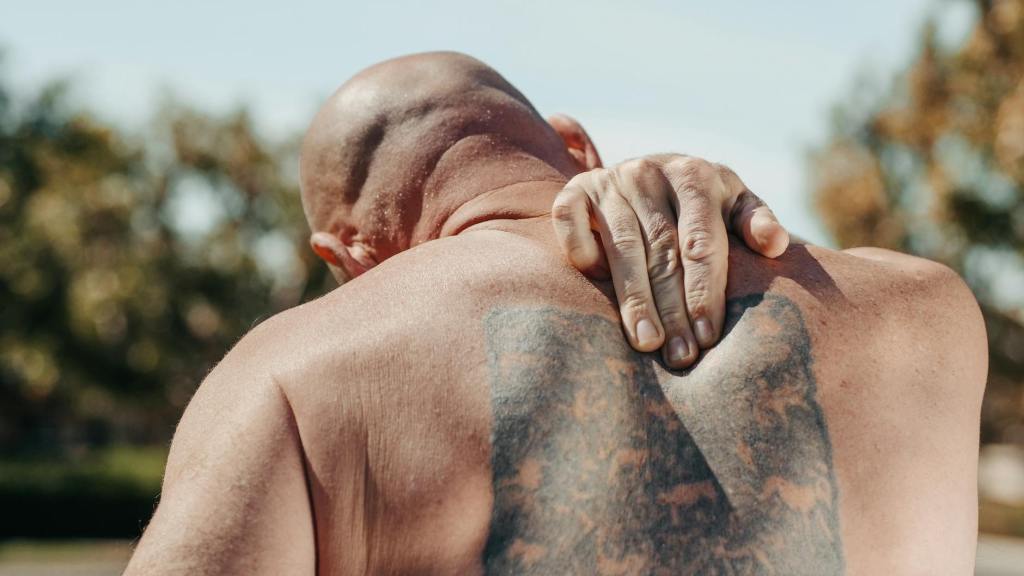
    A torn rotator cuff doesn’t just hurt—it becomes the project manager of your mood swings and mental health. Every everyday gesture gets interrogated like a crime scene: How high can I raise this arm? Which angle is the assassin? When will the orthopedic surgeon enter stage left and demand a sacrificial tendon? You find yourself mentally policing every muscle fiber in the chest, shoulders, and biceps—formerly your prized territories, now embargoed like Cold War no-man’s lands. And then comes the flashback reel: Was it the single-arm kettlebell press? The swing? The curl? Maybe it wasn’t a heroic injury at all, just the slow, bureaucratic decay of connective tissue over time—aging’s signature insult.

    The constant vigilance is corrosive. Shoulder injuries have support groups because sufferers eventually learn the catastrophic secret: it’s not the rotator cuff that breaks first—it’s the psyche. The shoulder, like the back and knees, is a psychological choke point. When it fails, it takes your mood, your sleep, and your sense of invincibility hostage. Physical rehab becomes inseparable from emotional rehab. The body limps, and the mind limps with it, muttering under its breath.

    It’s been three months and I’m starting to resent the job of being my own orthopedic babysitter. I’m grateful I can still sleep without feeling like someone is driving a railroad spike through my scapula. I have enough forward and lateral mobility to get dressed without a prayer circle. I can still train legs, glutes, and abs like a functioning primate. But the lesson is brutal: a torn rotator cuff grants no mercy, no sanctuary from overthinking, and no reprieve from the quieter forms of psychological sabotage.

    A torn rotator cuff is no country for sniveling, navel-gazing men. The challenge now is to un-snivel, un-navel-gaze, and rebuild myself without the luxury of denial.

  • A Diagnosis is a Weapon: My First Step Toward Shoulder Recovery

    A Diagnosis is a Weapon: My First Step Toward Shoulder Recovery

    Yesterday I met with a sports medicine physical therapist at Kaiser for the first time. The kind nurse took my vitals, and to my surprise my blood pressure wasn’t bad at all: 127 over 84. My blood pressure always spikes a bit at the doctor’s. 

    Then I met the sports doctor. She was affable, direct, and clearly passionate about her work. She examined my left shoulder, noted that the swelling was visible even through my T-shirt, pressed along the biceps groove, and tested my range of motion. After watching me perform several movements, she diagnosed me with rotator cuff syndrome and biceps tendinopathy. She immediately ordered an X-ray (results pending) and scheduled an ultrasound in five weeks to gather more detail. 

    Her initial verdict was cautiously optimistic: with proper rehab, she believes I can recover in three months. I told her that unlike my old gym injury—when I tore my rotator cuff doing heavy bench presses and spent nine months in purgatory—this one didn’t begin with trauma. I was simply doing my normal kettlebell chest presses, felt a little tightness, and woke up the next morning with a shoulder that felt like it belonged to someone else. That incident was three months ago. 

    She has me on Motrin three times a day to bring down the inflammation so I can tolerate the rehab movements. To my relief, she didn’t ask me to abandon muscle training; she understands the realities of aging and the need to protect lean mass. I just have to avoid chest presses, shoulder presses, and curls. My work will shift to legs, glutes, traps, and lat activation, with shoulder and pec stimulation coming indirectly through rehab. She gave a handout of exercises, some I can do and others I can’t. I also consulted some doctors who do shoulder rehab on YouTube and told her about some, and she agreed I could do them.

    So far, I have a long list of rehab exercises I can choose from: cat–cow yog pose, broomstick flexion, wall push-ups, wall flexion, planks, plank taps, narrow push-ups on the knees, light dumbbell rotations, and others. 

    Some overhead movements are currently impossible. Hanging from a chin-up bar, the internet’s magic cure, feels like medieval torture. 

    I’ll do the exercises that I can tolerate for fifteen minutes daily: integrated on kettlebell days, standalone on the rest. Also, on my non-kettlebell days, the doctor agrees I should take an hour-long walk.

    Psychologically, this appointment mattered. A diagnosis means I’m not inventing pain or collapsing mentally. It gives me a plan, an organizing principle, a weapon. When my body fails, I can live with discomfort; what I cannot tolerate is drifting in uncertainty. Seeing this doctor was the first step in taking back control.

  • Three Months of Shoulder Pain and the Art of Not Panicking

    Three Months of Shoulder Pain and the Art of Not Panicking

    This afternoon I’ll see a doctor about my three-month shoulder ordeal. I’m hoping for clarity: bursitis or a torn rotator cuff. The injury didn’t begin with a dramatic moment. I remember doing single-arm chest presses on the garage mat with a 50-pound kettlebell. There was a subtle tightness in the left shoulder—no alarm bells. The next morning I woke as if someone had rearranged the joint overnight. Side raises and reaching behind became nearly impossible. I cut out all chest and shoulder presses. Some days the pain flared after training; I blamed curls and single-arm swings, so I eliminated them too, and the pain eased.

    To make up for the reduced kettlebell volume, I doubled down on the Schwinn Airdyne, grinding through hour-long sessions that combine pedaling and lever rowing. No pain—until three days ago, when the movement set off a nerve fire down my arm. That told me I was no longer dealing with simple irritation. Something was pinched and inflamed. The bike is now retired. I’ll walk the neighborhood for cardio until further notice. I’ve experimented with rehab exercises: cat-cow yoga poses help; so do wall push-ups from shoulder rehab videos. Side lateral raises, though medically recommended, feel like sabotage. I refuse them.

    I made a video about the injury yesterday. The floodgates opened. Dozens of comments from people who had surgery, magnets, injections, or long stretches of physical therapy. One old friend emailed: he never recovered and has lived with pain and restricted motion for a decade. The road, it seems, is long and indifferent to optimism. I don’t enjoy the pain, the limited workouts, or the hypervigilance required to avoid reinjury. The mental effort—combined with physical discomfort—wears me down. Right now the shoulder aches at a low level, probably from the idiotic attempt to sling on a backpack this morning. Starting next week, I’m switching to a messenger bag over my healthy shoulder.

    When I speak to the doctor today, I’ll try to be calm, give a clear narrative, and resist letting anxiety pull me into melodrama. I want to hear the data, not force my fantasy of “no surgery” onto the facts. I had hoped to write about something else this morning—anything other than this shoulder—but obsession has its own gravity. It will not be ignored.

  • Among the Sprout People

    Among the Sprout People

    I’ve been a bodybuilder since 1974, which means I’ve spent half a century haunting health food stores. Not the modern corporate ones with sterile aisles and soothing playlists, but the old-school mom-and-pop operations run by barefoot idealists and tense, caffeine-free librarians who smelled faintly of patchouli and moral superiority.

    Those stores had a bouquet unlike any other—a humid cloud of brewer’s yeast, carob dust, desiccated liver tablets, toasted wheat germ, and stale bran, all marinated in tea tree oil and valerian root. Mix it together and you got the unmistakable scent of loneliness and intestinal distress.

    The shelves sagged with mimeographed books from obscure presses, all preaching salvation through sprouts, tofu, and lentils. Reading them, you understood the subtext: renounce pleasure, annoy everyone, and either die alone or join a small cult where everyone smells faintly of alfalfa and martyrdom.

    In the back corner sat the “Alternative Reading” section—dog-eared manifestos about conspiracies, telepathy, UFOs, and energy vortices. These weren’t health stores; they were secular monasteries for the over-enlightened and under-medicated.

    Most shoppers weren’t buying vitamins—they were buying deliverance. They came searching for answers: to their chronic bloating, their failed relationships, their career detours, their lingering sense that the world had been designed without them in mind. They were pilgrims in pursuit of absolutes, desperate to turn meaninglessness into a smoothie.

    I often tried to avoid eye contact. The vibes were heavy, like wet hemp. They looked at me—broad shoulders, protein powder in hand—and saw a defector. In their eyes, I wasn’t a fellow seeker; I was a pragmatic muscle robot looking for more bioavailable amino acids. They, meanwhile, communed with chlorophyll and cosmic vibrations.

    In that ecosystem, I was the natural enemy: a bodybuilder. My very existence refuted their gospel. My muscles were proof of a material world they’d spent decades trying to transcend through spirulina and good intentions.

    These days, I skip the incense and buy my protein online. It’s efficient, impersonal, and utterly free of judgment—mine or theirs. They can keep chasing transcendence through powdered algae; I’ll settle for FedEx and 160 grams of protein a day. Somewhere, they’re still sniffing valerian root and waiting for the universe to text them back.

  • Have I Gone Overboard with My Protein Obsession?

    Have I Gone Overboard with My Protein Obsession?

    Five nights ago, I dreamed I was trapped at a houseboat party. The decks heaved with music and laughter; people swayed, bottles clinked, lights shimmered across the water. Somewhere between the bass thump and the spray of cheap champagne, I decided it was time to save everyone. I climbed onto a railing and began lecturing on the virtues of a high-protein diet.

    The crowd ignored me. The more I shouted about the glory of amino acids, the louder the DJ turned the volume. My words scattered across the lake like crumbs for fish. I tried compromise—lowering the daily requirement from 200 grams to 120—but no one cared. Eventually, hoarse and defeated, I realized I’d become a mad prophet of whey protein, screaming into the void. When I woke, I asked myself the obvious question: Had I gone overboard on my protein obsession?

    That question lingered until this morning, when I read Julia Belluz and Kevin Hall’s Food Intelligence: Protein, the “Only True Nutrient.” They argue that our worship of protein is centuries old. In 1853, a Parisian newspaper mocked vegetarians as gaunt weaklings too frail to walk out of a restaurant unaided. A hundred years later, Arnold’s gospel of 250 grams a day turned protein into a civic duty for gym rats. Now, with Google searches and supplement sales hitting record highs—an industry worth $28 billion—protein has become both religion and racket. Everyone preaching its holiness seems to be selling tubs of it.

    Protein has always been marketed as a competitive edge: animal protein supposedly bestows power, plant protein supposedly punishes you with mediocrity. Yet Belluz and Hall dismantle this myth. Plant eaters, they write, can easily get all essential amino acids from a diverse diet—no powders, no “meat extract,” no panic required.

    Even more humbling, they admit that no one actually knows the optimal daily dose. Our bodies, they say, have a built-in governor called “protein leverage,” which drives us to crave roughly what we need. Too little protein and we lose muscle, which shortens life. Too much—especially at the expense of a balanced diet—and we hasten the same end. Somewhere between the extremes lies the sweet spot, but it’s not a round number you can print on a supplement label.

    That answer frustrated me. I like numbers. I like goals. “More” has always felt safer than “enough.” Reading their chapter, I remembered the summer of 1978, when I was sixteen and backstage with Mr. Universe Mike Mentzer before his posing exhibition set to 2001: A Space Odyssey. I asked how much protein he ate. “About a hundred grams,” he said, barely looking up from his shake. I was stunned. Arnold had taught us to eat at least 250.

    “Why not more?” I asked. Mentzer shrugged. “It’ll just make you fat.” Then, with equal candor, he mentioned his steroid stack—Deca-Durabolin included. Even then I could tell: genetics, not shakes, were the true miracle. At five-foot-eight and 225 pounds, he was carved from marble, but it was marble under pressure. He died of heart failure at 49, just five miles from where I live.

    Now I’m 64, taking in 180 grams a day and wondering if I’ve turned protein into a creed. I’m strong for my age but heavier than I’d like. Maybe the excess that built my muscle also built my burden. That houseboat dream feels less like absurdity and more like warning. It’s time to stop shouting about protein and start listening—to appetite, to reason, and maybe to the quiet voice reminding me that balance, not bulking, is the real art form.

  • Tooter Turtle Goes to Gold’s Gym

    Tooter Turtle Goes to Gold’s Gym

    When you’re old, you burn daylight running stupid counterfactuals. Forty years of teaching college writing and now I mutter to myself, “You were never meant to be a professor. You were meant to be a personal trainer.” This fantasy is less revelation than acid reflux—I can’t keep it down no matter how hard I try.

    But let’s be honest about the personal trainer gig. Path A: you scrape together rent money coaching half-motivated clients through limp triceps pushdowns while they whine about kale. Path B: you cater to narcissistic celebrities who want you to count their lunges in a whisper, until their self-absorption has hollowed you out like a dry coconut.

    In this farce, I’m no different than Tooter Turtle, that cartoon sad sack from my childhood. Every week he begged Mr. Wizard to reinvent him as a lumberjack, a detective, a gladiator, a football star. And every week he proved that no matter how much you change the costume, you can’t change the pratfall. His new career always ended in humiliation, panic, and the desperate cry: “Help me, Mr. Wizard!”

    That’s us: eternal college freshmen, forever switching majors, convinced that the next “out there” will be our deliverance. But when the magic portal opens, we loathe ourselves for asking.

    Me, a personal trainer? Please. Within a week I’d be rolling my eyes at clients’ flabby excuses, pawning my kettlebells to cover insurance premiums I don’t have, and slinging creatine tubs from the trunk of my Honda. I wouldn’t be a coach—I’d be a sidewalk prophet of six-pack abs, half-broke, half-starved, and wholly ridiculous.

    Punchline: In short, I’d be Tooter Turtle in gym shorts—begging Mr. Wizard to zap me back to the classroom, where at least the only thing I’m destroying is a freshman’s thesis statement.

  • When It Comes to Swim Trunks the Size of a Hotel Mint, Maybe Opt Out

    When It Comes to Swim Trunks the Size of a Hotel Mint, Maybe Opt Out

    The New York Times article, titled “Skimpy Men’s Swimming Briefs Are Making a Splash,” offers a solemn dispatch from the front lines of GLP-1 drugs, but I would guess that men—having exhausted every form of visible self-optimization—are now expressing their Ozempic-enabled slenderness via tiny, Lycra-clad declarations of status. We’re talking male bikinis, or what I like to call the ego sling.

    Apparently, if you’re dropping $18,000 a year to chemically suppress your appetite and shed your humanity one subcutaneous injection at a time, you deserve the privilege of looking like a Bond villain’s pool boy. I suppose this is the endgame: pay to waste away, then wrap what’s left in a luxury logoed banana peel.

    Luxury underwear companies, never ones to miss a chance to monetize body dysmorphia, are now marketing these second-skin briefs not as mere swimwear, but as power statements. To wear them is to say: “I’ve defeated fat, joy, modesty, and comfort in one fell swoop.”

    I’m almost 64. My aspirations remain high—ideally, I’d like to look like a special-ops operator on vacation in Sardinia. But I know my place. I wear boxer-style swim trunks, the cloth of the pragmatic and the semi-dignified. They’re not exciting, but neither is seeing a sun-leathered septuagenarian adjust a spandex slingshot over a suspicious tan line.

    There’s a difference between being aspirational and being delusional. The former means striving for vitality, strength, and energy. The latter means stuffing yourself into a satirical undergarment and pretending you’re a twenty-two-year-old wide receiver with a sponsorship deal.

    To my fellow older men: sculpt your body like it’s your spiritual obligation—but when it comes to swim briefs the size of a hotel mint, maybe opt out. Not every part of youth is worth reliving. Some of it deserves to be left in the chlorine-stained past, right next to Axe body spray and Ed Hardy tank tops.