Tag: fitness

  • Exiled from Desert: A Bodybuilder’s Dream of Failure

    Exiled from Desert: A Bodybuilder’s Dream of Failure

    Last night I dreamed I lived in a place so stripped of imagination it had the confidence to call itself Desert, Arizona—as if the planners had looked at a map, shrugged, and said, “Why embellish? We’re in the desert. That’s our name.”

    In Desert, I was a bodybuilder. Not one of the marble statues you see in magazines, but a working stiff with a barbell and delusions of parity. My friends—my friends, I thought—were Serge Nubret and Robbie Robinson in their prime. Thirty years old, luminous, carved out of some superior mineral. We spent our afternoons at a man-made lake, discussing training splits, protein intake, and the eternal question of carbs—as if the fate of civilization hinged on oatmeal versus steak.

    For a while, I forgot who they were. That was the charm. They were just Serge and Robbie—men with opinions, not monuments with lats.

    Then I made the mistake that ruins most good things: I noticed the hierarchy. They were far beyond me in achievement. 

    One afternoon, the thought hit me with the force of a missed squat: I told them I didn’t belong. These were titans. I was a reasonably assembled civilian. I said as much—praised their greatness, confessed my inadequacy, pledged to work ten times harder to catch up.

    And just like that, the air changed.

    They didn’t argue. They didn’t correct me. They simply withdrew, as if I had violated an unspoken clause in the friendship agreement: Do not turn us into symbols. The moment I stopped seeing them as people and started seeing them as achievements, the spell broke. They eased me out of the circle with the quiet efficiency of men accustomed to dropping dead weight.

    A replacement arrived with the punctuality of a cautionary tale: a young Englishman in his early twenties, newly employed as a high school teacher, brimming with the kind of metabolic optimism that borders on arrogance. He made gains at a rate that suggested divine favoritism. Within weeks, he surpassed me. Within days of that, he lost interest in me. He graduated upward—into the company of Serge and Robbie—leaving me where all the surpassed are left: behind, holding yesterday’s program.

    That’s when I knew I had to leave Desert.

    My in-laws were waiting to drive me to Prescott Valley, a destination that sounded like a compromise. Before the journey, we stopped at an overnight smoothie station—an oasis for the nutritionally anxious. Imagine a row of blenders stretching into the horizon, bins of organic ingredients arranged like offerings, and travelers preparing their liquid penance before braving the heat.

    I approached the blender with the confidence of a man who has learned nothing.

    I added fruit. Then vegetables. Then protein powder. Then more of everything, because moderation is for people who have already succeeded. The machine whirred, strained, and then produced something biblical: a green, algae-like tendril that rose from the blender and clawed at the ceiling, as if trying to escape my dietary philosophy.

    The proprietor—a matronly woman in an apron who had seen too many men confuse excess with virtue—fixed me with a look that could curdle whey. “You overloaded it,” she said, with the calm authority of someone accustomed to cleaning up after ambition.

    Nearby, bodybuilder and YouTuber Greg Doucette produced a perfect smoothie with surgical precision and regarded me the way a pilot regards turbulence: an inconvenience best ignored. His competence was an indictment.

    We got in the car.

    As we drove away from Desert, the realization settled in: this wasn’t a relocation. It was a retreat. I had committed the small, accumulating sins of a man who wants the result without fully respecting the method. I ate buckwheat groats when I should have eaten steak and eggs. I entertained carbs with a softness bordering on affection. I mistook enthusiasm for discipline and variety for virtue.

    But the deeper failure wasn’t nutritional. It was philosophical. I had tried to stand among the great by admiring them as great, which is the surest way to exile yourself. I had reduced people to their achievements, and in doing so, reduced myself to a spectator.

    In Desert, that’s a disqualifying offense.

    And so I left, not because I was banished, but because I finally understood the terms of my own eviction: in a city that rewards precision, I had been imprecise—in diet, in discipline, and worst of all, in how I saw other people.
  • The Vegan Diet That Actually Behaves

    The Vegan Diet That Actually Behaves

    Most vegan diets chase variety. This one chases something else: predictability. I wanted a plan that supports gut health, delivers about 150 grams of protein, and stays around 2,300 calories—without turning every meal into a digestive gamble. The result is not a celebration of abundance. It’s a system that behaves.

    The guiding idea is simple. Every meal is built from three parts: a stable starch, a low-residue protein, and a measured dose of fiber. The aim is not to flood the gut with “healthy” inputs, but to give it clear, consistent instructions.

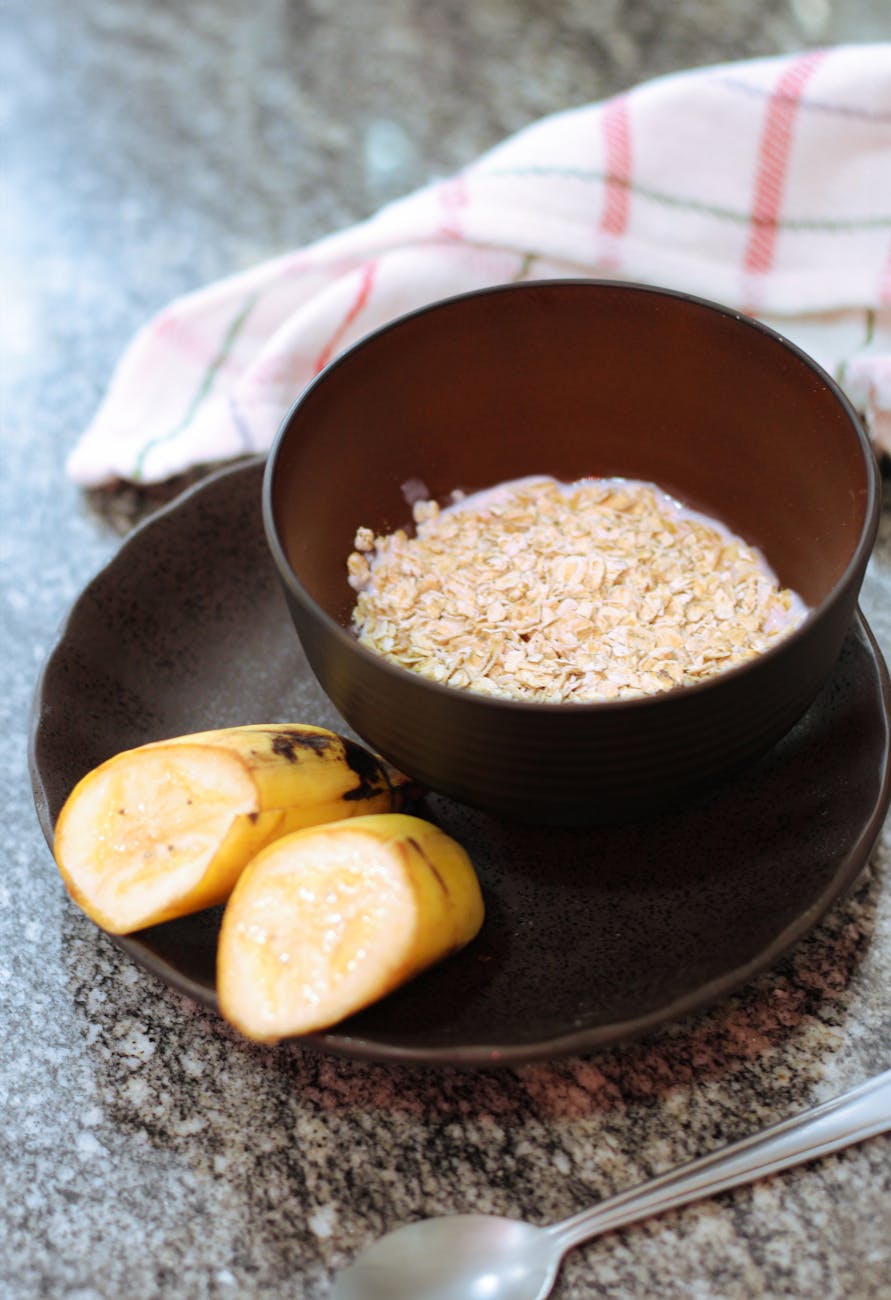
    Breakfast is structured but quiet. I start with well-cooked buckwheat groats—soft enough to digest without resistance. Into that goes a scoop of pea-and-rice protein powder, half a banana, a teaspoon of psyllium husk, and a small pour of unsweetened soy milk. It’s not exciting, but it is dependable. The psyllium adds just enough cohesion, the banana binds, and the protein arrives without the usual legume side effects.

    Lunch simplifies things even further. Oatmeal becomes the base—again, in a controlled portion. I add another scoop of protein powder, then rotate between half a banana and a small serving of applesauce. A modest amount of soy milk smooths it out. That’s it. No stacking of proteins, no fiber fireworks. Lunch is designed to send a single, clear signal to the body: digest, don’t negotiate.

    Dinner does the heavy lifting. This is the anchor meal, the one that determines how the next morning unfolds. A plate of white rice and red potatoes forms the foundation—arguably the most reliable pairing for digestive stability. On top of that, I add about six ounces of extra-firm tofu and a side of sautéed zucchini or carrots. Everything is cooked soft. Everything is deliberate. A tablespoon of olive oil finishes the plate, not for indulgence, but for smooth passage.

    If I need something at night, I keep it controlled: half a banana, a tablespoon of peanut butter, and a small glass of soy milk. Enough to take the edge off, not enough to start a second digestive act.

    Across the day, the numbers line up: roughly 2,300 calories, about 150 grams of protein, and a moderate fiber intake that stays in the zone where things hold together instead of falling apart. The real achievement, though, isn’t the macros—it’s the consistency. Meals repeat. Ingredients overlap. The system stabilizes.

    There are rules. Beans and lentils are out as daily staples—not because they’re unhealthy, but because they introduce too much variability. Raw vegetables are unnecessary friction. Fiber is measured, not celebrated. Variety is limited on purpose. This is a diet built on the belief that clarity beats complexity.

    Is it boring? Often. But boredom, in this context, is a kind of luxury. It means nothing is going wrong. It means your body is no longer improvising. It means the system is working.

    Can I sustain my health and muscle on a plant-based diet? What if I feel weak? To be honest, I have two contingency plans: I may have to add a scoop of Greek yogurt a day, and replace the vegan protein powder with whey protein powder. That will be the tentative part of the journey. 

  • Pedaling Through the Voice That Says Quit

    Pedaling Through the Voice That Says Quit

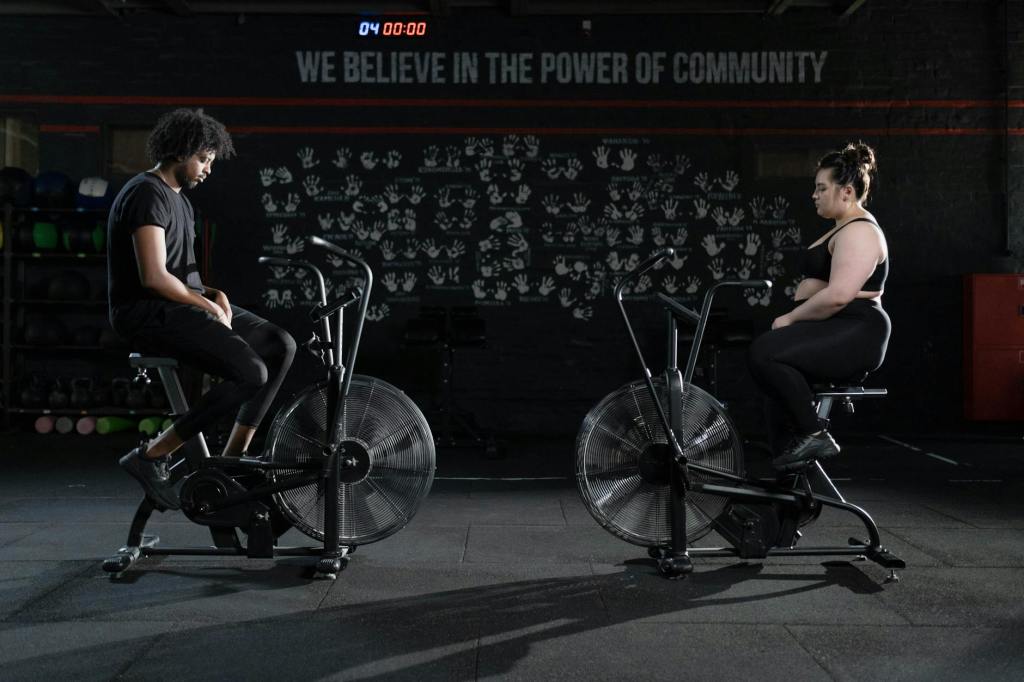
    Ninety percent of the time, the Schwinn Airdyne—known in honest circles as the Misery Machine—treats me like a competent operator. I settle into a rhythm and burn roughly 730 calories an hour, sometimes pushing past 800 over a 51–58 minute stretch. It’s hard work, but it feels governed, almost cooperative. The Rate Select hovers around 52, climbs to 58 when I press it, and rewards effort with visible progress. Numbers rise, and with them, morale.

    Then there is the other ten percent—the mutiny.

    You know it immediately. The first minute betrays you. The legs feel like they’ve been filled with wet cement. The lungs are slow to negotiate. The machine, once a willing accomplice, turns indifferent. No matter how much you push, the Rate Select stalls in the high 40s, as if it has quietly downgraded your status. Today was one of those days. Fifty-eight minutes of negotiation yielded 601 calories—an 18 percent deficit from my usual output. I clawed my way past 600 not out of strength, but out of stubborn bookkeeping: at least I could claim I burned off breakfast.

    The real struggle, of course, isn’t physical. It’s narrative. When the numbers climb, the mind becomes a cheerleader—faster, harder, more. But when they sag, a different voice takes the microphone. You’re finished. You’ve lost it. This is a young man’s game, and you’re trespassing. The body tires, but the mind drafts a eulogy.

    That’s the moment that matters. Not the calories, not the pace, but the argument. Today, I didn’t win cleanly, but I held the line. I kept pedaling. I refused the early exit. Six hundred calories is not a triumph, but it is a refusal to collapse.

    These lag days arrive like monthly audits. They expose the fault lines—the impatience, the vanity, the dependence on numbers for validation. The task is not to dominate the machine, but to manage the voice that wants to quit. The reasonable adult has to step in, take the whining child by the shoulders, and say: Not today.

  • The No-Watch Zone

    The No-Watch Zone

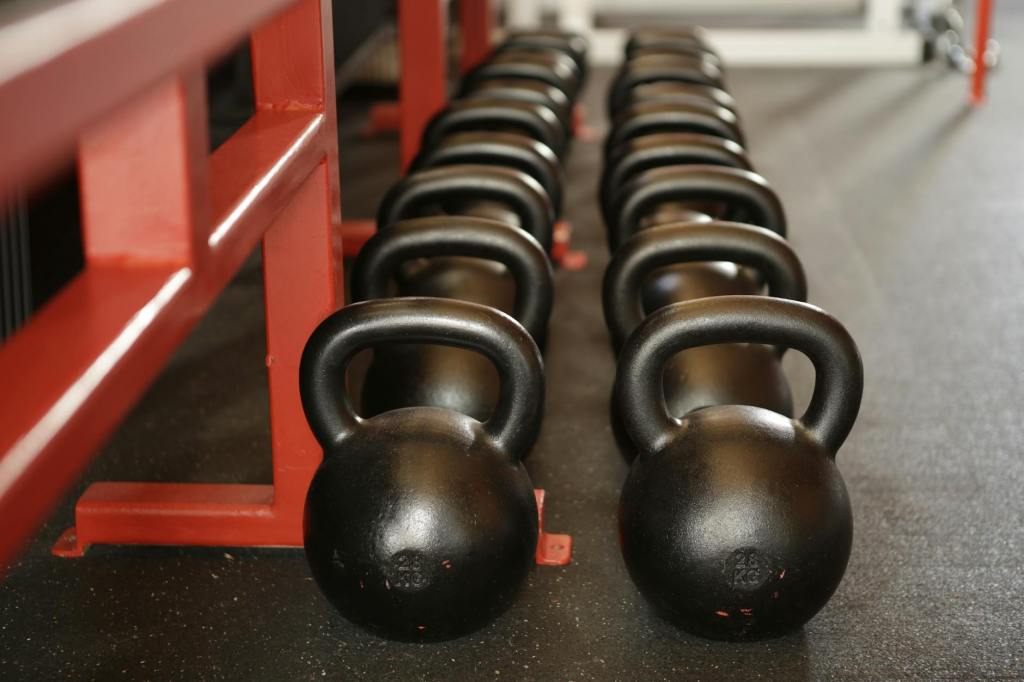
    Since early adolescence, I’ve belonged to physical culture. Training, lifting, macro-counting, controlled breathing—the rituals took hold when I was twelve and never left. My sacred spaces are wherever the work happens: the gym, the garage, the office corner cleared for punishment and repair. In these places I move iron, swing kettlebells, grind through bike intervals, and fold myself into the severe calm of power yoga. This is the body’s economy—strain, recovery, repeat.

    But I live another life as well.

    I live the timepiece life.

    Throughout the week I rotate watches the way other people rotate shoes. A watch completes the uniform. Without it, the day feels unfinished, like leaving the house without a belt or a sense of purpose.

    Eventually, anyone who inhabits both worlds confronts the same question:
    What watch do you wear when you train?

    My answer: none.

    I have no interest in marinating a watch in sweat until it develops the bouquet of a gym towel abandoned in a locker since the Bush administration. Yes, I’ve entertained the fantasy—the rugged masculinity of crushing a workout while a G-Shock absorbs the shock and the glory. But the fantasy fades quickly.

    Training, for me, is a No-Watch Zone.

    I wear a watch all day. I sleep with one. At some point, the wrist deserves parole. It needs air. It needs to remember what unmonitored existence feels like. Naked skin against the barbell. No weight, no strap, no quiet reminder of identity, status, or time itself.

    The No-Watch Zone is less a practical rule than a philosophical boundary. Sweat, strain, and the sharp chemistry of effort belong to the body alone, not to the artifact. Inside this space, there is no curation, no aesthetic, no signaling. Only breath, effort, fatigue, and the small private victory of continuing.

    And something unexpected happens.

    When the workout ends—shower taken, pulse settled—the act of putting the watch back on feels ceremonial. The wrist returns to civilization. The object regains its presence. Absence restores its meaning.

    Constant wear dulls a watch.

    A little separation makes it matter again.

  • The Wrist That Ate the Workday

    The Wrist That Ate the Workday

    Working from home is supposed to be a privilege. Deliver the numbers, meet the deadlines, and you’re spared the slow death of freeway traffic and fluorescent lighting. Your company trusts you. Your productivity is tracked by a sleek little monitoring app that converts your workday into a tidy efficiency score.

    Unfortunately, your desk shares airspace with the enemy.

    The lacquered watch box sits there like a silent casino. You glance at the watch on your wrist. Nice. Solid choice. But what about the others? You lift the lid. A row of polished faces looks back at you—steel, lume, sapphire, promise. You’re supposed to be refining actuarial tables, tightening the language in your report, making sure the graphs don’t embarrass you in front of management.

    Instead, you swap.

    The new watch feels right. For three minutes.

    Then doubt creeps in. Maybe the diver was too heavy. Maybe the field watch better matches your “work-from-home professional” persona. Swap again. Back to the box. Another selection. Another micro-adjustment to your identity. Meanwhile, the cursor blinks on an unfinished paragraph, and your productivity score quietly bleeds out.

    You know the behavior is neurotic. You also know you’re waiting for a moment of revelation—for one watch to settle onto your wrist and announce, in a calm and authoritative voice, This is the one. The watches remain silent. So you keep rotating, chasing a verdict that never comes.

    What you have is Chrono-Proximity Compulsion.

    The disorder is simple: when your collection lives within eyesight, your brain enters a loop—check, compare, swap, repeat. Each decision feels minor, harmless, even rational. In aggregate, they shred your attention into chrome-plated confetti. The watches stop telling time and start interrupting it. Work hours dissolve into wrist experiments, each swap chasing a mythical state of alignment between object, mood, and self.

    The cure is drastic but effective.

    You remove the collection from the battlefield. Down to the basement it goes—sealed in a treasure trunk, out of sight, out of negotiation. No lineup. No options. No silent chorus asking to be chosen.

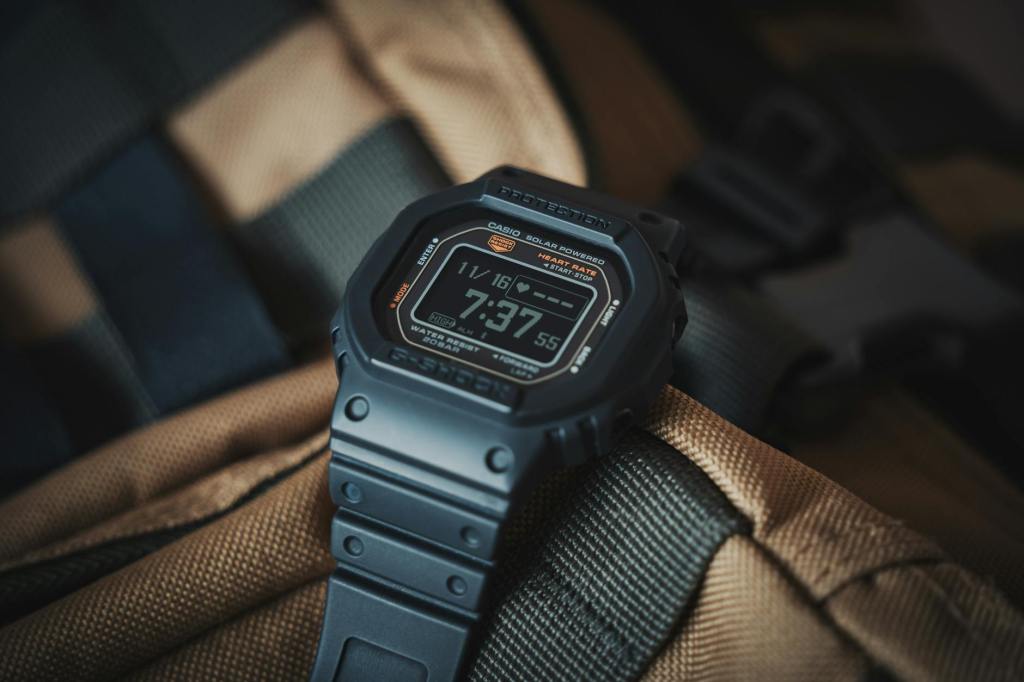
    On your wrist remains the G-Shock GW5000.

    It does not flatter you. It does not whisper about heritage, craftsmanship, or lifestyle. It does not ask to be admired or reconsidered. It delivers one message, blunt and unromantic: Get back to work.

    For the first time all day, the cursor moves.

    And the efficiency app finally has something to measure.

  • Six Months with a Torn Rotator Cuff and a Reality Check

    Six Months with a Torn Rotator Cuff and a Reality Check

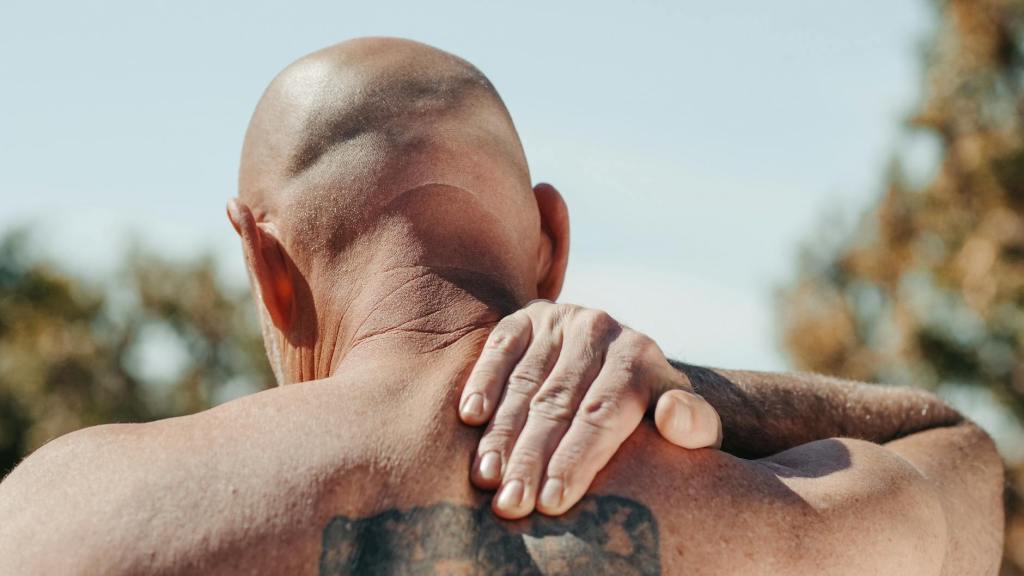
    Six months ago, I didn’t tear my left rotator cuff in a moment of heroism or catastrophe. There was no dramatic pop, no cinematic collapse. This was a slow, quiet betrayal—the accumulated result of too many kettlebell sessions, too much weight, and too few rest days. Overtraining doesn’t announce itself. It keeps a ledger. One day the bill comes due.

    The injury delivered more than pain. It delivered anxiety. Every movement carried a whisper of threat: one wrong reach, one careless angle, and the shoulder might unzip itself. I moved cautiously, slept poorly, and began a small, private relationship with fear. I visited the doctor, the physical therapist, and the ultrasound technician. I chose the conservative path—no MRI, no surgery—just the long road of rehab: light weights, resistance bands, patience.

    Subjectively, the progress is real. Mobility has improved. Pain has eased. I’d estimate I’m about 70 percent back. But the injury has one cruel habit: the 3 a.m. wake-up call of throbbing pain. Lying still is the enemy of a damaged shoulder. Arthritis settles in like a squatter. The strange irony is that movement helps. Blood flow is medicine. A light workout often feels better than rest, which violates every instinct you have when something hurts.

    The questions, however, remain. If full mobility returns in a few months, will the nighttime arthritis fade, or is this now part of the landscape? When I’m “healed,” does that mean I can return to moderate kettlebell presses, or is the future a permanent treaty with lighter loads and humility? Injury has a way of rewriting your contract with ambition.

    My current training schedule reflects that renegotiation: two kettlebell sessions, two power yoga sessions, and two rounds a week on the Schwinn Airdyne—the machine I’ve come to call the Misery Machine. Kettlebells and yoga feel like disciplined bliss. The Airdyne feels like punishment administered by a research facility with questionable ethics. I’m less a human being and more of a lab rat. I don’t exercise on it so much as survive it.

    If the bike is the physical grind, the real psychological battle is food. I know what to eat. I actually crave healthy food. My staples read like a nutritionist’s love letter: buckwheat groats, steel-cut oats, chia, hemp, pumpkin seeds, molasses, soy milk. High protein. High magnesium. Clean and intentional.

    The problem isn’t what I eat. It’s how much—and why. Food is how my family connects. A couple nights a week means takeout. Mendocino Farms sandwiches that arrive with the caloric density of a small planet. Bread, desserts, shared indulgence. These moments feel like love, and they also keep me about thirty pounds heavier than I’d like to be.

    There’s a hard truth here that no diet book can soften: you can’t pursue food like a hobby and expect to look like a fitness model. Appetite has consequences. Pleasure has a price. At some point you stop negotiating with reality, make your choices, accept the outcome, and move forward without the luxury of self-pity.

    The shoulder, at least, is improving. Slowly. Imperfectly. But better.

  • Watch Hermit Mode

    Watch Hermit Mode

    At a certain point in the hobby, something subtle and irreversible happens: your internal rhythms begin to synchronize with the mechanical rhythms on your wrist. Time is no longer something you check; it is something you become. Welcome to Watch Hermit Mode—the state in which life is reorganized around precision, predictability, and the closed-loop efficiency of a well-regulated movement. The world outside is noisy, random, and inefficient. Your world is none of those things. Clothing becomes a uniform, routines run on fixed cycles, social invitations are flagged as system malfunctions, and discretionary hours are redirected toward higher-order maintenance: strap swaps, rotation optimization, wrist-time analytics, and the quiet satisfaction of knowing exactly how your collection is performing. Early mornings, early nights, and aggressive schedule defense are not quirks; they are operational strategy. What begins as efficiency slowly hardens into elective isolation. You are no longer merely wearing a machine. You are running its operating system.

    The symptoms appear gradually. First comes the 24-Hour Uniform Protocol. One outfit rules them all: sleep, gym, house, repeat. You go to bed in training shorts and a performance shirt, wake up in them, live in them, sweat in them, shower, and replace them with an identical specimen waiting like a spare part. Wardrobe changes are for amateurs and extroverts. You take quiet pride in your textile minimalism while lesser mortals stagger through multiple outfits a day like inefficient prototypes. Like a properly engineered movement, nothing in your system is ornamental. Every component has a function.

    Next comes the Saturday Night Diver Symposium. While your spouse and her friends are making custom concert signs for a desert music festival, you are at home performing strap swaps with surgical focus, refining a rotation calendar, and updating your annual wrist-time ledger. You know—without irony—that your Seiko Marine Master logged exactly 863 hours last year. This information feels important to you. It is less important to everyone else, who now watches you the way one observes a man who alphabetizes his spices by emotional significance.

    Your tolerance for human friction declines accordingly. Grocery shopping becomes a dawn operation conducted among the sleepwalking and the defeated. The early hour is not about convenience; it is about control. By the time the world wakes up, you have completed coffee, steel-cut oats, kettlebells, macro acquisition, and inventory storage. Bed at nine. Up at five. While the masses drift through their dreams, your system has already executed its morning cycle.

    The final stage is known domestically as Captain Cancel. Social plans are treated as hostile intrusions and neutralized with strategic intelligence: weather risks, parking deficiencies, epidemiological concerns, structural hazards, noise pollution, or the sudden discovery that a once-beloved comedian has not been funny since the Reagan administration. On the rare occasion you attend Taco Tuesday, you insert improvised ear protection, declare a medical issue, and Uber home to safety. The long-term result is operational peace. Invitations cease. The perimeter holds.

    If any of this feels familiar, the diagnosis is clear. You have optimized your life for accuracy, order, and solitude. The chaos of human variability has been replaced by the calm logic of regulated systems. In Watch Hermit Mode, you are not hiding from the world. You have engineered a better one—smaller, quieter, perfectly timed. The door is locked from the inside, the key discarded, and the movement is running beautifully.

  • Why I Bought the G-Shock Frogman

    Why I Bought the G-Shock Frogman

    If you’re buying the G-Shock Frogman GWF-1000-1JF, you need to abandon one illusion immediately: the fantasy that you are a solemn, high-minded “serious watch buyer.”

    Yes, the Frogman is a legitimate tool—ISO-rated, solar-powered, atomic-syncing, built like a bunker. It tracks tides. It handles world time. It could probably survive a minor meteor event.

    But let’s be honest.

    The Frogman is not a symbol of horological gravitas.
    It is a giant, unapologetic wrist toy.

    And that’s the point.

    This is not the watch of a restrained aesthete sipping espresso while discussing movement finishing. This is the watch of a twelve-year-old who never lost his appetite for adventure. The Frogman doesn’t whisper refinement. It shouts, Let’s go break something. It belongs just as comfortably on your wrist while you’re teaching rhetoric as it does while you’re wandering the house in gym shorts and a robe, pretending you might dive into the Pacific at any moment.

    So stop apologizing.

    Look at the thing. Smile.

    You’ve spent years marinating in the mythology of seriousness—heritage, prestige, restraint, the quiet dignity of brushed steel. Enough. Watches were never meant to be solemn artifacts of personal identity. They were meant to delight the eye, engage the hand, and give you a small surge of pleasure every time you check the time.

    What you’re practicing now is Gravitas Shedding—the psychological act of discarding the heavy costume of the “serious collector” and admitting a simple truth: if the hobby isn’t fun, it isn’t sustainable.

    Function still matters, of course. The watch should be well made, reliable, and usable. But once those boxes are checked, joy becomes the real criterion. The worst fate for any watch isn’t inadequacy—it’s boredom.

    Many enthusiasts have told me every collection needs at least one G-Shock for exactly this reason. A pressure valve. A reminder that watches don’t have to be precious.

    So after fifteen years of on-again, off-again longing, I finally did it.

    Last month I checked Sakura and saw the Frogman was out of stock. Prices on eBay were absurd. I assumed the window had closed. Case dismissed. Desire filed away.

    Then it reappeared.

    $440.
    $506 after shipping.

    Decision made.

    Now I have a new assignment: learn the dual-time function and actually use the thing when I travel. If I’m going to own a watch that can track the world, I might as well let it earn its keep.

    And I’ll admit it—I’m looking forward to the arrival more than I expected.

    I own beautiful mechanical divers. But when I picture myself in front of a classroom, talking about argument structure and logical fallacies, I don’t see a polished luxury piece on my wrist.

    I see the Frogman.

    Big. Black. Slightly ridiculous. Completely confident.

    Will it become my daily watch?
    Will it replace the others?
    Will it become my signature?

    That’s the experiment.

    The watch is on the way.

    We’ll see what happens.

  • Rome Wasn’t Built in a Day, and Neither Was a Better Body

    Rome Wasn’t Built in a Day, and Neither Was a Better Body

    Five months into a rotator cuff injury, my left shoulder now runs a morning protest movement. Today it was particularly militant. The arthritis pain was so loud it drowned out my writing, which is saying something, because writing is usually where I go to escape pain, not negotiate with it.

    The solution, as usual, was humility. I picked up light dumbbells and did slow lateral raises—nothing heroic, nothing Instagram-worthy. Just enough movement to get blood into the joint and remind it that we are still partners, not enemies. The pain eased. Ibuprofen helped too, but I’ve learned the hard lesson: skip it for a day, let the inflammation throw a party, and it takes hours to evict the guests.

    Rotator cuff arthritis is a mechanical problem disguised as a moral one. When the joint isn’t tracking well, the socket gets irritated, and the irritation becomes inflammation. Night makes it worse. While you sleep, the synovial fluid thickens into something closer to cold syrup. Morning arrives, and the shoulder feels like a rusty hinge. The cure is movement—gentle, persistent, unglamorous movement. Every time I loosen it up, the joint forgives me a little.

    Training now looks less like conquest and more like diplomacy. Two kettlebell sessions a week, mostly lower body, with some shrugs and narrow-stance knee push-ups—just enough upper-body work to maintain function without provoking rebellion. Power yoga is back three days a week, a return to the early-2000s era of Bryan Kest and Rodney Yee, now supplemented by the Man Flow Yoga channel. I modify poses for the shoulder, but once I settle into the rhythm, the familiar state returns—the quiet, steady current of yoga flow. At this point, the mental repair may be more important than the physical.

    The Schwinn Airdyne—the Misery Machine—has been demoted to one day a week. Left unchecked, I turn cardio into a courtroom, constantly trying to beat yesterday’s calorie output. Competition with yourself sounds noble until it becomes another form of anxiety.

    Underneath all of this sits the larger ambition: weight loss through appetite discipline. Easier declared than achieved. Two nights ago I dreamed I wanted to be lean again but could only get there through GLP-1 drugs (which I’ve never taken). Such a dream is what your subconscious imagines when it has lost faith in your willpower. I’m hovering around 230—solid in a T-shirt, but without the narrower waist that signals to the world (and to my lab results) that discipline has the upper hand. For me, that line is about 210.

    Physical self-improvement is rarely about aesthetics alone. It’s an attempt to become the kind of person who can choose the long-term over the immediate—the kind of person who doesn’t negotiate with every craving. Discipline isn’t punishment. It’s the architecture of a calmer life.

    This question of belief came back to me while watching the documentary Queen of Chess, about Judit Polgar, who fought her way through a male-dominated chess world. Her advice was simple: you have to believe in yourself. The line landed harder than expected.

    But belief doesn’t arrive on command. If your history includes abandoned goals and broken dietary programs, confidence isn’t a mindset—it’s a construction project. It’s built the only way durable things are built: small wins, repeated often enough that the brain stops arguing.

    Rome wasn’t built in a day. Neither is a shoulder. Neither is a waist. Neither is a self you trust.

  • My Rotator Cuff Injury Taught Me Patience and Restraint

    My Rotator Cuff Injury Taught Me Patience and Restraint

    I hesitate to say this out loud, for fear of angering whatever capricious deity oversees orthopedic recoveries, but my torn rotator cuff appears to have turned a corner.

    For the first time in five months, I’ve gone without ibuprofen. No chemical truce. No white tablets brokered between inflammation and denial. My range of motion has improved by more than sixty percent, and for two nights in a row I’ve slept without that familiar 4 a.m. arthritis ambush—just a bit of stiffness, the kind that registers as information rather than alarm.

    When discomfort does surface, I can quiet it with embarrassingly small interventions: lateral raises with a three-pound dumbbell, posterior-delt pulls using a resistance band anchored to a garage wall strut. Movements so light they feel like apologies. And yet—they work.

    Two weeks ago, an ultrasound revealed inflammatory fluid. The doctor promptly suggested the modern holy trinity: cortisone shot, MRI, and escalation. I declined all three. Why submit to a needle when the pain isn’t screaming? Why enter an MRI tube when claustrophobia turns it into a medieval punishment device? And why rush toward surgery when my rehab therapist, calm and unflappable, says I’ll heal just fine without it?

    So I stick with what got me here.

    Careful shoulder work. Kettlebell leg training. Trap shrugs. Slow, deliberate cleans. Reverse curls. Close-hand push-ups on my knees—humbling but honest. Anything that irritates the shoulder—dumbbell flyes, grand gestures, heroic nonsense—gets cut without appeal. I’ve become ruthless in the best way. No bargaining. No ego.

    Injury has a way of clarifying priorities. You don’t truly appreciate the orchestration of a whole body until one part goes rogue and holds the rest hostage. Healing teaches restraint. Progress rewards patience. And recovery, when it finally begins, feels less like triumph than like a quiet ceasefire—one you’re careful not to violate.