Tag: food

  • DEATH BY SNACKS

    DEATH BY SNACKS

    After dinner, my wife and I luxuriated in a couple of Arrested Development reruns, marveling at the genius of Mitchell Hurwitz and Ron Howard. The show, an absurdist ode to familial dysfunction, felt decades ahead of its time—sharp enough to leave paper cuts on your brain. During the opening credits, I rose from the couch with noble intentions: I was off to fetch my so-called “satiety apple,” a modest, virtuous snack that allegedly curbs my post-dinner cravings without derailing my calorie count.

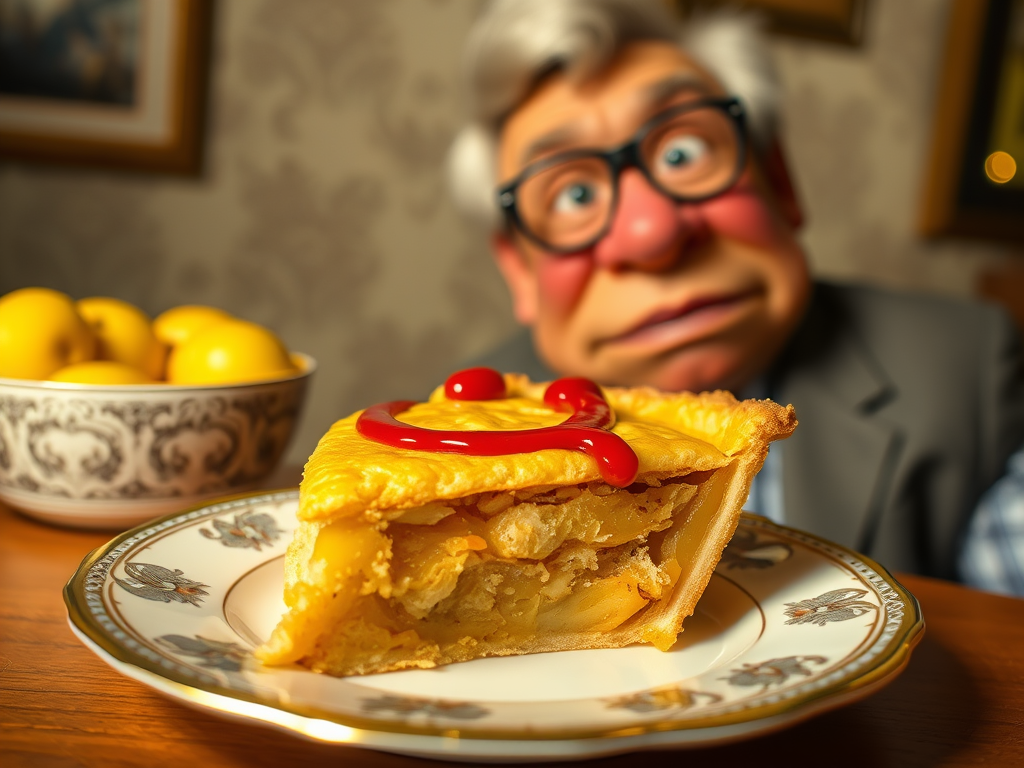
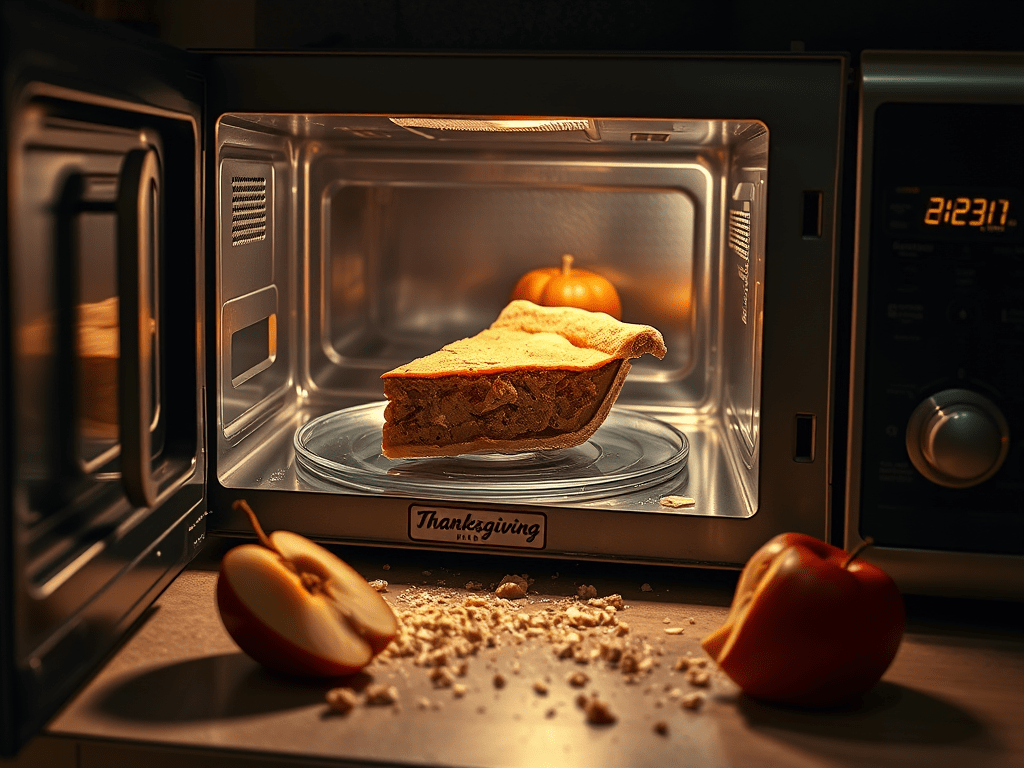
    But as I crossed the kitchen, fate—or treachery—beckoned me toward the microwave. There it sat: a pie box, faintly glowing, practically humming a siren song of buttery crust and spiced filling. One peek inside, and there it was—the last slice of Thanksgiving pie, radiating the kind of allure that no apple could ever muster.

    Before I knew it, I was hunched over the sink, inhaling that pie like a feral animal who’d just discovered civilization’s baked goods. Crumbs flew. Filling dripped. I was mid-bite, fully in beast mode, when my daughter Alison walked in. She stopped, surveyed the scene, and with surgical precision, dropped her line: “When’s the last time you were on a diet?”

    I froze mid-chew, my cheeks puffed out like a chipmunk caught in a raid. “A single slice of pie hardly merits such harsh judgment,” I said, wiping a smear of whipped cream off my chin.

    “Don’t be so defensive,” she said, her voice carrying the kind of condescension only a teenage girl can master. “I’m just asking—when was the last time you were on a diet?”

    “I didn’t realize you were the official historian of my weight management strategies,” I shot back, trying to maintain some shred of dignity.

    “What strategy?” she deadpanned, her tone as flat as the pie tin now sitting empty in the sink.

    I opened my mouth in an exaggerated display of mock offense, as if her words had wounded me so deeply that I could only respond with silence. We laughed, but the truth landed like a sucker punch: despite my heroic kettlebell workouts and high-protein meal plans, my daughter saw me for what I really was—a fat slob, undone by my inability to resist the siren song of leftover pie.

    My conversation with my daughter hit a nerve: my relationship with food is less of a partnership and more of a chaotic entanglement worthy of a reality show. I’m living with a chronic condition others have dubbed food noise—the relentless, mind-consuming obsession with food. It’s not just a passing craving; it’s a full-time occupation. Food noise is that little gremlin in your head planning tomorrow’s breakfast while you’re still wiping pie crumbs off your shirt from dinner. It’s exhausting, intrusive, and, frankly, a massive pain in the ass.

    I’ve tried all the supposed solutions. High-protein meals? Check. Fiber-packed fruits and veggies? Done. Permission to eat favorite foods to deflate their psychological power? Sure, why not. Listening to my so-called “hunger cues”? Please, those cues have been drowned out by a symphony of appetite louder than a Wagner opera. The truth is, my love of food has nothing to do with hunger. This isn’t about survival—it’s about passion.

    I crave food the way a musician craves music, except instead of performing Beethoven’s Ninth, I’m inhaling pie and serenading a protein bar like it’s my muse. Eating isn’t just sustenance; it’s a full-body euphoria, a never-ending sonata of chewing that I never want to end.

    So here I am, a helpless Snack Serenader, crooning over every dish like it’s the centerpiece of my magnum opus. Pie, pasta, cereal, or steak—it doesn’t matter. They’re all part of the eternal love song I sing to food, even as it steamrolls my willpower and expands my waistline. And while it may sound romantic, let’s be honest: it’s less about joy and more about imprisonment. I don’t just eat food; I worship it. I’m not hungry for a meal; I’m desperate for an encore. Just as a Beethoven superfan can lose themselves in the ninth symphony on repeat, I want to marinate in a bottomless jacuzzi of flavor, chewing my way through life’s buffet like a one-man marching band of mastication.

    As a Snack Serenader, I croon love songs to everything from pie to chicken shawarma. That Thanksgiving slice of pie wasn’t dessert; it was a crescendo. A bag of chips isn’t a snack; it’s an aria. And here I am, the tragic hero, swooning over leftovers as my waistline rolls its eyes and mutters, “You’re killing me.”

    The irony isn’t lost on me that I began this post with Arrested Development while chronicling my sink-side pie binge—a man-child devouring apple pie like it was the elixir of life, all under the unimpressed gaze of my daughter. Uncontrolled eating, it seems, is less about hunger and more about a deep-seated infantilization for which there’s no cure, just a lifetime subscription.

  • Where ChatGPT falls short as a writing tool

    Where ChatGPT falls short as a writing tool

    In More Than Words: How to Think About Writing in the Age of AI, John Warner points out just how emotionally tone-deaf ChatGPT is when tasked with describing something as tantalizing as a cinnamon roll. At best, the AI produces a sterile list of adjectives like “delicious,” “fattening,” and “comforting.” For a human who has gluttonous memories, however, the scent of cinnamon rolls sets off a chain reaction of sensory and emotional triggers—suddenly, you’re transported into a heavenly world of warm, gooey indulgence. For Warner, the smell launches him straight into vivid memories of losing his willpower at a Cinnabon in O’Hare Airport. ChatGPT, by contrast, is utterly incapable of such sensory delirium. It has no desire, no memory, no inner turmoil. As Warner explains, “ChatGPT has no capacity for sense memory; it has no memory in the way human memory works, period.”

    Without memory, ChatGPT can’t make meaningful connections and associations. The cinnamon roll for John Warner is a marker for a very particular time and place in his life. He was in a state of mind then that made him a different person than he was twelve years later reminiscing about the days of caving in to the temptation to buy a Cinnabon. For him, the cinnamon roll has layers and layers of associations that inform his writing about the cinnamon roll that gives depth to his description of that dessert that ChatGPT cannot match.

    Imagine ChatGPT writing a vivid description of Farrell’s Ice Cream Parlour. It would perform a serviceable job describing the physical layout–the sweet aroma of fresh waffle cones, sizzling burgers, and syrupy fudge;  the red-and-white striped wallpaper stretched from corner to corner, the dark, polished wooden booths lining the walls; the waitstaff, dressed in candy-cane-striped vests and straw boater hats, and so on. However, there are vital components missing in the description–a kid’s imagination full of memories and references to their favorite movies, TV shows, and books. The ChatGPT version is also lacking in a kid’s perspective, which is full of grandiose aspirations to being like their heroes and mythical legends. 

    For someone who grow up believing that Farrell’s was the Holy Grail for birthday parties, my memory of the place adds multiple dimensions to the ice cream parlour that ChatGPT is incapable of rendering:

    When I was a kid growing up in the San Francisco Bay Area in the 1970s, there was an ice creamery called Farrell’s. In a child’s imagination, Farrell’s was the equivalent of Willy Wonka’s Chocolate Factory. You didn’t go to Farrell’s often, maybe once every two years or so. Entering Farrell’s, you were greeted by the cacophony of laughter and the clinking of spoons against glass. Servers in candy-striped uniforms dashed around with the energy of marathon runners, bearing trays laden with gargantuan sundaes. You sat down, your eyes wide with awe, and the menu was presented to you like a sacred scroll. You don’t need to read it, though. Your quest was clear: the legendary banana split. When the dessert finally arrived, it was nothing short of a spectacle. The banana split was monumental, an ice cream behemoth. It was as if the dessert gods themselves had conspired to create this masterpiece. Three scoops of ice cream, draped in velvety hot fudge and caramel, crowned with mountains of whipped cream and adorned with maraschino cherries, all nestled between perfectly ripe bananas. Sprinkles and nuts cascaded down the sides like the treasures of a sugar-coated El Dorado. As you took your first bite, you embarked on a journey as grand and transformative as any hero’s quest. The flavors exploded in your mouth, each spoonful a step deeper into the enchanted forest of dessert ecstasy. You were not just eating ice cream; you were battling dragons of indulgence and conquering kingdoms of sweetness. The sheer magnitude of the banana split demanded your full attention and stamina. Your small arms wielded the spoon like a warrior’s sword, and with each bite, you felt a mixture of triumph and fatigue. By the time you reached the bottom of the bowl, you were exhausted. Your muscles ached as if you’d climbed a mountain, and you were certain that you’d expanded your stomach capacity to Herculean proportions. You briefly considered the possibility of needing an appendectomy. But oh, the glory of it all! Your Farrell’s sojourn was worth every ache and groan. You entered the ice creamery as an ordinary child and emerged as a hero. In this fairy-tale-like journey, you had undergone a metamorphosis. You were no longer just a scrawny kid from the Bay Area; you were now a muscle-bound strutting Viking of the dessert world, having mastered the art of indulgence and delight. As you returned home, the experience of Farrell’s left a lasting imprint on your soul. You regaled your friends with tales of your conquest, the banana split becoming a legendary feast in the annals of your childhood adventures. In your heart, you knew that this epic journey to Farrell’s, this magical pilgrimage, had elevated you to the ranks of dessert royalty, a memory that would forever glitter like a golden crown in the kingdom of your mind. As a child, even an innocent trip to an ice creamery was a transformational experience. You entered Farrell’s a helpless runt; you exited it a glorious Viking. 

    The other failure of ChatGPT is that it cannot generate meaningful narratives. Without memory or point of view, ChatGPT has no stories to tell and no lessons to impart. Since the days of our Paleolithic ancestors, humans have shared emotionally charged stories around the campfire to ward off both external dangers—like saber-toothed tigers—and internal demons—obsessions, pride, and unbridled desires that can lead to madness. These tales resonate because they acknowledge a truth that thoughtful people, religious or not, can agree on: we are flawed and prone to self-destruction. It’s this precarious condition that makes storytelling essential. Stories filled with struggle, regret, and redemption offer us more than entertainment; they arm us with the tools to stay grounded and resist our darker impulses. ChatGPT, devoid of human frailty, cannot offer us such wisdom.

    Because ChatGPT has no memory, it cannot give us the stories and life lessons we crave and have craved for thousands of years in the form of folk tales, religious screeds, philosophical treatises, and personal manifestos. 

    That ChatGPT can only muster a Wikipedia-like description of a cinnamon roll hardly makes it competitive with humans when it comes to the kind of writing we crave with all of our heart, mind, and soul. 

    One of ChatGPT’s greatest disadvantages is that, unlike us, it is not a fallen creature slogging through the freak show that is this world, to use the language of George Carlin. Nor does ChatGPT understand how our fallen condition can put us at the mercy of our own internal demons and obsessions that cause us to warp reality that leads to dysfunction. In other words, ChatGPT does not have a haunted mind and without any oppressive memories, it cannot impart stories of value to us.

    When I think of being haunted, I think of one emotion above all others–regret. Regret doesn’t just trap people in the past—it embalms them in it, like a fly in amber, forever twitching with regret. Case in point: there are  three men I know who, decades later, are still gnashing their teeth over a squandered romantic encounter so catastrophic in their minds, it may as well be their personal Waterloo.

    It was the summer of their senior year, a time when testosterone and bad decisions flowed freely. Driving from Bakersfield to Los Angeles for a Dodgers game, they were winding through the Grapevine when fate, wearing a tie-dye bikini, waved them down. On the side of the road, an overheated vintage Volkswagen van—a sunbaked shade of decayed orange—coughed its last breath. Standing next to it? Four radiant, sun-kissed Grateful Dead followers, fresh from a concert and still floating on a psychedelic afterglow.

    These weren’t just women. These were ethereal, free-spirited nymphs, perfumed in the intoxicating mix of patchouli, wild musk, and possibility. Their laughter tinkled like wind chimes in an ocean breeze, their sun-bronzed shoulders glistening as they waved their bikinis and spaghetti-strap tops in the air like celestial signals guiding sailors to shore.

    My friends, handy with an engine but fatally clueless in the ways of the universe, leaped to action. With grease-stained heroism, they nursed the van back to health, coaxing it into a purring submission. Their reward? An invitation to abandon their pedestrian baseball game and join the Deadhead goddesses at the Santa Barbara Summer Solstice Festival—an offer so dripping with hedonistic promise that even a monk would’ve paused to consider.

    But my friends? Naïve. Stupid. Shackled to their Dodgers tickets as if they were golden keys to Valhalla. With profuse thanks (and, one imagines, the self-awareness of a plank of wood), they declined. They drove off, leaving behind the road-worn sirens who, even now, are probably still dancing barefoot somewhere, oblivious to the tragedy they unwittingly inflicted.

    Decades later, my friends can’t recall a single play from that Dodgers game, but they can describe—down to the last bead of sweat—the precise moment they drove away from paradise. Bring it up, and they revert into snarling, feral beasts, snapping at each other over whose fault it was that they abandoned the best opportunity of their pathetic young lives. Their girlfriends, beautiful and present, might as well be holograms. After all, these men are still spiritually chained to that sun-scorched highway, watching the tie-dye bikini tops flutter in the wind like banners of a lost kingdom.

    Insomnia haunts them. Their nights are riddled with fever dreams of sun-drenched bacchanals that never happened. They wake in cold sweats, whispering the names of women they never actually kissed. Their relationships suffer, their souls remain malnourished, and all because, on that fateful day, they chose baseball over Dionysian bliss.

    Regret couldn’t have orchestrated a better long-term psychological prison if it tried. It’s been forty years, but they still can’t forgive themselves. They never will. And in their minds, somewhere on that dusty stretch of highway, a rusted-out orange van still sits, idling in the sun, filled with the ghosts of what could have been.

    Humans have always craved stories of folly, and for good reason. First, there’s the guilty pleasure of witnessing someone else’s spectacular downfall—our inner schadenfreude finds comfort in knowing it wasn’t us who tumbled into the abyss of human madness. Second, these stories hold up a mirror to our own vulnerability, reminding us that we’re all just one bad decision away from disaster.

    As a teacher, I can tell you that if you don’t anchor your ideas to a compelling story, you might as well be lecturing to statues. Without a narrative hook, students’ eyes glaze over, their minds drift, and you’re left questioning every career choice that led you to this moment. But if you offer stories brimming with flawed characters—haunted by regrets so deep they’re like Lot’s wife, frozen and unmovable in their failure—students perk up. These narratives speak to something profoundly human: the agony of being broken and the relentless desire to become whole again. That’s precisely where AI like ChatGPT falls short. It may craft mechanically perfect prose, but it has never known the sting of regret or the crushing weight of shame. Without that depth, it can’t deliver the kind of storytelling that truly resonates.
  • Never Insult Your Guests with Mock Apple Pie

    Never Insult Your Guests with Mock Apple Pie

    One fateful evening in 1982, as I was nestled on the couch like a potato after a long day, I tuned into a San Francisco KQED comedy special. Enter Bob Sarlatte, a comedian with a chin so bold it could be used as a paperweight and a grin so snide it seemed to have its own agenda. He took aim at the pièce de résistance of culinary chicanery: the Ritz Crackers recipe for Mock Apple Pie. Sarlatte was on a mission to uncover the absurdity behind Ritz’s audacious claim of making apple pie with, wait for it, crackers instead of apples. He was incredulous, practically frothing at the mouth as he dissected this travesty. “Why on earth,” he demanded, “would Ritz, in all their cracker-clad glory, boast about a recipe that doesn’t even remotely involve apples?” According to Sarlatte, this so-called “apple pie” was like calling a desert a beach because it had sand—except the sand was made of crushed Ritz crackers, and the beach was a figment of your imagination. The comedian was in no mood for Ritz’s grandstanding. To him, this wasn’t a culinary innovation; it was a culinary catastrophe. He took Ritz to task for attempting to pass off a cracker conglomeration as apple pie, as if the lack of fruit was a feature, not a flaw. “Who,” Sarlatte railed, “are you going to serve this Mock Apple Pie to? Your mock friends? People who enjoy mockery served with a side of disappointment?” Sarlatte’s razor-sharp wit wasn’t just about lampooning a recipe—it was about exposing a greater travesty: the shameless elevation of a subpar substitute as a triumph of creativity. This wasn’t a clever culinary trick; it was an insult wrapped in a cracker crust. Bob Sarlatte laid bare the staggering lack of self-awareness and the brazen audacity required to serve such an ersatz “apple” pie with a smug smile. It was a masterclass in how to serve up an insult with a cherry on top, minus the apple, of course.

  • WHEN WATCHING PIE BAKING CONTESTS ELEVATES THE SOUL

    WHEN WATCHING PIE BAKING CONTESTS ELEVATES THE SOUL

    Many moons ago, my wife and I watched the 2006 HBO documentary Thin, which chronicles the tragic existence of girls in a Florida rehab clinic for eating disorders. These poor souls were ensnared in a vicious cycle of depression, self-loathing, and lies, their recovery rates abysmally low and fatality rates tragically high. After this emotional gut-punch, we desperately needed a palate cleanser, so we turned to a pie-baking contest featuring Midwestern women in Christmas sweaters, lovingly toiling over pie crusts. These wholesome warriors of the kitchen were a stark contrast to the aforementioned sufferers. It dawned on me that pie baking is the antithesis of anorexia—a condition of solipsism where one disappears into the self, whereas pie baking is a testament to community, love, and selfless devotion to butter and flour.

    Imagine, if you will, a world where the kitchen isn’t just a hub of culinary creation but a sacred temple of love, where pie-baking is the highest form of devotion. In this sanctified realm, every Midwestern woman in a Christmas sweater is a culinary high priestess, her rolling pin a scepter of affection, her pie crust a canvas for heartfelt artistry. The Pie Baking Contest is an epic battleground where these valiant women gather, their aprons fluttering like superhero capes, ready to channel pure, unadulterated love into their pies. The stakes are absurdly high, the competition fierce, but the atmosphere? Pure camaraderie and joy.

    Here, pie baking is not just a quaint pastime; it’s an epic saga of love, community, and unyielding devotion. These heroines approach their craft with the precision of neurosurgeons and the passion of Renaissance artists. Flour fills the air like enchanted snow, butter is blended into dough with the deftness of a master illusionist, and apples are peeled and sliced with the ferocity of a seasoned samurai. Each pie is a labor of love, a tangible expression of their deepest affections. As they sweat and toil over their creations, the kitchen morphs into a bustling hub of warmth and connection.

    Baking pies, slinging spaghetti and garlic bread, or whipping up a dish of hot and sour Tom Yum Goong soup demands a healthy soul, one that’s plugged into the matrix of family and community. We therefore don’t journey solo but soar with a merry band of culinary adventurers, armed with spatulas and mixing bowls, ready to conquer the next great feast. So, skip the guilt and embrace the butter—life’s too short for bland food and empty kitchens.

  • EATING THE UNCLE NORMAN WAY

    EATING THE UNCLE NORMAN WAY

    Every morning during my teenage years, I’d stagger out of bed and make my daily plea to the heavens: “God, please grant me the confidence and self-assuredness to ask a woman on a date without suffering from a full-blown cerebral explosion.” And every morning, God’s response was as subtle as a sledgehammer to the forehead: “You’re essentially a walking emotional landfill, a neurotic mess doomed to wander the planet bereft of charm, romantic grace, and any semblance of healthy relationships. Get used to it, buddy.” And thus commenced my legendary odyssey in the land of perpetual non-dating.

    This was not the grand design I had envisioned. No, the blueprint was to be a suave bachelor, just like my childhood idol, Uncle Norman from The Courtship of Eddie’s Father. At the ripe age of eight, I watched in awe as Uncle Norman demonstrated his revolutionary kitchen hack: why bother with dishes when you can devour an entire head of lettuce while standing over the sink? He proclaimed, “This way, you avoid cleanup, dishes, and the pesky inconvenience of sitting at a table.” In that glorious moment, I was struck with a revelation so profound it reshaped my entire existence. The Uncle Norman Method, as I would grandiosely dub it, became my life’s guiding principle, my personal beacon of satisfaction, and the defining factor of my existence for decades.

    Channeling my inner Uncle Norman, I envisioned a life of unparalleled convenience. My bed would be perpetually unmade because who needs sheets when you have a trusty sleeping bag? I’d never waste time watering plants—plastic ones were far superior. Cooking? Please. Cereal, toast, bananas, and yogurt would sustain me in perpetuity. My job would be conveniently located within a five-mile radius of my house, and my romantic escapades would be strictly zip code-based. Laundry? My washing machine’s drum would double as my hamper, and I’d simply press Start when it reached capacity. Fashion coordination? Not a concern, as all my clothes would be in sleek, omnipresent black. My linen closet would be repurposed to stash protein bars, because who needs linens anyway?

    I’d execute my grocery shopping like a stealthy ninja, hitting Trader Joe’s at the crack of dawn to dodge crowds, while avoiding those colossal supermarkets that felt like traversing a grid of football fields. 

    Embracing the Uncle Norman Way wasn’t just a new approach to dining; it was a radical overhaul of my entire lifestyle. The world would bow before the sheer efficiency and unadulterated convenience of my new existence, and I would remain eternally satisfied, basking in the glory of my splendidly uncomplicated life.

    Of course, it didn’t take long for my delusion to expand into a literary empire—or at least, that was the plan. The world, I was convinced, desperately needed The Uncle Norman Way, my magnum opus on streamlining life’s most tedious inconveniences. It would be part manifesto, part self-help guide, and part fever dream of a man who had spent far too much time contemplating the finer points of lettuce consumption over a sink. Each chapter would tackle a crucial element of existence, from the philosophy of single-pot cooking (aka, eating directly from the saucepan) to the art of strategic sock re-wearing to extend laundry cycles. I even envisioned a deluxe edition featuring tear-out coupons for discounted plastic plants, a fold-out map of the most efficient grocery store layouts, and, for true devotees, a companion workbook to track their progress toward the ultimate goal: Maximum Laziness with Minimum Effort™.

    Naturally, I imagined its meteoric rise to cultural dominance. Talk show hosts would marvel at my ingenuity, college professors would weave my wisdom into philosophy courses, and minimalists would declare me their messiah. Young bachelors, overwhelmed by the burden of societal expectations, would turn to my book in their darkest hour, finding solace in the knowledge that they, too, could abandon the tyranny of dishware and lean fully into sink-based eating. The revolution would be televised, one head of lettuce at a time.

  • The Demise of Danish Go-Rounds Will Never Be Forgiven

    The Demise of Danish Go-Rounds Will Never Be Forgiven

    Introduced by Kellogg’s in 1968, Danish Go-Rounds were like the golden fleece of breakfast pastries. Imagine Pop-Tarts, but with the sophistication of a five-star dessert. The brown sugar-cinnamon Danish Go-Rounds were so addictive, they made crack look like a mere curiosity. At the ungodly hour of 2 a.m., millions of Americans would wake up in cold sweats, their cravings driving them to frenzied searches for the Nectar of the Gods—only to find their precious pastries had vanished into thin air. Then, in a move so baffling it felt like a conspiracy against breakfast enthusiasts everywhere, Kellogg’s pulled the plug on Danish Go-Rounds in the mid-seventies. They kept the Pop-Tarts, those cardboard-like impostors that tasted like they were designed by a committee of flavorless robots. The heartbreak was palpable. It was as if a divine bakery had been shut down and replaced with a factory that churned out glorified toaster insulation. The eradication of Danish Go-Rounds is now remembered as one of the most colossal institutional blunders in history—up there with the fall of Rome and the invention of the Rubik’s Cube. The void they left was so immense, it bored a gaping chasm in my soul. My heart, once full of pastry-filled joy, now echoed with the hollow sound of Pop-Tarts’ lifeless crunch. While Danish Go-Rounds faded into the annals of breakfast history, Pop-Tarts flourished like a tasteless, mass-produced phoenix. This shift symbolized the erosion of artisanal craftsmanship and the triumph of consumer complacency. It heralded the rise of such culinary horrors as Imperial Margarine, Tang, Space Food Sticks, Boone’s Farm Apple Wine, and SlimFast—products so tragic they make a TV dinner look like a gourmet feast. The Gastronomic Time Traveler had to bear witness to this disheartening transition, seeing the demise of pastries that were practically food royalty. In their place, we got a parade of processed atrocities that made the culinary landscape look like a dystopian nightmare. So there I was, left to mourn the loss of Danish Go-Rounds, savoring the bitter taste of what once was, while choking down the unworthy replacements that flooded the market. It was a breakfast apocalypse, and I was living in its soggy aftermath.