Tag: health

  • The Gospel of Iron: How Weightlifting Became My Religion

    The Gospel of Iron: How Weightlifting Became My Religion

    In 1974, at the age of thirteen, I began weightlifting under the guidance of Lou Kruk, my junior high P.E. teacher and Junior Olympic weightlifting coach. Lou wasn’t just teaching kids to hoist iron—he was shaping futures. He handed me a barbell and lit the fuse. Soon, I was consuming protein powders and flipping through Strength & Health and Muscle Builder, the gospel according to Bob Hoffman and Joe Weider.

    From garage gyms to commercial ones, from clunky bench presses to rusted barbells, I trained. I flirted briefly with gimmicks—a Bullworker here, a Power Yoga phase there—but nothing kept me grounded like the iron. Eventually, I found kettlebells: odd, compact, brutally effective. And fifty-one years later, I’m still at it. The protein, the lifting—they’re no longer habits; they’re rituals.

    I don’t work out to chase aesthetics or to stave off decay. I train because not training feels like suffocating. My routine gives shape to my days, the way grammar gives shape to language. Without it, life would collapse into chaos. I marvel at those who drift through their hours without structure, snacking at whim, binge-watching shows, darting between texts and chores like pinballs. A life without scaffolding feels not just unsatisfying—it feels dangerous.

    Sometimes I wonder: what if I’d never met Lou Kruk? What if weightlifting had never entered my life? Would I have found some other sacred structure to cling to, or would I have been swallowed by drift? Yes, I play piano. Yes, I write. But I’m no professional writer unless you count me as a “professional navel-gazer.” These activities are merely sidelines—dilettante pursuits. It’s the iron that makes me whole.

    Maybe weightlifting saved my life. Maybe it still does. I could psychoanalyze this, wax poetic about addiction to ritual and the fear of entropy. Or I could walk into the garage, chalk my hands, and get lost in goblet squats and Turkish Get-Ups until the world makes sense again. I think you already know what I’m going to choose.

  • When It comes to Swim Briefs the Size of a Hotel Mint, Maybe Opt Out

    When It comes to Swim Briefs the Size of a Hotel Mint, Maybe Opt Out

    Today’s New York Times article, titled “Skimpy Men’s Swimming Briefs Are Making a Splash,” offers a solemn dispatch from the front lines of GLP-1 drugs, but I would guess that men—having exhausted every form of visible self-optimization—are now expressing their Ozempic-enabled slenderness via tiny, Lycra-clad declarations of status. We’re talking male bikinis, or what I like to call the ego sling.

    Apparently, if you’re dropping $18,000 a year to chemically suppress your appetite and shed your humanity one subcutaneous injection at a time, you deserve the privilege of looking like a Bond villain’s pool boy. I suppose this is the endgame: pay to waste away, then wrap what’s left in a luxury logoed banana peel.

    Luxury houses, never ones to miss a chance to monetize body dysmorphia, are now marketing these second-skin briefs not as mere swimwear, but as power statements. To wear them is to say: “I’ve defeated fat, joy, modesty, and comfort in one fell swoop.”

    I’m almost 64. My aspirations remain high—ideally, I’d like to look like a special-ops operator on vacation in Sardinia. But I know my place. I wear boxer-style swim trunks, the cloth of the pragmatic and the semi-dignified. They’re not exciting, but neither is seeing a sun-leathered septuagenarian adjust a spandex slingshot over a suspicious tan line.

    There’s a difference between being aspirational and being delusional. The former means striving for vitality, strength, and energy. The latter means stuffing yourself into a satirical undergarment and pretending you’re 28 with a sponsorship deal.

    To my fellow older men: sculpt your body like it’s your spiritual obligation—but when it comes to swim briefs the size of a hotel mint, maybe opt out. Not every part of youth is worth reliving. Some of it deserves to be left in the chlorine-stained past, right next to Axe body spray and Ed Hardy tank tops.

  • Post-Vacation Penance: A Dietary Manifesto in Four Meals

    Post-Vacation Penance: A Dietary Manifesto in Four Meals

    There’s something bleakly comical about spiraling into despair on vacation—the kind that sets in when you’re no longer tethered to your sacred rituals of productivity, restraint, and the sweet, tight belt of routine. Out here, in this plush exile of self-indulgence, I’ve become a man who stares into a plate of hotel hash browns and thinks, This ends when I get home.

    And so, to soothe the spiritual rot that sets in after too many mornings without my normal suffering, I’ve started building a plan—a post-vacation austerity program disguised as wellness.

    First, the coffee. I will reclaim my morning dignity with the $89 Ninja 12-cup glass carafe coffee maker. No plastic pod disgrace. I will grind dark roast beans with the solemnity of a monk at matins, using my burr grinder like a weapon forged for righteousness.

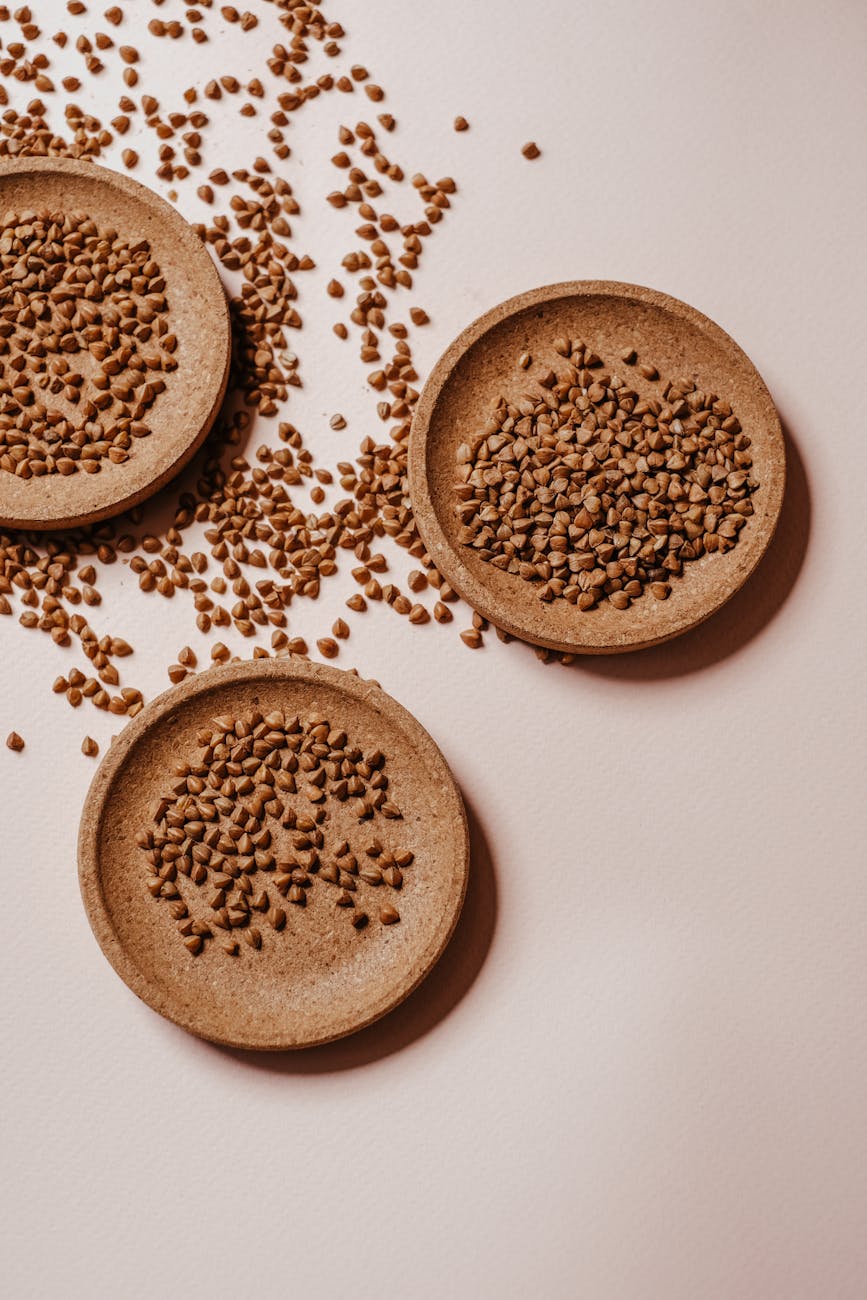
    Breakfast will not be an act of contrition but one of redemption: buckwheat groats or steel-cut oats, topped with protein powder, berries, walnuts, and chia seeds—like an edible TED Talk on anti-inflammation.

    Lunch will be a spartan affair: arugula so bitter it judges you, and tofu braised until it forgets it was once bland. Dressing? A holy trinity of balsamic vinegar, spicy mustard, and nutritional yeast. This is not food—it’s penance with flavor.

    Afternoon snack? Greek yogurt, protein powder, and berries. The combination is reliable, unexciting, and doctrinally correct.

    Dinner is where things get unhinged in a good way. I will reach for my Le Creuset Dutch oven (color: colonial blue, attitude: smug) and conjure quinoa with zucchini, fire-roasted tomatoes, nutritional yeast, and a whisper of coconut milk. I will mix in braised tofu until the pan hisses in agreement.

    And yes, there will be protein pancakes, crafted from oats, baking powder, protein powder, eggs (or applesauce, if I’m feeling woke), yogurt, cinnamon, honey, chia seeds, and vanilla extract. The batter will feel like spackle. The result will feel like victory.

    Exercise? Four days of kettlebells instead of five—because joints are finite, and ego is not a medical plan. On my “off” days, I’ll alternate between the exercise bike and power-flow yoga, both of which will mock me in their own way.

    Diet soda? Dead to me. I’ve seen what happens when it wins: a family friend guzzles it by the gallon, her health circling the drain like a cautionary fable. I will swap it out for sparkling water and the moral superiority it confers.

    This is not about orthorexia or self-hate disguised as wellness. This is about escaping confusion, that modern affliction where “healthy” means both everything and nothing. I will eat four times a day. I will consume 160 grams of protein. I will not exceed 2,400 calories. I will fight entropy with routine, bloat with balance, and preserve the image of myself I still—somehow—believe is possible.

  • Viral Nations: How Pandemic Cinema Reflects a World (a College Essay Prompt)

    Viral Nations: How Pandemic Cinema Reflects a World (a College Essay Prompt)

    Both 28 Years Later and World War Z depict the spread of a deadly virus that triggers the collapse of global order. Yet beyond the zombies and infected hordes, these films offer striking metaphors for the chaos, distrust, and political polarization amplified by the COVID-19 pandemic.

    In a well-structured, thesis-driven essay of 1,700 words, compare how each film explores the fragility of major institutions (governments, media, military, science), the spread of misinformation, and the psychological aftermath of global catastrophe. Your analysis should consider how each film allegorizes different aspects of pandemic culture: emotional volatility in 28 Years Later vs. bureaucratic inertia in World War Z.

    You must address the following questions:

    1. How do these films portray public institutions’ response to crisis? What critiques are embedded in those portrayals?
    2. In what ways do these narratives reflect or exaggerate the real-world cultural and political divisions that were intensified by COVID-19?
    3. Do these films offer any hope or solutions, or are they fundamentally cynical about humanity’s ability to cooperate?

    Use specific scenes, dialogue, and cinematic techniques from both films to support your claims. Outside sources are encouraged but not required.

    Here are five sample thesis statements for the prompt comparing 28 Years Later and World War Z as post-COVID allegories, each with clear mapping components:


    1. The Bureaucratic Collapse vs. Emotional Fallout Thesis
    While World War Z depicts a slow-motion collapse of global institutions in the face of a virus that outpaces diplomacy and reason, 28 Years Later focuses on the emotional and ethical wreckage left behind, showing that the true horror of a pandemic lies not in the infection itself but in the unraveling of trust, memory, and social cohesion.


    2. The Misinformation and Fear Contagion Thesis
    Both 28 Years Later and World War Z serve as cultural autopsies of the COVID era, portraying not only viral outbreaks but the parallel contagion of misinformation, fear, and ideological extremism, revealing how modern pandemics are fought as much in echo chambers and comment threads as in laboratories.


    3. The Institutional Failure and Survivalist Morality Thesis
    In their depiction of pandemic response, World War Z shows the impotence of top-down globalism, while 28 Years Later offers a bottom-up view of localized anarchy and survivalist ethics, together illustrating a post-COVID cinematic shift from faith in institutions to tribal resilience and moral ambiguity.


    4. The Pandemic as Psychological Reckoning Thesis
    More than disaster films, 28 Years Later and World War Z use the aesthetics of horror and action to stage a psychological reckoning with the trauma of COVID—28 Years Later captures the rage and exhaustion of a public pushed to its emotional brink, while World War Z visualizes the logistical panic and fractured chain of authority that left millions globally disoriented and unmoored.


    5. The Allegory of Polarization Thesis
    28 Years Later and World War Z reflect the political polarization accelerated by COVID by framing survival as dependent not on unity but on division—on isolation, suspicion, and competing narratives of truth—suggesting that in a fractured society, pandemics don’t create monsters so much as they expose them.

  • I Came for Health and Left with a Halo

    I Came for Health and Left with a Halo

    I’m stubborn—pathologically so. I know full well that going full carnivore would melt the fat right off me. A steady stream of fatty meats, maybe a token vegetable or two for show, and boom—I’d be a suburban Wolverine. Ripped, lean, possibly feral. But my suspicion kicks in around the long-term effects. Sure, eating like a seal-clubbing Inuit makes sense when you live on a glacier and need 6,000 calories just to blink. But when you’re a guy driving a hybrid through Trader Joe’s parking lots, gorging on brisket with your Apple Watch monitoring your heart rate, the “ancestral diet” starts to look less like primal wisdom and more like performative caveman cosplay.

    No, my reluctant truth is this: a mostly plant-based diet is probably my best bet. I imagine a future of buckwheat groats, steel-cut oats, rainbow chard, tofu, tempeh, and beans. My meals will be slathered with artisanal dressings composed of balsamic vinegar, spicy mustard, and nutritional yeast—because apparently sainthood is now spreadable.

    Sure, I’ll fold in some salmon twice a week. Maybe Greek yogurt. And yes, I’ll backslide into Mongolian beef barbecue once a month when life feels meaningless and I want my food to fight back. But the plan is mostly monkish. And here lies the rub: the diet starts making me feel too pure. Too righteous. The kind of person who silently judges you for using ranch dressing. The glow of self-congratulation hangs around my head like a flickering LED halo.

    And then comes the cookware. You can’t cook holy grains in a peasant pot. No, this lifestyle demands French-made enameled cast iron Dutch ovens—heirloom cookware with the price tag of a minor surgical procedure. I tell myself this is an investment in my health. What it really is: a $300 declaration that I’ve joined the priesthood of quinoa.

    Worse, the whole thing becomes a personality. Plant-based meals. Exercise tracking. Morning rituals. Deep-breathing routines. It becomes its own narcissistic opera. I’m centered. I’m optimized. I’m intolerable. My life starts to feel like an Instagram reel narrated by a smug inner voice that’s always meditating.

    The real irony? I embarked on this whole food pilgrimage to escape the traps of modern life—its clutter, chaos, and chronic disease. And yet, somewhere between my third batch of millet and Googling the mineral content of nutritional yeast, I crossed into a new disorder: a lifestyle so curated it starts to feel like a museum exhibit titled Me, Trying Too Hard.

    Sometimes the cure becomes its own kind of sickness. We chase health, only to wind up imprisoned by our own kale-scented, cast iron-coated obsessions.

  • Training to Failure: A Love Letter to My Broken Sixty-Year-Old Body

    Training to Failure: A Love Letter to My Broken Sixty-Year-Old Body

    I just inhaled 80 grams of braised tofu on a bed of arugula—an herbivore’s banquet—because I didn’t want any leftovers skulking in the fridge while my family disappears for a weeklong trip. The trip also means six missed workouts, which my inner gym rat is already mourning with the solemnity of a funeral dirge.

    In my infinite wisdom—or perhaps masochistic delusion—I stacked seven consecutive kettlebell workouts into my week like some demented CrossFit monk chasing transcendence through joint pain. Predictably, I torched myself. Yesterday, I hit the wall. Even after a nap, I was cooked—bone tired, foggy, the kind of fatigue that whispers pre-flu doom into your ears while your muscles quietly plan a mutiny.

    Today was my supposed “last hurrah” before vacation. I skipped the kettlebells and mounted the Schwinn Airdyne, knowing full well I was running on fumes. Usually, I scorch 700–800 calories in an hour. Today I limped to 600. Eighty percent effort. That’s what the data says. My pride says otherwise.

    This might be my new reality: controlled, measured workouts instead of cinematic Rocky montages. The problem? I came of age in the 1970s golden era of bodybuilding, when Arnold preached the Gospel of Training to Failure and warned us about becoming “paper tigers.” I took that to heart. Too much heart. The kind that skips beats when your prefrontal cortex is begging you to lie down and your inner bro yells, “One more set!”

    But now, every time I push too hard—whether it’s with kettlebells or a fevered sprint on the Airdyne—I spiral into what I’ve dubbed RAA: Rundown Anxiety Affliction. It’s not a diagnosis. It’s a curse. You feel like you’re on the verge of the flu, haunted by a twitchy dread that your immune system has thrown in the towel. And for what? To impress the ghost of Mike Mentzer?

    I’m not exercising and eating tofu like a reformed monk to become a sickly, anxious husk of a man. That’s not fitness. That’s martyrdom.

    Today I danced at the edge of RAA. I throttled back. Took my 600 calories, thanked the fitness gods for the mercy, and called it. I’ll nap. I’ll pack. I’ll go on this trip, eat as decently as possible, and try not to treat my return like a penitential Ironman.

    Because no one needs to come back from vacation needing a vacation from their vacation—especially if it starts with RAA and ends with a doctor saying, “You need to calm the hell down.”

  • Cling to Your Lead and You’ll Lose: A Midlife Playbook

    Cling to Your Lead and You’ll Lose: A Midlife Playbook

    I don’t take the Life Force lightly. It’s the mysterious voltage that animates us, that flicks the switch from sloth to spark. One minute you’re groggy and half-dreaming, the next you’re lacing up your sneakers, firing up the espresso machine, and attacking your kettlebell workout like you’re in a Rocky montage scored by Miles Davis. The Life Force says: Get up. Get after it. Drink, eat, laugh, lift, love, live—before the curtain drops.

    Even when we’re slumped in a funk, sulking like a teenager who just discovered Camus, the Life Force doesn’t vanish. It simply retreats, muffled beneath layers of melancholy and cheap self-pity, waiting for the clouds to lift so it can slip back in with a jolt.

    I’ve been thinking about this lately as I inch toward sixty-four. The aging brain doesn’t hide its compromises. The body offers new aches like parting gifts from yesterday’s workout. And I keep reading about public figures—my age or younger—dropping dead from heart attacks and cancer, as if the universe is whispering, “You’re next.”

    The awareness of mortality, while useful in the Stoic-philosopher sense, has a dark gravitational pull. It makes you want to swaddle yourself in self-pity, curl up with grim hypotheticals, and mentally prewrite your own eulogy. I’m no sage, but I’ve noticed: the older you get, the easier it is to start thinking about death instead of living your life.

    And that’s where the football metaphor barges in—uninvited, but apt. Picture a team nursing a small lead. Instead of playing their usual game, they start playing not to lose. They abandon boldness, creativity, and flow. They tighten up. They stall. They cling. And then they lose.

    That’s what obsessing over death becomes: Playing Not to Lose Syndrome. You stop being you. You start tiptoeing through your own damn life, hands over your eyes, praying not to fall. But life’s not won through timid pacing. You win by doing what got you here in the first place—living like hell, moving the ball down the field, trusting your strength, and swinging the kettlebell with fury and joy.

    Yes, I’ll admit it: the fearful doppelgänger lives in me too. He bites his nails and speaks in doomsday whispers. But so does the joyful lifer, the one who’s still in love with breakfast, jazz, hard workouts, and writing rants like this one. Maybe being fully human means acknowledging both—the brave and the cowardly—and choosing, as often as possible, to side with the one who gets up and dances anyway.

    Life doesn’t reward those who cling. It rewards those who play to win—until the final whistle.

  • Soy-Boy Rising: Confessions of a Reluctant Carnivore

    Soy-Boy Rising: Confessions of a Reluctant Carnivore

    I’m not a vegan, though I flirt with the lifestyle like someone dabbling in theater—call it vegan cosplay. I still eat fish a few times a week. My wife’s turkey meatballs make regular cameos. And every now and then, Mongolian beef seduces me with its glossy, MSG-laced siren song. That said, I’ve slashed my meat intake by 75%, which, by American standards, practically makes me a Buddhist monk.

    These days, I spend an inordinate amount of time pressing water out of high-protein tofu bricks like they’ve wronged me. I cube them, toss them in olive oil, and dust them with whatever spices are within reach—barbecue rub, smoked paprika, Italian herbs, chili flakes. While they sizzle, I assemble my daily temple of penance: a salad of arugula, balsamic vinegar, nutritional yeast, and a squirt of spicy mustard. Add in some herbs, and it’s a flavor riot with zero cholesterol.

    Surprisingly, it satisfies me. The texture, the tang, the crunch—I’m not suffering. I’m thriving. But I can already hear the Bro-sphere grunting with disapproval. To them, my tofu devotion is nothing short of culinary treason. The True Path, they say, is paved in ribeyes and romaine. Soy is heresy. My masculinity, they warn, is at risk of withering into oblivion if I don’t start eating liver by the pound.

    Let them growl. I don’t evangelize. If carnivore life gives them six-pack abs and existential clarity, more power to them. But my reasons for sidestepping meat are complicated. One: I find raw meat disgusting. I’ve never acclimated. Slabs of pink muscle leaking juice in my hands? No thanks. Sure, I’ll eat a well-prepared dish if someone sets it in front of me, but I don’t like the psychic gymnastics it takes to pretend nothing had to die for it.

    So yes, sometimes I give in. But most mornings, you’ll find me standing over a bowl of buckwheat groats, quietly thrilled not to be cooking a corpse. The older I get, the more that matters. Not for moral purity. Just peace of mind—and digestion.

  • Mercury Rising, Tuna Retiring: A Fish Addict’s Tofu Detox

    Mercury Rising, Tuna Retiring: A Fish Addict’s Tofu Detox

    Howard Stern recently went public with the kind of health confession that makes nutrition nerds shiver with schadenfreude: years of eating fish like a ravenous sea lion left him with sky-high mercury levels—over 30, when 8 is considered the red alert line. His white blood cell count crashed, and his bloodstream began to resemble a periodic table. So now he’s easing into a mostly plant-based diet, still clinging to salmon and shrimp a few times a week like a man transitioning from whiskey to kombucha.

    Taking a page from Howard’s mercury memoir, I’m retiring my daily canned-fish salad lunch. No more tuna tins. No more mackerel mania. In their place? A half-block of Trader Joe’s High-Protein Tofu, sautéed in olive oil like a grown-up with arteries worth protecting. The whole package is 70 grams of protein. I’ll eat one half at lunch, the other half either for dinner or for the next day.

    Preparation, of course, requires a bit of tofu theater. I wrap the slab in a dish towel and stack a Dutch oven on top like I’m pressing it into a confession. From there, it crisps nicely in the pan—unlike my nerves, which are still adjusting to life without anchovies.

    The salad base: arugula, because I enjoy a green that fights back. The dressing: Greek yogurt whipped with nutritional yeast, herbs, and spices—a tangy, umami-rich blend that says “I’m trying” louder than balsamic ever could.

    If I need a protein boost, I’ll toss in some drained beans or egg whites, though I refuse to let the salad become a protein arms race. The goal isn’t to feel full for eight hours—it’s to avoid mercury poisoning while still pretending I’m eating for pleasure.

    We’ll see how satisfying it all is. At worst, I miss the old tuna days. At best, I keep my nervous system intact and live long enough to be skeptical of my next health phase.

  • Why I’m Eating Like My Life Depends on It (Because It Might)

    Why I’m Eating Like My Life Depends on It (Because It Might)

    In 2020, my mother passed away from kidney disease. She refused to go on a dialysis machine. I found out a few days ago that her sister, now 80, has stage-4 kidney disease. My aunt doesn’t drink or smoke, but her doctor told her that age can do its job on the kidneys and will give her medication and a diet to slow down the disease’s progression. 

    I assume I may have a genetic predisposition for tired kidneys, so at 63, I’m looking to make some preventative dietary changes. I’m going to watch my potassium, phosphates, and sodium. I’m going to cut down on dairy, nuts, nut butters, sweets, diet sodas, canned fish, meat and such. I’m going to keep my creatine at 3 grams a day. Being overweight, having high sugar levels, high cholesterol, and high blood pressure are all bad for the kidneys, so my diet has to keep those areas under control. I remember Doctor Peter Attia writing in his book Outlive: The Science and Art of Longevity that having advanced kidney disease presents a shorter lifespan diagnosis than stage-4 cancer, so I feel motivated to be diligent. My diet now looks like this:

    Breakfast: I’ll rotate 5 breakfast grains in which I will measure exactly one-fourth cup of one of the following: 1. steel-cut oatmeal, 2. quinoa, 3. buckwheat groats, 4. bulgur, and 5. hulled or foxtail millet (11-12 grams of protein) with half a cup of Greek plain yogurt, chia seeds, walnuts, plain soy milk, phosphate-free protein powder, berries, and coffee.

    Lunch: Salad with 20 grams of protein tempeh, rinsed from a can or cooked beans or salmon with balsamic vinegar, herbs and spices, half cup of soy milk, berries or small tangerine. 

    Post-nap Afternoon Snack: One cup of plain Greek yogurt with phosphate-free protein powder, or no powder at all, and berries. 

    Dinner: Vegetables, protein of some kind, including braised tofu, and a small apple. If I want a vegan dinner, I can make a mixture of rice or quinoa with black beans, tofu or tempeh, and a cup of coconut milk. 

    Between meals: No more diet soda of any kind, only water, herbal tea, and soda water.