Tag: life

  • How a Tetanus Shot Turned Me Into Hamlet

    How a Tetanus Shot Turned Me Into Hamlet

    Chronic injuries make cowards of us all. The moment something snaps, pinches, or throbs, we become amateur radiologists, WebMD addicts, and midnight correspondents to our favorite AI oracle. Two days ago, I was diagnosed with left rotator cuff syndrome and left biceps tendinopathy. The ultrasound is five weeks away, a kind of orthopedic oracle reading, to determine whether the gods demand surgery. I followed the physical therapist’s rehab routine like a monk honoring scripture, only to feel soreness not just in the injured shoulder, but the good one as well. Suddenly, I was a man with two defective meat hooks, staring down the possibility of losing the ability to open a jar or button a shirt. Too little rehab, my shoulder would ossify into frozen stone; too much rehab, the tendons would “retract,” that satanic verb whispered in dark orthopedic circles—also leading to surgery. The tightrope was killing me. I imagined myself as a doomed invalid, a useless patriarch who had to ask his teenage daughters to help him put on socks.

    This morning I drove to the Honda dealership, handed over the keys, and walked home for my “workout,” earbuds piping KCRW’s Left, Right & Center into my ears. As I trudged past the familiar storefronts on Hawthorne Boulevard and spotted that the Chinese restaurant had been replaced by an IHOP, a revelation struck: the soreness in my right shoulder wasn’t from rehab. It was from the tetanus shot I’d gotten the same day as my diagnosis. The universe wasn’t collapsing—just my sense of proportion. In an instant I went from doomed cripple to idiot hypochondriac, humbled by the absurdity of my own catastrophizing.

    To add insult to ego, I’d been treating this like a heroic ordeal. At Thanksgiving, my brother-in-law mentioned his own rotator cuff—65% torn, surgery, sling, brutal rehab—and he endured it without turning it into a Greek tragedy. Meanwhile, I recorded a video describing my plight and dozens of fellow sufferers flooded the comments with horror stories of two-year recoveries, cortisone injections, and pain that made sleep a myth. So now I’m trying to regain perspective, to tighten my armor and “gird up thy loins like a man,” as the biblical thunderbolt commands.

    Easier said than done.

  • Thanksgiving Heart Attack

    Thanksgiving Heart Attack

    Thanksgiving Day, 2025. My wife and twin daughters were applying their final cosmetic and sartorial flourishes before we drove to Los Alamitos for the obligatory family pageant, and I had a half-hour window of solitude. I sat at my Yamaha piano, eager to play a song I’d written years ago—“The Heartbreak of Micky Dolenz”—a melancholic tribute to a Monkees episode that shattered my five-year-old psyche. In it, Micky pumps iron to steal a blonde beach goddess from a sun-bleached bodybuilder, only to discover she has evolved into a Proust-reading aesthete and now prefers intellectuals who collect first editions. It was my first lesson in the absurdity of desire: you can train, sweat, and transform yourself into a bronze Adonis only to watch beauty run away with a man who hides behind Remembrance of Things Past. That moment was my first crack in the façade of childhood—when I faintly understood life might be crueler and more ambiguous than birthday cake and Saturday morning cartoons.

    Halfway through the song, I felt a stabbing pressure in my left chest—an alarm bell that whispered, “heart attack.” It was the kind of pain you ignore for twenty seconds until the fear gets loud. Maybe it was simple anxiety: I am sixty-four, three semesters from retirement, and just endured Sam Harris complimenting Christian fundamentalist Doug Wilson for possessing the courage of his biblical barbarities. As an agnostic torn between admiration and nausea, I crave certainty the way addicts crave relapse—but God gives me ambiguity, Paul gives me guilt, and the afterlife gives me indigestion.

    Ethics don’t spare me, either. I eat yogurt and whey protein while pretending I don’t hear the screams behind factory-farmed supply chains. My “plant-leaning” diet is a moral performance piece—vegan cosplay with a dairy chaser. Every spoonful tastes like cognitive dissonance.

    The day before, a sports doctor diagnosed my left shoulder with rotator cuff syndrome and biceps tendinopathy. She promised I might avoid surgery if I did her rehab exercises. She printed out eleven medieval torture movements, most of which lit my shoulder up like a Roman candle. Should I push through the pain, I wondered, or was I already guilty of kettlebell blasphemy—retracting the tendon until I doomed myself to the orthopedic gulag?

    So I sat there, convinced the pain in my chest was an omen. But when my wife stepped into the living room and asked me—without ceremony—whether her boots matched her dress, the pain evaporated. The piano, the Monkees, Sam Harris, Paul, vegan sins, and torn tendons all vanished. Her question grounded me. It was the kind of mundane interruption that reminds you the world is still here, indifferent to your melodramas. My imaginary heart attack surrendered to domestic reality.

  • Three Months of Shoulder Pain and the Art of Not Panicking

    Three Months of Shoulder Pain and the Art of Not Panicking

    This afternoon I’ll see a doctor about my three-month shoulder ordeal. I’m hoping for clarity: bursitis or a torn rotator cuff. The injury didn’t begin with a dramatic moment. I remember doing single-arm chest presses on the garage mat with a 50-pound kettlebell. There was a subtle tightness in the left shoulder—no alarm bells. The next morning I woke as if someone had rearranged the joint overnight. Side raises and reaching behind became nearly impossible. I cut out all chest and shoulder presses. Some days the pain flared after training; I blamed curls and single-arm swings, so I eliminated them too, and the pain eased.

    To make up for the reduced kettlebell volume, I doubled down on the Schwinn Airdyne, grinding through hour-long sessions that combine pedaling and lever rowing. No pain—until three days ago, when the movement set off a nerve fire down my arm. That told me I was no longer dealing with simple irritation. Something was pinched and inflamed. The bike is now retired. I’ll walk the neighborhood for cardio until further notice. I’ve experimented with rehab exercises: cat-cow yoga poses help; so do wall push-ups from shoulder rehab videos. Side lateral raises, though medically recommended, feel like sabotage. I refuse them.

    I made a video about the injury yesterday. The floodgates opened. Dozens of comments from people who had surgery, magnets, injections, or long stretches of physical therapy. One old friend emailed: he never recovered and has lived with pain and restricted motion for a decade. The road, it seems, is long and indifferent to optimism. I don’t enjoy the pain, the limited workouts, or the hypervigilance required to avoid reinjury. The mental effort—combined with physical discomfort—wears me down. Right now the shoulder aches at a low level, probably from the idiotic attempt to sling on a backpack this morning. Starting next week, I’m switching to a messenger bag over my healthy shoulder.

    When I speak to the doctor today, I’ll try to be calm, give a clear narrative, and resist letting anxiety pull me into melodrama. I want to hear the data, not force my fantasy of “no surgery” onto the facts. I had hoped to write about something else this morning—anything other than this shoulder—but obsession has its own gravity. It will not be ignored.

  • The Day My Wife Met the Quietest Refugees

    The Day My Wife Met the Quietest Refugees

    Before our twins were even born—more than fifteen years ago—my wife told me a story that still sits in the back of my mind like a ghost that refuses to leave. She and her best friend, A, drove to Long Beach to visit what would soon be A’s new home. She and her partner had bought it a month earlier, but escrow delays, termite fumigation, and bureaucratic nonsense kept the place stuck in a strange limbo: theirs legally, but uninhabitable in practice. The house was technically empty—no furniture, no boxes—just an address waiting for its owners to arrive.

    Inside, my wife and A heard voices drifting from somewhere near the kitchen. They followed the sound and found a couple, perhaps in their early fifties, sitting at the counter with steaming cups of bouillon broth. They were calm, unthreatening, even dignified. Two shopping carts stood beside them like faithful dogs, packed with precision: folded clothes, cans of food, hygiene supplies, diabetic needles, prescription bottles—everything arranged with military neatness. My wife used the word squatters, but they looked more like survivors who had finally found a safe harbor.

    They spoke kindly. They’d been living there for nearly a month, they said. The house sheltered them from the cold; they cooked simple meals, washed, slept. They didn’t pretend it was theirs—only that it was a rare oasis in a city allergic to mercy. My wife described them as being sweet, especially toward one another. More than anything, my wife was moved by their sweetness and tenderness.

    Then A told them in a gentle tone that she was the homeowner. The couple apologized, almost embarrassed. The man rolled his cart out first, down the hallway and out through the front door. His companion followed—until she stopped mid-stride, panic rippling across her face. He had forgotten one of his medications. She sprinted back to the kitchen, grabbed the bottle, and hurried after him.

    That moment—her urgency, her loyalty, the fragile bond of two people clinging to each other against the world—burned itself into my heart. Even now, whenever I remember it, my eyes well with tears.

  • Camp Flog Gnaw: The Weekend That Broke My Driving Career

    Camp Flog Gnaw: The Weekend That Broke My Driving Career

    Camp Flog Gnaw was a weekend-long bacchanal of sound and sweat for my wife and our twin daughters, two days of music and mayhem baked under the unforgiving Los Angeles sun. My wife braved the trip on Friday and came home looking like a survivor of a maritime disaster, muttering that leaving Dodger Stadium traffic was like trying to escape a collapsing pyramid. She begged me to handle Sunday drop-off and assured me they would Uber home like civilized people. Armed with a “Fast Pass” for the 110 North, I engaged Google Maps, which promptly betrayed me and sent me barreling into downtown—an urban obstacle course specifically engineered to destroy men my age. Pedestrians sprang into the street like feral pigeons, daring me to earn a manslaughter charge. Driverless Waymo cars drifted past me with pastel-lit antennae, cheerful like clown hearses guiding me into the underworld. The lanes themselves seemed painted by committee: solid, dashed, turning, not turning, red, green, “maybe stop,” “maybe don’t”—a psychedelic optical exam administered at 20 mph.

    When I finally dropped off my wife and daughters, I whispered a confession to my wife: “I think I’m giving my Accord to you, and the other car to the girls. I’m retiring from the driving game.” They didn’t laugh; they’ve seen cracks in the armor. I’m a high-strung man, and at sixty-four, the neurons don’t fire like they used to. I can still handle a five-mile radius around my house—my personal demilitarized zone—but pull me into the wilds of Los Angeles traffic and I’m ready to hang up my driver’s jersey. Downtown LA isn’t a city. It’s a gladiatorial arena where the young come to dominate, and I say to myself, “This is no country for old men.” 

  • The Myth of the Inner Circle

    The Myth of the Inner Circle

    It’s wired into the species—not just the desire to belong, but the craving to belong intensely, to slip past the outer ring of acquaintances and take a seat inside the inner ring, the secret hearth where the real warmth allegedly lives. Decades ago, I convinced myself I had secured that coveted spot within my friend group. Then came the day I wasn’t invited to what I imagined was a grand, festive gathering. One tiny exclusion detonated my entire reality. I felt betrayed, humiliated, and terrified. Had I been exiled? Had I never belonged at all? What kind of fool mistakes polite laughter for fellowship? The hurt settled in for years. I saw myself as a wounded wolf limping away from the pack, nipped at the heels, slipping into the freezing brush alone—shivering, haggard, staring back at the others as I wondered what was left for me now.

    Three decades later, the story has taken on different contours. If I’m honest, I suspect I was never part of anyone’s inner circle; I was the victim of my own wishcasting. My glum tendencies—funny in small doses, exhausting in larger ones—probably nudged me to the periphery from the start. And in a twist more humbling than any imagined exile, I eventually learned the friend group didn’t have an inner circle at all. After one member retired, another admitted they rarely saw each other, that their camaraderie had been built on workplace convenience, not tribal loyalty. My grand narrative of being cast out by a cabal of insiders evaporated. There had been no cabal—just ordinary friendships and my own melodramatic imagination.

    So now the task is simple and difficult at once: forgive myself for the fears and delusions that shaped the story. Reclaim myself. Return to the only inner circle that was ever guaranteed—my own. Maybe that hunger for return is the quiet power of religion: the promise that we can wander, fall apart, and still be welcomed home. The myth of my “expulsion from the inner circle” now feels biblical in scale, a parable of longing not just for belonging, but for wholeness, acceptance, and the grace of being taken back as I am.

  • Anhedonia: The Teacher We Deserve

    Anhedonia: The Teacher We Deserve

    People are using GLP-1 drugs not just to manage their weight but to sculpt themselves into something that looks less like a person and more like a medical emergency waiting to happen. They’re chasing an aesthetic so gaunt it should come with an IV drip and a gurney. It’s the old human trick: take a good thing, drive it straight past moderation, and plunge it into the abyss.

    We’ve done it forever. In the 70s, we didn’t aim for a tasteful tan; we baked ourselves into mahogany idols so glossy and dark we made strangers gasp with envy—never mind that we were essentially slow-roasting our epidermis. We didn’t want cars; we wanted gas-guzzling behemoths that could outgrowl every engine on the boulevard, even if they drank fuel at 8 miles per gallon. Our bodybuilders juiced themselves into tragicomic animations—bulging, veiny caricatures who collapsed under the very mass they worshipped.

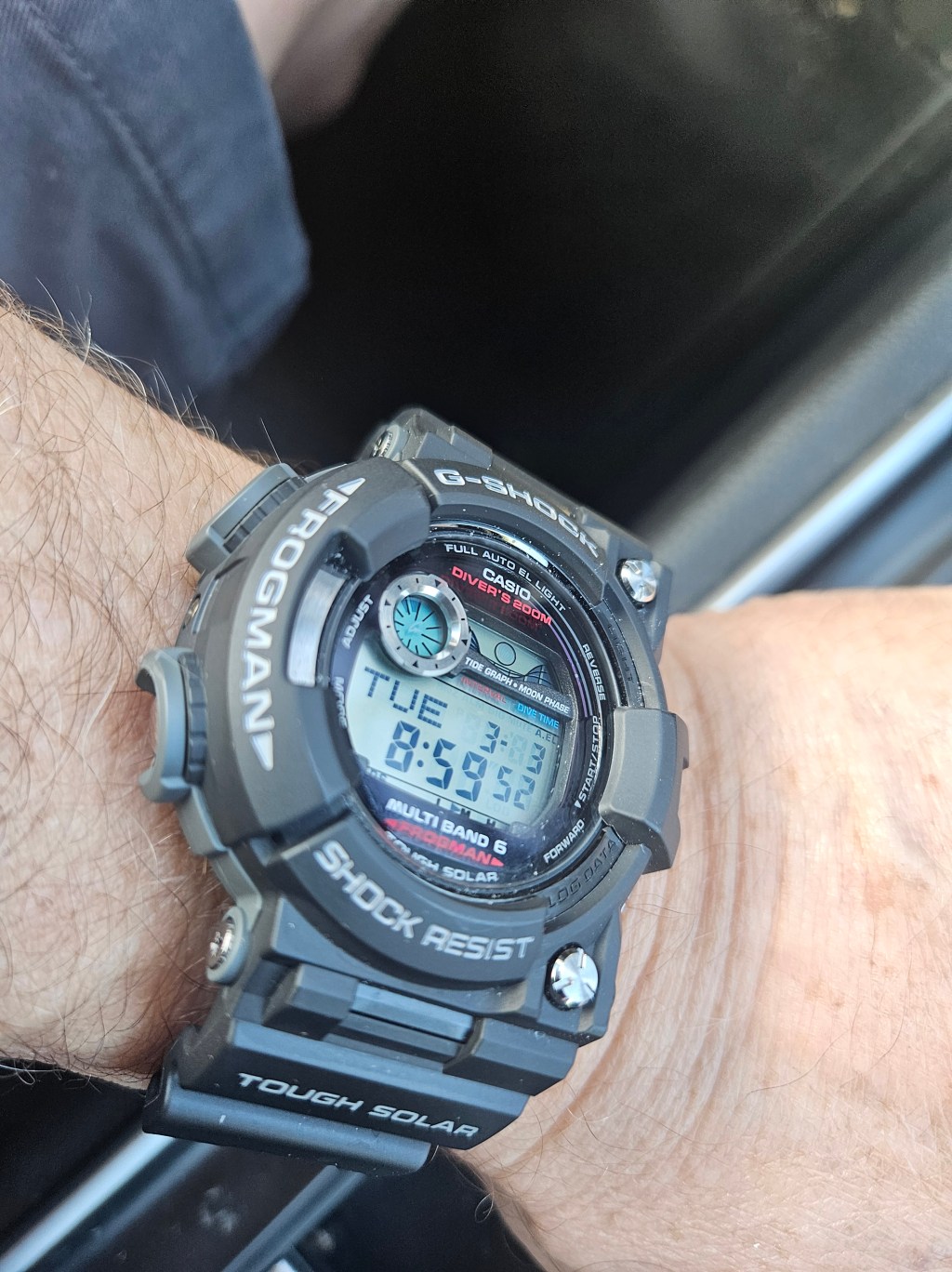
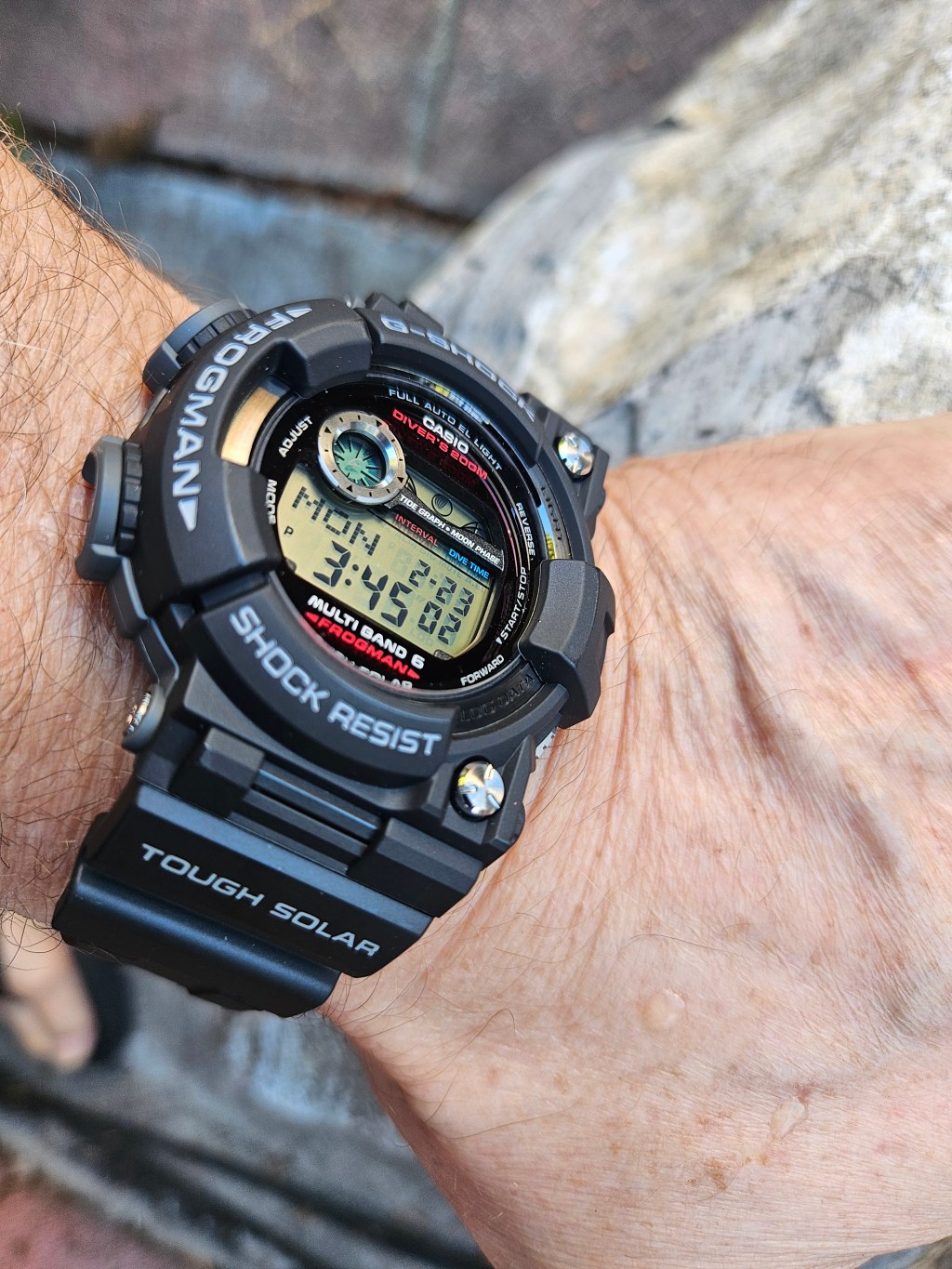
    We do it with art, too. A classical Spotify playlist that began as a polite nod to Haydn mutates into a 300-hour monster stuffed with every composer who ever touched a quill. Coffee? We don’t sip it; we mainline it until it tastes less like roasted beans and more like chemical punishment. And watches? We buy so many that the simple act of choosing one in the morning becomes a hostage negotiation with our own shame.

    Somewhere in this carnival of excess, a king once turned everything to gold and discovered he’d built himself a private hell. We’ve just updated the myth with better tech and worse impulse control.

    Thankfully, we also have a counter-teacher: anhedonia. That deadening of pleasure, that bleak emotional flatline, arrives like a stern therapist with a clipboard and informs us that the thrill is over and the chase was a lie. It tells us the secret we never want to hear: extremes always collapse. And only then—dragged back from the edge—we crawl toward equilibrium, toward something like balance, toward a life that feels human again.

  • The Man of Rotation

    The Man of Rotation

    My family gave me a custom T-shirt last Christmas emblazoned with “Man of Rotation.” It wasn’t a compliment; it was a diagnosis. They were mocking the fact that I rotate everything like a monk tending sacred relics.

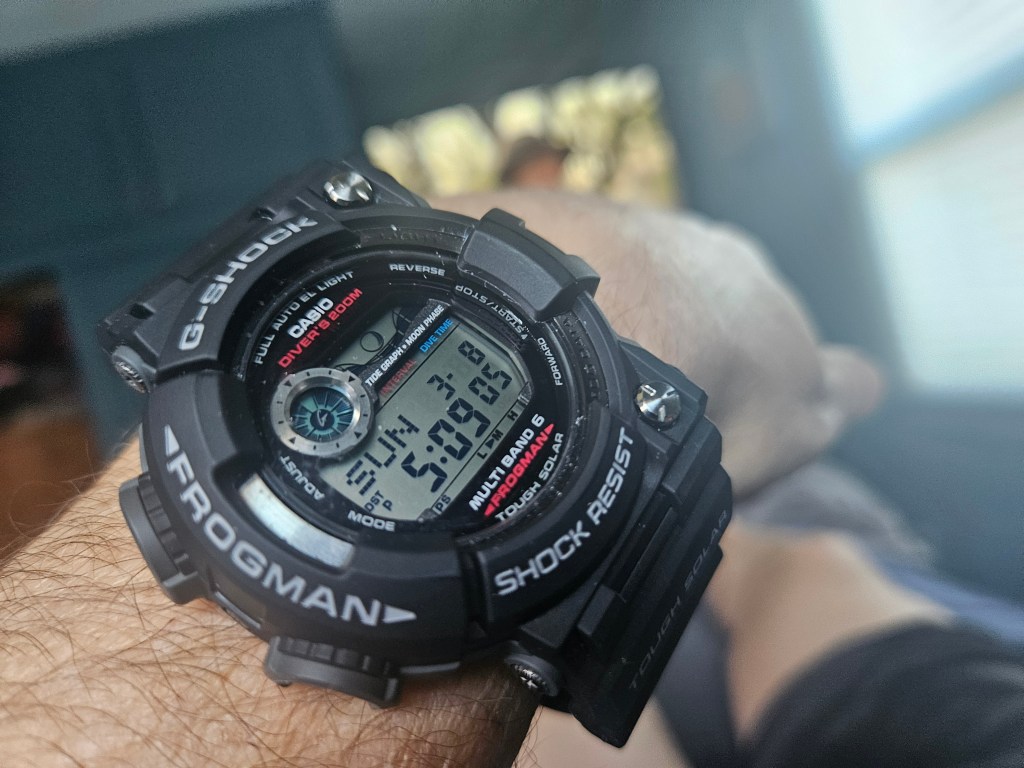
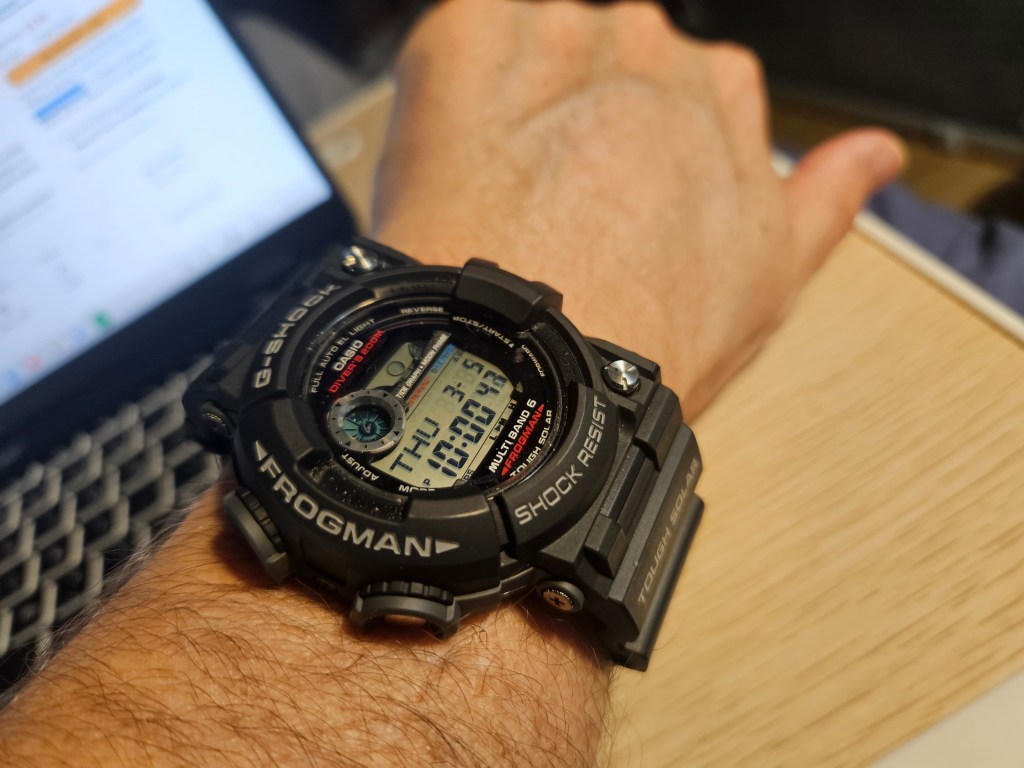
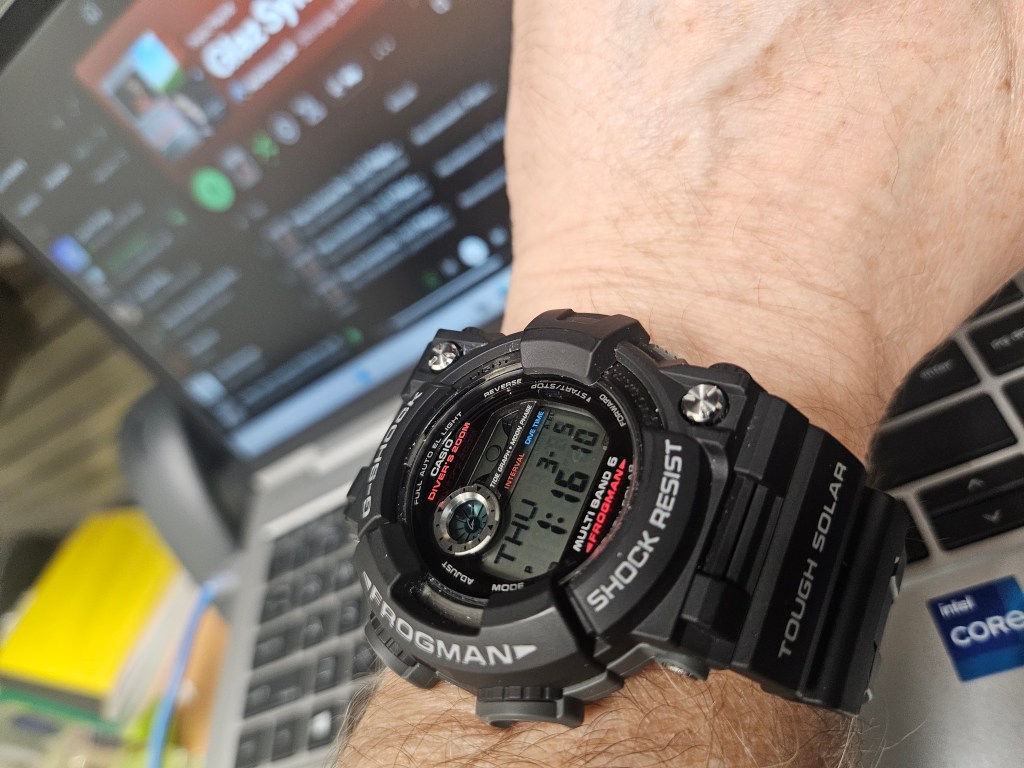
    I wear a different watch every day from my seven-piece Seiko harem. I rotate three kinds of medium-to-dark roasts as if the coffee beans need equal custody time. I alternate between my Gillette Fatboy and Slim razors with the solemnity of a Cold War arms treaty. Astra blades on Monday, Feather blades when I feel reckless. Even my soaps—triple-milled rose, triple-milled almond—take scheduled turns, like aristocrats queuing for a royal audience.

    It gets worse. Quilted and fleece sweatshirts take their laps. Knit caps cycle through the week as if they were a jury pool. My radios each get a “shift” in the garage during my kettlebell workouts, which is the closest they’ll ever get to military service. Even my podcasts rotate, governed by a sliding scale of how much political despair I can tolerate without bursting into flames. Hoka tennis shoes? They march in formation. My pairs of dark-washed boot-cut jeans—virtually indistinguishable to the human eye—are treated like unique Renaissance tapestries. Golf shirts and T-shirts are matched to the day of the week because my synesthesia demands order, not chaos. And breakfast? A solemn liturgy of alternation: buckwheat groats one day, steel-cut oats the next—my personal Eucharist of complex carbs.

    What is rotation, exactly? A philosophy? A pathology? Maybe it’s my attempt to mimic the cosmic cycles of life: moons, tides, seasons, me choosing a different razor. Maybe it’s a counterfeit sense of forward motion for a man who often feels marooned in his own stagnation. Maybe it’s ritual as a pressure valve, keeping the anxieties from boiling over.

    Or perhaps these rotations are my charm against the rising madness of the world—a tiny pocket of structure in a universe that increasingly behaves like it’s had too much caffeine and too little therapy. A way of keeping my Jungian Shadow from dragging me into the basement and locking the door behind me.

    Forgive me: I’m no oracle. I don’t have definitive answers. I have suspicions, hunches, and a working familiarity with amateur psychoanalysis.

    What I do know is this: it’s time to get up, get ready for work, and select today’s Hoka. The wheel must turn.

  • Dream Exam for a Retiring Professor in the Bedroom of Time

    Dream Exam for a Retiring Professor in the Bedroom of Time

    Last night I found myself back in the primary bedroom of my parents’ 1970s house—a room fossilized in memory but somehow updated to the present day. I was perched on their king-sized bed, the same monolithic slab of furniture that once seemed big enough to host the United Nations, scribbling notes about my long, bruised, oddly tender career as a college instructor. It was the kind of dream where the past and present shake hands awkwardly, unsure who invited whom.

    Outside, I heard the rumble of a moving truck. A couple had arrived next door, and before I could finish a sentence in my notebook, they had already unpacked their lives, established themselves as the new neighborhood aristocracy, and decided—God help me—to visit. Instead of knocking at the front door like terrestrial beings, they wandered from their backyard onto a dirt trail, crossed into my parents’ yard like friendly invaders, and slipped through the sliding glass doors behind the beige curtains as if they were stepping into a beachfront Airbnb.

    Their names were Dan and Deidre, early forties, both in education—the D & D Couple. I wrote their names down immediately because even in dreams I have the short-term memory of a concussed squirrel, and I didn’t want to fail the basic decency test of remembering the names of unexpected houseguests. They asked my age. I told them sixty-four. I told them I was still lifting weights, still teaching after thirty-eight years, still clinging to the last threads of my profession with a mix of pride, resignation, and the kind of melancholy that whispers, It’s almost time to go.

    They listened politely, heads tilted just enough to convey admiration without actually committing to it. Then Dan—the more mischievous half of the D & D Duo—decided to spring a quiz on me. “Do you remember our names?” he asked, as if I were auditioning for senior citizenship.

    For one horrifying second, my mind decided their names were Karl and Kathy—the K & K Couple. But before I committed social suicide, I dropped my gaze to my notebook, where my handwriting—half cryptic scrawl, half cry for help—reminded me: Dan and Deidre. D & D. Not K & K.

    I delivered the correct answer, and the couple beamed at me as if I had passed a cosmic entrance exam for the next stage of my life. Their smiles weren’t just approval; they were a benediction, assuring me that even as one chapter closed, another waited—stranger, softer, intruded upon, but somehow welcoming.

  • Blogging in the Belly of the Whale Has Its Perils

    Blogging in the Belly of the Whale Has Its Perils

    For those of us who can’t shell out $150 a week for therapy—and who would rather confess our shadow selves to strangers on the Internet than to a licensed professional—blogging becomes a kind of bargain-bin psychoanalysis. We know it’s not perfect, but it’s cheap, available, and gives us the illusion that we’re sorting out the world’s madness and our own with nothing more than sentences on a glowing screen.

    But there’s a catch. When we talk only to ourselves long enough, the echo becomes comforting. Too comforting. We stop listening to other voices and drift into a form of digital solipsism, a state where we’re the sole inhabitant of our private universe. It’s Jonah in the whale—except the whale has Wi-Fi and ergonomic seating. We settle into the warm bath of a frictionless existence, the kind of life where nothing challenges us, nothing interrupts us, and nothing demands that we grow.

    My students write about this same seduction when discussing AI and the Black Mirror episode “Joan Is Awful,” where the promise of absolute control mutates into the loss of identity. The frictionless life—everything tailored, curated, predictable—slowly erodes our individuality until we’re no longer people but users. And blogging can slip into that same trap: so cozy, so insulated, that we begin sipping our own Kool-Aid and calling it intellectual hydration.

    So what’s the antidote? Certainly not brawling on social media. Those aren’t arguments; they’re moral-outrage bacchanals dressed up as discourse. Trading the frictionless void of a blog for the poisoned well of tribal rage is not an upgrade—it’s simply chaos with a comment section.

    There is a kind of healthy friction, though—the ordinary back-and-forth you get between two friends arguing about life over coffee. The Internet can mimic that if we’re deliberate. My YouTube channel has taught me as much. For over a decade, I’ve posted videos about watch obsession, addiction, identity, and everything connected to them. Making those videos demands more from me than a blog ever could. I have to generate compelling content, communicate clearly, keep people engaged, and then face their responses—praise, critique, confusion, all of it. It forces rigor. It forces presence. It won’t let me get lazy.

    That’s why I’m reluctant to quit. Yes, I’m 64. Yes, mental health matters. Yes, I worry that staying in the YouTube world might stir up my watch addiction and pressure me to flip watches just to feed the algorithm. But abandoning the channel completely in favor of the blog feels like retreating into the frictionless void I’m trying to escape.

    So I’ll keep experimenting with “video essays,” starting with a brief nod to my watch collection before pivoting into whatever topic is actually on my mind. Fortunately, viewers seem willing to follow me into this new territory. And for now, that’s enough. Because I’m tired of the soft trap of writing into silence. I need the friction. I need the challenge. I need the reminder that I’m not alone in the whale.