Tag: life

  • 30 Years of Teaching College Writing in the Greatest City in the World

    30 Years of Teaching College Writing in the Greatest City in the World

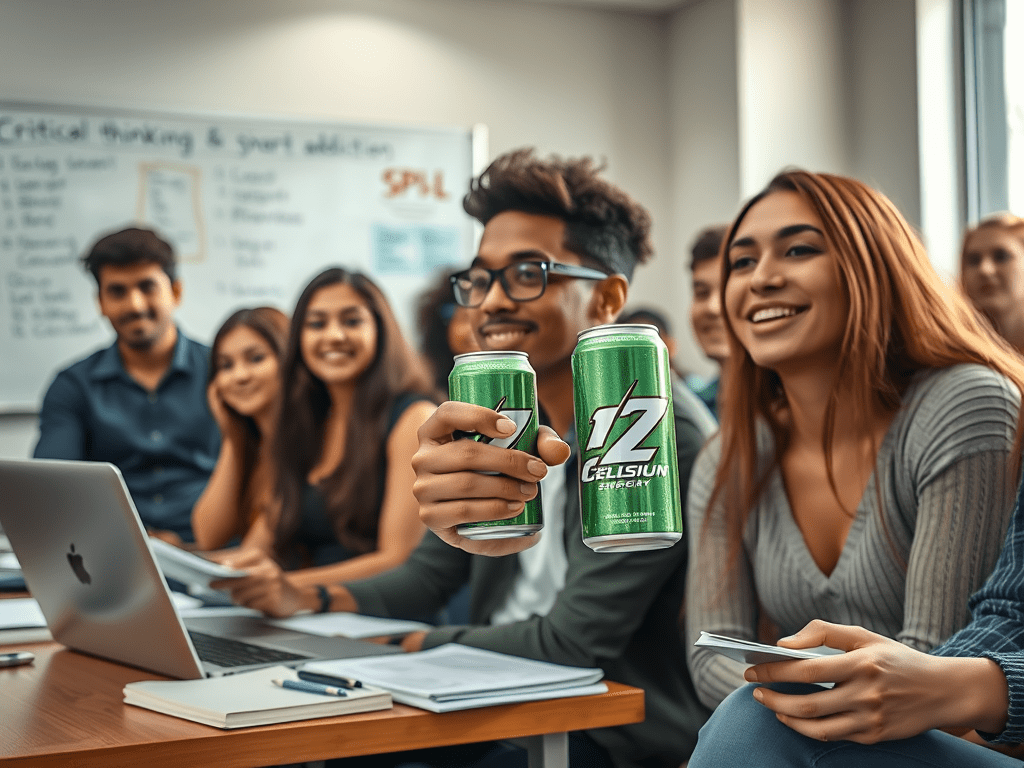
    Yesterday, in my college critical thinking class, I played a clip from Liza Treyger’s Night Owls set, where she spirals into a monologue about her addiction to animal videos. The class erupted in recognition—Treyger’s bit was less comedy, more collective confession. We then compared the insidious grip of food addiction to the death grip of smartphones, two habits nearly impossible to break because, unlike more glamorous vices, they’re baked into the daily human experience. You have to eat. You have to communicate. And thanks to Pavlovian conditioning, the mere buzz of a notification or the scent of a cheeseburger can hijack your willpower before you even know what hit you.

    At one point, I noticed one of my students—a professional surfer—had a can of Celsius energy drink perched on his desk like a talisman of modern endurance. I mentioned that my daughters practically mainline the stuff, to which he casually replied that he was transitioning to Accelerator, as if he were upgrading his addiction to something with a more explosive name. This led us down a delightful rabbit hole about the marketing committee responsible for naming that monstrosity, the raw aggression of Costco shoppers jostling for bulk energy drinks, and how smartphones are turning my students into exhausted zombies. They shared their chosen comfort foods, each confession tinged with equal parts nostalgia and shame.

    The discussion was sharp, lively, and deeply engaging. And yet, in a moment of brutal self-awareness, I admitted to them that I felt pathetic. Here I was, sitting among the chillest students in the world, having a profound conversation about addiction—and all I could think about was ditching class to speed down to Costco and buy a case of Accelerator. They cracked up, and we carried on dissecting addiction for their essay on weight management and free will.

    After thirty years of teaching in Los Angeles, I’m convinced I’ve won the academic lottery. There’s no better place to teach, no better students to challenge my tomfoolery, and no better city to fuel my own ridiculous, completely relatable compulsions.

  • TEACHING COLLEGE WRITING IN THE AGE OF OZEMPIFICATION

    TEACHING COLLEGE WRITING IN THE AGE OF OZEMPIFICATION

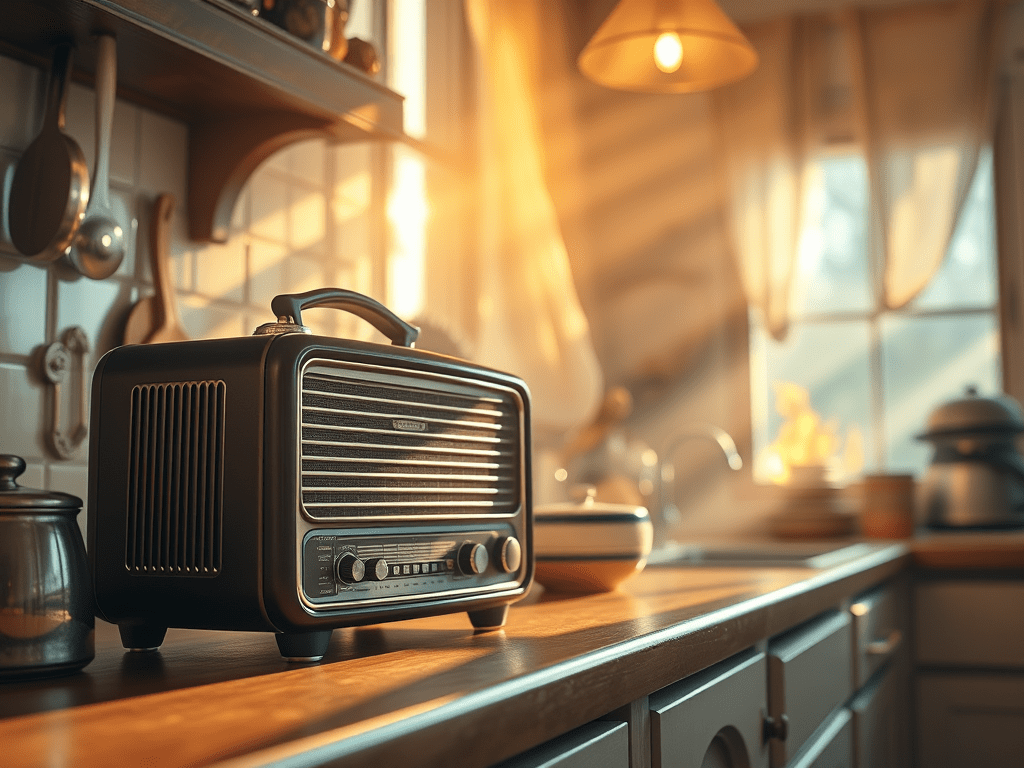
    The 2025 Los Angeles wildfires, blazing with apocalyptic fury, prompted me to do something I hadn’t done in years: dust off one of my radios and tune into live local news. The live broadcast brought with it not just updates but an epiphany. Two things, in fact. First, I realized that deep down, I despise my streaming devices—their algorithm-driven content is like an endless conveyor belt of lukewarm leftovers, a numbing backdrop of music and chatter that feels canned, impersonal, and incurably distant. Worst of all, these devices have pushed me into a solipsistic bubble, a navel-gazing universe where I am the sole inhabitant. Streaming has turned my listening into an isolating, insidious form of solitary confinement, and I haven’t even noticed.

    When I flipped on the radio in my kitchen, the warmth of its live immediacy hit me like a long-lost friend. My heart ached as memories of radio’s golden touch from my youth came flooding back. As a nine-year-old, after watching Diahann Carroll in Julia and Sally Field in The Flying Nun, I’d crawl into bed, armed with my trusty transistor radio and earbuds, ready for the night to truly begin. Tuned to KFRC 610 AM, I’d be transported into the shimmering world of Sly and the Family Stone’s “Hot Fun in the Summertime,” Tommy James and the Shondells’ “Crystal Blue Persuasion,” and The Friends of Distinction’s “Grazing in the Grass.” The knowledge that thousands of others in my community were swaying to the same beats made the experience electric, communal, alive—so unlike the deadening isolation of my curated streaming playlists.

    The fires didn’t just torch the city—they laid bare the fault lines in my craving for connection. Nostalgia hit like a sucker punch, sending me down an online rabbit hole in search of a high-performance radio, convinced it could resurrect the magic of my youth. Deep down, a sardonic voice heckled me: was this really about better reception, or just another pitiful attempt by a sixty-something man trying to outrun mortality? Did I honestly believe a turbo-charged radio could beam me back to those transistor nights and warm kitchen conversations, or was I just tuning into the static of my own existential despair?

    Streaming had wrecked my relationship with music, plain and simple. The irony wasn’t lost on me either. While I warned my college students not to let ChatGPT lull them into embracing mediocre writing, I had let technology seduce me into a lazy, soulless listening experience. Hypocrisy alert: I had become the very cautionary tale I preached against.

    Enter what I now call “Ozempification,” inspired by that magical little injection, Ozempic, which promises a sleek body with zero effort. It’s the tech-age fantasy in full force: the belief that convenience can deliver instant gratification without any downside. Spoiler alert—it doesn’t. The price of that fantasy is steep: convenience kills effort, and with it, the things that actually make life rich and rewarding. Bit by bit, it hollows you out like a bad remix, leaving you a hollow shell of passive consumption.

    Over time, you become an emotionally numb, passive tech junkie—a glorified NPC on autopilot, scrolling endlessly through algorithms that decide your taste for you. The worst part? You stop noticing. The soundtrack to your life is reduced to background noise, and you can’t even remember when you lost control of the plot.

    But not all Ozempification is a one-way ticket to spiritual bankruptcy. Sometimes, it’s a lifeline. GLP-1 drugs like Ozempic can literally save lives, keeping people with severe diabetes from joining the ranks of organ donors earlier than planned. Meanwhile, overworked doctors are using AI to diagnose patients with an accuracy that beats the pre-AI days of frantic guesswork and “Let’s Google that rash.” That’s Necessary Ozempification—the kind that keeps you alive or at least keeps your doctor from prescribing antidepressants instead of antibiotics.

    The true menace isn’t just technology—it’s Mindless Ozempification, where convenience turns into a full-blown addiction. Everything—your work, your relationships, even your emotional life—gets flattened into a cheap, prepackaged blur of instant gratification and hollow accomplishment. Suddenly, you’re just a background NPC in your own narrative, endlessly scrolling for a dopamine hit like a lab rat stuck in a particularly bleak Skinner box experiment.

    As the fires in L.A. fizzled out, I had a few weeks to prep my writing courses. While crafting my syllabus and essay prompts, Mindless Ozempification loomed large in my mind. Why? Because I was facing the greatest challenge of my teaching career: staying relevant when my students had a genie—otherwise known as ChatGPT—at their beck and call, ready to crank out essays faster than you can nuke a frozen burrito.

  • When We Had to Get Approval from the Attendance Priestess

    When We Had to Get Approval from the Attendance Priestess

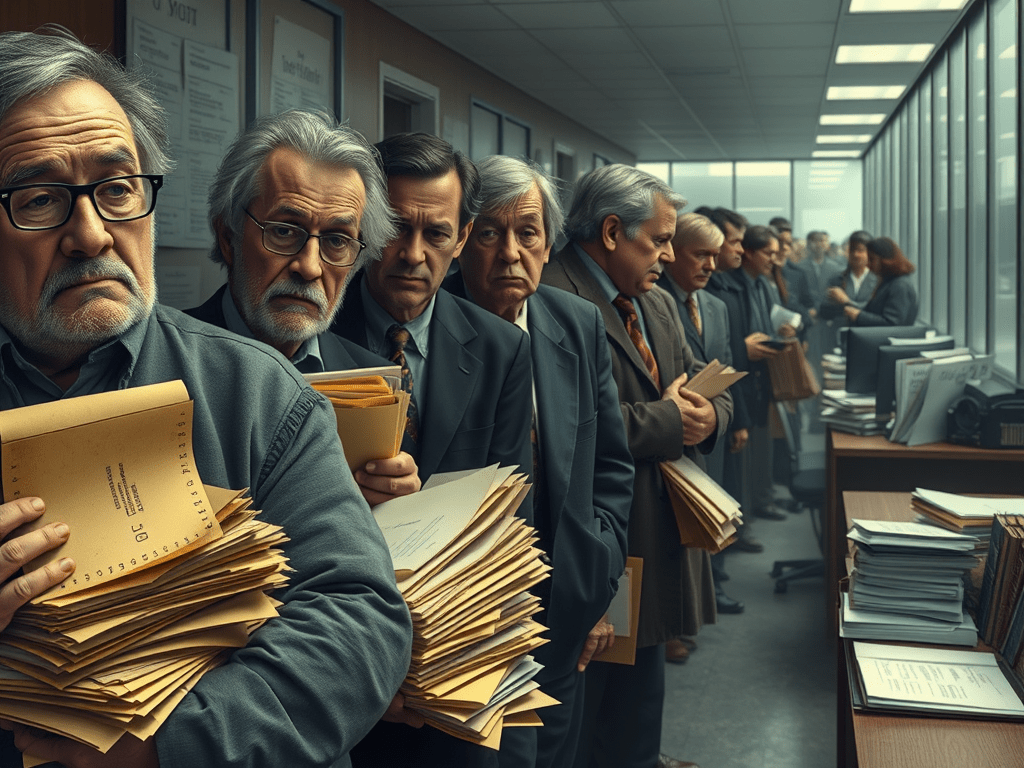
    I don’t miss the pre-digital education era when the semester was over but I still wasn’t finished. I had to drag myself to the campus during the semester break, lugging a mountain of paper that looked like it had survived the apocalypse.

    My stack of grades and attendance records—yellowed, dog-eared, and adorned with enough coffee stains and White-Out smudges to pass as a Jackson Pollock reject—was a bureaucratic nightmare in physical form. I found myself in line with a hundred other sleep-deprived, caffeine-fueled professors, each clutching their own messy masterpieces like they were carrying the Dead Sea Scrolls. The line outside the Office of Records was so long it could have served as an endurance test for Navy SEALs. To stave off starvation and existential dread, I had packed a comically oversized sack of protein bars and apples, as if I were preparing for a month-long siege rather than a simple bureaucratic ritual.

    There I was, supposed to be basking in the sweet, sweet nothingness of semester break, but instead, I was condemned to a gauntlet of waiting that made Dante’s Inferno look like a walk in the park. For what felt like hours, waited for the privilege of sitting at a table and enduring the laser-like glare of humorless bureaucrats who would scrutinize my records as if they were forensic experts analyzing evidence from a high-profile murder case.

    Once I finally managed to wade through the outdoor line, I advanced to the foyer for the second, even more soul-crushing phase of The Great Wait. Inside, rows of desks manned by expressionless drones awaited, each one peering over piles of grading records that seemed to stretch back to the dawn of civilization. Behind the staff of functionaries who examined the professors’ gradebooks were towers of file boxes stacked so precariously that a single sneeze could have transformed them into a cataclysmic eruption of dust and possibly asbestos.

    Eventually, I was summoned to one of the desks where an eagle-eyed Attendance Priestess scrutinized my records with the intensity of a customs officer suspecting I had smuggled contraband. She licked her fingertips with the solemnity of a high priestess preparing for a sacred ritual, only to cast me a look of such disdain you’d think I’d just handed her a wad of toilet paper instead of my gradebook.

    Finally, when the pinch-faced administrator deemed my records sufficiently unblemished and granted me the bureaucratic blessing to leave, it felt like I had just been handed the keys to the Pearly Gates. I then sprinted to my car unless she changed her mind and needed me to edit this or that. I never fully trusted her.

  • Perkatory

    Perkatory

    Every morning at 6 sharp, like some deranged caffeinated monk, I stagger to the kitchen, where the sacred rite of coffee-making begins. This isn’t just a routine—it’s a holy sacrament that grants me the powers of focus, confidence, and the kind of superhuman alertness that helps me work on one of my best-selling coffee table humor books or grade college essays. The taste of that bitter coffee kissed with a hint of milk and a drop of liquid stevia, is nothing short of ambrosia. By 7 a.m., after downing two 18-ounce cups, I’ve ascended to a higher plane—a realm where I’m not just a man, but a writing, essay-grading, piano-playing, kettlebell-swinging demigod. I go through my day, shower, lunch, nap—rinse and repeat—like a well-oiled machine of productivity, albeit one lugging around a trunkful of neuroses and the social skills of a startled raccoon.

    But there’s this nagging little itch I can’t quite scratch: coffee. It’s more than just a drink at this point; it’s an obsession. Do I love coffee too much? Maybe. Do I worship the ritual a bit too fervently? Definitely. Throughout the day, this thought keeps tiptoeing into my mind like a ninja with a vendetta: “I can’t wait till tomorrow morning when I can make coffee again.” And then, the existential kicker: “Is my life just one endless loop of killing time between coffee sessions?”

    Pat myself on the back: I’ve crossed into a special kind of hell—a hell I’ve christened Perkatory. It’s not quite purgatory, but it’s close. It’s that torturous stretch of time where I’m just existing, dragging myself through the mind-numbing hours between one glorious cup of coffee and the next. It’s a slow-burning obsession that has taken over my life, turning everything else into the dull, gray filler content I’d skip if life had a fast-forward button.

    I remember those bleak, pre-coffee days of my youth—days when Perkatory wasn’t even a thing. Back then, life was simpler, more innocent, and tragically devoid of the caffeinated highs I now chase with the zeal of a junkie trying to recapture that first, glorious hit. But let’s be honest: there’s no going back. Perkatory is here to stay, like that annoying roommate who never does the dishes and steals your leftovers. I’m stuck in this never-ending cycle of waiting, longing, and counting down the hours until I can get my next hit of that sweet, sweet java.

  • Transforming into Mope-a-saurus Rex

    Transforming into Mope-a-saurus Rex

    There’s ongoing debate over whether boomers willingly morph into Mope-a-saurus Rex—the scowling relic pacing his lawn and muttering about “kids these days”—or if the transformation is as unavoidable as hair loss and rising cholesterol. Maybe it’s some grim milestone on the aging checklist, or maybe it sneaks up, the natural side effect of realizing your cultural currency has expired while the youth livestream their way into the future. I’ll leave that existential puzzle for the philosophers to untangle.

    What I do know is that by the time Thanksgiving rolled around, I was still carrying the weight of grief like an overstuffed holiday plate. I’d said goodbye to my mother during the pandemic, standing outside a nursing home window and offering her love through a mesh screen, as if I were visiting someone in solitary confinement. Two years later, I watched my father—a proud infantryman in his day—fade to 130 pounds, his body surrendering to cancer. Since their passing, the world felt quieter, smaller, like someone had dimmed the lights without warning.

    So, when hosting Thanksgiving fell squarely on my plate, it wasn’t some Norman Rockwell fantasy. It was more like getting crushed by a baby grand piano dropped from the second floor. And instead of gracefully stepping aside, I just let it hit me—because honestly, moving felt like too much effort.

    The guest list wasn’t exactly daunting—just my perpetually single brother, whose dating apps seemed better at generating cautionary tales than romantic prospects, and two of my wife’s teacher friends, both middle school band directors still recovering from clarinet-induced PTSD. The conversation was polite, though it had all the flavor of plain oatmeal.

    Stuffed to the gills but somehow still shoveling pie like our lives depended on it, we trudged through the ritual of TV show recommendations. Each suggestion was delivered with the gravitas of a public service announcement—skip this series at your own peril. Apparently, failing to watch that one obscure, eight-part masterpiece would leave me culturally destitute, wandering through a desolate landscape devoid of punchlines and plot twists.

    Honestly, I enjoyed the company. The real villain of Thanksgiving wasn’t the guests—it was the dishes. The endless scrubbing that left my hands raw, the dishwashing marathon that stretched into eternity, the mountain of dirty plates multiplying like gremlins in the sink. That’s where the wheels came off.

    My wife, meanwhile, glided through the chaos like some kind of culinary sorceress, humming softly as she orchestrated the entire meal with the grace of a Michelin-starred maestro. She didn’t grumble. Not a single passive-aggressive sigh escaped her lips. She was the picture of serene competence.

    I, on the other hand, hovered around the kitchen like a useless NPC in a video game—occasionally moving a plate from table to sink and acting as though I’d just conquered Everest. At one point, I genuinely felt winded after rearranging the silverware. My contribution was so meager it felt performative, like a child pretending to be tired after “helping” Dad mow the lawn by pushing a plastic toy mower ten feet behind him.

    Somewhere between rinsing the roasting pan and glaring at the pile of silverware, it hit me—I was teetering on the edge of a Mope-a-saurus moment. The only thing preventing my full transformation was the vague sense of shame that my wife, who had just cooked for hours, wasn’t grumbling about the aftermath. That’s when you know you’re in trouble—when someone else’s superior competence and good cheer makes you feel like a defective appliance, sputtering through life with a flickering power cord and a weak motor.

    I’m such a fragile soul that after surviving the harrowing gauntlet of Thanksgiving dishes and the Herculean task of small talk, I felt entitled to a months-long convalescence—something involving soft blankets, intravenous fluids, and a team of specialists monitoring my vitals like I’d just summited Kilimanjaro in flip-flops. Surely, I had earned the right to collapse melodramatically onto a fainting couch and demand chicken soup by candlelight.

  • Before Snack Times

    Before Snack Times

    In the Before Snack Times of the early 70s, we didn’t have helicopter parents hovering over us, micromanaging our every move with a suffocating schedule of dance classes, gymnastics, karate, swim lessons, math tutors, writing coaches, soccer practices, chess clubs, computer coding, mindfulness meditation, and Ashtanga Yoga. We didn’t have smartphones tracking us like we were secret agents with microchips implanted in our necks. For the entire day, our parents had absolutely no clue where we were or what we were up to. We’d saunter off after breakfast, either on foot or aboard our trusty bicycles, and were expected to return only by dinner. During that endless stretch of freedom, we’d navigate through construction sites strewn with lumber, nails, electrical wires, and bottomless ditches, all of which screamed, “Adventure awaits!” We gravitated toward mud, streams, and rivers like moths to a flame, setting up wooden ramps to perform Evel Knievel-level stunts over bodies of water. The messier and more perilous the terrain, the more irresistible it became. These hazardous playgrounds were usually bordered by rusty barbed-wire fences and “Do Not Enter” signs, which not only failed to deter us but ignited our rebellious spirits to trespass with even more gusto. Inside these danger zones, we’d be chased by furious steers, territorial cows, and muscle-bound guard dogs. Occasionally, a disgruntled landowner would fire warning shots at us with a pellet gun, a token gesture that barely fazed us. In the ravines behind our homes, we crafted forts, swung from vines, ignited firecrackers, and leaped into piles of poison oak. We encountered black widows, rattlesnakes, bobcats, coyotes, and even the occasional mountain lion. After a day of flouting every conceivable health and safety code, we’d trudge home at night, our bodies caked in filth, bruises, and scratches. But our parents, bless their oblivious hearts, never inquired about our whereabouts or escapades. As long as we took a bath and cleaned up, they were content to feed us hearty helpings of turkey pot pies, meatloaf, chili, and tacos. They knew we needed the energy to wake up the next morning and dive headfirst into another day of mayhem. Back then, we had little time for snacking. Our days were filled with wilderness adventures, where our imaginations ran wild. This level of playfulness, chaos, and enchantment is as extinct as the dinosaurs in today’s Snack Age, where parents meticulously micromanage their children’s activities and pacify their appetites with chips, juice boxes, chocolate chip granola bars, fruit rolls, and Happy Meals.

  • DON’T GET TRAPPED IN A FLINTSTONES BACKGROUND LOOP

    DON’T GET TRAPPED IN A FLINTSTONES BACKGROUND LOOP

    In Arnold: The Education of a Bodybuilder, Arnold Schwarzenegger observes that bodybuilding is not merely a means toward self-improvement of the body. It opens other doors as well in business and other enterprises. I found that Arnold was right: My teenage years of toiling in the gym and amassing muscles finally paid off in 1979 when, at the tender age of seventeen, I landed the coveted position of bouncer at Maverick’s Disco in San Ramon, California. I was rolling in dough, earning a whopping ten cents over the minimum wage at three dollars an hour, while enjoying the luxurious perks of free soft drinks and peanuts. My nights were spent amidst a sea of polyester pantsuits and hairdos so heavily sprayed they constituted a legitimate fire hazard. I thought I had hit the jackpot, killing two birds with one stone: raking in the cash while strolling around the teenage disco, flexing my lats, and mingling with an endless parade of beautiful women. However, my dreams of disco glory were dashed when I encountered a cruel concept I’d later learn about in my college Abnormal Psychology class: the anhedonic response. This phenomenon numbs the brain to repeated stimulation, leading to a state of anhedonia, where happiness and pleasure are but distant memories. Thinking about anhedonia took me back to the moment when I stopped enjoying my beloved cartoon, The Flintstones. One day, as Fred and Barney drove their caveman car down the highway, I noticed the background—a series of trees, boulders, and buildings—repeating over and over. This revelation shattered the show’s illusion of reality, much like seeing how the sausage is made. Watching The Flintstones was never the same again. Maverick’s Disco was my Flintstones moment. Night after night, I watched customers flood the club with faces lit up with high expectations of excitement, glamour, and romantic connections. By closing time, those same faces were glazed over, tired, and disappointed. Yet, like clockwork, they returned the next weekend, ready to repeat the cycle. My life at the disco had become the monotonous wraparound background of The Flintstones. It was a sign that I needed to quit. Like Arnold Schwarzenegger, I needed to break out of a limited situation, spread my wings, and fly. 

  • WALTER CRONKITE AND FRANK SINATRA WERE THE TRUSTED PROPHETS OF MY YOUTH

    WALTER CRONKITE AND FRANK SINATRA WERE THE TRUSTED PROPHETS OF MY YOUTH

    At four years old, a pocket-sized philosopher in footie pajamas, I’d often find myself stationed in the living room like a tiny sentinel, transfixed by the glow of our hulking television set. The air was thick with the comforting aroma of my mother’s lasagna or spaghetti, a scent that promised warmth and stability, while my father and I tuned in to the evening sermon of Walter Cronkite. Cronkite, that square-jawed oracle of truth, delivered the news with the gravitas of a benevolent yet exhausted deity. His voice—measured, slightly weary—wrapped around the day’s events like a woolen blanket, equal parts reassurance and obligation, as necessary as a nightly dose of cod liver oil or a reluctant gulp of Ovaltine.

    But Cronkite, for all his journalistic divinity, did not hold the title of Supreme Voice in our household. That honor belonged to Frank Sinatra, whose velvet baritone floated from our Fischer Hi-Fi console stereo with the omnipresence of a household deity. Sinatra wasn’t merely a singer—he was a prophet, a sage in a sharp suit, the Cronkite of melody, issuing dispatches on love, loss, and longing with a conviction that made it clear: this was the stuff of life. His voice had the eerie authority of a celestial news anchor, forewarning me of adulthood’s looming weather patterns—storms of responsibility, gales of regret, hurricanes of heartbreak.

    At an age when my greatest concern should have been whether I got the last Nilla Wafer, I found myself drowning in premature nostalgia, gripped by the weight of Sinatra’s melancholic musings. “It Was a Very Good Year” hit my preschool psyche like an existential anvil—suddenly, I was an ancient soul trapped in a toddler’s body, debating whether to pair my Triscuits with a port wine cheddar spread or just give in and sip on some prune juice like a man resigned to his fate. Sinatra had me feeling so prematurely adult, I half-expected a cigar to materialize in my hand or to receive a personal invitation to an exclusive stockholder’s meeting.

    I wasn’t just waiting for dinner. I was reckoning with life’s grand metaphysical dilemmas, wrestling with the realization that the world was vast, unknowable, and, worst of all, drenched in longing. And yet, as I sat there, absorbing the gospel of Ol’ Blue Eyes, I couldn’t help but suspect that Sinatra had the answers—the ones I wouldn’t fully understand until I was old enough to toast my regrets with a stiff drink and a knowing smirk.

  • NOT THE GREATEST AMERICAN HERO

    NOT THE GREATEST AMERICAN HERO

    When I was a nineteen-year-old bodybuilder in Northern California, I stumbled into a gig at UPS, where they transformed the likes of me into over-caffeinated parcel gladiators. Picture this: UPS, the coliseum of cardboard where bubble wrap is revered like a deity. My mission? To load 1,200 boxes an hour, stacking them into trailer walls so precise you’d think I was defending a Tetris championship title. Five nights a week, from eleven p.m. to three a.m., I morphed into a nocturnal legend of the loading dock. Unintentionally, I shed ten pounds and saw my muscles morph into something straight out of a comic book—like the ones where the hero’s biceps could bench-press a car.

    I had a chance to redeem myself from the embarrassment of two previous bodybuilding fiascos. At sixteen, I competed in the Mr. Teenage Golden State in Sacramento, appearing as smooth as a marble statue without the necessary cuts. I repeated the folly a year later at the Mr. Teenage California in San Jose. I refused to let my early bodybuilding career be tarnished by these debacles. With a major competition looming, I noticed my cuts sharpening from the relentless cardio at UPS. Redemption seemed not only possible but inevitable.

    Naturally, I did what any self-respecting bodybuilder would do: I slashed my carbs to near starvation levels and set my sights on the 1981 Mr. Teenage San Francisco contest at Mission High School. My physique transformed into a sculpted masterpiece—180 pounds of perfectly bronzed beefcake. The downside? My clothes draped off me like a sad, deflated costume. Cue an emergency shopping trip to a Pleasanton mall, where I found myself in a fitting room that felt like a shrine to Joey Scarbury’s “Theme from The Greatest American Hero,” the ultimate heroic anthem of 1981.

    As I tried on pants behind a curtain so flimsy it could’ve been mistaken for a fogged-up windshield, I overheard two young women employees outside arguing about which one should ask me out. Their voices escalated, each vying for the honor of basking in my bronzed splendor. As I slid a tanned, shaved calf through a pants leg, I pictured the cute young women outside my dressing room engaged in a WWE smackdown right there on the store floor, complete with body slams and flying elbows, all for a dinner date with me. This was it—the ultimate validation of my sweat-drenched hours in the gym. And what did I do? I froze like a deer in headlights, donning an aloof expression so potent it was like tossing a wet blanket on a fireworks show. They scattered, muttering about my stuck-up demeanor, while I stood there in my Calvin Kleins, paralyzed by the attention I had so craved.

    For a brief, shining moment—from my mid-teens to my early twenties—I possessed the kind of looks that could make a Cosmopolitan “Bachelor of the Month” seem like the “Before” picture in a self-help book. But my personality? Stuck in the same developmental phase as a slab of walking protein powder with the social finesse of a half-melted wax figure.

    I had sculpted the body of a Greek god but inhabited it with the poise of a toddler wearing his dad’s shoes. In this regrettable state, I found that dozens of attractive women threw themselves at me, and I responded with the enthusiasm of a tax auditor on Xanax. Look past the Herculean exterior, and you’d find a hollow shell—a construction site abandoned mid-project, complete with rusted scaffolding and a sign that said, “Sorry, we’re closed.”

  • NOTHING TRIGGERED CHILDHOOD FOMO MORE THAN THE BRADY BUNCH

    NOTHING TRIGGERED CHILDHOOD FOMO MORE THAN THE BRADY BUNCH

    In the scorching summer of 1971, when I was nine and convinced that destiny owed me something spectacular, my family and four others carved out a rugged paradise on Mount Shasta. For two weeks, we fished, water-skied, dodged hornets, and lounged beneath the hypnotic drone of a massive battery-powered radio blasting The Doors, Paul McCartney, Carole King, and Three Dog Night. It should have been idyllic. It should have been.

    One morning, while the other families fried pancakes, prepped their fishing gear, and reveled in their pioneer fantasies, I was still wrapped in my sleeping bag, immersed in the most transcendent dream of my life. This wasn’t just a dream—it was a divine calling. I had met The Brady Bunch in downtown San Francisco, right beside a gleaming red cable car. Their smiles were radiant, practically angelic, and their body language said it all: I had been chosen. The adoption papers had already been signed in some conveniently located government office, and it was official—I was now a Brady.

    Questions swirled in my nine-year-old mind: Would I get my own room in their split-level suburban utopia, or would I have to bunk with Greg? More importantly, how soon would I appear on the show? Just as I was about to find out, reality crashed in like a wrecking ball. Mark and Tosh, my so-called friends, yanked me out of my blissful state, insisting it was time to go fishing. Fishing? Fishing?! I had just been welcomed into America’s most wholesome sitcom family, and now I was expected to slum it with worms and hooks?

    I sulked like a deposed prince. All day, I stomped around Mount Shasta, scowling like a kid exiled from paradise, my Brady Bunch dream stuck inside me like a splinter. I couldn’t tell anyone. What was I supposed to say? “Sorry, I can’t go fishing; I was about to move into a Technicolor utopia where the biggest problem is whether Marcia gets a date to the dance.” Yeah, that would go over well.

    “Get with the program!” my dad barked in his military tone. “We’re living in the wild!” The wild? I didn’t want the wild. I wanted avocado-green appliances, shag carpeting, and Alice the maid serving pork chops and applesauce. Instead, I got yellowjackets hovering over our food, a fishing pole, and a cold dose of reality. I was not a Brady, and the sting of it lingered longer than the mosquito bites.

    But here’s the punchline—my Brady Bunch fantasy wasn’t some rare stroke of delusion. Millions of kids across America were staring at that pastel-hued utopia, convinced that salvation came in the form of avocado-colored kitchens and polyester bell-bottoms. Creator Sherwood Schwartz was practically running a cult without knowing it—he received hundreds of letters from kids in broken homes, willing to renounce their possessions, hitchhike cross-country, and pledge fealty just for a shot at joining the sacred Brady fold. The show had become a sitcom Mecca, and nothing triggered childhood FOMO quite like realizing you weren’t born into that family.

    And here’s the cosmic joke—while we were glued to those 30-minute morality plays, dreaming of a world where even a busted nose got a feel-good resolution, the actors’ real lives were flaming train wrecks. Addiction, affairs, infighting—the Bradys weren’t living in a sitcom, they were trapped in a full-blown soap opera. Turns out, while America was fantasizing about swapping families, the actual Bradys probably wished they could swap out of their own.

    Should we have expected the actors to live the squeaky-clean fantasy they sold us? Of course not. Expecting that is like assuming Superman pays his taxes. Hollywood doesn’t run on truth—it runs on glossy façades, and The Brady Bunch was one of the greatest of them all. They spoon-fed us choreographed family bliss while drowning in off-screen dysfunction. And yet, we still crave that fantasy. Once you’ve had a taste of Brady-level wholesomeness, it’s like emotional junk food—artificial, saccharine, and utterly addictive.

    To this day, I still have dreams that I’m in that opening theme song, my face glowing in one of the squares, beaming at my Brady siblings. In that dream, I am forever young, forever safe, basking in the manufactured warmth of a world that never really existed.