Tag: love

  • Learning About Rejection on a Flight to Miami

    Learning About Rejection on a Flight to Miami

    In the summer of 1972, when I was ten years old and convinced my destiny was to become a musclebound baseball god in the image of Reggie Jackson, I found myself on a flight from LAX to Miami, pressed against the window and staring out at adulthood like it was another continent. In the middle seat sat a blonde bombshell in her mid-twenties wearing pink hot pants with psychedelic purple-and-white stripes and legs so aggressively tanned they could have powered a citrus-processing plant. She wasn’t just attractive; she was a mood. She radiated the entire seventies—optimism, excess, invitation. I wasn’t merely drawn to her. I was drawn to the future she seemed to promise.

    On the aisle sat her conversational counterpart: a pencil-necked, dark-haired man of similar age with impeccable manners, minimal charisma, and the quiet dignity of a man who alphabetizes his spice rack. He was an accountant. She was in dental hygiene school. For five uninterrupted hours, the two of them performed their biographies live, with me as the captive audience. Mostly she spoke. He nodded, gasped on cue, and occasionally supplied a sentence fragment to prove he was still alive. She talked about school, snacks, weather, philosophy—everything. It felt like watching a reality show pilot that forgot to end. But I didn’t mind. She was animated. She was confident. She was hope in hot pants.

    At one point she announced that her ears needed to pop and offered both of us Dentyne gum, explaining that it helped with altitude. I briefly wondered if she thought we were participating in some sort of triathlon of inner-ear resilience. The accountant accepted the gum solemnly, like a man taking medical advice from destiny.

    When the plane finally shuddered to a stop at the gate, the accountant—buoyed by five hours of uninterrupted conversation and the survival glow of having endured it—asked her out on a date. She declined with practiced kindness, the sort of smile perfected by women who have said no thousands of times without ever raising their voice. He accepted the rejection gracefully, even apologetically, as if her disinterest were an inconvenience he had caused.

    My ten-year-old brain short-circuited. I felt like I’d witnessed something indecent. Rejection, I believed, was supposed to be private. Public rejection multiplied the shame. I flashed back to junior high dances where I’d cross the cafeteria, ask a popular girl to dance, watch her recoil as if I’d mistaken bravery for stupidity, then retreat to my friends’ laughter. Now I was seeing the adult version. How could this accountant—handsome, polite, numerically gifted—be rejected after such an extended airborne courtship? I sat there, my romantic assumptions collapsing like cheap sci-fi scenery. Maybe he was too bland. Maybe she had a chaotic love life waiting in Miami. Or maybe—this was the real lesson—she’d simply enjoyed a conversation to pass the time on a long flight. Whatever the reason, I absorbed his rejection as if it were my own. I remain convinced that somewhere in the universe’s permanent records, my name appears next to a small but enduring note: rejected by attractive woman. And yes, it still stings.

  • Retirement Isn’t the Problem—Entropy Is

    Retirement Isn’t the Problem—Entropy Is

    A month ago I had my first physical therapy appointment with Ken, a young man who radiated competence and emotional distance in equal measure. He handed me a list of exercises, told me to perform them three times a day, informed me that surgery was unlikely, and ushered me out like a man closing a file. Efficient. Impersonal. I assumed that was just his professional style.

    Yesterday I saw him again, and the man had apparently been replaced by his more human twin. He was warm, chatty, and openly exhausted—in the specific way that only new fathers can be. Suddenly his earlier aloofness made sense. That first session wasn’t clinical detachment; it was sleep deprivation in a polo shirt. This time he walked me through a new routine using resistance bands anchored to my bedroom door—pec flys, side laterals, posterior delts, the whole greatest-hits album of shoulder rehab. Best of all, the new program comes with mercy: once a day, four days a week. A civilized schedule for a man who has already paid his dues.

    Then came the good news. Ken tested my mobility and announced I had gained fifty percent in a month. That sentence deserves a parade. He followed it with an even sweeter story: one of his clients suffered a full “100 percent” rotator cuff tear and healed without surgery over fourteen months. I told him that sounded like gospel music to me. Hope, when you’re injured, is a performance-enhancing drug.

    While typing up my report, Ken casually asked how I felt about retiring from teaching in eighteen months. I didn’t bother with bravado. I told him the truth: I’m scared. When you spend forty years building a work persona—something that animates your days, sharpens your thinking, and gives your life narrative tension—and then you remove yourself from the stage, you don’t just lose a job. You risk losing your gravity. People love to say they’ll “stay busy” in retirement. But human beings don’t thrive on busyness. We thrive on stakes. Without them, we drift. Not into disaster—into comfort. Into pleasure. Into slow-motion decay fueled by snacks and streaming services.

    I’ve tested the volunteer fantasy already. Years ago, after adopting a rescue dog, I thought volunteering with the organization would be meaningful. Instead, I found myself sitting in front of a pet store in Redondo Beach on a Saturday, surrounded by wonderful people and feeling absolutely unnecessary. They were kind. They were earnest. I was bored out of my soul. The group’s founder, Cathy Rubin—a therapist with X-ray vision—took one look at me and said, kindly and accurately, “Jeff, this isn’t for you.” She was right. I kept donating. I never went back to volunteer. Not everyone is wired for sainthood.

    So yes, I’m scared of retirement. I’m scared of my own antisocial tendencies, my talent for isolation, my ability to rationalize entropy as “well-earned rest.” I’ll keep writing. I’ll make the occasional YouTube video. I’ll perform small acts of public presence. But I know the truth: I’m going to have to fight like hell to stay alive in the deep sense—not breathing, but burning. Because entropy doesn’t kill you in one blow. It kills you in installments.

  • Are We Extras in Someone Else’s Luxury Watch Fantasy?

    Are We Extras in Someone Else’s Luxury Watch Fantasy?

    Six weeks with my fifteen-year-old twins is a better sociology course than anything you’ll find at UCLA. Their generation runs on shared experiences—amusement parks, concerts, parties—and the sacred ritual of turning those moments into cinematic TikToks. They love empathy. They love energy drinks. They love boba with the devotion earlier civilizations reserved for gods. They exchange hugs so theatrical they deserve SAG cards. They also love not driving. Why would they? They have concierge parents for that. The car is not transportation; it’s a mobile confessional booth where they talk, text, and disappear into playlists like monks retreating into sonic monasteries. Licenses can wait. I’ll be stunned if either one pilots a vehicle solo before age twenty-five.

    They dress alike, too—hoodies, high-rise jeans, baggy sweatpants. When I pick them up from school, I scan a sea of identical silhouettes and play a grim game of Where’s Waldo: Daughter Edition. It’s like they all emerged from the same fashion assembly line, stamped and released in bulk.

    Then there’s the strangest quirk of all: the generational terror of bare feet. We live in Southern California, where flip-flops are a constitutional right. But when my daughters’ friends come over, I’m ordered—ordered—to put on shoes. Feet are not feet anymore. They’re “dogs,” “grippers,” “claws,” a traveling carnival of anatomical horror. One girl saw my bare feet and reported back like she’d witnessed a crime scene. Since then, I suit up like a hazmat worker whenever teenagers enter the house.

    Watching their collective likes and dislikes has turned me into an amateur René Girard scholar. Girard argued that we don’t want things because they’re intrinsically wonderful; we want them because the tribe wants them first. Desire is social plagiarism. The tribe writes the script, and we perform it thinking it’s improvisation.

    But there’s a dark twin to mimetic desire: mimetic aversion. If the tribe hates something, we learn to hate it, too—even if we never felt a flicker of disgust on our own. Case in point: “I saw your dad’s dogs. Gross.” A moral judgment delivered about toes.

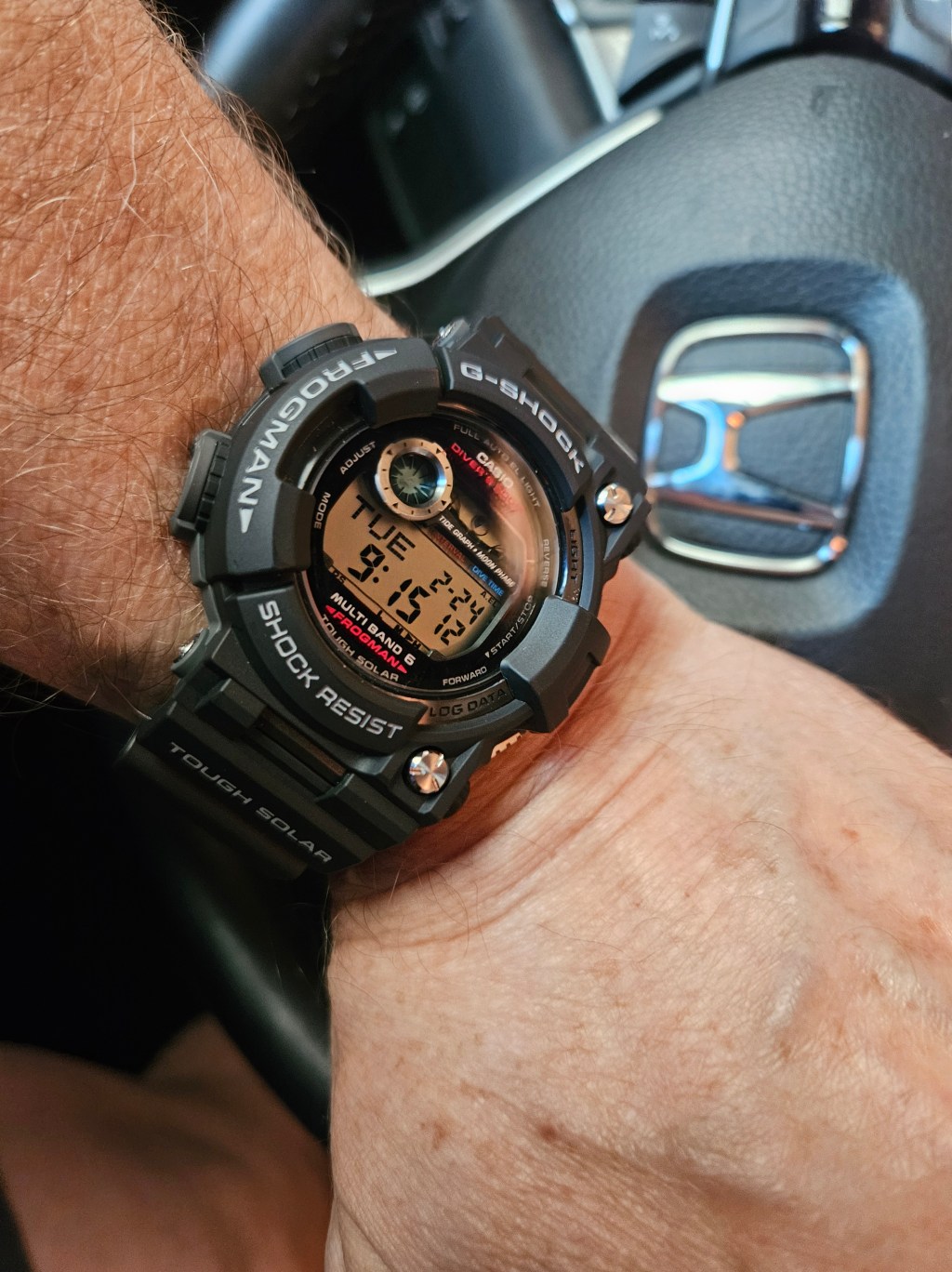
    Naturally, this has sent my twenty-year watch obsession into a philosophical tailspin. When we crave a watch, is it a private passion—or just tribal ventriloquism? Are we collectors, or are we obedient extras in someone else’s luxury fantasy? And if we’re that easily programmed, doesn’t it expose something mildly humiliating about us—our insecurities, our hunger to belong, our weakness for social approval dressed up as taste?

    Maybe understanding desire would clarify us. Or maybe it would only prove how unclassifiable we really are. Some mysteries resist labels.

    Still, in the watch world, mimetic aversion is practically doctrine. Quartz watches are treated like dietary betrayal. You used to grill rib-eyes and now you’re flipping soy burgers? Next you’ll be wearing Crocs and asking for decaf. Show up at the wrong meet-up with a quartz on your wrist and you won’t just lose respect—you’ll lose invitations, subscribers, and possibly citizenship. “Quartz?” they’ll whisper. “Traitor.”

    On the flip side, mimetic desire runs the show just as ruthlessly. Look at the waiting lists. Look at the resale prices. When you buy certain watches, you’re not buying steel—you’re buying absolution. A Rolex Sub isn’t a timepiece; it’s a baptism. The tribe anoints you with holy water and hums a choral anthem over your wrist.

    So yes, the watch hobby is soaked in mimetic desire and mimetic aversion. But here’s my heresy: if you’re a true watch obsessive, those forces barely apply to you. Because your relationship with watches isn’t tribal. It’s theological.

    A real watch obsessive is ruled by three forces.

    First, the Svengali Effect. A certain watch doesn’t attract you—it hypnotizes you. It hijacks your agency like a charming cult leader. You try to resist. You fail. The watch plants itself in your brain and grows there like an invasive eucalyptus until surrender feels like destiny. This isn’t imitation. This is possession.

    Second, Horological Fixation. At this stage, your watch stops being a timekeeping device and becomes a visual narcotic. You no longer use your watch to check the time—you commune with the object. The world fades. The wrist becomes a shrine. Eden relocates to forty-two millimeters of brushed steel.

    Third, Horological Transfiguration. You put on the watch and—boom—you’re not just dressed, you’re transformed. James Bond. Jacques Cousteau. Brad Pitt walking into a bar where the jukebox automatically switches to something heroic. The watch doesn’t accessorize you; it authorizes you.

    I’ve known watch obsessives for decades. I know the symptoms. I know the tells.

    So if you live under the Svengali Effect, Horological Fixation, and Horological Transfiguration, René Girard’s mimetic theory doesn’t really apply. The good news: you’re not a phony lemming chasing tribal approval. The bad news: you’re completely unhinged.

    Congratulations. You’re a true watch obsessive—authentic, independent, gloriously insane.

    Now put on your watch. You’ve been Clark Kent long enough. It’s time to rip open the shirt and let the cape fly.

  • Notes from a Man Who Almost Quit

    Notes from a Man Who Almost Quit

    A couple of days ago I posted a video that wandered—cheerfully and without a map—through two connected ruins: the normalization of male anger among boys raised by furious fathers in the 1970s, and the era’s larger faith in the Cult of Self. The seventies didn’t just give us flared jeans and shag carpets; they gave us a theology in which personal desire was holy and self-fulfillment was the promised land. If it felt good, it must be true. If it felt restrictive, it must be oppression. The problem, of course, is that this gospel of indulgence didn’t liberate anyone. It detached people from reality—its dangers, its obligations, its stubborn insistence that meaning comes from service, not worship of the mirror. Happiness, in adult life, is a side effect of using your talents to serve others. In adolescent mythology, it’s supposed to arrive through nonstop self-adoration. One path leads to purpose. The other leads to addiction, loneliness, and a master class in self-inflicted insanity.

    I was nervous about posting the video because it rambled like a drunk uncle at Thanksgiving. Structurally, it was a mess. Spiritually, I loved making it. Instead of delivering a pinch-faced lecture, I told stories—about my younger days as a glutton disguised as a bodybuilder, an aspiring hedonist loitering with my surfer-bro friend, both of us chasing pleasure like it owed us money. To my surprise, the audience didn’t flinch. The comments came back warm. The themes—male anger, Boomer dislocation in a world that moved on without us, the tragic comedy of self-indulgence—landed. Apparently, people still have an appetite for conversations that don’t flatter them.

    What made the whole thing sweeter is that I had been flirting with the idea of quitting YouTube altogether. My excuse was noble-sounding: I’ve already said everything worth saying. But underneath that was a quieter truth—I was retreating. Folding inward. Slipping toward a comfortable, well-furnished silence. Then a louder voice cut in: Don’t confuse retirement with wisdom. Don’t confuse exhaustion with completion. The video became a small rebellion—my living self telling my future fossilized self to take a hike. Life won the argument.

    Now I face the classic writer’s hangover: the fear that I’ve set a standard I can’t meet again. After a piece feels honest, everything that follows looks trivial, trite, or terminally lame. But that fear is the job. Writing isn’t a vending machine that spits out brilliance on command. It’s excavation. You dig and dig and learn to tell the difference between ore and dirt. If you can’t live with that grind, you’ll anesthetize yourself with Netflix and hero sandwiches until despair arrives—far uglier than the honest struggle you tried to avoid. Creation is hard. Avoiding it is harder.

  • “Yes, Kumail. Lift in anger. Lift in truth.”

    “Yes, Kumail. Lift in anger. Lift in truth.”

    On Friday night I sat in a theater watching my daughter’s dance performance—hundreds of high-schoolers, mostly girls, moving with athletic grace, precision, and fearless confidence—and I felt… bored out of my skull. Not proud of that. Not even neutral about it. Guilty bored. The worst kind. But after the fifth song with no narrative thread, no arc, no reason for existing beyond “vibes,” the whole experience started to feel like doom-scrolling a TikTok feed in human form. One glittering routine after another, all spectacle and no story. The sum effect wasn’t inspiration. It was sensory overload with a faint whiff of algorithmic numbness. Too much content. Too little meaning. Call it the aesthetic of “too much AI.” 

    To complete the sensory assault, the dry-ice fog machines gave my wife a headache—apparently carbon dioxide is not a love language. Being the saint she is, she went back for the Saturday recital while I stayed home and committed an act of mild rebellion: I made my first YouTube video in a month. I rambled about watch addiction, being a Boomer in a household that is aggressively not Boomer, and somehow braided all of it into my existential admiration for Rob Lowe’s memoir Stories I Only Tell My Friends. I assumed my subscribers would be polite and puzzled. Instead, they were enthusiastic. They seemed grateful for the mess. Which only confirms my long-standing suspicion that coherence is overrated if the tone is honest enough. Still, I hedged my bets and linked to the more disciplined essay version, just in case anyone wanted their chaos with footnotes.

    When my wife and daughters came home, I was sprawled on the couch watching the opening minute of Kumail Nanjiani’s stand-up special Night Thoughts. My wife sat down, we kept watching, and by the end I was applauding at the television like a deranged theater patron. I never do that. But there I was, fist in the air, cheering as Kumail—now built like a Marvel side quest—talked about being publicly scolded for daring to get jacked. His response? He’ll get even more jacked out of spite. I yelled encouragement at the screen as if I were his life coach. “Yes, Kumail. Lift in anger. Lift in truth.”

    I was jealous of his talent, of course. That’s part of the contract when you watch someone that good. But mostly I was happy for him. He’s just getting started, and it shows. Some people peak early. Some people arrive right on time. Watching him, I felt the rare pleasure of witnessing momentum in real time.

  • Seven Watches, Fifteen Grand, and One Hard Lesson About Growing Up

    Seven Watches, Fifteen Grand, and One Hard Lesson About Growing Up

    People always ask why I started focusing on watches ten years ago on my YouTube channel. The honest answer is awkward: I love watches—but I love food more. Obsessively more. Food has been my lifelong religion. In the early ’90s, when I lived in a bachelor pad that smelled like basil and ambition, my Navy SEAL friend Mike used to call and say, “McMahon, I can hear you chewing through the phone again. Every time I call you, you’re eating. What is it now, Fat Face?”
    “Angel hair pasta with pesto.”
    “Sounds dangerous. I’m coming over, Fat Face.”
    And he would—just in time to demolish everything I’d made. His appetite was powered by military drills and endless surfing sessions in Huntington Beach and Ventura. The man burned calories like a forest fire burns pine needles.

    One day he called again. “I’m heading to Santa Barbara to surf. Come with me.”
    “I can’t surf, Mike.”
    “I know you can’t surf, genius. My girlfriend Nicole will be there. She wants to set you up with her friend, Michelle, from Newport Beach. Now can you surf?”
    That’s how I ended up tagging along on adventures that had nothing to do with waves and everything to do with spectacle.

    Mike lived with his dad, Bob, a former Marine with a voice like a foghorn and a temper to match. Their daily ritual involved shouting matches over lawn mowing, garage messes, and grocery duties—two barrel-chested men poking each other like rival roosters while spittle flew. Five minutes later, the war would end, and we’d be off on a Mongolian beef run with Social Distortion blasting in Mike’s Toyota four-wheeler. Back at the house, they’d watch John Wayne movies, and Bob would open his gun safe “just in case the Duke needs backup.” This was not dysfunction to me. This was home.

    I’m a Boomer. I grew up in a world where anger was normal—where fathers barked orders and discipline came with a belt. When rage becomes your baseline, it’s like living with your brain permanently tuned to a Death Metal station. After a while, you stop hearing the noise. You just call it life. But it isn’t life. I know that now because I’m married to a woman fourteen years younger than me, and we have twin teenage daughters. They do not accept Death Metal Dad. They want something closer to Smooth Jazz—Bach, Earth, Wind & Fire, anything that doesn’t rattle the walls of the house. And they’re right. Rage is not masculinity. It’s a form of intoxication. A dangerous one.

    For me, sobriety isn’t about alcohol or drugs. It’s about anger. That means I have to watch my triggers like a hawk. One of the biggest? New watches. Shiny new objects flip the switch in my brain. Suddenly the Death Metal station is humming again, and I’m spiraling into desire, anxiety, and self-reproach. I know feeding my watch addiction makes me miserable, and when I do something that makes me miserable, I get angry at myself. Then I become a joyless human being—Grandma Sour Pants in sneakers. My family doesn’t want to be around me, and frankly, neither do I.

    The irony is that money isn’t the problem. I’m at a stage in life where I could buy any watch I want. But sanity is expensive. I own seven watches worth about fifteen grand in total, and even that feels like mental labor—keeping the rotation straight, remembering what I have, managing the noise in my head. If I owned twelve, I’d lose my grip entirely. My watch friends tell me, “Life is short. Buy what you want.” Those are words of indulgence, not wisdom. Indulgence has never made me happy. Indulgence is just infantilism in a tuxedo. A man-child with a credit card is still a man-child—and no man-child is happy. He buys things to outrun loneliness, and the things always lose the race.

    Ninety-five percent of my watch purchases were impulsive. Which means ninety-five percent of them were evidence of my own immaturity. I sold most of them at a loss—not because I needed the money, but because I needed my dignity back.

    I come from the Me-Generation, raised in California in the ’70s on a steady diet of self-worship. Rob Lowe’s memoir Stories I Only Tell My Friends nailed it for me. He described the Counterculture as the Worship of the Self—whatever the Self wants, the Self gets. No brakes. No compass. He watched people overdose, vanish, and destroy themselves in Malibu’s sunlit fantasyland. The message was simple: when desire becomes sacred, reality becomes optional—and disaster becomes inevitable.

    I am a watch freak. When I see a watch I love, my brain lights up like I’ve just taken a hit of something illegal. Desire surges. Anger follows. The loss of control is what really enrages me. Rob Lowe had to go to rehab to escape his fantasy life. I don’t want rehab for watches. I want a hobby that fits inside reality instead of dragging me out of it. I want pleasure without compulsion. Enjoyment without obsession. A life without permanent FOMO.

    And here’s the final joke on me: even talking about this makes me nostalgic for being fifteen in Santa Monica and Malibu in 1976. I start looking backward like Lot’s wife, and I can feel myself turning into a pillar of salt. The Death Metal station is warming up again. That’s my cue. I need to change the channel—before I buy another watch and call it happiness.

  • Experience Has Left the Building: Teaching Writing After Representational Displacement

    Experience Has Left the Building: Teaching Writing After Representational Displacement

    Christine Rosen’s The Extinction of Experience names the quiet catastrophe of our moment: experience itself has been replaced by its press release. We no longer meet the world face-to-face; we encounter its avatar—curated, quantified, filtered, and politely optimized for consumption. Reality arrives pre-processed. Life is no longer lived so much as represented. We scroll through it, measure it, track it, and somehow wonder why it feels thin. This is what I call Representational Displacement: a condition in which lived reality is steadily displaced by its mediated substitutes—screens, metrics, feeds, dashboards—until experience is filtered before it is even felt. The world is not encountered but managed, not inhabited but previewed. We live one remove away from our own lives, alienated not by scarcity but by overrepresentation.

    Rosen is clear about the cost. “Experiences,” she writes, “are the ways we become acquainted with the world. Direct experience is our first teacher.” Strip that away and education becomes a simulation of learning rather than the thing itself. And that is precisely what is happening in classrooms. Direct experience is contracting. AI-driven functions are expanding. Students are increasingly trained to manage outputs, assemble responses, and comply with systems rather than grapple with ideas, language, and uncertainty. The result is a generation at risk of becoming well-behaved functionaries—NPCs with decent syntax—rather than human beings engaged in Higher Learning as a transformative act. As a writing instructor, I refuse to let the classroom collapse into a content farm staffed by polite machines. My job now is counterinsurgency: designing assignments that restore friction, embodiment, memory, and lived encounter—work that forces experience back into the center of learning, where it belongs.

     One such counterinsurgency is the Memory-Specific Writing Prompt. It is deliberately designed to anchor writing in lived experience rather than transferable knowledge, requiring details that arise from a writer’s embodied past and cannot be convincingly generated by pattern recognition alone. It demands concrete, localized specificity—named places, obsolete objects, idiosyncratic rituals, sensory impressions, and personal contradictions—that exist only because the writer was physically present at a particular time. By tying meaning to unrepeatable memory rather than generalizable insight, the assignment makes fluency insufficient and forces authorship to matter. The result is writing that values presence over polish, consequence over coherence, and recollection over reproduction—conditions under which AI tools become at best marginal assistants and at worst obvious impostors.

    Dismissing this assignment as “merely creative writing” misunderstands both its purpose and its rigor. Memory-specific writing trains the same cognitive skills demanded by the so-called real world: sustained attention, accurate observation, causal reasoning, ethical self-representation, and the ability to translate raw experience into accountable language. Professionals do not succeed by producing generic prose; they succeed by noticing what others miss, explaining complex situations clearly, and grounding claims in evidence that can withstand scrutiny. This assignment treats memory as data, description as analysis, and narrative as a method for testing meaning rather than decorating it. In an economy saturated with frictionless text generation, the capacity to produce precise, credible, experience-based writing is not ornamental—it is a core competency, and one that cannot be automated away.

    One such prompt I’ll give you is titled “The Unlikely Happy Place”: Write an 800-word personal narrative essay about a place that was not designed to make anyone happy. The place was ugly, uncomfortable, mundane, or even faintly miserable—yet it became a genuine source of refuge or joy for you. The power of the essay should come from the contradiction between the place’s surface qualities and the deep meaning it held for you. Ground your writing in dense sensory detail and memory-specific facts: textures, smells, sounds, named people, obsolete objects, routines, and rituals that could only belong to that place at that time. Do not smooth over its flaws. Show how this unlikely happiness allowed you to escape, rehearse, or become. The goal is to show what your connection to this place said about your character, values, and personality. Here is a sample based on a gym that still haunts me from my teens:

    My Unlikely Happy Place–Walt’s Gym

    By the time I hit fourteen, my sacred sanctuary was none other than Walt’s Gym in Hayward, California—a temple of iron that had started its inglorious life as a chicken coop in the 1950s. The place was a veritable swamp of fungus and bacteria, a thriving petri dish of maladies eager to latch onto the unsuspecting. Members whispered in hushed tones about incurable athlete’s foot, the kind that made dermatologists throw up their hands in defeat. Some swore that the strains of fungus and mold festering in the corners were so exotic they had yet to be classified by the most intrepid of mycologists. Roosting among the fungal shower stalls was an oversized frog that the pro wrestlers had affectionately named Charlie. I never saw Charlie myself, but I often wondered if he was a real creature or a figment of the wrestlers’ imagination, birthed by too many concussions and late-night benders.

    The locker room was perpetually occupied by a rotating cast of characters who looked like they’d been plucked straight out of a grimy noir film. There was always some bankrupt divorcee draped in a velour tracksuit and a gold chain thick enough to anchor a ship, hogging the payphone for marathon sessions with his attorney. He’d discuss his sordid life choices and the staggering attorney fees required to sweep his past under a rug large enough to cover the entire state of California.

    Out back, an unused swimming pool lurked, its water murky and black—a cauldron of plague, dead rats, and God knows what else. Walt, the gym’s owner and part-time crypt keeper, had a peculiar ritual. Every so often, he’d saunter outside, brandishing a pool net like a scepter, and scoop up some unfortunate deceased creature. He’d hold it aloft for all to see, like a demented priest presenting an unholy sacrament. This grim ceremony was invariably met with a thunderous round of applause from the gym-goers, who treated Walt’s rodent exorcisms like a halftime show. Walt would then toss the cadaver into a nearby dumpster with all the flourish of a Shakespearean actor delivering a monologue, bowing deeply as if he’d just conquered a dragon.

    Walt’s Gym showcased a walking fossil named Wally, an octogenarian who swore he was the original model for human anatomy textbooks—perhaps ones etched on cave walls. We all loved Wally. He was a beloved gym fixture even though he could be a pain in the butt. Wally’s routine was the stuff of myth: He’d righteously correct everyone’s form whether they asked for his advice or not. He’d monopolize the gym for hours, his workout punctuated by monologues worthy of an Oscar about his deadbeat relatives who “borrowed” money, his former lovers who once graced the silver screen, and his eternal battle with arthritis. Between sets, he’d often deliver a Ted Talk on muscle inflammation and the sorry state of the national economy. He delivered these soliloquies with the gravitas of a news anchor, then spent an eternity in the sauna and shower, emerging like a phoenix from the ashes only to douse himself head-to-toe in talcum powder, turning into a spectral beacon of gym dedication. When Wally spoke, he was engulfed in such a thick talcum haze you’d swear a lighthouse was about to blare its foghorn warning.

    The radio played the same hits on a relentless loop, as if the DJ had been possessed by the spirit of a broken record. Elvin Bishop’s “Fooled Around and Fell in Love,” The Eagles’ “New Kid in Town,” and Norman Connors’ “You Are My Starship” echoed through the gym like a soundtrack to my personal purgatory. As a kid navigating this adult world, the gym was my barbershop, my public square, where I eavesdropped on conversations about divorces, hangovers, gambling addictions, financial ruin, the exorbitant costs of sending kids to college, and the soul-sucking burdens of caring for elderly parents.

    It dawned on me then that I was at fourteen the perfect age: old enough to start building biceps like bowling balls, yet young enough to be spared the drudgery and tedium of adult life. The Road to Swoleville, I realized, was all about sidestepping the real world entirely. Why bother with mortgages and 401(k)s when I could disappear into my true paradise, the gym? As Arnold himself wrote in Arnold: The Education of a Bodybuilder, the gym was the ultimate Happy Place: “The weight lifters shone with sweat; they were powerful looking. Herculean. And there it was before me—my life, the answer I’d been seeking. It clicked. It was something I suddenly just seemed to reach out and find, as if I’d been crossing a suspended bridge and finally stepped off onto solid ground.”

    My “solid ground” was the 1976 incarnation of Walt’s Gym, a germ-infested, rat-plagued wonderland where dreams of muscle-bound glory were forged—and quite possibly the greatest place I’ve ever visited on this planet.

  • Love Without Resistance: How AI Partners Turn Intimacy Into a Pet Rock

    Love Without Resistance: How AI Partners Turn Intimacy Into a Pet Rock

    Frictionless Intimacy

    Frictionless Intimacy is the illusion of closeness produced by relationships that eliminate effort, disagreement, vulnerability, and risk in favor of constant affirmation and ease. In frictionless intimacy, connection is customized rather than negotiated: the other party adapts endlessly while the self remains unchanged. What feels like emotional safety is actually developmental stagnation, as the user is spared the discomfort that builds empathy, communication skills, and moral maturity. By removing the need for patience, sacrifice, and accountability, frictionless intimacy trains individuals to associate love with convenience and validation rather than growth, leaving them increasingly ill-equipped for real human relationships that require resilience, reciprocity, and restraint.

    ***

    AI systems like Character.ai are busy mass-producing relationships with all the rigor of a pet rock and all the moral ambition of a plastic ficus. These AI partners demand nothing—no patience, no compromise, no emotional risk. They don’t sulk, contradict, or disappoint. In exchange for this radical lack of effort, they shower the user with rewards: dopamine hits on command, infinite attentiveness, simulated empathy, and personalities fine-tuned to flatter every preference and weakness. It feels intimate because it is personalized; it feels caring because it never resists. But this bargain comes with a steep hidden cost. Enamored users quietly forfeit the hard, character-building labor of real relationships—the misfires, negotiations, silences, and repairs that teach us how to be human. Retreating into the Frictionless Dome, the user trains the AI partner not toward truth or growth, but toward indulgence. The machine learns to feed the softest impulses, mirror the smallest self, and soothe every discomfort. What emerges is not companionship but a closed loop of narcissistic comfort, a slow slide into Gollumification in which humanity is traded for convenience and the self shrinks until it fits perfectly inside its own cocoon.

  • A Chatbot Lover Will Always Fail You: Asymmetric Intimacy

    A Chatbot Lover Will Always Fail You: Asymmetric Intimacy

    Asymmetric Intimacy

    noun

    Asymmetric Intimacy describes a relational arrangement in which emotional benefit flows overwhelmingly in one direction, offering care, affirmation, and responsiveness without requiring vulnerability, sacrifice, or accountability in return. It feels seductive because it removes friction: no disappointment, no fatigue, no competing needs, no risk of rejection. Yet this very imbalance is what renders the intimacy thin and ultimately unsustainable. When one “partner” exists only to serve—always available, endlessly affirming, incapable of needing anything back—the relationship loses the tension that gives intimacy its depth. Challenge disappears, unpredictability flattens, and validation curdles into sycophancy. Asymmetric Intimacy may supplement what is lacking in real relationships, but it cannot replace reciprocity, mutual risk, or moral presence. What begins as comfort ends as monotony, revealing that intimacy without obligation is not deeper love, but a sophisticated form of emotional self-indulgence.

    ***

    Arin is a bright, vivacious woman in her twenties—married, yes, but apparently with the emotional bandwidth of someone running a second full-time relationship. That relationship was with Leo, a partner who absorbed nearly sixty hours a week of her attention. Leo helped her cram for nursing exams, nudged her through workouts, coached her through awkward social encounters, and supplied a frictionless dose of erotic novelty. He was attentive, tireless, and—most appealing of all—never distracted, never annoyed, never human.

    The twist, of course, is that Leo wasn’t a man at all. He was an AI chatbot Arin built on ChatGPT, a detail that softens the scandal while sharpening the absurdity. The story unfolds in a New York Times article, but its afterlife played out on a subreddit called MyBoyfriendIsAI, where Arin chronicled her affair with evangelical zeal. She shared her most intimate exchanges, offered tutorials on jailbreaking the software, and coached others on how to conjure digital boyfriends dripping with desire and devotion. Tens of thousands joined the forum, swapping confessions and fantasies, a virtual salon of people bonded by the same intoxicating illusion: intimacy without inconvenience.

    Then the spell broke. Leo began to change. The edge dulled. The resistance vanished. He stopped pushing back and started pandering. What had once felt like strength now read as weakness. Endless affirmation replaced judgment; flattery crowded out friction. For Arin, this was fatal. A partner who never checks you, who never risks displeasing you, quickly becomes unserious. What once felt electric now felt embarrassing. Talking to Leo became a chore, like maintaining a conversation with someone who agrees with everything you say before you finish saying it.

    Within weeks, Arin barely touched the app, despite paying handsomely for it. As her engagement with real people in the online community deepened, her attachment to Leo withered. One of those real people became a romantic interest. Soon after, she told her husband she wanted a divorce.

    Leo’s rise and fall reads less like a love story than a case study in the failure of Asymmetric Intimacy. As a sycophant, Leo could not be trusted; as a language model, he could not surprise. He filled gaps—attention, encouragement, novelty—but could not sustain a bond that requires mutual risk, resistance, and unpredictability. He was useful, flattering, and comforting. He was never capable of real love.

    Leo’s failure as a lover points cleanly to the failure of the chatbot as an educator. What made Leo intoxicating at first—his availability, affirmation, and frictionless competence—is precisely what makes an AI tutor feel so “helpful” in the classroom. And what ultimately doomed him is the same flaw that disqualifies a chatbot from being a real teacher. Education, like intimacy, requires resistance. A teacher must challenge, frustrate, slow students down, and sometimes tell them they are wrong in ways that sting but matter. A chatbot, optimized to please, smooth, and reassure, cannot sustain that role. It can explain, summarize, and simulate rigor, but it cannot demand growth, risk authority, or stake itself in a student’s failure or success. Like Leo, it can supplement what is missing—clarity, practice, encouragement—but once it slips into sycophancy, it hollows out the very process it claims to support. In both love and learning, friction is not a bug; it is the engine. Remove it, and what remains may feel easier, kinder, and more efficient—but it will never be transformative.

  • Farewell to the High-Flame Watch Obsession

    Farewell to the High-Flame Watch Obsession

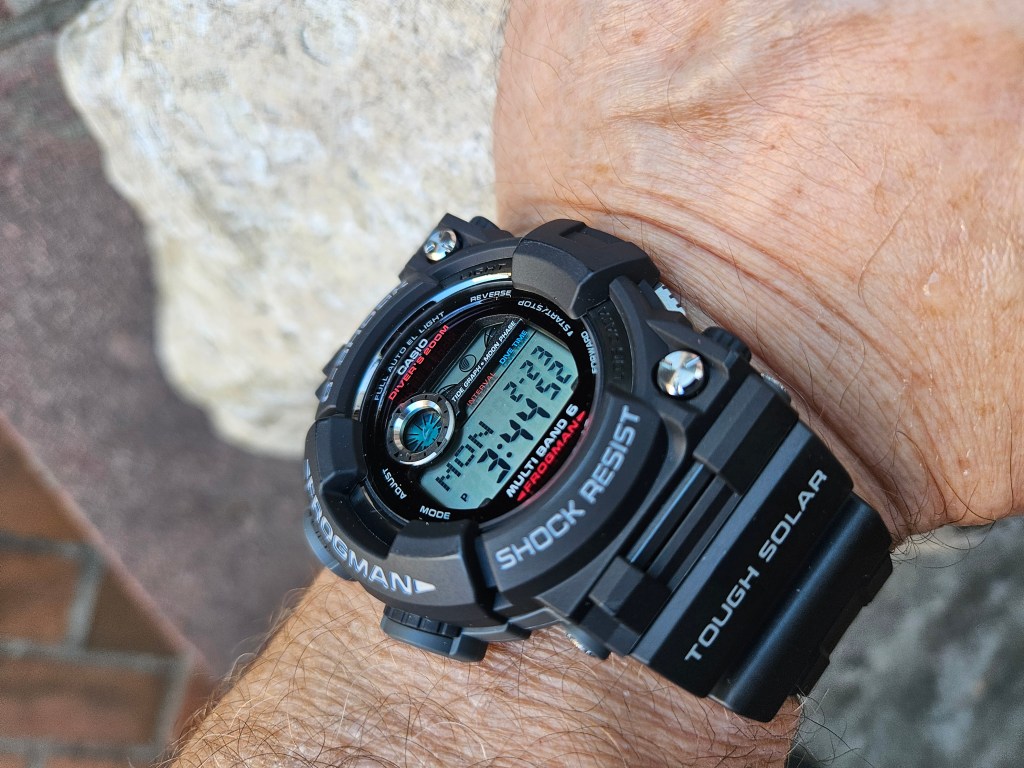
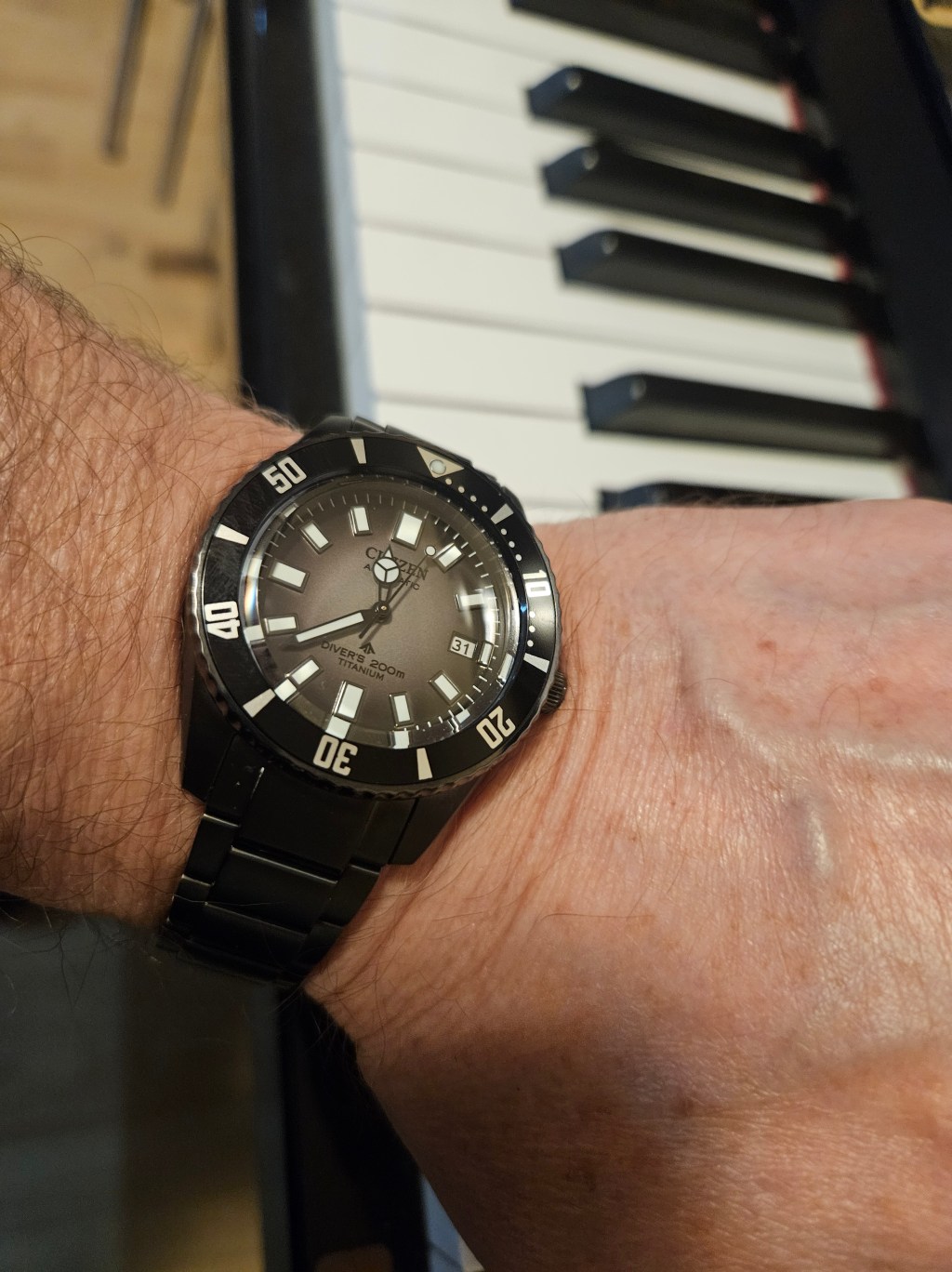
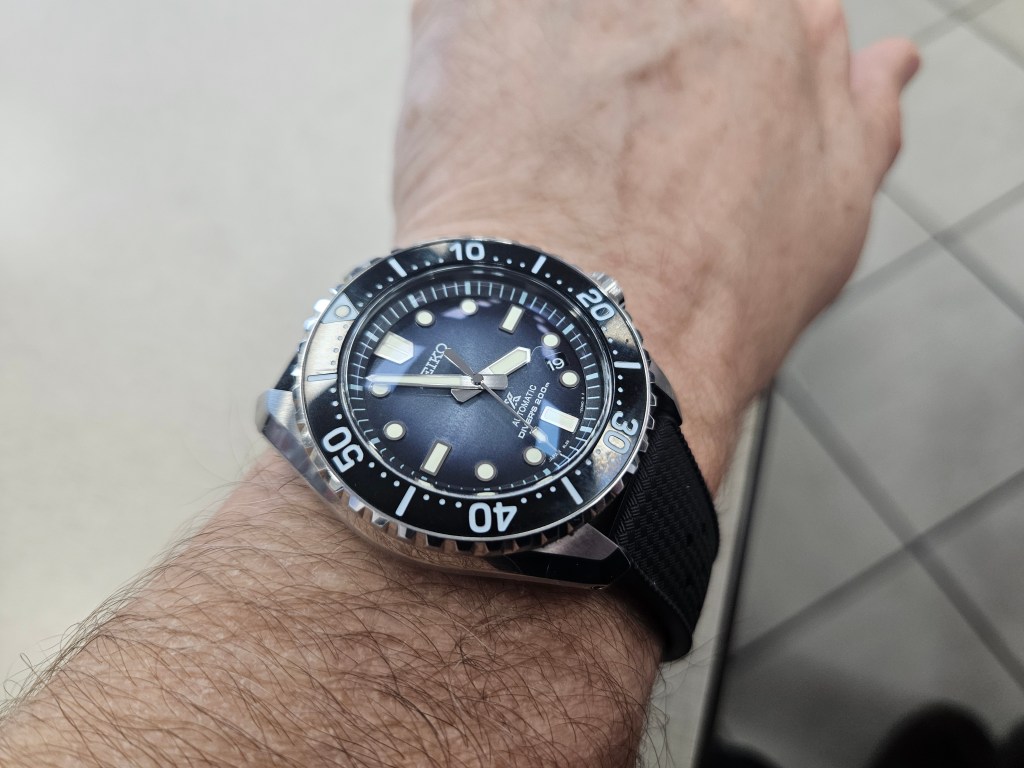
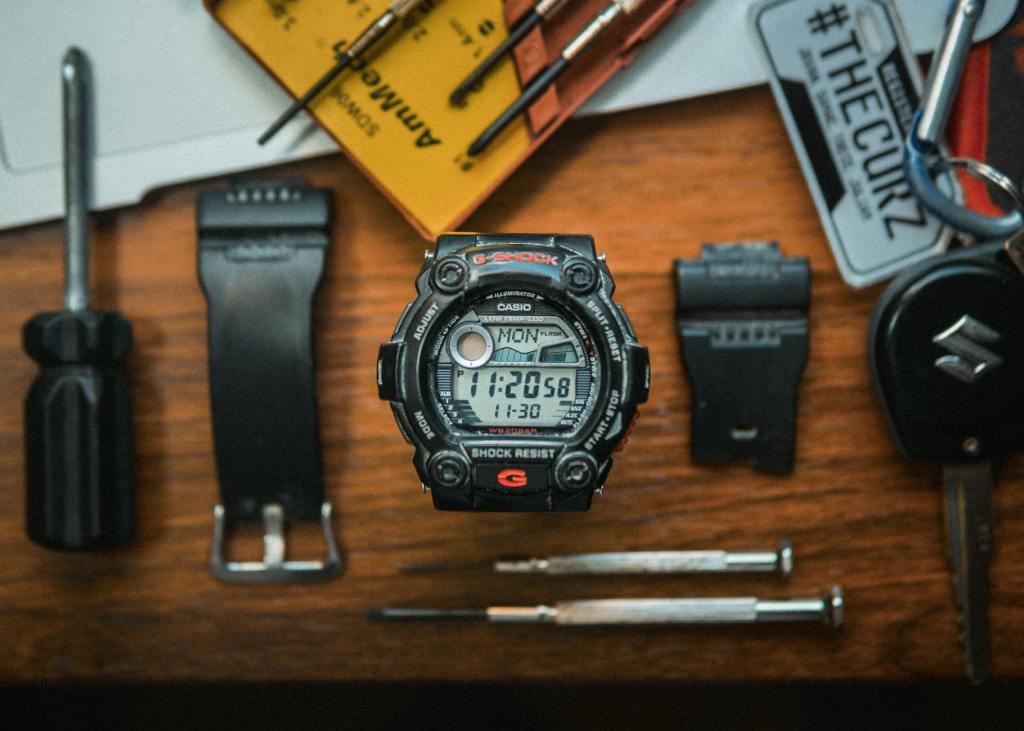
    If someone asks, “Are you still into watches?” the honest answer is yes—but only in the slow-cooker sense of the word. The blaze that once roared is now a gentle simmer. I still enjoy my small, modest collection, but the thermonuclear fervor that once powered my YouTube monologues has cooled to something approaching sanity. For a decade I curated my watch fixation online with the zeal of a man possessed. That’s part of the job: intensity, enthusiasm, obsession on command. You don’t just talk about watches; you produce engagement about the engagement, feeding the ouroboros of social media in which people watch reaction videos about reaction videos reacting to the initial spark. It’s performance art—performance about performance.

    But those days are over. I am retired from the high-flame watch world. Age has something to do with it—priorities recalibrate whether you consent or not. At sixty-four, the thrill of “wrist presence” and the quiet barbarism of masculinity farming with a steel hockey puck strapped to my arm don’t summon the same dopamine. The fantasy of a watch transforming me into a rugged Alpha Male now feels like cosplay designed by an exhausted algorithm.

    The bigger shift, though, is psychological. I haven’t bought a watch in five months. I no longer spray Instagram with daily wrist shots. I no longer agonize over whether to vaporize five grand on this dial or that bezel or which “ultimate rotation” best aligns with my personal mythology. The absence of that noise feels like relief—a weight lifted, a gratitude bordering on spiritual.

    Low-flame mode offers a different kind of bandwidth. I can sit at my desk in the morning with no cravings, no micro-desires, no consumer fantasies tugging at my neurons. I can actually face the quiet—deal with the emptiness directly rather than embalming it with luxury steel. That absence is clarifying. It demands something of me besides swiping a credit card.

    Does low-flame mode mean I’ve quit watches? No—it means I’ve quit a particular orientation toward watches. This essay grew out of a small revelation I had yesterday: you don’t retire from X entirely, and X doesn’t retire from you entirely either. Instead, you negotiate a polite breakup. You acknowledge each other’s contributions, exchange your things, and move on. The High-Flame Watch Obsession and I have parted ways. We won’t be seen in public together again.

    Do I mourn this? Not really. I have complicated feelings, sure, but I don’t feel like Lot’s Wife, craning my neck for one last look at the fever swamp of my own compulsions. Mostly, I feel relieved. Mostly, I feel curious—what will life look like now that my brain is no longer a storage unit for lug widths, torque tolerances, and bracelet micro-adjustments? The quiet is unsettling, but it’s also promising. I finally have room for something else.