Tag: mental-health

  • Screen Bilinguals and Screen Natives

    Screen Bilinguals and Screen Natives

    Screen Bilinguals

    noun

    Screen Bilinguals are those who remember Pre-Screen Life and Post-Screen Life and can mentally translate between the two. They know what it felt like to disappear into a book without notifications, to wander outdoors without documenting the evidence, and to experience friendship without performance. They may use screens constantly now, but they retain an embodied memory of undistracted attention and uncurated presence. That memory gives them perspective—and often a quiet grief.

    Screen Natives

    noun

    Screen Natives are those who never lived outside the Attention Economy. They have no experiential baseline for pre-digital reading, boredom, or intimacy. For them, screens are not tools but atmosphere. Experience arrives already framed, shareable, and optimizable. Connection is inseparable from capture, and attention has always been contested territory. What Screen Bilinguals experience as loss, Screen Natives experience as reality itself—neither chosen nor questioned, simply inherited.

    ***

    I am reasonably sure that some of the best memories of my pre-screen adolescence would not survive contact with smartphones and social media. They required a kind of reckless presence that today’s technology quietly sabotages. Every summer from 1975 to 1979, my family—along with ten others—made a pilgrimage to Point Reyes Beach, where the Johnsons’ oyster farm supplied what appeared to be bottomless truck beds of shellfish. From noon until sunset, hundreds of us devoured obscene quantities of barbecued oysters dripping with garlic butter and Tabasco, flanked by thousands of loaves of garlic bread and slabs of chocolate cake so moist they bordered on indecent. Ignoring cheerful warnings about nearby great white sightings, we periodically sprinted into the Pacific, then staggered back to the picnic tables, pecs gleaming with saltwater, to resume eating like mythological beings. In the summer of ’78, I told my parents to leave without me and caught a ride home in the bed of a stranger’s truck. Stuffed beyond reason, convinced I was some minor sea god, I lay under the stars with a gang of people I’d met hours earlier, trading delirious stories and watching the universe spin. No one documented a thing. We didn’t track calories, curate moments, or worry about time. Life simply happened to us, and that was enough.

    Those memories now trouble me. Were they the accidental privilege of being screen-bilingual—raised before devices trained us to perform our lives in public? Does being a screen native quietly thin experience itself by insisting everything be captured, filtered, and offered up for consumption? Free from the reflex to mediate, I could disappear into the moment without irony or self-surveillance. Had I grown up with screens, the day would have demanded angles, captions, and metrics. The magic would have curdled under the pressure to perform. The idea that every experience must double as content strikes me as a curse—a low-grade exile from real life, where spontaneity dies not from malice but from documentation.

  • Algovorous

    Algovorous

    Algovorous
    adjective

    Characterized by habitual consumption of algorithmically curated stimuli that prioritize engagement over nourishment. An algovorous person feeds continuously on feeds, prompts, and recommendations, mistaking stimulation for insight. Attention erodes, resilience weakens, and depth is displaced by endless, low-friction intake.

    ***

    You don’t know any other world because you were born inside the Attention Economy. There was no “before” for you—no baseline against which to compare the glow of screens to a quieter, unmonetized mental life. So let me tell you something grim about the system you’ve inherited: it runs on engagement at all costs. Not truth. Not wisdom. Not even pleasure in any deep sense. Just engagement. As Jaron Lanier warns in Ten Arguments for Deleting Your Social Media Account Right Now, the economy works best when it bypasses your higher faculties and plugs directly into the brain’s most primitive circuitry. This is not the part of you that reasons, imagines, or aspires. It’s the reptile brain—the swampy basement where jealousy, envy, FOMO, and schadenfreude slosh around, waiting to be poked with a stick. Stimulate that region long enough and you don’t become thoughtful or fulfilled. You become reactive, agitated, and strangely hungry for more of the same poison.

    The platforms know this. A successful YouTuber doesn’t need insight; he needs targets. Hence the booming genre of downfall porn: endless autopsies of other people’s collapses. Take bodybuilding YouTube, a carnival of oiled torsos and moral rot. Greg Doucette, with his two-and-a-half million subscribers, has perfected the form. His brand is not training wisdom so much as public execution. He thrives on predicting the imminent demise of rival influencers, especially Mike Israetel, whose Renaissance Periodization channel—approaching four million subscribers—shows no interest in collapsing on schedule. That hasn’t stopped Doucette from announcing the funeral. He does it in a tank top, veins bulging, traps flared, voice pitched to a squeaky fury, filleting his subjects like a caffeinated fishmonger. The performance is manic, theatrical, and wildly successful. Rage, it turns out, scales beautifully.

    I’m not a psychiatrist, but you don’t need a medical degree to recognize a toxic loop when you see one. Mental health professionals would likely agree: this is dopamine farming. The audience gets a chemical jolt from watching others stumble while doing nothing to improve their own lives. It’s adrenaline for the bored, envy with a subscription button. In the Attention Economy, toxicity isn’t a bug—it’s the feature. The viewer doesn’t flourish; the algorithm does. You sit there, immobilized, a butterfly pinned to corkboard entertainment, while someone else’s revenue graph climbs. That is the deal on offer: your attention in exchange for distraction from the harder work of becoming a person.

  • Farewell to the High-Flame Watch Obsession

    Farewell to the High-Flame Watch Obsession

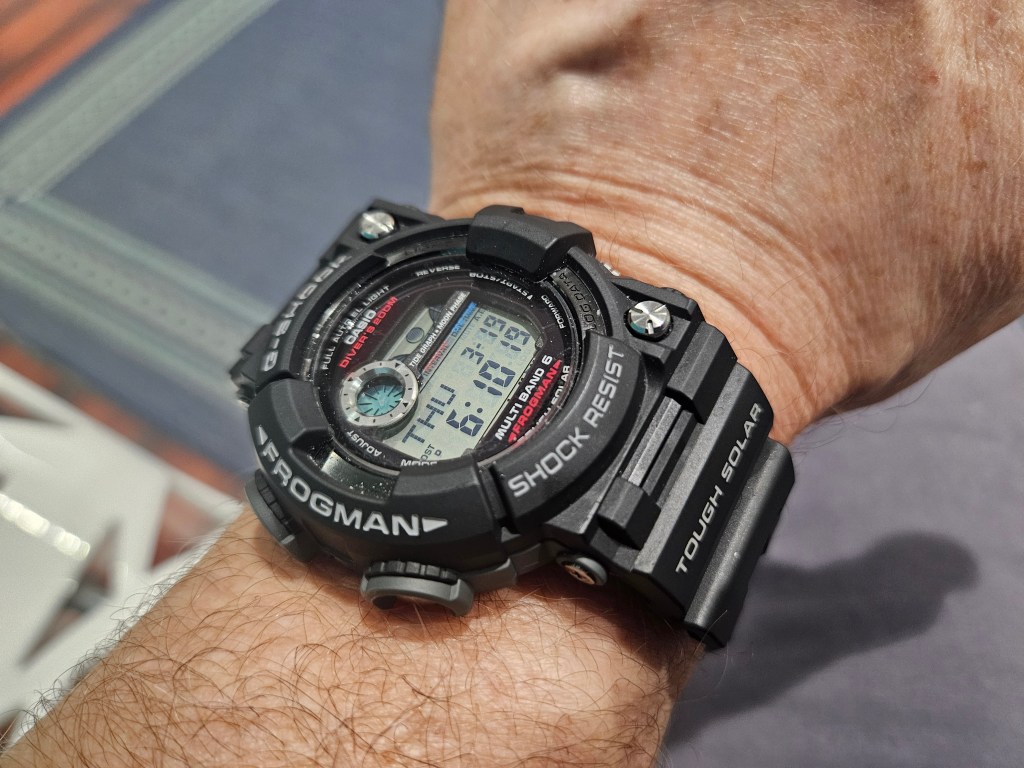
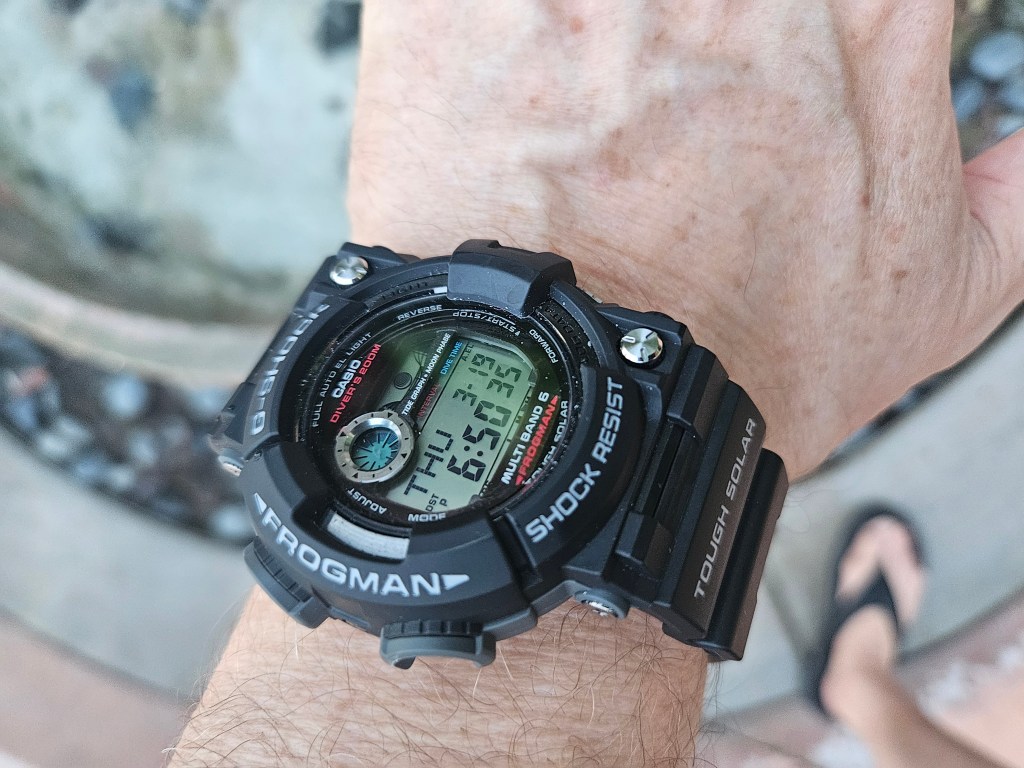
    If someone asks, “Are you still into watches?” the honest answer is yes—but only in the slow-cooker sense of the word. The blaze that once roared is now a gentle simmer. I still enjoy my small, modest collection, but the thermonuclear fervor that once powered my YouTube monologues has cooled to something approaching sanity. For a decade I curated my watch fixation online with the zeal of a man possessed. That’s part of the job: intensity, enthusiasm, obsession on command. You don’t just talk about watches; you produce engagement about the engagement, feeding the ouroboros of social media in which people watch reaction videos about reaction videos reacting to the initial spark. It’s performance art—performance about performance.

    But those days are over. I am retired from the high-flame watch world. Age has something to do with it—priorities recalibrate whether you consent or not. At sixty-four, the thrill of “wrist presence” and the quiet barbarism of masculinity farming with a steel hockey puck strapped to my arm don’t summon the same dopamine. The fantasy of a watch transforming me into a rugged Alpha Male now feels like cosplay designed by an exhausted algorithm.

    The bigger shift, though, is psychological. I haven’t bought a watch in five months. I no longer spray Instagram with daily wrist shots. I no longer agonize over whether to vaporize five grand on this dial or that bezel or which “ultimate rotation” best aligns with my personal mythology. The absence of that noise feels like relief—a weight lifted, a gratitude bordering on spiritual.

    Low-flame mode offers a different kind of bandwidth. I can sit at my desk in the morning with no cravings, no micro-desires, no consumer fantasies tugging at my neurons. I can actually face the quiet—deal with the emptiness directly rather than embalming it with luxury steel. That absence is clarifying. It demands something of me besides swiping a credit card.

    Does low-flame mode mean I’ve quit watches? No—it means I’ve quit a particular orientation toward watches. This essay grew out of a small revelation I had yesterday: you don’t retire from X entirely, and X doesn’t retire from you entirely either. Instead, you negotiate a polite breakup. You acknowledge each other’s contributions, exchange your things, and move on. The High-Flame Watch Obsession and I have parted ways. We won’t be seen in public together again.

    Do I mourn this? Not really. I have complicated feelings, sure, but I don’t feel like Lot’s Wife, craning my neck for one last look at the fever swamp of my own compulsions. Mostly, I feel relieved. Mostly, I feel curious—what will life look like now that my brain is no longer a storage unit for lug widths, torque tolerances, and bracelet micro-adjustments? The quiet is unsettling, but it’s also promising. I finally have room for something else.

  • The Word of the Year Points to the Collective Loss of Our Minds

    The Word of the Year Points to the Collective Loss of Our Minds

    The Word of the Year is supposed to capture the moment we’re living in—our collective mood, our shared madness. As Amogh Dimri explains in “Rage Bait Is a Brilliant Word of the Year,” we’re no longer defined by reason or restraint but by whatever emotion the attention economy yanks out of us. Dimri reminds us that 2023 gave us rizz and 2024 bestowed brain rot. In other words, when our brains aren’t decomposing from endless scrolling, we’re wide awake and quivering with unhinged outrage. This may explain why I now hate driving more than folding laundry or going to the dentist. The roads are filled with people whose minds seem equal parts rotted and enraged—and the algorithms aren’t helping.

    Dimri cites the Oxford English Dictionary’s definition of rage bait as “online content deliberately designed to elicit anger” in order to goose traffic and juice engagement. An elegant description for something as crude as poking humanity’s collective bruise.

    Critics complain that Oxford’s online voting process indulges the very brain rot it warns us about, but I’m with Dimri. Oxford is right to acknowledge how digital speech shapes culture. Ignoring these terms would be like pretending smog doesn’t count as weather. Rage bait is influential because it packs the whole human condition—weakness, manipulation, and political dysfunction—into two syllables. And, as I’d add, it also produces drivers who treat the road like a demolition derby.

    As for predecessors, rage bait didn’t appear out of thin air. Vince McMahon practically drafted its blueprint decades ago. His wrestling empire ran on kayfabe, where performers wore the mask of rage so long they eventually believed it. Something similar has infected our online discourse. The performance swallowed the performer, and here we are—furious, fragmented, and algorithmically herded into traffic.

  • For Twenty Years, Regret Drove My Watch Hobby

    For Twenty Years, Regret Drove My Watch Hobby

    I’m four months into shoulder rehab for a torn rotator cuff, and I’m sad to report that after laying off Motrin for 36 hours, the pain and inflammation came roaring back in my left shoulder. Not surprisingly, during these last four months of shoulder obsession, my watch obsession has taken a back seat. About a month ago, I did a brief experiment with my collection: I put bracelets on three of my Seiko divers. That lasted less than a week. All seven of my divers are back on straps.

    I’m not currently buying or selling watches, and I don’t have much left to say about my collection that I haven’t already said. But my all-consuming watch obsession has transferred to healing my shoulder, and that distance from the hobby has given me a few insights I didn’t have before. I realized I’m not just a watch addict. If I peel back the layers beneath the shiny timepieces, what I’m really addicted to is regret. For twenty years, regret drove my watch hobby. The thrill wasn’t owning a new diver; it was convincing myself I’d bought the wrong one. I always needed something better, so I’d sell the old one and replace it with a new model. Then one of two things would happen: I’d miss the old one or want to replace the new one with something even newer. Either way, regret was the engine. I was constantly second-guessing myself and spinning my wheels. My watch hobby became a soap opera with the same tired plot: What Could Have Been.

    Regardless of the purchase, I was overwhelmed with regret. I bought watches that were too big, too small, too dressy, too blinged-out—each one a personalized regret grenade.

    Letting the collection creep past seven was another fiasco. Anything over that number triggered what I call “Watch-Rotation Anxiety,” a condition where choosing a wristwatch feels like negotiating a hostage release.

    When the regret overwhelmed me, I tried to smother it with another purchase. A new watch fed my brain with fresh dopamine and adrenaline, but it was just a band-aid. Regret always returned.

    As I descended into this regret-feedback loop, I entered a phase I call Gollumification. Gollum didn’t turn into a demon overnight—his soul disintegrated over centuries. Like a Holy Grail diver watch, the Ring promised specialness, superiority, and shortcuts to power. He committed desperate acts to keep it. He murdered and then lied to himself about why. Clinging to the Ring as his last scrap of identity, he withered into a sad, lonely creature.

    That’s why Gollumification resonates today—it’s a slow-motion collapse. You don’t need the Ring to become Gollum. Any addiction will do. Isolate yourself, feed an obsession, and treat your desires as the only truth that matters. Eventually, the human being disappears and Gollum takes over.

    So has this distance from watches cured me of my inner Gollum? No, not really.

    I’m still addicted to the soap opera of regret.

    Regret addiction is very real for me. I’m going through it right now, but not with watches—this time it’s computers. I spent six months researching a desktop to replace my seven-year-old Windows laptop. Recently, I bounced back and forth between a small form factor Windows machine and a Mac Mini. I ended up buying two Mac Minis—one for me and one for my wife. She’s fine with hers because she’s used Mac OS for the last decade, but I’ve been on Windows.

    For the last three days, I’ve hated my life. The Mac Mini is a great computer, but I miss Windows. I miss the way Windows accepts all my peripherals—mechanical keyboards, printers—without any fuss. I don’t feel at home on Mac OS at all. I’m actually using Google Chrome on my Mac Mini. Why? Because I’m homesick for Windows. It’s like the American who goes to Paris and misses home so much he goes to McDonald’s just to feel normal again.

    That’s where I’m at. I’m overcome with regret.

    Here’s how bad it is: Yesterday, after my workout, I wanted to get on a computer for fifteen minutes before taking a nap, and I didn’t want to use the Mac Mini. I resented it. So instead I went into my room and used my old Windows laptop—just to get a taste of home.

    My engineering friend Pedro is coming over this weekend to help me connect my peripherals to the Mac Mini and teach me how to use the command keys on my mechanical keyboard so I can feel more comfortable. He assures me the regret is temporary, a necessary transition that will fade as I acclimate to the Mac Mini.

    We shall see. The thing is: I think I’m addicted to regret.

    All of us are. Go on watch-message boards and you’ll see watch obsessives crying for help—paralyzed by indecision, regret, self-doubt, and lost Holy Grails.

    I suspect the watch hobby is just a proxy for the human hunger for high stakes. If you’re full of regret, the drama makes you feel like you’re in a meaningful battle. You’re a man living too comfortably inside the cave with your WiFi, your Internet, your Netflix, and your Cocoa Puffs. You need adventure. You need a deep-sea diver on your wrist while navigating Google just to feel like you’re sailing the Seven Seas.

    Regret is the soap opera of suburban man. He’s trapped in his cave and wants to escape, but he also wants to avoid traffic—so he’s stuck. To escape his confinement, he creates soap operas in his mind. And in doing so, he discovers that regret is a powerful tool. It fuels his watch addiction, and when that addiction quiets down, the hunger for regret leaks into other decisions: Windows or Mac, Honda Accord or Toyota Camry, Thai or sushi.

    Regret makes inconsequential decisions feel consequential. When we confront this truth, we see how ridiculous we are.

    It’s time to turn the page and move on to the next chapter. I just hope the next chapter is one without a sore shoulder.

    That’s it. I can’t go on anymore. I’m overcome with regret.

  • The Torn Rotator Cuff, Watch Regrets, and Gollumification

    The Torn Rotator Cuff, Watch Regrets, and Gollumification

    I’m three months into shoulder rehab for a torn rotator cuff, and I’m finally getting close to making another video for my YouTube channel. I’m not buying or selling watches, and I don’t have much left to say about my collection that I haven’t already said. But the slow, tedious obsession of coaxing my left shoulder back to life has given me a strange gift: distance. That distance from the watch addiction has created a few insights I didn’t have before. A video essay forces me to confront those insights, not just type them into the void. Writing the essay is like benching 200 pounds for eight reps—respectable, tidy. Filming the video is 300 pounds for fifteen: heavy, ridiculous, and somehow spiritually necessary. I’m a lifelong weightlifter who invents dubious personal metrics to quantify “quality of life.” It’s pathological, but it’s mine.

    As the shoulder rehab dragged on, a realization hit me with the subtlety of a kettlebell to the teeth: my watch hobby was never just an addiction to watches—it was an addiction to regret. The thrill wasn’t owning a new diver; it was selling the old one, instantly regretting it, and staging an internal soap opera about what could have been. I bought watches that were too big, too dainty, too dressy, too gaudy—each one its own personalized regret grenade. Letting the collection creep past seven watches was another fiasco. Anything over that line triggered what I call “Watch-Rotation Anxiety,” a condition where choosing a wristwatch felt like negotiating the release of hostages.

    When the regret swelled, I tried to smother it with another purchase. New watch, fresh dopamine, quick emotional triage. The relief never arrived. The cycle darkened and tightened, and I entered a phase I call Gollumification. Gollum didn’t collapse in a single catastrophic moment—his soul thinned over centuries. The Ring promised specialness, superiority, shortcuts to power. He murdered, then lied to himself about why. Clinging to the Ring as the last scrap of identity, he withered: body shrinking, language breaking, morality dissolving into compulsive self-justification. That’s why Gollumification resonates today—it’s the slow-motion collapse. You don’t need a cursed artifact to become Gollum. Just isolate yourself, feed an obsession, and treat your desires as the only truth that matters. Eventually, the human being disappears. Only the craving remains.

    For four months, I’ve lived without that watch-ring around my neck. I feel relief. The Gollumification, at least in that realm, has paused.

    Unfortunately, demons don’t retire; they migrate. The regret addiction simply found another host. I spent three months researching a desktop to replace my seven-year-old Windows laptop, bouncing endlessly between a Lenovo business tower and a Mac Mini. I finally chose the small form factor and efficient M4 chip, then immediately began interrogating myself. Why abandon eight comfortable years of Windows just to move into the cramped hotel of Mac OS, where the mattress is lumpy and the concierge shrugs?

    After days of melodrama, I realized that in a week I’ll be acclimated to the Mac Mini. Besides, if I had bought the Lenovo, I’d be regretting not getting the Mac. Regret is a snake with two fangs: it bites whether you go left or right.

    Here’s the truth I’ve been avoiding: I am addicted to regret. It makes me second-guess everything. It freezes me in the past, clouds the present, and sabotages the future. That is the heart of Gollumification—not the obsession itself, but the paralysis of compulsive doubt.

    So I’m using this rehab period to hunt the addiction at its source. I’m trying to see it clearly, resist it, and move forward without pandering to the demon that wants me to rewind every decision.

    Because if my YouTube content simply replays my “greatest hits,” then I’m not a creator—I’m Muzak in a grocery store. The kind that whispers, “You may have woken from a coma, but please return to it.” I can do better than that. If I can’t, if I’m nothing but a jukebox endlessly replaying my own past, then I should retire, crack open a beer, devour apple pie, and watch Gilligan’s Island reruns with my spiritual sponsor, Gollum. He and I can cradle our Seiko divers, lament the third-gen Monster that slipped through our fingers, and harmonize to Gilbert O’Sullivan like two addicts in a karaoke bar built out of broken dreams.

  • The Myth of the Inner Circle

    The Myth of the Inner Circle

    It’s wired into the species—not just the desire to belong, but the craving to belong intensely, to slip past the outer ring of acquaintances and take a seat inside the inner ring, the secret hearth where the real warmth allegedly lives. Decades ago, I convinced myself I had secured that coveted spot within my friend group. Then came the day I wasn’t invited to what I imagined was a grand, festive gathering. One tiny exclusion detonated my entire reality. I felt betrayed, humiliated, and terrified. Had I been exiled? Had I never belonged at all? What kind of fool mistakes polite laughter for fellowship? The hurt settled in for years. I saw myself as a wounded wolf limping away from the pack, nipped at the heels, slipping into the freezing brush alone—shivering, haggard, staring back at the others as I wondered what was left for me now.

    Three decades later, the story has taken on different contours. If I’m honest, I suspect I was never part of anyone’s inner circle; I was the victim of my own wishcasting. My glum tendencies—funny in small doses, exhausting in larger ones—probably nudged me to the periphery from the start. And in a twist more humbling than any imagined exile, I eventually learned the friend group didn’t have an inner circle at all. After one member retired, another admitted they rarely saw each other, that their camaraderie had been built on workplace convenience, not tribal loyalty. My grand narrative of being cast out by a cabal of insiders evaporated. There had been no cabal—just ordinary friendships and my own melodramatic imagination.

    So now the task is simple and difficult at once: forgive myself for the fears and delusions that shaped the story. Reclaim myself. Return to the only inner circle that was ever guaranteed—my own. Maybe that hunger for return is the quiet power of religion: the promise that we can wander, fall apart, and still be welcomed home. The myth of my “expulsion from the inner circle” now feels biblical in scale, a parable of longing not just for belonging, but for wholeness, acceptance, and the grace of being taken back as I am.

  • How Pre-Digital Cinema Imagined the Stupidification Social Media Perfected

    How Pre-Digital Cinema Imagined the Stupidification Social Media Perfected

    Write a 1,700-word argumentative essay analyzing how The King of Comedy (1982) and/or The Truman Show (1998) anticipate the forms of “stupidification” depicted Jonathan Haidt’s “Why the Past 10 Years of American Life Have Been Uniquely Stupid.” Make an argumentative claim about how one or both of these earlier films relate to today’s digitally amplified forms of stupidification. Do they function as prophetic warnings? As examinations of longstanding human weaknesses that social media later exploited? Or as both? Develop a thesis that takes a clear position on the relationship between pre-digital and digital stupidification.

    Introduction Requirement (about 200–250 words):

    Define “stupidification” using Haidt’s key concepts—such as the Babel metaphor, outrage incentives, the collapse of shared reality, identity performance, and tribal signaling. Then briefly connect Haidt’s ideas to one concrete example from your own life or personal observations (e.g., online behavior, comment sections, family disputes shaped by social media). End your introduction with a clear thesis that takes a position on how effectively the earlier films anticipate the pathologies depicted in Haidt’s essay. 

    Be sure to have a counterargument-rebuttal section and a Works Cited page with a minimum of 4 sources. 

  • Anhedonia: The Teacher We Deserve

    Anhedonia: The Teacher We Deserve

    People are using GLP-1 drugs not just to manage their weight but to sculpt themselves into something that looks less like a person and more like a medical emergency waiting to happen. They’re chasing an aesthetic so gaunt it should come with an IV drip and a gurney. It’s the old human trick: take a good thing, drive it straight past moderation, and plunge it into the abyss.

    We’ve done it forever. In the 70s, we didn’t aim for a tasteful tan; we baked ourselves into mahogany idols so glossy and dark we made strangers gasp with envy—never mind that we were essentially slow-roasting our epidermis. We didn’t want cars; we wanted gas-guzzling behemoths that could outgrowl every engine on the boulevard, even if they drank fuel at 8 miles per gallon. Our bodybuilders juiced themselves into tragicomic animations—bulging, veiny caricatures who collapsed under the very mass they worshipped.

    We do it with art, too. A classical Spotify playlist that began as a polite nod to Haydn mutates into a 300-hour monster stuffed with every composer who ever touched a quill. Coffee? We don’t sip it; we mainline it until it tastes less like roasted beans and more like chemical punishment. And watches? We buy so many that the simple act of choosing one in the morning becomes a hostage negotiation with our own shame.

    Somewhere in this carnival of excess, a king once turned everything to gold and discovered he’d built himself a private hell. We’ve just updated the myth with better tech and worse impulse control.

    Thankfully, we also have a counter-teacher: anhedonia. That deadening of pleasure, that bleak emotional flatline, arrives like a stern therapist with a clipboard and informs us that the thrill is over and the chase was a lie. It tells us the secret we never want to hear: extremes always collapse. And only then—dragged back from the edge—we crawl toward equilibrium, toward something like balance, toward a life that feels human again.

  • The Man of Rotation

    The Man of Rotation

    My family gave me a custom T-shirt last Christmas emblazoned with “Man of Rotation.” It wasn’t a compliment; it was a diagnosis. They were mocking the fact that I rotate everything like a monk tending sacred relics.

    I wear a different watch every day from my seven-piece Seiko harem. I rotate three kinds of medium-to-dark roasts as if the coffee beans need equal custody time. I alternate between my Gillette Fatboy and Slim razors with the solemnity of a Cold War arms treaty. Astra blades on Monday, Feather blades when I feel reckless. Even my soaps—triple-milled rose, triple-milled almond—take scheduled turns, like aristocrats queuing for a royal audience.

    It gets worse. Quilted and fleece sweatshirts take their laps. Knit caps cycle through the week as if they were a jury pool. My radios each get a “shift” in the garage during my kettlebell workouts, which is the closest they’ll ever get to military service. Even my podcasts rotate, governed by a sliding scale of how much political despair I can tolerate without bursting into flames. Hoka tennis shoes? They march in formation. My pairs of dark-washed boot-cut jeans—virtually indistinguishable to the human eye—are treated like unique Renaissance tapestries. Golf shirts and T-shirts are matched to the day of the week because my synesthesia demands order, not chaos. And breakfast? A solemn liturgy of alternation: buckwheat groats one day, steel-cut oats the next—my personal Eucharist of complex carbs.

    What is rotation, exactly? A philosophy? A pathology? Maybe it’s my attempt to mimic the cosmic cycles of life: moons, tides, seasons, me choosing a different razor. Maybe it’s a counterfeit sense of forward motion for a man who often feels marooned in his own stagnation. Maybe it’s ritual as a pressure valve, keeping the anxieties from boiling over.

    Or perhaps these rotations are my charm against the rising madness of the world—a tiny pocket of structure in a universe that increasingly behaves like it’s had too much caffeine and too little therapy. A way of keeping my Jungian Shadow from dragging me into the basement and locking the door behind me.

    Forgive me: I’m no oracle. I don’t have definitive answers. I have suspicions, hunches, and a working familiarity with amateur psychoanalysis.

    What I do know is this: it’s time to get up, get ready for work, and select today’s Hoka. The wheel must turn.