Tag: mental-health

  • The Gospel According to Lalo: Watches, Inadequacy, and the Quest for a Better Self

    The Gospel According to Lalo: Watches, Inadequacy, and the Quest for a Better Self

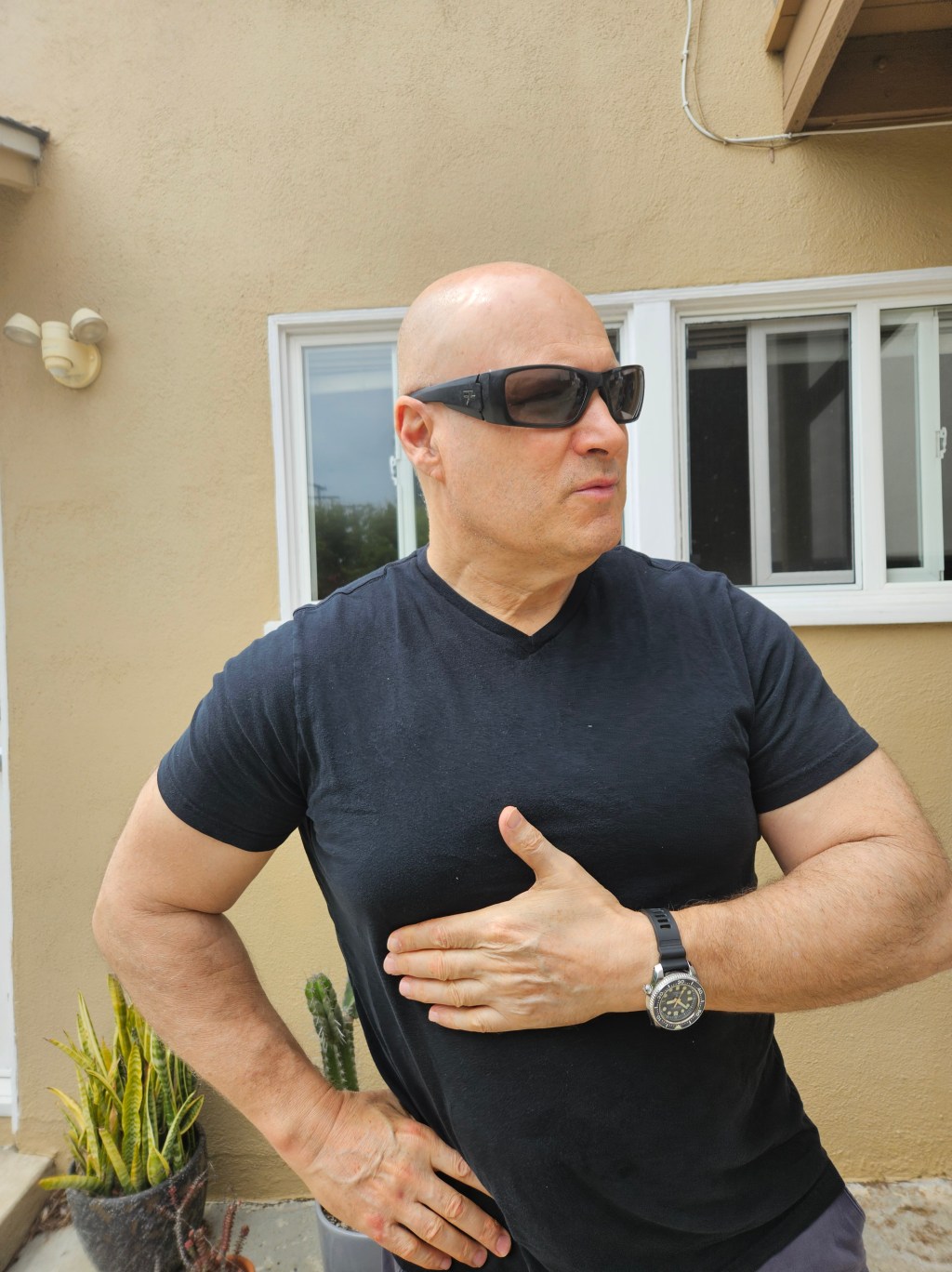
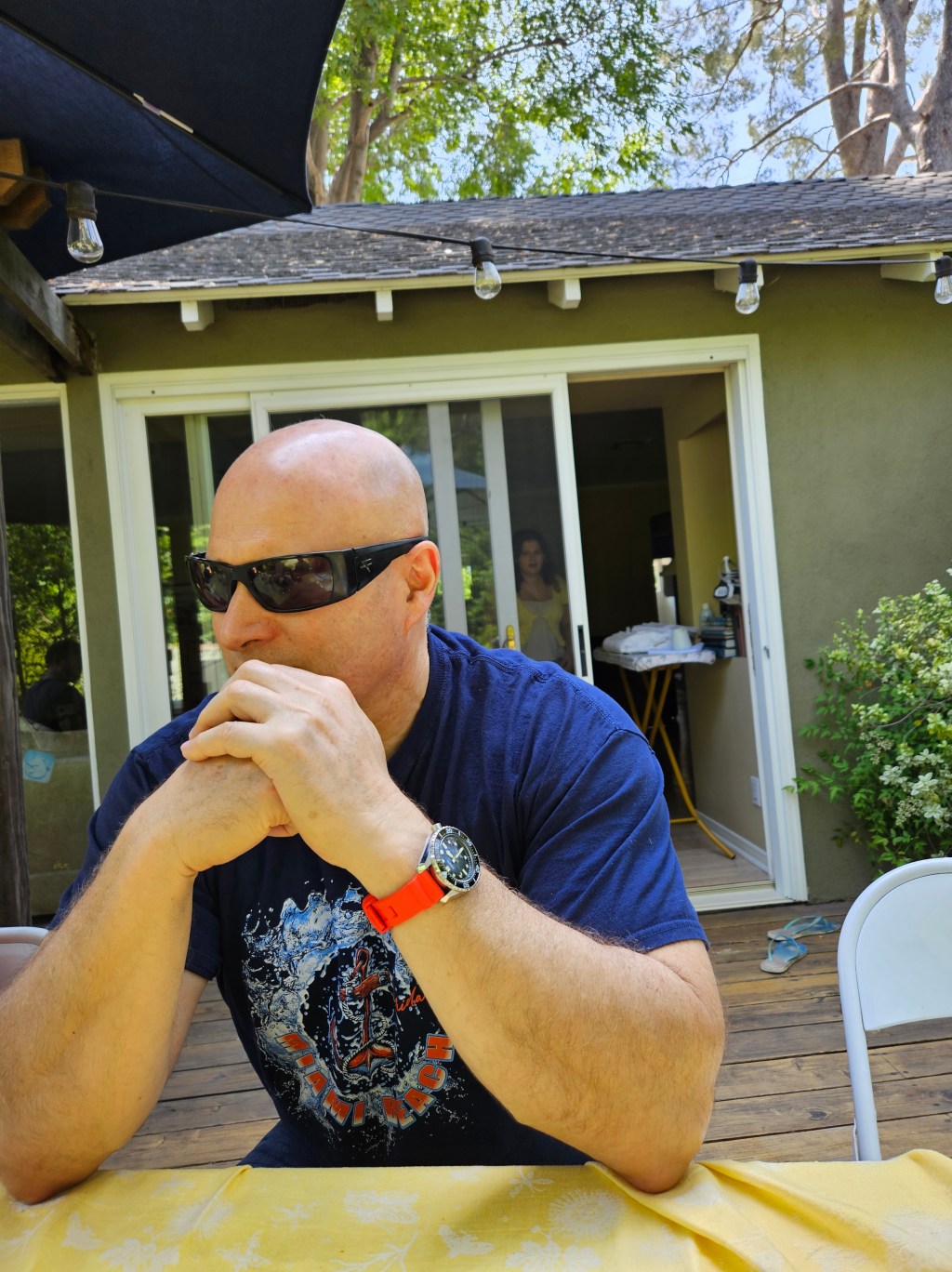
    Yesterday, the tour bus wheezed to a stop and dumped us in Little Havana like a sack of reluctant tourists. We wandered through downtown under a punishing sun, the air thick with the scent of café Cubano and bravado. That’s when I saw him: a man who looked exactly like Lalo Salamanca, minus the drug empire—crisp white shirt, swagger in his step, and two kids in tow. He wasn’t just crossing the street; he was gliding, chin up, radiating unfiltered, unstudied masculinity. And he wasn’t alone. Little Havana was teeming with these men—fathers who looked like they’d stepped out of a sepia-toned photo labeled Pride, circa Always.

    Meanwhile, there’s me—63 years old, 30 pounds overweight despite daily exercise and good intentions. My daughters joke that I look like Charlie Brown, and not in the charming, animated special way—more in the “existential dread in khakis” sense. I don’t walk across intersections like Lalo. I trudge. And if I’m holding hands, it’s probably because I’m being led away from a pastry counter.

    But as I watched those fathers—their confidence, their presence—I began to realize the true pathology behind my watch obsession. I wasn’t just collecting watches. I was searching for transformation. If I could find the watch, the perfect timepiece, it might just alchemize my Charlie Brown soul into something closer to Lalo—proud, magnetic, quietly heroic.

    Enter the Seiko Astron Nexter—$1,700 of satellite-synced wizardry and horological lust. It gleams. It commands respect. It’s whispering, “Buy me, and become the man you were meant to be.” But let’s be real: I barely go anywhere these days. My public appearances are limited to grocery store aisles and accidental mirror encounters. I’m not a man about town; I’m a man about tuna salad and ibuprofen.

    At 63, how many years of wrist real estate do I even have left? How long before I’m just another well-accessorized ghost, my legacy a drawer of luxury regret? The whole ritual—buying, flipping, rationalizing, repenting—is starting to feel less like a hobby and more like a slow, polished breakdown. This isn’t taste. It’s compulsion with a tracking number.

    Maybe it’s time to quit. I’ve got five watches already—each one a chapter in the memoir of my delusions. Maybe the next chapter isn’t about adding to the collection, but about burning the altar down.

    Here’s a wild idea: make self-denial the new dopamine hit. Let the new obsession be calorie restriction instead of case diameter. Let others chase sapphire crystals and ceramic bezels—I’ll chase a slimmer waistline, a clean mind, and the kind of inner quiet no chronograph can measure.

    Because maybe happiness isn’t behind a glass display case. Maybe it’s not ticking on my wrist. Maybe it’s the empty space where the craving used to be.

    Still… the Astron is beautiful. And it would look damn good on Lalo.

  • An Argument for Healthy Denial: A Self-Help Sermon for the Self-Indulgent

    An Argument for Healthy Denial: A Self-Help Sermon for the Self-Indulgent

    Let’s be honest. You’ve tried the soft-glow Instagram mantras and the overpriced journaling apps. You’ve danced with dopamine like a lab rat in a Vegas casino, chasing every ping, snack, scroll, and retail hit like it was divine revelation. And where has it gotten you? Nowhere worth photographing.

    So here’s your wake-up call, preacher-style, minus the tambourine: take care of your damn self. Not in that syrupy “self-care” way that means binge-watching prestige TV while mainlining DoorDash and calling it therapy. No, I mean the kind of care that involves discipline, boundaries, and strategic discomfort—also known as healthy denial.

    Phil Stutz is right: your relationship with your body, your soul, and the people around you depends on your ability to say “no” like your life depends on it—because it does. Not “no” out of self-loathing or ascetic performance art, but “no” because you actually give a damn about the human being you’re becoming.

    You don’t skip the donut because you hate yourself. You skip it because you respect yourself enough not to let your biology, your boredom, or your bastardized idea of “treat culture” run your life. You are not a French bulldog in a baby stroller. You are a fully grown adult with responsibilities and, presumably, a spine.

    And no, this isn’t some narcissistic glow-up project. You’re not chiseling your abs to become a thirst trap or launching your “healing journey” vlog. This is not a TED Talk in the making. This is about getting better because the people who count on you deserve more than your bloated, distracted, half-baked self. Society doesn’t need another dopamine junkie sucking on algorithmic pacifiers while pretending to be “living their truth.”

    Yes, some will tell you denial is toxic, puritanical, even abusive. These are the same people who believe “treating yourself” five times a day is a human right. But let’s get something straight: healthy denial is not self-hatred—it’s self-respect with a steel backbone. You deny yourself garbage because you’re aiming for gold. You crave meaning, not just muffins. You want to die with fewer regrets, not a legacy of half-eaten potato chips and unread terms of service.

    So here’s what you’re going to do.
    You will stop snacking. Period.
    You will stop scrolling like a brainless peasant begging for dopamine crumbs from tech oligarchs.
    You will stop curating materialistic trinkets—yes, even the “limited edition” timepieces—and broadcasting your conspicuous consumption like a status-starved magpie.

    Instead, you will create.

    You will write.
    You will make music.
    You will work out with the devotion of a monk in a burning temple.
    You will show up for your family like it matters—because it does.
    And you will treat your time on this spinning sphere not as an entitlement but as the limited-edition miracle it is.

    This is not about being better than others. This is about being better for others. And if that sounds corny to you, maybe you’ve been swimming in irony so long you’ve forgotten what sincerity feels like.

    Here’s your new gospel: eat clean, think clearly, serve humbly, and waste nothing—not even time.

    Now get to it. The clock is ticking, and you’re not getting any younger.

  • The Maudlin Man: On Watches, Social Media, and the Narcissism of Meaningless Eagerness

    The Maudlin Man: On Watches, Social Media, and the Narcissism of Meaningless Eagerness

    There is no sound more pathetic than the cry of the maudlin man—the self-appointed tragic hero of his own YouTube channel, sobbing between cuts of B-roll footage of his watch collection, mistaking emotional leakage for authenticity. He clutches his diver watches like talismans, convinced that the right lume or bezel action will finally make him whole. But his affliction is deeper than poor taste or consumer excess. He is in love with his own sorrow. And worse, he films it.

    Cicero had a word for this spectacle: maudlin. It was not meant kindly. The maudlin man is drunk on his own emotional silliness, addicted to contrived drama, and tragically proud of his displays of overstated sorrow and giddy exuberance. In his pursuit of happiness, he has mistaken cheap feeling for moral virtue, dopamine for character, sentiment for wisdom. He is not mature. He is a teenager with a $5,000 Tudor.

    The watch hobby, for all its mechanical beauty and aesthetic value, has become a theater of narcissistic self-performance. The YouTube wrist-roll has replaced the confessional. The thumbnail becomes the new sacred icon: face frozen mid-epiphany, a timepiece held up like a religious relic. Each upload, each gushing review, is a digital Rolex—plucked, examined, and consumed with trembling fingers and tears in the eyes. The tragedy is not that the watch community is ridiculous (though it often is), but that it has devolved into a factory of performative adolescence.

    It wasn’t always this way. There was a time when the pursuit of happiness, as Jeffrey Rosen in The Pursuit of Happiness reminds us, meant the cultivation of moral character. Rosen draws from Franklin, Jefferson, and ultimately Cicero, who taught that happiness came not from pleasure but from the tranquil soul: one unbothered by fear, ambition, or maudlin eagerness. The watch obsessive is none of these things. His soul is rattled, consumed by longing, shaken by regret. He mistakes every new acquisition for a cure, every unboxing for a rebirth. But he is not reborn. He is merely re-dramatizing the same pathology.

    Enter the maudlin man, the inner saboteur. He mocks, he sneers, and he tells the truth: that the maudlin man has no real restraint. That his self-recrimination is as performative as his self-praise. The maudlin man is cruel. He exaggerates the regret that comes from flipping watches like penny stocks; the hollow boast of self-control while our eBay watchlist grows longer by the hour; the dopamine crashes masked by overproduced videos and fake enthusiasm. We are not collectors. We are addicts with ring lights.

    To be addicted to the watch hobby is to be afflicted with a thousand tiny regrets. We regret what we bought, what we sold, what we didn’t buy fast enough. We suffer from wrist rotation anxiety, Holy Grail delusions, false panic, and the creeping horror that we are just men who talk too much about case diameter. Our collections become mausoleums of past mistakes. We are haunted, not healed.

    The only cure—if one exists—is a form of philosophical sobriety. Cicero called it temperance. Franklin called it moral perfection. Phil Stutz calls it staying out of the lower channel. It is the refusal to feed the drama. It is the decision not to narrate your regret as if it were wisdom. It is stepping back, stepping away, and recognizing that sometimes, the most radical act of self-possession is to stop filming.

    This maudlin sickness isn’t limited to the horological hellscape. Social media itself is a dopamine machine engineered to keep us emotionally drunk. We live in a world of curated personas, algorithmic affirmation, and the self-cannibalizing loop of outrage and euphoria. As Kara Swisher notes in Burn Book, the tech elite have weaponized this environment for profit, fueling sociopathy with likes and retweets. They are not gods. They are billionaires who behave like wounded teenagers in private jets.

    It is not a coincidence that the watch obsessive and the tech mogul share the same pathology: a hunger for affirmation masquerading as taste. They are the same creature, only one wears a G-Shock and the other a Richard Mille. Both are drunk on maudlin emotion. Both mistake attention for meaning.

    What, then, is the alternative? It is to shut off the camera. To read. To walk. To live a life not curated but inhabited. To pursue virtue, not validation. To wear one watch and be content. To see, finally, that maudlin self-display is not depth, but decadence.

    So here is the diagnosis, bitter but true: The maudlin man must die. Not literally, but spiritually. He must be silenced so the adult may speak. He must be buried so the man of character can rise. He must be mocked, dissected, exposed, and ultimately exorcised.

    Only then, perhaps, will we stop crying over something as silly as the regret of sold watches we can never get back.

    And maybe—just maybe—stop filming them.

  • College Essay Prompt: Mental Breakdown in a Society of Screens and Parasocial Relationships

    College Essay Prompt: Mental Breakdown in a Society of Screens and Parasocial Relationships


    Prompt:

    In the Black Mirror episode “Nosedive,” Lacie Pound is a woman obsessed with improving her social credit score in a dystopian world where every interaction is rated. Beneath the pastel filter and performative smiles lies a darker exploration of human identity, self-worth, and the collapse of authentic connection. Your task is to write a 1,700-word analytical essay exploring Lacie’s psychological and emotional breakdown in this episode, and to determine whether her collapse is directly caused by the pressures of social media—or whether these platforms merely accelerate a personal unraveling that was already inevitable.

    To support your analysis, draw on the following sources:

    • The Social Dilemma (Netflix documentary)
    • Jonathan Haidt’s essay, “Why the Past 10 Years of American Life Have Been Uniquely Stupid”
    • Sherry Turkle’s TED Talk, “Connected But Not Alone”

    As you craft your argument, consider the following themes:

    • The role of external validation in shaping identity
    • The psychological consequences of living a curated digital life
    • The connection between social media engagement and rising anxiety, loneliness, and inauthenticity
    • The tension between societal pressures and individual vulnerability

    In your response, be sure to define what it means to “nosedive” emotionally and psychologically in a world built on ratings, algorithms, and hyper-performative culture. Does Lacie’s collapse function as a cautionary tale about social media, or is it more accurately read as an exposure of underlying personal fragility that the digital world simply brings to the surface?


    Sample Thesis Statements:


    Thesis 1: Lacie Pound’s breakdown in “Nosedive” is not simply caused by social media, but rather by a deeper psychological dependency on external approval that predates the digital age; in this light, social media acts less as the villain and more as the mirror, reflecting and magnifying insecurities that already governed her identity.


    Thesis 2: While Lacie’s nosedive appears personal, Black Mirror, The Social Dilemma, and Haidt’s essay collectively argue that her mental collapse is symptomatic of a broader cultural condition: one in which algorithmic design, curated self-presentation, and digital tribalism erode authentic self-worth and create a climate of chronic social anxiety.


    Thesis 3: Lacie’s descent into psychological ruin is the inevitable outcome of a society that commodifies likability; as Turkle and Haidt suggest, the illusion of connection offered by digital platforms disguises a deeper emotional isolation that transforms people into performers—and performance into pathology.

    Paragraph 1 – Introduction

    • Open with a hook: describe a real-world example of someone spiraling due to social media pressure.
    • Introduce “Nosedive” and its relevance to today’s digital culture.
    • Define the metaphor of a psychological “nosedive” as a collapse of self-worth triggered by performance anxiety and social failure.
    • Present core question: Is Lacie’s breakdown caused by social media itself, or does it reveal deeper insecurities?
    • End with a clear thesis: Lacie’s unraveling is both personal and systemic—her need for validation reflects broader societal patterns of technology-driven identity performance, but her fragility also exposes how digital tools prey on unresolved emotional vulnerabilities.

    Paragraph 2 – The World of “Nosedive”: Ratings as a Proxy for Self-Worth

    • Describe the dystopian rating system in “Nosedive”.
    • Show how every interaction is gamified, creating a society obsessed with likeability metrics.
    • Link this to The Social Dilemma’s critique of algorithm-driven behavior modification.
    • Argue that this environment creates constant self-surveillance, leading to emotional volatility.

    Paragraph 3 – Lacie’s Performance Addiction

    • Analyze Lacie’s early behavior: carefully scripted interactions, forced smiles, rehearsed expressions.
    • Discuss how her self-worth becomes entirely contingent on digital perception.
    • Use Turkle’s “Connected but Alone” idea—she’s always performing but never truly known.
    • Argue that social media didn’t create this need, but it made it pathological.

    Paragraph 4 – The Spiral Begins: Social Failure and Systemic Collapse

    • Walk through Lacie’s descent—missteps leading to plummeting scores.
    • Show how one social miscue becomes a digital contagion, amplifying shame and exclusion.
    • Reference The Social Dilemma’s point that digital feedback loops intensify emotional reactions and punish deviation.
    • Suggest that Lacie’s environment leaves no room for recovery or grace.

    Paragraph 5 – Internal Fragility: Lacie’s Preexisting Insecurities

    • Explore signs that Lacie is already emotionally unstable before the social collapse.
    • Her obsession with pleasing her childhood friend, her rehearsed conversations—all suggest deep-seated neediness.
    • Connect this to Haidt’s argument that our culture has created emotionally fragile individuals by overprotecting and under-challenging them.
    • Argue that social media simply amplifies what’s already fragile.

    Paragraph 6 – External Validation and the Collapse of the Authentic Self

    • Explore how Lacie no longer knows what she wants—she’s completely shaped by other people’s expectations.
    • Bring in Turkle’s argument: constant performance erodes the self; connection becomes simulation.
    • Use The Social Dilemma to show how this is by design—platforms profit from our insecurity.
    • Argue that Lacie’s breakdown is the result of living entirely outside of herself.

    Paragraph 7 – Public Spaces, Public Shame

    • Analyze the role of public humiliation in Lacie’s fall—airport scene, wedding meltdown.
    • Show how social media culture weaponizes public space—cancellations, social scoring, dogpiling.
    • Reference Haidt’s observation about outrage culture and public reputational death.
    • Argue that Lacie’s failure is no longer private—it’s performatively punished by the crowd.

    Paragraph 8 – Final Breakdown: Liberation or Madness?

    • Examine Lacie’s final moments in the prison cell—unfiltered, foul-mouthed, finally honest.
    • Is this a breakdown, or a breakthrough?
    • Connect to Turkle’s point that authenticity can emerge only when we step away from performance.
    • Suggest that Lacie’s collapse may be tragic, but it’s also a moment of reclaimed selfhood.

    Paragraph 9 – Synthesis: Personal Fragility Meets Systemic Pressure

    • Reconcile the two sides of the argument: the personal and the structural.
    • Social media didn’t invent Lacie’s insecurities, but it created a high-pressure ecosystem where they became catastrophic.
    • Digital culture accelerates emotional collapse by monetizing validation and punishing imperfection.
    • Reinvention in a digital world is nearly impossible—every misstep is documented, judged, and immortalized.

    Paragraph 10 – Conclusion

    • Reaffirm thesis: Lacie’s nosedive is a cautionary tale about both social media and emotional fragility.
    • Summarize key insights from The Social Dilemma, Haidt, and Turkle.
    • End with a broader reflection: In a world obsessed with performance and visibility, real freedom may lie in being able to live—and fail—without an audience.
  • The Effort Mandate: Why Your Milkshake Scene Matters More Than Your Netflix Queue

    The Effort Mandate: Why Your Milkshake Scene Matters More Than Your Netflix Queue

    My students read Cal Newport, who argues—rightly—that happiness has less to do with basking in self-care rituals and more to do with rolling up your sleeves and pursuing a life of relentless, purpose-driven work. Newport, like a modern-day monk with a MacBook, insists that true contentment doesn’t come from “finding your passion” or retiring to some fantasy Airbnb with pizza in one hand and a remote in the other. Instead, happiness is built the old-fashioned way: through grit, sweat, and enough existential gumption to brave the storms of effort.

    Alex Hutchinson, in “The Paradox of Hard Work,” asks why we pursue brutal, bone-crunching tasks when our evolutionary wiring is supposedly set to “energy-saving mode.” He calls it puzzling. I don’t. The so-called “Effort Paradox” isn’t a mystery; it’s a truth so obvious we dress it up in academic hand-wringing to avoid confronting it: people crave hard things because without them, we rot.

    Whether it’s Peter Gabriel locking himself in a farmhouse to claw So into existence, or Isabel Wilkerson spending fifteen years writing The Warmth of Other Suns, meaningful work demands blood. Even weekend warriors know this. Ask a suburbanite about their yearlong bathroom renovation—listen to them swell with the pride of a soldier recounting a siege.

    And then there’s art. Cheap, glossy, instant-gratification art that evaporates from your mind before you reach the parking lot. You didn’t watch a movie—you consumed a content burrito and forgot the taste. Contrast that with There Will Be Blood: a cinematic ordeal so dense and punishing that it leaves claw marks on your psyche. I think of that milkshake scene more than I think of most people I went to college with. That’s not paradox. That’s payoff.

    So let’s stop calling it a paradox and start calling it what it is: The Effort Mandate. Meaning isn’t a gift; it’s a byproduct of voluntary suffering. You want happiness? Go earn it.

  • The Netflix TV Series Adolescence Explores the Incel Inferno

    The Netflix TV Series Adolescence Explores the Incel Inferno

    In her searing New Yorker essay “The Rage of the Incels,” Jia Tolentino charts the psychological freefall of young men who feel so broken, so undesirable, that they trade intimacy for ideology. These are men who live in the shadows—paralyzed by fear, consumed by resentment, and desperate to rewrite their own narrative of failure. Lacking the confidence to form real connections, they retreat into a warped fantasy of grandiosity and “absolute male supremacy,” hoping to drown out their self-loathing in the cold armor of systemic power.

    At the core of this fantasy lies a cruel sleight of hand: to escape the feeling of being disgusting, they dehumanize others—namely women. Online, where pornified, transactional, and violent depictions of sex are the norm, this dehumanization metastasizes with chilling efficiency. On the internet, there’s no need for empathy, just anonymity and algorithms.

    Tolentino highlights the gendered nature of this despair. When women feel undesirable, they tend to turn the blame inward. Men, however, often blame the system—or more specifically, women. This externalization leads some into the dark corridors of inceldom, where racism, misogyny, and white supremacy form the ideological bedrock of a movement built on grievance.

    The young men most vulnerable to this radicalization often come with tragic resumes: childhood trauma, social ineptitude, academic failure, economic hopelessness. They are digital shut-ins, living in their parents’ basements, marinating in their self-hatred and curating worldviews that feed their rage. With no jobs, no degrees, and no meaningful relationships, they rot—and rot loudly.

    This psychological spiral is embodied in Adolescence, the Netflix miniseries centered on Jamie Miller, a 13-year-old whose descent into incel ideology leads to horrific violence. The show doesn’t offer easy answers—it shows a boy abandoned long before he ever picked up a weapon. His parents aren’t just grieving the victim of his crime; they’re grieving their own son, whose silent suffering metastasized into something monstrous. The tragedy is not just what he did—but how long he was hurting, invisible to everyone.

  • The Dopamine Dumpster Fire: How I Went from Literary Scholar to Algorithm Addict

    The Dopamine Dumpster Fire: How I Went from Literary Scholar to Algorithm Addict

    In 1979, I went to college—back when students still read entire books and didn’t skim Nietzsche between TikTok scrolls. By 1986, I had a master’s degree in English and a reading habit so fierce it could scare a librarian. This was the Pre-Digital, Pre-Illiterate Age, and I was both smarter and, dare I say, happier. Then came the internet, like a radioactive vending machine of constant stimulation, and within a decade my attention span was fried, my dopamine receptors scorched, and my brain felt like a squirrel on meth.

    Reading Anna Lembke’s Dopamine Nation: Finding Balance in the Age of Indulgence was like holding a mirror up to my own cognitive and emotional decline—except the mirror was cracked and buzzing with notification pings. Lembke, a Stanford psychiatrist with a scalpel-sharp intellect, writes that we live in a world of “overwhelming abundance,” where the smartphone is the modern hypodermic needle, delivering micro-hits of dopamine at all hours like a dealer with unlimited supply and no off switch. Her message is clear: addiction isn’t a fringe problem—it’s the central operating system of modern life.

    Lembke’s insight that “pleasure and pain are processed in the same part of the brain” makes you rethink every moment of scrolling, snacking, shopping, and spiraling. The more dopamine you chase, the more pain you invite in through the back door. It’s like sprinting on a treadmill made of banana peels—every gain is followed by a crash. According to Lembke, addiction rewires your brain to seek shortcuts, and in the process, you become a hollowed-out shell of your former self, one push notification away from an existential crisis.

    I didn’t need convincing. Twenty-five years of living online has made my mind a junk drawer of fragmented thoughts and snack-sized emotions. Lembke explains that many addicts live a double life, a private underworld of shame and secrecy that eats away at their integrity. That rang uncomfortably true. She points to risk factors like having a parent with addiction or mental illness. Bingo. Both my parents were alcoholics, and my mother had bipolar disorder—my genetic cocktail came shaken, stirred, and garnished with a panic attack.

    But the biggest risk factor, Lembke argues, is access. We’re all mainlining the internet every day. The supply has become the demand. The dopamine economy, she says, thrives on overconsumption, normalized by the fact that everyone else is doing it. If your entire community is obsessed with likes, outrage, and FOMO-fueled consumerism, it starts to feel… reasonable. Normal. Even patriotic.

    Social media isn’t just a distraction; it’s a full-blown Outrage Machine, built to keep our emotional hair on fire 24/7. We are like feral raccoons pawing at glowing rectangles, convinced that salvation lies in another dopamine hit—another comment, another package, another numbing episode of low-stakes content. Our collective descent is so absurd it would be funny if it weren’t so bleak.

    Lembke leans on the wisdom of cultural critic Philip Rieff, who observed that we’ve moved from “religious man” to “psychological man”—from seeking salvation to chasing pleasure. Add to that Jeffrey Rosen’s The Pursuit of Happiness, which reminds us that classical philosophy defined happiness not as feeling good, but as being good—the moral life, not the moist towelette of consumer satisfaction.

    But that idea, in our current therapeutic culture, sounds about as appealing as a cold shower in February. We’ve been taught to medicate our moods, sedate our angst, and wrap our trauma in soft blankets of “self-care” that often amount to binge-watching and overeating. Our modern mantra is: “If it hurts, scroll faster.” The result? A crisis of meaning, a society allergic to discomfort, and a spiritual vacuum that smells faintly of Axe Body Spray.

    Lembke calls this the paradox of hedonism: the more you chase pleasure, the less capable you become of feeling it. Hedonism leads to anhedonia—a state in which nothing satisfies. You eat the cake, buy the thing, get the like, and feel… nothing. It’s like winning a prize that turns into a cockroach when you unwrap it.

    Ever since reading Dopamine Nation, I’ve been haunted by a single, searing thought: Maybe I shouldn’t try to feel good. Maybe I should try to be good. But this, in a consumer culture built on instant gratification, feels like a betrayal of the social contract. We’re not just addicted—we’re indoctrinated.

    So here I am, a relic of the Pre-Digital Age, nursing my overstimulated brain, trying to claw my way out of the dopamine pit with a few dog-eared paperbacks and a shortwave radio. Because the real question isn’t how to feel better—but how to live better in a world that confuses stimulation for meaning and pleasure for purpose.

    And if that makes me sound like a cranky monk with Wi-Fi, so be it. I’d rather be a lucid cynic than another dopamine casualty with a glowing screen and dead eyes.

  • The Great, on Hulu, is your TV Mount Everest

    The Great, on Hulu, is your TV Mount Everest

    So, you’ve just finished watching the complete 3 seasons of The Great on Hulu, and now you’re a broken shell of a human being. This “anti-historical” comedy about Empress Catherine the Great, penned by the devilishly talented Tony McNamara, is hands-down the best thing you’ve ever seen on television. And now, you’re plunged into a depression so deep that not even Elle Fanning’s radiant smirk or Nicholas Hoult’s glorious, sociopathic wit can pull you out of it. Why? Because you know, deep in your soul, that you’ll never see a script with such biting humor, impeccable cadence, and penetrating insight again. Ever.

    The Great is your TV Mount Everest, and the air up there is so thin that coming back down to the ground feels like an existential freefall. Desperate for solace, you decide to drown your sorrows in another “costume comedy,” because clearly, nothing soothes the soul like more ruffles and wigs.

    Enter The Decameron on Netflix—a comedy about the bubonic plague in 14th Century Italy. Yes, someone thought it would be a good idea to wring laughs out of a pandemic that killed a third of Europe. And the shocking part? They actually pulled it off. You’re impressed. Sort of. But at the same time, let’s not kid ourselves—the writing is not even in the same universe as The Great. It’s like comparing a Michelin-starred meal to the tastiest TV dinner you’ve ever had. Sure, it’s good, but come on—it’s not The Great. But here’s the kicker: you can’t trust your judgment anymore. You’ve entered a full-blown Post-Masterpiece Meltdown. On one hand, you’re bending over backward to be generous toward The Decameron, because you know deep down it’s unfair to compare anything to the sheer brilliance of The Great. On the other hand, you’re haunted by the suspicion that your generosity might be blinding you to the show’s actual merits—or lack thereof. You’re like someone who’s just lost the love of their life and is now attempting to date again by swiping right on Tinder with tears streaming down their face.

    Can you really trust your post-Great heart to judge anything properly? To make matters worse, The Decameron features the enigma that is Tanya Reynolds, an actress whose face is a bafflingly delightful conundrum—one moment goofy, the next serenely beautiful, as if she’s somehow tapped into a facial time machine that can travel between awkward adolescence and timeless beauty at will. Her intoxicating, elastic pulchritude is the final nail in the coffin of your short-circuited judgment. Your critical faculties, once sharp as a chef’s knife, now resemble a spoon trying to slice through steak. And you used to take pride in your TV criticism! Now you’re floundering in a sea of existential doubt, questioning everything—your taste, your standards, your very identity as a TV aficionado. So here you are, a once-confident critic, now reduced to a quivering mass of uncertainty, all because you stumbled upon Tony McNamara’s masterpiece, The Great. It’s like finding out you’ve been living in Plato’s cave all along, and now you’ve seen the light, you’re doomed to spend the rest of your days in the shadows, longing for the brilliance you can never unsee. Welcome to your new life in the Post-Masterpiece Meltdown. Enjoy the view—such as it is.

  • FOMO Detox: The Irony of Missing Out on Missing Out

    FOMO Detox: The Irony of Missing Out on Missing Out

    Johann Hari’s Stolen Focus: Why You Can’t Pay Attention delivers a delicious paradox: in recounting his three-month escape from the digital mosh pit, he finds that others are envious—not of his former screen-addled misery, but of his newfound clarity. That’s right—people experience FOMO over his liberation from FOMO. The irony is so rich it could fund a startup.

    Hari makes it plain: our collective addiction to the glowing rectangle is absurd. The average person fondles their phone 2,617 times a day—a number so obscene it belongs in a criminal indictment. The sheer time-suck is beyond comprehension. Whole lives are quietly siphoned into the abyss of notifications, DMs, and doomscrolling, and the tragedy is that most of us don’t even realize it’s happening. The smartphone, he argues, is the ultimate avoidance device—a pocket-sized panic portal that keeps you hooked on the fantasy of being somewhere else, all while real life drifts past like a neglected houseplant.

    And yet, there is no moral outcry. No grand rebellion. We are, at best, laboratory rats pressing the dopamine lever. The tech overlords—those data-mining, attention-harvesting Svengalis—have transformed our collective neurosis into a business model. They don’t just own our data. They own us.

    But something strange happens when Hari logs off. The panic dissipates. The constant itch for digital validation fades. His nervous system, previously fried to a crisp, begins to heal. News consumption becomes a choice, not a compulsion. He starts feeling something he hadn’t in years: depth. The world around him regains texture. Conversations feel richer. His brain, previously hijacked by the siren call of infinite scrolling, starts functioning again.

    His grand revelation? Multitasking is a lie. A cruel joke. The human brain is wired for focus, not for toggling between Instagram reels and email pings like a malfunctioning slot machine. And yet, people have become so conditioned to constant distraction that they can’t even sit on a toilet without clutching a phone like a life raft.

    As the world speeds up, Hari finds himself craving slowness. A quiet rebellion against the frantic pace dictated by social media’s profit-driven algorithms. It’s almost as if—perish the thought—the tech lords don’t want you to know this. Because if enough people realized that the great FOMO-induced panic is just an engineered illusion, they might finally look up from their screens and ask the unthinkable: What have I been missing?

  • FOMO: A Condition as Old as Childhood Tantrums

    FOMO: A Condition as Old as Childhood Tantrums

    Much has been made of FOMO—Fear of Missing Out—in the social media age, where we subject ourselves to an endless scroll of curated perfection, exotic vacations, and influencer brunches that remind us, yet again, that our lives are decidedly less fabulous. We are told, repeatedly, that comparison is the mother of misery, and we learn this lesson the hard way every time we doomscroll our way into existential despair.

    The connection between FOMO and social media is so well-documented that many assume it’s a modern affliction, a byproduct of algorithms and influencer culture. But this is nonsense. FOMO is primal. FOMO is childhood itself.

    It’s the feverish, anxiety-ridden anticipation that every child feels when something exciting is on the horizon—an internal combustion engine of eagerness, panic, and irrational urgency.

    I got my first brutal taste of FOMO-induced devastation in 1967, when my parents took me to Disneyland on Free Hat Day. In my young mind, this wasn’t just an outing—it was destiny. But instead of racing out the door at dawn, my parents had the audacity to languish over bacon and eggs while I vibrated with dread. By the time we arrived, the Mickey Mouse hats were long gone—claimed by early-rising, better-prepared children whose parents actually understood the stakes of childhood desire.

    And what did I get?

    A Donald Duck cap. A second-place trophy in the hierarchy of Disney headwear. It was my first true heartbreak, a cruel reminder that hesitation and breakfast foods could cost you everything.

    The beach was another FOMO battleground.

    As our car inched closer to the ocean, I could smell the saltwater, hear the cacophony of seagulls, and catch a tantalizing sliver of the horizon—and with each sensory cue, my stomach flipped with impatience.

    To my young mind, we weren’t just going to the beach—we were competing for a piece of it, and if my parents didn’t park immediately, we would lose our rightful claim to the best stretch of sand. I imagined other families staking their umbrellas, digging their trenches, laying territorial claim while we circled endlessly in a parking lot purgatory.

    Of course, there was always plenty of beach, and we always found a spot, but that’s the nature of FOMO—it turns everything into a high-stakes competition in which the difference between bliss and utter catastrophe comes down to how fast you can get there.

    FOMO isn’t new. It’s the original childhood affliction, the gnawing anxiety that life’s best moments are happening somewhere else—and you’re missing them because your parents won’t hurry the hell up.