Tag: mental-health

  • Beauty Isn’t Enough: The Moment Desire Meets Reality

    Beauty Isn’t Enough: The Moment Desire Meets Reality

    We are, most of us, walking around with a quiet fracture. Something missing. Something we believe can be restored if only we find the right object, the right achievement, the right arrangement of circumstances. The trouble is that the very strategies we use to make ourselves whole often deepen the crack.

    Citizen Kane is the classic case study. Charles Foster Kane acquires everything—wealth, art, palaces, influence—only to die alone, whispering “Rosebud” like a man calling into an empty room. For all his possessions, he never possessed what he actually wanted: love. The sled was not valuable. It was a memory of unconditional belonging, the one thing money could not purchase.

    Once the unconscious decides that objects can deliver emotional completion, the trap is set. The shopping becomes symbolic. The acquisition becomes therapeutic. And the disappointment becomes inevitable.

    I would like to believe I’m immune to this logic. I am not.

    I’m not trying to buy love, exactly. What captures me is beauty. A gunmetal sports car. A finely finished watch. Once the image enters my field of vision, it begins to work on me. Beauty has a narcotic quality. It doesn’t argue. It persuades.

    When I was nine, my father and I would slow the car to stare at Corvettes and my personal holy object, the Opel GT. We didn’t own them. That hardly mattered. Looking was enough to induce a quiet intoxication.

    Some forms of beauty age well. Twenty years ago my wife and I bought a framed Botticelli Primavera from an antique store. It hangs in our living room today. I still find myself studying the figures, pulled into the scene as if it were unfolding in slow motion. The painting asks nothing from me except attention.

    Watches work differently.

    A beautiful watch does not merely sit on the wall. It demands a relationship. It asks to be worn, justified, integrated into daily life. And here the problem begins.

    I’m drawn to intricate designs—chronographs, textured dials, bold contrasts, mechanical drama. These pieces photograph beautifully. They mesmerize under good lighting. They whisper, You are a man of taste.

    But then I put them on.

    The dial is busy. The legibility suffers. The weight feels wrong. The watch stays in the box.

    That’s the gap—the quiet but decisive chasm between aesthetic admiration and lived use. Many of the most beautiful watches I’ve owned became box queens: admired, respected, and essentially abandoned.

    A fellow collector once told me he doesn’t mind owning watches he never wears. He thinks of them as wall art. People collect paintings for beauty; he collects watches the same way.

    I can’t do that.

    Unworn watches don’t calm me. They make me uneasy, like unfinished obligations. A watch that isn’t part of daily life feels less like art and more like a small, expensive mistake.

    Years ago, a neighbor let me drive his black Corvette—a childhood Rosebud made real. Within minutes, the spell broke. The cabin was cramped. The ride was harsh. Every bump transmitted directly into my spine. I handed back the keys with relief.

    The car looked magnificent. Living with it would have been miserable.

    That experience clarified something I’ve come to accept across watches, cars, and most objects of desire:

    Beauty alone is not enough.

    At some point, every enthusiast discovers a personal boundary—what might be called a Functional Integrity Threshold. It’s the moment when aesthetic appeal loses its authority because the object fails in comfort, usability, or daily harmony.

    Below that threshold, beauty is intoxicating.
    Beyond it, beauty becomes irrelevant.

    Give me both—form and function in alignment—or give me neither. Anything else is just another Rosebud waiting to disappoint.

  • The Psychology of Watch Regret

    The Psychology of Watch Regret

    Many watch obsessives suffer from a peculiar torment: they cannot live with a certain watch—and they cannot live without it.

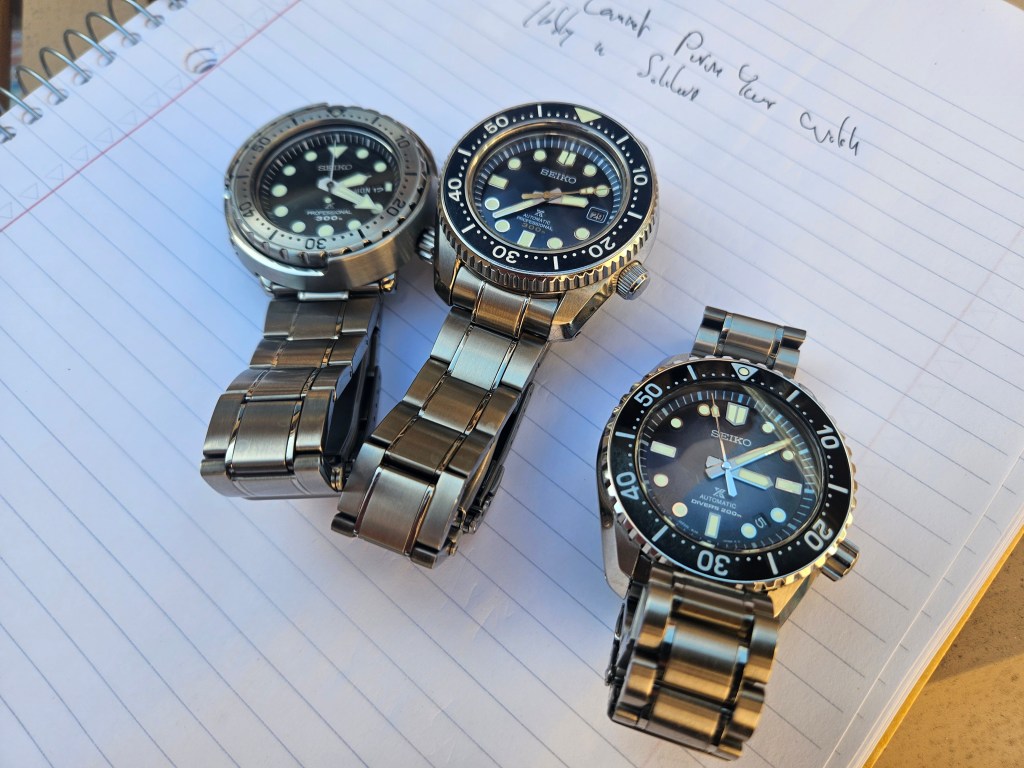
    I know men who have bought, sold, and rebought the same Seiko Tuna a dozen times. Some have done the same dance with the MM300. The watch leaves. Relief follows. Then memory begins its quiet revision. The flaws soften. The virtues glow. Soon the search begins again.

    If you stay in this hobby long enough, you may find yourself performing the same ritual.

    First comes infatuation. The watch arrives. For a few weeks it feels inevitable, permanent, right. Then something shifts. It wears too large. Too heavy. Too shiny. Too common. The magic drains out. Now the watch feels like a mistake that must be corrected immediately.

    You list it on eBay. You price it aggressively. You take the loss. You feel lighter, cleaner, restored.

    Three months later you’re browsing photos of the very same model.

    This time it looks perfect.

    You buy it back at full price.

    The cycle repeats. Sell low. Buy high. Repeat until the watch has cost you the price of a small used car. Some collectors eventually place the piece in a safe—not for protection from thieves, but from themselves.

    There is a darker variation.

    You sell the watch. Regret arrives. You go looking for it again.

    But now it’s gone.

    No listings. No used examples. No inventory anywhere. The watch has slipped into the market’s shadow, and your memory transforms it into something mythic. You dream about it. You refresh search pages like a man checking hospital monitors. You wake up with the emotional intensity of a breakup and the soundtrack of the Chi-Lites playing somewhere in your head.

    Have you seen her?

    This condition has a name: The Acquisition Reversal Loop—the compulsive pattern in which a collector sells a watch to escape dissatisfaction, only to experience renewed desire and repurchase the same model, often at repeated financial loss.

    The loop is not about watches. It is about unstable desire.

    A healthy hobby is supposed to add pleasure and structure to your life. The Acquisition Reversal Loop does the opposite. It erodes judgment. Preferences become volatile. Decisions become emotional. The collector begins to resemble a child—grabbing, rejecting, reclaiming, and insisting that this time the object will finally make everything right.

    This is not enthusiasm. It is regression.

    At this point the watches are no longer possessions. They are orbiting objects in a private gravitational field of anxiety and impulse.

    And when a hobby turns into a system that repeatedly empties your wallet, disturbs your peace, and overrides your judgment, it is no longer a pastime.

    It is a small, well-lit prison.

    The question is no longer which watch to buy.

    The question is how—and whether—you intend to leave.

  • Why a G-Shock Frogman Makes More Sense Than a Mechanical Collection

    Why a G-Shock Frogman Makes More Sense Than a Mechanical Collection

    If you come to me and confess that you’re curious about my watch hobby—intrigued, even—and ask for guidance so you can pursue the passion with the same enthusiasm, I won’t welcome you into the brotherhood.

    I’ll stop you at the door.

    If you are currently free from thoughts of watches, I will advise you to remain free. Walk away. Continue your life as a relatively sane and solvent human being. Because the mechanical watch hobby, viewed without romance or nostalgia, makes less and less sense in the modern world.

    You are paying premium money for obsolete technology in an age that worships useful technology. Why spend six thousand dollars on a Swiss machine that tells you the time when a five-hundred-dollar fitness watch can monitor your heart, track your sleep, detect arrhythmias, and quietly send your vital signs to your doctor before you collapse in a parking lot?

    Mechanical watches don’t make you healthier. They make you sentimental.

    The future is not kind to sentiment. As the world moves away from mechanical timekeeping, competent service will become slower, rarer, and more expensive. Your treasured watch will eventually be packed into a padded box and shipped across the country—or the ocean—where it will sit for months awaiting lubrication, regulation, or a gasket replacement. When it returns scratched, delayed, or mysteriously altered, you’ll enter a corporate complaint system so backlogged it feels less like customer service and more like geological time.

    Meanwhile, the social currency that once justified the expense is quietly evaporating.

    There was a time when a fine mechanical watch signaled professional success. Doctors noticed. Lawyers noticed. Bankers noticed. Today, most people don’t know a Rolex from a Fossil, and many don’t notice watches at all. The design language of luxury horology is becoming a private dialect spoken by a shrinking tribe.

    This is where the collector encounters Analog Futility Syndrome: the slow, uncomfortable realization that enormous resources are being poured into a technology that no longer solves a modern problem. The pleasure remains—but it is shadowed by a faint, persistent question: Why am I doing this?

    Meanwhile, the cultural signaling has inverted.

    Show up wearing a $500 solar-powered G-Shock that works everywhere, never needs service, survives abuse, and keeps atomic time, and people read something entirely different. Efficiency. Practical intelligence. Optimization. The G-Shock wearer looks like a person who solves problems, not one who collects them. The same watch works at the office, on a trail, or on a flight across time zones. It whispers competence. It suggests you might belong to MENSA. Or at least that you don’t spend your evenings arguing about bezel fonts.

    So if you ask me how to become a watch enthusiast, I will not guide you toward Swiss luxury and its Ferrari-like maintenance costs. I will point you toward the solar, radio-controlled, GPS-enabled tools that actually serve a modern life.

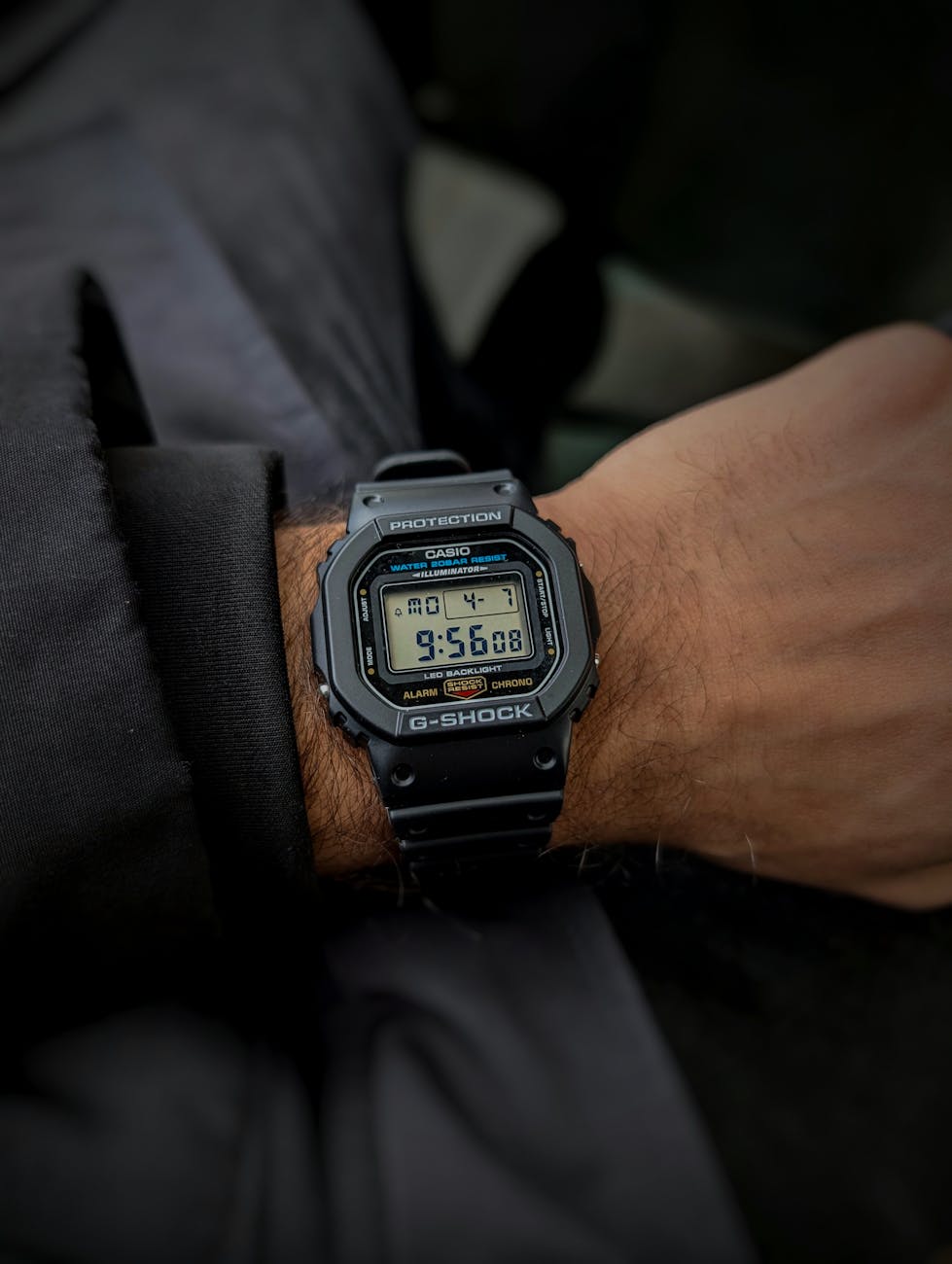
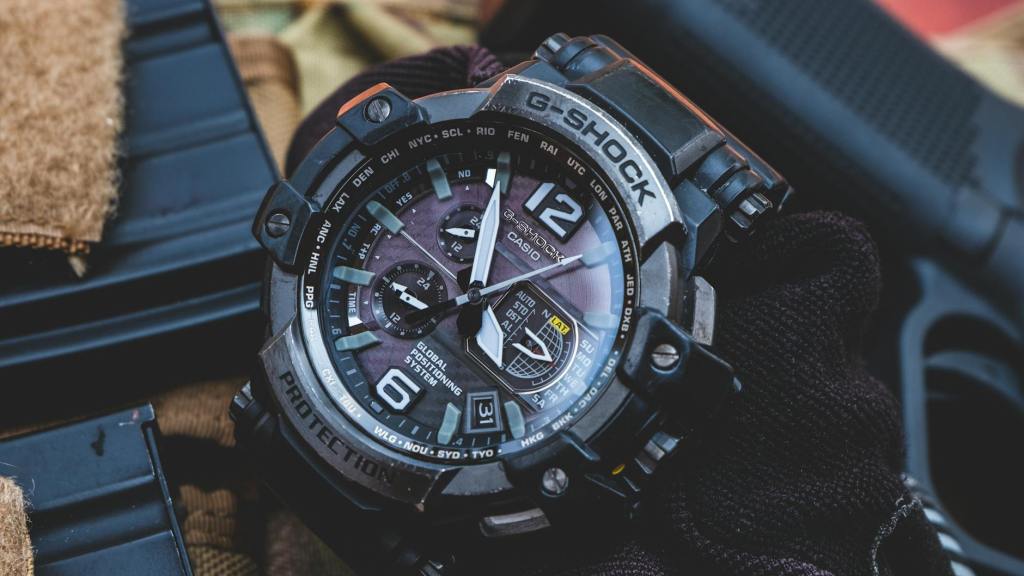
    A GPS Master of G Rangeman.
    A radio-controlled square.
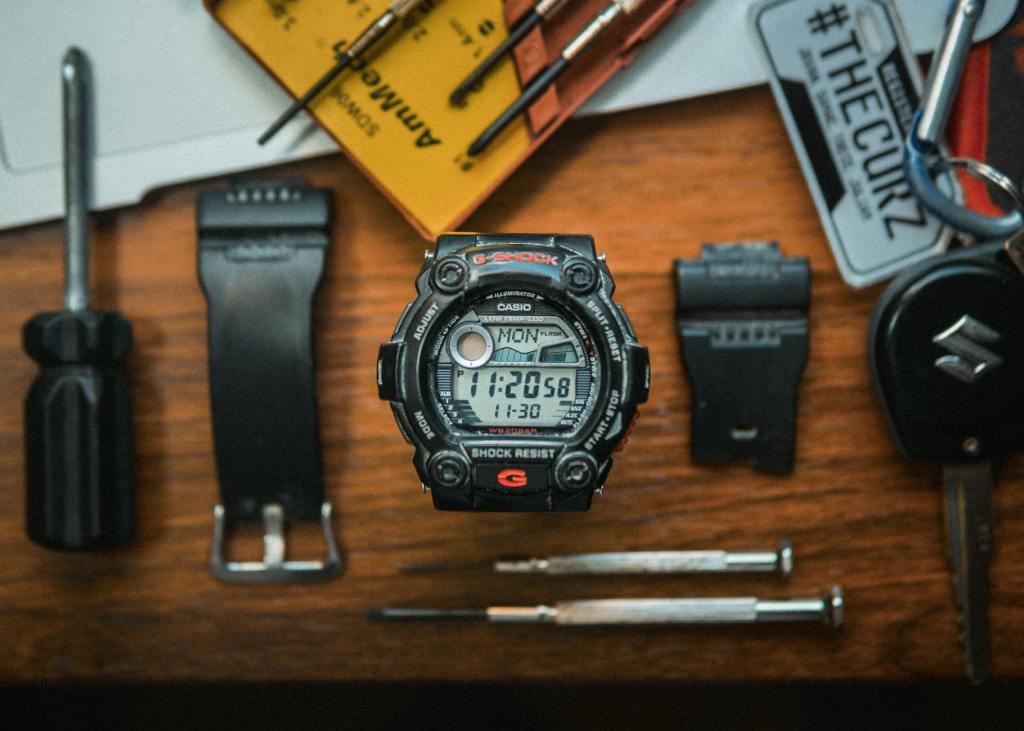
    The digital Frogman.

    Real time anywhere. Light weight. Near-zero maintenance. Functional serenity.

    Writing this advice to you has caused something strange to happen to me while composing it. The argument has pointed an accusatory finger toward me. What began as guidance for you has become a prosecution of my imbecilic watch hobby.

    The longer I write, the more irritated I become at my own years of horological excess—years spent chasing mechanical romance while quietly accumulating cost, inconvenience, and low-grade anxiety.

    I may have to sell everything.

    I may have to replace the entire collection with a single indestructible digital watch and walk away.

    You think I’m exaggerating. I am not.

    Writing this has triggered a full-blown Horological Renunciation Fantasy: the emotionally charged vision of liquidating every mechanical piece and replacing them with one maintenance-free instrument—liberation not from watches, but from the psychological gravity of owning too many of them.

    The fantasy is seductive. I can’t imagine being happy right now unless I sell all my mechanicals and replace them with a digital Frogman.

    And that should tell you everything you need to know about the hobby.

  • Absolutes and the Ruin of Watch Collecting

    Absolutes and the Ruin of Watch Collecting

    It’s often said that comparison is the mother of misery. No matter how high you climb in any pursuit, there’s always someone perched above you, dangling their boots over the edge. The distance between you and them can feel vast—so vast it erases the climb you already made. In watch collecting, this happens fast. You finally land your grail: a Seiko GMT diver that cost real money, money that made you flinch. You admire it. You feel complete. Then a friend casually flashes a five-thousand-dollar Grand Seiko and—poof—your triumph collapses. You don’t feel lucky. You feel inadequate.

    If comparison is the mother of misery, then she has a meddlesome sister. Call her Aunt Absolute. Aunt Absolute is just as ruinous. She whispers that contentment requires perfection. Not just a great watch, but the right watch. Not just a collection, but the collection. The correct rotation. The correct strap. The correct bracelet. She promises peace once everything clicks into place forever.

    This hunger for absolutes usually rides shotgun with an OCD streak in the hobby. The flaw in that mindset is simple: the hobby refuses to stay still. Tastes change. Knowledge deepens. Bodies age. Jobs shift. Moods fluctuate. Absolutes hate variables, and watch collecting is nothing but variables. To the absolutist, change feels like threat, and threat breeds anxiety. In its ugliest form, that anxiety convinces you your collection is one wrong move away from collapse. Sell a watch. Swap a strap. Wear a bracelet again. The whole thing topples. This is Jenga Anxiety—the chronic fear that a single adjustment will destabilize not just your watches, but the identity you’ve built around them. Adaptability feels like fragility. Experimentation feels like self-destruction.

    I lived under Aunt Absolute’s roof for about two years. I refused bracelets entirely. Every watch sat on Divecore FKM straps. The system was clean. The rules were rigid. I was happy—until the FKM “forever chemical” scare cracked the foundation. I reassessed. I adjusted. Now four watches live on straps and four on bracelets. The collection breathes. I have options. And yes, I forgot how good a bracelet can feel until I let myself enjoy one again.

    That experiment proved something important. I didn’t need absolutes to enjoy the hobby. I didn’t need perfection. Flexibility wasn’t failure—it was freedom. The watches didn’t lose meaning when the rules softened. They gained it.

    Will I stay flexible, or will I drift back toward absolutism? History suggests vigilance is required. But if I feel Aunt Absolute tugging at my sleeve again, I’ll remind myself of a simple truth: absolutism is the aunt of misery.

  • Buy Now, Regret Later: How Ancient Instincts Ruined Modern Shopping

    Buy Now, Regret Later: How Ancient Instincts Ruined Modern Shopping

    In the early 1990s, I saw comedian Rob Becker perform Defending the Caveman in San Francisco—a one-man anthropology class disguised as stand-up. His central thesis, stitched together from kitchen-table spats with his wife, was that men are hunters, women are gatherers, and this prehistoric wiring still runs our modern relationships like a bad operating system.

    His proof? Shopping.

    For the gatherer, shopping is a leisurely daydream. Wandering the mall for six hours and imagining buying things she can’t afford is an enriching sensory experience—like spiritual window-shopping. For the hunter, shopping is a surgical strike. He wants pants. He buys pants. He leaves. The suggestion to “just browse” makes his eye twitch.

    “Let’s get the hell out of here,” says the man. He has completed his mission. He has felled the beast.

    That moment—man as single-focus, tunnel-visioned, goal-oriented predator—explains a great deal about the pathology of watch addiction. We are still cavemen, just hairier and worse at squatting. And we don’t hunt food anymore. We hunt wristwear.

    We see a watch online and a brontosaurus steak lights up in our brain. Locked in. Target acquired. Our dopamine circuits spark like faulty Christmas lights. We must have it. There is no tranquility, no peace, until the object is in our possession.

    The problem? Our primitive instincts weren’t designed for the digital age. Back then, acquiring a new object meant trekking through wilderness, battling saber-toothed tigers, and earning your meal. Today, it’s clicking a “Buy Now” button while half-watching a YouTube review at your ergonomic standing desk, surrounded by a sea of unopened Amazon boxes. Intoxicated by online shopping platforms, we are overcome with the Horological Hunt Reflex–the involuntary lock-on response triggered by spotting a desirable watch. Once activated, attention narrows, patience evaporates, and the collector cannot rest until the object is captured—regardless of need, cost, or logic.

    Our brains still think we’re walking 40 miles to spear a mammoth. In reality, we’re reclining in office chairs with lumbar support, ordering $2,000 divers like they’re takeout sushi. The hunt requires no sacrifice, no sweat, no real effort. And so it never satisfies.

    This caveman instinct affects our watch hobby. We get the watch. We admire it. We post a photo to Instagram. Then—we twitch. We fidget. Our brain says, “Good job. Now go get another.”

    We are not content in the cave. Evolution didn’t design us for stillness. It designed us to be hungry. To prepare. To hoard. So we keep hunting. And the cave fills with stainless steel trophies until the glint attracts low-flying pterodactyls that dive-bomb us in our sleep and try to pluck the Omega off our wrist.

    We are maladapted creatures. Our eyeballs evolved for survival. Now they doom us. We were built to scan the horizon for danger. Now we scan Hodinkee, Instagram, Reddit, eBay, WatchRecon, and Chrono24 until our dopamine is a wrung-out dishrag and our bank account is an obituary.

    We’re trapped in a glitch—stone-age instincts, 5G bandwidth. Our visual fixation, once essential to survival, now chains us to a cycle of desire and regret. Thousands of watches flood our screens in a single hour, and our brains are too old and too soft to resist. The only real solution is exile. But exile from what? Our jobs, our networks, our entire digital lives?

    There is no cave to retreat to. Just another tab open.

  • Why I’m Not Really Into Watches (Says the Man Writing About Watches)

    Why I’m Not Really Into Watches (Says the Man Writing About Watches)

    I can’t believe I’ve spent more than twenty years obsessing over watches, because the inconvenient truth is this: I’m not actually into watches. They are the last things I want to think about, write about, or discuss with another adult human. And yet—here we are. I’ll admit I’ve allowed watches to hijack my brain more than is healthy, but these hijackings aren’t lifelong commitments. They’re flare-ups. Brain fevers. A condition I’ve come to call Timepiece Malaria.

    Timepiece Malaria is a recurrent, feverish fixation that arrives without warning, drains your energy, and leaves you sweating under the illusion that the answer—the answer—is just one more reference number away. It’s not a hobby. It’s not an identity. It’s an illness that behaves episodically, exhausts the host, and then disappears, leaving behind only the desire for shade, silence, and distance. Once the fever breaks, I want nothing to do with watches. Not even a little.

    I’m reminded of something the Edge once said about music: he dives deep, burns himself out completely, and then has to get away from it. I understand this instinct perfectly. When the watch fever hits, I plunge like a SCUBA diver hunting abalone—methodical, obsessive, convinced there’s treasure just beyond the next reef. But once I surface, gasping for air, all I want is a pool floaty and a long afternoon of not giving a damn about bezels, calibers, or lume plots.

    What I resent most is that trying to understand the obsession only makes it worse. Overthinking watches is like trying to smooth choppy water with your hands. Every attempt at control produces more turbulence. Analysis doesn’t cure the fever; it spikes it. The more I try to “get a handle” on the madness, the more aggressively it grips back.

    This is why I sympathize with Werner Herzog’s famously hostile reaction when Terry Gross once asked him if he was in therapy. He bristled at the idea, calling it a kind of intellectual stupidity—a descent into a carnival Fun House of Mirrors. You peer inward and see nothing but distorted fragments: too tall, too short, grotesquely magnified, absurdly shrunken. Therapy, in this view, doesn’t unify the self; it dismembers it. That’s exactly how writing about my watch obsession feels. Every paragraph multiplies me. None of them put me back together.

    And yet the evidence is damning. A blog. A YouTube channel. Endless introspection about the very thing I claim to be done with. My left hand insists I’m not into watches. My right hand keeps typing anyway. I say I don’t want to explore the psychology of the obsession, then immediately explore it in public, at length, with footnotes.

    I don’t seem to understand this contradiction. I can’t resolve it. I can’t stop it.

    Which may be the clearest symptom of all.

  • Why Your Watch Doesn’t Make You Happy Anymore

    Why Your Watch Doesn’t Make You Happy Anymore

    To understand the madness of the modern watch addict, you’d do well to consult Dopamine Nation by Stanford psychiatrist Anna Lembke, a book that should be shelved somewhere between philosophy, neuroscience, and quiet screaming. Her central thesis? In an age of relentless indulgence, the line between pleasure and pain is not only blurry—it’s the same neurological pathway. You’re not escaping pain with your latest acquisition. You’re feeding it.

    “The smartphone,” she writes, “is the modern-day hypodermic needle.” And the drug? Dopamine—delivered in neat little parcels: TikToks, tweets, memes, and yes, wrist shots of watches you don’t own (yet). If you haven’t met your poison of choice, don’t worry. It’s just a click away.

    Lembke makes the uncomfortable truth clear: The more dopamine hits we seek, the more our brain adapts by reducing our baseline pleasure response. What once thrilled you—your grail watch, your Rolex Explorer, your Seiko with the Wabi-Sabi patina—now barely registers. You’re not chasing pleasure anymore. You’re just trying to feel something.

    Watch addicts, of course, understand this intimately. The pursuit of horological perfection starts out innocent enough: a G-Shock here, a vintage diver there. But soon you’re tumbling into the abyss of boutique limited editions and message board enablement, haunted by the need to stay relevant. Because here’s the twist: It’s not just about the watches. It’s about being seen. You post, you review, you flex because if you stop, you vanish. No new watches = no new content = digital extinction.

    And extinction, in a social-media world, feels like death.

    Lembke warns us that addiction thrives in secrecy, in the exhausting double life. The watch addict may present as a tasteful minimalist to family and friends, while secretly rotating 19 watches, five straps deep, waiting for the next “drop.” The addiction is fed by access, and we live in an access economy. New releases are no longer annual events—they’re hourly temptations. The vortex is bottomless. The supply creates the demand.

    Even worse, modern society normalizes this behavior. Everyone is scrolling. Everyone is upgrading. Our addiction to novelty is passed off as taste. Our frenzied consumption masquerades as identity. Lembke borrows from Philip Rieff to explain the deeper shift: “Religious man was born to be saved; psychological man is born to be pleased.” The modern watch collector doesn’t believe in salvation. He believes in configuration.

    But here’s the cruel irony: The more you seek to be pleased, the less capable you are of being pleased. In Lembke’s words: “Hedonism, the pursuit of pleasure for its own sake, leads to anhedonia—the inability to enjoy pleasure of any kind.”

    You can understand the watch addict’s feeble quest when you look at the Horological Dopamine Loop–the self-reinforcing cycle in which acquisition, posting, validation, and anticipation replace enjoyment. The watch no longer delivers pleasure; it merely resets the craving for the next hit.

    What’s the solution? A dopamine fast. Lembke prescribes it like a bitter medicine: Remove the source. Reset the brain. Let it reestablish homeostasis. For the watch addict, this means one thing: a watch fast.

    And yes—it’s brutal. I’ve been a watch obsessive for over twenty years. My longest fast? Six months. And I nearly went feral. New releases tempt. Friends enable. Algorithms whisper. Strap swaps and vintage reissues beckon like sirens. Even the FedEx truck starts to look like a personal tormentor.

    So you get creative. You stash watches in the safe and “rediscover” them. You buy new straps instead of new watches. You try to redirect the compulsion toward something productive: fitness, music, sourdough, monkish austerity. Anything but another chronograph.

    But the real cure, oddly enough, may be conversation—actual human connection. At watch meet-ups, we start out discussing bezels and spring bars, but within ten minutes we’re talking about life: real estate, parenting, knee surgeries, emotional burnout, dinner recipes. We talk for hours. But barely about watches.

    The truth slips out in these moments: we want to be free. We crave community more than we crave sapphire crystals. What began as a shared obsession has become a trap, and these conversations, paradoxically, offer relief from the very addiction that brought us together.

    Imagine a bunch of watch enthusiasts at a watch meet-up and we’re talking about everything but watches. Wrap your head around that.

  • When a Strap Solved Everything—and Instagram Ruined It

    When a Strap Solved Everything—and Instagram Ruined It

    I don’t work for Divecore straps. I don’t have an affiliate link. I don’t even remember how I found them. They just appeared one day, like a cult recruiter with good posture. All I know is this: once I tried them, something clicked. The fit was right. The comfort was immediate. The look was honest. So I did what any rational watch obsessive does when he thinks he’s reached enlightenment—I stripped every watch off its bracelet, slapped on black or orange FKM Divecore straps, and declared myself finished.

    Done.
    Happy.
    At ease.

    That phrase—at ease—matters. A seven-watch collection, unified by one strap philosophy, felt merciful. There was no mental juggling, no wrist gouging from metal end links, no micro-adjustment rituals to accommodate the daily swelling and shrinking of my aging, temperamental wrist. The system was clean. Elegant. Humane. For once, the hobby felt like a hobby instead of a low-grade engineering problem.

    Then, in August of 2025, Instagram did what Instagram does best: it ruined my peace. Someone informed me—solemnly, heroically—that a study had been released about FKM straps and PFAS “forever chemicals.” The straps in the study were abused like props in a MythBusters episode—conditions so extreme they bore little resemblance to actual wrist life—but still. With plastic contamination already saturating the planet, did I really need to marinate my arteries in additional synthetic mystery?

    So off came the FKM. On went the “safe” alternatives: urethane, silicone, vulcanized rubber. They were… fine. Adequate. Technically acceptable. Emotionally inert. I wore them the way you eat airline chicken—without complaint, but without love. And yes, I feel compelled to say it again: I still don’t work for Divecore.

    Feeling vaguely bereaved, I did what many men do when they sense disorder: I tried to impose balance. I put stainless steel bracelets back on some heavy hitters. I even bought a gunmetal, monochromatic dive watch on a bracelet, as if symmetry itself could rescue me. I now had four watches on straps and four on bracelets. The collection looked fantastic. Museum-worthy. Spreadsheet-perfect.

    And yet—I was less happy.

    That’s when I recognized the familiar enemy: Cognitive Load Creep. The slow, insidious return of mental fatigue as the collection grows more complex. Straps versus bracelets. Balance logic. Adjustment rituals. The hobby quietly mutates into unpaid systems management. Every glance at the watch box now came with a background hum of decision-making. And whenever that hum gets loud enough, a voice appears.

    You lost the plot.

    And it’s right.

    The plot was never variety.
    The plot was never balance.
    The plot was happiness.

    Happiness, in the watch hobby, is hard to define—but it’s easy to identify its opposites: stress, obsession, second-guessing, wheel-spinning, FOMO anxiety, mental overload, and the constant sense that you’ve taken on more than you can metabolize. If your watches feel like a to-do list, something has gone wrong.

    I’m trying to learn from this chapter. I know, intellectually, that less really is more. I know stress is poison. I also know I have a flair for melodrama. I can turn a strap swap into a Greek tragedy. I pine. I brood. I catastrophize like an adolescent waiting for a love note reply that never comes. It’s embarrassing. It’s funny. And I’m certain I’m not alone. Watch people are wired this way—OCD-prone, sentimentally overloaded, forever narrating their own inner turmoil.

    So what’s next?

    I don’t know. There’s no blueprint. No masterplan. No illuminated exit sign pointing toward Horological Sanity. The best I can do is remain watch-agnostic, laugh at my own compulsions, and tell the truth about whatever move I make next—if I make one at all.

    The world, I assure you, is not holding its breath.

    But a fellow watch obsessive might be.

  • Why You Can’t Pursue the Watch Hobby in Solitude

    Why You Can’t Pursue the Watch Hobby in Solitude

    I should have known at thirteen that seventeen would be brutal. At thirteen, Janis Ian’s “At Seventeen” was already circulating through the house like a prophecy. I liked the song well enough, but my mother loved it. It was her time machine back to high school—loneliness, rejection, the ache of not measuring up. More than once I watched her eyes fill as the song drifted out of our Panasonic portable radio. That was her loneliness anthem. I needed my own. Mine was “Watching and Waiting” by the Moody Blues—a song for someone alone in the dark who senses there is something greater beyond himself and aches to make contact with it. Less teenage rejection, more metaphysical hunger.

    By seventeen, starting college, I was profoundly lonely. According to Erik Erikson, this is the stage defined by intimacy versus isolation, and I was losing badly. I felt it in my bones as a socially maladroit bodybuilder shuffling through classes by day and working nights as a bouncer at a teen disco called Maverick’s in San Ramon. Picture it: me at the door, arms crossed, watching a parade of thrill-seekers gyrate, flirt, and dissolve into noise. The job didn’t cure my loneliness; it distilled it. I was close enough to touch the crowd and miles away from belonging to it.

    One morning after a late shift, I dreamed I was living in the Stone Age. I was alone in a cave, wrapped in animal skins, stepping out into a gray, indifferent sky. I raised my arms toward the clouds, reaching for something—anything—that might answer me. In the background, “Watching and Waiting” played like a prayer I hadn’t yet learned how to pray. The dream was sad and beautiful, which felt like progress. As Kierkegaard noted, despair’s worst form is not knowing you’re in it. At least I knew. And as the Psalmist understood long before therapy existed, grace tends to follow sorrow once the sorrow has been fully felt.

    People hate being alone. They’ll sit through ads on YouTube rather than listen ad-free on Spotify because YouTube lets them comment, scroll, argue, agree—experience the song with others. Solitude may be cleaner, but communion is warmer. Which brings me to watches. What is the watch hobby in isolation? Nothing. A watch on a deserted island is just a lump of steel keeping time for no one. The hobby exists only because a community animates it—supports it, debates it, sometimes overfeeds it. A watch on your wrist is a semiotic flare. It says something. Others read it. You read them back. That exchange is the point.

    This is what I mean by Horological Communion: the quiet fellowship formed when watches are not hoarded as private trophies but offered as shared symbols. Meaning emerges only when the object is seen, recognized, and answered—at meetups, in forums, in comment sections, across a knowing glance from one wrist to another. Without that communion, the watch is mute. It ticks, faithfully, but it says nothing at all.

  • The Watch Relapse Spectacle

    The Watch Relapse Spectacle

    Watch addicts eventually reach a terminal stage of torment: the moment when the hobby that once delivered pleasure produces only agitation. The rotation feels oppressive. The collection feels accusatory. At this point, the addict does what desperate cultures have always done—he invents a ritual.

    Surveying the landscape for deliverance, one inevitably recalls the 2014 viral fever dream known as the Ice Bucket Challenge. The watch world demands its own purgative spectacle. Enter the One-Watch Challenge.

    The ritual is simple and public. A ten-minute YouTube video is required. The setting must be tasteful—backyard at golden hour or living room with flattering light. Friends gather. Straws are drawn. Every watch in the collection is claimed except the one the addict secretly hopes will remain. The winners strap on their spoils, grinning like looters at the fall of a city. The subject is then lifted into the air, victorious yet emptied, holding aloft his single remaining watch.

    He is reborn. He is no longer a collector. He is a Oner—a new creature who has renounced rotation days for the austere monogamy of one watch, worn for the rest of his natural life. He speaks of clarity. He speaks of peace. He uploads the video and waits for absolution.

    Naturally, the movement does not end there.

    A counter-genre soon emerges: the Relapser. These videos document former Oners discovered months later, sprawled on their carpets amid a shameful abundance of watches. Boxes are open. Straps are tangled. The men appear undone—glassy-eyed, infantile, muttering references to limited editions and “just one more.” The videos are initially consumed as comedy, shared with a wink and a laugh.

    Over time, the laughter fades.

    The genre acquires a formal name: the Watch Relapse Spectacle—the inevitable counter-ritual in which renunciation collapses into excess. What began as entertainment hardens into parable. For the first time, the wider public glimpses the pathology beneath the polish. The madness is no longer charming. It is instructive.