Tag: mental-health

  • Beware of the Appetizer Watch

    Beware of the Appetizer Watch

    A week ago, you ordered a G-Shock Frogman from Sakura Watches in Japan. Five hundred dollars of stainless steel caseback confidence and amphibious authority. It hasn’t shipped. It hasn’t moved. It may not even be awake yet. And already you’re pacing like a father in a maternity ward.

    This is when the mind proposes a solution—reasonable, economical, almost virtuous. Why not a small interim purchase? Something modest. Something practical. Enter the Rangeman. Two hundred dollars. Which, compared to five hundred, is practically free. In fact, you’d be irresponsible not to buy it. You need something to wear. Something to distract you. Something to manage the emotional volatility of waiting.

    You have now encountered the Appetizer Watch: the elegant fiction that a secondary purchase is a financial non-event simply because a larger purchase already exists. The math is creative, the tone is prudent, and the outcome is predictable. Compulsion, dressed in the language of thrift.

    But then a harsher voice cuts through the negotiation. If you need a consolation prize while you wait, you are not a collector. You are a child in a checkout line demanding gum. You don’t want to greet your Frogman as a man who held the line. You want the hero’s entrance, not the emotional equivalent of, “I couldn’t wait, so I bought a snack.”

    Because you understand something deeper: if you numb the waiting, you weaken the arrival. This is the Anticipation Dilution Effect—the emotional law of acquisition. The longer the buildup, the sharper the impact. Buy a Rangeman now, and the Frogman lands with a shrug instead of a thunderclap. You didn’t wait for the moment. You softened it.

    So you wait. You refresh the shipping page. You rehearse the wrist shot in your mind. And somewhere inside, you see him—the impatient little creature banging a plastic spoon against the inside of your skull, demanding immediate gratification.

    Once you see that inner infant, you can’t unsee him. He lives there now. Not defeated. Not reformed. Just exposed—your permanent reminder that beneath the language of discipline and discernment sits a toddler with Wi-Fi and a credit card.


  • The Art of Managing Excess Without Reducing It

    The Art of Managing Excess Without Reducing It

    At some point in the life of a watch obsessive, the collection crosses a quiet but decisive border. You no longer own the number of watches you once imagined as tasteful, disciplined, and sane. The ideal was five. Seven felt like a firm upper limit. Then one day you open the watch box and discover you’re living with nine, twelve, perhaps seventeen small mechanical dependents staring back at you like polite, expensive houseguests who have no intention of leaving.

    This is the moment when pride turns to pressure. The collection is no longer a source of simple pleasure but a low-grade psychological obligation. Each piece wants wrist time. Each one carries a memory, a justification, a story you once told yourself about why it was necessary. Selling is theoretically an option, but in practice it’s a bureaucratic ordeal for a financial return that feels insulting relative to the emotional investment. These watches are not inventory. They are artifacts. They are also, inconveniently, permanent.

    In my case, the number is nine. My comfort zone is seven. Two extra watches may not sound like a crisis, but in the obsessive mind, those two pieces push the collection into the Anxiety Zone—a territory defined less by quantity than by the feeling that ownership has quietly outrun intention.

    When reduction feels impossible, the mind does what it does best: it invents management strategies. Not to shrink the collection, but to make the collection feel smaller. We call this Inventory Anxiety Mitigation: a set of mental and logistical tactics designed to dull the psychological pressure of owning more watches than one believes is reasonable.

    The first maneuver is the Comparative Relief Loop. You soothe yourself by looking outward. Yes, nine feels excessive—until you visit a forum where someone casually posts a photo of forty-seven watches arranged like a jewelry store liquidation. Perspective arrives. Your excess becomes restraint.

    Next comes Taxonomic Downsizing. You divide the herd into categories: mechanical, quartz, solar, titanium, G-Shock. Each subgroup feels modest. Nothing has actually been reduced, but complexity has been repackaged into smaller mental containers, which creates the comforting illusion of discipline.

    Then there is Scheduled Rotation Rationalization. You build a calendar. Monday is the diver. Tuesday is the G-Shock. Wednesday is titanium day. Structure transforms abundance into a system. The problem is no longer “too many watches.” The problem has been reframed as operational logistics.

    Inventory Legitimization follows naturally. Tracking, cataloging, planning, rotating—these activities convert accumulation into something that feels curated. The collection acquires moral authority. It is no longer excess. It is a program.

    Underneath all of this lies Cognitive Load Camouflage. Lists, spreadsheets, categories, and schedules do not reduce the mental weight of ownership. They conceal it. Administration becomes a mask for complexity, allowing the collector to feel in control without actually simplifying anything.

    And then there is the internal voice I call Kevin O’Leary Scolding. When you stand before the watch box feeling faintly overwhelmed, you hear the imaginary Shark Tank verdict: “Stop whining about your watches. Get out of the house and make some money.”

    Together, these strategies reveal the collector’s central paradox. When reduction feels unrealistic, the mind does not shrink the collection. It redesigns the story. The watches stay the same. The narrative gets smaller.

  • When the World Updates Without You: The Quiet Power of Mechanical Time

    When the World Updates Without You: The Quiet Power of Mechanical Time

    No one warned me, but I should have seen it coming: creeping toward your mid-sixties is less a rite of passage than a crisis of competence. Or, to be precise, it’s a progressive misalignment with the modern world. You drop references to Danish Go-Rounds, Screaming Yellow Zonkers, Tooter Turtle, Super Chicken, and All in the Family and watch blank faces stare back at you. You still assume that appliances are built with the sturdiness of yesteryear, only to find that today’s models disintegrate if you breathe on them sideways. This misalignment breeds a special kind of incompetence—egregious, preventable, humiliating.

    You can swallow vats of triglyceride omega-3 fish oil, but the short-term memory still slips away without mercy. You forget where you parked your socks (on the couch), that you meant to watch the final episode of that crime docuseries on Netflix, that a Costco-sized case of 12-gallon trash bags lurks in the garage, or that you already ground tomorrow’s coffee beans. The indignities pile up like unopened mail.

    These lapses, coupled with your fossilized references to extinct foods and beloved TV shows, render you a creature out of phase with the universe—an alien with wrinkles, blinking in confusion, flashing your unearned senior discount at the box office like it’s a badge of relevance.

    You can flex all you want against this verdict. Wolf down 200 grams of protein daily, clang kettlebells in the garage, and polish yourself into the semblance of a beaming bodybuilder who could pass for forty-four instead of sixty-four. But that delusion ends the second you get behind the wheel at night. Your depth perception is a cruel joke. The glare of headlights and streetlamps slices into your worn irises like laser beams, reminding you that biology—not discipline—is running the show.

    Like it or not, you’re aging in real time, a public spectacle of decline, the unwelcome prophet of mortality who shatters the younger generation’s illusion that time is indefinite. To them, you are as pleasant a presence as a neighbor’s dog barking at a squirrel at six a.m.—loud, unnecessary, and impossible to ignore.

    Congratulations–you’ve become the world’s unwanted alarm clock.

    But all is not lost. You have your watches. While the larger world moves faster than your reflexes and updates itself without your consent, the watch box waits patiently, offering a language you still speak fluently. You wind the crown. You change a strap. You turn the bezel and count the clicks like a monk fingering prayer beads. No notifications. No software patches. No judgment.

    This is Therapeutic Realignment: the quiet restoration that occurs when a man drifting out of phase with modern life anchors himself in a domain he can still master. Mechanical watches obey touch, attention, and ritual. Set the time and the movement responds. Rotate the collection and the day acquires structure. Flip the caseback toward the light and there it is—a small, disciplined universe of gears and springs, working without complaint, without irony, without asking you to download anything.

    These tactile routines create a sanctuary of competence in a world that increasingly makes you feel like a beta tester for your own existence. Where memory falters, the ritual holds. Where technology alienates, mechanics reassures. In this ecosystem, time stops behaving like a predator and becomes a companion. You move, if only briefly, from obsolescence to equilibrium. You are no longer behind. You are simply keeping time.

    Which is why the watch hobby is never just a hobby. It is a romance with mechanized time—a private jurisdiction where order still answers to your hand. While the young glance at their phones and treat time as a background utility, you study the slow sweep of a seconds hand or the living heartbeat inside your Grand Seiko. Through the sapphire caseback, time is no longer something slipping away. It is something alive, something contained, something you can hold steady—your own small sphere of Sacred Time in a loud and impatient world.

  • The Exit Watch Myth: My Plan to Cure Addiction with a Neon Frog G-Shock

    The Exit Watch Myth: My Plan to Cure Addiction with a Neon Frog G-Shock

    The Exit Watch does not exist. It is a legend, a campfire story told among collectors, a mechanical Messiah rumored to deliver us from the fever swamp. And yet—try not believing in it. The fantasy is too powerful: one watch to end the search, silence the forums, close the browser tabs, and return the mind to civilian life. The fact that no such watch has ever performed this miracle does nothing to weaken the dream.

    I’ve watched men attempt the cure with watches costing as much as a compact car. Twenty thousand dollars later, they’re still refreshing WatchRecon at midnight, still comparing lume shots, still whispering, “Maybe one more.” If luxury won’t save us, then perhaps salvation requires a different strategy. Not refinement. Not restraint. Something stranger.

    Enter the Limited Edition G-Shock Poison Dart Frogman—an object that looks less like a watch and more like a radioactive amphibian that escaped a laboratory accident. Oily black. Toxic green neon streaks. Subtlety has been strangled and buried. It is loud, unapologetic, and almost aggressively unserious—which is precisely why I believe it might work. I am invoking the Reverse Acquisition Principle: the theory that the only way to break an aesthetic addiction is to buy something that violently contradicts your taste, your identity, and possibly your dignity.

    Of course, this could backfire. A man in his sixties wearing a neon poison watch risks resembling a retiree who wandered into a disco wearing leather pants, peroxide hair, and a mustache drawn with a stencil. But addiction does not respond to dignity. The heart wants what the heart wants, and nothing fuels desire like resistance. Tell me the watch is ridiculous, inappropriate, or embarrassing—and I will want it twice as much.

    If the Exit Watch is a myth, then so be it. I am prepared to believe in miracles. Preferably ones that glow in the dark.

  • It’s Morphin Time: The Power Rangers Psychology of Watch Collecting

    It’s Morphin Time: The Power Rangers Psychology of Watch Collecting

    You can’t really understand watch addiction until you understand the cultural genius of the phrase, “It’s morphin time.” The right watch doesn’t just tell time. It tells a story about you. The ordinary man—the one answering emails, sitting in traffic, reheating leftovers—straps something onto his wrist and suddenly feels upgraded. The small embarrassments of daily life recede. Weakness gives way to narrative. He is no longer a civilian. He is a character.

    This is the adult version of the Power Rangers fantasy. Awkward kids once found belonging by joining a color-coded team of heroes. The grown version joins a forum, a subreddit, a YouTube comment section. He curates his collection, posts wrist shots, spreads a little FOMO among friends, and speaks with evangelical certainty about how the hobby changed his life. Once you see this clearly, the truth is hard to miss: the watch community is a cafeteria for former outsiders. Drink the enthusiast Kool-Aid, learn the language, memorize the reference numbers, and you’re no longer alone. You’ve found your tribe.

    What’s happening psychologically is something more potent than consumer preference. It’s Morphic Identity Transfer—the quiet conviction that wearing a particular watch upgrades your status, confidence, and personal mythology. The object becomes a portable origin story. Steel, sapphire, and lume become emotional armor.

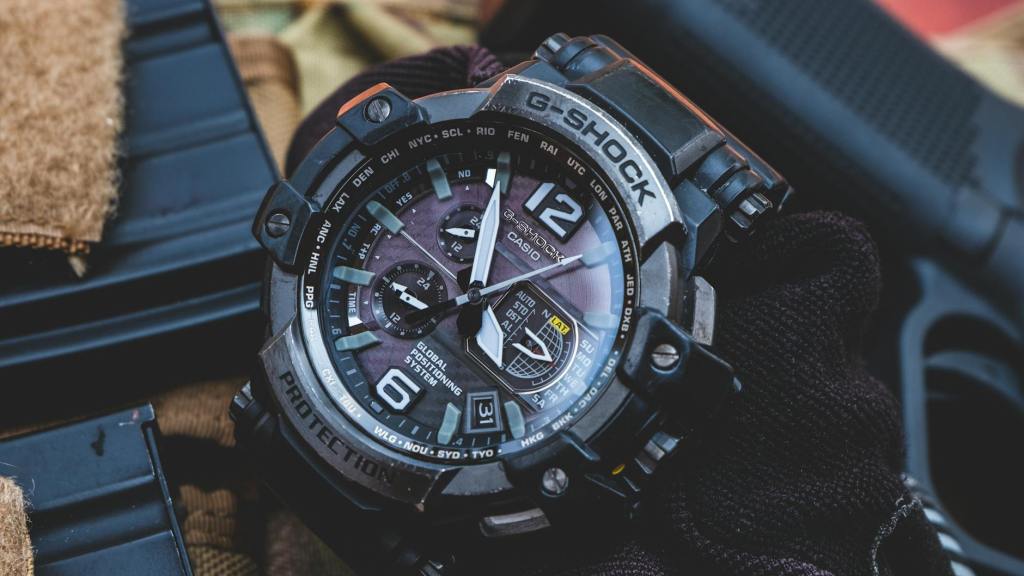
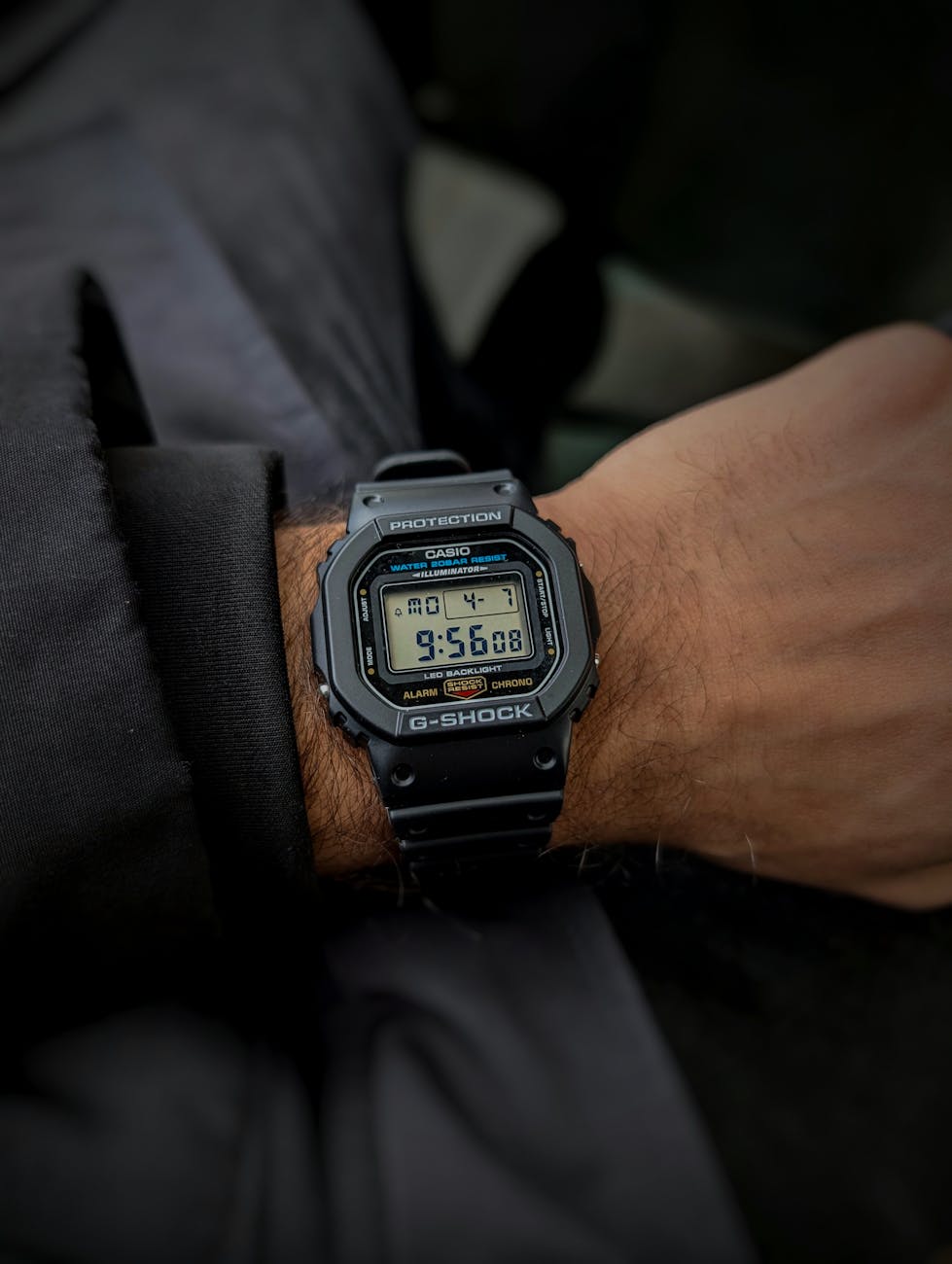
    Mechanical divers provide a respectable version of this transformation—heritage, competence, rugged restraint. But if you want the full Power Rangers experience, you eventually arrive at G-Shock. This is where the transformation stops pretending to be subtle. A Square, a Frogman, a Mudmaster—these don’t whisper identity. They shout it. The nerd brain lights up. The inner twelve-year-old sits forward. Somewhere deep inside, a voice is ready to announce, “Megazord sequence initiated.”

    And that’s the point. Beneath the curated adulthood—the mortgages, meetings, and ergonomic chairs—lives the same anxious kid who wanted to become someone stronger, braver, harder to ignore. The suburban professional who carefully selects his watches each morning is still reaching for his Zord. Because grown-up life, for all its spreadsheets and decorum, is still a little frightening. And sometimes the smallest, most irrational comfort is the feeling that, with the right thing on your wrist, you’ve just morphed into someone who can handle it.

  • The Morning Crisis No One Talks About: Choosing the Wrong Watch

    The Morning Crisis No One Talks About: Choosing the Wrong Watch

    You wake up, shuffle to the coffee maker, and open the watch box.

    Inside, a dozen small mechanical personalities stare back at you, each silently asking the same question: Why not me?

    You freeze.

    The seconds tick. Your coffee overflows. Your toast burns. Your heart rate climbs. This is not a simple accessory choice. This is a moral decision. Identity is at stake. Judgment will be rendered.

    Welcome to Watch-Rotation Anxiety, a condition built from four reliable pressures.

    First, the cognitive load: the sheer mental friction of choosing one watch from many. What should be a two-second decision becomes a committee meeting.

    Second, the creeping suspicion that whatever you choose is wrong. The diver feels too casual. The dress watch feels pretentious. The field watch feels underdressed for a meeting that probably won’t matter but might.

    Third, the guilt. The untouched watches sit in the box like neglected pets. You imagine them fading, unloved, wondering what they did to deserve exile.

    Fourth, the compensation ritual: multiple swaps. Morning diver. Midday GMT. Afternoon chronograph. Evening dress piece. By dinner you’ve worn four watches and bonded with none. The day becomes horological speed-dating—lots of introductions, no relationships.

    Some collectors attempt to outsmart the anxiety with systems. They create rotation schedules—actual calendars mapping two- or three-week cycles. Monday: black dial. Tuesday: titanium. Wednesday: vintage. The calendar decides so the mind doesn’t have to.

    Others rely on a more mystical framework. If Tuesday feels blue, a blue dial must be worn. If Sunday carries a gray mood, only gray will do. The week becomes a chromatic destiny, and the watch simply obeys.

    And then there are the cautionary tales.

    A friend of mine in Laguna Beach—successful, disciplined, financially immune to consequences—once owned a dozen Swiss luxury pieces. Each morning he would lay them out, tilt them toward the light, evaluate them against his suit, his meetings, his mood. What began as appreciation became ritual. What began as ritual became burden. What began as burden became madness.

    One day he solved the problem decisively.

    He gave them all away.

    He still wears watches now—but only those given to him by clients. Which has created a new, more specialized condition. Before every business lunch he must ask himself: Which watch did this person give me?

    In his case, Watch-Rotation Anxiety has not disappeared.

    It has simply evolved into something more professional.

    Client-Recognition Anxiety: the quiet fear that the wrong wrist might cost you the account.

  • When No One Notices, the Watch Finally Becomes Yours

    When No One Notices, the Watch Finally Becomes Yours

    A word of counsel to anyone entering the watch community: prepare to be ignored.

    You will spend months researching, comparing, obsessing over the ultimate timepiece. You will move money around with the strategic intensity of a small hedge fund. When the Holy Grail finally arrives and you fasten it to your wrist, it will hum with meaning. Your pulse will quicken. Your posture will improve. You will feel like a cross between a secret agent and a Power Ranger.

    Then you will go to a party.

    No one will notice.

    You will angle your wrist during conversation. Nothing. You will reach for a glass slowly, theatrically. Nothing. You will stand under brighter lighting, rotate the bezel, perhaps mention the brand in passing. Still nothing. The evening will end without a single comment. It will be as if both you and your grail passed through the room as a minor atmospheric event.

    This is the onset of Grail Invisibility Shock (GIS)—the disorienting realization that an object carrying enormous emotional weight for you occupies exactly zero space in anyone else’s consciousness.

    In the early years, GIS can sting. I would go home irritated, quietly wounded, entertaining dark thoughts about selling the watch that had failed to perform its social duties. If the world refused to applaud, what was the point?

    Time cures this illusion.

    Eventually, you understand something liberating: the watch you choose each morning is your private theater. The drama is internal. The audience does not exist. Your job is not to harvest attention or stage-manage admiration. Your job is simply to wear what you love.

    Once this realization settles in, public indifference becomes an unexpected gift. Without the burden of performance, the pleasure sharpens. The hobby sheds its social anxiety and returns to what it should have been all along—an aesthetic conversation between you and your wrist.

    When no one notices, the watch finally becomes yours.

  • When Watch Collecting Becomes Financial Infidelity

    When Watch Collecting Becomes Financial Infidelity

    Any honest account of watch addiction must confront its most uncomfortable chapter: financial infidelity.

    The watch obsessive does not merely inhabit a fever dream of dials and bezels. He is a consumer training his appetite the way a bodybuilder trains a muscle. Each purchase lowers resistance. Each box on the doorstep normalizes the next. What begins as an occasional indulgence becomes a rhythm, then a pattern, then a supply chain.

    At first, his wife is charmed. A parcel here and there. A harmless hobby. A grown man treating himself to a toy.

    But frequency is the tell.

    Soon the packages arrive too often, too predictably, like clockwork. The enthusiast recognizes the danger before anyone says a word. And so the hobby evolves. Deliveries rerouted to the office. A friend’s address. A rented mailbox. The collection expands. The domestic narrative is quietly edited.

    The line is crossed when the money changes categories.

    Vacation funds become “temporary reallocations.” Home projects become “later.” College savings become “untouched in principle.” And somewhere along the way, a Swiss luxury watch appears that cannot be explained without a level of honesty the buyer is no longer prepared to offer.

    Behavior adapts to the secrecy.

    Watches are swapped during the day so no single piece attracts attention. New arrivals are unboxed during strategic windows of solitude. Lume checks are performed under blankets like a teenager hiding a flashlight after lights-out. YouTube reviews are watched with the sound off.

    To the outside world, he is a responsible husband and father.

    Privately, he operates a parallel identity.

    This condition has a name: Domestic Double Life Disorder—the psychological split in which a man performs stability and restraint in public while privately sustaining a covert economy of acquisition, concealment, and rationalization.

    For some, the weight of the split becomes unbearable. Guilt accumulates. The numbers add up. The secrecy grows exhausting. And one day, the buying stops.

    The result is not relief.

    It is silence.

    No packages. No tracking numbers. No late-night research. No private surge of anticipation. Life becomes honest—and strangely flat. For a man accustomed to the adrenaline of concealment and the dopamine of arrival, integrity feels less like freedom and more like withdrawal.

    This is the danger point.

    Because if honesty feels empty and secrecy felt alive, the relapse writes itself.

    The addresses reappear. The justifications return. The private economy resumes. The double life feels, once again, familiar. Efficient. Even comforting.

    For some watch addicts, deceit is not the problem.

    It is the habitat.

  • Life Inside the Watch Relapse Cycle

    Life Inside the Watch Relapse Cycle

    For the watch obsessive, the most seductive experience is not the purchase.
    It’s the quiet and the possibility that his addiction is over.

    Every so often, something strange happens. The mind clears. The forums go unread. The YouTube algorithm loses its grip. The collection—miraculously—feels complete. No gaps. No missing category. No late-night searches for “best travel GMT under $5,000.”

    For a few fragile days, he wonders:

    Is this it?
    Am I… cured?
    Is this what normal people feel like?

    This state—call it Horological Remission—can be triggered by real life intruding. A demanding project at work. A family crisis. A trip to Maui where the ocean is more compelling than ceramic bezel technology. Or simple immersion in a good show—say, Fallout, where Walton Goggins and Kyle MacLachlan are busy navigating the apocalypse while, for once, the obsessive is not thinking about lug widths.

    During these rare intervals, he lives like a civilian. He checks the time without evaluating the watch. He moves through the day unaccompanied by reference numbers. He almost forgets that the phrase “micro-adjust clasp” exists.

    Hope appears.

    It never lasts.

    Because the obsession does not disappear. It waits.

    Somewhere in the unconscious lives the Octopus—patient, silent, its tentacles coiled around the deeper circuitry of attention. All it needs is a spark. A visual. A passing image. A drop of lighter fluid.

    Maybe it’s a scene in Homeland. A lean operative checks his watch. The obsessive leans forward.

    That looks like a Mudman.

    Now the cascade begins.

    Model number search.
    Variant comparison.
    Sapphire or mineral?
    Then: Full Metal series.
    Then: silver vs. black.
    Then: forum threads debating coating durability in “real-world tactical conditions,” most of which involve typing at a desk.

    This is Trigger Cascade—the rapid cognitive chain reaction in which a single exposure detonates into hours of research, comparison, and low-grade acquisition planning.

    Meanwhile, Homeland continues.

    The obsessive has no idea what’s happening.

    He cannot explain the plot, the characters, or the geopolitical stakes. But he now possesses a working knowledge of shock resistance standards across three generations of G-Shock metallurgy.

    This condition is known as Narrative Displacement Syndrome: the loss of engagement with the original activity as attention is hijacked by watch research, resulting in the peculiar outcome of knowing the reference number but not the story.

    At some point, awareness returns.

    He looks up from his phone. The episode is over. The room is quiet. Ten browser tabs glow like evidence.

    The Octopus has him again.

    In that moment, he experiences Relapse Lucidity—the painful clarity of recognizing the pattern while continuing to scroll.

    He may even feel cinematic about it. Like Charlton Heston on the beach at the end of Planet of the Apes, shaking his fist at the ruined monument of his attention span.

    You maniacs! You did it!

    Then another thought appears, calm and practical:

    If this is a relapse, should someone be filming me as I do my Charles Heston impersonation? And if that’s the case, should I be wearing the Black Bay… or the Planet Ocean?

    And just like that, the cycle resets.

  • G-Shock University: Studying for the Frogman Final Exam

    G-Shock University: Studying for the Frogman Final Exam

    My next personal project is to graduate from what I now call G-Shock University. Some people study Spanish. Others learn Italian. I, apparently, am trying to become conversational in Mode Logic.

    This is not my first attempt. Over the past twenty years, I’ve owned half a dozen G-Shocks, and every time the same thing happened: I opened the manual, felt like a tourist staring at a subway map written in hieroglyphics, panicked, and eventually sold or gave the watch away. I didn’t own the G-Shock. The G-Shock owned my anxiety.

    Not speaking the language of modes has been humiliating—like a prizefighter getting knocked out before the announcer finishes his name. But this time I want a comeback. This time I want fluency. Specifically, I want to master the Module 3184, the operating system inside the watch I’ve coveted for more than a decade: the digital Frogman GWF-1000.

    I don’t own the Frogman yet. First, I must earn it. I’m currently studying the operating guide like a nervous graduate student preparing for orals. I suffer from Mode Impostor Syndrome—the uneasy conviction that I am intellectually unqualified to own a feature-rich digital watch, combined with the quiet terror that someone will ask, “How do you switch time zones?” and I’ll freeze like a deer in tactical headlights.

    The interface is simple in theory: four buttons.
    Top left: A.
    Top right: B.
    Bottom left: C.
    Bottom right: D.

    Simple. Elegant. Also, somehow, psychologically menacing.

    Button C scrolls through the modes—the linguistic equivalent of changing verb tenses. My goal is modest. I want Timekeeping Mode set to LAX as my home city. I want World Time Mode so I can toggle easily when traveling to Miami, Cabo, or Maui. Diving logs, tide data, countdown timers, alarms—these are elective courses. I am here for conversational proficiency, not a doctorate.

    The manual’s tone is reassuring. Every complex procedure begins with a comforting phrase: First Thing You Should Do.

    The first thing, apparently, is to sit near a window. Already this feels less like a watch and more like a houseplant.

    From Timekeeping Mode, I hold A until the city code flashes. Then D moves east, B moves west, and eventually I land on LAX. Press A again to exit. Supposedly this locks in the Home City and sets the time.

    Supposedly.

    Here is where my second condition emerges: Mode Anxiety—the persistent fear that one wrong press will erase home time, activate some obscure subroutine, or send the watch into a digital wilderness from which it may never return.

    Page 6 introduces the Dual Time display. Press A to toggle between date and the selected World Time. This raises a terrifying question:
    Am I viewing another city… or accidentally reprogramming my home city to Miami?

    The last thing I need is to wake up in Torrance and discover I’m living psychologically in Florida.

    Manual time setting is even more daunting. Twelve variables: city code, DST, 12/24 format, seconds, minutes, hours, illumination duration, power saving, tone, day, month, year. This is no longer watch ownership. This is municipal governance.

    One setting, however, brings joy: button tone. Silence is essential. In Timekeeping Mode, hold A, press C nine times, toggle to Mute with D, press A to exit. At last, a victory. The watch will no longer beep like a microwave with opinions.

    Other questions remain.
    Do I need to manage DST, or will the radio signal handle it?
    How exactly do I move cleanly between Home and World Time without triggering a digital incident?

    At this point, I suspect what I really need is a one-hour Zoom session with a Professor of G-Shock Studies.

    Because this is no longer about a watch. This is about conquest.

    Like Ahab stalking the whale, I want to master the module and earn the right to wear the Frogman with confidence. What I’m really fighting is Frogman Qualification Anxiety—the belief that ownership of a high-end G-Shock must be earned through technical mastery, as if the purchase were a certification exam rather than a retail transaction.

    If I pass, I won’t just own a watch.

    I’ll finally be fluent.