Tag: mental-health

  • The Wrist That Ate the Workday

    The Wrist That Ate the Workday

    Working from home is supposed to be a privilege. Deliver the numbers, meet the deadlines, and you’re spared the slow death of freeway traffic and fluorescent lighting. Your company trusts you. Your productivity is tracked by a sleek little monitoring app that converts your workday into a tidy efficiency score.

    Unfortunately, your desk shares airspace with the enemy.

    The lacquered watch box sits there like a silent casino. You glance at the watch on your wrist. Nice. Solid choice. But what about the others? You lift the lid. A row of polished faces looks back at you—steel, lume, sapphire, promise. You’re supposed to be refining actuarial tables, tightening the language in your report, making sure the graphs don’t embarrass you in front of management.

    Instead, you swap.

    The new watch feels right. For three minutes.

    Then doubt creeps in. Maybe the diver was too heavy. Maybe the field watch better matches your “work-from-home professional” persona. Swap again. Back to the box. Another selection. Another micro-adjustment to your identity. Meanwhile, the cursor blinks on an unfinished paragraph, and your productivity score quietly bleeds out.

    You know the behavior is neurotic. You also know you’re waiting for a moment of revelation—for one watch to settle onto your wrist and announce, in a calm and authoritative voice, This is the one. The watches remain silent. So you keep rotating, chasing a verdict that never comes.

    What you have is Chrono-Proximity Compulsion.

    The disorder is simple: when your collection lives within eyesight, your brain enters a loop—check, compare, swap, repeat. Each decision feels minor, harmless, even rational. In aggregate, they shred your attention into chrome-plated confetti. The watches stop telling time and start interrupting it. Work hours dissolve into wrist experiments, each swap chasing a mythical state of alignment between object, mood, and self.

    The cure is drastic but effective.

    You remove the collection from the battlefield. Down to the basement it goes—sealed in a treasure trunk, out of sight, out of negotiation. No lineup. No options. No silent chorus asking to be chosen.

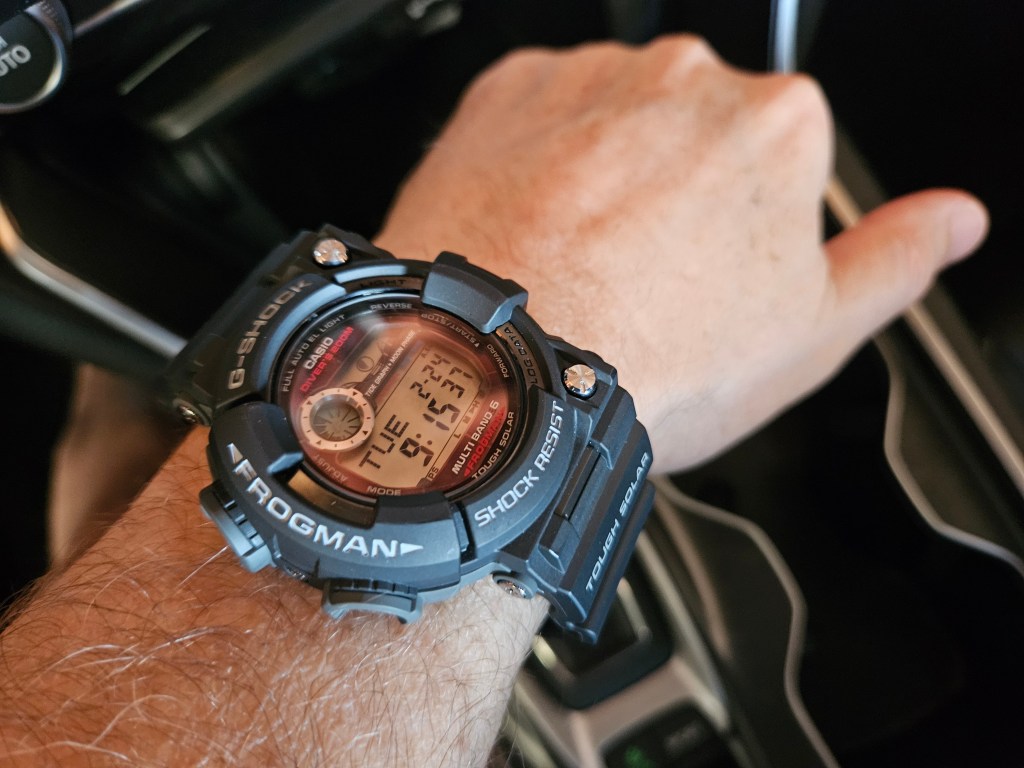
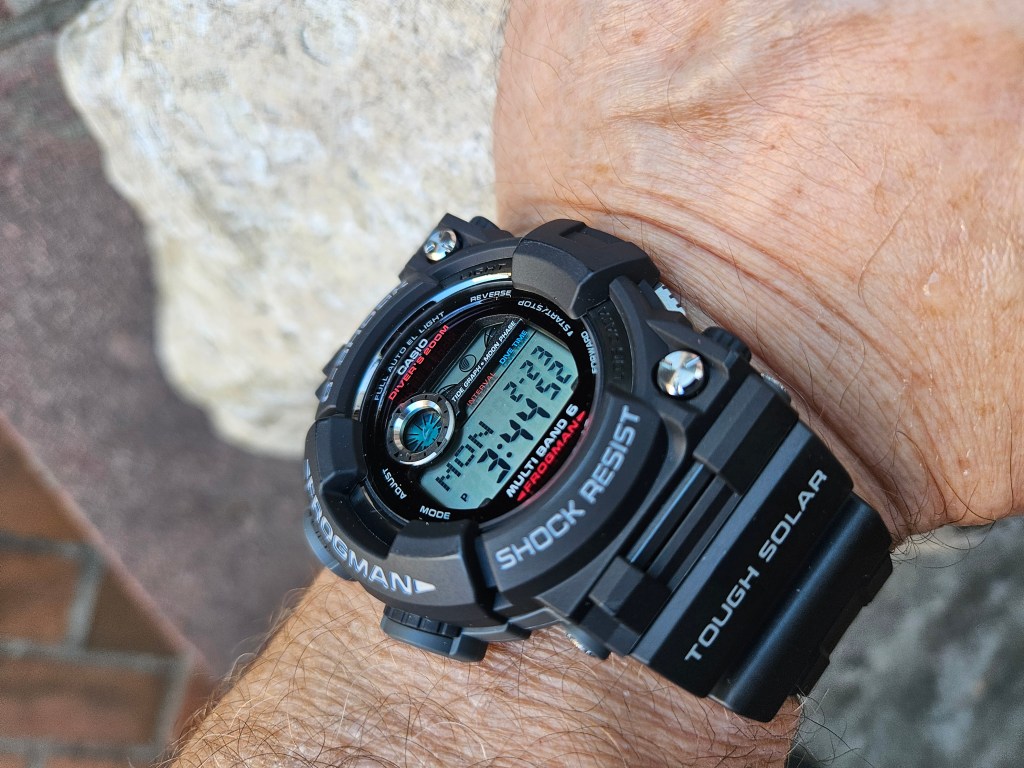
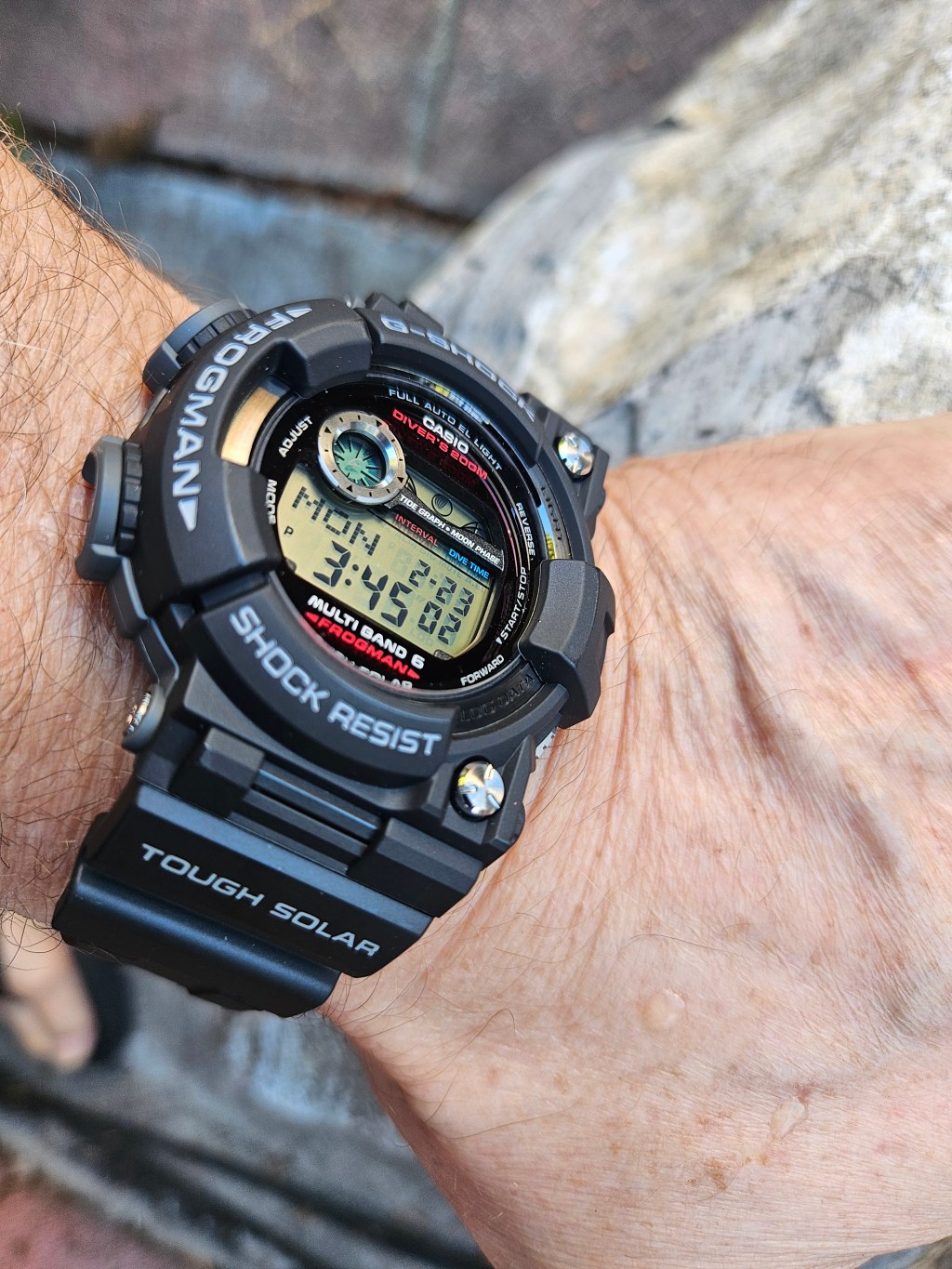
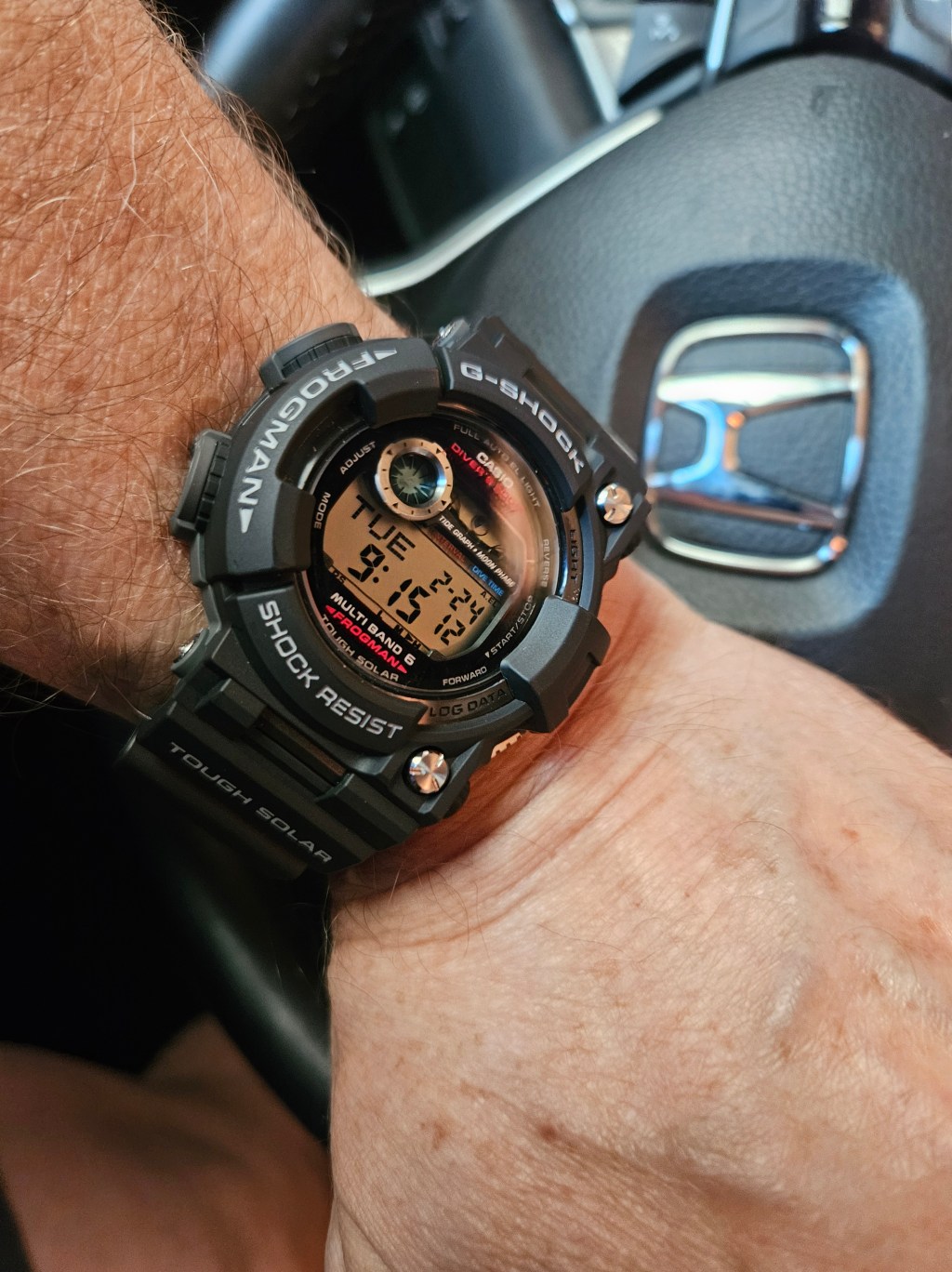
    On your wrist remains the G-Shock GW5000.

    It does not flatter you. It does not whisper about heritage, craftsmanship, or lifestyle. It does not ask to be admired or reconsidered. It delivers one message, blunt and unromantic: Get back to work.

    For the first time all day, the cursor moves.

    And the efficiency app finally has something to measure.

  • When Too Much Self-Awareness Kills the Hobby

    When Too Much Self-Awareness Kills the Hobby

    Your watch doomsday routine was entertaining at first. The addiction jokes, the madness metaphors, the psychological autopsies—it all had bite. But over time, the act hardened into a script. Same diagnosis, same grim prognosis, same weary punchline: the hobby is a pathology and you are its patient. What began as sharp self-awareness slowly turned into background noise. When every watch conversation ends in a cautionary tale, the insight stops sounding wise and starts sounding tired.

    Yes, the hobby has its absurdities. Grown men tracking bezel action like lab technicians. Endless forum debates about lume longevity and strap chemistry. The theater of acquisition, the drama of regret. It’s funny because it’s true. But truth has a shadow side: if you keep rehearsing the dysfunction, you begin to believe dysfunction is the whole story. And it isn’t. Watches are also craft, design, history, engineering, ritual, friendship, and—most dangerously of all—simple pleasure.

    Push the pessimism too far and you commit a quiet act of vandalism against your own life. Years of learning, refining your taste, and assembling a disciplined collection suddenly feel like evidence in a case against yourself. Instead of appreciation, you feel suspicion. Instead of satisfaction, you feel embarrassment. The hobby becomes a courtroom where enjoyment is treated as a character flaw.

    So ease off the throttle. Keep your critical edge—persnickety is part of the fun—but let some sunlight into the room. You don’t need to romanticize the hobby, but you don’t need to prosecute it either. Otherwise, you’ll fall into the Self-Sabotage Loop: the habit of undermining your own enjoyment by endlessly rehearsing the hobby’s worst traits—addiction, immaturity, manipulation—until pleasure itself feels irresponsible. That’s the trap. Too invested to quit. Too cynical to enjoy.

    The goal isn’t innocence. It’s balance. Own the flaws. Then wear the watch anyway.

  • Leaving Action Park: The Day Your Watch Obsession Loses Its Voltage

    Leaving Action Park: The Day Your Watch Obsession Loses Its Voltage

    In the 1980s, some of my New Jersey friends spent their summers at a place that now sounds less like a water park and more like a liability experiment: Action Park. After watching the documentary Class Action Park, I was reminded that this was no ordinary recreational facility. It was a carnival of abrasions, concussions, electrocutions, and broken bones—a gauntlet designed by people who apparently believed safety was a form of weakness. And yet, for the locals, surviving Action Park wasn’t a warning; it was a credential. If you came out scraped, bruised, and still standing, you belonged. You were tough. You were one of them. When a former employee explained the park’s eventual collapse, his answer was simple and almost philosophical: like everything else, it just took its course.

    Watch obsession operates the same way. When you’re deep inside it, the madness feels permanent. The research, the tracking, the buying, the selling, the late-night forum autopsies—it grips you with the conviction that this is who you are now. But no obsession sustains peak intensity forever. Eventually the voltage drops. The chase slows. The emotional temperature falls. And when it does, you enter what might be called a Tribal Burnout Exit—the quiet unwinding of an identity built around a shared fixation. The relief is immediate: less pressure, less noise, less compulsion. But the sadness follows close behind. You don’t just lose the obsession; you lose the tribe, the language, the rituals, the daily structure that gave shape to your time.

    This is the strange aftertaste of recovery. You escape the psychological Action Park—but you also miss the ride. The hobby that once exhausted you also organized your days and connected you to people who spoke your dialect of madness. Without it, the calendar can feel oddly spacious, even exposed.

    That’s why the end of watch madness shouldn’t be treated as a victory lap but as a transition plan. Obsessions always have a shelf life, whether you admit it or not. When this one burns out—and it will—you’ll need something sturdier, quieter, and healthier to take its place. Otherwise, the mind, uncomfortable with empty space, will simply go looking for the next amusement park.

  • Stop Writing About Your Obsession Before It Gets Worse

    Stop Writing About Your Obsession Before It Gets Worse

    You may be tempted to turn your watch obsession into literature. The idea has a certain romance. You picture yourself channeling Dostoevsky, producing a modern Diary of a Madman, transforming your horological unraveling into art—brave, raw, cathartic. You imagine clarity emerging from confession, insight distilled from chaos.

    But this is a dangerous illusion.

    Writing about your obsession does not drain it. It feeds it. The writer inside you is not a therapist; he is a scavenger. He needs material. And if the material isn’t dramatic enough, he will improve it. Soon you are not merely observing your compulsions—you are staging them, heightening them, curating your own instability for narrative effect. What began as self-examination becomes performance. You are now caught in a Pathology Amplification Loop: the act of writing about the fixation rehearses it, enlarges it, and gives it emotional weight. Reflection becomes rehearsal. Analysis becomes reinforcement.

    There is a second problem. Writing about watches keeps your attention locked on watches. For someone trying to loosen the grip of a fixation, this is the cognitive equivalent of hosting a wine tasting during sobriety. You are not stepping away from the stimulus. You are polishing it, describing it, lighting it for dramatic effect. Attention is fuel, and you are pouring it directly onto the fire.

    There is a third cost, and it is social. Confessional obsession reads less like literature and more like a slow-motion car crash. Your friends may be sympathetic, but sympathy has limits. Once people see the full machinery of your fixation—the spreadsheets, the rationalizations, the psychic weather reports—they quietly step back. You are still invited to gatherings. You are still greeted warmly. But you are no longer the person they choose for long conversations over coffee. Everyone has their own burdens. Few volunteer to carry someone else’s.

    The wiser move is not literary but physical. Shift the energy out of the head and into the body. Walk long distances. Lift something heavy. Eat food that grew in soil rather than in a laboratory. Maintain a modest calorie deficit. Build routines that produce fatigue instead of rumination. When watch thoughts rise, do not interrogate them, narrate them, or mine them for prose. Dismiss them the way you clear your throat when a cold threatens—briefly, calmly, without ceremony.

    The goal is not a better story.

    The goal is less story.

  • Precision Displacement: When the Bezel Replaces the Mirror

    Precision Displacement: When the Bezel Replaces the Mirror

    You know, at least in theory, that the soul deserves more attention than the watch box. But theory is one thing; the comfort of brushed titanium is another. The soul is abstract, unruly, and resistant to instruction. There is no manual, no torque specification, no authorized service interval. A watch, by contrast, behaves. It offers dimensions, tolerances, finishes, and measurable improvements. You can change a strap and feel progress. You can regulate a movement and feel control. The inner life asks unsettling questions; the outer object gives reassuring answers. And so, without ever making a formal decision, you begin treating the collection while postponing the treatment of yourself. The watches become a buffer—a polished, luminous perimeter against the vague anxiety of being a finite creature with unfinished business.

    This drift has a name: Precision Displacement Syndrome—the habit of redirecting emotional or spiritual uncertainty into domains that reward technical exactness. Instead of confronting meaning, identity, or mortality, you refine alignment, accuracy, and material quality. The language shifts accordingly. You stop asking whether your life is coherent and start asking whether the bezel action is crisp. The psyche seeks certainty wherever it can find it, and mechanics provide something the soul does not: compliance.

    Over time, this pattern produces a strange and impressive asymmetry. The collection improves. It becomes curated, rationalized, and narrated with the solemnity of a museum catalog. Meanwhile, the interior landscape narrows. Complexity is replaced by control; vulnerability by optimization. This is Gollumification—the quiet contraction of the inner life alongside the expansion of horological expertise. Faced with the untidy work of self-examination, the enthusiast retreats into the clean world of case thickness, lume performance, crown feel, and strap chemistry, where every unease can be translated into a specification and every mood can be managed with a purchase.

    The final transformation is subtle but unmistakable. Precision Displacement Syndrome does the thinking for you. Instead of asking, Who am I becoming? you ask, Is this the correct lug width? The watches grow more refined, more intentional, more spiritually justified. The wearer grows more guarded, more dependent, more quietly organized around objects that stabilize his emotional climate. Like Tolkien’s cave-dweller, he becomes pale but authoritative, whispering “my precious” over a perfectly regulated timepiece—externally upgraded, internally undernourished, and increasingly persuaded that mastery of the mechanism is a close enough substitute for mastery of his life.

  • The Watch That Quietly Took Over Your Life

    The Watch That Quietly Took Over Your Life

    Every so often, a strange coup takes place inside a watch collection. One piece—sometimes a $50 Casio, sometimes a $5,000 Tudor—quietly stages a takeover. It doesn’t announce its intentions. It simply shows up on your wrist one morning… and then the next… and then every day after that. Before long, the rest of the collection sits in the watch box like retired generals, decorated but inactive. Without ceremony, without debate, you’ve acquired a Watch Buddy—the one piece that absorbs nearly all your wrist time and rewrites the rules of your ownership.

    What makes the phenomenon unsettling is that you didn’t go looking for it. This was not your grail, your research obsession, your late-night forum fixation. It just happened. Somewhere between errands, workouts, and ordinary Tuesdays, the watch proved itself comfortable, legible, reliable, emotionally neutral in the best way. You wake up one day and realize you’re living inside the Accidental Grail Effect: a lifelong favorite that earned its status the old-fashioned way—by being easy to live with. No mythology. No prestige theater. Just quiet competence and the absence of friction.

    Curiously, most enthusiasts don’t liquidate the rest of the collection once the hierarchy becomes obvious. The other watches remain in their slots, like supporting actors who make the lead look better simply by standing nearby. Their presence sharpens the contrast. The Watch Buddy doesn’t just win—it wins by comparison, day after day, until its dominance feels less like a choice and more like gravity.

    This is not a honeymoon. Honeymoons are loud, hormonal, and short-lived—social-media enthusiasm followed by the inevitable cooling. The Watch Buddy is something else entirely: a long marriage. The dopamine fades, the novelty disappears, and what remains is habit, trust, and emotional silence. From that point forward, the collector’s behavior changes. The chase slows. The fantasy of the next perfect watch loses voltage. Because once you’ve found the one you actually live in, the rest of the hobby begins to look like what it always was—auditions.

  • Watch Hermit Mode

    Watch Hermit Mode

    At a certain point in the hobby, something subtle and irreversible happens: your internal rhythms begin to synchronize with the mechanical rhythms on your wrist. Time is no longer something you check; it is something you become. Welcome to Watch Hermit Mode—the state in which life is reorganized around precision, predictability, and the closed-loop efficiency of a well-regulated movement. The world outside is noisy, random, and inefficient. Your world is none of those things. Clothing becomes a uniform, routines run on fixed cycles, social invitations are flagged as system malfunctions, and discretionary hours are redirected toward higher-order maintenance: strap swaps, rotation optimization, wrist-time analytics, and the quiet satisfaction of knowing exactly how your collection is performing. Early mornings, early nights, and aggressive schedule defense are not quirks; they are operational strategy. What begins as efficiency slowly hardens into elective isolation. You are no longer merely wearing a machine. You are running its operating system.

    The symptoms appear gradually. First comes the 24-Hour Uniform Protocol. One outfit rules them all: sleep, gym, house, repeat. You go to bed in training shorts and a performance shirt, wake up in them, live in them, sweat in them, shower, and replace them with an identical specimen waiting like a spare part. Wardrobe changes are for amateurs and extroverts. You take quiet pride in your textile minimalism while lesser mortals stagger through multiple outfits a day like inefficient prototypes. Like a properly engineered movement, nothing in your system is ornamental. Every component has a function.

    Next comes the Saturday Night Diver Symposium. While your spouse and her friends are making custom concert signs for a desert music festival, you are at home performing strap swaps with surgical focus, refining a rotation calendar, and updating your annual wrist-time ledger. You know—without irony—that your Seiko Marine Master logged exactly 863 hours last year. This information feels important to you. It is less important to everyone else, who now watches you the way one observes a man who alphabetizes his spices by emotional significance.

    Your tolerance for human friction declines accordingly. Grocery shopping becomes a dawn operation conducted among the sleepwalking and the defeated. The early hour is not about convenience; it is about control. By the time the world wakes up, you have completed coffee, steel-cut oats, kettlebells, macro acquisition, and inventory storage. Bed at nine. Up at five. While the masses drift through their dreams, your system has already executed its morning cycle.

    The final stage is known domestically as Captain Cancel. Social plans are treated as hostile intrusions and neutralized with strategic intelligence: weather risks, parking deficiencies, epidemiological concerns, structural hazards, noise pollution, or the sudden discovery that a once-beloved comedian has not been funny since the Reagan administration. On the rare occasion you attend Taco Tuesday, you insert improvised ear protection, declare a medical issue, and Uber home to safety. The long-term result is operational peace. Invitations cease. The perimeter holds.

    If any of this feels familiar, the diagnosis is clear. You have optimized your life for accuracy, order, and solitude. The chaos of human variability has been replaced by the calm logic of regulated systems. In Watch Hermit Mode, you are not hiding from the world. You have engineered a better one—smaller, quieter, perfectly timed. The door is locked from the inside, the key discarded, and the movement is running beautifully.

  • The Dignity Liquidation Cycle: When Buying Feels Good and Selling Feels Necessary

    The Dignity Liquidation Cycle: When Buying Feels Good and Selling Feels Necessary

    If I were brutally honest, I’d admit that over the past twenty years, ninety-five percent of my watch purchases were impulsive. Which means ninety-five percent were evidence of arrested development with a credit card. I sold most of them at a loss—not because I needed the cash, but because I needed my self-respect. This is the Dignity Liquidation Cycle: the ritual of unloading recent purchases at a financial loss to restore psychological balance. The money forfeited becomes a self-administered fine, a tuition payment to the School of Impulse, and a symbolic attempt to reassert control over a mind that briefly wandered off without supervision.

    The harder question is not what I bought, but why I kept buying. My suspicion is cultural. I come from the Me-Generation, raised in 1970s California where desire wasn’t something to question—it was something to honor. Rob Lowe captured the atmosphere perfectly in Stories I Only Tell My Friends: the Counterculture as the Worship of the Self. Whatever the Self wants, the Self gets. No brakes. No compass. In Malibu’s sunlit dreamscape, people overdosed on pleasure, vanished into excess, and confused appetite with identity. When desire becomes sacred, reality becomes negotiable—and the bill eventually arrives.

    That wiring never quite left me. When I see a watch that speaks to me, my brain lights up like I’ve taken a controlled substance without the prescription. The surge is immediate and physical. Then comes the anger—not at the price, but at the loss of command. What does self-belief even mean if a rotating bezel can override your judgment? How do you grow into adulthood if your emotional economy still runs on the logic of a sixteen-year-old with access to a catalog?

    I don’t want rehab. I don’t want a hobby that has to be locked in a drawer for my own safety. I want a watch life that fits inside reality instead of pulling me out of it. Pleasure without compulsion. Enjoyment without drama. A collection that reflects judgment rather than appetite. In other words, I want the hobby to behave like an adult, even if the hobbyist occasionally does not.

    And here’s the punchline: even diagnosing the Me-Generation triggers nostalgia for being sixteen in Southern California in 1976, when the future felt endless and impulse felt like freedom. The danger is looking back too long. That way lies Lot’s wife, calcified in longing. So I change the channel. I close the YouTube reviews. Because the distance between “research” and “purchase” is about three videos—and I’ve learned the hard way that impulse has a very convincing voice when it sounds like happiness.

  • Mortality Attenuation: When the Hobby Survives but the Hunger Fades

    Mortality Attenuation: When the Hobby Survives but the Hunger Fades

    I’ve made more real friendships online over watches than I ever expected—full-grown adults bonding over bezel action, dial texture, and the shared conviction that the perfect collection is exactly one purchase away. It’s a peculiar fraternity: half hobby, half recovery meeting. We compare scars from impulse buys and premature flips. We confess, we relapse, we congratulate one another on restraint that lasts roughly twelve days. Then someone posts a new release, and the room goes quiet. We nod, knowingly. Maybe this time we’re cured, we say—the way a gambler says he’s just there for the buffet.

    My own delirium began in 2005, when I was forty-three and certain that mechanical watches were not merely instruments but therapeutic devices—tiny machines capable of repairing the larger, less cooperative machinery inside me. Twenty years disappeared in a blur of rotating bezels, “exit watches,” and divers purchased for hypothetical adventures that never rose above grading papers. The obsession didn’t feel excessive. It felt like maintenance.

    Then, at sixty-three, something shifted. Mortality didn’t shout; it tapped me lightly on the shoulder, like a polite but persistent waiter. The hobby didn’t vanish. The flame still burns. But the heat changed. The urgency drained away. After two decades of acquisition, a quiet truth settled in: no matter how precise the watch, it was still losing the only race that mattered.

    The sensation reminds me of a scene from Battlestar Galactica: a traitor is sealed behind glass, pleading as the airlock hisses and the crew looks on, solemn and unmovable. A ritual exile. That’s what aging feels like–not tragedy, not humiliation. Just the slow recognition that you’ve crossed into a different atmosphere. Those still inside the warm illusion of endless tomorrows don’t push you away. They simply drift forward without you.

    The pane lowers gently. You tap it, wave, even smile, but the cockpit of youthful urgency is sealed. No reentry. What remains is quieter work: dignity over display, usefulness over accumulation, meaning over inventory. You stop building collections and start building perspective. You become less of a buyer and more of a witness.

    This is the Mortality Attenuation Phase: the gradual reduction of acquisition fever as the finite horizon comes into view. The obsession doesn’t die. It simply loses its panic. The watches remain. The urgency does not. Objects can mark time. They cannot bargain with it.

  • When Wrist Presence Dies and Play Takes Over

    When Wrist Presence Dies and Play Takes Over

    In my early forties, I was intoxicated by wrist presence. I wanted watches so large they could signal low-flying aircraft. The bigger the case, the smaller my sense of self. These weren’t timepieces; they were emergency beacons for a man negotiating a quiet identity crisis. I wasn’t checking the time. I was broadcasting relevance.

    My vanity, however, was narrowly focused. I didn’t need a luxury car or a curated wardrobe. A sensible Honda Accord, a pair of jeans, a T-shirt, and a reasonably functional body were enough. The watch did the heavy lifting. It carried the narrative, the authority, the illusion of significance. For twenty years, this arrangement felt efficient: a minimalist life wrapped around a maximalist ego.

    Then, sometime in my sixty-third year, the chemistry changed. The thrill soured. The signature piece that once delivered a dopamine surge now felt like an old campaign slogan from a war already lost. I had entered what can only be called Vanity Burnout—the moment when the performance loop collapses and status objects lose their voltage. The competitive theater of self-presentation gives way to something quieter, less theatrical, and far more honest.

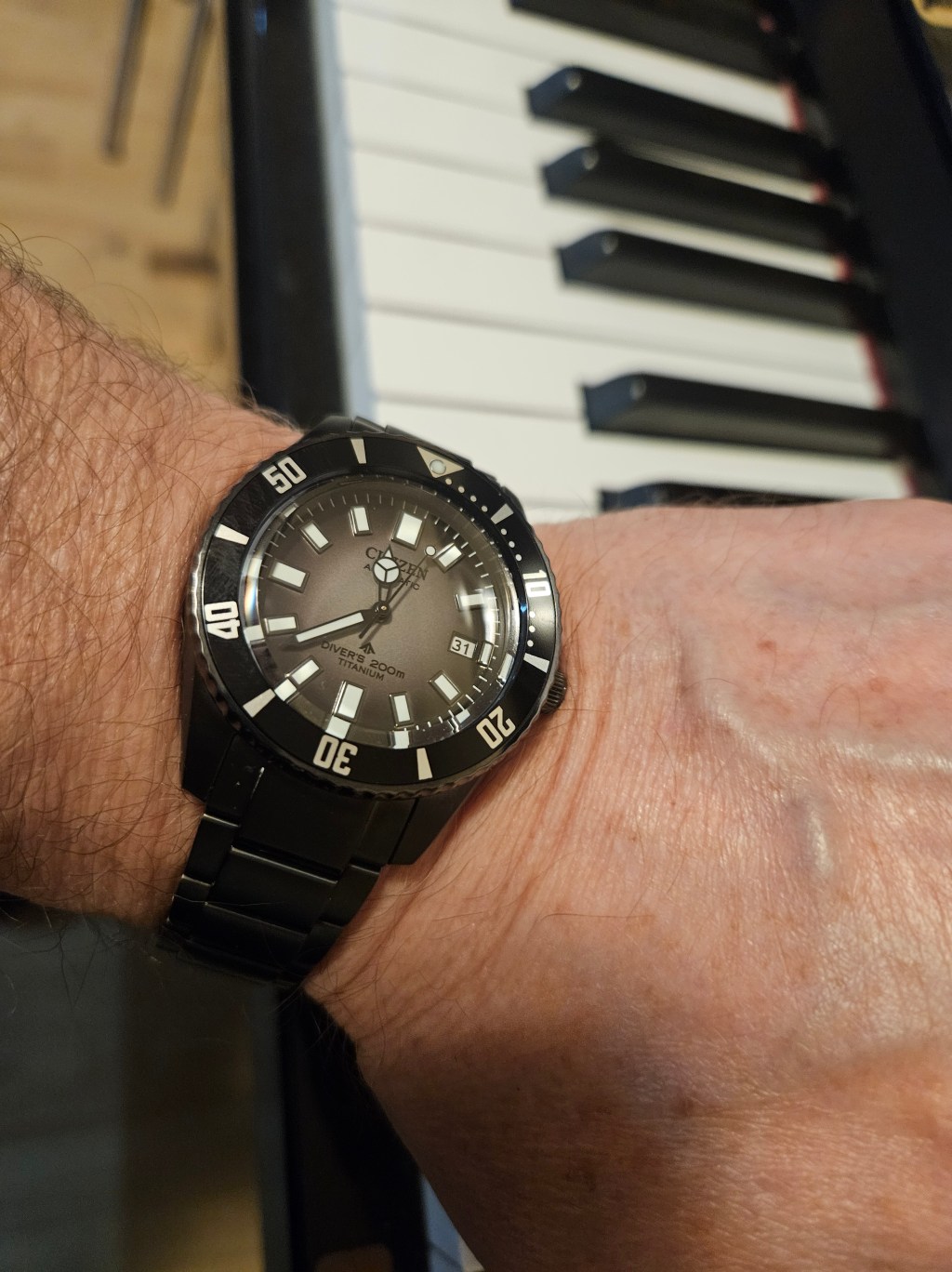
    I still love my divers. But the relationship has changed. They no longer feel like conquests. They feel like companions. The manic gleam is gone, and no amount of Instagram flexing or YouTube rumination will bring it back. The truth is blunt: every ticking second is a small reminder that the clock is not decorative. Time—the final minimalist—has stripped away the illusion of permanence and replaced it with perspective.

    And yet, in about a week, a G-Shock Frogman will arrive from Japan.

    It is enormous. It is loud. It borders on cosplay. By any rational standard, it contradicts everything I’ve just said.

    But this is not a relapse into status anxiety. Something else is happening. When the need to impress dissolves, the wrist becomes a private stage. The watch is no longer a signal to the world; it’s a toy for the soul. Certain territories remain protected—ritual, hobby, the small theater of personal delight.

    The vanity has burned off.

    The play instinct has not.

    And when I strap on that absurd, tactical Frogman, I won’t be announcing anything to anyone.

    I’ll just be smiling.