Tag: mental-health

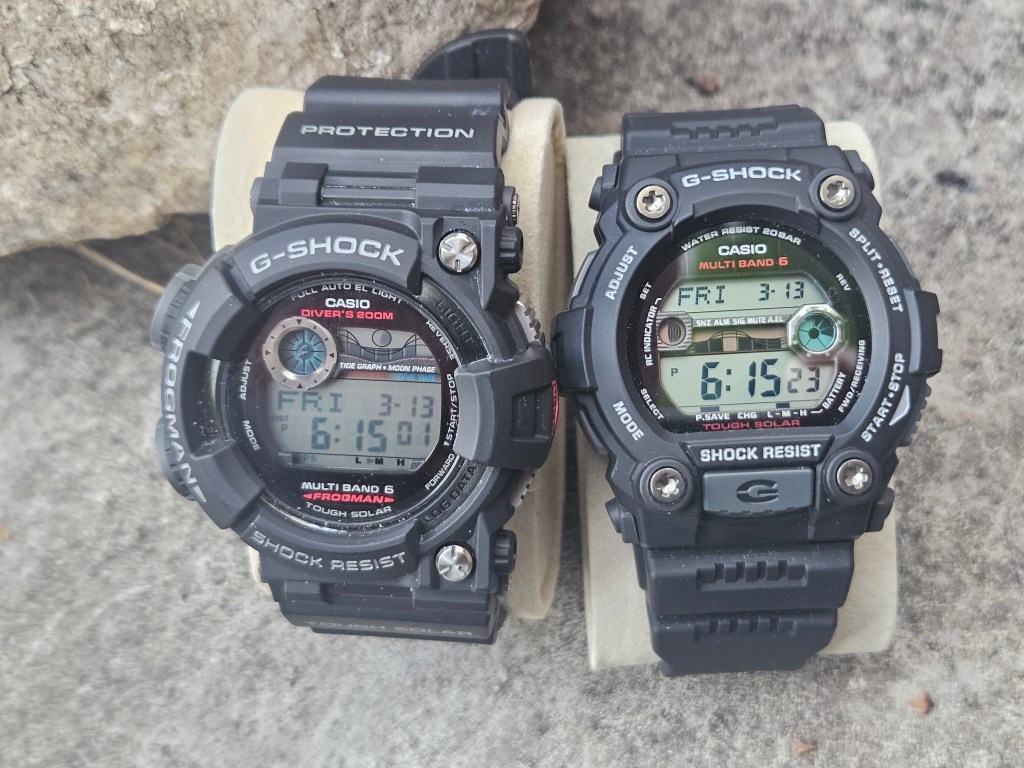
  • The Gospel of the Multiband 6 Solar G-Shock

    The Gospel of the Multiband 6 Solar G-Shock

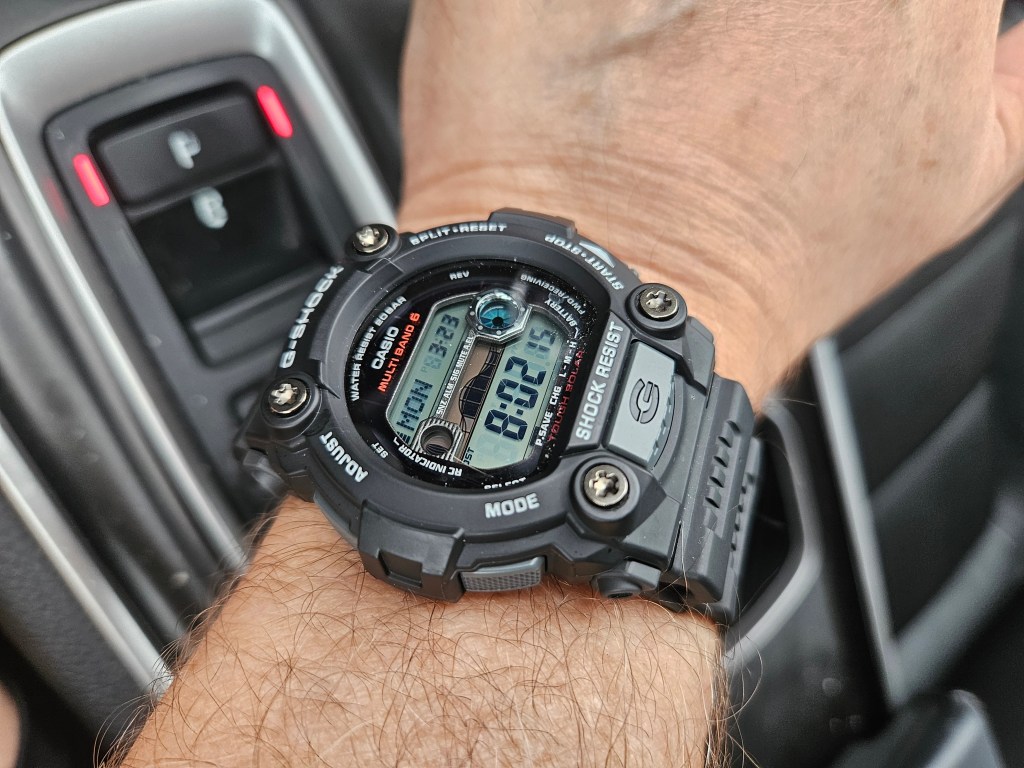
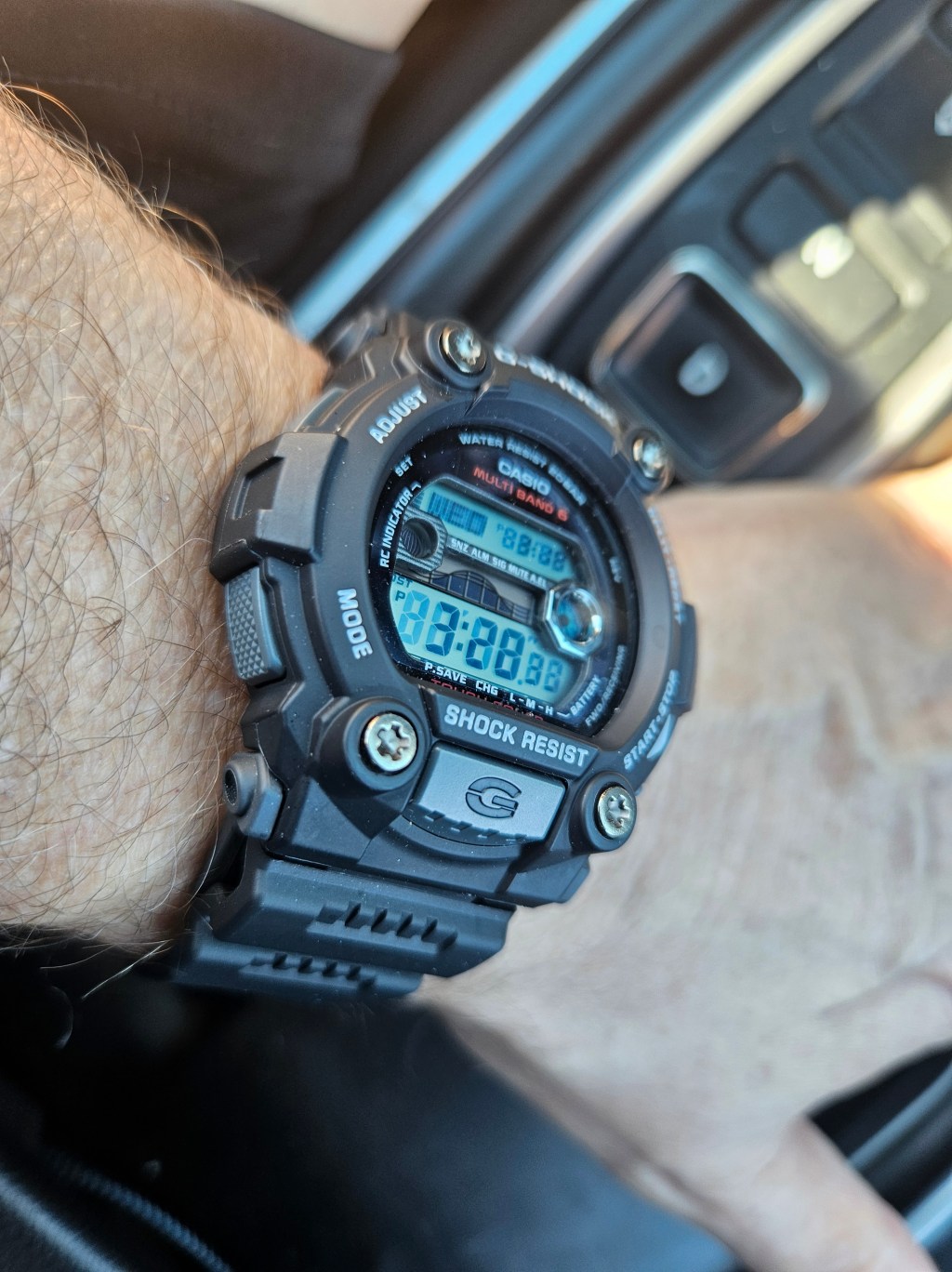
    If you’re drawn to a Multiband 6 solar G-Shock, you may possess what could be called the engineer mind—the temperament that treats maintenance as failure and automation as a moral good. You don’t want a watch so much as a system instance or virtual machine running on your wrist.

    A proper watch, in your view, should set itself, power itself, correct itself, and never—under any circumstances—require the fussy rituals of mechanical ownership. Manual winding feels like typing commands that should have been automated. Battery changes feel like scheduled downtime. Service intervals feel like flawed architecture. What you want is operational silence: install once, forget forever.

    For you, reliability isn’t a feature; it’s a philosophy. Drift is offensive. Inaccuracy produces low-grade anxiety. Atomic synchronization delivers more than precision—it delivers relief, the quiet satisfaction of knowing the number is exactly right, the emotional equivalent of clean code and zero errors. 

    Solar power satisfies the same instinct. External dependency is weakness. Self-sustaining systems feel intelligent. Over time, the watch stops feeling like an object and starts behaving like a background process—always running, never demanding attention, never crashing.

    Status signaling holds no appeal. Flash invites conversation, and conversation about objects is noise. A Multiband G-Shock communicates competence the way a well-organized server rack does: quietly, efficiently, and without asking to be admired. Like a good waiter, it serves your needs without being intrusive.

    Adding to its appeal, its overbuilt case, shock resistance, and water tolerance reflect your respect for systems designed for field conditions rather than showroom lighting. It performs like good infrastructure—essential, invisible, and indifferent to opinion.

    You may tell yourself it’s just a tool, but the attachment runs deeper. You move through a world that feels increasingly unstable, and the watch becomes an ally in your search for order. Each morning glance is less a habit than a systems check. Did it sync overnight? Is everything aligned? That small confirmation carries disproportionate comfort: something, somewhere, is still working exactly as designed.

    This is the onset of Operational Silence Dependency—the quiet attachment that forms when you come to value a device not for what it does, but for what it never asks you to do. The ideal tool makes no demands, sends no alerts, requires no rituals, and never interrupts your day with the mechanical equivalent of small talk. It sets itself, powers itself, corrects itself, and disappears. Over time, you stop noticing its presence and start depending on its absence of problems.

    You’ll know the shift is complete when you wear it through everything—sleep, showers, travel, deadlines, minor crises—because taking it off feels less like removing a device and more like disconnecting a trusted process.

    The depth of the bond becomes obvious when “upgrades” appear. New models promise new features, but you hesitate. Bluetooth, for example, strikes you as a category error. You prefer Multiband for the same reason a systems administrator prefers a cron job to a phone call: one is infrastructure; the other is a relationship. Atomic sync happens quietly in the night—no pairing, no permissions, no firmware prompts, no cheerful reminders to “stay connected.” Bluetooth drags the watch into the emotional ecosystem of the smartphone: updates, battery anxiety, dropped connections, and the faint suspicion that something somewhere needs your attention.

    Multiband 6 is operational dignity—set once, corrected by physics and radio towers that don’t need passwords. To the engineer mind, atomic time isn’t just elegant. It’s morally superior. Bluetooth asks for interaction. Multiband delivers silence—and silence, in your worldview, is the sound of a system working perfectly.

    So you won’t be replacing your Multiband 6 watch with the new Bluetooth model. The current one has proven itself. Replacing it would feel less like upgrading hardware and more like retiring a colleague who has never missed a deadline.

    Over the years, the watch absorbs your history—projects completed, trips survived, long stretches of life that passed without drift or failure. At that point, it is no longer equipment. It is continuity on the wrist: an uncomplaining witness, a small island of order carried through a world that rarely behaves as predictably as your watch does.

    The story doesn’t stop here. Over time, something subtle happens. The watch stops being something you wear and becomes something you operate with. Your rhythms align. You wake, it has already corrected itself. You move through deadlines, travel, minor crises, and long uneventful stretches, and it keeps the same quiet pace—never drifting, never asking, never failing. You stop thinking about it the way a pilot stops thinking about a reliable instrument: not because it’s unimportant, but because it’s always right. Somewhere along the way, the relationship shifts from ownership to partnership. You handle the chaos; it handles the time. Together you form a small, efficient system—human judgment paired with mechanical certainty. In a noisy, unreliable world, the two of you run clean, synchronized, and uninterrupted, less like a man and his watch and more like a single unit that simply works.

  • The Man Who Moved to G-Shock Avenue

    The Man Who Moved to G-Shock Avenue

    Paul McCartney once admitted that after the Beatles broke up, he couldn’t bring himself to play their songs. Too much history. Too much emotion packed into every chord. The music wasn’t just music—it was a former life. That’s how you feel about your mechanical divers. They now sit in what you’ve come to call the Box of the Abandoned Past—not discarded, not unloved, but too heavy with memory to wear without reopening old chapters.

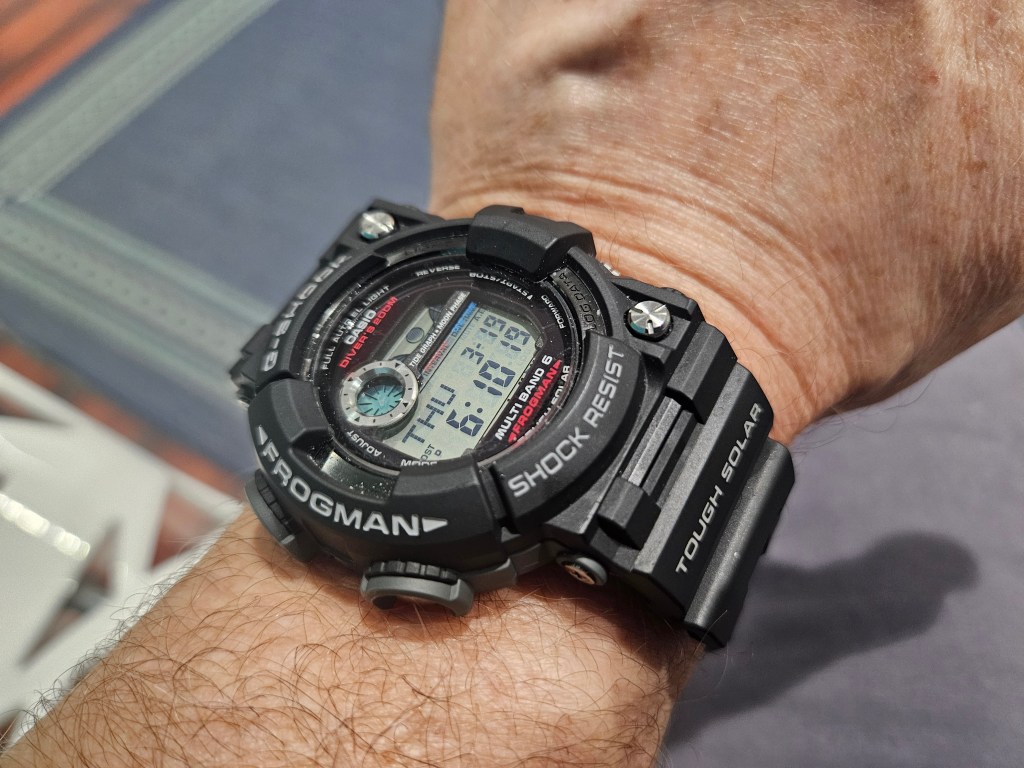
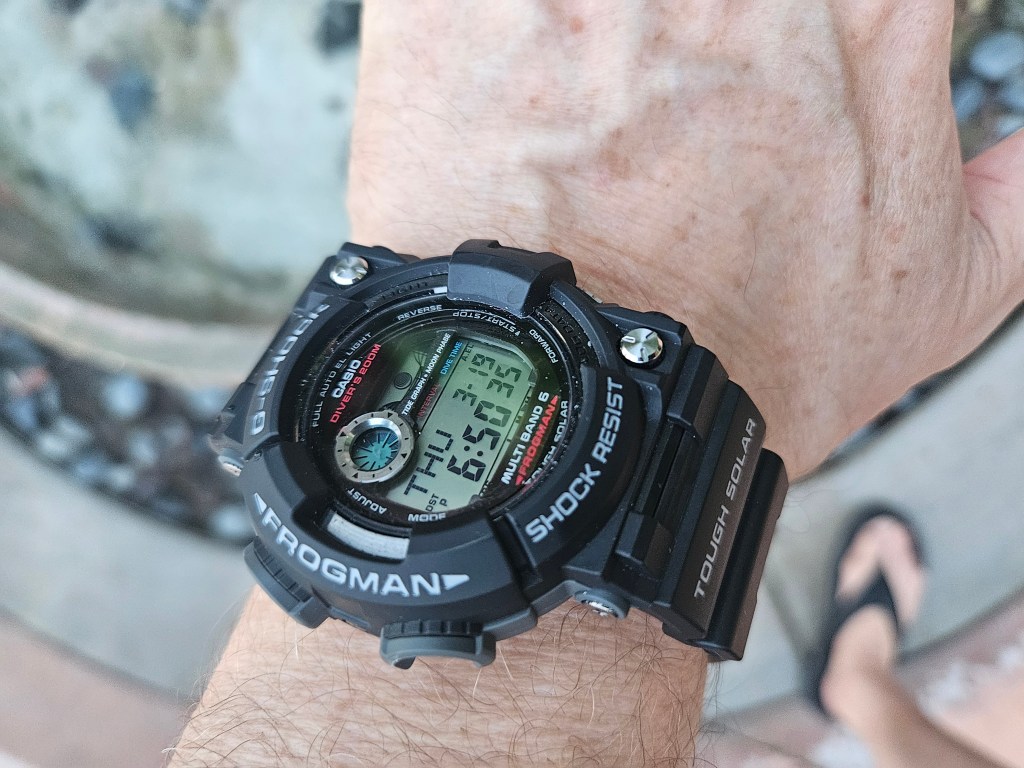
    Then the G-Shock Frogman arrived, and with it came a revelation: you hadn’t just bought a new watch—you had moved cities. For more than twenty years, you’d been living in Mechanical Town, polishing bezels and monitoring seconds like a municipal duty. Suddenly you realized you belonged somewhere else entirely. You packed your emotional bags and relocated to G-Shock Avenue. First the Frogman. Then the Rangeman. Then the high-end Square. No ceremony. No farewell speech. Just a quiet change of address.

    Years passed. Occasionally, you tried to revisit the old neighborhood. You’d take out a mechanical diver, strap it on, and see if the feeling returned. But like McCartney staring at a piano and deciding “Yesterday” could stay in the past, you always drifted back to the Frogman. It was lighter. Simpler. Emotionally frictionless. The past had craftsmanship. The present had peace.

    Still, you refuse to sell the mechanicals. They’re not watches anymore; they’re chapters. Expensive bookmarks in the autobiography of your former self. Once a year, you conduct the ritual. You open the Box of the Abandoned Past. You shine a small, theatrical light across the rows. You offer a quiet apology while Paul McCartney’s “Uncle Albert” plays in the background, the soundtrack of dignified transition.

    Your wife and daughters evacuate the premises during this ceremony, treating it with the same enthusiasm reserved for releasing an aerosol flea bomb in the living room.

    But alone in the room, you sing along, close the box, strap on the Frogman, and step back into the present—no longer a resident of the mechanical past, but a citizen, fully and permanently, of G-Shock City.

    You have entered painful terrain for the watch enthusiast: Emotional Migration. It is the moment a watch enthusiast changes allegiance not by selling a collection, but by quietly moving his identity to a new territory. The old watches may still sit in the box, polished and respectable, but the emotional address has changed. What once felt essential now feels historical; what once felt like an experiment now feels like home. There is no announcement, no dramatic purge—just the slow realization that your wrist no longer reaches for the past. Emotional Migration isn’t about acquiring something new. It’s about discovering that your center of gravity has relocated, and the watches you once loved now live where you used to live.

  • The Great Rangeman Dilemma

    The Great Rangeman Dilemma

    You should be grading over a hundred student essays right now—papers waiting patiently for marginal comments, thesis corrections, and the quiet mercy of a final score. Instead, you are wrestling with a question of far greater cosmic importance, a problem so profound it makes theological disputes such as substationary atonement look like small talk: Should you buy the positive or negative display of the G-Shock Rangeman GW-9400?

    After hundreds of hours on Reddit and YouTube—an advanced degree in amateur Rangeman studies—you have learned the central truth of the universe. The negative display looks better. The positive display works better. And now you stand at the fork in the road where beauty and usability glare at each other like rival theologians.

    Choose the negative display and you will live with Legibility Anxiety—the persistent suspicion that your watch looks magnificent but requires negotiation every time you want the hour. Choose the positive display and you inherit Aesthetic Anxiety—the quiet sense that you chose practicality at the expense of tactical cool. Either way, you lose something essential.

    Of course, there is the nuclear option: buy both. But this only deepens the disorder. Now each morning becomes a moral trial. Whichever watch you choose indicts the other. You will experience Rotational Guilt, the daily awareness that satisfaction has been structurally engineered out of the system.

    Welcome to the Great Rangeman Dilemma—the condition in which a minor consumer choice expands into a metaphysical crisis because every option comes preloaded with future regret. Time disappears into comparison videos, comment threads, lighting tests, and wrist shots while your actual obligations—those hundred essays—sit quietly aging like milk on the counter. The dilemma is not about watches. It is about the mind’s ability to convert a simple decision into a no-win psychological contract where perfection is mandatory, satisfaction is temporary, and productivity flatlines.

    Do not berate yourself for failing to solve it. Many have entered this labyrinth. None have emerged with certainty.

    Now close the browser.

    Your students are waiting.

  • Power Jewelry Rejection

    Power Jewelry Rejection

    Many of you have written to me about your migration from luxury mechanical watches to G-Shocks. In your telling, it wasn’t a casual shift. It was a renunciation. The grails were sold, the bracelets retired, the safe emptied. The wrist went digital and never looked back.

    Your stories are not universal. They are personal, situational, shaped by your own history with status, money, and identity. But taken together, they reveal a pattern worth examining.

    The turning point for many of you was a growing discomfort with what your watches had become: power jewelry. The grail that once represented achievement began to feel like a performance—an expensive signal broadcast to strangers. What had felt like success started to feel like theater. The watch no longer told time. It told a story about you, and you were tired of telling it.

    That moment marked the beginning of Power Jewelry Rejection.

    Power Jewelry Rejection is the instant a collector looks down and realizes he isn’t wearing a tool—he’s wearing a résumé. The rejection isn’t driven by finances or fashion. It comes from fatigue with the performance itself. The grail is sold. In its place comes something blunt, durable, socially invisible. And with that change comes an unexpected sensation: relief. Not the thrill of acquisition, but the quiet authority of no longer needing to explain yourself. This isn’t anti-luxury. It’s anti-broadcast. The real power is wearing a watch that does its job and asks nothing about your status in return.

    Once the performance ends, something else appears: a different kind of attachment.

    Many of you described a bond with your G-Shocks that never existed with your luxury pieces. Not pride. Not admiration. Something quieter. The watch became a companion rather than a symbol. You wore it hard. You stopped worrying about it. You trusted it. The relationship shifted from ownership to reliance. For the first time, the watch served you instead of representing you.

    Interestingly, this conversion produced very little missionary zeal.

    There was no urge to persuade others, no need to defend the choice. G-Shock Nation, as you quickly discovered, requires no recruitment. The community is vast, stable, and unconcerned with validation. Evangelism felt unnecessary, even absurd. Confidence made persuasion irrelevant.

    But honesty required one more admission.

    Yes, you had abandoned the idolatry of luxury. But you had not escaped devotion. You had simply changed altars. The emotional intensity remained—only the object had become more practical, more affordable, less socially conspicuous. The new attachment felt healthier, but it was still an attachment.

    And here is where the tone of your stories becomes notable: there was no triumphalism.

    You did not claim enlightenment. You did not declare moral victory. You acknowledged the obvious truth: you hadn’t left consumerism. You had changed its form. The new version felt cleaner, quieter, more aligned with your values. Less performance. More use. Less anxiety. More stability.

    No revolution. Just a recalibration.

    And that may be the most honest outcome the watch hobby ever produces.

  • Treat Your Watches Like Playlists, Not Religion

    Treat Your Watches Like Playlists, Not Religion

    For decades, your identity was secure. High-end mechanical divers. Steel, weight, heritage, tolerances measured in microns. A small, loyal brotherhood of engineering purity lived in your watch box, and you knew exactly who you were.

    Then the fairy tale cracked.

    A G-Shock Frogman entered your life.

    You told yourself it was a novelty. A tool. A temporary experiment.

    Then came the Rangeman.
    Then the premium Square.

    Now you’re standing over your watch box like a man who has betrayed his own lineage.

    Who am I?
    What have I done?
    What happened to my mechanical diver heritage?

    Relax.

    You’re not having a crisis. You’re experiencing Genre Guilt.

    Genre Guilt is the uneasy sensation that enjoying a new category somehow betrays the old one. The mechanical diver sits in the box like a disappointed mentor while the G-Shock hums cheerfully on your wrist, and suddenly you feel the need to justify yourself—to your friends, to your former self, possibly to the watches themselves.

    But the anxiety has nothing to do with enjoyment or function. It comes from a simple mistake: treating collecting like a moral code instead of a mood.

    Here’s the truth.
    Watches are not a marriage.
    Categories are not religions.
    Your collection is not a pledge of allegiance.

    It’s a playlist.

    Your streaming app doesn’t panic when you move from jazz to electronic. It doesn’t accuse you of betraying classical. It simply plays what fits your mood.

    Your collection works the same way.

    Mechanical divers: one playlist.
    G-Shocks: another.

    Millions of collectors do this. You haven’t broken tradition. You haven’t reinvented the hobby. You’re not undergoing a transformation.

    You’re a suburban enthusiast who briefly mistook preference for drama.

    So take a breath. Close the courtroom in your head. There is no betrayal here.

    Add the playlist. Wear the Frogman. Enjoy the Square.

    Your blood pressure—and your hobby—will run a lot smoother once you stop treating mood swings like moral events. Instead, treat your watches like playlists, not religion. 

  • When Enthusiasm Becomes a Sermon

    When Enthusiasm Becomes a Sermon

    Your fellow watch obsessives will tolerate your excitement—up to a point. Enthusiasm is welcome. Testimony is not. There comes a moment when you cross the invisible line from collector to missionary, and that’s when the room cools. The wrist shots multiply. The tone shifts. Conversations begin to sound less like sharing and more like recruitment. That’s when your friends deliver the social equivalent of a gentle intervention: Get a room.

    What they’re reacting to is Acquisition Afterglow—that brief, intoxicating window after a new watch arrives when the purchase doesn’t merely feel satisfying; it feels revelatory. The watch appears flawless. Doubts evaporate. The owner speaks with the calm authority of a man who has solved time itself. Posting frequency increases. Explanations lengthen. The watch stops being an object and becomes a philosophy. The danger isn’t the joy. The danger is the certainty. What feels like permanent clarity is usually just dopamine with a publicist.

    This is especially true when the revelation is G-Shock. You strap on atomic accuracy, solar autonomy, and blunt utility, and suddenly the mechanical world looks theatrical, sentimental, inefficient. It feels like you’ve discovered plutonium. But here’s the problem: millions discovered it before you. Some stayed in G-Shock Fever for life. Others burned hot for a year or two and drifted back to gears and springs. The experience feels revolutionary. Historically, it’s routine.

    So when the community quietly labels you a Watch Evangelist, the correct response is not denial—it’s calibration. Acknowledge the afterglow. Admit the volume got high. Then stop apologizing. Because enthusiasm is honest, and honesty is the only currency that matters in a hobby built on obsession.

    What you must make clear is this: you are not prescribing. You are not declaring a final truth. You are reporting weather conditions from your wrist. Today it’s G-Shock. Tomorrow, who knows. The emotional terrain shifted—that’s the story. The future is not.

    This is the posture of maturity in the hobby. Not certainty. Not conversion.
    You are not a Watch Evangelist.
    You are a Watch Agnostic.

  • Lost Inside the Time Matrix

    Lost Inside the Time Matrix

    Fun has never come naturally to me. When laughter showed up in my life, it arrived like an unscheduled visitor—pleasant, surprising, and slightly suspicious. Childhood wasn’t organized around fun. It was organized around performance, comfort, and controlled pleasure. If reality felt unpredictable, I built systems to keep it at a safe distance.

    Bodybuilding became one of those systems.

    I loved the structure. The measurable progress. The illusion that strength and discipline could turn life into something orderly and manageable. But let’s be honest: bodybuilding wasn’t fun. It was work disguised as purpose. My real occupation wasn’t lifting weights. It was self-soothing.

    And like any good neurotic, once I found a soothing routine, I locked onto it with the emotional flexibility of a steel beam.

    One week before placing second in the Mr. Teenage San Francisco contest, I finished a psychology exam and was talking after class with a girl who looked like she had been designed by a committee of Renaissance painters. Roxanne was nearly six feet tall, with sharp cheekbones, green eyes that moved slowly and confidently, and long honey-colored hair that suggested she lived in better weather than the rest of us.

    She invited me to the campus ale house. We could talk psychology. And, presumably, other matters.

    I checked my watch.

    It was Pec Day.

    I declined.

    There it was: paradise extending an invitation, and me consulting my schedule like a prison guard checking the lights-out list.

    I wasn’t choosing discipline over fun. I was trapped inside time itself. The routine didn’t support my life—it enclosed it. Roxanne wasn’t competing with the gym. She was competing with the system that kept the world at a safe emotional distance.

    The watch hobby operates in much the same way.

    At its core, it is a self-soothing mechanism—precision, order, control, measurable certainty in a world that offers very little of any of those things. But when the soothing becomes rigid, something strange happens. You stop living in time and start living inside a time matrix, where research replaces experience and optimization replaces spontaneity.

    At that point, the enthusiast risks becoming what the world casually calls a nerd—not someone who loves a subject, but someone who uses structure to avoid the unpredictable mess of actual life.

    The deeper lesson is the danger of the Schedule Fortress.

    A Schedule Fortress begins as discipline and ends as defense. Every hour has a purpose. Every deviation feels like a breach. Spontaneity becomes a hostile force that must be repelled. Inside the walls, you feel productive, controlled, even virtuous.

    But the cost is quiet and cumulative.

    Invitations get declined. Detours get avoided. Unexpected moments bounce off your life like rain off concrete.

    What began as time management slowly becomes life management.

    Then life avoidance.

    The fortress protects you from chaos, disappointment, and uncertainty.

    Unfortunately, it also protects you from surprise, connection, and the inconvenient truth that the best moments rarely arrive on schedule.

    Somewhere out there, Roxanne is still waiting at the ale house.

    And it’s still Pec Day.

  • When the Hobby Becomes the Opponent

    When the Hobby Becomes the Opponent

    The three-season comedy Loudermilk follows Sam Loudermilk, a recovering alcoholic played by Ron Livingston with the weary eyes and emotional gravity of a man who has seen too much of himself. Loudermilk is a music critic and group-therapy counselor operating out of a church run by a priest who tolerates him the way a landlord tolerates a tenant who pays on time but keeps starting small fires. Loudermilk insults everyone in sight—clients, friends, strangers, furniture—but beneath the sarcasm is a man fighting the most difficult opponent there is: himself. The misfits around him bicker, sabotage one another, and occasionally behave like emotional demolition crews, yet they remain bound by a shared reality. Addiction is not a single enemy. It is a civil war.

    Watching the show clarified something about obsessive personalities: the real damage comes from the voice inside the head. Addicts rarely need outside criticism. They are already running a full-time internal tribunal.

    Watch obsessives understand this well.

    Many of us live under a regime of Precision Self-Punishment—the habit of applying the same microscopic standards we use to judge watches to our own decisions, purchases, impulses, and regrets. Alignment must be perfect. Judgment must be flawless. Every mistake is measured in tolerances.

    The community, like Loudermilk’s circle, exists partly for the same reason: belonging. We gather because the outside world doesn’t understand why a dial texture can occupy the mind for hours or why a purchase can trigger both joy and self-reproach. We come looking for a place where our obsession isn’t dismissed—and where our self-criticism might soften.

    But there’s a pattern most enthusiasts eventually recognize.

    We are too hard on ourselves.

    We laugh at the madness. We make jokes about “the addiction.” But the humor doesn’t erase the anxiety, the late-night research spirals, the quiet exhaustion that comes from caring too much, too often, for too long.

    The deeper problem isn’t weakness.

    It’s stamina.

    Obsessive personalities can endure astonishing amounts of mental strain. We can run the hobby like a marathon at sprint pace—research, compare, doubt, regret, repeat—long after the activity has stopped being restorative.

    At some point, exhaustion becomes the only honest signal.

    That’s when a few enthusiasts do something radical: they tap out.

    No drama. No manifesto. They simply stop. They step back, lie down on the mat, and let the hobby breathe without them. Some return later with healthier boundaries. Others recognize that the hobby has become a 300-pound opponent they were never meant to fight and quietly leave the ring for good.

    This moment is the Tap-Out Threshold.

    It’s the point where the hobby has crossed an invisible line—from pleasure to pressure, from curiosity to compulsion. What once gave energy now drains it. Late-night research feels heavy instead of exciting. The next purchase feels like obligation instead of discovery.

    And here’s the crucial part: the threshold does not arrive with drama.

    It arrives with fatigue.

    At that point, the solution is no longer refinement, consolidation, or one final “correction purchase.” The solution is surrender—stepping back, stepping away, or stepping out entirely.

    The Tap-Out Threshold isn’t failure.

    It’s the moment when clarity finally outweighs momentum—and the enthusiast chooses peace over the fight.

  • The Hidden Gravity of the Watch Tribe

    The Hidden Gravity of the Watch Tribe

    Take a long, honest look at your fellow watch obsessives. They are not fools. They are intelligent, disciplined, frighteningly attentive to detail. These are people who can debate lume longevity like theologians parsing eternity. But like you, they wandered into the forest of horology and followed the glint of polished steel until the trail disappeared. Now they live among the trees, refreshing forums, studying release rumors, and calling it research.

    Like you, they dream of escape.

    Now imagine the impossible: you wake up one morning and the fever is gone. No urge to browse. No itch to upgrade. No late-night calculations about selling three watches to buy the one that will finally bring peace.

    It feels like ending a bad relationship you tolerated for years. One morning you look at the situation and say, quietly and without drama, “I’m done.”

    And just like that, you are.

    Now ask yourself what happens next.

    Your fellow obsessives will not celebrate your recovery. They will react like crabs in a bucket watching one of their own reach the rim. The moment you start climbing, the pincers come out. Links appear. “Just look at this one.” Wrist shots multiply. Someone whispers that a discontinued Seiko has surfaced — a rare opportunity, possibly your last chance at sanity.

    In the language of addiction, this force has a name: Bucket Gravity.

    Bucket Gravity is the invisible pull of the tribe — the group chats, the incoming posts, the shared excitement, the collective anxiety that turns private desire into social momentum. Addiction rarely operates alone. Community gives it mass, direction, and escape velocity in the wrong direction.

    And make no mistake: the community does not want you gone.

    But don’t mistake this resistance for cruelty. Your fellow collectors are not villains. They are loyal. They are affectionate. They are afraid.

    What they fear is the silence you leave behind.

    Your exit creates an emotional vacuum. Without you, there is one less person to validate the cycle — the buying, the selling, the regret, the recovery, the relapse. You were a witness to their struggle. You were a companion in the late-night rationalizations. You helped turn compulsion into culture.

    Without you, the noise drops. And in the quiet, each person is left alone with an uncomfortable question.

    You will miss them too. The camaraderie is real. The humor is real. The shared obsession creates a strange and powerful intimacy — a fellowship built from equal parts enthusiasm and mutual self-deception.

    But keep climbing.

    Because love that depends on shared compulsion is not healthy love. It is a support group disguised as a hobby and a feedback loop disguised as friendship.

    Get out of the bucket.

    Stand on solid ground. Become someone who enjoys objects without needing them, who appreciates beauty without chasing it, who measures time without being owned by it.

    Then — and only then — you can return to the world with a different kind of affection: not the anxious love of mutual enabling, but the steady kind that comes from being whole, quiet, and finally free.

  • When the Search Stops: Life After the Frogman

    When the Search Stops: Life After the Frogman

    After I posted my video, I Am the Frogman, the comments came in like evangelists at a revival.

    “I have to buy one now.”
    “McMahon, welcome to G-Shock. This won’t be your last.”
    “Once you taste the G-Shock glory, you can’t go back.”

    Those voices were still echoing in my head this morning—Day Three of my Frogman conversion.

    I opened the watch box. Seven magnificent Seiko divers stared up at me, polished, dignified, loyal. I looked at the Frogman on my wrist.

    Swap?

    Not a chance.

    The Frogman stays.

    That moment clarified something uncomfortable: the true watch obsessive isn’t chasing watches. He’s chasing a bond. Not a collection—a connection. At the center of the hobby is a private hope: one day, a watch will quiet the search.

    It’s too early to declare the Frogman The One, but something has shifted inside me. The mental vibration has changed. The noise is down.

    Imagine this: a collector buys a watch that silences his cravings—not only for new pieces, but for the ones he already owns. The wishlists lose their gravity. The forums lose their pull. The late-night browsing sessions evaporate.

    In medical terms, GLP-1 drugs reduce “food noise” by recalibrating the brain’s reward system. The Frogman appears to do something similar.

    Atomic precision. Brutal legibility. Tool-watch authority.

    The brain looks at the wrist and says: Enough.

    I seem to be in a state of Horological Appetite Suppression—a condition in which one watch satisfies the reward circuitry so completely that desire goes quiet. No hunting. No fantasizing. No itch.

    Just calm.

    The analogy isn’t perfect. GLP-1 kills pleasure. The Frogman is pleasure. It’s lean protein and cheesecake at the same time—pure function wrapped in outrageous fun.

    Still, the result is the same.

    The noise is gone.

    Of course, my fellow obsessives issued a warning: maybe the Frogman hasn’t cured your watch addiction. Maybe it’s just moving you into Phase Two–G-Shock addiction. 

    So I surveyed the landscape.

    The GW-5000: perfect, but too polite.
    The red Frogman: dramatic, but too dramatic.
    The Poison Dart: spectacular—on a 22-year-old influencer.
    The Rangeman: impressive, but not my watch.
    Titanium Frogmen: beautiful, but dangerously redundant.
    Full-metal Square: disqualified—bracelet violation.

    After careful consideration, I arrived at a radical conclusion:

    One Frogman is enough.

    Now comes the unsettling question.

    If the search is over—if the appetite is quiet—what happens next?

    Seven mechanical divers sitting idle.
    Fewer reasons to buy.
    Possibly fewer stories to tell.

    Has the Frogman cured the madness?

    Or refined it?

    Because here’s the strange part: if this is insanity, it’s the best version I’ve ever had.

    Maybe no one escapes obsession. Maybe the real task is wardrobe selection—choosing the madness that hurts least.

    There is the madness of endless rotation, endless comparison, endless hunger.

    Or there is the madness of devotion.

    Between the two, I’ll take the one that lets me sleep.

    Because when I look down at the Frogman, it doesn’t whisper.

    It delivers a verdict.

    “I am the time,” it says.

    “Your search is over.”