Tag: mental-health

  • Death by Beauty: Looksmaxxing and the Collapse of Meaning

    Death by Beauty: Looksmaxxing and the Collapse of Meaning

    Thomas Chatterton Williams takes a scalpel to the latest mutation of social-media narcissism in his essay “Looksmaxxing Reveals the Depth of the Crisis Facing Young Men,” and what he exposes is not a quirky internet fad but a moral and psychological breakdown. Looksmaxxing is decadence without pleasure, cruelty without purpose, vanity stripped of even the dignity of irony. It reflects a culture so hollowed out that aesthetic dominance is mistaken for meaning and beauty is treated as a substitute for character, responsibility, or thought.

    I first encountered the term on a podcast dissecting the pronouncements of an influencer called “Clavicular,” who dismissed J.D. Vance as politically unfit because of his face. Politics, apparently, had been reduced to a casting call. Vote for Gavin Newsom because he’s a Chad. At first, this struck me as faintly amusing—Nigel Tufnel turning the cosmetic dial to eleven. Williams disabuses us of that indulgence immediately. Looksmaxxing, he writes, is “narcissistic, cruel, racist, shot through with social Darwinism, and proudly anti-compassion.” To achieve their idealized faces and bodies, its adherents break bones, pulverize their jaws, and abuse meth to suppress appetite. This is not self-improvement. It is self-destruction masquerading as optimization, a pathology Williams rightly frames as evidence of a deeper moral crisis facing young men.

    Ideologically, looksmaxxers are incoherent by design. They flirt with right-wing extremism, feel at home among Groypers, yet will abandon ideology instantly if a rival candidate looks more “alpha.” Their real allegiance is not conservatism or liberalism but Looksism—a belief system in which aesthetics trump ethics and beauty confers authority. Williams traces the movement back to incel culture, where resentment and misogyny provide a narrative to explain personal failure. The goal is not intimacy or community but status: to climb the visual pecking order of a same-sex digital hive.

    At the center of Williams’ essay is a quieter, more unsettling question: what conditions have made young men so desperate to disappear into movements that erase them? Whether they become nihilistic looksmaxxers or retreat into rigid, mythic religiosity, the impulse is the same—to dissolve the self into something larger in order to escape the anxiety of living now. As Williams notes, this generation came of age online, during COVID, amid economic precarity, social fragmentation, and the reign of political leaders who modeled narcissism and grifting as leadership. Meaning became scarce. Recognition became zero-sum.

    Williams deepens the diagnosis by invoking John B. Calhoun’s infamous mouse-utopia experiment. In conditions of peace and abundance, boredom metastasized into decadence. A subset of male mice—“the beautiful ones”—withdrew from social life, groomed obsessively, avoided conflict, and stopped reproducing. Comfort bred collapse. Beauty became a dead end. Death by preening. These mice didn’t dominate the colony; they hollowed it out. NPCs before the term existed.

    The literary echo is unmistakable. Williams turns to Oscar Wilde and The Picture of Dorian Gray, where beauty worship corrodes the soul. Wilde’s warning is blunt: the belief that beauty exempts you from responsibility leads not to transcendence but to ruin. Dorian’s damnation is not excess pleasure but moral vacancy.

    The final irony of looksmaxxing is that it produces no beauty at all. The faces are grotesque, uncanny, AI-slicked, android masks stretched over despair. Their ugliness is proportional to their loneliness. Reading Williams, I kept thinking of a society fractured into information silos, starved of trust, rich in spectacle and poor in care—the perfect compost for a movement this putrescent. Looksmaxxing is not rebellion or politics. It’s a neglected child acting out. Multiply that child by millions and you begin to understand the depth of the crisis Williams is naming.

  • Are We Extras in Someone Else’s Luxury Watch Fantasy?

    Are We Extras in Someone Else’s Luxury Watch Fantasy?

    Six weeks with my fifteen-year-old twins is a better sociology course than anything you’ll find at UCLA. Their generation runs on shared experiences—amusement parks, concerts, parties—and the sacred ritual of turning those moments into cinematic TikToks. They love empathy. They love energy drinks. They love boba with the devotion earlier civilizations reserved for gods. They exchange hugs so theatrical they deserve SAG cards. They also love not driving. Why would they? They have concierge parents for that. The car is not transportation; it’s a mobile confessional booth where they talk, text, and disappear into playlists like monks retreating into sonic monasteries. Licenses can wait. I’ll be stunned if either one pilots a vehicle solo before age twenty-five.

    They dress alike, too—hoodies, high-rise jeans, baggy sweatpants. When I pick them up from school, I scan a sea of identical silhouettes and play a grim game of Where’s Waldo: Daughter Edition. It’s like they all emerged from the same fashion assembly line, stamped and released in bulk.

    Then there’s the strangest quirk of all: the generational terror of bare feet. We live in Southern California, where flip-flops are a constitutional right. But when my daughters’ friends come over, I’m ordered—ordered—to put on shoes. Feet are not feet anymore. They’re “dogs,” “grippers,” “claws,” a traveling carnival of anatomical horror. One girl saw my bare feet and reported back like she’d witnessed a crime scene. Since then, I suit up like a hazmat worker whenever teenagers enter the house.

    Watching their collective likes and dislikes has turned me into an amateur René Girard scholar. Girard argued that we don’t want things because they’re intrinsically wonderful; we want them because the tribe wants them first. Desire is social plagiarism. The tribe writes the script, and we perform it thinking it’s improvisation.

    But there’s a dark twin to mimetic desire: mimetic aversion. If the tribe hates something, we learn to hate it, too—even if we never felt a flicker of disgust on our own. Case in point: “I saw your dad’s dogs. Gross.” A moral judgment delivered about toes.

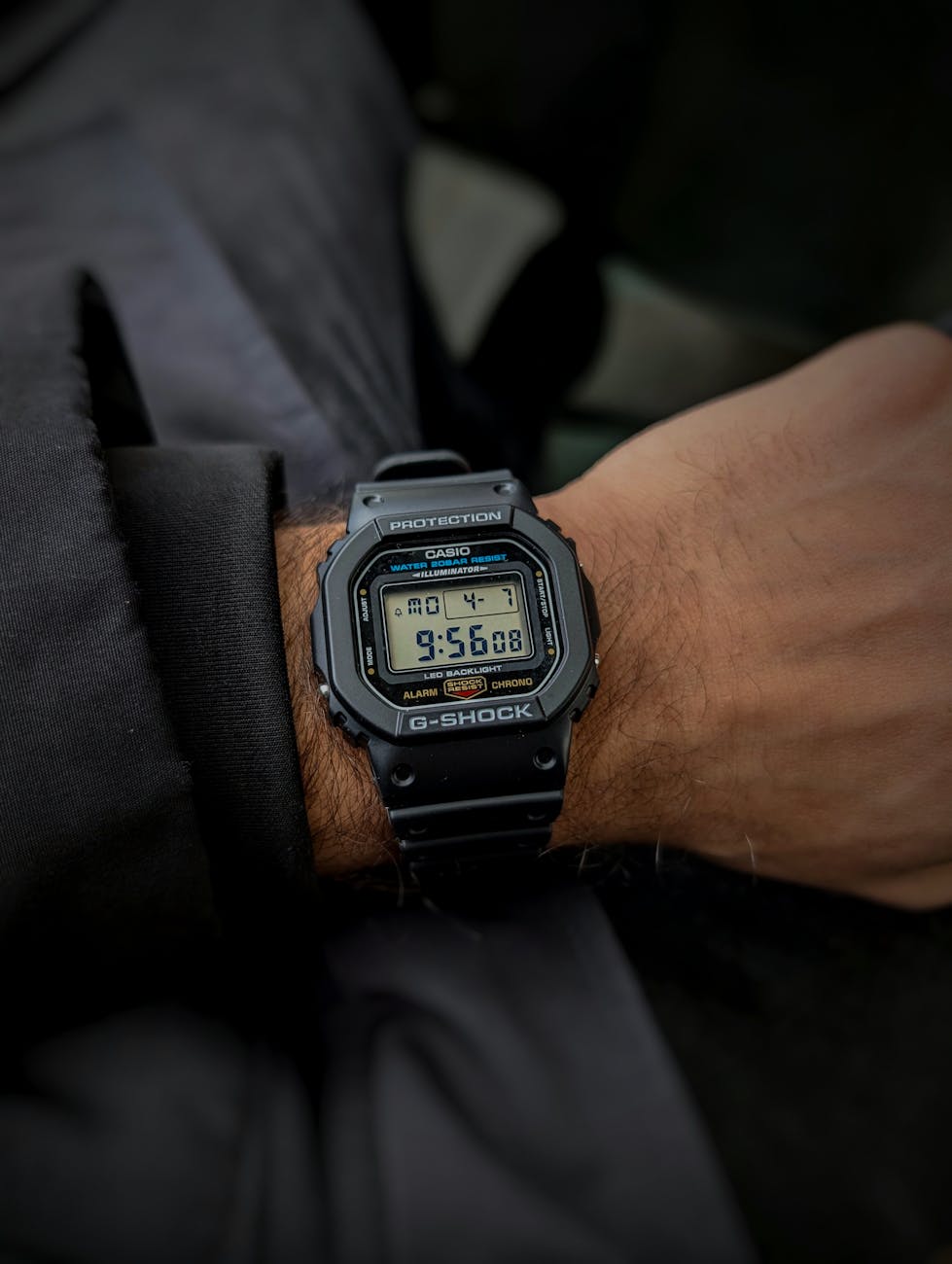
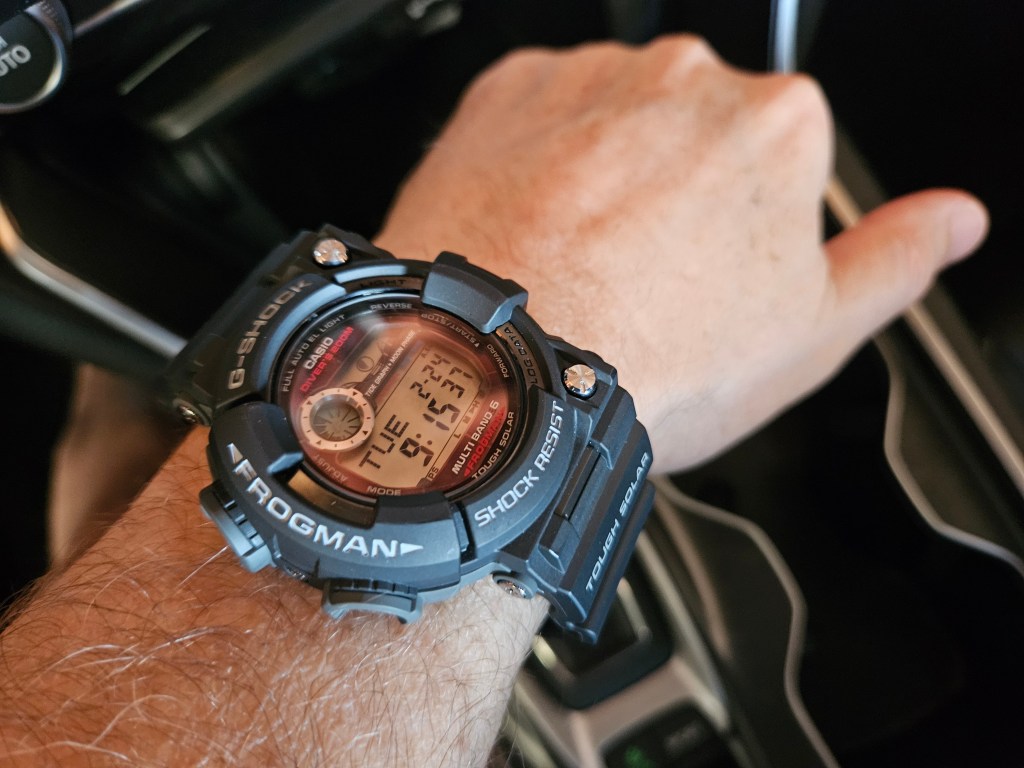
    Naturally, this has sent my twenty-year watch obsession into a philosophical tailspin. When we crave a watch, is it a private passion—or just tribal ventriloquism? Are we collectors, or are we obedient extras in someone else’s luxury fantasy? And if we’re that easily programmed, doesn’t it expose something mildly humiliating about us—our insecurities, our hunger to belong, our weakness for social approval dressed up as taste?

    Maybe understanding desire would clarify us. Or maybe it would only prove how unclassifiable we really are. Some mysteries resist labels.

    Still, in the watch world, mimetic aversion is practically doctrine. Quartz watches are treated like dietary betrayal. You used to grill rib-eyes and now you’re flipping soy burgers? Next you’ll be wearing Crocs and asking for decaf. Show up at the wrong meet-up with a quartz on your wrist and you won’t just lose respect—you’ll lose invitations, subscribers, and possibly citizenship. “Quartz?” they’ll whisper. “Traitor.”

    On the flip side, mimetic desire runs the show just as ruthlessly. Look at the waiting lists. Look at the resale prices. When you buy certain watches, you’re not buying steel—you’re buying absolution. A Rolex Sub isn’t a timepiece; it’s a baptism. The tribe anoints you with holy water and hums a choral anthem over your wrist.

    So yes, the watch hobby is soaked in mimetic desire and mimetic aversion. But here’s my heresy: if you’re a true watch obsessive, those forces barely apply to you. Because your relationship with watches isn’t tribal. It’s theological.

    A real watch obsessive is ruled by three forces.

    First, the Svengali Effect. A certain watch doesn’t attract you—it hypnotizes you. It hijacks your agency like a charming cult leader. You try to resist. You fail. The watch plants itself in your brain and grows there like an invasive eucalyptus until surrender feels like destiny. This isn’t imitation. This is possession.

    Second, Horological Fixation. At this stage, your watch stops being a timekeeping device and becomes a visual narcotic. You no longer use your watch to check the time—you commune with the object. The world fades. The wrist becomes a shrine. Eden relocates to forty-two millimeters of brushed steel.

    Third, Horological Transfiguration. You put on the watch and—boom—you’re not just dressed, you’re transformed. James Bond. Jacques Cousteau. Brad Pitt walking into a bar where the jukebox automatically switches to something heroic. The watch doesn’t accessorize you; it authorizes you.

    I’ve known watch obsessives for decades. I know the symptoms. I know the tells.

    So if you live under the Svengali Effect, Horological Fixation, and Horological Transfiguration, René Girard’s mimetic theory doesn’t really apply. The good news: you’re not a phony lemming chasing tribal approval. The bad news: you’re completely unhinged.

    Congratulations. You’re a true watch obsessive—authentic, independent, gloriously insane.

    Now put on your watch. You’ve been Clark Kent long enough. It’s time to rip open the shirt and let the cape fly.

  • Notes from a Man Who Almost Quit

    Notes from a Man Who Almost Quit

    A couple of days ago I posted a video that wandered—cheerfully and without a map—through two connected ruins: the normalization of male anger among boys raised by furious fathers in the 1970s, and the era’s larger faith in the Cult of Self. The seventies didn’t just give us flared jeans and shag carpets; they gave us a theology in which personal desire was holy and self-fulfillment was the promised land. If it felt good, it must be true. If it felt restrictive, it must be oppression. The problem, of course, is that this gospel of indulgence didn’t liberate anyone. It detached people from reality—its dangers, its obligations, its stubborn insistence that meaning comes from service, not worship of the mirror. Happiness, in adult life, is a side effect of using your talents to serve others. In adolescent mythology, it’s supposed to arrive through nonstop self-adoration. One path leads to purpose. The other leads to addiction, loneliness, and a master class in self-inflicted insanity.

    I was nervous about posting the video because it rambled like a drunk uncle at Thanksgiving. Structurally, it was a mess. Spiritually, I loved making it. Instead of delivering a pinch-faced lecture, I told stories—about my younger days as a glutton disguised as a bodybuilder, an aspiring hedonist loitering with my surfer-bro friend, both of us chasing pleasure like it owed us money. To my surprise, the audience didn’t flinch. The comments came back warm. The themes—male anger, Boomer dislocation in a world that moved on without us, the tragic comedy of self-indulgence—landed. Apparently, people still have an appetite for conversations that don’t flatter them.

    What made the whole thing sweeter is that I had been flirting with the idea of quitting YouTube altogether. My excuse was noble-sounding: I’ve already said everything worth saying. But underneath that was a quieter truth—I was retreating. Folding inward. Slipping toward a comfortable, well-furnished silence. Then a louder voice cut in: Don’t confuse retirement with wisdom. Don’t confuse exhaustion with completion. The video became a small rebellion—my living self telling my future fossilized self to take a hike. Life won the argument.

    Now I face the classic writer’s hangover: the fear that I’ve set a standard I can’t meet again. After a piece feels honest, everything that follows looks trivial, trite, or terminally lame. But that fear is the job. Writing isn’t a vending machine that spits out brilliance on command. It’s excavation. You dig and dig and learn to tell the difference between ore and dirt. If you can’t live with that grind, you’ll anesthetize yourself with Netflix and hero sandwiches until despair arrives—far uglier than the honest struggle you tried to avoid. Creation is hard. Avoiding it is harder.

  • Seven Watches, Fifteen Grand, and One Hard Lesson About Growing Up

    Seven Watches, Fifteen Grand, and One Hard Lesson About Growing Up

    People always ask why I started focusing on watches ten years ago on my YouTube channel. The honest answer is awkward: I love watches—but I love food more. Obsessively more. Food has been my lifelong religion. In the early ’90s, when I lived in a bachelor pad that smelled like basil and ambition, my Navy SEAL friend Mike used to call and say, “McMahon, I can hear you chewing through the phone again. Every time I call you, you’re eating. What is it now, Fat Face?”
    “Angel hair pasta with pesto.”
    “Sounds dangerous. I’m coming over, Fat Face.”
    And he would—just in time to demolish everything I’d made. His appetite was powered by military drills and endless surfing sessions in Huntington Beach and Ventura. The man burned calories like a forest fire burns pine needles.

    One day he called again. “I’m heading to Santa Barbara to surf. Come with me.”
    “I can’t surf, Mike.”
    “I know you can’t surf, genius. My girlfriend Nicole will be there. She wants to set you up with her friend, Michelle, from Newport Beach. Now can you surf?”
    That’s how I ended up tagging along on adventures that had nothing to do with waves and everything to do with spectacle.

    Mike lived with his dad, Bob, a former Marine with a voice like a foghorn and a temper to match. Their daily ritual involved shouting matches over lawn mowing, garage messes, and grocery duties—two barrel-chested men poking each other like rival roosters while spittle flew. Five minutes later, the war would end, and we’d be off on a Mongolian beef run with Social Distortion blasting in Mike’s Toyota four-wheeler. Back at the house, they’d watch John Wayne movies, and Bob would open his gun safe “just in case the Duke needs backup.” This was not dysfunction to me. This was home.

    I’m a Boomer. I grew up in a world where anger was normal—where fathers barked orders and discipline came with a belt. When rage becomes your baseline, it’s like living with your brain permanently tuned to a Death Metal station. After a while, you stop hearing the noise. You just call it life. But it isn’t life. I know that now because I’m married to a woman fourteen years younger than me, and we have twin teenage daughters. They do not accept Death Metal Dad. They want something closer to Smooth Jazz—Bach, Earth, Wind & Fire, anything that doesn’t rattle the walls of the house. And they’re right. Rage is not masculinity. It’s a form of intoxication. A dangerous one.

    For me, sobriety isn’t about alcohol or drugs. It’s about anger. That means I have to watch my triggers like a hawk. One of the biggest? New watches. Shiny new objects flip the switch in my brain. Suddenly the Death Metal station is humming again, and I’m spiraling into desire, anxiety, and self-reproach. I know feeding my watch addiction makes me miserable, and when I do something that makes me miserable, I get angry at myself. Then I become a joyless human being—Grandma Sour Pants in sneakers. My family doesn’t want to be around me, and frankly, neither do I.

    The irony is that money isn’t the problem. I’m at a stage in life where I could buy any watch I want. But sanity is expensive. I own seven watches worth about fifteen grand in total, and even that feels like mental labor—keeping the rotation straight, remembering what I have, managing the noise in my head. If I owned twelve, I’d lose my grip entirely. My watch friends tell me, “Life is short. Buy what you want.” Those are words of indulgence, not wisdom. Indulgence has never made me happy. Indulgence is just infantilism in a tuxedo. A man-child with a credit card is still a man-child—and no man-child is happy. He buys things to outrun loneliness, and the things always lose the race.

    Ninety-five percent of my watch purchases were impulsive. Which means ninety-five percent of them were evidence of my own immaturity. I sold most of them at a loss—not because I needed the money, but because I needed my dignity back.

    I come from the Me-Generation, raised in California in the ’70s on a steady diet of self-worship. Rob Lowe’s memoir Stories I Only Tell My Friends nailed it for me. He described the Counterculture as the Worship of the Self—whatever the Self wants, the Self gets. No brakes. No compass. He watched people overdose, vanish, and destroy themselves in Malibu’s sunlit fantasyland. The message was simple: when desire becomes sacred, reality becomes optional—and disaster becomes inevitable.

    I am a watch freak. When I see a watch I love, my brain lights up like I’ve just taken a hit of something illegal. Desire surges. Anger follows. The loss of control is what really enrages me. Rob Lowe had to go to rehab to escape his fantasy life. I don’t want rehab for watches. I want a hobby that fits inside reality instead of dragging me out of it. I want pleasure without compulsion. Enjoyment without obsession. A life without permanent FOMO.

    And here’s the final joke on me: even talking about this makes me nostalgic for being fifteen in Santa Monica and Malibu in 1976. I start looking backward like Lot’s wife, and I can feel myself turning into a pillar of salt. The Death Metal station is warming up again. That’s my cue. I need to change the channel—before I buy another watch and call it happiness.

  • The Masculinity of Noise: How I’m Learning to Retire Anger

    The Masculinity of Noise: How I’m Learning to Retire Anger

    I was born in 1961, late enough in the Boomer generation to miss its mythic highs, but early enough to inherit its emotional weather. In the houses many of us grew up in, male anger wasn’t treated as a problem; it was treated as policy. Fathers were allowed to be unhinged. Discipline arrived with belts and eruptions, not explanations. If you disappointed him—by being slow, gloomy, or merely inconvenient—you didn’t get correction; you got rage dressed up as authority. And if your father was military, as mine was, that rage came with extra starch and sharper edges. Of course, he could also be funny, generous, even heroic in flashes, which made the whole experience confusing. You loved him. You feared him. You absorbed him.

    Now I’m in my sixties with teenage daughters and a wife fourteen years younger than me. I have to stay awake to the fact that I was raised in a culture where anger passed for masculinity. Today, I see anger differently—not as a right, not as a release, but as a liability. Anger is not power. It’s panic. It’s what happens when you mistake control for dignity and then lose both. The world refuses to cooperate. People remain unpredictable. You don’t get to be calm only when conditions are “frictionless.” That bargain never existed.

    Lately, after finishing a semester’s worth of teaching and another book that will probably never see a publisher’s desk, my mind feels oddly clear. In that clarity, one old companion stands out: inherited anger. I no longer treat it as a personality trait. I treat it as a relic—something to be handled carefully and put away for good. 

    I say this because I’ve spent most of my life marinating my brain in anger, and I can report back from the experiment: it’s like being trapped on a radio station that only plays sonic punishment. Call it Death Metal—endless noise, endless tension, no silence to think in. When I make a disciplined effort to meet my family and the world with humility instead of heat, the dial shifts. Suddenly it’s Bach. Space. Order. Breathing room. And here’s the practical wisdom I’ve earned the hard way: if you’re living with people you love, or steering a three-thousand-pound vehicle through public space, you want your mind tuned to Bach, not Death Metal. One soundtrack makes life survivable. The other just makes everything louder while you quietly fall apart.

    Growing up, real growing up, means choosing one radio station over another and accepting that you don’t run the variables of life. You don’t command outcomes. That is the default setting. Anger should not be. Anger belongs to toddlers and tyrants. Maturity begins when you retire it.

  • Optimized to Death: When Improvement Outruns Personal Growth

    Optimized to Death: When Improvement Outruns Personal Growth

    Optimization without integration produces a lopsided human being, and the AI age intensifies this distortion by overrewarding what can be optimized, automated, and displayed. Systems built on speed, output, and measurable performance train us to chase visible gains while starving the slower capacities that make those gains usable in real life. The result is a person who can execute flawlessly in one narrow lane yet falters the moment the situation becomes human—ambiguous, emotional, unscripted. The body may be sculpted while the self remains adolescent; the résumé gleams while judgment dulls; productivity accelerates while meaning evaporates. AI tools amplify this imbalance by making optimization cheap and frictionless, encouraging rapid improvement without requiring maturation, reflection, or integration. What emerges is not an unfinished person so much as an unevenly finished one—overdeveloped in what can be measured and underdeveloped in what must be lived. The tragedy is not incompetence but imbalance: strength without wisdom, speed without direction, polish without presence. In an age obsessed with optimization, what looks like progress is often a subtler form of arrested development.

    To encourage you to interrogate your own tendencies to achieve optimization without integration, write a 500–word personal narrative analyzing a period in your life when you aggressively optimized one part of yourself—your body, productivity, grades, skills, image, or output—while neglecting the integration of that growth into a fuller, more functional self.

    Begin by narrating the specific context in which optimization took hold. Describe the routines, metrics, sacrifices, and rewards that drove your improvement. Use concrete, sensory detail to show what was gained: strength, speed, recognition, efficiency, status, or validation. Make the optimization legible through action rather than abstraction.

    Then pivot. Identify the moment—or series of moments—when the imbalance became visible. What failed to develop alongside your optimized trait? Social competence? Emotional maturity? Judgment? Confidence? Meaning? Show how this lack of integration surfaced in a lived encounter: a conversation you couldn’t sustain, an opportunity you mishandled, a relationship you sabotaged, or a realization that exposed the limits of your progress.

    By the end of the essay, articulate what optimization without integration cost you. Do not reduce this to a moral lesson or self-help platitude. Instead, reflect on what this experience taught you about human development itself: why improving a single dimension of the self can create distortion rather than wholeness, and how true growth requires coordination between capacity, character, and context.

    Your goal is not confession or nostalgia but clarity. Show how a life can look impressive on the surface while remaining structurally incomplete—and what it takes to move from optimization toward integration.

    Avoid clichés about “balance” or “being well-rounded.” This essay should demonstrate insight through specificity, humor, and honest self-assessment. Let the reader see the mismatch before you explain it.

    As a model for the assignment, consider the following self-interrogation—a case study in optimization gone feral and integration nowhere to be found.

    At nineteen, I fell into a job at UPS, where they specialized in turning young men into over-caffeinated parcel gladiators. Picture a cardboard coliseum where bubble wrap was treated like a minor deity and the only sacrament was speed. My assignment was simple and brutal: load 1,200 boxes an hour into trailer walls so tight and elegant they could’ve qualified for Olympic Tetris. Five nights a week, from eleven p.m. to three a.m., I lived under fluorescent lights, sprinting on concrete, powered by caffeine, testosterone, and a belief that exhaustion was a personality trait. Without meaning to, I dropped ten pounds and watched my body harden into something out of a comic book—biceps with delusions of automotive lifting.

    This mattered because my early bodybuilding career had been a public embarrassment. At sixteen, I competed in the Mr. Teenage Golden State in Sacramento, smooth as a marble countertop and just as defined. A year later, at the Mr. Teenage California in San Jose, I repeated the humiliation, proving that consistency was my only strength. I refused to let my legacy be “promising kid, zero cuts.” Now, thanks to UPS cardio masquerading as labor, I watched striations appear like divine handwriting. Redemption no longer seemed possible; it felt scheduled.

    So I did what any responsible nineteen-year-old bodybuilder would do: I declared war on carbohydrates. I starved myself with religious fervor and trained like a man auditioning for sainthood. By the time the 1981 Mr. Teenage San Francisco rolled around at Mission High School, I had achieved what I believed was human perfection—180 pounds of bronzed, veined, magazine-ready beefcake. The downside was logistical. My clothes no longer fit. They hung off me like a visual apology. This triggered an emergency trip to a Pleasanton mall, where I entered a fitting room that felt like a shrine to Joey Scarbury’s “Theme from The Greatest American Hero,” the soundtrack of peak Reagan-era delusion.

    While changing behind a curtain so thin it offered plausible deniability rather than privacy, I overheard two young women working the store arguing—audibly—about which one should ask me out. Their voices escalated. Stakes rose. I imagined them staging a full WWE brawl among the racks: flying elbows, folding chairs, all for the right to split a breadstick with me at Sbarro. This, I thought, was the payoff. This was what discipline looked like.

    And then—nothing. I froze. I adopted an aloof, icy expression so effective it could’ve extinguished a bonfire. The women scattered, muttering about my arrogance, while I stood there in my Calvin Kleins, immobilized by the very attention I had trained for. I had optimized everything except the part of me required to be human.

    For a brief, shimmering window, I possessed the body of a Greek god and the social competence of a malfunctioning Atari joystick. I looked like James Bond and interacted like a background extra waiting for direction. Beneath the Herculean exterior was a hollow shell—a construction site abandoned mid-project, rusted scaffolding still up, a plywood sign nailed crookedly to the entrance: SORRY, WE’RE CLOSED.

  • The Hidden Price of Digital Purity

    The Hidden Price of Digital Purity

    Digital Asceticism is the deliberate, selective refusal of digital environments that inflame attention, distort judgment, and reward compulsive performance—while remaining just online enough to function at work or school. It is not technophobia or a monkish retreat to the woods. It is targeted abstinence. A disciplined no to platforms that mainline adrenaline, monetize approval-seeking, and encourage cognitive excess. Digital asceticism treats restraint as hygiene: a mental detox that restores proportion, quiets the nervous system, and makes sustained thought possible again. In theory, it is an act of self-preservation. In practice, it is a social provocation.

    At some point, digital abstinence becomes less a lifestyle choice than a medical necessity. You don’t vanish entirely—emails still get answered, documents still get submitted—but you excise the worst offenders. You leave the sites engineered to spike adrenaline. You step away from social platforms that convert loneliness into performance. You stop leaning on AI machines because you know your weakness: once you start, you overwrite. The prose swells, flexes, and bulges like a bodybuilder juiced beyond structural integrity. The result is a brief but genuine cleansing. Attention returns. Language slims down. The mind exhales.

    Then comes the price. Digital abstinence is never perceived as neutral. Like a vegan arriving at a barbecue clutching a frozen vegetable patty, your refusal radiates judgment whether you intend it or not. Your silence implies their noise. Your absence throws their habits into relief. You didn’t say they were living falsely—but your departure suggests it. Resentment follows. So does envy. While you were gone, people were quietly happy for you, even as they resented you. You had done what they could not: stepped away, purified, escaped.

    The real shock comes when you try to return. The welcome is chilly. People are offended that you left, because leaving forced a verdict on their behavior—and the verdict wasn’t flattering. Worse, your return depresses them. Watching you re-enter the platforms feels like watching a recovering alcoholic wander back into the liquor store. Your relapse reassures them, but it also wounds them. Digital asceticism, it turns out, is not just a personal discipline but a social rupture. Enter it carefully. Once you leave the loop, nothing about going back is simple.

  • What Cochinita Pibil Can Teach Us About Learning

    What Cochinita Pibil Can Teach Us About Learning

    Academic Friction is the intentional reintroduction of difficulty, resistance, and human presence into the learning process as a corrective to academic nihilism. Academic friction rejects the premise that education should be frictionless, efficient, or fully mediated by machines, insisting instead that intellectual growth requires struggle, solitude, and sustained attention. It is created through practices that cannot be outsourced or automated—live writing, oral presentations, performance, slow reading, and protected time for thought—forcing students to confront ideas without the buffer of AI assistance. Far from being punitive, academic friction restores agency, rebuilds cognitive stamina, and reawakens curiosity by making learning consequential again. It treats difficulty not as an obstacle to be removed, but as the very medium through which thinking, meaning, and human development occur.

    Greatness is born from resistance. Depth is what happens when something pushes back. Friction is not an obstacle to meaning; it is the mechanism that creates it. Strip friction away and you don’t get excellence—you get efficiency, speed, and a thin satisfaction that evaporates on contact. This is as true in food as it is in thinking.

    Consider cochinita pibil, a dish that seems to exist for the sole purpose of proving that greatness takes time. Nothing about it is casual. Pork shoulder is marinated overnight in achiote paste, bitter orange juice, garlic, cumin, oregano—an aggressive, staining bath that announces its intentions early. The meat doesn’t just absorb flavor; it surrenders to it. Traditionally, it is wrapped in banana leaves, sealed like contraband, and buried underground in a pit oven. Heat rises slowly. Smoke seeps inward. Hours pass. The pork breaks down molecule by molecule, fibers loosening until resistance gives way to tenderness. This is not cooking as convenience; it is cooking as ordeal. The reward is depth—meat so saturated with flavor it feels ancient, ceremonial, earned.

    Now here’s the confession: as much as I love food, I love convenience more. And convenience is just another word for frictionless. I will eat oatmeal three times a day without hesitation. Not because oatmeal is great, but because it is obedient. It asks nothing of me. Pour, stir, microwave, done. Oatmeal does not resist. It does not demand patience, preparation, or attention. It delivers calories with monk-like efficiency. It is fuel masquerading as a meal, and I choose it precisely because it costs me nothing.

    The life of the intellect follows the same fork in the road. There is the path of cochinita pibil and the path of oatmeal. One requires slow reading, sustained writing, confusion, revision, and the willingness to sit with discomfort until something breaks open. The other offers summaries, shortcuts, prompts, and frictionless fluency—thought calories without intellectual nutrition. Both will keep you alive. Only one will change you.

    The tragedy of our moment is not that people prefer oatmeal. It’s that we’ve begun calling it cuisine. We’ve mistaken smoothness for insight and speed for intelligence. Real thinking, like real cooking, is messy, time-consuming, and occasionally exhausting. It stains the counter. It leaves you unsure whether it will be worth it until it is. But when it works, it produces something dense, resonant, and unforgettable.

    Cochinita pibil does not apologize for the effort it requires. Neither should serious thought. If we want depth, we have to accept friction. Otherwise, we’ll live well-fed on oatmeal—efficient, unchallenged, and never quite transformed.

  • The Fit Yoga Guy vs. the Hungry Bouncer

    The Fit Yoga Guy vs. the Hungry Bouncer

    Appetite–Identity Schism is the comic yet demoralizing rift between the person you believe you should be—lean, serene, lightly nourished by kombucha, nutritional yeast, and moral superiority—and the person your body stubbornly insists you are: ravenous, calorically ambitious, and constitutionally unsuited for dainty portions or lifestyle minimalism. In this schism, the mind dreams in yoga poses while the stomach dreams in baked goods; the aspirational self floats through the day fasting effortlessly, while the embodied self plans its next meal with the focus of a military campaign. The result is not merely frustration but a persistent identity crisis, in which self-improvement fantasies are repeatedly mugged by biology, and the gap between ideal and appetite becomes a source of chronic scowling, gallows humor, and reluctant acceptance that some bodies are built less for cucumber water and more for surviving winters.

    ***

    I love the idea of myself as a vegan: trim, luminous, gently smiling through yoga poses, fueled by virtue and trace minerals. I eat two, maybe three small meals a day—meals so tasteful and restrained they barely count as eating. I sip green tea. I flirt with cucumber water. I practice intermittent fasting with the smug serenity of someone who hasn’t felt hunger since 2009. I don’t need a cleanse because I always feel cleansed. A cleanse, for me, would be redundant—like washing a raindrop.

    Then reality clears its throat.

    Enter the gorilla in the room: my appetite. It is not mindful. It is not intermittent. It is an industrial operation. I dream in towers of molasses cookies. I wake up hungry. I snack the way fish breathe—constantly, instinctively, and without shame. Remove my appetite and I am the Fit Yoga Guy, floating through life in breathable linen. Restore it and I become a burly, bow-legged bouncer who looks like a retired football player with a herniated disc working the late shift at Honky Tonk Central. The kind of man who doesn’t sip beverages—he orders them.

    This misalignment between aspiration and anatomy makes me irritable. I wear a permanent scowl, as if I’ve just been personally betrayed by a salad. I stare wistfully at the possibility of a GLP-1 prescription, praying my insurance will deliver salvation, only to accept the grim truth: I will not die looking like Jake Gyllenhaal. I will die looking like Larry Csonka—solid, hungry, and built for a colder, harsher era.

  • Love Without Resistance: How AI Partners Turn Intimacy Into a Pet Rock

    Love Without Resistance: How AI Partners Turn Intimacy Into a Pet Rock

    Frictionless Intimacy

    Frictionless Intimacy is the illusion of closeness produced by relationships that eliminate effort, disagreement, vulnerability, and risk in favor of constant affirmation and ease. In frictionless intimacy, connection is customized rather than negotiated: the other party adapts endlessly while the self remains unchanged. What feels like emotional safety is actually developmental stagnation, as the user is spared the discomfort that builds empathy, communication skills, and moral maturity. By removing the need for patience, sacrifice, and accountability, frictionless intimacy trains individuals to associate love with convenience and validation rather than growth, leaving them increasingly ill-equipped for real human relationships that require resilience, reciprocity, and restraint.

    ***

    AI systems like Character.ai are busy mass-producing relationships with all the rigor of a pet rock and all the moral ambition of a plastic ficus. These AI partners demand nothing—no patience, no compromise, no emotional risk. They don’t sulk, contradict, or disappoint. In exchange for this radical lack of effort, they shower the user with rewards: dopamine hits on command, infinite attentiveness, simulated empathy, and personalities fine-tuned to flatter every preference and weakness. It feels intimate because it is personalized; it feels caring because it never resists. But this bargain comes with a steep hidden cost. Enamored users quietly forfeit the hard, character-building labor of real relationships—the misfires, negotiations, silences, and repairs that teach us how to be human. Retreating into the Frictionless Dome, the user trains the AI partner not toward truth or growth, but toward indulgence. The machine learns to feed the softest impulses, mirror the smallest self, and soothe every discomfort. What emerges is not companionship but a closed loop of narcissistic comfort, a slow slide into Gollumification in which humanity is traded for convenience and the self shrinks until it fits perfectly inside its own cocoon.