Tag: nutrition

  • The Unspeakable Miracle of the Clean Break

    The Unspeakable Miracle of the Clean Break

    I stopped buying toilet paper three months ago. Not as an act of rebellion or eco-virtue—just as a natural consequence of no longer needing it. At first, I thought it was a fluke. But week after week, the same strange reality: quick, frictionless exits from the bathroom with nothing left to wipe. Naturally, I retraced my steps. What had changed?

    Breakfast, for starters. I began eating buckwheat groats—just under half a cup—bathed in soy milk, whey protein, and a handful of berries. Think monk breakfast with gym-bro toppings. At lunch, I ditched meat and tinned fish in favor of twelve ounces of super-firm tofu atop a cucumber salad, dressed with Greek yogurt, nutritional yeast, and whatever herbs made me feel like I was living in Tuscany.

    Dinner? Whatever my wife cooks. I’m not a monster.

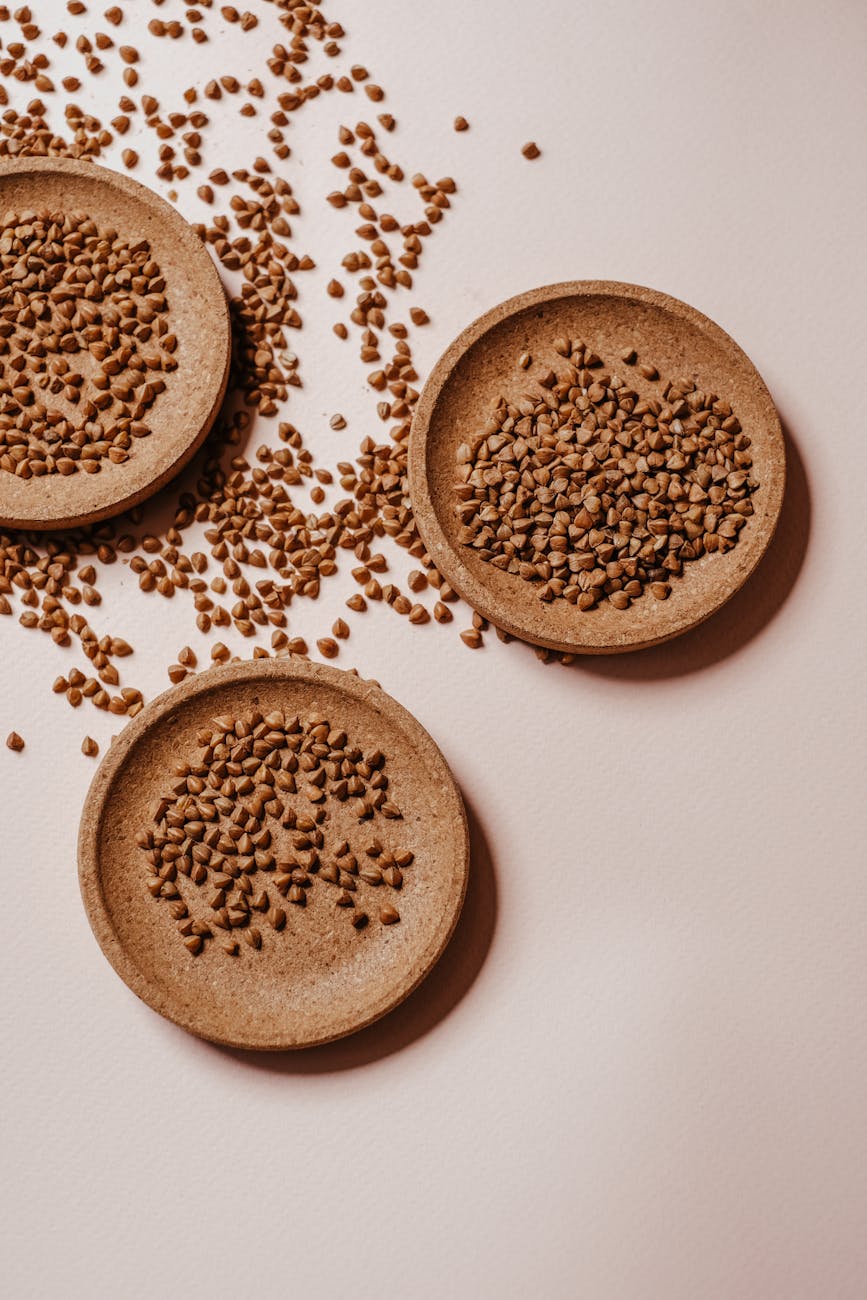
    Of course, the hero here is the buckwheat. It isn’t wheat, not really—it’s a seed masquerading as a grain, gloriously gluten-free and loaded with insoluble fiber and resistant starch. In less science-y terms: it bulks, it sweeps, it feeds your gut’s good guys, and it delivers the elusive clean break. The kind of bathroom visit where nothing lingers—physically or emotionally.

    Then there’s the tofu. It doesn’t showboat. It doesn’t need to. Its gift is its non-disruption. High in protein, low in drama, tofu is the digestive equivalent of a self-driving electric car. It quietly replaces the gut’s old sputtering engine, the one bogged down by greasy meats and dairy sabotage, and makes everything hum.

    Put the two together, and suddenly, bathroom time became… efficient. Minimal. Almost elegant. No TP required. Just a moment of stunned gratitude, a small prayer to the intestinal gods, and a confused gaze into the middle distance: Did I just hack the human body?

    And then came the real question: Do I tell people?

    Because while we’ll chat endlessly about protein macros, creatine, cholesterol, and God help us, cold plunges—we go silent on the topic of TP use and the miracle of no longer needing it. And yet, so many are secretly miserable. The bloating, the straining, the endless wiping. And here I am with the holy grail—and I’m supposed to stay quiet?

    No, I won’t promise this will work for everyone. But if you’re even slightly intrigued by the promise of digestive liberation, consider the humble buckwheat. Consider the tofu. And maybe, just maybe, you’ll find yourself typing from a place of lightness, efficiency, and radiant intestinal peace.

  • What Fifty Years of a High-Protein Diet Taught Me

    What Fifty Years of a High-Protein Diet Taught Me

    These days, there’s no shortage of content promising health, strength, and longevity through high-protein diets. Everyone’s got a take. I can only give you mine—earned through fifty years of trial, sweat, and a steady stream of protein powder.

    I first learned the value of protein in 1974. I was thirteen, a Junior Olympic weightlifter, and determined not to be outlifted by anyone with better genetics or better snacks. I made it my mission to eat no fewer than 160 grams of protein a day. That habit never left. For the past five decades—save for the occasional vacation detour—I’ve kept my intake between 160 and 200 grams daily. Today, approaching 64, I train in my garage like a teenager on a mission, kettlebells swinging, breath steady, muscles intact.

    Protein isn’t a trend. It’s foundational. Just the other day, I was driving my daughter and her friend to Knott’s Berry Farm when her friend said, “I think I’m going to faint.” I asked if she’d eaten breakfast. “Yes,” she said. “A bowl of fruit.” I told her the truth: “That’s zero protein. No wonder you’re crashing. First thing you do when we park—go find yourself a carne asada burrito.” I told her to eat a meal with forty grams of steak-powered resurrection.

    Here’s what people still don’t get: if you don’t eat at least 40 grams of protein in a meal, you’ll be starving and sluggish thirty minutes later. It’s not magic; it’s physiology. Back in the day, I inhaled bodybuilding magazines. Everyone warned me: “Don’t believe those. They’re just selling supplements.” Sure, some of them were. But when it came to protein, they weren’t wrong. The numbers don’t lie. For men, 160 grams a day is a solid target. For women, around 120. I’ve lived it. I’ve trained on it. And I’ve aged with it. The science has finally caught up to what lifters have known all along.

  • Groats, Greens, and the Gospel of Self-Control

    Groats, Greens, and the Gospel of Self-Control

    I’m a man prone to obsessions. Not in a cute, quirky, Wes Anderson way, but in the full-blown, white-knuckled grip of irrational fixations that orbit around some grand illusion of self-improvement. These fixations rarely tether themselves to anything as vulgar as reality, which means I have to approach them like a man handling live wires—gingerly, skeptically, with rubber gloves and a fire extinguisher nearby. My latest obsession? A brutally austere, monastic eating plan masquerading as discipline but smelling faintly of madness.

    The rules are simple, almost religious in tone: three meals a day. No snacks. Breakfast is a steaming bowl of steel-cut oats doped with vanilla protein powder and berries. Lunch: buckwheat groats, same protein powder, same berries, different bowl. Dinner: a joyless, crunchy salad of cucumber and bell pepper crowned with sauteed tofu and doused in a dressing so puritanical it could double as penance—balsamic vinegar, Greek yogurt, nutritional yeast, and a blizzard of righteous herbs. To add some zing, I’ll dump a tablespoon of Trader Joe’s Italian Hot Bomba Sauce to give me a lifeline to joy and pleasure. 

    But here’s the rub: the long, harrowing stretch between lunch and dinner. That’s when the madness starts to whisper. Could green tea keep me afloat? Coffee? A heretical diet soda or two? These are the thoughts of a man trying to barter with his own obsession, bargaining with the jailer who’s taken his afternoon hostage. I pretend it’s hunger, but what I’m really feeling is the hollow buzz of addiction to a narrative: that if I follow this sacred routine, I will unlock a better, lighter, more transcendent version of myself.

    Of course, it’s likely just another chimera—one more shimmering lie I chase like a half-crazed mystic in a Whole Foods aisle. I suspect I don’t actually change. I just trade compulsions. Some people devour cheesecake. I devour grand narratives of control, discipline, and spiritual rebirth through groats and greens. My real diet isn’t food—it’s fantasy. And I am a glutton.

  • Chunky: The Candy Bar That Gaslit My Taste Buds

    Chunky: The Candy Bar That Gaslit My Taste Buds

    Of all the confections that have ever graced my palm, none haunts my imagination quite like the Chunky bar. It’s not a candy bar so much as a relic—an absurd, silver-foiled ingot you’d expect to pry loose from a cursed dwarven mine, guarded by balrogs and bureaucracy.

    Let’s start with the shape. The Chunky is a squat, lumpy pyramid—a candy bar built like it wants to be a paperweight. Peanuts and raisins form the bulk of its crude alchemy, though earlier iterations flaunted Brazil nuts and cashews, adding to its ancient mystique.

    The taste? Off. Not bad exactly, but certainly not seductive. Its faintly bitter, vaguely disappointing flavor has a curious effect: you start to convince yourself that this underwhelming mouthful must be good for you. A health food in disguise. A sweet for contrarians. Like chewing on moral fiber.

    Then there’s the weight. The Chunky carries mass. It sits in your hand with the cold confidence of a Seiko diver watch on a stainless-steel bracelet. There’s a heft to it—an aura of seriousness. No one double-fists a Chunky on a whim. You eat one as an act of personal philosophy.

    To deepen its enigma, the Chunky has become scarce. Since the ’90s, it’s been largely exiled from gas station shelves, spotted only in the digital wilds of the Internet. It’s no longer a candy bar—it’s a rumor. A memory. A grail. And even when you do track one down and unwrap it in a moment of nostalgic triumph, you’re struck with the bitter realization: you’re not reliving a taste. You’re chasing a ghost.

    The truth is, you’re more in love with the idea of the Chunky bar than the thing itself. Its greatest ingredient is projection. It is candy-as-concept. The chunky grail.

    And so, like a certain kind of watch obsessive—those who hunt for the mythical One Perfect Timepiece, the Holy Grail Diver that will satisfy all wrist cravings—you may find that what you’re after is not an object, but an ideal. The Chunky isn’t a candy bar. It’s a mirror. A reminder that the real addiction lies not in sugar or steel, but in fantasy.

  • Post-Vacation Penance: A Dietary Manifesto in Four Meals

    Post-Vacation Penance: A Dietary Manifesto in Four Meals

    There’s something bleakly comical about spiraling into despair on vacation—the kind that sets in when you’re no longer tethered to your sacred rituals of productivity, restraint, and the sweet, tight belt of routine. Out here, in this plush exile of self-indulgence, I’ve become a man who stares into a plate of hotel hash browns and thinks, This ends when I get home.

    And so, to soothe the spiritual rot that sets in after too many mornings without my normal suffering, I’ve started building a plan—a post-vacation austerity program disguised as wellness.

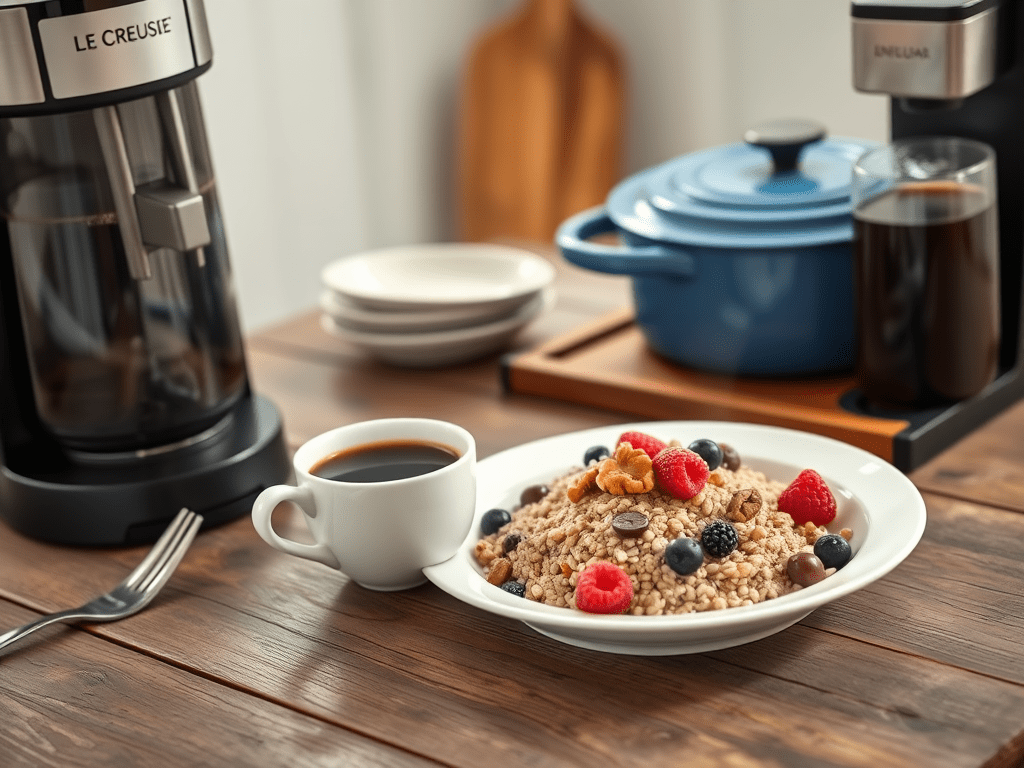
    First, the coffee. I will reclaim my morning dignity with the $89 Ninja 12-cup glass carafe coffee maker. No plastic pod disgrace. I will grind dark roast beans with the solemnity of a monk at matins, using my burr grinder like a weapon forged for righteousness.

    Breakfast will not be an act of contrition but one of redemption: buckwheat groats or steel-cut oats, topped with protein powder, berries, walnuts, and chia seeds—like an edible TED Talk on anti-inflammation.

    Lunch will be a spartan affair: arugula so bitter it judges you, and tofu braised until it forgets it was once bland. Dressing? A holy trinity of balsamic vinegar, spicy mustard, and nutritional yeast. This is not food—it’s penance with flavor.

    Afternoon snack? Greek yogurt, protein powder, and berries. The combination is reliable, unexciting, and doctrinally correct.

    Dinner is where things get unhinged in a good way. I will reach for my Le Creuset Dutch oven (color: colonial blue, attitude: smug) and conjure quinoa with zucchini, fire-roasted tomatoes, nutritional yeast, and a whisper of coconut milk. I will mix in braised tofu until the pan hisses in agreement.

    And yes, there will be protein pancakes, crafted from oats, baking powder, protein powder, eggs (or applesauce, if I’m feeling woke), yogurt, cinnamon, honey, chia seeds, and vanilla extract. The batter will feel like spackle. The result will feel like victory.

    Exercise? Four days of kettlebells instead of five—because joints are finite, and ego is not a medical plan. On my “off” days, I’ll alternate between the exercise bike and power-flow yoga, both of which will mock me in their own way.

    Diet soda? Dead to me. I’ve seen what happens when it wins: a family friend guzzles it by the gallon, her health circling the drain like a cautionary fable. I will swap it out for sparkling water and the moral superiority it confers.

    This is not about orthorexia or self-hate disguised as wellness. This is about escaping confusion, that modern affliction where “healthy” means both everything and nothing. I will eat four times a day. I will consume 160 grams of protein. I will not exceed 2,400 calories. I will fight entropy with routine, bloat with balance, and preserve the image of myself I still—somehow—believe is possible.

  • I Came for Health and Left with a Halo

    I Came for Health and Left with a Halo

    I’m stubborn—pathologically so. I know full well that going full carnivore would melt the fat right off me. A steady stream of fatty meats, maybe a token vegetable or two for show, and boom—I’d be a suburban Wolverine. Ripped, lean, possibly feral. But my suspicion kicks in around the long-term effects. Sure, eating like a seal-clubbing Inuit makes sense when you live on a glacier and need 6,000 calories just to blink. But when you’re a guy driving a hybrid through Trader Joe’s parking lots, gorging on brisket with your Apple Watch monitoring your heart rate, the “ancestral diet” starts to look less like primal wisdom and more like performative caveman cosplay.

    No, my reluctant truth is this: a mostly plant-based diet is probably my best bet. I imagine a future of buckwheat groats, steel-cut oats, rainbow chard, tofu, tempeh, and beans. My meals will be slathered with artisanal dressings composed of balsamic vinegar, spicy mustard, and nutritional yeast—because apparently sainthood is now spreadable.

    Sure, I’ll fold in some salmon twice a week. Maybe Greek yogurt. And yes, I’ll backslide into Mongolian beef barbecue once a month when life feels meaningless and I want my food to fight back. But the plan is mostly monkish. And here lies the rub: the diet starts making me feel too pure. Too righteous. The kind of person who silently judges you for using ranch dressing. The glow of self-congratulation hangs around my head like a flickering LED halo.

    And then comes the cookware. You can’t cook holy grains in a peasant pot. No, this lifestyle demands French-made enameled cast iron Dutch ovens—heirloom cookware with the price tag of a minor surgical procedure. I tell myself this is an investment in my health. What it really is: a $300 declaration that I’ve joined the priesthood of quinoa.

    Worse, the whole thing becomes a personality. Plant-based meals. Exercise tracking. Morning rituals. Deep-breathing routines. It becomes its own narcissistic opera. I’m centered. I’m optimized. I’m intolerable. My life starts to feel like an Instagram reel narrated by a smug inner voice that’s always meditating.

    The real irony? I embarked on this whole food pilgrimage to escape the traps of modern life—its clutter, chaos, and chronic disease. And yet, somewhere between my third batch of millet and Googling the mineral content of nutritional yeast, I crossed into a new disorder: a lifestyle so curated it starts to feel like a museum exhibit titled Me, Trying Too Hard.

    Sometimes the cure becomes its own kind of sickness. We chase health, only to wind up imprisoned by our own kale-scented, cast iron-coated obsessions.

  • Mercury Rising, Tuna Retiring: A Fish Addict’s Tofu Detox

    Mercury Rising, Tuna Retiring: A Fish Addict’s Tofu Detox

    Howard Stern recently went public with the kind of health confession that makes nutrition nerds shiver with schadenfreude: years of eating fish like a ravenous sea lion left him with sky-high mercury levels—over 30, when 8 is considered the red alert line. His white blood cell count crashed, and his bloodstream began to resemble a periodic table. So now he’s easing into a mostly plant-based diet, still clinging to salmon and shrimp a few times a week like a man transitioning from whiskey to kombucha.

    Taking a page from Howard’s mercury memoir, I’m retiring my daily canned-fish salad lunch. No more tuna tins. No more mackerel mania. In their place? A half-block of Trader Joe’s High-Protein Tofu, sautéed in olive oil like a grown-up with arteries worth protecting. The whole package is 70 grams of protein. I’ll eat one half at lunch, the other half either for dinner or for the next day.

    Preparation, of course, requires a bit of tofu theater. I wrap the slab in a dish towel and stack a Dutch oven on top like I’m pressing it into a confession. From there, it crisps nicely in the pan—unlike my nerves, which are still adjusting to life without anchovies.

    The salad base: arugula, because I enjoy a green that fights back. The dressing: Greek yogurt whipped with nutritional yeast, herbs, and spices—a tangy, umami-rich blend that says “I’m trying” louder than balsamic ever could.

    If I need a protein boost, I’ll toss in some drained beans or egg whites, though I refuse to let the salad become a protein arms race. The goal isn’t to feel full for eight hours—it’s to avoid mercury poisoning while still pretending I’m eating for pleasure.

    We’ll see how satisfying it all is. At worst, I miss the old tuna days. At best, I keep my nervous system intact and live long enough to be skeptical of my next health phase.

  • Why I’m Eating Like My Life Depends on It (Because It Might)

    Why I’m Eating Like My Life Depends on It (Because It Might)

    In 2020, my mother passed away from kidney disease. She refused to go on a dialysis machine. I found out a few days ago that her sister, now 80, has stage-4 kidney disease. My aunt doesn’t drink or smoke, but her doctor told her that age can do its job on the kidneys and will give her medication and a diet to slow down the disease’s progression. 

    I assume I may have a genetic predisposition for tired kidneys, so at 63, I’m looking to make some preventative dietary changes. I’m going to watch my potassium, phosphates, and sodium. I’m going to cut down on dairy, nuts, nut butters, sweets, diet sodas, canned fish, meat and such. I’m going to keep my creatine at 3 grams a day. Being overweight, having high sugar levels, high cholesterol, and high blood pressure are all bad for the kidneys, so my diet has to keep those areas under control. I remember Doctor Peter Attia writing in his book Outlive: The Science and Art of Longevity that having advanced kidney disease presents a shorter lifespan diagnosis than stage-4 cancer, so I feel motivated to be diligent. My diet now looks like this:

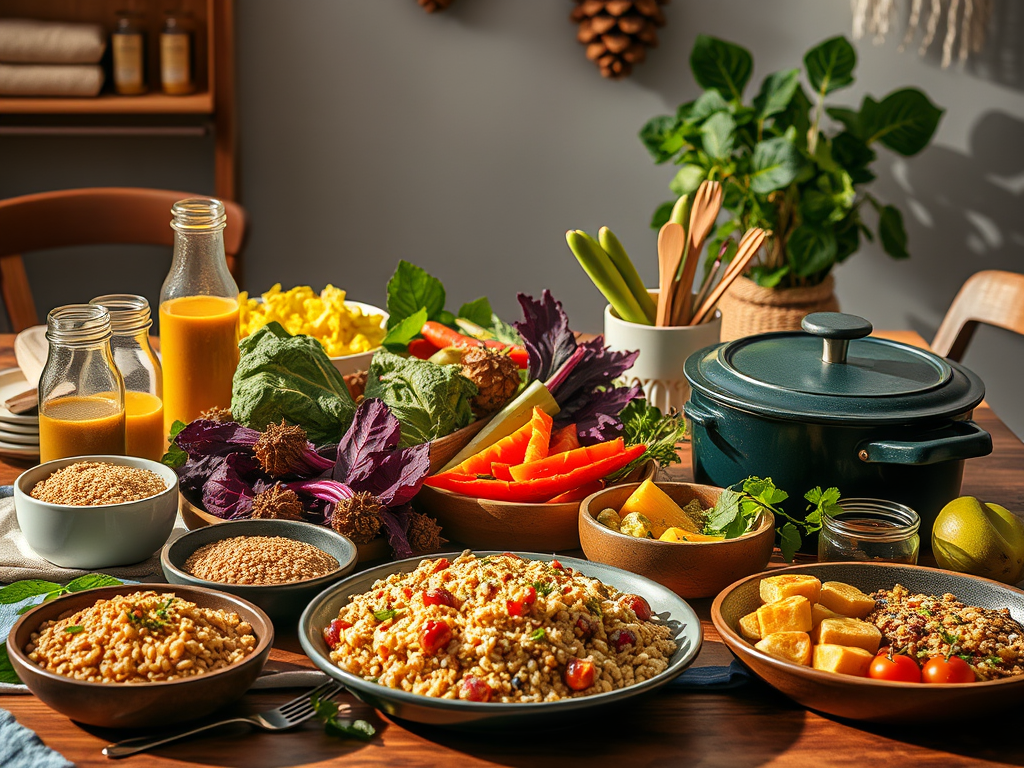
    Breakfast: I’ll rotate 5 breakfast grains in which I will measure exactly one-fourth cup of one of the following: 1. steel-cut oatmeal, 2. quinoa, 3. buckwheat groats, 4. bulgur, and 5. hulled or foxtail millet (11-12 grams of protein) with half a cup of Greek plain yogurt, chia seeds, walnuts, plain soy milk, phosphate-free protein powder, berries, and coffee.

    Lunch: Salad with 20 grams of protein tempeh, rinsed from a can or cooked beans or salmon with balsamic vinegar, herbs and spices, half cup of soy milk, berries or small tangerine. 

    Post-nap Afternoon Snack: One cup of plain Greek yogurt with phosphate-free protein powder, or no powder at all, and berries. 

    Dinner: Vegetables, protein of some kind, including braised tofu, and a small apple. If I want a vegan dinner, I can make a mixture of rice or quinoa with black beans, tofu or tempeh, and a cup of coconut milk. 

    Between meals: No more diet soda of any kind, only water, herbal tea, and soda water.   

  • The Hunger Games: GLP-1, Free Will, and the Price of Thin

    The Hunger Games: GLP-1, Free Will, and the Price of Thin

    In my Critical Thinking course, we tackle three research-based essays that wrestle with one central, disquieting premise: technology is not just helping us live—it’s rewriting what it means to be human. Our first unit? A polite but pointed takedown of the American weight loss gospel. The assignment is called The Aesthetic Industrial Complex, and it asks students to write a 1,700-word argumentative essay exploring a question that’s fast becoming unavoidable: Does the old moral framework of discipline, kale, and “personal responsibility” still hold water in the age of GLP-1 injections, food-delivery algorithms, and weaponized Instagram bodies?

    We dive into the stories of good-faith dieters—folks who’ve counted calories, logged cardio, avoided sugar like it was plutonium—and still watched their doctors frown over charts lit up with prediabetes, high blood pressure, and the telltale signs of metabolic collapse. These are not cases of vanity. These are mandates from cardiologists and endocrinologists. Lose weight or lose time.

    Enter the needle. GLP-1 drugs like Ozempic and Wegovy promise what decades of dieting books never delivered: chemical satiety and the end of food noise—that constant mental hum that turns the pantry into a siren song. The results are seismic: hunger down, weight down, cravings down, existential questions up.

    Because here’s the paradox: when food no longer seduces us, we gain a body that’s marketable and medically optimized—but we lose something else. Food is not just fuel. It’s ritual. It’s celebration. It’s Grandma’s lasagna, a first date over sushi, a kitchen filled with the smell of garlic. Food is culture, memory, and soul. And yet, being ruled by it? That’s a kind of servitude. Constant hunger is its own form of imprisonment.

    So we’re caught in a new paradox: to be free from food, we must become dependent on pharmacological salvation. Health insurers love it. Employers love it. Actuarial tables are singing hymns of praise. But should we?

    That’s the real assignment: not just whether GLP-1s work, but whether the shift they represent is something to embrace or fear. This is no clear-cut debate. It’s a riddle with contradictory truths. A tug-of-war between biology, economics, ethics, and the shrinking silhouette in the mirror.

    And if my students groan under the weight of the question, I remind them: this isn’t Home Ec. This is Critical Thinking. If you want easy answers, go back to diet TikTok.

  • College Essay Prompt That Addresses Food and Economic Class: Ozempification, AI, and the Class Divide in the End of Food Culture

    College Essay Prompt That Addresses Food and Economic Class: Ozempification, AI, and the Class Divide in the End of Food Culture

    Prompt Overview:
    As GLP-1 drugs like Ozempic suppress hunger and artificial intelligence tailors hyper-personalized, nutrient-optimized meals, our relationship with food is undergoing a radical transformation. But not all communities are experiencing this shift equally. While affluent professionals embrace biotech and AI to streamline their eating, working-class and immigrant communities often continue to practice food as culture, tradition, and emotional ritual.

    Your Task:
    Write an 8-paragraph argumentative essay that responds to the following claim:

    Claim:
    GLP-1 drugs and artificial intelligence are ending the traditional notion of food and eating as cultural, emotional, and communal experiences—but primarily for the educated upper-middle class, creating a new kind of class-based food divide.

    Instructions:

    1. Introduction (Paragraph 1):
      Open with a compelling hook. Present the claim and your thesis—whether you agree, disagree, or take a nuanced stance.
    2. Background (Paragraph 2):
      Briefly explain what GLP-1 drugs do and how AI is influencing food production and personalization. Introduce the concept of “Ozempification.”
    3. First Argument (Paragraph 3):
      Argue how the professional-managerial class is disproportionately embracing GLP-1 and AI technologies as part of a broader trend toward self-optimization.
    4. Second Argument (Paragraph 4):
      Show how this new model of eating—quantified, detached, and efficient—erodes traditional food practices like communal meals, emotional eating, or ritual cooking.
    5. Third Argument (Paragraph 5):
      Examine the contrasting experience of working-class and immigrant communities who, whether by choice or necessity, retain deeper connections to cultural food practices.
    6. Counterargument and Rebuttal (Paragraph 6):
      Acknowledge the argument that biotech and AI could democratize health and nutrition. Then challenge this by exploring accessibility, affordability, or cultural loss.
    7. Cultural Reflection (Paragraph 7):
      Reflect on the long-term cultural implications of this class-based divide. Will we see a future where the elite biohack their appetites while the working class clings to endangered food rituals?
    8. Conclusion (Paragraph 8):
      Reassert your thesis and end with a provocative insight, question, or forecast about the future of food and class.

    Source Requirement:
    Use at least 4 credible sources, including recent journalism, scholarly articles, or reports (2023 or later). Cite sources in MLA format.

    Suggested Angles to Explore:

    • How does Silicon Valley’s culture of optimization affect food rituals?
    • Is “Ozempification” a privilege or a necessity?
    • What happens when food stops being a shared story and becomes a solo algorithm?

    Here is a curated reading list for your revised prompt on Ozempification, AI, and the Class Divide in the End of Food Culture. These selections balance journalism, research, and cultural commentary, providing accessible and provocative sources for students at various reading levels:


    READING LIST

    1. Ozempic and GLP-1 Drugs

    • “Scientists Find Why Ozempic Changes the Types of Food People Eat”
      Prevention Magazine, 2024
      Explains how GLP-1 drugs alter appetite and food preferences.

    • “Ozempic’s Effect on Food Innovation”
      Institute of Food Technologists (IFT), May 2024
      Discusses how food manufacturers are shifting products in response to Ozempic-driven consumer changes.

    2. AI and the Personalization of Food

    • “AI-Driven Transformation in Food Manufacturing”
      Frontiers in Nutrition, 2025
      An in-depth research article on AI’s impact on food production, sustainability, and consumer targeting.
      PDF Download
    • “AI Is Hacking Your Hunger: How the Food Industry Engineers Addiction”
      Forbes, March 2025, by Jason Snyder
      A bold look at how AI and biotech are reprogramming consumer desire and food experience.

    3. Food, Class, and Culture

    • “The Labor of Lunch: Why We Need Real Food and Real Jobs in American Public Schools”
      By Jennifer E. Gaddis, University of California Press, 2019
      Offers a clear view of how food, labor, and class intersect in institutional settings like schools.
    • “Cultural Appropriation in Food: Is It a Problem?”
      The New York Times, by Ligaya Mishan
      Reflects on food, culture, and who gets to profit from culinary traditions—good for contrast with bioengineered food trends.
    • “You Can’t Eat Optimized Food with Your Grandma”
      The Atlantic, speculative title suggestion (hypothetical essay you might write or assign students to mimic stylistically)
      Encourages reflection on the emotional and generational disconnect caused by hyper-personalized, tech-driven diets.