Tag: politics

  • Contagion of Fear: World War Z and the Collapse of Global Order: A College Essay Prompt

    Contagion of Fear: World War Z and the Collapse of Global Order: A College Essay Prompt

    Essay Prompt:

    In the film World War Z, the zombie apocalypse is more than a cinematic spectacle—it’s a fast-moving allegory for the collective anxieties plaguing our 21st-century world. As the undead swarm across borders and institutions collapse in real time, the movie confronts viewers with deep-rooted fears about globalization, pandemics, migration, misinformation, and the breakdown of social trust. The zombies are not just monsters—they are metaphors.

    This essay invites you to write a 1,700-word argumentative essay in which you analyze World War Z as a metaphor for mass anxiety. Using at least two of the research essays listed below, develop an argument that connects the film’s themes to contemporary global challenges such as:

    • The COVID-19 pandemic and fear of viral contagion
    • Global migration driven by war, poverty, and climate change
    • The dehumanization of “The Other” in politically polarized societies
    • The fragility of global cooperation in the face of crisis
    • The spread of weaponized misinformation and conspiracy

    Your thesis should not simply argue that World War Z is “about fear”—it should claim what kind of fear, why it matters, and what the film reveals about our modern condition. You may focus on one primary fear or compare multiple forms of crisis (e.g., pandemic vs. political polarization, or migration vs. misinformation).

    Use at least two of the following essays as research support:

    1. Jonathan Haidt, “Why the Past 10 Years of American Life Have Been Uniquely Stupid” (The Atlantic)
      —A deep dive into how social media has fractured trust, created echo chambers, and undermined democratic cooperation.
    2. Ed Yong, “How the Pandemic Defeated America” (The Atlantic)
      —An autopsy of institutional failure and public distrust during COVID-19, including how the virus exposed deep structural weaknesses.
    3. Seyla Benhabib, “The Return of the Sovereign: Immigration and the Crisis of Globalization” (Project Syndicate)
      —Explores the backlash against global migration and the erosion of human rights amid rising nationalism.
    4. Zeynep Tufekci, “We’re Asking the Wrong Questions of Facebook” (The New York Times)
      —An analysis of how misinformation spreads virally, creating moral panics and damaging collective reasoning.

    Requirements:

    • Use MLA format
    • 1,700 words
    • Quote directly from World War Z (film dialogue, plot events, or visuals)
    • Integrate at least two sources above with citation
    • Present a counterargument and a rebuttal

    Here’s a 9-paragraph outline and three sample thesis statements to guide students toward deep, layered analysis of World War Z as metaphor.


    Three Sample Thesis Statements

    World War Z presents zombies not just as flesh-eating threats but as avatars of global panic—embodying fears of pandemics, mass migration, and social collapse. Through its globe-hopping narrative and relentless spread of infection, the film critiques a world increasingly unprepared to manage the fallout of interconnected crises, echoing Haidt’s concerns about fractured public trust and Yong’s analysis of institutional fragility.

    In World War Z, the zombie outbreak functions as a metaphor for weaponized misinformation and the breakdown of global cooperation, dramatizing how societies consumed by fear and tribalism respond not with solidarity, but with suspicion and violence. The film anticipates the moral failures detailed by Haidt and Tufekci, making it less about monsters than about our inability to face crisis without self-destructing.

    Far from a typical horror film, World War Z is a global parable of dehumanization and displacement, where zombies symbolize both contagious fear and the faceless masses of migration and poverty. As Benhabib argues, the return of nationalism and the fear of the “Other” has shattered international solidarity—anxiety the film visualizes through barricades, lockdowns, and apocalyptic border control.


    9-Paragraph Outline

    Paragraph 1 – Introduction

    • Hook: Use an arresting visual to frame our world’s current instability.
    • Context: Introduce World War Z as more than a thriller—it’s an allegory of global collapse.
    • Thesis: State your central argument about how the zombies symbolize a deeper, contemporary fear (e.g., pandemic panic, social polarization, migration anxiety, misinformation, etc.).

    Paragraph 2 – The Metaphorical Function of Zombies

    • Discuss the symbolic role of zombies in film generally (fear of the masses, disease, mindlessness).
    • Explain how World War Z updates the metaphor to reflect 21st-century global anxieties.

    Paragraph 3 – Global Crisis and Institutional Collapse

    • Analyze scenes showing governments falling apart, the UN being sidelined, the world reduced to reactive chaos.
    • Connect to Ed Yong’s argument about institutional failure during COVID-19.

    Paragraph 4 – Fear of Migration and the Dehumanized Other

    • Examine the treatment of human mobs, refugees, and zombies in border scenes (e.g., Jerusalem wall, flight panic).
    • Use Seyla Benhabib’s piece to discuss the rising fear of displacement and the collapse of asylum ethics.

    Paragraph 5 – The Spread of Misinformation and Breakdown of Truth

    • Point to the conspiracy theories and media confusion in the film’s early scenes.
    • Use Tufekci’s argument to show how misinformation spreads like a virus—and how that’s reflected in the zombie metaphor.

    Paragraph 6 – The Psychology of Polarization and Fear

    • Explore the emotional tone of the film: anxiety, distrust, hyper-individualism.
    • Connect to Haidt’s claim that polarization has eroded rational cooperation and heightened mass irrationality.

    Paragraph 7 – Counterargument

    • Some may argue that World War Z is just a fast-paced action flick with no real political message.
    • Rebut by showing how even its structure—a global chase from chaos to cure—mirrors real-world anxieties about global crisis management and ethical triage.

    Paragraph 8 – Deeper Implications of the Metaphor

    • Push the metaphor further: zombies as collapsed selves, media-driven mobs, people stripped of identity.
    • Reflect on how the film doesn’t just diagnose fear—it reflects our inability to reckon with complexity in a globalized age.

    Paragraph 9 – Conclusion

    • Reaffirm your thesis.
    • Leave the reader with a provocative final thought: maybe the zombies aren’t the dead—they’re us, stripped of cooperation, overwhelmed by fear, and marching blindly toward collapse.

  • Devotion and Deliverance: Frederick Douglass as Prophet of the Sunken Place

    Devotion and Deliverance: Frederick Douglass as Prophet of the Sunken Place

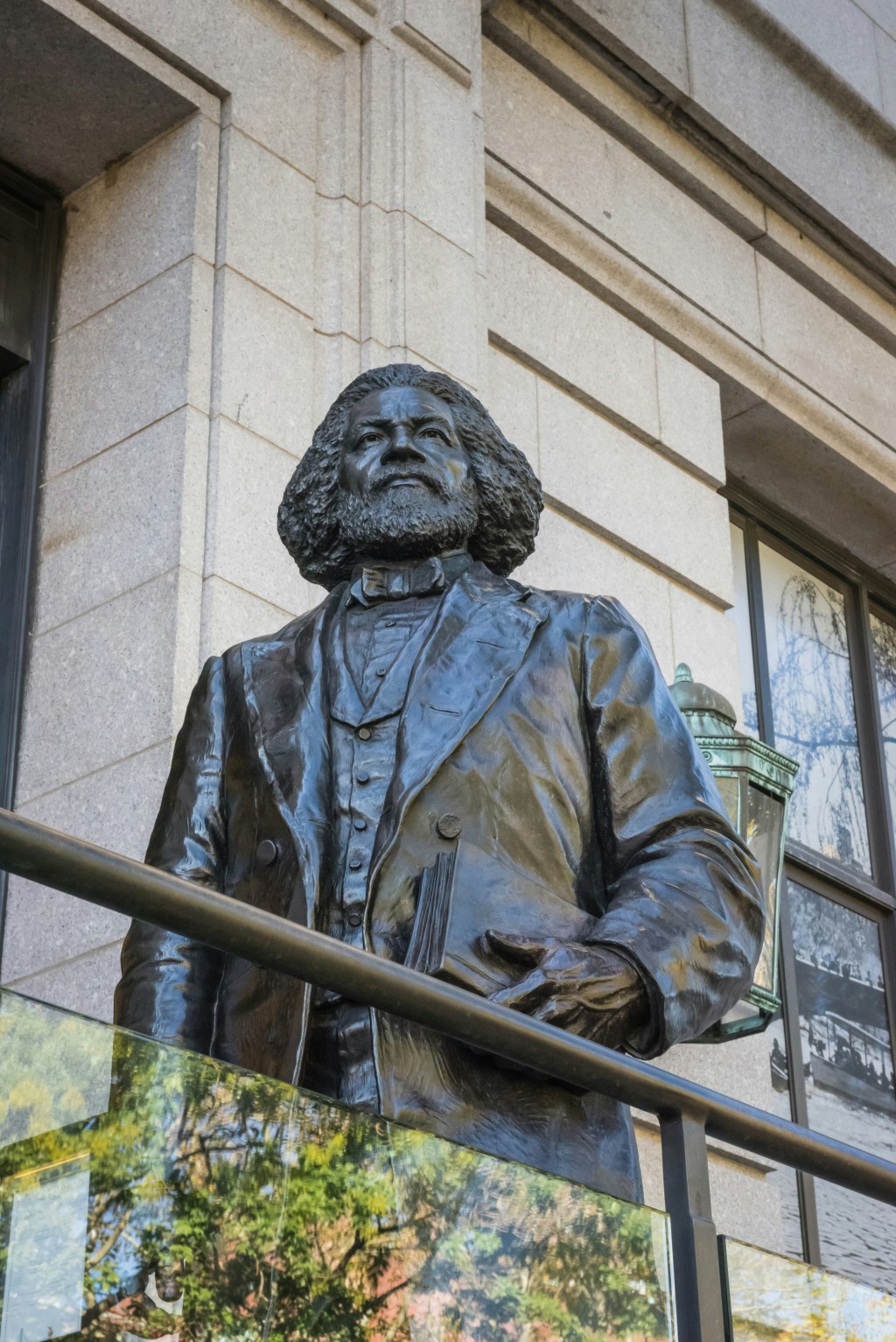
    Frederick Douglass was the first great American voice to name what Jordan Peele would later visualize as the Sunken Place—that paralyzing state of voicelessness, invisibility, and psychological captivity experienced by African Americans. Though Peele dramatizes the horror of this condition in his film Get Out, Douglass lived it. As an enslaved child denied literacy and identity, Douglass endured what he later described as a living death, a soul frozen beneath the surface of white supremacy’s illusion of order. His fight to reclaim his voice, his mind, and his humanity was nothing less than a jailbreak from the original Sunken Place—and once free, Douglass didn’t just climb out. He turned around and lit the way for others.

    Douglass’s genius wasn’t just in naming the horror but in refusing to let his people be forgotten. In his Narrative, he writes not only for white readers’ moral awakening but for Black readers’ spiritual survival. He wants them to know: I see you. I know what you’re going through. I made it out—and you can, too. His commitment was not just to truth-telling, but to emotional rescue. He becomes the voice for the voiceless, and more importantly, a memory for the disappeared. In every speech, every book, Douglass is saying to his people: You are not crazy. You are not alone. You are not invisible. I love you.

    This radical love—this refusal to forget or abandon the oppressed—is not only the essence of Douglass’s mission but the throughline of the African-American church and the great soul artists who emerged from its sanctuary. Aretha Franklin’s demand for “Respect” is not merely about gender or music—it is about soul-level recognition, the same Douglass demanded when he taught himself to read and stood before an audience to declare, I am a man. Marvin Gaye’s “What’s Going On?” is a lament and a prayer, echoing Douglass’s own grief at watching America devour its conscience while pretending to be virtuous.

    Earth, Wind, and Fire’s “Devotion” is a gospel-soaked anthem of uplift, a promise to stay true, stay grounded, and stay together. That’s the same spiritual contract Douglass wrote with his people: no matter how far he rose—dining with Lincoln, traveling to Europe—he never abandoned the struggle, never stopped fighting for those still trapped in the Sunken Place. The Commodores’ “Zoom” imagines flight from pain and confinement, a kind of cosmic exodus—but not a selfish escape. The dream is to rise and return with wisdom, strength, and hope. This is Douglass in every sense.

    Jordan Peele gave us the Sunken Place in high-definition horror, but Frederick Douglass mapped it out with ink and fire long before the screen could flicker. He understood that the greatest tragedy of oppression is not physical bondage but spiritual erasure. And he devoted every breath of his free life to pulling others out—through rhetoric, through writing, through relentless love.

    In the voices of Aretha, Marvin, Maurice White, and Lionel Richie, we hear Douglass’s echo: not just survival, not just resistance, but a deeply rooted refusal to abandon anyone to silence. These aren’t just songs. They are gospel calls to rise, to remember, and to remain devoted. In that sacred tradition, Douglass stands as the first great prophet of the Sunken Place—and the first to vow, with soul-deep conviction, I will not leave you there.

  • Comparing Resistance to the Sunken Place in the Movie Get Out and the Life of Frederick Douglass: 3 Essay Prompts

    Comparing Resistance to the Sunken Place in the Movie Get Out and the Life of Frederick Douglass: 3 Essay Prompts

    Here are three argumentative essay prompts suitable for a 9-paragraph essay that explore how Narrative of the Life of Frederick Douglass and Jordan Peele’s Get Out use the concept of the Sunken Place—whether literal or metaphorical—to reveal how racism dehumanizes, and how resistance can lead to liberation and agency.


    Prompt 1: The Fight to Reclaim the Self

    Essay Prompt:
    Both Narrative of the Life of Frederick Douglass and Get Out explore how slavery and racism rob people of their autonomy and identity, trapping them in a psychological “Sunken Place.” Write an argumentative essay analyzing how Douglass and Chris struggle to reclaim their personhood. Whose escape from the Sunken Place carries a more powerful message for modern audiences, and why?

    Key Themes to Consider:

    • Psychological captivity and dehumanization
    • Literacy and perception as tools of resistance
    • Voice vs. voicelessness
    • Breaking free—literal and symbolic escapes

    Prompt 2: Racism as Psychological Warfare

    Essay Prompt:
    Jordan Peele’s Get Out introduces the Sunken Place as a metaphor for the paralyzing effects of racism. Frederick Douglass’s memoir reveals how slavery functioned similarly—as a system designed to psychologically disarm and silence Black people. Write a 9-paragraph essay comparing how each text shows racism operating not just physically, but psychologically, and argue which representation is more effective in showing the true depth of racial oppression.

    Key Themes to Consider:

    • Mind control and learned helplessness
    • Surveillance, control, and social “hypnosis”
    • The role of silence and invisibility
    • Liberation through consciousness and rebellion

    Prompt 3: Resistance as a Path Out of the Sunken Place

    Essay Prompt:
    In both Narrative of the Life of Frederick Douglass and Get Out, the protagonists face overwhelming systems of control—but both find ways to resist. Write an argumentative essay analyzing how Douglass and Chris resist oppression and reclaim power. Which character’s resistance offers a more effective model for overcoming systemic injustice today?

    Key Themes to Consider:

    • Subversion, deception, and rebellion
    • Education vs. survival instinct
    • Heroism and moral courage
    • The journey from victimhood to agency

    Here are three argumentative essay prompts designed for a 9-paragraph essay that compares themes in Malcolm X (1992) and Black Panther (2018). Each prompt invites students to explore how the two films depict Black identity, resistance, and leadership while allowing room for critical thinking, comparison, and rebuttal:


    Prompt 1: Heroism and Resistance

    Essay Prompt:
    Both Malcolm X and Black Panther present Black protagonists who wrestle with systems of oppression and redefine what it means to be a hero. Write an argumentative essay comparing how Malcolm X and T’Challa evolve in their views on resistance and justice. Which film presents a more compelling vision of heroism in the face of racial oppression?

    Guiding Themes:

    • Radical vs. diplomatic resistance
    • Personal transformation as political awakening
    • The burden and responsibility of leadership
    • Sacrifice and moral complexity in defining heroism
  • Comparing Heroism and Resistance in the Movies Malcolm X and Black Panther: 3 Essay Prompts

    Comparing Heroism and Resistance in the Movies Malcolm X and Black Panther: 3 Essay Prompts

    Here are three argumentative essay prompts designed for a 9-paragraph essay that compares themes in Malcolm X (1992) and Black Panther (2018). Each prompt invites students to explore how the two films depict Black identity, resistance, and leadership while allowing room for critical thinking, comparison, and rebuttal:


    Prompt 1: Heroism and Resistance

    Essay Prompt:
    Both Malcolm X and Black Panther present Black protagonists who wrestle with systems of oppression and redefine what it means to be a hero. Write an argumentative essay comparing how Malcolm X and T’Challa evolve in their views on resistance and justice. Which film presents a more compelling vision of heroism in the face of racial oppression?

    Guiding Themes:

    • Radical vs. diplomatic resistance
    • Personal transformation as political awakening
    • The burden and responsibility of leadership
    • Sacrifice and moral complexity in defining heroism

    Prompt 2: Black Identity and Global Responsibility

    Essay Prompt:
    Malcolm X and Black Panther both challenge their audiences to rethink what it means to be Black in a global context. Using these two films, write an essay arguing whether the personal journey of Malcolm X or the political journey of Wakanda offers a more powerful vision for modern Black identity.

    Guiding Themes:

    • Pan-Africanism and global Black solidarity
    • The role of isolation vs. engagement with the world
    • Cultural pride, history, and reimagined futures
    • The tension between tradition and evolution

    Prompt 3: Rage, Revolution, and the Ethics of Power

    Essay Prompt:
    Both Malcolm X and Erik Killmonger are driven by rage born from historical injustice. Yet while one channels that rage into spiritual and political leadership, the other weaponizes it. Write an argumentative essay comparing how each film uses these characters to explore the ethics of power, revenge, and revolution.

    Guiding Themes:

    • Righteous anger vs. destructive rage
    • Violence as a political tool
    • Redemption, change, and moral ambiguity
    • Legacies of trauma and systemic injustice
  • Welcome to the Age of the Algorithmic Snake Oil Salesman

    Welcome to the Age of the Algorithmic Snake Oil Salesman

    In her clear-eyed and quietly blistering essay, “The ‘Mainstream Media’ Has Already Lost,” Helen Lewis paints a picture that should make any old-school news anchor break out in hives: a world where Joe Rogan has more political leverage than the sitting Vice President of the United States. Days before the 2024 election, Kamala Harris reportedly wanted to appear on Rogan’s podcast. He declined. Not out of spite or political protest, but simply because he could. That’s power. That’s the media landscape now.

    The term “mainstream media” has become a wheezing relic, a dusty VHS tape of a bygone era. The networks that once shaped public consensus now resemble aging bodybuilders—still flexing, but under the blinding fluorescents of a Planet Fitness instead of the Mr. Olympia stage. Meanwhile, Rogan and his ilk bench-press audiences of millions, all while wearing hoodies and sipping from branded tumblers. He doesn’t need legacy media. Legacy media needs him—and it’s already too late.

    Lewis reports that 54 percent of Americans now get their news from social media. Let that sink in. More than half the country is being spoon-fed their worldview by apps designed to addict, outrage, and silo. Instead of objective reporting, people now binge infotainment curated by opaque algorithms trained to fatten engagement at any cost. These feeds aren’t delivering news; they’re cultivating dopamine dependency.

    Welcome to the Age of the Algorithmic Snake Oil Salesman. The modern grifter doesn’t stand on a soapbox in a public square—he livestreams in 4K from a ring light-lit garage, selling supplements, conspiracies, and cultural resentment like they’re Girl Scout cookies. Facts are irrelevant. Performance is king. These charlatans don’t have to be right—they just have to be loud.

    Irony of ironies: these influencers wrap themselves in the cloak of “authenticity.” They curse, they rant, they “tell it like it is,” but their every inflection is calibrated for virality. Rage isn’t an emotion—it’s a marketing strategy. Performative outrage now passes for truth, and click-through rates replace credibility.

    As the mainstream media limps into irrelevance, it takes with it a few other quaint notions—like science. In this brave new world, you don’t need peer review when you have followers. Why believe the CDC when a ripped guy with a ring light and an Instagram handle ending in “.truth” tells you that vaccines are a globalist plot? The return of diseases like measles and tuberculosis—once considered conquered—are just collateral damage in the war on expertise.

    And with the fall of old-school journalism, our already threadbare civic discourse has collapsed into a gladiator arena of smug narcissists screaming at each other with all the subtlety of a demolition derby. Politeness is for chumps. Nuance is for cowards. The algorithm doesn’t reward thoughtful dialogue—it feeds on belligerence. Online, the dumbest guy in the room often gets the biggest microphone, because ignorance is loud, confident, and apparently good for ad revenue.

    Let’s not forget critical thinking, that delicate orchid now trampled under the steel-toed boots of clickbait and tribal rage. The marketplace of ideas has become a black market of weaponized talking points. People are no longer consuming information—they’re huffing ideological fumes. And like any good addict, they don’t want to quit. They want a stronger hit.

    Lewis doesn’t offer false hope. There’s no tidy ending where the media reclaims its place and truth triumphs in a feel-good montage. Instead, she suggests the comeback of reason, of trust in science, of civil discourse—will only happen the way all painful recalibrations happen: through crisis. It will take something even more catastrophic than COVID-19 to shock us back into reality. Only when the fantasy scaffolding collapses and we’re left staring at real, unfiltered chaos will the fever break.

    Until then, we scroll. We rage. We share. We follow. We spin deeper into silos. And we continue pretending that Joe Rogan isn’t the new Cronkite.

    But he is.

  • Dumbbells and Demagogues: The Bizarre Battle for the Bros

    Dumbbells and Demagogues: The Bizarre Battle for the Bros

    In “The Battle for the Bros,” Andrew Marantz dons his flak vest and ventures into the testosterone-slicked minefield of online masculinity, where disenfranchised young men are drifting rightward faster than a Joe Rogan cold plunge. Bro culture, Marantz argues, isn’t just real—it’s a booming cottage industry of rage, raw meat, and red pills. It thrives on podcasts, YouTube channels, and Instagram feeds soaked in motivational bile, where carnivore diets, deadlifts, and conspiracy theories all count as self-improvement.

    At the center of this digital flex-off is the Rogan Industrial Complex, which has evolved from left-leaning curiosities like The Young Turks to its current stance of muttering about immigrants while gnawing on elk jerky and praising Vladimir Putin’s virility. Rogan isn’t just an influencer—he’s a cultural battering ram who can probably swing a presidential election with a few bro-ish shrugs and an anecdote about DMT. Meanwhile, the left is left blinking in the dust, coming off to many young men as smug, brittle, and somehow both humorless and condescending—like a human resources memo with a sociology degree.

    Marantz interviews Hasan Piker, a foul-mouthed socialist Twitch-streamer with cheekbones sharp enough to cut through the culture war. Piker wants to offer a leftist alternative to the Bro pipeline, but despite his 1.5 million subscribers, he’s still playing catch-up to Rogan’s podcast empire. Piker gets it: if you tell a broke 23-year-old living in his parents’ basement that he’s “privileged,” don’t be shocked when he rage-clicks his way into the arms of Andrew Tate.

    The tragedy—and farce—of this ecosystem is that much of it runs on ersatz authenticity. Grifters wear the costume of “real talk” while peddling warmed-over xenophobia and junk-science self-help. Marantz muses on whether the left can produce its own no-nonsense avatar of male angst—someone with enough swagger, wit, and working-class rage to compete. Though not mentioned in the essay, Bill Burr came to mind as I pondered a possible counterforce to the bro culture from the right. Burr is pissed off, principled, and perpetually exasperated—a man who could roast Elon Musk and filet toxic masculinity in the same breath. But Burr is sui generis, not a manufactured product. As Marantz rightly notes, you don’t summon authenticity with a PR team and a protein shake.

    The real kicker? In a post-truth world, what matters isn’t truth—it’s vibes. And right now, the right’s vibes are winning the war for the bros.

  • Magical Thinking #4: The Power Play Illusion

    Magical Thinking #4: The Power Play Illusion

    (or, Why Rolex is Schmolex and Your Favorite Song is Dead to You)

    People like to believe that power equals happiness—that if they can flex on the world just right, contentment will follow. It won’t. But that doesn’t stop the endless parade of obnoxious power plays designed to manufacture status while delivering absolutely zero fulfillment.

    If you want an easy lesson in the folly of power, read a children’s book. Yertle the Turtle by Dr. Seuss perfectly illustrates the doomed nature of power-lust. Yertle stacks himself on the backs of his fellow turtles, ruling over them like a tyrant—until, inevitably, the whole thing collapses and he ends up in the mud, humiliated. A perfect metaphor for the desperate, self-defeating nature of most power grabs.

    Power Play #1: Making People Wait

    One of the most tired power moves in the corporate playbook is the boss who makes his subordinates stand around like idiots while he does something “important.” Maybe he’s chomping on a sandwich, lazily swinging a golf club in his office, or pretending to be locked in a deep, world-changing phone call. The message is clear: I am in control. You exist on my schedule.

    In reality, this is a power move straight from the middle manager’s guide to overcompensation—the business-world equivalent of a small dog barking furiously through a fence.

    Power Play #2: Restaurant Tyrants

    Some people have so little actual power in their lives that the only place they can lord over others is at a restaurant. Watch for the guy berating the waitstaff over a slightly overcooked steak or treating the hostess like she’s beneath him. This is not a powerful person—this is a loser grasping at the flimsiest form of authority available.

    Power Play #3: Dating as a Status Grab

    Some high school guys don’t date because they like a girl. They date because other guys like her, and taking her is a flex. She’s not a person to them—she’s a trophy, a territory to be claimed, a game to be won. This is not love, nor attraction—it’s status theater, and it’s as empty as it is pathetic.

    Power Play #4: Buying Rolex for the Wrong Reasons

    Which brings me to the ultimate power flex of consumer culture: Rolex.

    I love Rolex. The Explorer II is a masterpiece. But would I buy one? No. Not even if money were no object. Because Rolex is no longer Rolex—it’s Schmolex.

    The Transmutational Phenomenon: When Prestige Gets Laundered into Meaninglessness

    Rolex suffers from what I call The Transmutational Phenomenon—a process where something once beautiful and meaningful is absorbed into the commercial bloodstream and spit back out as a status symbol for the masses.

    Rolex, originally a marvel of craftsmanship, is now the go-to wrist flex for people who don’t actually care about watches. It has been worn by too many hedge-fund bros, crypto grifters, and status-hungry clout chasers who want the shiny aura of power but lack the appreciation for the artistry. After decades in the cosmic wash cycle of commercial culture, Rolex emerges from the machine unrecognizable to its former self. It’s no longer Rolex. It’s Schmolex.

    How Commercial Culture Murders Meaning

    This transmutational process happens all the time. Take music.

    I once loved Pink Floyd’s Dark Side of the Moon. Then, in my teenage years, Circuit City, a now-defunct stereo store chain in the Bay Area, blasted a snippet of it in every single radio and TV ad. Slowly, insidiously, the song transformed. It was no longer “Dark Side of the Moon.” It was “Flark Flide of the Gloom.” The song I once revered no longer existed.

    This is what happened to Rolex. Maybe it’s not the brand’s fault, but the fact remains: Rolex isn’t Rolex anymore. It’s Schmolex.

    The Lesson? Power is an Empty Currency

    Whether it’s making people wait, bossing around waiters, dating for status, or flexing a Rolex for the Instagram likes, none of it leads to actual happiness.

    Because power isn’t joy, and status isn’t meaning. If you need an overpriced watch, an expensive steak, or a fragile ego-boost to feel powerful, you’re not powerful at all.

  • Gilded Cages and Bourbon Hangovers: The Tragicomedy of Southern Charm

    Gilded Cages and Bourbon Hangovers: The Tragicomedy of Southern Charm

    Gilded Cages and Bourbon Hangovers: The Tragicomedy of Southern Charm

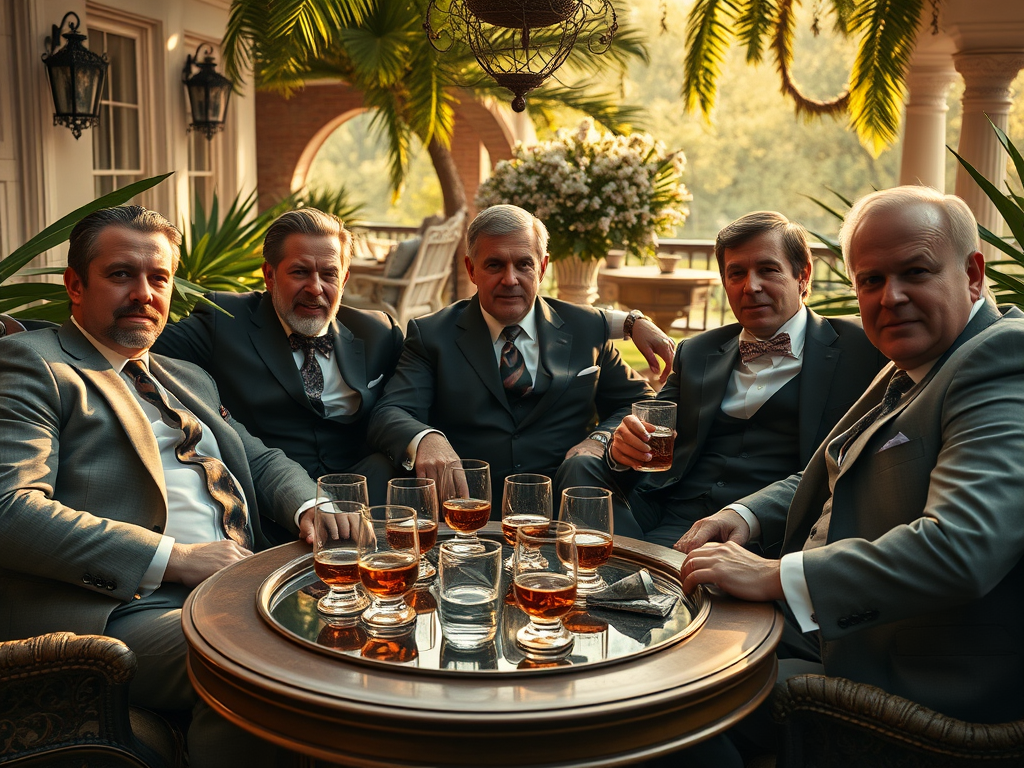
    There’s an old saying: declaw a cat, and it can’t survive in the wild. But what happens when the cat doesn’t want to leave its velvet-cushioned cage? Welcome to Southern Charm, a reality show that parades a peculiar species—the overgrown man-child, trapped by privilege, mediocrity, and the reassuring hum of an ever-flowing bourbon decanter.

    These men, ranging from their thirties to their fifties, are not so much participants in life as they are well-dressed relics, embalmed in their own vices. Work is an abstract concept, something dabbled in between brunches and boat parties. Women are recreational pastimes, sampled and discarded like seasonal cocktails. And the ultimate validation? The cooing, slurred approval of their doting mothers, who, in between vodka tonics, assure their progeny that they are, indeed, true Southern gentlemen.

    But Southern Charm isn’t just about individual arrested development—it’s about a collective one. Nowhere is this more apparent than in the show’s occasional detours into the grotesque theater of old-money delusion. Take, for example, the time disgraced politician Thomas Ravenel dined with his father, Arthur, a former U.S. Representative. Over lunch, Arthur casually revealed his habit of quickly getting rid of five-dollar bills because Abraham Lincoln’s face still irks him. That’s right—Lincoln, the president who ended slavery, remains a personal affront to this withered artifact of the antebellum South.

    If I had to sum up Southern Charm in a single word, it would be imprisonment. These men are locked in a gilded purgatory, shackled by tradition, vice, and a desperate fear of anything beyond their insular Charleston bubble. They know their world is suffocating, yet they can’t—or won’t—leave it. And that’s what makes Southern Charm such a mesmerizing trainwreck: watching these men wriggle and rationalize, making their slow-motion deal with the devil, one bourbon at a time.

  • Teaching History Without Erasure: Frederick Douglass, Germany’s Reckoning, and the Power of Truth

    Teaching History Without Erasure: Frederick Douglass, Germany’s Reckoning, and the Power of Truth

    This is my second essay prompt in my freshman composition class:

    Teaching History Without Erasure: Frederick Douglass, Germany’s Reckoning, and the Power of Truth

    In recent years, fierce debates have erupted over how slavery, Jim Crow laws, and racial injustice should be taught in American classrooms. Some critics argue that these lessons have become excessively politicized, accusing educators of pushing a divisive narrative that portrays America as fundamentally irredeemable. They claim that such an approach fosters victimhood, undermines critical thinking, and turns education into a vehicle for ideological indoctrination.

    Others push back, arguing that this resistance is itself a form of historical distortion—an attempt to silence African-American voices and obscure painful but essential truths. They assert that teaching racial injustice is not about politics but about moral, psychological, and historical reckoning. Frederick Douglass’ writings offer a powerful counterpoint, illustrating how truth-telling about oppression is not an act of condemnation but one of empowerment. Much like Jordan Peele’s The Sunken Place concept, Douglass’ life reveals how acknowledging injustice can lead to personal agency, resistance, and the pursuit of justice. Similarly, Germany’s post-Holocaust reckoning provides a framework for confronting historical atrocities without fostering helplessness or national self-loathing.

    For this 1,700-word argumentative essay (MLA format required), analyze how Frederick Douglass’ personal fight against slavery and Germany’s effort to memorialize the Holocaust offer crucial lessons on addressing historical injustice. Drawing on Douglass’ Narrative of the Life of Frederick Douglass, An American Slave and Clint Smith’s essay “Monuments to the Unthinkable,” explore how bearing witness to historical truths can foster accountability, self-agency, and resilience. Consider how both examples highlight the importance of acknowledging past wrongs while also promoting national and individual growth.

    Essay Requirements:

    • Length: 1,700 words
    • Format: MLA (Modern Language Association)
    • Sources: Minimum of 4, cited in MLA format
    • Required Texts:
      • Narrative of the Life of Frederick Douglass, An American Slave (available online as a PDF)
      • Clint Smith’s “Monuments to the Unthinkable”
      • PBS NewsHour YouTube video “Why Americans Are So Divided Over Teaching Critical Race Theory”
      • David Pilgrim’s YouTube video “The Jim Crow Museum”
      • Childish Gambino’s “This Is America” (Optional for thematic analysis)

    Key Focus Areas for Analysis:

    • How Douglass’ narrative challenges oppression and promotes self-agency
    • How Germany’s post-Holocaust reforms serve as a model for confronting historical injustice
    • The moral responsibility of societies to acknowledge past atrocities and ensure they are not repeated
    • How historical awareness empowers future generations to break cycles of injustice
    • Strategies for teaching history in a way that fosters accountability, growth, and resilience—without promoting victimhood or division

    This essay invites you to step beyond the surface of modern political debates and examine how history, when taught truthfully, can serve as a tool for both personal and societal transformation. How should we reckon with our past, and what can we learn from those who have done it well?

  • Reading A Clockwork Orange in Russia

    Reading A Clockwork Orange in Russia

    In my early twenties, I was holding a copy of A Clockwork Orange on an Aeroflot flight from New York to Moscow, and I was fairly certain I’d be arrested before I even touched Soviet soil. This was not the book I was supposed to be reading. My grandfather, a proud, card-carrying Communist, had made it clear that my in-flight reading should be Cities Without Crisis: The Soviet Union Through the Eyes of an American by Mike Davidow—a glowing, uncritical love letter to the USSR. According to Davidow, the Soviet Union was well on its way to utopia, a land where happy, apple-cheeked children played in clean, orderly cities, miraculously untouched by the crime, chaos, and moral decay of capitalist America.

    I had every intention of honoring my grandfather’s wishes. He had, after all, funded my spot on this Sputnik Peace Tour, a Cold War-era cultural exchange designed to showcase the Soviet Union’s superiority and convince impressionable American university students that their homeland was little more than a dilapidated shack compared to the Soviet skyscraper. My grandfather, who spent his golden years vacationing in Russia and Cuba and had personally befriended Fidel Castro, hoped I’d return to the States ready to sing the Soviet anthem on command, with a crimson hammer-and-sickle tattoo stretched across my chest.

    But try as I might, I couldn’t stomach Davidow’s propaganda. It read like an overlong infomercial scripted by a particularly humorless bureaucrat. Every page was predictable, every assertion dripping with a blind, almost devotional reverence for the Soviet system. By chapter three, my eyelids were growing heavier than a Soviet cement block. That’s when I ditched it for A Clockwork Orange, a novel that, in its satirical depiction of authoritarianism and mindless conformity, was just about the worst reading material one could bring on a goodwill trip to the USSR. My grandfather would have called it “reactionary,” but I wasn’t worried about him.

    No, my real concern was the Soviet customs officers waiting for us on the tarmac. They’d be rummaging through our luggage, sniffing out any hint of anti-Soviet subversion. And there I was, gripping a book that, if noticed, might earn me an all-expenses-paid trip to the kind of re-education program I had no interest in attending.

    When one of my fellow tourists, Jerry Gold, who was studying law at Brown University, saw me reading the subversive novel while sitting next to me on the plane, he warned me that the Soviet police would probably confiscate it when we got to the airport. “Not only will they take your book,” he said, “they will mark you as a troublemaker and keep tags on you throughout the entire trip. You must now constantly look over your shoulder for spies, my friend. And remember, if anyone wants to offer you good money for your jeans, it’s probably KGB. Selling Western commodities for the black market is a crime that could get you sent to a Soviet prison.”

    I’ll admit, I was a little anxious about some stern-faced Soviet officer confiscating A Clockwork Orange from my hands, but that concern quickly took a backseat to a far more immediate crisis: the inedible horrors being passed off as food on the Aeroflot flight. The demure flight attendants, clad in their stiff, no-nonsense uniforms, moved through the cabin with a grim efficiency, depositing onto our trays what could only be described as Cold War rations—waxy cheese triangles entombed in foil, anemic cold cuts that looked like they had lost a war of their own, limp lettuce gasping for dignity, and carrot slices so soggy they seemed to be pre-chewed. It was a meal that could single-handedly refute Mike Davidow’s utopian vision in Cities Without Crisis. His thesis—that the Soviet Union was building thriving cities free of strife—collapsed under the weight of this culinary travesty. Because if a nation’s food is a reflection of its prosperity, then a country that serves despair on a tray is, in fact, in crisis. And a man who fails to acknowledge that crisis is a fraud.

    Across the aisle, Jerry Gold, the kind of guy who exuded the unshakable self-assurance of someone who spent his summers at debate camp and his winters skiing in Vermont, curled his lip in disgust. A mop of reddish-brown hair and a constellation of freckles gave him the air of a scholarly leprechaun. He peeled back the foil on his cheese triangle with surgical precision, examined its plasticky surface like a jeweler appraising a fake diamond, and let out a slow, deliberate sigh. Then, in a display of Ivy League pragmatism, he took the industrial-grade brown napkin from his tray, folded it with the care of a man preparing for a high-stakes origami competition, and tucked it into the inner pocket of his coat. “You might want to do the same,” he advised me in a tone that suggested this was less a suggestion and more a survival strategy. I nodded, following suit, because when faced with Soviet airline cuisine, you learned to take advice from the man with a backup plan.

    “This could be the only toilet paper you’re going to have on this trip,” he said. “You would be wise to save all your napkins. They’re worth their weight in gold around here.”

    “That’s disgusting.”

    “Have you ever used an Eastern European toilet?”

    I shook my head.

    “A hole in the ground. An invitation to the deep knee bend. It’s a free Jack Lalanne workout every time you go to the shitter. Things can be rather primitive.”

    “For someone so hellbent on horrifying me on every aspect of this tour, can you please tell me why you decided to go on this trip?”

    “It’s college credit. It’s exotic. How many Americans can boast of having been inside the Soviet Union?” He forced down a bite of cheese and asked me why I was going on the tour. 

    “My grandfather is a card-carrying communist,” I said. “He’s trying to convert me.”

    “So he sent you to paradise.” He laughed, then pinched a cold cut, lifted it before his face, and scrutinized it carefully.

    “The food isn’t a winning argument,” I said. “Nor is the absence of toilet paper.”

    “There is a saying in the Soviet Union,” he said while tossing the uneaten cold cut on his tray. “If you see people standing in line, make sure you stand in it. People are always waiting in line for something.”

    His statement proved to be true. A week later when we were in a sweltering market in Kyiv, we saw forlorn citizens, mostly stoic-faced babushkas, standing in a long line to buy wrinkled room-temperature chickens with flies swarming over them. I kept thinking to myself, “Cities without crisis? Bullshit.” Little did I know, I was standing 62 miles from Chernobyl and that two years later the nuclear reactor would explode causing worldwide radioactive contamination. Cities without crisis indeed.

    But in 1984 as I witnessed long lines, food shortages, nonexistent toilet paper, and primitive toilets, I found something about the Soviet Union that struck me as almost admirable: Everywhere we went, markets, train stations, parks, and museums, there were government speakers playing classical music, much of it from Rachmaninoff, Shostakovich, and Prokofiev. I wanted to believe, as my grandfather would want me to, that the violin chamber pieces and piano sonatas were the Soviet Union’s idea of music for the masses based on the government cultivating sophisticated taste in its citizens. But a darker motive was that the music was part of the Soviet Union’s propaganda: Classical music from Russian composers was a way of rebuking the vulgarity and corruption of the West.