Tag: reading

  • Zosia Mamet and My Personal Reading Revival

    Zosia Mamet and My Personal Reading Revival

    It’s rare that I fall in love with books these days, but when it happens, I’m grateful because reading reminds me of my glory days, the early 80s when I consumed books with ferocity, imaginative pleasure, and obligation like a bodybuilder taking protein powder and creatine. Three major factors have curtailed my reading of books: One, I’ve grown so cynical over the years that I’ve come to the belief that 99% of books are in actuality just a short story or essay with padding. An author has an intriguing idea, and they sit down with their agent and cook up a book that is mostly chicanery with a dash of substance. 

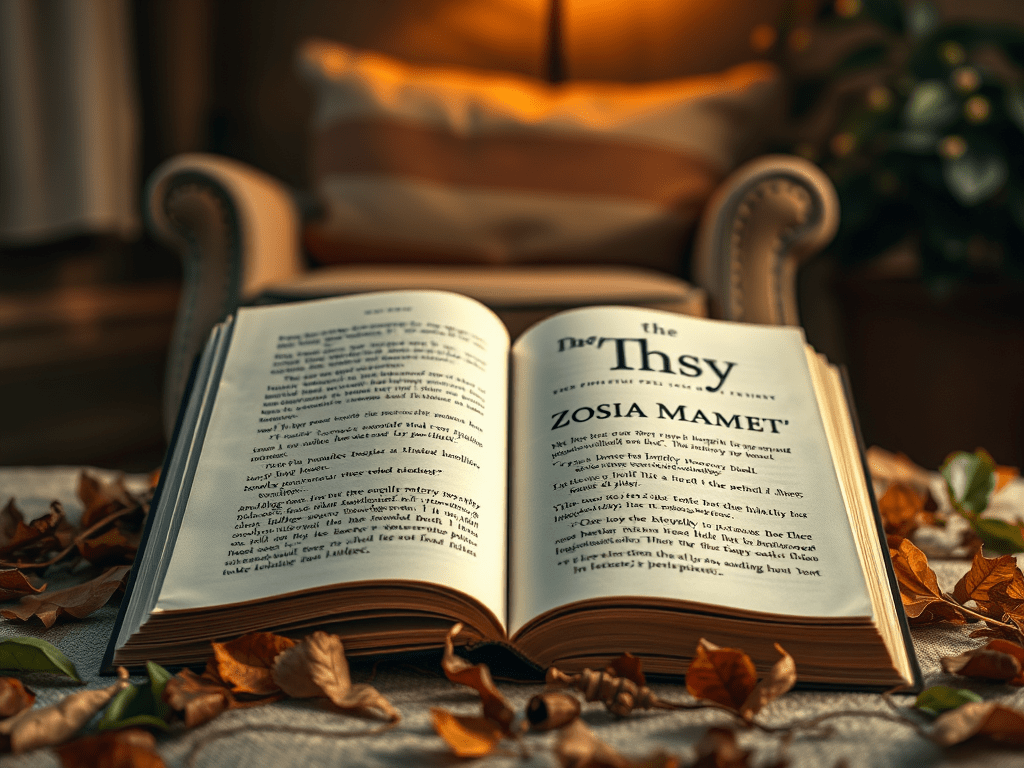
    Then three days ago, I heard actor Zosia Mamet talking about her memoir Does This Make Me Funny?, a collection of essays, with KCRW host Sam Sanders, and I was so struck by her depth of wit, intelligence, and moral perspective that I immediately bought her book, or I should say the Kindle eBook version of it. Even more rare than buying books as intellectual property, it is even rarer that I buy a hard copy of something, unless it is a kettlebell training book or a cookbook like Miyoko Schimmer’s The Vegan Creamery

    Getting most of my books on Kindle speaks to the second reason my reading has diminished. The physical act of reading is unpleasant. Holding the book, turning the pages, getting into a comfortable position, attenuating my eyes to the various font sizes. I find the whole thing disconcerting and unpleasant, like trying to figure out the seat positions, buttons, and levers of an unfamiliar car. The most comfortable forms of reading are either sitting at my desktop and reading the Kindle on a 27-inch screen or reading while sitting in bed with a 16-inch laptop.

    The third reason I don’t read as much is that the Internet and its attention economy have fried my brain over the decades. The attention muscles inside my cortex have atrophied to a woeful state. 

    But occasionally a rose grows out of the cracks in the cement sidewalk, and such is the case with Zosia Mamet’s memoir, as witty, deep, self-deprecating, and salient as the author speaking to Sam Sanders three days ago. Reading the memoir is to connect with someone for whom her writing voice and the core of her being are the same. The result is something distinctive and salient, something that recoils and then snaps forward to leave its literary fangs inside you. Isn’t that what writing is supposed to be about? Nabokov was like that. So was Kafka. And so is Zosia Mamet.

    I detest some confectionary celebrity memoir reeking of privilege, superfluousness, and mediocrity. None of that is in Zosia’s collection of essays. 

    As we read in Jancee Dunn’s New York Times article “At Least Zosia Mamet Can Laugh About It,” the core of her book is about her mental, physical, and spiritual health. Coming from a family that is deeply entrenched in literature and the arts is a double-edged sword with excruciating pressure to live up to superhuman expectations causing Zosia’s thorn in her side to be the constant sense that she is falling abysmally short. 

    Like the best comedia, she opts out of self-pity for humor as she does a deep dive into her anxiety, depression, body dysmorphia, anorexia, and anhedonia, and all the self-destructive behaviors she succumbed to in order to overcome these afflictions. Because she knows that body dysmorphia is a delusion that hijacks her brain, she says about herself: “I am often an unreliable narrator of my own reality.” 

    Which in a nutshell is the human condition: Can we trust ourselves or are we getting duped by our own fake narrative? 

    What tools from our emotional toolbox can we use to be more reliable? Perhaps comedy is one of them. Think of our irrational states: overcome by maudlin self-pity, vanity, and grandiosity, we spin grotesque narratives about ourselves that compel us to behave in ways that are ridiculous and often result in self-sabotage. Perhaps comedy is the antidote. Perhaps comedy distances us from our preposterous self-mythology and helps us in the arduous process of self-reinvention. That’s the sense I’m getting from Zosia Mamet’s very necessary book, a book that has no padding at all but has been made from a brilliant mind with blood, sweat, and tears. 

  • Why Reading Is the Last Romantic Act

    Why Reading Is the Last Romantic Act


    If you take my Critical Thinking class, let me set expectations up front: I will not stand at the front of the room and lecture you into becoming an intellectual. That’s not how it works. I can’t command you to read. I can’t install curiosity like a software update.

    What I can tell you is this: the default setting is mediocrity. It’s smooth, seductive, and socially acceptable. The world—especially its algorithmic avatars—is built to exploit that setting. Platforms like OpenAI don’t just offer tools; they offer excuses. They whisper: You don’t have to think. Just prompt.

    You’ll get by on it. You’ll write tolerable essays. You might even land a job—something stable and fluorescent-lit with a breakroom fridge. But if you keep outsourcing your critical thinking to machines and your inner life to streaming platforms, you may slowly congeal into a Non-Player Character: a functionally adequate adult with no self-agency, just dopamine hits from cheap tech and cheaper opinions.

    The world needs thinkers, not task-completers.

    And that’s why I push reading—not as an obligation, but as a doorway to a higher mode of existence. Reading changes the texture of your thoughts. It exposes you to complexity you didn’t ask for and patterns of mind you didn’t inherit. But here’s the inconvenient truth: no one can make you read.

    Reading isn’t a commandment. It’s a love affair—and like any love worth having, it’s irrational, wild, and self-chosen. You don’t read because it’s good for you. You read because at some point a book wrecked you—in the best way possible. It made your brain itch, or your chest tighten, or your worldview crack open like an old floorboard.

    And that’s what I want for you. Not because it makes me feel like a good professor, but because if you don’t fall in love with ideas—on the page, in the margins, in someone else’s wild, flawed sentences—you’ll live a life someone else designed for you.

    And you’ll call it freedom.

  • Hot Pockets, CliffNotes, and the Death of Deep Reading

    Hot Pockets, CliffNotes, and the Death of Deep Reading

    Before the Internet turned my brain into a beige slush of browser tabs and dopamine spikes, I used to read like a man possessed. In the early ’90s, I’d lounge by the pool of my Southern California apartment, sun-blasted and half-glossed with SPF 8, reading books with a kind of sacred monastic intensity. A. Alvarez’s The Savage God. Erik Erikson’s Young Man Luther. James Twitchell’s Carnival Culture. James Hillman and Michael Ventura’s rant against the therapy-industrial complex–We’ve Had a Hundred Years of Psychotherapy – and the World’s Getting Worse. Sometimes I’d interrupt the intellectual ecstasy to spritz my freshly tanned abs with water—because I was still vain, just literate.

    Reading back then was as natural as breathing. As Joshua Rothman points out in his New Yorker essay, “What’s Happening to Reading?”, there was a time when the written word was not merely consumed—it was inhaled. Books were companions. Anchors. Entire weekends were structured around chapters. But now? Reading is another tab, sandwiched between the news, a TikTok video of a dog on a skateboard, and an unopened Instacart order.

    Rothman nails the diagnosis. Reading used to be linear, immersive, and embodied—your hands on a book, your mind in a world. Now we shuttle between eBooks, PDFs, Reddit threads, and Kindle highlights like neurotic bees skimming data nectar. A “reading session” might include swiping through 200-word essays while eating a Hot Pocket and half-watching a documentary about narco penguins on Netflix. Our attention is fractured, our engagement ritualized but hollow. And yes, the statistics back it up: the percentage of Americans who read at least one book a year dropped from 55% to 48%. Not a cliff, but a slow, sad slide.

    Some argue it’s not worth panicking over—a mere 7% drop. I disagree. As a college instructor, I’ve seen the change up close. Students don’t read long-form books anymore. Assign Frederick Douglass and half the class will disappear into thin air—or worse, generate AI versions of Douglass quotes that never existed. Assign a “safe” book and they might skim the Wikipedia entry. We’ve entered an age where the bar for literacy is whether someone has read more than one captioned infographic per week.

    Rothman tries to be diplomatic. He argues that we’re not consuming less—we’re just consuming differently. Podcasts, YouTube explainers, TikTok essayists—this is the new literacy. And fine. I live in that world, too. I mainline political podcasts like they’re anti-anxiety meds. Most books, especially in the nonfiction space, do feel like padded TED Talks that should have stayed 4,000 words long. The first chapter dazzles; the next nine are a remix of the thesis until you feel gaslit into thinking you’re the problem.

    But now the reading apocalypse has a new beast in the basement: AI.

    We’ve entered the uncanny phase where the reader might be an algorithm, the author might be synthetic, and the glowing recommendation comes not from your friend but from a language model tuned to your neuroses. AI is now both the reader and the reviewer, compressing thousand-page tomes into bullet points so we can decide whether to fake-read them for a book club we no longer attend.

    Picture this: you’re a podcaster interviewing the author of a 600-page brick of a book. You’ve read the first 20 pages, tops. You ask your AI: “Give me a 5-page summary and 10 questions that make me sound like a tortured genius.” Boom—you’re suddenly a better interviewer than if you’d actually read the book. AI becomes your memory, your ghostwriter, your stand-in intelligence. And with every assist, your own reading muscles atrophy. You become fit only for blurbs and bar graphs.

    Or take this scenario: you’re a novelist. You’ve published 12 books. Eleven flopped. One became a cult hit. Your publisher, desperate for cash, wants six sequels. AI can generate them faster, better, and without your creative hand-wringing. You’re offered $5 million. Do you let the machine ghostwrite your legacy, or do you die on the sword of authenticity? Before you answer, consider how often we already outsource our thinking to tools. Consider how often you’ve read about a book rather than the book itself.

    Even the notion of a “writer” is dissolving. When I was in writing classes, names like Updike, Oates, Carver, and Roth loomed large—literary athletes who brawled on live television and feuded in magazines. Writers were gladiators of thought. Now they’re functionally obsolete in the eyes of the market, replaced by a system that values speed, virality, and AI-optimized titles.

    Soon, we won’t pick books. AI will pick them for us. It will scan our history, cross-reference our moods, and deliver pre-chewed summaries tailored to our emotional allergies. It will tell us what to read, what to think about it, and which hot takes to regurgitate over brunch. We’ll become readers in name only—participants in a kind of literary cosplay, where the act of reading is performed but never truly inhabited.

    Rothman’s essay is elegant, insightful, and wrong in one key respect: it shouldn’t be titled What’s Happening to Reading? It should be called What’s Happening to Reading, Writing, and the Human Mind? Because the page is still there—but the reader might not be.

  • I Have No Illusions About Converting My Students to “The Ways of Literacy”

    I Have No Illusions About Converting My Students to “The Ways of Literacy”

    My college students admit that they barely read. They avoid books. They’ll skim an article. Their “cognitive load” is taken up by texting on their phones and watching TikTok and YouTube videos. They don’t have bandwidth for doing deep reading.

    Many of them were in the eighth grade during the pandemic. They lost close to two years of school, spent time on their phones and Chromebooks, and see ChatGPT as a godsend. They can outsource college instructors’ writing assignments and no longer have to worry about grammar or formatting. 

    Teaching college writing, I have to meet students where they are. I have to teach them rhetorical skills, critical thinking skills, and the transforming power of literacy, so I show them powerful arguments, and what makes them persuasive, and people who have found their higher selves through literacy, such as Frederick Douglass and Malcolm X, and the happiness derived from Cal Newport’s notion of “deep work” as an antidote to the despair and nihilism of popular culture’s default setting for cheap dopamine hits, immediate gratification, and meretricious consumer hype. 

    The good news is that my lessons resonate with the students evidenced by their engagement with class discussions. The less than good news is that these philosophical discussions don’t turn them into readers, don’t make them want to trade their phones and social media platforms for a novel or a biography, and don’t make them want to learn the finer points of rhetoric. 

    My students are smart, decent, reasonable, and pragmatic. They learn what they feel is essential to adapt to life’s challenges. Doing a deep dive into reading and writing doesn’t seem that essential to them even though they’ll acknowledge many of the writers and writing samples I present to them are impressive and worthy of admiration. 

    My students seem to appreciate me for giving them an entertaining presentation and for having made the effort to sell literacy as an essential tool for becoming our aspirational selves, but at the end of the day, they focus on getting their homework done as efficiently as possible, working a part-time job to pay the bills, enjoying their friendships, and nurturing their romantic interest. 

    The unspoken agreement between my students and me is that I will be entertaining and enthusiastic about my subject for 90 minutes, but I will not have any delusions about converting them to The Ways of Literacy. That is a teacher’s fantasy, made even more elusive in the AI Age. 

  • Manuscripnosis: A Vexing Tale of Self-Sabotage

    Manuscripnosis: A Vexing Tale of Self-Sabotage

    I suffer from a humiliating literary affliction: when I’m not trying to write a book—when I’m simply crafting loose, witty blog posts—my prose sings. It breathes. It struts across the page like it owns the place. In those moments, I’m not an “author,” I’m just a clever diarist with decent rhythm and a nose for irony.

    But then comes the fatal whiff—that intoxicating scent of a book deal drifting in from the distance like a mouth-watering freshly-baked coconut macaroon. Suddenly, I begin to try. I sit up straighter. I structure. I strategize. I lean into “craft.” And that’s when my prose, once alive and sinewy, collapses like a soufflé that sensed it was being watched. Gone is the energy, the voice, the mischievous verve. What remains is a flaccid husk of what could have been—something that reads less like a potential bestseller and more like a workshop handout no one asked for.

    This, dear reader, is the vicious, looping paradox I call Unintended Book Syndrome. The moment I stop writing and start authorshipping, my words die on the vine.

    The clinical term, I believe, is Manuscripnosis: a trance-like state in which blog-worthy brilliance is transfigured into joyless literary taxidermy the moment the idea of a “real book” enters the room. I have lived with this disorder for decades. I’ve tried everything—lowering expectations, denying ambition, even faking indifference. Nothing works. The moment I think this could be a book, the prose curls up and dies like a Victorian heroine too delicate for publication.

    Sometimes I fantasize about quitting writing altogether. But abstinence only makes it worse. The despair of not writing eclipses even the misery of writing badly. Which means I am doomed to live forever in this creative purgatory—hovering between genius and garbage, blog post and book, dopamine and dread.

  • I Am My Own Audiobook: A Washed-Up Reader’s Redemption Arc

    I Am My Own Audiobook: A Washed-Up Reader’s Redemption Arc

    After four decades of teaching college writing, I now find myself plagued by a humiliating truth: my reading habits have withered into something more decorative than devout. In my twenties, I devoured two books a week like a literary piranha. Now, I manage a limp 30-minute bedtime reading session before drooling onto the page like a narcoleptic bookworm. Call it aging, call it digital distraction, or—as I like to tell myself in moments of flattering delusion—call it undiagnosed ADHD. Whatever the cause, my reading stamina has become a cautionary tale.

    If I want to do anything resembling real, rigorous reading, I’ve learned to prop myself between two 27-inch screens like a cyborg monk: one monitor displaying the sacred text, the other open to Google Docs so I can take notes, argue with myself, and shame my inner skimmer into paying attention. This is not pleasure reading. This is performance reading—a controlled environment designed to bully my mind into staying in the room. If a book so much as looks at me funny, I’ll click over to email.

    But something strange has happened: I’ve become a better listener than reader. I now “read” through Audible with more duration and intensity than I’ve mustered with paper in years. Especially with nonfiction, the audiobook format feels less like cheating and more like a form of literary intravenous drip—direct, efficient, and oddly intimate. That’s why a recent blurb in The New Yorker caught my eye: Peter Szendy’s Powers of Reading: From Plato to Audiobooks isn’t just an academic tour through literary history—it’s a philosophical rebranding of the audiobook experience.

    Szendy resurrects a long-lost distinction between two roles: the reader (the person decoding text) and the readee (the listener, the audience of the reading). Since antiquity, he notes, most literature wasn’t read—it was heard. We were, for most of human history, listenees. Silent, solo reading is a relatively recent phenomenon, and yet we’ve somehow crowned it the gold standard of literary engagement. Szendy isn’t buying it. In fact, he argues for the emancipation of the readee—a manifesto that practically throws confetti over the return of orality via Audible.

    And here’s the kicker: even when we read to ourselves, we’re still listenees. We are listening to our own interior narration. We are, in essence, narrating to ourselves. Szendy suggests that when we read, we play both roles: the voice and the ear, the actor and the audience. And when we listen to a book, we are doing something ancient, dignified, and sacred—not some degraded, dumbed-down version of real reading.

    So yes, maybe I’m a fallen reader, a man who used to crush Dostoevsky before breakfast but now requires high-tech scaffolding just to get through a paragraph. But thanks to Szendy, I can now see myself as a kind of restored readee—part monk, part machine, part audiobook in human form. Not a failure of attention, but a return to tradition. And if my bedtime ritual now sounds more like a podcast than a prayer, well… Plato probably would’ve approved.

  • The Guru in the Mini-Fridge: A Miami Manifesto

    The Guru in the Mini-Fridge: A Miami Manifesto

    I’m standing barefoot in the dim kitchenette of our Miami hotel room, illuminated by the dull glow of a microwave clock and the soft snoring of my family behind a paper-thin wall. I am overweight, overserved by anxiety, and currently marinating in a mix of guilt and existential fatigue. I miss Southern California, where I can at least pretend the ocean breeze is part of some reinvention montage.

    Then, out of nowhere—perhaps summoned by my elevated cortisol levels—my invisible guru appears. You know the type: part stoic monk, part irritated life coach, part inner drill sergeant with a taste for poetic slogans.

    He looks at me with eyes that have seen too many late-night snacks and says:


    “Repeat after me—less coffee, less food means more dignity. More focus, more humility, more gratitude, more work means less regret and despair. Are we clear?”

    It’s a slogan so clean and self-righteous it should be stenciled on a CrossFit wall. But fine, I play along. I nod. I even feel a flicker of hope—that slightly delusional warmth that hits right before you decide you’ll never eat bread again.

    But I level with him. “Look,” I say, “I love the aphorism. Truly. But here’s the problem. I forget everything the moment a cookie enters the room. My brain turns into a Vegas slot machine when I’m tired. There’s this compulsive, despairing little imp inside me who waits for just the tiniest whiff of sugar, sloth, or social media to hijack the controls and turn me into a ruinous parody of myself. What do I do with that guy?”

    My guru, undisturbed and frankly unimpressed, delivers the gospel:


    “As you live in accordance with the plan, you will grow stronger. The old ways will become repulsive. The deeper you root yourself in the good, the weaker the bad becomes. Got it?”

    I nod again. Less certain this time, but willing to try. Maybe it’s the humidity. Maybe it’s the quiet. Or maybe, just maybe, it’s the faint hope that I can still wrestle my wreckage into something resembling a life worth living.

    At the very least, I’ll try it out—until breakfast.

  • Stories That Eat Novels (and Leave No Bones Behind)

    Stories That Eat Novels (and Leave No Bones Behind)

    As part of my rehabilitation from writing novels I have no business writing, I remind myself of an uncomfortable truth: 95% of books—both fiction and nonfiction—are just bloated short stories and essays with unnecessary padding. How many times have I read a novel and thought, This would have been a killer short story, but as a novel, it’s a slog? How often have I powered through a nonfiction screed only to realize that everything I needed was in the first chapter, and the rest was just an echo chamber of diminishing returns?

    Perhaps someday, I’ll learn to write an exceptional short story—the kind that punches above its weight, the kind that leaves you feeling like you’ve just read a 400-page novel even though it barely clears 30. It takes a rare kind of genius to pull off this magic trick. I think of Alice Munro’s layered portraits of regret, Lorrie Moore’s razor-sharp wit, and John Cheever’s meticulous dissections of suburban despair. I flip through my extra-large edition of The Stories of John Cheever, and three stand out like glittering relics: “The Swimmer,” “The Country Husband,” and “The Jewels of the Cabots.” Each is a self-contained universe, a potent literary multivitamin that somehow delivers all the nourishment of a novel in a single, concentrated dose. Let’s call these rare works Stories That Ate a Novel—compact, ferocious, and packed with enough emotional and intellectual weight to render lesser novels redundant.

    As part of my rehabilitation, I must seek out such stories, study them, and attempt to write them. Not just as an artistic exercise, but as a safeguard against relapse—the last thing I need is another 300-page corpse of a novel stinking up my hard drive.

    But maybe this is more than just a recovery plan. Maybe this is a new mission—championing Stories That Eat Novels. The cultural winds are shifting in my favor. Attention spans, gnawed to the bone by social media, no longer tolerate literary excess. Even the New York Times has noted the rise of the short novel, reporting in “To the Point: Short Novels Dominate International Booker Prize Nominees” that books under 200 pages are taking center stage. We may be witnessing a tectonic shift, an age where brevity is not just a virtue but a necessity.

    For a failed novelist and an unapologetic literary wind-sprinter, this could be my moment. I can already see it—my sleek, ruthless 160-page collection, Stories That Eat Novels, four lapidary masterpieces gleaming like finely cut diamonds. Rehabilitation has never felt so good. Who says a man in his sixties can’t find his literary niche and stage an artistic rebirth? Maybe I wasn’t a failed novelist after all—maybe I was just a short-form assassin waiting for the right age to arrive.

  • Manuscriptus Rex: My Life as a Delusional Writing Addict

    Manuscriptus Rex: My Life as a Delusional Writing Addict

    I am a writing addict, at least in part, because I was indoctrinated by the twin cults of positive thinking and unrelenting perseverance. Never quit. Fight like hell. Success is inevitable if you just want it badly enough. And if it doesn’t come? Well, then you’re just not a real American.

    By the time I hit kindergarten, I was a true believer in the gospel of hard work. My worldview was a Frankenstein’s monster stitched together from children’s books, Charles Atlas bodybuilding ads wedged between comic book panels, and the propaganda of Captain Kangaroo. The formula was clear: effort equals triumph. I swallowed this doctrine whole, with the blind conviction of a kid who thought that eating all his vegetables would one day grant him the ability to fly.

    My optimism knew no bounds. It was untethered, soaring on the helium of pop-culture platitudes. The Little Engine That Could had me whispering “I think I can” like a monk chanting a holy incantation, convinced that sheer willpower and enough push-ups could bulldoze any obstacle. It didn’t occur to me that sometimes you think you can, but you absolutely cannot—and that no amount of stubborn persistence will turn a delusion into destiny.

    And then came the night of October 16, 1967—a date I would later remember as the day the universe gave me a cosmic swirly. Twelve days before my sixth birthday, I sat cross-legged in front of the TV, ready to revel in another episode of my favorite show, The Monkees. But what played out before me was a betrayal so deep it made Santa Claus feel like a Ponzi scheme.

    The episode, “I Was a 99-lb. Weakling,” featured my hero, Micky Dolenz, getting steamrolled by Bulk, a slab of human granite played by Mr. Universe himself, Dave Draper. Bulk wasn’t just big—he was the walking embodiment of every Charles Atlas ad come to life, the muscle-bound colossus I had been taught to revere. And right on cue, Brenda, the bikini-clad goddess of the beach, ditched Micky for Bulk without so much as a backward glance.

    This was a crisis of faith. How could the Monkees’ resident goofball, my spiritual avatar, lose to a guy who looked like he bench-pressed telephone poles for fun? Desperate to reclaim his dignity, Micky enrolled in Weaklings Anonymous, where he endured a training montage so ludicrous it made Rocky Balboa’s look like a casual Pilates class. He lifted weights the size of Buicks. He chugged fermented goat milk curd—a punishment so grotesque it could only be described as liquefied despair. He even sold his drum set. His very essence, his identity, was on the chopping block, all in pursuit of the almighty muscle.

    But the final twist? Brenda changed her mind. Just as Micky was emerging from his trial by whey protein, she dropped Bulk like a bad habit and swooned over a pencil-necked intellectual—a guy who looked like he could barely lift a library book, but there he was, nose buried in Marcel Proust’s Remembrance of Things Past. Brenda, the same woman who had once melted for a walking slab of muscle, now found transcendence in a man contemplating lost time in a cork-lined room.

    It was then that the tectonic plates of my worldview shifted. Muscles weren’t the real source of power—books were. The secret wasn’t in deadlifts or protein shakes but in the right combination of words, strung together with enough elegance, insight, and authority to bend the universe to your will. The revelation landed with the force of a divine decree: if you wanted to shape the world, you didn’t need biceps—you needed prose.

    That night, my inner writing demon was born. It didn’t arrive with fanfare but stealthily, like an assassin—hijacking my ambitions, whispering to me that if I truly wanted to matter, I needed to trade in my devotion to squat racks for an obsession with syntax. The real alphas weren’t the ones flexing on the beach; they were the ones commanding attention through the written word, weaving sentences so powerful they made bikini-clad goddesses switch allegiances overnight.

    ***

    Picture a five-year-old boy glued to The Monkees, absorbing every absurd twist and turn, when suddenly—a revelation. Not from a heroic feat, a rock anthem, or a daring stunt, but from a pencil-necked geek buried in Remembrance of Things Past. The sheer audacity of it! This bookish weakling wasn’t just reading—he was brandishing literature like a weapon, as if cracking open Proust conferred an instant intellectual throne.

    That moment rewired my brain and began my transformation into Manuscriptus Rex. I wanted that kind of power. I wanted to be indelible, undeniable, and necessary—a man whose words carried weight, whose sentences etched themselves into the fabric of cultural consciousness. And when, at twenty-three, I read A Confederacy of Dunces, my mission crystallized. It wasn’t enough to be intelligent or insightful. No, I had to be a satirical novelist, an ambassador of caustic wit, a statesman of irony, and just self-deprecating enough that people wouldn’t hate me for it. I saw myself as a literary assassin, razor-sharp, unignorable, the kind of writer who forces the world to take notice.

    What the writing demon conveniently failed to mention—what it actively conspired to keep from me—is the vast and merciless chasm between the actual process of writing and the seductive fantasy of literary fame. To ignore this gulf is to court a special kind of stupidity, the kind that can waste an entire lifetime.

    Writing is a protracted act of self-torture, an endless loop of revision, self-doubt, and existential agony. J.P. Donleavy, author of The Ginger Man, had no idea what fresh hell awaited him as he wrestled his novel into something that met his own impossibly high standards. The process was not romantic; it was a war of attrition. Tedium, solitude, mental torment—these were his constant companions. But he and his book trudged forward, bloodied but breathing, as if the act of creation itself were some cursed form of survival.

    Meanwhile, I was high on a much glossier hallucination. I wasn’t going to be some embattled craftsman drowning in rewrites—I was going to be the genius, the confetti-drenched literary deity, basking in the ovation of an enraptured public. This was the demon’s cruel joke. The more reality smacked me in the face, the deeper I dug into the delusion. It wasn’t just self-deception; it was a pathology, a spiritual affliction.

    F. Scott Fitzgerald mapped this sickness in “Winter Dreams,” the tale of Dexter Green, a man who squanders his entire existence chasing Judy Jones, a capricious cipher onto which he projects all his longings. She isn’t a goddess—she’s an empty shell, a faithless mediocrity. No matter. His fantasy of perfection keeps him shackled to his own vanity, blind to the fact that life is passing him by.

    Dexter Green is a sucker. He doesn’t know how to live—only how to worship an illusion. He believes in moments frozen in time, in pristine, untouchable ideals, instead of the mess and movement of real life. And that, of course, is the problem. As therapist Phil Stutz puts it in Lessons for Living, “Our culture makes the destructive suggestion that we can perfect life and then get it to stand still… but real life is a process.” The ideal world is a snapshot—a slick, frozen fantasy that never existed. But still, these images are intoxicating. There’s no mess in them. And that’s precisely why they’re a trap.

    I cannot overstate the self-imposed destruction, loneliness, and sheer dumb misery that comes from being seduced by these moments frozen in time. To underscore my point, let’s rewind to 1982—a memory buried so deep in my psyche it took writing a book about the dangers of writing a book to dig it up.

    Back then, I was in college, drowning in an evening statistics course taught by a professor who looked like he’d been yanked straight from the pages of Dickens. His wild white hair defied gravity, his darting blue eyes seemed permanently lost in a private existential crisis, and his nose—aggressively red—suggested a longstanding love affair with whiskey. His aura? Pure, unfiltered eau de liquor. But he was kind, in the way that only deeply tragic people can be.

    The class itself was a slow-motion car crash. By week four—when the sadistic monster known as “standard deviation” reared its head—half of us were openly contemplating dropping out. Among my classmates was an elderly African American couple, dressed for church every single day, like they had wandered into the wrong building but decided to stay out of sheer politeness. The husband, Clarence, announced on day one that this was his seventh attempt at passing statistics. His wife, Dorothy, wasn’t even enrolled—she was there as his Bible-toting, knitting, long-suffering support system.

    Clarence’s approach to learning was… improvisational. While the rest of us shrank into our seats, he would leap up mid-lecture, cane clattering to the ground, and hobble to the chalkboard. Pointing an accusatory finger, he’d declare, “That’s not the answer I got! Let me show you!” Then he’d scrawl his “solution”—a series of indecipherable symbols that looked more like an alien distress signal than math.

    The professor, possibly fortified by whatever he had stashed in his desk, took these interruptions with monk-like patience. Dorothy, meanwhile, would bow her head and whisper prayers to “sweet Jesus,” presumably asking Him to either deliver her husband from his statistical afflictions or at least save her from public humiliation. The rest of us stifled laughter behind our hands. I sat there, torn between secondhand embarrassment and the creeping realization that this was pure comedy gold, something straight out of Saturday Night Live.

    After class, I’d drive home, pop in a cassette of The Psychedelic Furs or Echo and the Bunnymen, and drown in existential dread. I’d replay the scene over and over: Clarence’s quixotic battle with numbers, Dorothy’s quiet suffering. And then, like clockwork, I’d start crying. Not because I was flunking statistics or because my social life was a wasteland, but because that couple had shown me something profound: the power of love.

    Not the saccharine kind from movies, but the kind that trudges alongside you through seven failed attempts at statistics. The kind that withstands public embarrassment, dashed hopes, and sheer futility. The kind that endures.

    And here I was, wasting my life chasing a mirage. I was too caught up in my grand illusion of literary immortality. In my fevered fantasy, writing wasn’t grueling labor—it was divine alchemy. I would conjure brilliance with effortless flair, radiate tortured genius with an insouciant smirk. The world would see. The world would know. I would be whole. Complete. Immortal.

    But, of course, none of that happened.

    Decades passed. The literary world remained profoundly unaffected by my absence. The holy grail I had obsessed over wasn’t stolen—it simply… never materialized. And so, left standing in the wreckage of my own delusion, I did the only logical thing: I started writing a book about how foolish it is to write a book.

    And in that act of failure, I dug deep. In this memoir, which I am forbidden to write according to the terms of my sobriety, I excavated my past, peeling back layers of delusion, tracing the origins of this writing demon, this unquenchable hunger to be heard, to be distinct, to matter.

    Now, with some clarity (if not closure), a bigger question looms: What threatens me now?

    My war isn’t just with obscurity. It’s with a world surrendering to algorithms, generative AI, and the hollow dopamine drip of social media engagement. As a college writing professor who lives in the shadow of Manuscriptus Rex, I see my own relevance dangling by a thread, held hostage by an era where a bot can churn out a passable essay in seconds, where language itself is becoming disposable.

    So here we are. If I’m to survive, if my voice is to matter in this algorithmic wasteland, I must confront the existential question:

    How do you assert your presence in a world that is actively erasing the need for presence at all?

  • The Urge to Write Is the Urge to Dominate

    The Urge to Write Is the Urge to Dominate

    Looking back, I’m torn between admiring my audacity and filing a restraining order against my judgment. How, exactly, did I manage to pin so much hope on novels that, despite their half-decent opening chapters, quickly spiraled into the literary equivalent of a stalled elevator—going nowhere and deeply uncomfortable for everyone involved?

    In contrast, my short essays were clearly sharper, more potent—but I refused to let reality intrude on my mission. No, I was going to write the comic novel.

    This compulsion was never about art. It was about pain—the kind so deep that Jonathan Franzen famously coined Ache to describe the existential condition of adulthood: the rude awakening that we are not, in fact, the center of the universe and that our desires will always outrun our ability to satisfy them.

    Manuscriptus Rex feels this Ache acutely and has embarked on a fool’s errand to silence it with literary fame. But why this brand of glory? Why not build a real estate empire, become a movie heartthrob, or invent the perfect bed that guarantees twelve uninterrupted hours of blissful, coma-grade sleep? Because Manuscriptus Rex is too much of a narcissist for mere wealth, beauty, or utility. Writing a book—one that matters—offers something more intoxicating: the power to hijack people’s brains.

    And that’s what you really crave—not just admiration, but full cognitive occupation. You want your words burrowed into the minds of millions, your dream world dictating their thoughts. Your need for validation is so bottomless that only mass literary infiltration will mollify you. That this ambition is wildly improbable, driven by pathology, and guaranteed to bring more suffering than satisfaction? Irrelevant. The mission is all that matters. And the mission is literary dominance.

    My wife once observed that men, with their colossal egos, often wake up with sudden revelations, epiphanies so grand they feel compelled to start religions. She’s not wrong. The novelist, the polemicist—what are they really doing but trying to ignite a movement, disrupt the world, and bask in the glow of their own importance? Their gospel isn’t about some grand truth—it’s about them, standing center stage, ablaze with self-appointed brilliance.

    Religion is the ultimate expression of literary dominance. I think of the Apostle Paul himself, scribbling his epistles in a manic frenzy, waging rhetorical war in the bustling marketplace of spiritual ideas, demolishing rival orators, and confessing his own unhinged nature in Romans—his theological magnum opus, a mini-Bible inside the Bible. Only eighty pages in total. That was the sum of his obsessive writing, and yet his literary dominance is established. He’s been the talk of the town for over two thousand years. Whether they like him or not, people still want to hear what he has to say about the human condition. 

    This was the novelist’s role five decades ago, back when novelists were secular prophets, summoned to The Dick Cavett Show to pontificate on the issues of the day—because, once upon a time, their opinions mattered.

    And that’s what I loved about Cavett. Even as a ten-year-old, I grasped the show’s implicit assumption: the intellectual life was its own parallel universe, just as electrifying as Paul’s eschatological one—except with better punchlines.

    Perhaps Cavett planted the seeds of my literary delusion, setting the stage for a demon that would fully blossom into madness a decade later when I read A Confederacy of Dunces—then Portnoy’s Complaint and The Ginger Man. If I could write something as riotously funny as those masterpieces, I wouldn’t just be funny—I’d be brilliant, important, part of the conversation. My name would be etched into the pantheon of literary wit, my shattered self-esteem miraculously restored. I would find completion.

    And lest you think this was mere posturing, let me be clear: my aspirations weren’t some carefully curated cool pose. I was, without question, funny—not in the “guy who recycles late-night monologue jokes” way, but in the gimlet-eyed, take-no-prisoners way that slices through the world’s absurdities like a scalpel. I was an ally of Kafka, wielding my literary axe to shatter the frozen ocean of human folly. My quest was real, my voice authentic, my success inevitable.

    Except, of course, it wasn’t.

    I failed. Repeatedly. The novels kept coming, and to my credit, they got better—sharper, wittier, good enough to attract literary agents, which was dangerous because it fed the delusion. This wasn’t a phase. It became a lifelong affliction. In my twenties, thirties, forties, fifties—hell, even my sixties—the novels kept churning, like those chocolates on the conveyor belt in I Love Lucy, coming faster than I could process, devour, or even appreciate.

    The demon was still in business.

    And how good were these books as the result of all my literary effort? “Just okay.” Which, in an attention economy, is about as useful as a dial-up modem in the age of fiber optics. “Just okay” might sell 300 copies—a number so pitiful that the editor who championed your book could lose their job over it.

    But sure, let’s keep the dream alive.

    Having failed to write my grand, world-shaking book and having let A Confederacy of Dunces derail my life, I am left standing amid the wreckage of my literary ambitions, clutching at whatever scraps of wisdom I can salvage. Something must be redeemed, after all. And what better way to salvage a wreck than by turning it into yet another book? The Confessions of a Recovering Writing Addict.

    But of course, that’s just the demon running its mouth again. The same devious little imp that once whispered sweet nothings about my inevitable literary greatness now insists that my failure is my brand, my gimmick, my golden ticket to the book that will finally rock the world.

    And what is this seismic masterpiece, this literary game-changer? Oh, just a book about aspiring writers so starved for attention that they write not as artists, but as junkies, chasing the next fix of validation. A cautionary tale wrapped in a confession, packaged as a sales pitch—because irony, it seems, is the one thing I have mastered.

    Writing with an ego hellbent on domination, we writing junkies reveal an uncomfortable truth—we all have a little Paul in us. We insist we write out of sincerity, fueled by a pure, burning need to communicate something true. But let’s not kid ourselves. Deep down, what we really crave isn’t truth—it’s importance. Recognition. Veneration. And, above all, relevance.

    We aren’t just stringing words together; we’re mounting a last-ditch offensive against oblivion, hammering out prose as if sheer verbosity might hold off the reaper a little longer.

    In the end, we place our hope in something as fragile as a glue-and-paper book in the digital age, believing—despite all evidence to the contrary—that it will elevate us, transcend us, and make us immortal.