Like most people, I have an unbreakable bond with food—a bond so primal that when the food industry dares to present me with a counterfeit, I might taste it out of politeness or morbid curiosity, but love it? Never. Inferior substitutes, especially those concoctions posing as “creative alternatives,” are my culinary kryptonite. My first encounter with such deceit came in 1970, courtesy of my stint in the YMCA’s Indian Guides (now rebranded as Adventure Guides). We were part of “tribes,” each made up of eight father-son pairs, with one dad dubbed “Chief” and the rest relegated to “Assistant Chiefs.” The real highlight, of course, was the weekly rotation to a different family’s home, where the moms—our unsung heroes—served dessert.
But one evening, dessert took a turn for the worst. Our host mother, a vision of 70s flair with her blonde spun-sugar hair and white go-go boots, had stumbled upon what she must have thought was the recipe of the century. There it was, in plain sight on her kitchen counter: an open Ladies’ Home Journal or some equally menacing tome of domestic innovation. She cheerfully announced her culinary coup—a dessert she was calling “ice cream” but with no actual ice cream in it. Instead, the concoction was an unholy alliance of canned frosting and Cool Whip.
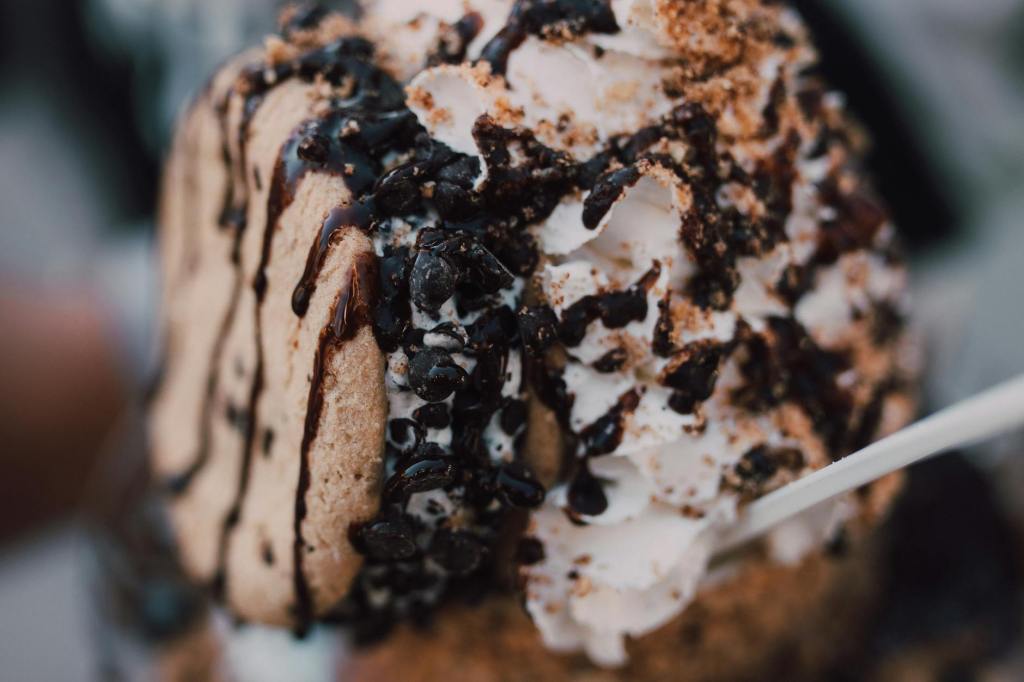
She served it in cones with an enthusiasm that could have powered the disco lights at Studio 54. But when I took a bite, the illusion shattered. It wasn’t ice cream; it was a crime scene. The texture was gritty, like someone had blended sand with modeling clay. It was lukewarm—room temperature, for God’s sake—and tasted like the sugary sludge dentists use to polish your teeth before hitting you with the guilt trip about flossing. I glanced around and saw my fellow boys and their dads wearing identical expressions of barely-contained horror—the same grimace detectives on TV crime procedurals make when they have to pull out a hanky to block the stench of a decomposing corpse. One by one, we all quietly set our cones down as though handling evidence at a murder trial.
The poor woman, sensing the full weight of her failure, blushed beet-red and stammered out a series of apologies, swearing on everything holy that she would never again darken a dessert table with this abomination. We forgave her, of course—some crimes are too absurd to punish. But to this day, whenever I see Cool Whip, I feel a pang of existential dread and hear the faint echo of tribal laughter masked by suppressed gagging.
My second traumatic encounter with fake food came years later, sometime in the early 90s. I was living alone in the barren expanse of the California desert, surrounded by nothing but dust, lizards, and my questionable life choices. Thanksgiving rolled around, and rather than go full Norman Rockwell with a solo turkey feast, I decided to spare myself the hassle and opted for something “easy.” Enter the boxed abomination known as tofurkey—a vegetarian horror show complete with a pouch of dubious “gravy.”
The first bite was a betrayal of taste and texture. My jaw slowed in protest, grinding against the dense, rubbery mass like I was chewing on a tire patch. The spongy gluten monstrosity refused to yield, as if daring my teeth to break first. The flavor? Imagine licking a salted yoga mat that’s been marinated in vague artificial regret. I eyed another slice, its pallid, lifeless complexion daring me to continue. With the enthusiasm of a condemned man, I stabbed the fork into it, hoping for some hidden culinary salvation. Nope. The taste was as bland and soul-crushing as the first bite—less “holiday cheer,” more “processed despair.”
Finally, I’d had enough. With a sigh that could’ve put out a candle, I carried my plate to the trash and scraped the entire crime scene into the garbage, where it belonged. Dignity had to be reclaimed. I poured myself a bowl of Cheerios, sliced a banana over the top, and drizzled on some honey. As I savored each crunchy, sweet spoonful, I felt a small but vital spark of culinary joy return. It wasn’t just a meal—it was a rescue mission for my self-respect. And let me tell you, a bowl of cereal has never tasted so victorious.
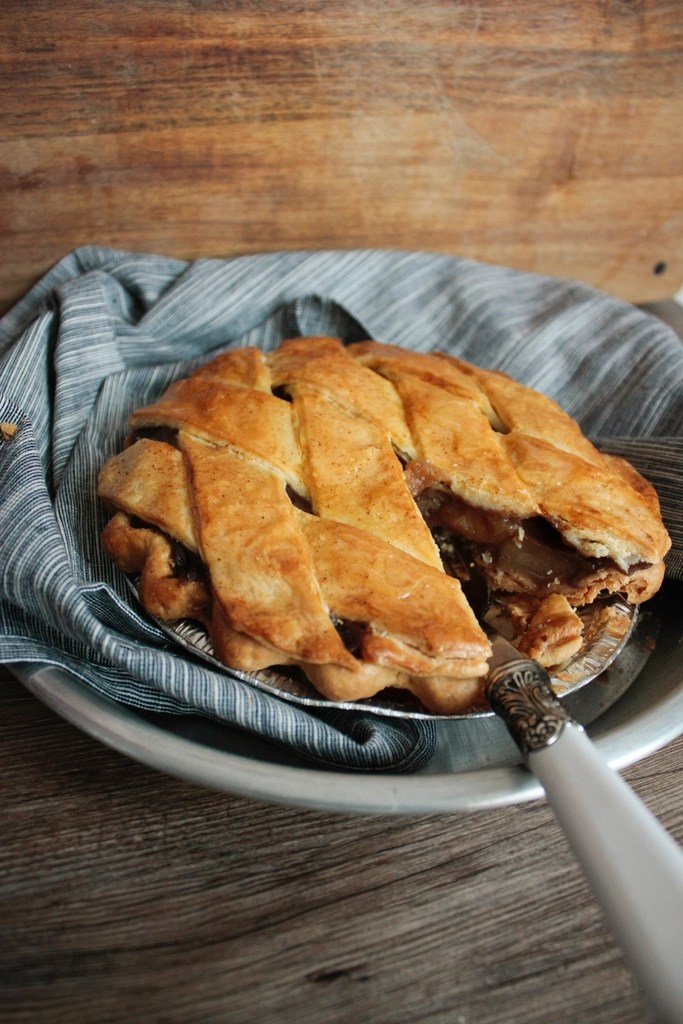
The self-abasement and insult to others from eating and serving fake food was captured brilliantly in the early 1980s when comedian Bob Sarlatte took aim at the pièce de résistance of culinary chicanery: the Ritz Crackers recipe for Mock Apple Pie. Sarlatte was on a mission to uncover the absurdity behind Ritz’s audacious claim of making apple pie with, wait for it, crackers instead of apples. He was incredulous, practically frothing at the mouth as he dissected this travesty. “Why on earth,” he demanded, “would Ritz, in all their cracker-clad glory, boast about a recipe that doesn’t even remotely involve apples?” According to Sarlatte, this so-called “apple pie” was like calling a desert a beach because it had sand—except the sand was made of crushed Ritz crackers, and the beach was a figment of your imagination. The comedian was in no mood for Ritz’s grandstanding. To him, this wasn’t a culinary innovation; it was a culinary catastrophe. He took Ritz to task for attempting to pass off a cracker conglomeration as apple pie, as if the lack of fruit was a feature, not a flaw. “Who,” Sarlatte railed, “are you going to serve this Mock Apple Pie to? Your mock friends? People who enjoy mockery served with a side of disappointment?” Sarlatte’s razor-sharp wit wasn’t just about lampooning a recipe—it was about exposing a greater travesty: the shameless elevation of a subpar substitute as a triumph of creativity. This wasn’t a clever culinary trick; it was an insult wrapped in a cracker crust. Bob Sarlatte laid bare the staggering lack of self-awareness and the brazen audacity required to serve such an ersatz “apple” pie with a smug smile. It was a masterclass in how to serve up an insult with a cherry on top, minus the apple, of course.
Sarlatte’s takedown resonates because food is sacred territory. Our connection to it is primal. Unlike AI-generated text, fake food assaults the senses in ways you can’t ignore. And while AI hasn’t (yet) encroached on the culinary world with soulless meal simulations, the market’s rejection of fake meat shows just how little tolerance we have for edible counterfeits. Sales of plant-based protein substitutes have tanked, a clear signal that consumers aren’t ready to trade their ribeye for a rubbery simulacrum. Simply put, there’s only so much culinary mockery we’re willing to stomach—literally.
Fake foods fail 90% of the time with 90% of the people, but in the realm of writing, AI-generated prose seems to enjoy the opposite fate: it’s “good enough” 90% of the time for 90% of situations. So perhaps fake food isn’t the right comparison. When it comes to our slow surrender to mediocrity in writing, convenience food may be a more apt metaphor. Sure, a Hot Pocket isn’t a Russian piroshki, but its ham and cheese filling is technically real. The danger isn’t the outright fakery of fake food—it’s the insidious appeal of convenience that gradually numbs our taste for anything better. The same flattening effect occurs in writing, where AI churns out serviceable but soulless content, lowering our appetite for higher-level craftsmanship.
Let’s be real: when you bite into a Big Mac, you’re not searching for the subtle interplay of flavors or the delicate dance of textures. You’re there for the holy trinity of fat, protein, and salt—instant gratification, hold the sophistication. Likewise, when you fire up ChatGPT, you’re not chasing literary immortality. You’re after a fast, serviceable product so you can free up time to hit the drive-thru. Convenience becomes king, and both your palate and prose pay the price. Before you know it, you’ve traded filet mignon for fast food and Shakespeare for shallow clickbait. Standards? Those eroded long ago, somewhere between the special sauce and the soulless syntax.
We’ve already seen this erosion over the last fifteen years. Smartphones have replaced thoughtful correspondence with texts full of abbreviations and emojis. My students now submit essays littered with “LOL” and lowercase “i” like punctuation’s gone on permanent strike. But maybe it doesn’t matter. Maybe this linguistic infantilization is the new standard, and business communication will one day be indistinguishable from TikTok captions. Still, I don’t entirely despair. Higher-level writing—like Joan Didion’s piercing cultural reportage—exists in a category of its own and doesn’t compete with the memos and press releases AI is destined to take over.
What worries me more is that fewer people will seek out writers like Didion, Zadie Smith, or Hunter S. Thompson. Without readers, the appetite for great writing—and with it, deep thinking—shrinks. The flattening of taste becomes a flattening of consciousness, a slow bleed of our shared humanity. Look at our growing dependence on technology: GLP-1 drugs manage our weight, AI shapes our communication, streaming algorithms filter our music, and nutrition powders substitute for food. The result is a bland middle ground, a life devoid of both high peaks and deep valleys. We stop noticing the dehumanization because we’ve acclimated to it.
But not all hope is lost. I remember hearing an interview on Fresh Air with Tiffany Haddish. Early in her career, Haddish struggled to find her comedic voice—until Eddie Murphy gave her a piece of advice that changed everything. He told her to have fun on stage, to genuinely enjoy herself. If she was having fun, the audience would feel it and respond. That human moment of mentorship transformed her career.
This story reassured me for two reasons. First, Tiffany Haddish wasn’t mentored by ChatGPT—she was guided by Eddie Murphy, a living legend. Second, comedy itself is proof that people will always crave voices that cut through the emotional numbness of modern life. Great comedians, like great writers, are the axes that Kafka said could break the frozen sea within us. They shatter our tech-induced monotony and return us to the raw, messy experience of being human. As long as there are voices like Haddish and Murphy to remind us of that, there’s still hope that humanity won’t flatline into a dull, digital abyss.
We may live in a world where powdered meal replacements pose as dinner and AI-generated text poses as thought, but the human appetite—whether for flavor or for meaning—can’t be faked for long. Just as we spit out Cool Whip cones and tofurkey slabs with a shudder, our souls eventually revolt against the flattening effects of machine-made language. We remember what real texture feels like, in food and in prose. We remember what it means to laugh at a story that stings because it’s true. And even if convenience wins most days, there will always be those who crave the messy, glorious excess of a banana split or the searing honesty of a well-told tale. As long as people continue to gag on mediocrity—be it edible or literary—there’s hope that the hunger for something real, soulful, and defiantly human will keep coming back.




 Cinemorphosis