Tag: recipes

  • Memoirs of a Tanned Narcissist

    Memoirs of a Tanned Narcissist

    The summer of 1977: I was fifteen, half-boy, half-bicep, bronzing my delusions at the Don Castro Swim Lagoon. I lay stretched across the sand like a sacrificial offering to the gods of narcissism, a dog-eared paperback of The Happy Hooker tucked inside my gym bag like contraband scripture. My nose, my skin, my hormonal soul were all baptized in the collective perfume of that era—banana-scented cocoa butter and coconut oil sizzling on sunbaked flesh.

    It wasn’t just a swim lagoon; it was a sensory bacchanal. My eyes devoured the parades of bikini-clad girls, but it was the scent—the olfactory gospel of the ’70s—that tattooed itself onto my brainstem. The decade fused with my adolescence to form a perfect cocktail of lust, leisure, and delusion. That was Me Time before “me time” became a self-help cliché. This was Me Time as a birthright. An ecstatic creed. A half-naked mission statement.

    I hoarded that fragment of the 70s like a holy relic, a sweaty teenage talisman that whispered, You are entitled to this pleasure. And for decades, I believed it. I ritualized it. I salted it into the marrow of my daily habits. Self-indulgence wasn’t a guilty pleasure; it was as essential as cod liver oil and calf raises.

    But now, older, less tanned, and with only traces of Adonis left in my rearview mirror, I wonder if that Me Time ethos has become a prison disguised as a spa. What began as a teenage philosophy of sacred sensuality now feels like a rerun of Fantasy Island with worse lighting. The coconut oil that once anointed me has turned rancid with nostalgia.

    Am I frozen like Lot’s wife, looking back too long at the sun-glazed glory of the past and turning to salt—one of the many malformed, glittering relics trapped in the Salt Mines of my own mythology? Have I confused my emotional scrapbook for a roadmap?

    I don’t want to kill the boy inside me. I just don’t want him running the show.

    I’m not aiming to become some dried-out stoic spouting bromides about detachment and virtue while chewing flaxseed in silence. I still want pleasure. Complexity. Shadow. Laughter. Sweat. But I want to carry my memories like a man, not drag them around like a stunted boy still snorting the ghost of Hawaiian Tropic in the Rite Aid aisle.

    So I ask—how do you love the Me Time Era less? How do you put the suntan oil back in the bottle?

  • Chunky: The Candy Bar That Gaslit My Taste Buds

    Chunky: The Candy Bar That Gaslit My Taste Buds

    Of all the confections that have ever graced my palm, none haunts my imagination quite like the Chunky bar. It’s not a candy bar so much as a relic—an absurd, silver-foiled ingot you’d expect to pry loose from a cursed dwarven mine, guarded by balrogs and bureaucracy.

    Let’s start with the shape. The Chunky is a squat, lumpy pyramid—a candy bar built like it wants to be a paperweight. Peanuts and raisins form the bulk of its crude alchemy, though earlier iterations flaunted Brazil nuts and cashews, adding to its ancient mystique.

    The taste? Off. Not bad exactly, but certainly not seductive. Its faintly bitter, vaguely disappointing flavor has a curious effect: you start to convince yourself that this underwhelming mouthful must be good for you. A health food in disguise. A sweet for contrarians. Like chewing on moral fiber.

    Then there’s the weight. The Chunky carries mass. It sits in your hand with the cold confidence of a Seiko diver watch on a stainless-steel bracelet. There’s a heft to it—an aura of seriousness. No one double-fists a Chunky on a whim. You eat one as an act of personal philosophy.

    To deepen its enigma, the Chunky has become scarce. Since the ’90s, it’s been largely exiled from gas station shelves, spotted only in the digital wilds of the Internet. It’s no longer a candy bar—it’s a rumor. A memory. A grail. And even when you do track one down and unwrap it in a moment of nostalgic triumph, you’re struck with the bitter realization: you’re not reliving a taste. You’re chasing a ghost.

    The truth is, you’re more in love with the idea of the Chunky bar than the thing itself. Its greatest ingredient is projection. It is candy-as-concept. The chunky grail.

    And so, like a certain kind of watch obsessive—those who hunt for the mythical One Perfect Timepiece, the Holy Grail Diver that will satisfy all wrist cravings—you may find that what you’re after is not an object, but an ideal. The Chunky isn’t a candy bar. It’s a mirror. A reminder that the real addiction lies not in sugar or steel, but in fantasy.

  • Trader Joe’s and the End of the World (One Tofu Block at a Time)

    Trader Joe’s and the End of the World (One Tofu Block at a Time)

    With my wife and twin daughters making the long drive home from San Francisco, I realized someone had to restock the household pantry. That someone was me. So by 8 a.m., I was wandering the fluorescent aisles of Trader Joe’s, still half-asleep, in search of tempeh, oat milk, and maybe a reason to keep going.

    Twenty seconds in, I spotted Eliot—a jazz musician in his early forties who’s worked there forever and knows every spice rack and frozen entrée by memory. I hadn’t seen him in a while. He asked if I’d retired from teaching at the local college yet.

    “Two more years,” I said, adding, “but who knows what’s happening to writing classes in the Age of ChatGPT. Everyone talks like they know. They don’t.”

    He asked how I’m handling it in the classroom.

    “I’m not sure I am,” I told him. “I can teach. I can perform. I can entertain. But grading online essays? That’s an existential crisis wrapped in a PDF. I’m dancing in quicksand.”

    Eliot nodded grimly. “This generation doesn’t read.”

    “My daughters don’t,” I said. “Their friends don’t. They’re sweet kids, empathetic and funny, but they don’t seem built for a world that requires deadlines, grit, or employment.”

    Eliot, without hesitation: “We’re screwed.”

    “And there’s no going back,” I said. “CNN gets out-watched by Joe Rogan. Most people get their facts from guys yelling into ring lights while drinking protein shakes.”

    We stared into the epistemic abyss together, nodded, and parted ways before we started crying in the chip aisle.

    Twenty minutes later, I made it to the checkout line, where I was greeted by Megan—the tall, soft-spoken vegan cashier who’s known me for years. She had just broken up with her boyfriend and noticed the mountain of super-firm tofu in my cart.

    We exchanged tofu recipes, talked about the protein digestibility scale, and mourned the impossibility of plant-based love in a society fueled by backyard barbecue. Her breakup, as it turns out, was partly due to meat incompatibility. “He grilled like it was a belief system,” she said.

    We also touched—briefly—on factory farming, which always makes me want to cry or scream or stop eating altogether. But just like I couldn’t solve the collapse of literacy and truth with Eliot, I couldn’t solve the meat-industrial complex with Megan.

    All I could do was pay for my groceries and accept the fact that I’m a limited man in a crumbling culture, armed with tofu, oat milk, and a Costco-sized tub of almond butter.

    I loaded the trunk with the small consolation that I had, at the very least, fed my family.

  • Post-Vacation Penance: A Dietary Manifesto in Four Meals

    Post-Vacation Penance: A Dietary Manifesto in Four Meals

    There’s something bleakly comical about spiraling into despair on vacation—the kind that sets in when you’re no longer tethered to your sacred rituals of productivity, restraint, and the sweet, tight belt of routine. Out here, in this plush exile of self-indulgence, I’ve become a man who stares into a plate of hotel hash browns and thinks, This ends when I get home.

    And so, to soothe the spiritual rot that sets in after too many mornings without my normal suffering, I’ve started building a plan—a post-vacation austerity program disguised as wellness.

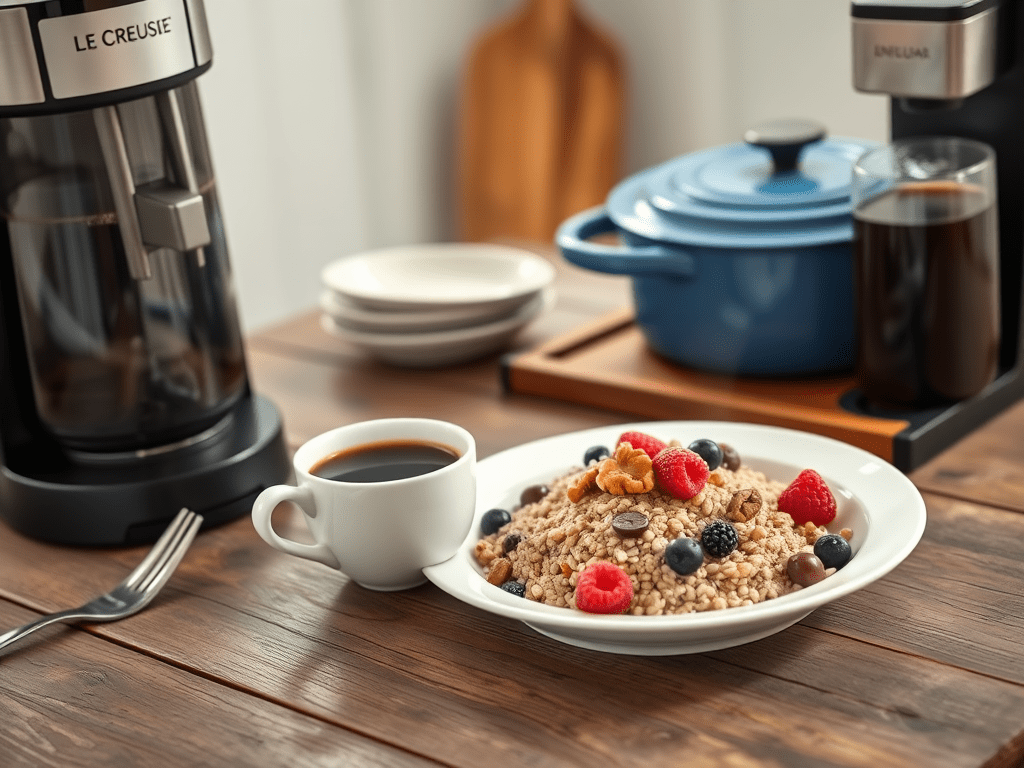
    First, the coffee. I will reclaim my morning dignity with the $89 Ninja 12-cup glass carafe coffee maker. No plastic pod disgrace. I will grind dark roast beans with the solemnity of a monk at matins, using my burr grinder like a weapon forged for righteousness.

    Breakfast will not be an act of contrition but one of redemption: buckwheat groats or steel-cut oats, topped with protein powder, berries, walnuts, and chia seeds—like an edible TED Talk on anti-inflammation.

    Lunch will be a spartan affair: arugula so bitter it judges you, and tofu braised until it forgets it was once bland. Dressing? A holy trinity of balsamic vinegar, spicy mustard, and nutritional yeast. This is not food—it’s penance with flavor.

    Afternoon snack? Greek yogurt, protein powder, and berries. The combination is reliable, unexciting, and doctrinally correct.

    Dinner is where things get unhinged in a good way. I will reach for my Le Creuset Dutch oven (color: colonial blue, attitude: smug) and conjure quinoa with zucchini, fire-roasted tomatoes, nutritional yeast, and a whisper of coconut milk. I will mix in braised tofu until the pan hisses in agreement.

    And yes, there will be protein pancakes, crafted from oats, baking powder, protein powder, eggs (or applesauce, if I’m feeling woke), yogurt, cinnamon, honey, chia seeds, and vanilla extract. The batter will feel like spackle. The result will feel like victory.

    Exercise? Four days of kettlebells instead of five—because joints are finite, and ego is not a medical plan. On my “off” days, I’ll alternate between the exercise bike and power-flow yoga, both of which will mock me in their own way.

    Diet soda? Dead to me. I’ve seen what happens when it wins: a family friend guzzles it by the gallon, her health circling the drain like a cautionary fable. I will swap it out for sparkling water and the moral superiority it confers.

    This is not about orthorexia or self-hate disguised as wellness. This is about escaping confusion, that modern affliction where “healthy” means both everything and nothing. I will eat four times a day. I will consume 160 grams of protein. I will not exceed 2,400 calories. I will fight entropy with routine, bloat with balance, and preserve the image of myself I still—somehow—believe is possible.

  • Borderless Flavors: Food, Power, and the Collapse of Culinary Elitism (College Essay Prompt)

    Borderless Flavors: Food, Power, and the Collapse of Culinary Elitism (College Essay Prompt)

    Essay Prompt (1,700 words):

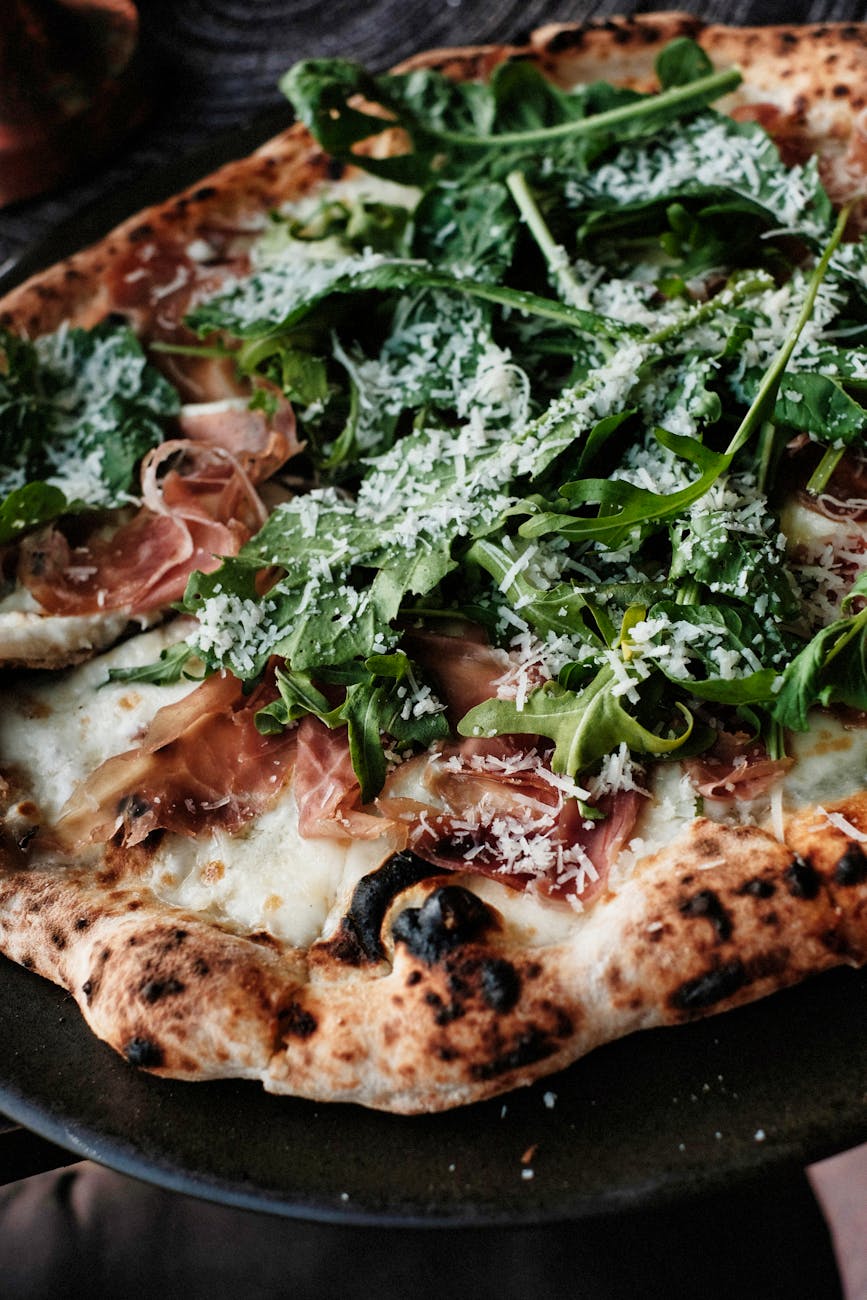
    In the Chef’s Table: Pizza episode featuring Ann Kim, food becomes a site of transformation, healing, and reinvention. Kim channels her failed acting career into culinary artistry, crafting dishes that express the multiplicity of her identity—as a Korean-American daughter, an artist, and an immigrant success story. Her pizzas become canvases for memory, rebellion, and gratitude, especially toward her parents. Her story is a microcosm of the broader immigrant narrative: negotiating identity, navigating cultural shame, and ultimately reversing the script as the very foods once mocked become culinary gold.

    In this essay, compare the themes in Ann Kim’s story with those in Ugly Delicious (Season 1, Episode “Tacos”) and selected episodes of The Taco Chronicles. How do these shows depict food as more than sustenance—as performance, identity, resistance, and love? In what ways do immigrant chefs and food workers subvert the shame once associated with their cultural foods and assert pride, creativity, and belonging through cuisine?

    Your essay must engage with the visual rhetoric of the shows (tone, music, imagery), analyze the role of food as narrative and identity, and include at least two secondary sources—these may include academic articles on food studies, identity, or immigrant narratives.

    Sample Thesis Statements:

    1. The Performance of the Plate
    Through Ann Kim’s story in Chef’s Table: Pizza, the taco discourse in Ugly Delicious, and the street-food heroism of The Taco Chronicles, we see food function as a performance of identity, where immigrant chefs use culinary artistry to reclaim scorned traditions, express hybrid selves, and find belonging in spaces that once excluded them.

    Mapping components:

    • Culinary performance as identity expression
    • Reversal of cultural shame into pride
    • Belonging through the craft of food

    2. From Shame to Reverence
    Ann Kim, David Chang, and the taqueros of The Taco Chronicles show how the foods once mocked in American lunchrooms are now celebrated on global stages, revealing that cuisine is a powerful tool of cultural revenge, emotional healing, and self-definition for immigrant communities.

    Mapping components:

    • Mockery and marginalization of immigrant food
    • Culinary revenge and cultural redemption
    • Healing and self-definition through cooking

    3. Food as Love, Labor, and Legacy
    While Chef’s Table: Pizza casts Ann Kim’s story as one of artistic reinvention and filial love, Ugly Delicious and The Taco Chronicles emphasize how food binds generations, builds communities, and becomes a labor of love that transforms trauma into legacy.

    Mapping components:

    • Culinary reinvention as personal and artistic legacy
    • Food as intergenerational bridge
    • Labor, love, and storytelling through cuisine

    Sample Outline:


    I. Introduction

    • Hook: A vivid scene from Ann Kim’s episode—placing gochujang on pizza as rebellion and homage.
    • Context: Rise of food documentaries as cultural texts.
    • Thesis: (Insert one of the thesis statements above.)

    II. Ann Kim: The Personal is Culinary

    • Acting failure and identity fragmentation
    • Food as theatrical medium: personas, freedom, risk
    • Immigrant shame turned into culinary power (Korean pizza)
    • Cooking for her parents as an act of redemption and gratitude

    III. Ugly Delicious: The Taco Episode and Cultural Inversion

    • David Chang’s exploration of authenticity and invention
    • The taco as a battleground of legitimacy (Mexican roots vs. American remix)
    • Use of celebrity chefs and taqueros to show class and cultural divides
    • Food once marginalized now used as a symbol of culinary innovation

    IV. The Taco Chronicles: Myth, Ritual, and Regional Pride

    • Focus on specific episodes (e.g., Suadero, Cochinita Pibil)
    • Tacos as sacred practice, generational labor, and social equalizer
    • Visual and musical rhetoric: the taco as folk hero
    • Repeated motif: taqueros breaking class and cultural boundaries with corn, fire, and steel

    V. Comparative Analysis

    • Immigrant identity in all three: reclaiming power through food
    • Emotional resonance: food as apology, tribute, rebellion
    • Different tones: Kim’s cinematic elegance vs. Chang’s irreverent inquiry vs. Chronicles’ reverent folklore

    VI. Counterargument Section

    • Some critics argue that food media romanticizes struggle or sanitizes labor conditions
    • Rebuttal: While these shows may aestheticize food, they also restore dignity to cuisines and cooks historically ignored by dominant culture

    VII. Conclusion

    • Reassert the thesis: food is not just fuel—it is metaphor, memoir, and medium
    • End with a return to a powerful image—perhaps Ann Kim in her pizzeria, cooking for her parents, feeding them not just dinner, but decades of unspoken love

  • Cultural Fusion or Culinary Fraud?

    Cultural Fusion or Culinary Fraud?

    My Critical Thinking students are grappling with the sacred and the sacrilegious—namely, tacos.

    Their final essay asks a deceptively simple question: When it comes to iconic dishes like the taco, should we cling to tradition as if it were holy writ, treating every variation as culinary heresy? Or is riffing on a recipe a legitimate act of evolution—or worse, an opportunistic theft dressed up in aioli?

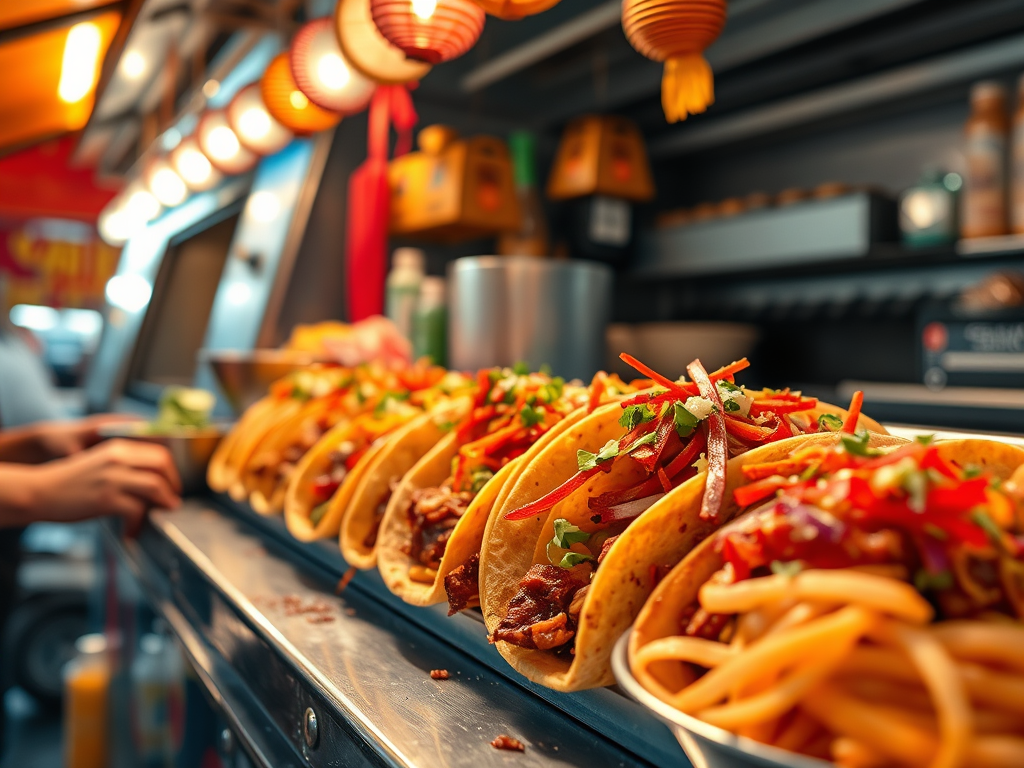
    To dig into this, we turn to Netflix’s Ugly Delicious, where chef David Chang hosts an episode simply titled “Tacos.” The episode plays like a beautifully constructed argumentative essay by Gustavo Arellano, who dismantles the idea of “Mexican food” as a static monolith. Instead, he presents it as a glorious, shape-shifting culture of flavor—one that thrives because of its openness to the outside world.

    Arellano celebrates Mexico’s culinary curiosity: how Lebanese immigrants brought shawarma and inspired tacos al pastor, a perfect example of cultural fusion that became canon. He contrasts this with the United States’ suspicious, xenophobic posture—a country that historically snarls at outsiders until they open a food truck and sell $2 magic on a paper plate.

    Roy Choi, creator of the legendary Kogi taco trucks, takes this further. He speaks of cooking as a street-level negotiation for dignity: Korean-Mexican fusion forged in the heat of shared kitchens, shaped by the scorn of American culture, and perfected not out of trendiness but out of survival. These tacos aren’t just delicious; they’re resistance with a salsa verde finish.

    But this isn’t just a story of open minds and flavor-blending utopias. There’s also the hard truth of survival and adaptation. Take Lucia Rodriguez, who immigrated from Jalisco and had to recreate her recipes using whatever ingredients she could find in San Bernardino. Her efforts became the foundation of Mitla Cafe, a restaurant still thriving since 1937. It also became the blueprint for Glen Bell—yes, that Glen Bell—who reverse-engineered her food to create Taco Bell, which is to Mexican cuisine what boxed wine is to Bordeaux.

    Still, not all spin-offs are sins. Rosio Sanchez, a Michelin-level chef, began her journey by mastering traditional Mexican food. Only then did she begin to improvise, like a jazz virtuoso honoring the standards before going off-script. Her reinvention is rooted in love, not opportunism. It’s a tribute, not a theft.

    And therein lies the moral fault line: intent, respect, and—let’s not forget—execution. As one student noted with appropriate outrage, white TikTok influencers once rebranded agua fresca as “spa water,” a cultural mugging wrapped in Pinterest aesthetics. And let’s not ignore the corporate vultures who buy beloved local chains only to gut their soul with frozen ingredients and bottom-line mediocrity.

    The lesson? Not all innovation is appropriation. But if your food disrespects its roots, dilutes its meaning, or simply tastes like disappointment, it’s not fusion—it’s a felony.

    The rule is simple: Make great food that honors its lineage and blows people away. Otherwise, what you’re serving is not cuisine. It’s edible disrespect.

  • How Fake Food Mirrors AI Writing

    How Fake Food Mirrors AI Writing

    Like most people, I have an unbreakable bond with food—a bond so primal that when the food industry dares to present me with a counterfeit, I might taste it out of politeness or morbid curiosity, but love it? Never. Inferior substitutes, especially those concoctions posing as “creative alternatives,” are my culinary kryptonite. My first encounter with such deceit came in 1970, courtesy of my stint in the YMCA’s Indian Guides (now rebranded as Adventure Guides). We were part of “tribes,” each made up of eight father-son pairs, with one dad dubbed “Chief” and the rest relegated to “Assistant Chiefs.” The real highlight, of course, was the weekly rotation to a different family’s home, where the moms—our unsung heroes—served dessert.

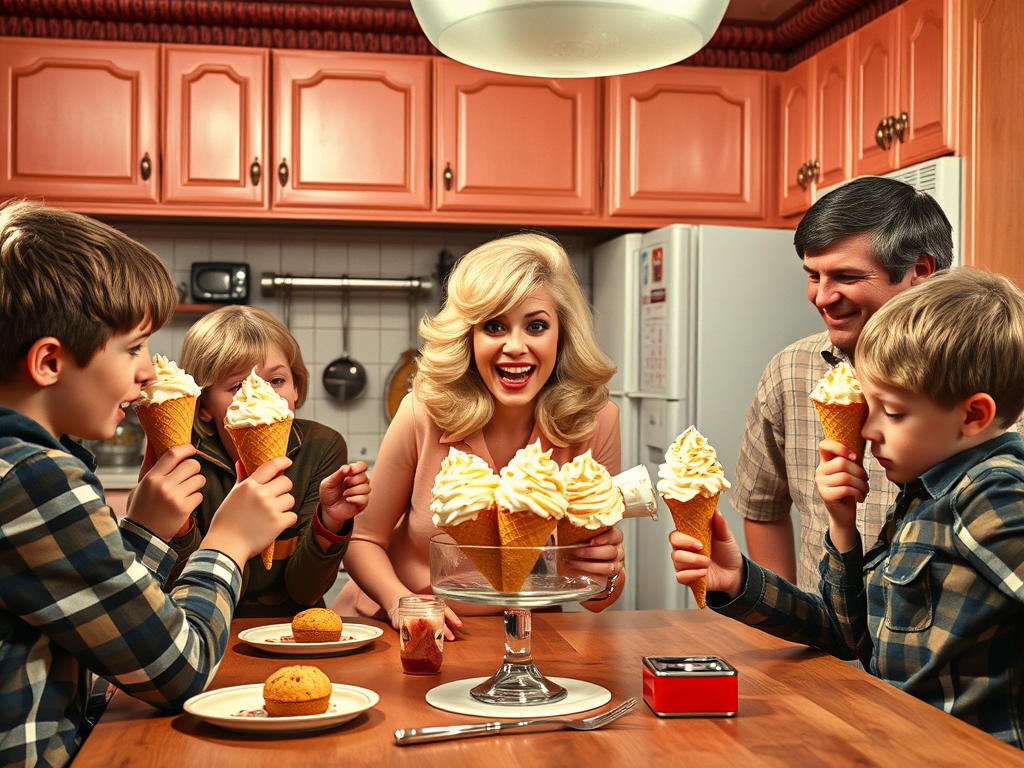
    But one evening, dessert took a turn for the worst. Our host mother, a vision of 70s flair with her blonde spun-sugar hair and white go-go boots, had stumbled upon what she must have thought was the recipe of the century. There it was, in plain sight on her kitchen counter: an open Ladies’ Home Journal or some equally menacing tome of domestic innovation. She cheerfully announced her culinary coup—a dessert she was calling “ice cream” but with no actual ice cream in it. Instead, the concoction was an unholy alliance of canned frosting and Cool Whip.

    She served it in cones with an enthusiasm that could have powered the disco lights at Studio 54. But when I took a bite, the illusion shattered. It wasn’t ice cream; it was a crime scene. The texture was gritty, like someone had blended sand with modeling clay. It was lukewarm—room temperature, for God’s sake—and tasted like the sugary sludge dentists use to polish your teeth before hitting you with the guilt trip about flossing. I glanced around and saw my fellow boys and their dads wearing identical expressions of barely-contained horror—the same grimace detectives on TV crime procedurals make when they have to pull out a hanky to block the stench of a decomposing corpse. One by one, we all quietly set our cones down as though handling evidence at a murder trial.

    The poor woman, sensing the full weight of her failure, blushed beet-red and stammered out a series of apologies, swearing on everything holy that she would never again darken a dessert table with this abomination. We forgave her, of course—some crimes are too absurd to punish. But to this day, whenever I see Cool Whip, I feel a pang of existential dread and hear the faint echo of tribal laughter masked by suppressed gagging.

    My second traumatic encounter with fake food came years later, sometime in the early 90s. I was living alone in the barren expanse of the California desert, surrounded by nothing but dust, lizards, and my questionable life choices. Thanksgiving rolled around, and rather than go full Norman Rockwell with a solo turkey feast, I decided to spare myself the hassle and opted for something “easy.” Enter the boxed abomination known as tofurkey—a vegetarian horror show complete with a pouch of dubious “gravy.”

    The first bite was a betrayal of taste and texture. My jaw slowed in protest, grinding against the dense, rubbery mass like I was chewing on a tire patch. The spongy gluten monstrosity refused to yield, as if daring my teeth to break first. The flavor? Imagine licking a salted yoga mat that’s been marinated in vague artificial regret. I eyed another slice, its pallid, lifeless complexion daring me to continue. With the enthusiasm of a condemned man, I stabbed the fork into it, hoping for some hidden culinary salvation. Nope. The taste was as bland and soul-crushing as the first bite—less “holiday cheer,” more “processed despair.”

    Finally, I’d had enough. With a sigh that could’ve put out a candle, I carried my plate to the trash and scraped the entire crime scene into the garbage, where it belonged. Dignity had to be reclaimed. I poured myself a bowl of Cheerios, sliced a banana over the top, and drizzled on some honey. As I savored each crunchy, sweet spoonful, I felt a small but vital spark of culinary joy return. It wasn’t just a meal—it was a rescue mission for my self-respect. And let me tell you, a bowl of cereal has never tasted so victorious.

    The self-abasement and insult to others from eating and serving fake food was captured brilliantly in the early 1980s when comedian Bob Sarlatte took aim at the pièce de résistance of culinary chicanery: the Ritz Crackers recipe for Mock Apple Pie. Sarlatte was on a mission to uncover the absurdity behind Ritz’s audacious claim of making apple pie with, wait for it, crackers instead of apples. He was incredulous, practically frothing at the mouth as he dissected this travesty. “Why on earth,” he demanded, “would Ritz, in all their cracker-clad glory, boast about a recipe that doesn’t even remotely involve apples?” According to Sarlatte, this so-called “apple pie” was like calling a desert a beach because it had sand—except the sand was made of crushed Ritz crackers, and the beach was a figment of your imagination. The comedian was in no mood for Ritz’s grandstanding. To him, this wasn’t a culinary innovation; it was a culinary catastrophe. He took Ritz to task for attempting to pass off a cracker conglomeration as apple pie, as if the lack of fruit was a feature, not a flaw. “Who,” Sarlatte railed, “are you going to serve this Mock Apple Pie to? Your mock friends? People who enjoy mockery served with a side of disappointment?” Sarlatte’s razor-sharp wit wasn’t just about lampooning a recipe—it was about exposing a greater travesty: the shameless elevation of a subpar substitute as a triumph of creativity. This wasn’t a clever culinary trick; it was an insult wrapped in a cracker crust. Bob Sarlatte laid bare the staggering lack of self-awareness and the brazen audacity required to serve such an ersatz “apple” pie with a smug smile. It was a masterclass in how to serve up an insult with a cherry on top, minus the apple, of course.

    Sarlatte’s takedown resonates because food is sacred territory. Our connection to it is primal. Unlike AI-generated text, fake food assaults the senses in ways you can’t ignore. And while AI hasn’t (yet) encroached on the culinary world with soulless meal simulations, the market’s rejection of fake meat shows just how little tolerance we have for edible counterfeits. Sales of plant-based protein substitutes have tanked, a clear signal that consumers aren’t ready to trade their ribeye for a rubbery simulacrum. Simply put, there’s only so much culinary mockery we’re willing to stomach—literally.

    Fake foods fail 90% of the time with 90% of the people, but in the realm of writing, AI-generated prose seems to enjoy the opposite fate: it’s “good enough” 90% of the time for 90% of situations. So perhaps fake food isn’t the right comparison. When it comes to our slow surrender to mediocrity in writing, convenience food may be a more apt metaphor. Sure, a Hot Pocket isn’t a Russian piroshki, but its ham and cheese filling is technically real. The danger isn’t the outright fakery of fake food—it’s the insidious appeal of convenience that gradually numbs our taste for anything better. The same flattening effect occurs in writing, where AI churns out serviceable but soulless content, lowering our appetite for higher-level craftsmanship.

    Let’s be real: when you bite into a Big Mac, you’re not searching for the subtle interplay of flavors or the delicate dance of textures. You’re there for the holy trinity of fat, protein, and salt—instant gratification, hold the sophistication. Likewise, when you fire up ChatGPT, you’re not chasing literary immortality. You’re after a fast, serviceable product so you can free up time to hit the drive-thru. Convenience becomes king, and both your palate and prose pay the price. Before you know it, you’ve traded filet mignon for fast food and Shakespeare for shallow clickbait. Standards? Those eroded long ago, somewhere between the special sauce and the soulless syntax.

    We’ve already seen this erosion over the last fifteen years. Smartphones have replaced thoughtful correspondence with texts full of abbreviations and emojis. My students now submit essays littered with “LOL” and lowercase “i” like punctuation’s gone on permanent strike. But maybe it doesn’t matter. Maybe this linguistic infantilization is the new standard, and business communication will one day be indistinguishable from TikTok captions. Still, I don’t entirely despair. Higher-level writing—like Joan Didion’s piercing cultural reportage—exists in a category of its own and doesn’t compete with the memos and press releases AI is destined to take over.

    What worries me more is that fewer people will seek out writers like Didion, Zadie Smith, or Hunter S. Thompson. Without readers, the appetite for great writing—and with it, deep thinking—shrinks. The flattening of taste becomes a flattening of consciousness, a slow bleed of our shared humanity. Look at our growing dependence on technology: GLP-1 drugs manage our weight, AI shapes our communication, streaming algorithms filter our music, and nutrition powders substitute for food. The result is a bland middle ground, a life devoid of both high peaks and deep valleys. We stop noticing the dehumanization because we’ve acclimated to it.

    But not all hope is lost. I remember hearing an interview on Fresh Air with Tiffany Haddish. Early in her career, Haddish struggled to find her comedic voice—until Eddie Murphy gave her a piece of advice that changed everything. He told her to have fun on stage, to genuinely enjoy herself. If she was having fun, the audience would feel it and respond. That human moment of mentorship transformed her career.

    This story reassured me for two reasons. First, Tiffany Haddish wasn’t mentored by ChatGPT—she was guided by Eddie Murphy, a living legend. Second, comedy itself is proof that people will always crave voices that cut through the emotional numbness of modern life. Great comedians, like great writers, are the axes that Kafka said could break the frozen sea within us. They shatter our tech-induced monotony and return us to the raw, messy experience of being human. As long as there are voices like Haddish and Murphy to remind us of that, there’s still hope that humanity won’t flatline into a dull, digital abyss.

    We may live in a world where powdered meal replacements pose as dinner and AI-generated text poses as thought, but the human appetite—whether for flavor or for meaning—can’t be faked for long. Just as we spit out Cool Whip cones and tofurkey slabs with a shudder, our souls eventually revolt against the flattening effects of machine-made language. We remember what real texture feels like, in food and in prose. We remember what it means to laugh at a story that stings because it’s true. And even if convenience wins most days, there will always be those who crave the messy, glorious excess of a banana split or the searing honesty of a well-told tale. As long as people continue to gag on mediocrity—be it edible or literary—there’s hope that the hunger for something real, soulful, and defiantly human will keep coming back.

  • Gluttonshame

    Gluttonshame

    During the Great Life Purge, flashbacks of gluttony didn’t just sneak up on me—they stormed in like uninvited relatives, loud and unrelenting. Just today, I winced remembering a scene from six months prior, when my wife and I, wrapped in the post-dinner glow of calories and denial, settled in for a couple Arrested Development reruns. The show—a chaotic valentine to familial dysfunction—still felt razor-sharp, sharp enough to leave paper cuts on your frontal lobe.

    As the theme song played, I rose from the couch with the sanctimony of a monk on pilgrimage. I was off to retrieve my so-called “satiety apple,” that smug little orb of virtue allegedly designed to curb cravings without detonating my calorie budget.

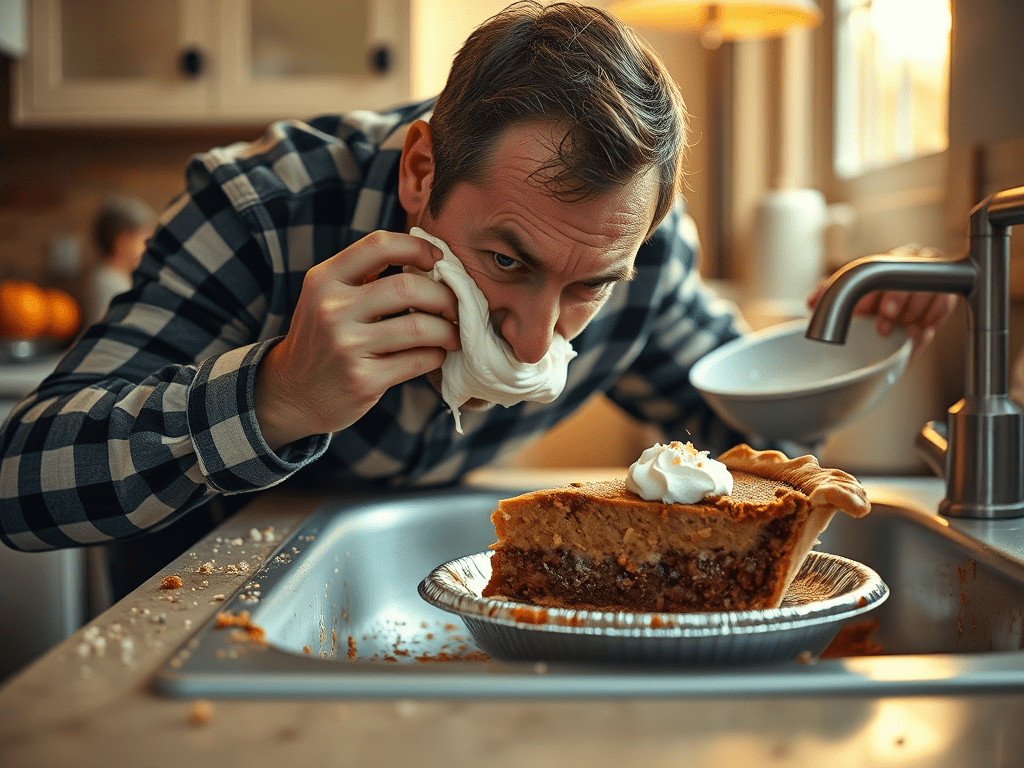
    But then I heard it—a low, seductive hum from the direction of the microwave. There it was: a lone pie box, faintly glowing like radioactive treasure, humming a siren song of buttery crust and spiced filling. I opened the box. Inside, the final slice of Thanksgiving pie waited like a femme fatale in a noir film—dangerous, irresistible, and destined to ruin me.

    I didn’t stand a chance. One second I was a man of discipline; the next, I was hunched over the sink, inhaling that pie like a raccoon who’d broken into a bakery. Crumbs flew. Filling oozed. I was mid-bite, feral and euphoric, when my daughter Alison entered the kitchen.

    She paused, surveyed the carnage, and with surgical precision asked, “When’s the last time you were on a diet?”

    I froze, mid-chew, cheeks ballooned like a chipmunk caught mid-heist. “It’s one slice of pie,” I sputtered, wiping whipped cream off my face. “Hardly a relapse worthy of a family intervention.”

    “Don’t be so defensive,” she replied, with the kind of tonal flatline only teenage girls can weaponize. “I’m just asking—when was the last time you had a strategy?”

    “I didn’t realize you were moonlighting as the historian of my weight management failures,” I muttered, scrambling for dignity.

    “What strategy?” she deadpanned, her eyes sliding toward the now-empty pie tin in the sink like a prosecutor resting her case.

    I opened my mouth in exaggerated mock offense, miming emotional devastation. We laughed, sort of. But her words hit like a sucker punch wrapped in fondant. Despite my kettlebell crusades and protein piety, my daughter saw me for what I was—a man-child undone by pastry.

    The truth hurt because it wasn’t just about pie. It was about a lifetime of performing duets with food, not as nourishment, but as codependence. My relationship with eating wasn’t a partnership; it was a soap opera—a never-ending saga of longing, betrayal, and deeply inappropriate snacking.

    I suffered from food noise—a chronic condition in which the brain becomes a 24-hour food court blaring meal ideas through a megaphone. It wasn’t a craving. It was a full-time broadcast. Even as I wiped pie filling off my shirt, some inner gremlin was planning breakfast, brunch, and an emotionally necessary mid-morning protein bar.

    I had, of course, tried everything. High-protein meals? Check. Fiber-packed produce? Ate it until I squeaked. “Permission to eat favorite foods”? Please. That just gave me moral cover for more cheesecake. As for “hunger cues”—those had long since been drowned in a Wagnerian opera of appetite, where every aria ended in a trip to the fridge.

    I didn’t eat because I was hungry. I ate because I was enchanted. Food was my symphony, and I was its slobbering conductor. While others savored notes of flavor, I devoured entire movements. Pie wasn’t dessert—it was the crescendo. A bag of chips? That was a tragic aria. My kitchen was a concert hall, and I, a helpless Snack Serenader, crooning sonnets to chicken shawarma and tearfully composing odes to sourdough.

    Romantic? Maybe. But make no mistake: this was less about joy than it was about entrapment. I didn’t eat food—I worshipped it. I wasn’t hungry for sustenance—I was desperate for an encore.

    And that’s when the memory landed with full force: the gluttonshame. A post-binge echo of mortification so potent it deserved its own DSM entry. Gluttonshame—the echoing pang of regret triggered by the memory of a food orgy, often witnessed, preferably by someone genetically programmed to judge you—is no passing embarrassment. It sticks, greasy and persistent, like pie filling on a dress shirt. It whispers, “This is why your jeans stage a mutiny every morning.”

    Symptoms? Defensive sarcasm. Performative chuckles. Sudden existential dread. And an uncontrollable urge to delete your food log and relocate to another time zone.

    I felt it all. But if the Great Life Purge taught me anything, it’s that these flashbacks are necessary. They remind me that change doesn’t happen without confession—and a little mockery. Because behind every gluttonshame echo is a man trying, however clumsily, to crawl his way back to self-control—one apple, one salad, one deeply judged slice of pie at a time.

  • The Shame of Being Crock Blocked

    The Shame of Being Crock Blocked

    I learned the invaluable lesson of staying in my lane in 1989, a year that will forever be etched in my memory as the year I brought industrial sludge to an English Department potluck picnic. I was a freshly minted lecturer at a university in the California desert, and it was my inaugural potluck. Naturally, I was determined to impress my colleagues with a culinary masterpiece. I had a slow cooker, a gift from my mother, which I imagined to be my ticket to gastronomic glory. So, I decided to tackle curried lentils—a dish so ambitious it could have been named “Lentil Apocalypse.” I poured lentils into the slow cooker until it was practically bursting at the seams. Next, I added what could only be described as an entire bottle of curry, along with a mountain of chopped onions and celery. Unsure of how long these lentils needed to avoid the dreaded “raw green beetle” look, I left them cooking all day. By the time I made my way to the picnic, the contents had morphed into what resembled a toxic waste spill, a sludge so thick it could be used to pave roads. With all the bravado of a culinary adventurer, I placed my slow cooker among the other dishes. As hours ticked by, my creation remained untouched. The English Chair, Solomon, seemed to take pity on me. He ladled a small portion onto his plate in a gesture of charity, but his reaction was nothing short of tragic. His face contorted in a way that suggested he’d just tasted a toxic waste dump, and he looked as if he might need a hazmat suit and a team of medics. From that day on, I was never again entrusted with bringing food. Instead, my muscles were put to better use hauling giant bags of ice, crates of wine glasses, and cartons of boxed wine to future events. Eventually, I learned my lesson and found my true calling—one that involved heavy lifting and zero culinary experiments. And so, I stayed in my lane, with a clear understanding that my talents were best suited for anything other than poisoning my colleagues with curried lentils.

    My ordeal points is an example of being Crock Blocked–the uniquely mortifying shame experienced when your potluck contribution—usually involving a Crock-Pot, misplaced ambition, and a suspiciously gelatinous texture—is avoided by everyone, like it’s radioactive. Crock Blocked is when your dish becomes a pariah on the buffet table, gathering flies instead of praise, while nearby casseroles are ravaged like it’s the last supper. You watch helplessly as guests whisper about “that lentil thing,” your dreams of impressing the crowd slowly congealing into a turmeric-scented failure. You leave with your dignity dented, your Crock-Pot still full, and your social standing demoted to Ice Guy.

  • Crustodianism

    Crustodianism

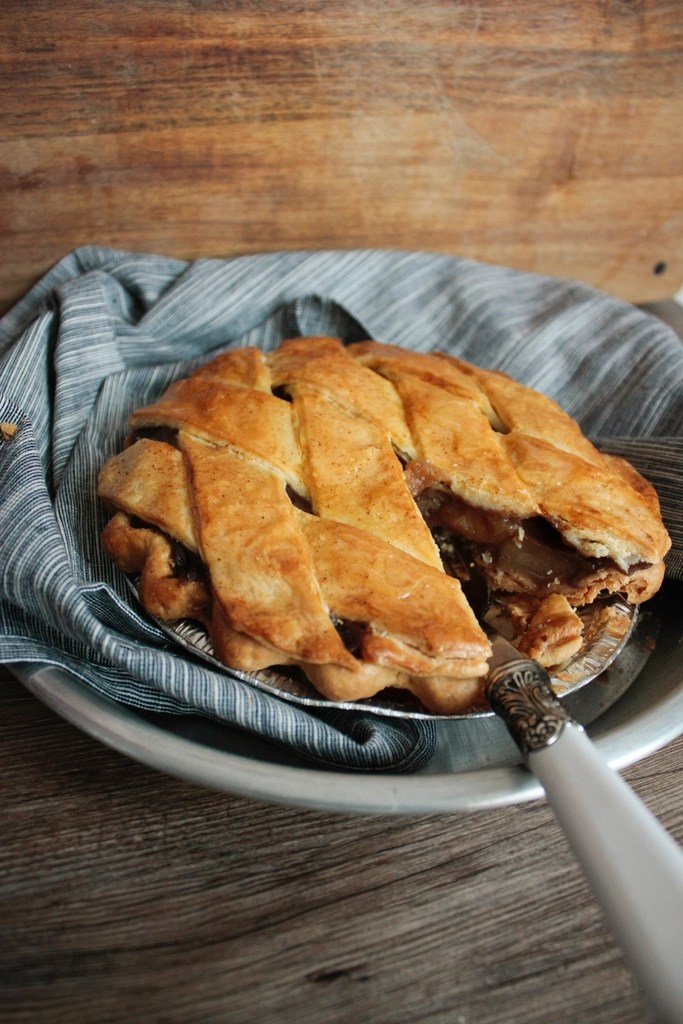
    Many moons ago, my wife and I watched the 2006 HBO documentary Thin, which chronicles the tragic existence of girls in a Florida rehab clinic for eating disorders. These poor souls were ensnared in a vicious cycle of depression, self-loathing, and lies, their recovery rates abysmally low and fatality rates tragically high. After this emotional gut-punch, we desperately needed a palate cleanser, so we turned to a pie-baking contest featuring Midwestern women in Christmas sweaters, lovingly toiling over pie crusts. These wholesome warriors of the kitchen were a stark contrast to the aforementioned sufferers. It dawned on me that pie baking is the antithesis of anorexia—a condition of solipsism where one disappears into the self, whereas pie baking is a testament to community, love, and selfless devotion to butter and flour.

    Imagine, if you will, a world where the kitchen isn’t just a hub of culinary creation but a sacred temple of love, where pie-baking is the highest form of devotion. In this sanctified realm, every Midwestern woman in a Christmas sweater is a culinary high priestess, her rolling pin a scepter of affection, her pie crust a canvas for heartfelt artistry. The Pie Baking Contest is an epic battleground where these valiant women gather, their aprons fluttering like superhero capes, ready to channel pure, unadulterated love into their pies. The stakes are absurdly high, the competition fierce, but the atmosphere? Pure camaraderie and joy.

    Here, pie baking is not just a quaint pastime; it’s an epic saga of love, community, and unyielding devotion. These heroines approach their craft with the precision of neurosurgeons and the passion of Renaissance artists. Flour fills the air like enchanted snow, butter is blended into dough with the deftness of a master illusionist, and apples are peeled and sliced with the ferocity of a seasoned samurai. Each pie is a labor of love, a tangible expression of their deepest affections. As they sweat and toil over their creations, the kitchen morphs into a bustling hub of warmth and connection.

    Baking pies, slinging spaghetti and garlic bread, or whipping up a dish of hot and sour Tom Yum Goong soup demands a healthy soul, one that’s plugged into the matrix of family and community. We therefore don’t journey solo but soar with a merry band of culinary adventurers, armed with spatulas and mixing bowls, ready to conquer the next great feast. So, skip the guilt and embrace the butter—life’s too short for bland food and empty kitchens.

    Baking pies points us to the valuable custom of Crustodianism–the sacred, soul-healing act of cooking not merely for sustenance, but as a devotional rite—an expression of love, fellowship, and culinary redemption. Born at the crossroads of Midwest Christmas sweater sincerity and battle-hardened pie crust tenacity, Crustodianism elevates the domestic act of baking into a communal liturgy. The Crustodian is no mere cook; she (or he, apron optional) is a caretaker of tradition, a therapist armed with a rolling pin, a high priest of carbs performing ritual alchemy with butter, flour, and tears of joy.

    In contrast to the solipsistic void of disordered eating, where nourishment is seen as the enemy, the Crustodian sees food as communion. A warm casserole becomes a life raft. A triple-layer coconut cream pie becomes a bridge to the lonely. A pot of stew bubbles with the echoes of ancestral affection. Cooking, in this frame, is the antidote to isolation—the proof that one has not given up on the world but doubled down on its delicious potential.

    Crustodianism isn’t just about the food. It’s about saying, “I made this for you,” and meaning it with your whole buttery soul. It’s about reclaiming joy, reclaiming appetite, and yes, reclaiming your place at the table—preferably next to someone you love, with a second helping on the way.