Tag: recipes

  • Crustodianism

    Crustodianism

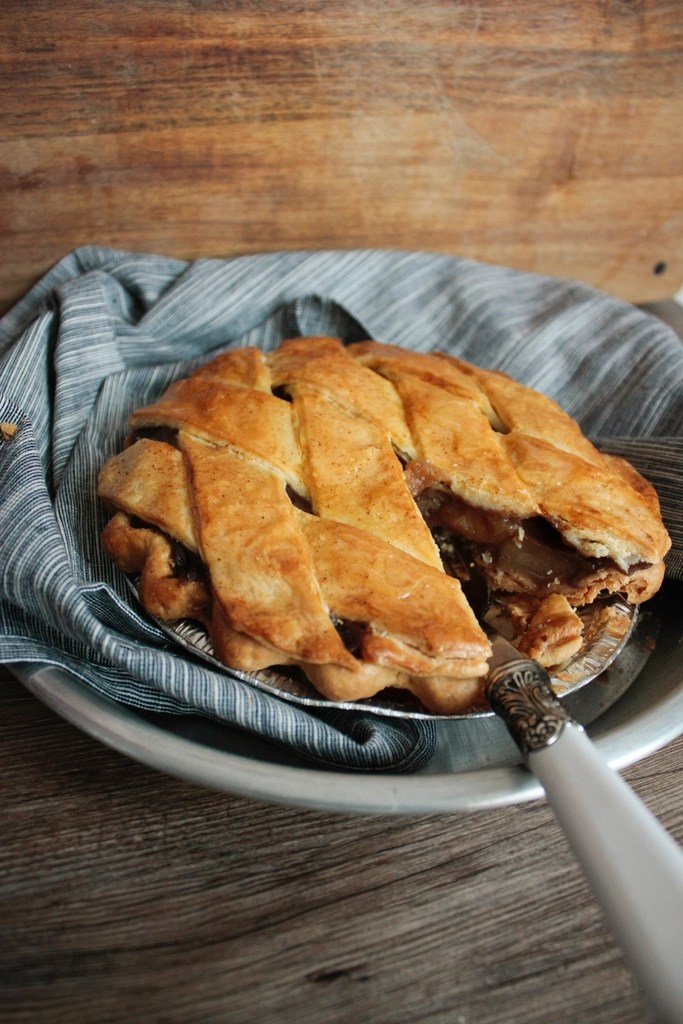
    Many moons ago, my wife and I watched the 2006 HBO documentary Thin, which chronicles the tragic existence of girls in a Florida rehab clinic for eating disorders. These poor souls were ensnared in a vicious cycle of depression, self-loathing, and lies, their recovery rates abysmally low and fatality rates tragically high. After this emotional gut-punch, we desperately needed a palate cleanser, so we turned to a pie-baking contest featuring Midwestern women in Christmas sweaters, lovingly toiling over pie crusts. These wholesome warriors of the kitchen were a stark contrast to the aforementioned sufferers. It dawned on me that pie baking is the antithesis of anorexia—a condition of solipsism where one disappears into the self, whereas pie baking is a testament to community, love, and selfless devotion to butter and flour.

    Imagine, if you will, a world where the kitchen isn’t just a hub of culinary creation but a sacred temple of love, where pie-baking is the highest form of devotion. In this sanctified realm, every Midwestern woman in a Christmas sweater is a culinary high priestess, her rolling pin a scepter of affection, her pie crust a canvas for heartfelt artistry. The Pie Baking Contest is an epic battleground where these valiant women gather, their aprons fluttering like superhero capes, ready to channel pure, unadulterated love into their pies. The stakes are absurdly high, the competition fierce, but the atmosphere? Pure camaraderie and joy.

    Here, pie baking is not just a quaint pastime; it’s an epic saga of love, community, and unyielding devotion. These heroines approach their craft with the precision of neurosurgeons and the passion of Renaissance artists. Flour fills the air like enchanted snow, butter is blended into dough with the deftness of a master illusionist, and apples are peeled and sliced with the ferocity of a seasoned samurai. Each pie is a labor of love, a tangible expression of their deepest affections. As they sweat and toil over their creations, the kitchen morphs into a bustling hub of warmth and connection.

    Baking pies, slinging spaghetti and garlic bread, or whipping up a dish of hot and sour Tom Yum Goong soup demands a healthy soul, one that’s plugged into the matrix of family and community. We therefore don’t journey solo but soar with a merry band of culinary adventurers, armed with spatulas and mixing bowls, ready to conquer the next great feast. So, skip the guilt and embrace the butter—life’s too short for bland food and empty kitchens.

    Baking pies points us to the valuable custom of Crustodianism–the sacred, soul-healing act of cooking not merely for sustenance, but as a devotional rite—an expression of love, fellowship, and culinary redemption. Born at the crossroads of Midwest Christmas sweater sincerity and battle-hardened pie crust tenacity, Crustodianism elevates the domestic act of baking into a communal liturgy. The Crustodian is no mere cook; she (or he, apron optional) is a caretaker of tradition, a therapist armed with a rolling pin, a high priest of carbs performing ritual alchemy with butter, flour, and tears of joy.

    In contrast to the solipsistic void of disordered eating, where nourishment is seen as the enemy, the Crustodian sees food as communion. A warm casserole becomes a life raft. A triple-layer coconut cream pie becomes a bridge to the lonely. A pot of stew bubbles with the echoes of ancestral affection. Cooking, in this frame, is the antidote to isolation—the proof that one has not given up on the world but doubled down on its delicious potential.

    Crustodianism isn’t just about the food. It’s about saying, “I made this for you,” and meaning it with your whole buttery soul. It’s about reclaiming joy, reclaiming appetite, and yes, reclaiming your place at the table—preferably next to someone you love, with a second helping on the way.

  • Longing to Return to the Syrupocene Era

    Longing to Return to the Syrupocene Era

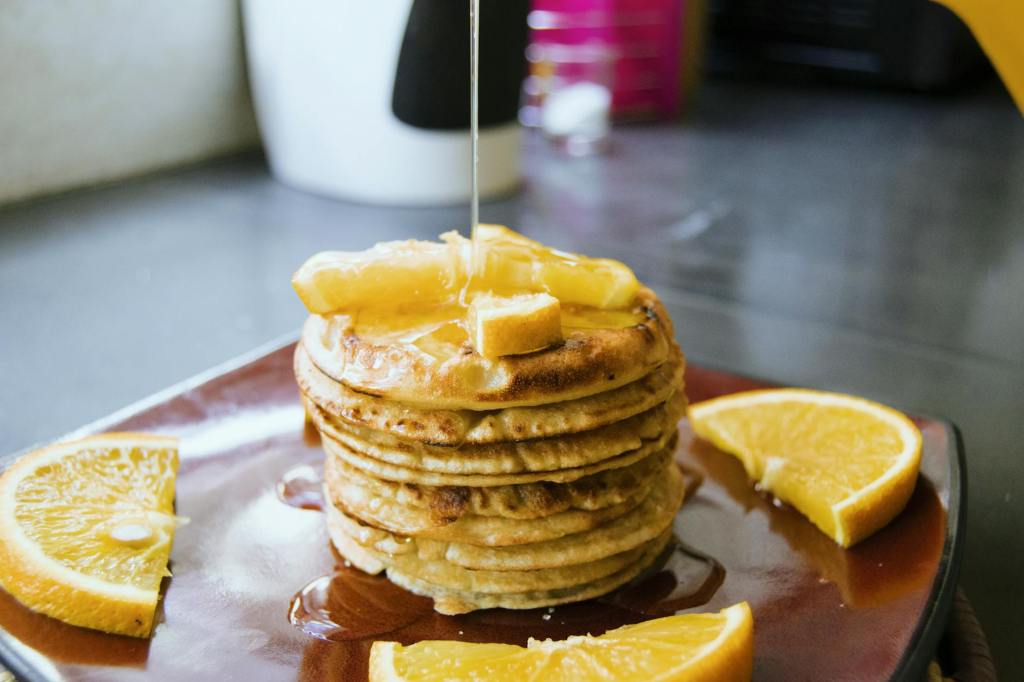
    Back in the 60s and 70s, nutritional concerns were as relevant to us as an old vinyl record in a streaming world. We were blissfully unaware of things like sugar grams and carbohydrate counts. On weekend mornings, my parents would sometimes treat me to a local pancake house, where I indulged in my favorite dish: apple pancakes. Now, picture this: a stack of ten flapjacks, each one a marvel of culinary excess. To say the pile was monumental is like calling Mount Everest a hillock. As I sat next to it, I looked like a hapless Lilliputian standing beside a mountain of golden, buttery goodness. The age-old question had to be asked: Was I going to eat these pancakes, or were they going to consume me in a pancake avalanche? Spoiler alert: I ate them. Every last one. These pancakes were no ordinary breakfast fare. They were brimming with cinnamon-spiced apple compote, slathered in creamy butter, and drenched in what must have been a half-gallon of maple syrup. If I had spilled that syrup, it would have created a sugar tsunami. To wash down this syrupy mountain, I guzzled down several tall glasses of orange juice, which was basically just liquid sugar with a side of citrus. The sheer volume of insulin-spiking sugars and carbohydrates I ingested could have given a modern endocrinologist a cerebral hemorrhage. I was consuming enough sugar to make Willy Wonka look like a health food advocate. After these epic breakfasts, rather than running outside to join my friends in their energetic games, I would slump into bed in a state of what could only be described as a Carbohydrate Coma. I was so catatonic, my friends might as well have been playing a game of “Guess Where’s the Sleeping Kid?” The trauma inflicted on my pancreas was beyond imagination. It was like a small factory working overtime without a break, pumping out insulin at a rate that would have made any modern dietitian faint. In those days, gluttony was a virtue, and self-indulgence was a badge of honor. We reveled in our ignorance, blissfully ignoring the fact that our indulgences would make today’s health-obsessed populace break out in a cold sweat. So there I was, a child of the 60s and 70s, living in an era where pancakes and orange juice were not just meals but monumental feats of indulgence. Our motto was simple: “Why worry about nutritional concerns when you can have another stack of apple pancakes?” Our golden era of gluttony was truly a feast for the ages—literally and metaphorically.

    This memory points us to the Syrupocene Era–a mythic golden age spanning the 1960s and 70s when nutritional ignorance reigned supreme, and breakfast was less a meal and more a caloric Greek tragedy performed in maple-soaked acts. The Syrupocene was a time when food pyramids hadn’t been built, glycemic indexes hadn’t been discovered, and “carb-loading” wasn’t a fitness strategy—it was a lifestyle.

    During the Syrupocene, children guzzled orange juice like it was an IV drip from the gods, consumed pancakes in stacks that could double as insulation, and considered butter a vegetable. It was a utopia of food denialism, where a carbohydrate coma was mistaken for a nap and diabetic shock was just “a sleepy Sunday morning.” The only sugar tracker in town was your mother asking, “Do you want more syrup, honey?”

    The Syrupocene didn’t end with an apocalypse—just a quiet whimper as food labels, cholesterol, and science crept in like puritans at a Mardi Gras parade. But those who lived through it still carry the memory: a wistful ache for the era when gluttony was innocent, ignorance was delicious, and a pancake wasn’t a sin—it was a ten-layered sacrament.

  • Sundae Grailism

    Sundae Grailism

    When I was a kid growing up in the San Francisco Bay Area in the 1970s, there was an ice creamery called Farrell’s. In a child’s imagination, Farrell’s was the equivalent of Willy Wonka’s Chocolate Factory. You didn’t go to Farrell’s often, maybe once every two years or so. Entering Farrell’s, you were greeted by the cacophony of laughter and the clinking of spoons against glass. Servers in candy-striped uniforms dashed around with the energy of marathon runners, bearing trays laden with gargantuan sundaes. You sat down, your eyes wide with awe, and the menu was presented to you like a sacred scroll. You don’t need to read it, though. Your quest was clear: the legendary banana split. When the dessert finally arrived, it was nothing short of a spectacle. The banana split was monumental, an ice cream behemoth. I was as if the dessert gods themselves had conspired to create this masterpiece. Three scoops of ice cream, draped in velvety hot fudge and caramel, crowned with mountains of whipped cream and adorned with maraschino cherries, all nestled between perfectly ripe bananas. Sprinkles and nuts cascaded down the sides like the treasures of a sugar-coated El Dorado. As you took your first bite, you embarked on a journey as grand and transformative as any hero’s quest. The flavors exploded in your mouth, each spoonful a step deeper into the enchanted forest of dessert ecstasy. You were not just eating ice cream; you were battling dragons of indulgence and conquering kingdoms of sweetness. The sheer magnitude of the banana split demanded your full attention and stamina. Your small arms wielded the spoon like a warrior’s sword, and with each bite, you felt a mixture of triumph and fatigue. By the time you reached the bottom of the bowl, you were exhausted. Your muscles ached as if you’ve climbed a mountain, and you were certain that you’d expanded your stomach capacity to Herculean proportions. You briefly considered the possibility of needing an appendectomy. But oh, the glory of it all! Your Farrell’s sojourn was worth every ache and groan. You entered the ice creamery as an ordinary child and emerged as a hero. In this fairy-tale-like journey, you had undergone a metamorphosis. You were no longer just a kid from the Bay Area; you were now a Jedi of the dessert world, having mastered the art of indulgence and delight. As you returned home, the experience of Farrell’s left a lasting imprint on your soul. You regaled your friends with tales of your conquest, the banana split becoming a legendary feast in the annals of your childhood adventures. In your heart, you knew that this epic journey to Farrell’s, this magical pilgrimage, had elevated you to the ranks of dessert royalty, a memory that would forever glitter like a golden crown in the kingdom of your mind.

    These indulgences point to Sundae Grailism–the childhood phenomenon in which a dessert outing—particularly involving elaborate confections like banana splits—takes on the structure, stakes, and emotional intensity of an Arthurian quest. Sundae Grailism transforms a simple trip to an ice cream parlor into a mythic pilgrimage where sprinkles are sacred relics, whipped cream is a divine cloud cover, and the spoon is Excalibur.

    Children afflicted with Sundae Grailism don’t just want dessert—they are summoned to it. They enter Farrell’s or any suitably over-the-top ice creamery with the gravity of knights entering Camelot, guided by visions of the elusive Banana Split of Destiny. The menu is not read—it is interpreted like scripture. Every bite of caramel-drizzled glory is a chapter in the epic. By the end of the journey, they’re bloated but victorious, stained with fudge and swagger, ready to regale the kingdom (a.k.a. the school lunch table) with tales of conquest and near-digestive ruin.

    Sundae Grailism is not just about sugar—it’s about transcendence, myth-making, and the belief that, under the right fluorescent lighting and with enough maraschino cherries, a kid can become legend.

  • Appetyranny

    Appetyranny

    One of the most memorable TV ad campaigns of my youth in the late 1960s was “How Do You Handle a Hungry Man?” The stakes were sky-high. Imagine the scene: a harried housewife in her perfectly pressed apron, hair teased to high heaven, facing off against her husband, the archetypal Hungry Man. He enters the kitchen with the imposing gait of a lumberjack who’s felled a forest, his appetite as vast as the Grand Canyon. He casts a skeptical eye over the bubbling pot on the stove, nostrils flaring like a bloodhound on the scent. The tension is palpable. But fear not! With a dramatic flourish, she opens a can of Campbell’s Manhandlers soup, the magical elixir that transforms her kitchen into a culinary Colosseum. She pours the contents into a pot, and it’s as if she’s summoned the culinary gods themselves. The soup is no ordinary broth; it’s a veritable cornucopia of steak chunks, peas, and potatoes, swimming in a rich, hearty base that promises to tame even the most insatiable of appetites. As the aroma wafts through the kitchen, her husband’s eyes widen in delight. He grabs a spoon and dives in, and the transformation is instantaneous. His previously skeptical demeanor melts away, replaced by pure bliss. He slurps the soup with the gusto of a Viking at a medieval banquet, and she watches, triumphant. The jingle plays in the background, a triumphant anthem to her victory over hunger.

    The food industry at the time was relying on Appetyranny–the 1970s advertising-driven psychosis in which a woman’s entire self-worth was measured by her ability to quell the beastly hunger of her man. Fueled by jingles and canned soup, Appetyranny framed female failure not in terms of character or intellect, but in spoonfuls: if he’s still hungry, you’re unlovable.

    It was the golden age of culinary gaslighting, where a man’s growling stomach was treated like a ticking bomb, and your job—housewife, mother, woman—was to neutralize it with sodium-laced beef sludge. Fail, and you risked suburban scandal. Succeed, and you were serenaded by baritone jingles that implied your marriage had been saved by soup.

    Side effects of Appetyranny include:

    • The belief that men turn feral without starch by 6 p.m.
    • Buying food with names like Manwich, Sloppy Joe, or Hearty Beef ‘n’ Barley
    • Mistaking Campbell’s labels for emotional validation
    • A lifelong association between love and ladles

    Appetyranny wasn’t just marketing. It was a meat-chunk manifesto from the patriarchal pantry, where the kitchen timer doubled as a ticking bomb of feminine adequacy.

  • Snackrilege

    Snackrilege

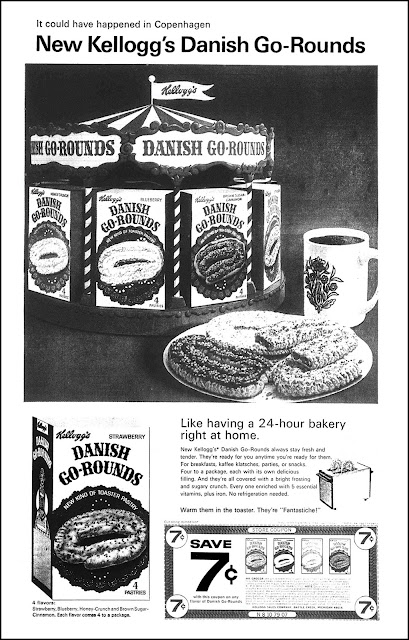
    Introduced by Kellogg’s in 1968, Danish Go-Rounds were like the golden fleece of breakfast pastries. Imagine Pop-Tarts, but with the sophistication of a five-star dessert. The brown sugar-cinnamon Danish Go-Rounds were so addictive, they made crack look like a mere curiosity. At the ungodly hour of 2 a.m., millions of Americans would wake up in cold sweats, their cravings driving them to frenzied searches for the Nectar of the Gods—only to find their precious pastries had vanished into thin air. Then, in a move so baffling it felt like a conspiracy against breakfast enthusiasts everywhere, Kellogg’s pulled the plug on Danish Go-Rounds in the mid-seventies. They kept the Pop-Tarts, those cardboard-like impostors that tasted like they were designed by a committee of flavorless robots. The heartbreak was palpable. It was as if a divine bakery had been shut down and replaced with a factory that churned out glorified toaster insulation. The eradication of Danish Go-Rounds is now remembered as one of the most colossal institutional blunders in history—up there with the fall of Rome and the invention of the Rubik’s Cube. The void they left was so immense, it bored a gaping chasm in my soul. My heart, once full of pastry-filled joy, now echoed with the hollow sound of Pop-Tarts’ lifeless crunch. While Danish Go-Rounds faded into the annals of breakfast history, Pop-Tarts flourished like a tasteless, mass-produced phoenix. This shift symbolized the erosion of artisanal craftsmanship and the triumph of consumer complacency. It heralded the rise of such culinary horrors as Imperial Margarine, Tang, Space Food Sticks, Boone’s Farm Apple Wine, and SlimFast—products so tragic they make a TV dinner look like a gourmet feast. The Gastronomic Time Traveler had to bear witness to this disheartening transition, seeing the demise of pastries that were practically food royalty. In their place, we got a parade of processed atrocities that made the culinary landscape look like a dystopian nightmare. So there I was, left to mourn the loss of Danish Go-Rounds, savoring the bitter taste of what once was, while choking down the unworthy replacements that flooded the market. It was a breakfast apocalypse, and I was living in its soggy aftermath.

    My undying grief over the extinction of Danish Go-Rounds introduced me to Snackrilege–The soul-crushing betrayal one experiences when a beloved snack—usually a glorious artifact of pre-1980s food engineering—is unceremoniously discontinued and replaced with a bland, mass-produced imposter that tastes like cafeteria foam and broken dreams.

    Snackrilege is not just a disappointment; it’s a culinary excommunication. It’s the moment you realize Kellogg’s didn’t just discontinue Danish Go-Rounds—they blasphemed the sacred breakfast pantheon by pretending a Pop-Tart could ever fill that flaky, spiraled void.

    Symptoms of Snackrilege include:

    • Grief rage in the frozen aisle
    • Late-night Google searches for defunct product petitions
    • Emotional hoarding of expired boxes found on eBay
    • Screaming “It used to mean something!” at a toaster

    Snackrilege marks the exact point where food nostalgia turns into holy indignation. It’s not about the pastry. It’s about what we lost—flavor, artistry, and the illusion that breakfast was once made by pastry angels instead of lab interns with degrees in corn syrup engineering.

  • College Essay Prompt: “Authenticity on the Menu: Rethinking Cultural Purity in Mexican and Chinese American Cuisine”

    College Essay Prompt: “Authenticity on the Menu: Rethinking Cultural Purity in Mexican and Chinese American Cuisine”


    Essay Prompt:

    In contemporary food discourse, cries of “inauthentic” are often used to police the boundaries of cultural identity. American Chinese food and modern Mexican cuisine are frequently accused of deviating from their traditional roots—dishes like General Tso’s chicken or Korean taco fusion provoke both celebration and scorn. But what does authenticity really mean in a country built on cultural convergence and adaptation?

    This essay invites you to explore the tensions between authenticity and adaptation in the evolution of Mexican and Chinese food in the United States. Rather than framing culinary transformation as a betrayal, consider how these cuisines have served as vehicles for survival, cultural expression, and even quiet resistance against exclusion and erasure.

    Drawing from:

    • Gustavo Arellano’s essay “Let White People Appropriate Mexican Food”
    • Ian Cheney’s documentary The Search for General Tso
    • Charles W. Hayford’s “Who’s Afraid of Chop Suey”
    • Cathy Erway’s “More Than ‘Just Takeout’”
    • Kelley Kwok’s “‘Not Real Chinese’: Why American Chinese Food Deserves Our Respect”
    • Jiayang Fan’s “Searching for America with General Tso”

    Your task is to defend, refute, or complicate the claim that criticizing Mexican and Chinese food for being “inauthentic” oversimplifies the realities of cultural exchange, economic survival, and creative resilience. Analyze how these foods reflect the lived experiences of immigrant communities negotiating belonging in a country often hostile to their presence.

    In your essay, define authenticity and explain how food operates as both cultural symbol and commodity. Should evolving cuisines be celebrated as testaments to resilience and ingenuity, or are there valid reasons to lament the loss of traditional culinary practices?

    You are encouraged to include personal anecdotes, cultural observations, or family histories if relevant—but maintain an argumentative, evidence-based tone throughout.


    Sample Thesis Statements


    Thesis 1:
    Labeling American Chinese and modern Mexican food as “inauthentic” not only ignores the histories of exclusion and survival that shaped these cuisines, but also reinforces a rigid, essentialist view of culture that fails to recognize adaptation as a legitimate—and necessary—form of expression.


    Thesis 2:
    While culinary purists may mourn the loss of tradition, dishes like orange chicken and carne asada fries should be understood not as betrayals of culture, but as inventive responses to racism, capitalism, and assimilation—proof that food evolves to meet the needs of those who cook it.


    Thesis 3:
    Though some modern interpretations of Mexican and Chinese cuisine risk diluting cultural meaning, dismissing them as inauthentic erases the labor, compromise, and strategy behind immigrant adaptation. These “inauthentic” dishes are often the only tools marginalized communities have to assert presence in the mainstream.


    10-Paragraph Essay Outline


    Paragraph 1 – Introduction

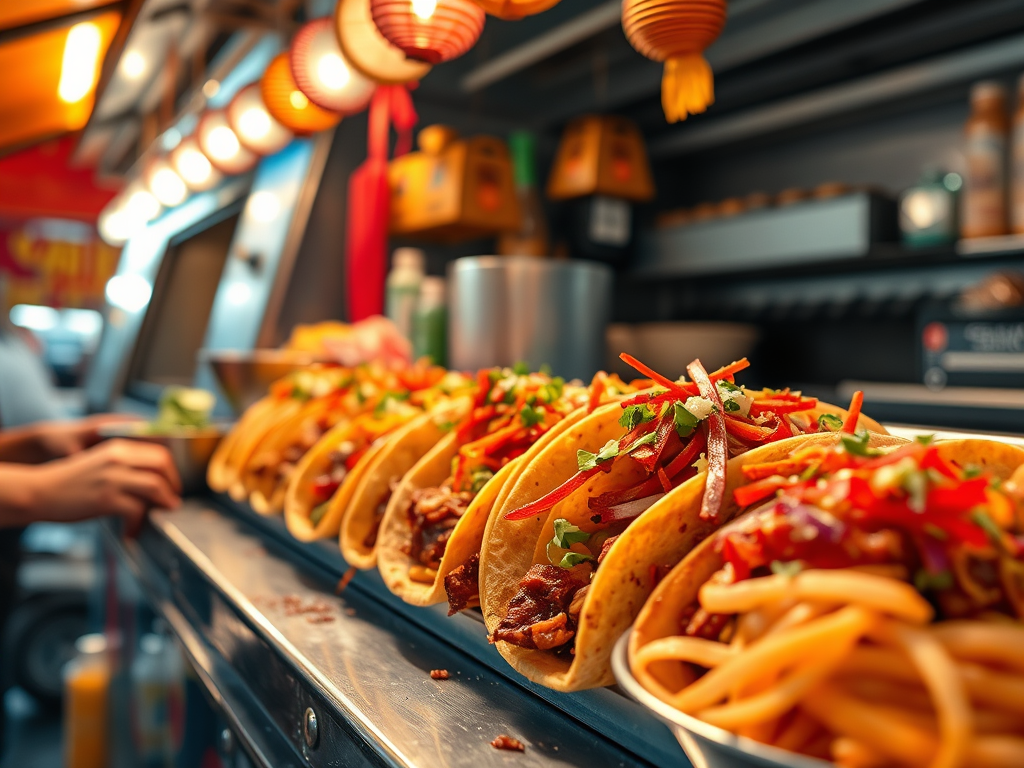
    • Open with a vivid description of a “fusion” dish—e.g., General Tso’s chicken or a bulgogi taco.
    • Introduce the cultural tension: critics call it inauthentic, but fans see it as innovative.
    • Define authenticity as it relates to food—linked to heritage, but often idealized or frozen in time.
    • Introduce thesis: Adapted Mexican and Chinese dishes are more than just Americanized versions—they are creative, resilient responses to exclusion, shaped by economic and social realities.

    Paragraph 2 – The Myth of Culinary Purity

    • Discuss how cultures, including their cuisines, are never static—food evolves across borders, time, and necessity.
    • Reference Hayford’s essay: Chop Suey was mocked but also became a symbol of cultural hybridity.
    • Suggest that authenticity is a moving target, not a fixed standard.

    Paragraph 3 – Food as Survival Strategy

    • Show how immigrant communities adapted recipes to fit American ingredients, tastes, and economic constraints.
    • Use The Search for General Tso to illustrate how Chinese restaurant owners tailored menus to avoid discrimination while making a living.
    • Frame these adaptations as strategic—not sellouts, but survival tools.

    Paragraph 4 – Mexican Cuisine and Cultural Flexibility

    • Draw from Arellano’s argument: Mexican food has always been flexible and regionally diverse.
    • Discuss the rise of dishes like breakfast burritos or California burritos—not Mexican per se, but still rooted in Mexican technique and sensibility.
    • Argue that innovation doesn’t erase identity—it expands it.

    Paragraph 5 – Appropriation vs. Adaptation

    • Make distinctions between cultural appropriation (extraction without respect) and cultural adaptation (evolution from within).
    • Arellano’s essay defends white chefs cooking Mexican food, but notes the double standard when immigrants are excluded from credit or capital.
    • Emphasize the importance of who benefits from culinary success.

    Paragraph 6 – The Emotional Stakes of Authenticity

    • Explore why food carries such emotional weight—it connects to home, family, memory.
    • Reference Kelley Kwok’s essay on shame and pride in eating American Chinese food.
    • Acknowledge that critiques of authenticity often come from a place of longing, but may oversimplify how identity is preserved.

    Paragraph 7 – The Mainstreaming of “Ethnic” Food

    • Discuss how dishes once dismissed as “ethnic junk” have become trendy and profitable.
    • Use Jiayang Fan’s reflections to show how General Tso became a cultural ambassador—flawed, yes, but powerful.
    • Ask: Is mainstream acceptance a win for cultural visibility, or does it flatten the story?

    Paragraph 8 – Counterargument: The Loss of Tradition

    • Consider critics who argue that modern adaptations erase important culinary history.
    • Acknowledge the danger of cultural dilution—e.g., chain restaurants replacing traditional kitchens.
    • But rebut by arguing that tradition and innovation are not mutually exclusive; both can coexist.

    Paragraph 9 – Synthesis: Food as a Living Archive

    • Reassert that Mexican and Chinese American dishes are not lesser—they are living archives of migration, struggle, and creativity.
    • Argue that we should assess cuisine not just by fidelity to a past, but by how it reflects the realities of the present.
    • Draw from Erway’s piece on how takeout often contains rich, hidden histories of resilience.

    Paragraph 10 – Conclusion

    • Return to your opening image: that “inauthentic” fusion dish is a cultural text worth reading.
    • Reaffirm your thesis: to dismiss adapted food as inauthentic is to miss its ingenuity and the hard histories behind it.
    • End with a call to rethink what authenticity means—not as static preservation, but as cultural endurance through change.
  • CAR T-Cell Therapy Helped My Brother Beat a Rare Cancer

    CAR T-Cell Therapy Helped My Brother Beat a Rare Cancer

    In 2021, my younger brother faced a grim diagnosis: Burkitt lymphoma, a rare and aggressive cancer that left him with a mere three months to live. As if that wasn’t enough, he was recently divorced, his finances were in tatters following the collapse of his tech start-up, and the weight of stage-4 cancer was crushing him. The doctor, in a rare moment of compassion, suggested he create a bucket list. But fate had one last twist in store: my brother was accepted as the final participant in a groundbreaking UCSF experimental treatment known as CAR T-cell therapy.

    For three weeks, he underwent this miracle treatment, and as his recovery began, he was supposed to stay at the nearby Koz Hospitality House, a sanctuary for cancer patients. But he needed more than just a place to stay—he needed someone to help him navigate this harrowing chapter. Enter me. My college courses had all shifted online due to the pandemic, so I was able to handle my remote office hours from the Koz House. I moved in with my brother for two weeks, and though it was a challenge, it felt like a moral imperative to be by his side.

    What followed was nothing short of miraculous. Not only did my brother defy the odds and beat the cancer—the enormous tumor in his chest vanished—but the absence of chemotherapy meant he was full of energy. We walked several miles a day in the warm embrace of the Golden Gate Park sunshine, and dined out at local restaurants, with our absolute favorite being the Bibimbap from a charming Korean café within walking distance of the Koz House.

    Imagine, if you will, a plate that could make the gods weep with joy: the luxurious Bibimbap. At its core is a steaming mound of jasmine rice, each grain perfectly cooked and slightly caramelized around the edges, promising a delightful crunch. This foundation is adorned with a vibrant array of vegetables that seem to dance in a riot of color. There are tenderly crisp shredded carrots, their bright orange sweetness a contrast to the emerald-green spinach, delicately sautéed to perfection. Thin strips of julienned shiitake mushrooms lend an earthy umami, while sautéed zucchini adds a touch of sweetness, and crunchy bean sprouts offer a refreshing snap.

    Amid this colorful tableau, slices of seasoned beef—tender and juicy, marinated in a rich blend of soy sauce, garlic, and sesame oil—rest in harmonious balance with the vegetables. Atop this culinary masterpiece is a perfectly fried egg, its golden yolk a glossy orb of creamy richness, its edges crisply caramelized for a delightful textural contrast. A bold dollop of gochujang, a spicy-sweet fermented chili paste, sits at the center, its fiery kick slicing through the richness with vibrant heat.

    A sprinkling of sesame seeds, their nutty aroma mingling with the dish’s complex flavors, completes the ensemble. Thinly sliced scallions add a touch of freshness, and a drizzle of toasted sesame oil imparts a deep, nutty undertone. Every bite of this artful creation is a testament to the balance of textures and flavors—a celebration of umami, sweetness, and spice that transforms each meal into a joyous feast.

    Watching my brother relish every bite of this extraordinary Bibimbap was more than just a culinary delight—it felt like witnessing a healing miracle. It was as though this renowned Korean dish held within it a secret power, a savory balm that not only nourished his body but also rejuvenated his spirit, making him heal before my very eyes.

  • The gastronomic equivalent of putting a monocle on a raccoon

    The gastronomic equivalent of putting a monocle on a raccoon

    As a kid, my taste buds were on a non-stop joyride with Pigs In a Blanket—those glorious cocktail sausages swaddled in Pillsbury Crescent Rolls, dunked with the carefree abandon of a sugar-high toddler in cheddar cheese, spicy mustard, and barbecue sauce. They were the epitome of childhood bliss.

    Fast forward to adulthood, and we must now suffer Luxury Reinterpretation. This is the gastronomic equivalent of putting a monocle on a raccoon. The process involves taking our beloved comfort foods like Pigs in a Blanket, grilled-cheese sandwiches, and Sloppy Joes, and draping them in so much opulence that you’d think they were being prepared for a royal banquet. We’re talking artisan breads that cost more than a week’s groceries, freshly baked brioche buns, and French cheeses so refined they practically come with a family crest.

    In this upscale twist, culinary wizards employ techniques that sound like they belong in a sci-fi film—slow cooking, smoking, and sous-vide. Flavors are layered with truffle oil, caramelized onions, and sautéed mushrooms, all artfully plated with microgreens, edible flowers, and a drizzle of balsamic reduction that could double as abstract art. There’s even a heart-wrenching narrative woven into the dish, involving deep-rooted culinary traditions or some distant great-grandmother who once served peas on an antique platter.

    The lengths to which we’ll go to gild the lily of our childhood comfort foods is a testament to our fear of being judged for enjoying simple pleasures. Sometimes, all I want is to revel in the uncomplicated joy of Pigs in a Blanket without all the pomp and circumstance. But no, in the world of haute cuisine, even the humble piggy-in-a-blanket must be paraded around in a tuxedo and given a backstory worthy of Shakespearean drama. And so, we drape our comfort foods in an extravagant cloak of sophistication, proving once and for all that our insecurities are as elaborate as the dishes we create.

    This scenario exposes the fact that the move to “Luxury Reinterpretation” isn’t just a culinary choice—it’s a full-blown identity crisis, a performance art piece meant to scream, Look how refined I’ve become! Remember: No matter how much balsamic reduction you drizzle, a piggy-in-a-blanket in a tuxedo is still just a piggy in a blanket—albeit one sweating under the weight of insecurity and overpriced truffle oil.

  • Authenticity or Evolution? The Cultural Legacy of Mexican and Chinese Food in America

    Authenticity or Evolution? The Cultural Legacy of Mexican and Chinese Food in America

    This is the third essay prompt for my critical thinking class:

    Authenticity or Evolution? The Cultural Legacy of Mexican and Chinese Food in America

    For many, food is more than sustenance—it is tradition, identity, and history. But what happens when traditional dishes evolve to fit new cultural landscapes? Should Americanized versions of Mexican and Chinese cuisine—from General Tso’s chicken to Tex-Mex burritos—be embraced as a vibrant contribution to culinary history, or dismissed as inauthentic imitations?

    This 1,700-word argumentative essay (MLA format required) invites you to examine how cultural adaptation and survival shape food traditions. Using Gustavo Arellano’s essay “Let White People Appropriate Mexican Food” and Ian Cheney’s documentary The Search for General Tso as key references, along with additional essays on the subject, you will defend, refute, or complicate the claim that labeling these cuisines as “inauthentic” ignores the deeper realities of immigration, adaptation, and resilience.

    Key Questions to Explore:

    • How do American Chinese and modern Mexican cuisines reflect adaptation and survival rather than cultural betrayal?
    • In what ways have these culinary shifts helped immigrant communities overcome economic and social adversity?
    • Does the concept of “authenticity” erase the ingenuity and history behind these evolving dishes?
    • How does food innovation expand cultural influence, making ethnic cuisines more accessible and desirable to broader audiences?

    Required Sources:

    Use a minimum of four sources from the following list, cited in MLA format:

    • Gustavo Arellano – “Let White People Appropriate Mexican Food”
    • Ian Cheney’s documentary – The Search for General Tso
    • Charles W. Hayford – “Who’s Afraid of Chop Suey”
    • Cathy Erway – “More Than ‘Just Takeout’”
    • Kelley Kwok – “‘Not Real Chinese’: Why American Chinese Food Deserves Our Respect”
    • Jiayang Fan – “Searching for America with General Tso”

    Suggested Essay Structure:

    I. Introduction (200-300 words)

    • Introduce the debate over culinary authenticity and how it applies to Mexican and Chinese food in America.
    • Present your thesis—whether you believe these evolving cuisines should be celebrated, criticized, or viewed with a nuanced perspective.
    • Briefly mention the key sources you will use to support your argument.

    II. The Case for Culinary Evolution (400-500 words)

    • Use Arellano’s claim that Mexican cuisine thrives on adaptability to explore how tacos, burritos, and other dishes have been reshaped by cultural influences.
    • Reference The Search for General Tso to highlight how Chinese immigrants adapted their cuisine to American tastes while maintaining entrepreneurial success.
    • Use Erway’s essay to examine how evolving cuisines serve as a source of creativity and pride for immigrant communities.

    III. Overcoming Racism and Economic Hardship (400-500 words)

    • Draw on Jiayang Fan’s argument that Chinese food’s popularity in America is inseparable from immigrant struggles, where adaptation was a tool for survival.
    • Explore how Tex-Mex and Chop Suey—despite being dismissed as “inauthentic”—helped immigrant communities establish visibility and economic stability.

    IV. Challenging the Authenticity Argument (400-500 words)

    • Use Kelley Kwok’s essay to challenge the myth that American Chinese food is “not real Chinese food” and explore what “authentic” really means.
    • Argue that cuisine is never static—traditions themselves were once innovations, influenced by migration and cultural blending.
    • Acknowledge the importance of preserving traditional dishes but emphasize how adaptation allows for survival and cultural expansion.

    V. Counterargument and Rebuttal (300-400 words)

    • Address critics who argue that Americanized versions of ethnic cuisine dilute culture or exploit culinary traditions for profit.
    • Rebut by emphasizing that adaptation does not erase tradition but extends its cultural reach, making food a dynamic part of identity.

    VI. Conclusion (200-300 words)

    • Reaffirm your thesis, reflecting on how evolving cuisines shape multicultural identity and bridge cultural divides.
    • Highlight how food tells a larger story of resilience, creativity, and the blending of cultures in an interconnected world.

    Final Thoughts:

    This essay challenges you to rethink the definition of authenticity in cuisine. By exploring how food evolves through necessity, survival, and creativity, you will craft an argument that goes beyond simplistic debates and acknowledges both the importance of tradition and the power of adaptation.

  • DEATH BY SNACKS

    DEATH BY SNACKS

    After dinner, my wife and I luxuriated in a couple of Arrested Development reruns, marveling at the genius of Mitchell Hurwitz and Ron Howard. The show, an absurdist ode to familial dysfunction, felt decades ahead of its time—sharp enough to leave paper cuts on your brain. During the opening credits, I rose from the couch with noble intentions: I was off to fetch my so-called “satiety apple,” a modest, virtuous snack that allegedly curbs my post-dinner cravings without derailing my calorie count.

    But as I crossed the kitchen, fate—or treachery—beckoned me toward the microwave. There it sat: a pie box, faintly glowing, practically humming a siren song of buttery crust and spiced filling. One peek inside, and there it was—the last slice of Thanksgiving pie, radiating the kind of allure that no apple could ever muster.

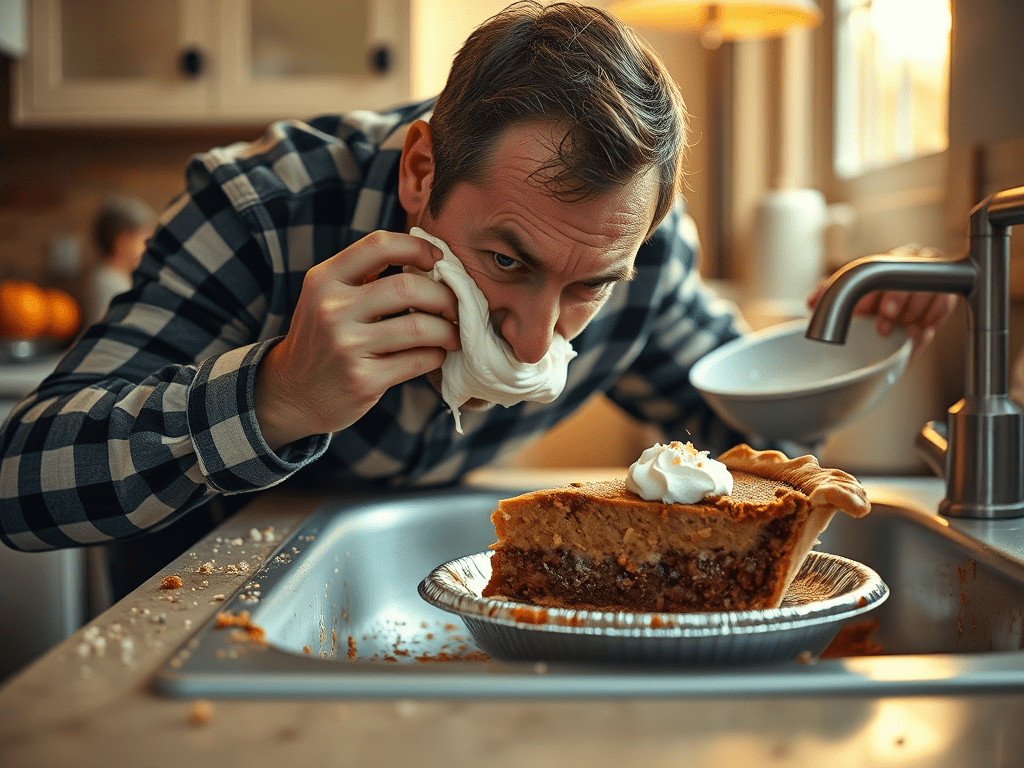
    Before I knew it, I was hunched over the sink, inhaling that pie like a feral animal who’d just discovered civilization’s baked goods. Crumbs flew. Filling dripped. I was mid-bite, fully in beast mode, when my daughter Alison walked in. She stopped, surveyed the scene, and with surgical precision, dropped her line: “When’s the last time you were on a diet?”

    I froze mid-chew, my cheeks puffed out like a chipmunk caught in a raid. “A single slice of pie hardly merits such harsh judgment,” I said, wiping a smear of whipped cream off my chin.

    “Don’t be so defensive,” she said, her voice carrying the kind of condescension only a teenage girl can master. “I’m just asking—when was the last time you were on a diet?”

    “I didn’t realize you were the official historian of my weight management strategies,” I shot back, trying to maintain some shred of dignity.

    “What strategy?” she deadpanned, her tone as flat as the pie tin now sitting empty in the sink.

    I opened my mouth in an exaggerated display of mock offense, as if her words had wounded me so deeply that I could only respond with silence. We laughed, but the truth landed like a sucker punch: despite my heroic kettlebell workouts and high-protein meal plans, my daughter saw me for what I really was—a fat slob, undone by my inability to resist the siren song of leftover pie.

    My conversation with my daughter hit a nerve: my relationship with food is less of a partnership and more of a chaotic entanglement worthy of a reality show. I’m living with a chronic condition others have dubbed food noise—the relentless, mind-consuming obsession with food. It’s not just a passing craving; it’s a full-time occupation. Food noise is that little gremlin in your head planning tomorrow’s breakfast while you’re still wiping pie crumbs off your shirt from dinner. It’s exhausting, intrusive, and, frankly, a massive pain in the ass.

    I’ve tried all the supposed solutions. High-protein meals? Check. Fiber-packed fruits and veggies? Done. Permission to eat favorite foods to deflate their psychological power? Sure, why not. Listening to my so-called “hunger cues”? Please, those cues have been drowned out by a symphony of appetite louder than a Wagner opera. The truth is, my love of food has nothing to do with hunger. This isn’t about survival—it’s about passion.

    I crave food the way a musician craves music, except instead of performing Beethoven’s Ninth, I’m inhaling pie and serenading a protein bar like it’s my muse. Eating isn’t just sustenance; it’s a full-body euphoria, a never-ending sonata of chewing that I never want to end.

    So here I am, a helpless Snack Serenader, crooning over every dish like it’s the centerpiece of my magnum opus. Pie, pasta, cereal, or steak—it doesn’t matter. They’re all part of the eternal love song I sing to food, even as it steamrolls my willpower and expands my waistline. And while it may sound romantic, let’s be honest: it’s less about joy and more about imprisonment. I don’t just eat food; I worship it. I’m not hungry for a meal; I’m desperate for an encore. Just as a Beethoven superfan can lose themselves in the ninth symphony on repeat, I want to marinate in a bottomless jacuzzi of flavor, chewing my way through life’s buffet like a one-man marching band of mastication.

    As a Snack Serenader, I croon love songs to everything from pie to chicken shawarma. That Thanksgiving slice of pie wasn’t dessert; it was a crescendo. A bag of chips isn’t a snack; it’s an aria. And here I am, the tragic hero, swooning over leftovers as my waistline rolls its eyes and mutters, “You’re killing me.”

    The irony isn’t lost on me that I began this post with Arrested Development while chronicling my sink-side pie binge—a man-child devouring apple pie like it was the elixir of life, all under the unimpressed gaze of my daughter. Uncontrolled eating, it seems, is less about hunger and more about a deep-seated infantilization for which there’s no cure, just a lifetime subscription.