Tag: recipes

  • The Day the German Chocolate Cake Lost Its Throne

    The Day the German Chocolate Cake Lost Its Throne


    The plan for my birthday was simple: a German Chocolate Cake from Torrance Bakery—rich, decadent, predictable, the sugary punctuation mark to another year survived. My wife, Carrie, placed the order, and I considered the matter settled. But on Sunday, three days before the big event, she blindsided me with an unsolicited miracle: a homemade hummingbird cake. It’s carrot cake’s tropical cousin—bananas and pineapple mingling like exiled fruits at a Southern potluck.

    She confessed she wanted to get me a “real” present, not something outsourced, so she compensated with butter, flour, and a whole lot of love. I ate three thick slices that Sunday afternoon, each forkful blurring the line between nourishment and seduction. “This is so wholesome,” I told her, “it doesn’t even count as cheating on my diet. It’s morally superior to carrot cake—and so dangerously good it might ruin Tuesday’s German Chocolate encore.”

    Carrie laughed, apologized for my impending existential crisis, and on Tuesday returned with the official cake: the grand Torrance Bakery specimen. We performed the ritual—candles, singing, obligatory family cheer—and I consumed an 800-calorie slice with the reverence of a man honoring tradition.

    It was moist. It was glossy. It was… fine. The caramel layer, usually the German Chocolate’s battleground of decadence, seemed to have surrendered before the fight began. I chewed, waiting for transcendence that never came. It struck me then: German Chocolate Cake is unreliable—half the time glorious, half the time cafeteria bland.

    The verdict arrived between bites. My lifelong allegiance had shifted. My mother’s German Chocolate Cake once ruled the birthday throne, but the crown has passed. The hummingbird cake reigns supreme—a moist, fragrant coup d’état led by pineapple and banana insurgents. The old guard has fallen. Long live the new confectionary monarch.

  • Self-Interest with Sauce: Why Your Finger Isn’t Worth a Million Lives

    Self-Interest with Sauce: Why Your Finger Isn’t Worth a Million Lives

    In How Adam Smith Can Change Your Life, Russ Roberts quotes the Talmudic sage Hillel: “If I am not for myself, who will be for me? If I am only for myself, who am I?” Roberts riffs on this by pointing out Smith’s hard edge: if you would sacrifice millions of lives to save a single finger, you are “a monster of inhuman proportions.”

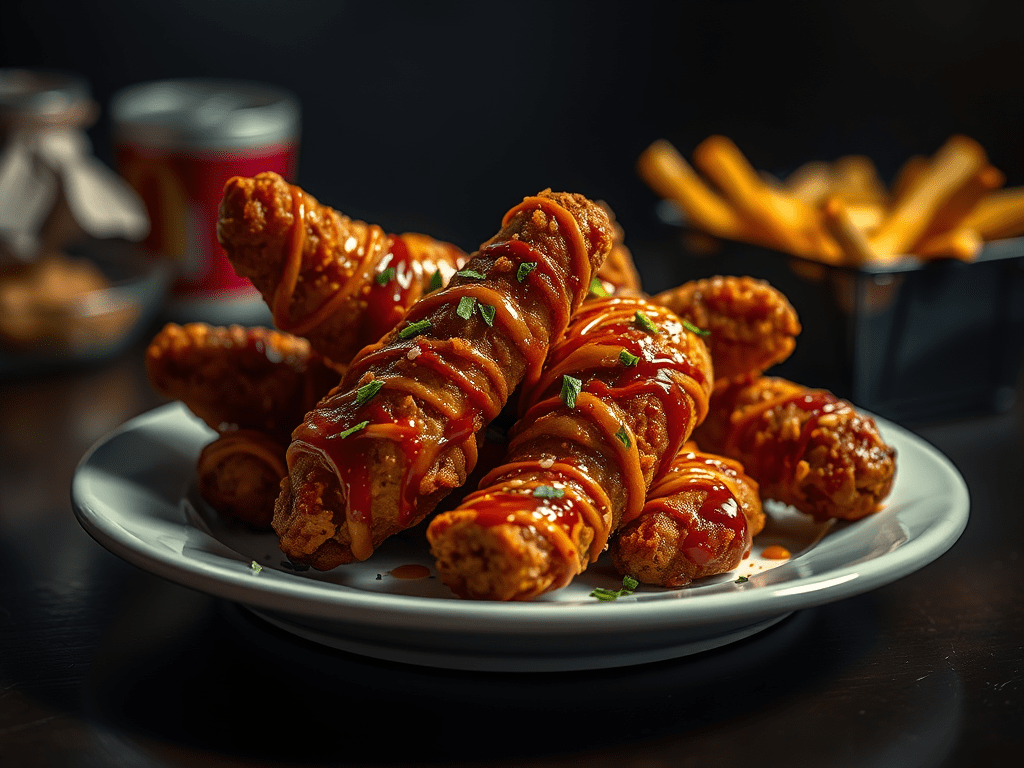
    Which, of course, made me think of chicken tenders. A few nights ago I had the Sweet Thai Glazed chicken at Starbird—fast food so transcendent it felt like a religious conversion, crispy shallots and herb aioli included. I wanted to go back the next day. And the next. My self-interest is crystal clear: eat more Starbird. The problem? My pursuit of gustatory bliss comes at the expense of chickens. Just as my hunt for bioavailable whey protein powders comes at the expense of cows.

    So—am I a monster? If I turned vegan, would that absolve me, or would I just uncover a longer list of moral failings still clinging to my name tag? Because the world isn’t eating less meat. It’s eating more, mostly factory-farmed, while pretending not to notice the conveyor-belt cruelty behind the menu. Ignore it long enough and moral numbness sets in, the kind that doesn’t just ruin animals but corrodes us too, spreading in ripples like bird flu, mad cow, or the next “mystery wet market disease.”

    And cruelty isn’t the only place where “self-interest” mutates into its evil twin. Consider America’s sacred cow: gun freedom. Other nations see mass shootings, change laws, and reduce tragedies. America, however, doubles down—choosing an idea of freedom that keeps killing us. Here, “self-interest” looks less like wisdom and more like suicide with better branding.

    That’s the trouble with self-interest. It’s a slippery little devil with at least two sharp horns. First: it lets us rationalize immoral behavior until we become monsters congratulating ourselves for our appetites. Second: it convinces us that policies which maim us—like endless guns, endless meat—are somehow in our “best interest.”

    In reality, self-interest is a hornet’s nest: buzzing passions, compulsive hungers, warped myths, and counterfeit happiness. To live in true self-interest means sorting out the destructive impulses from the behaviors that actually make us moral and happy. But most people never attempt the sorting, because the road to ruin is wide, comfortable, and paved with chicken tenders, while the road to virtue is narrow, steep, and has terrible Yelp reviews.

  • The Gospel of Broccoli

    The Gospel of Broccoli

    For the last two decades, I’ve gorged myself on a certain genre of book: part self-help, part pop psychology, part personal confession, and part armchair sociology. They’re all cut from the same cloth. Sometimes the title is blunt and monosyllabic—Grit, Flow, Blink. The kind of title that slaps you with FOMO and whispers: you’re missing out on the one great discovery of our age.

    The author inevitably casts themselves as an intellectual Indiana Jones, unearthing some dark corner of human frailty—our laziness, our compulsions, our doomscrolling brains—and holding it aloft like a cursed artifact. But don’t worry: they’ll swap your vice for a virtue. Where once was sloth, you’ll now install grit. Replace despair with tenacity, chaos with routine, cowardice with courage. Each quality is presented as if it were a rare mineral dug from the Earth’s molten core, not something your grandmother muttered at you over meatloaf.

    I’ll grant them this: these books are smooth. The anecdotes are lively, the arguments persuasive, the storytelling slick enough to convince you that eating your vegetables is an act of revolution. And yet—I wince. These books are built on a template so predictable you can spot the seams. They’re self-help in disguise, draped in academic robes to save the reader the shame of browsing the “Inspiration” aisle.

    Their authors remind me of medieval minstrels and troubadours, wandering into our living rooms and cubicles to hose down our cobwebbed souls with disinfectant. They don’t strum lutes anymore—they host podcasts, deliver TED Talks, and keynote conferences. We line up for their sermons because they make us feel clean. They are the secular priests of our age, baptizing us in chapter-length homilies and promising to purge our modern sins.

    The journey they lead us on is as predictable as a Disney ride: first the dark woods of dysfunction, then the bright meadows of redemption. The simplicity borders on smugness, and yet—I still buy the ticket. Why? Because sometimes I need to be scolded into eating my broccoli. These books are broccoli dressed up in filet mignon plating: familiar, obvious, slightly sanctimonious, but undeniably good for me in small, bitter doses.

  • The French Toast Zone and Other Dangerous Places

    The French Toast Zone and Other Dangerous Places

    Recently, I watched the new King of the Hill, where the gang has aged into the gentle patina of later life. In one scene, Hank, Peggy, and Bobby are seated at the kitchen table, devouring what looked like French toast or chocolate chip pancakes—something golden, sweet, and unapologetically bad for you. It was an ordinary family breakfast, the kind you imagine smelling from three houses away. Watching it felt like slipping into a warm bath of contentment. These were normal people, enjoying themselves, at ease in the sacred space I call the French Toast Zone.

    The French Toast Zone is the place where life is easy, breakfast is decadent, and you’re at peace with your waistline, your arteries, and your eventual mortality. But step into the biomarker minefield—calories counted, protein ratios calibrated, insulin spikes plotted like military campaigns—and you’re in the Restriction Zone. The mood shifts. Every bite is an act of negotiation with your cholesterol, your bathroom scale, and the grim actuarial math of your lifespan.

    Real life, of course, is not an all-inclusive stay in either zone. Most of us shuttle back and forth—half saint, half sinner—forever bargaining between the delights of German chocolate cake and the promise of three extra years of foggy-eyed longevity. Too much denial, and you die having lived as a monk in a bakery you never entered. Too much indulgence, and you’re trapped on the hedonic treadmill, sprinting after pleasures that get smaller the closer you get.

    Some people manage this dance effortlessly. They live in homeostasis, exercising moderation as naturally as breathing. I have never been one of these blessed creatures. As a teenage bodybuilder who saw biceps as salvation from low self-esteem, I learned early that moderation was for other people. My internal wiring is a one-way circuit from obsession to burnout and back again. I am, in short, Extreme Man.

    Extreme Man has his own archetype—a tragic, sweaty figure charging at his chosen folly until he mutates into something grotesque. Then comes the epiphany, the Damascus jolt that scrambles his molecules and sends him hurtling into a new life mission. It could be religion, music, bodybuilding, stamp collecting—doesn’t matter. Once the lightning strikes, moderation becomes an obscenity. He must convert the world.

    When I was a teenage Olympic weightlifter, I preached squats with the fervor of a street-corner prophet, convinced proper form could change lives. My audience—bewildered, politely nodding—failed to share my revelation. Some Extremes get written off as harmless cranks. Others, gifted with charisma, build religions followed by millions.

    The homeostatic types are often immune to these evangelists. They are already content. But for those of us who never knew balance, the siren call of radical change is intoxicating. We cling to the hope that the right transformation will lift us out of our malaise.

    Neither camp is wholly admirable. The balanced can model moderation—or smug mediocrity. The Extremes can inspire reinvention—or display unhinged egotism. The truth is in the messy middle, where both tendencies collide, and if you’re lucky, you learn from both without being consumed by either.

  • Memoirs of a Tanned Narcissist

    Memoirs of a Tanned Narcissist

    The summer of 1977: I was fifteen, half-boy, half-bicep, bronzing my delusions at the Don Castro Swim Lagoon. I lay stretched across the sand like a sacrificial offering to the gods of narcissism, a dog-eared paperback of The Happy Hooker tucked inside my gym bag like contraband scripture. My nose, my skin, my hormonal soul were all baptized in the collective perfume of that era—banana-scented cocoa butter and coconut oil sizzling on sunbaked flesh.

    It wasn’t just a swim lagoon; it was a sensory bacchanal. My eyes devoured the parades of bikini-clad girls, but it was the scent—the olfactory gospel of the ’70s—that tattooed itself onto my brainstem. The decade fused with my adolescence to form a perfect cocktail of lust, leisure, and delusion. That was Me Time before “me time” became a self-help cliché. This was Me Time as a birthright. An ecstatic creed. A half-naked mission statement.

    I hoarded that fragment of the 70s like a holy relic, a sweaty teenage talisman that whispered, You are entitled to this pleasure. And for decades, I believed it. I ritualized it. I salted it into the marrow of my daily habits. Self-indulgence wasn’t a guilty pleasure; it was as essential as cod liver oil and calf raises.

    But now, older, less tanned, and with only traces of Adonis left in my rearview mirror, I wonder if that Me Time ethos has become a prison disguised as a spa. What began as a teenage philosophy of sacred sensuality now feels like a rerun of Fantasy Island with worse lighting. The coconut oil that once anointed me has turned rancid with nostalgia.

    Am I frozen like Lot’s wife, looking back too long at the sun-glazed glory of the past and turning to salt—one of the many malformed, glittering relics trapped in the Salt Mines of my own mythology? Have I confused my emotional scrapbook for a roadmap?

    I don’t want to kill the boy inside me. I just don’t want him running the show.

    I’m not aiming to become some dried-out stoic spouting bromides about detachment and virtue while chewing flaxseed in silence. I still want pleasure. Complexity. Shadow. Laughter. Sweat. But I want to carry my memories like a man, not drag them around like a stunted boy still snorting the ghost of Hawaiian Tropic in the Rite Aid aisle.

    So I ask—how do you love the Me Time Era less? How do you put the suntan oil back in the bottle?

  • Chunky: The Candy Bar That Gaslit My Taste Buds

    Chunky: The Candy Bar That Gaslit My Taste Buds

    Of all the confections that have ever graced my palm, none haunts my imagination quite like the Chunky bar. It’s not a candy bar so much as a relic—an absurd, silver-foiled ingot you’d expect to pry loose from a cursed dwarven mine, guarded by balrogs and bureaucracy.

    Let’s start with the shape. The Chunky is a squat, lumpy pyramid—a candy bar built like it wants to be a paperweight. Peanuts and raisins form the bulk of its crude alchemy, though earlier iterations flaunted Brazil nuts and cashews, adding to its ancient mystique.

    The taste? Off. Not bad exactly, but certainly not seductive. Its faintly bitter, vaguely disappointing flavor has a curious effect: you start to convince yourself that this underwhelming mouthful must be good for you. A health food in disguise. A sweet for contrarians. Like chewing on moral fiber.

    Then there’s the weight. The Chunky carries mass. It sits in your hand with the cold confidence of a Seiko diver watch on a stainless-steel bracelet. There’s a heft to it—an aura of seriousness. No one double-fists a Chunky on a whim. You eat one as an act of personal philosophy.

    To deepen its enigma, the Chunky has become scarce. Since the ’90s, it’s been largely exiled from gas station shelves, spotted only in the digital wilds of the Internet. It’s no longer a candy bar—it’s a rumor. A memory. A grail. And even when you do track one down and unwrap it in a moment of nostalgic triumph, you’re struck with the bitter realization: you’re not reliving a taste. You’re chasing a ghost.

    The truth is, you’re more in love with the idea of the Chunky bar than the thing itself. Its greatest ingredient is projection. It is candy-as-concept. The chunky grail.

    And so, like a certain kind of watch obsessive—those who hunt for the mythical One Perfect Timepiece, the Holy Grail Diver that will satisfy all wrist cravings—you may find that what you’re after is not an object, but an ideal. The Chunky isn’t a candy bar. It’s a mirror. A reminder that the real addiction lies not in sugar or steel, but in fantasy.

  • Trader Joe’s and the End of the World (One Tofu Block at a Time)

    Trader Joe’s and the End of the World (One Tofu Block at a Time)

    With my wife and twin daughters making the long drive home from San Francisco, I realized someone had to restock the household pantry. That someone was me. So by 8 a.m., I was wandering the fluorescent aisles of Trader Joe’s, still half-asleep, in search of tempeh, oat milk, and maybe a reason to keep going.

    Twenty seconds in, I spotted Eliot—a jazz musician in his early forties who’s worked there forever and knows every spice rack and frozen entrée by memory. I hadn’t seen him in a while. He asked if I’d retired from teaching at the local college yet.

    “Two more years,” I said, adding, “but who knows what’s happening to writing classes in the Age of ChatGPT. Everyone talks like they know. They don’t.”

    He asked how I’m handling it in the classroom.

    “I’m not sure I am,” I told him. “I can teach. I can perform. I can entertain. But grading online essays? That’s an existential crisis wrapped in a PDF. I’m dancing in quicksand.”

    Eliot nodded grimly. “This generation doesn’t read.”

    “My daughters don’t,” I said. “Their friends don’t. They’re sweet kids, empathetic and funny, but they don’t seem built for a world that requires deadlines, grit, or employment.”

    Eliot, without hesitation: “We’re screwed.”

    “And there’s no going back,” I said. “CNN gets out-watched by Joe Rogan. Most people get their facts from guys yelling into ring lights while drinking protein shakes.”

    We stared into the epistemic abyss together, nodded, and parted ways before we started crying in the chip aisle.

    Twenty minutes later, I made it to the checkout line, where I was greeted by Megan—the tall, soft-spoken vegan cashier who’s known me for years. She had just broken up with her boyfriend and noticed the mountain of super-firm tofu in my cart.

    We exchanged tofu recipes, talked about the protein digestibility scale, and mourned the impossibility of plant-based love in a society fueled by backyard barbecue. Her breakup, as it turns out, was partly due to meat incompatibility. “He grilled like it was a belief system,” she said.

    We also touched—briefly—on factory farming, which always makes me want to cry or scream or stop eating altogether. But just like I couldn’t solve the collapse of literacy and truth with Eliot, I couldn’t solve the meat-industrial complex with Megan.

    All I could do was pay for my groceries and accept the fact that I’m a limited man in a crumbling culture, armed with tofu, oat milk, and a Costco-sized tub of almond butter.

    I loaded the trunk with the small consolation that I had, at the very least, fed my family.

  • Post-Vacation Penance: A Dietary Manifesto in Four Meals

    Post-Vacation Penance: A Dietary Manifesto in Four Meals

    There’s something bleakly comical about spiraling into despair on vacation—the kind that sets in when you’re no longer tethered to your sacred rituals of productivity, restraint, and the sweet, tight belt of routine. Out here, in this plush exile of self-indulgence, I’ve become a man who stares into a plate of hotel hash browns and thinks, This ends when I get home.

    And so, to soothe the spiritual rot that sets in after too many mornings without my normal suffering, I’ve started building a plan—a post-vacation austerity program disguised as wellness.

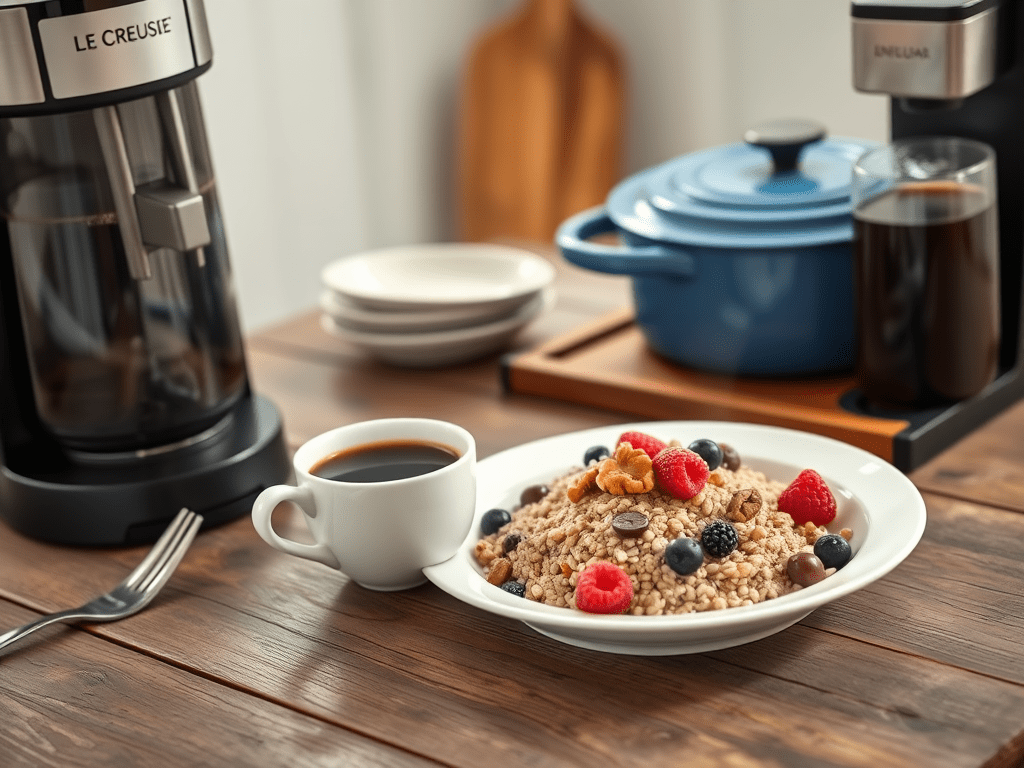
    First, the coffee. I will reclaim my morning dignity with the $89 Ninja 12-cup glass carafe coffee maker. No plastic pod disgrace. I will grind dark roast beans with the solemnity of a monk at matins, using my burr grinder like a weapon forged for righteousness.

    Breakfast will not be an act of contrition but one of redemption: buckwheat groats or steel-cut oats, topped with protein powder, berries, walnuts, and chia seeds—like an edible TED Talk on anti-inflammation.

    Lunch will be a spartan affair: arugula so bitter it judges you, and tofu braised until it forgets it was once bland. Dressing? A holy trinity of balsamic vinegar, spicy mustard, and nutritional yeast. This is not food—it’s penance with flavor.

    Afternoon snack? Greek yogurt, protein powder, and berries. The combination is reliable, unexciting, and doctrinally correct.

    Dinner is where things get unhinged in a good way. I will reach for my Le Creuset Dutch oven (color: colonial blue, attitude: smug) and conjure quinoa with zucchini, fire-roasted tomatoes, nutritional yeast, and a whisper of coconut milk. I will mix in braised tofu until the pan hisses in agreement.

    And yes, there will be protein pancakes, crafted from oats, baking powder, protein powder, eggs (or applesauce, if I’m feeling woke), yogurt, cinnamon, honey, chia seeds, and vanilla extract. The batter will feel like spackle. The result will feel like victory.

    Exercise? Four days of kettlebells instead of five—because joints are finite, and ego is not a medical plan. On my “off” days, I’ll alternate between the exercise bike and power-flow yoga, both of which will mock me in their own way.

    Diet soda? Dead to me. I’ve seen what happens when it wins: a family friend guzzles it by the gallon, her health circling the drain like a cautionary fable. I will swap it out for sparkling water and the moral superiority it confers.

    This is not about orthorexia or self-hate disguised as wellness. This is about escaping confusion, that modern affliction where “healthy” means both everything and nothing. I will eat four times a day. I will consume 160 grams of protein. I will not exceed 2,400 calories. I will fight entropy with routine, bloat with balance, and preserve the image of myself I still—somehow—believe is possible.

  • Borderless Flavors: Food, Power, and the Collapse of Culinary Elitism (College Essay Prompt)

    Borderless Flavors: Food, Power, and the Collapse of Culinary Elitism (College Essay Prompt)

    Essay Prompt (1,700 words):

    In the Chef’s Table: Pizza episode featuring Ann Kim, food becomes a site of transformation, healing, and reinvention. Kim channels her failed acting career into culinary artistry, crafting dishes that express the multiplicity of her identity—as a Korean-American daughter, an artist, and an immigrant success story. Her pizzas become canvases for memory, rebellion, and gratitude, especially toward her parents. Her story is a microcosm of the broader immigrant narrative: negotiating identity, navigating cultural shame, and ultimately reversing the script as the very foods once mocked become culinary gold.

    In this essay, compare the themes in Ann Kim’s story with those in Ugly Delicious (Season 1, Episode “Tacos”) and selected episodes of The Taco Chronicles. How do these shows depict food as more than sustenance—as performance, identity, resistance, and love? In what ways do immigrant chefs and food workers subvert the shame once associated with their cultural foods and assert pride, creativity, and belonging through cuisine?

    Your essay must engage with the visual rhetoric of the shows (tone, music, imagery), analyze the role of food as narrative and identity, and include at least two secondary sources—these may include academic articles on food studies, identity, or immigrant narratives.

    Sample Thesis Statements:

    1. The Performance of the Plate
    Through Ann Kim’s story in Chef’s Table: Pizza, the taco discourse in Ugly Delicious, and the street-food heroism of The Taco Chronicles, we see food function as a performance of identity, where immigrant chefs use culinary artistry to reclaim scorned traditions, express hybrid selves, and find belonging in spaces that once excluded them.

    Mapping components:

    • Culinary performance as identity expression
    • Reversal of cultural shame into pride
    • Belonging through the craft of food

    2. From Shame to Reverence
    Ann Kim, David Chang, and the taqueros of The Taco Chronicles show how the foods once mocked in American lunchrooms are now celebrated on global stages, revealing that cuisine is a powerful tool of cultural revenge, emotional healing, and self-definition for immigrant communities.

    Mapping components:

    • Mockery and marginalization of immigrant food
    • Culinary revenge and cultural redemption
    • Healing and self-definition through cooking

    3. Food as Love, Labor, and Legacy
    While Chef’s Table: Pizza casts Ann Kim’s story as one of artistic reinvention and filial love, Ugly Delicious and The Taco Chronicles emphasize how food binds generations, builds communities, and becomes a labor of love that transforms trauma into legacy.

    Mapping components:

    • Culinary reinvention as personal and artistic legacy
    • Food as intergenerational bridge
    • Labor, love, and storytelling through cuisine

    Sample Outline:


    I. Introduction

    • Hook: A vivid scene from Ann Kim’s episode—placing gochujang on pizza as rebellion and homage.
    • Context: Rise of food documentaries as cultural texts.
    • Thesis: (Insert one of the thesis statements above.)

    II. Ann Kim: The Personal is Culinary

    • Acting failure and identity fragmentation
    • Food as theatrical medium: personas, freedom, risk
    • Immigrant shame turned into culinary power (Korean pizza)
    • Cooking for her parents as an act of redemption and gratitude

    III. Ugly Delicious: The Taco Episode and Cultural Inversion

    • David Chang’s exploration of authenticity and invention
    • The taco as a battleground of legitimacy (Mexican roots vs. American remix)
    • Use of celebrity chefs and taqueros to show class and cultural divides
    • Food once marginalized now used as a symbol of culinary innovation

    IV. The Taco Chronicles: Myth, Ritual, and Regional Pride

    • Focus on specific episodes (e.g., Suadero, Cochinita Pibil)
    • Tacos as sacred practice, generational labor, and social equalizer
    • Visual and musical rhetoric: the taco as folk hero
    • Repeated motif: taqueros breaking class and cultural boundaries with corn, fire, and steel

    V. Comparative Analysis

    • Immigrant identity in all three: reclaiming power through food
    • Emotional resonance: food as apology, tribute, rebellion
    • Different tones: Kim’s cinematic elegance vs. Chang’s irreverent inquiry vs. Chronicles’ reverent folklore

    VI. Counterargument Section

    • Some critics argue that food media romanticizes struggle or sanitizes labor conditions
    • Rebuttal: While these shows may aestheticize food, they also restore dignity to cuisines and cooks historically ignored by dominant culture

    VII. Conclusion

    • Reassert the thesis: food is not just fuel—it is metaphor, memoir, and medium
    • End with a return to a powerful image—perhaps Ann Kim in her pizzeria, cooking for her parents, feeding them not just dinner, but decades of unspoken love

  • Cultural Fusion or Culinary Fraud?

    Cultural Fusion or Culinary Fraud?

    My Critical Thinking students are grappling with the sacred and the sacrilegious—namely, tacos.

    Their final essay asks a deceptively simple question: When it comes to iconic dishes like the taco, should we cling to tradition as if it were holy writ, treating every variation as culinary heresy? Or is riffing on a recipe a legitimate act of evolution—or worse, an opportunistic theft dressed up in aioli?

    To dig into this, we turn to Netflix’s Ugly Delicious, where chef David Chang hosts an episode simply titled “Tacos.” The episode plays like a beautifully constructed argumentative essay by Gustavo Arellano, who dismantles the idea of “Mexican food” as a static monolith. Instead, he presents it as a glorious, shape-shifting culture of flavor—one that thrives because of its openness to the outside world.

    Arellano celebrates Mexico’s culinary curiosity: how Lebanese immigrants brought shawarma and inspired tacos al pastor, a perfect example of cultural fusion that became canon. He contrasts this with the United States’ suspicious, xenophobic posture—a country that historically snarls at outsiders until they open a food truck and sell $2 magic on a paper plate.

    Roy Choi, creator of the legendary Kogi taco trucks, takes this further. He speaks of cooking as a street-level negotiation for dignity: Korean-Mexican fusion forged in the heat of shared kitchens, shaped by the scorn of American culture, and perfected not out of trendiness but out of survival. These tacos aren’t just delicious; they’re resistance with a salsa verde finish.

    But this isn’t just a story of open minds and flavor-blending utopias. There’s also the hard truth of survival and adaptation. Take Lucia Rodriguez, who immigrated from Jalisco and had to recreate her recipes using whatever ingredients she could find in San Bernardino. Her efforts became the foundation of Mitla Cafe, a restaurant still thriving since 1937. It also became the blueprint for Glen Bell—yes, that Glen Bell—who reverse-engineered her food to create Taco Bell, which is to Mexican cuisine what boxed wine is to Bordeaux.

    Still, not all spin-offs are sins. Rosio Sanchez, a Michelin-level chef, began her journey by mastering traditional Mexican food. Only then did she begin to improvise, like a jazz virtuoso honoring the standards before going off-script. Her reinvention is rooted in love, not opportunism. It’s a tribute, not a theft.

    And therein lies the moral fault line: intent, respect, and—let’s not forget—execution. As one student noted with appropriate outrage, white TikTok influencers once rebranded agua fresca as “spa water,” a cultural mugging wrapped in Pinterest aesthetics. And let’s not ignore the corporate vultures who buy beloved local chains only to gut their soul with frozen ingredients and bottom-line mediocrity.

    The lesson? Not all innovation is appropriation. But if your food disrespects its roots, dilutes its meaning, or simply tastes like disappointment, it’s not fusion—it’s a felony.

    The rule is simple: Make great food that honors its lineage and blows people away. Otherwise, what you’re serving is not cuisine. It’s edible disrespect.