Tag: short-story

  • Kleptobite

    Kleptobite

    When I was six years old in 1968, I lived for a year with my grandparents in Belmont Shore. One day after school, a distraught neighbor, a 79-year-old widow named Mrs. Davis, said she locked herself out of her house. Could she borrow me to climb through her bedroom window and unlock the front door for her? With my grandmother’s approval, I did just that. I pretended to be a cat burglar, slithered through the ajar window, and walked through her house. With great curiosity, I examined the interior of the living room.  The floor was covered with a plush, floral-patterned rug. The centerpiece of the room was a large, floral-patterned couch. It was flanked by two wingback chairs, upholstered in a velvety red fabric. Each chair had a lace doily draped over the backrest. A coffee table with spindly legs sat in front of the couch, its surface crowded with an assortment of knickknacks: a porcelain figurine of a ballerina, a small crystal bowl filled with wrapped candies, and a couple of framed photos. The walls were adorned with family portraits, framed cross-stitch samplers, and a large, oval mirror with a gold frame. A grandfather clock ticked methodically in the background, its pendulum swinging with a steady rhythm that made me feel lost in time. Something came over me. Being alone, I felt possessed with a transgressive spirit, and I lifted the candy jar’s lid and, even though I disdained hard candy, I stuffed a butterscotch candy in my pocket before opening the front door for Mrs. Davis. I felt guilty for my act of theft because Mrs. Davis proclaimed me to be her newly-minted hero and handed me a crisp one-dollar bill, which I would later spend on Baby Ruth and Almond Joy Bars. I had difficulty sleeping that night. I worried that Mrs. Davis might feel inclined to take inventory of her candies and discover that one was missing, prompting her to demote me from hero to villain. My career as a thief had come to a quick end. On the other hand, I had a glimpse of what it was like to be a superhero entering houses and saving people in distress. I convinced myself that my career as Superman was just beginning. 

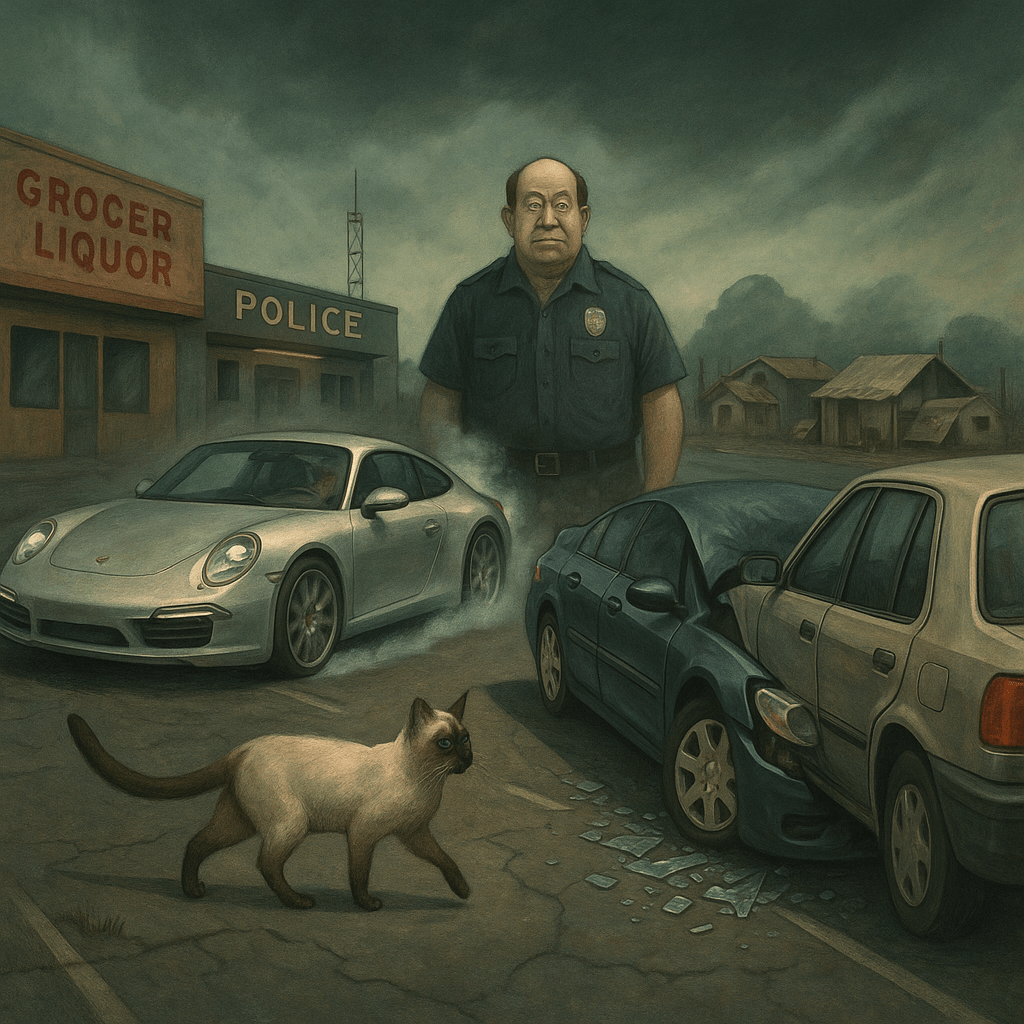
    My act of thievery points us to the lexicon term: Kleptobite–the act of stealing a food item not for its flavor or nutritional value, but purely for the electric thrill of transgression. A Kleptobite is less about appetite and more about theater—the petty larceny of a Werther’s Original lifted like a crown jewel, the pilfered peppermint filched under the nose of a trusting septuagenarian, not for the tongue, but for the adrenaline. Often committed in plush-carpeted living rooms with doilies and ticking clocks, this culinary crime wave is fueled by a cocktail of boredom, childhood hubris, and vague superhero delusions. Side effects include guilt-induced insomnia, paranoia about candy audits, and overcompensating acts of heroism.

  • The Curse of the Shamewich

    The Curse of the Shamewich

    I remember the day well. I was six years old as I trudged to Katherine R. Smith Elementary in San Jose, California, with three boys who would’ve made excellent talent scouts for the smell police. Usually, a Hostess Fruit Pie or pink Sno Ball made lunch a bright spot in my otherwise bleak existence, but not today. Today, the stench of rotten tuna wafting from my Captain Kangaroo lunch box was so potent it could’ve been classified as a biological weapon. My companions, gagging and accusing me of harboring a dead sea creature, demanded an explanation.

    Finally, I surrendered. We stopped in a field separating the Stop & Go Market from the school, and I opened the lunch box. There it was: the festering tuna sandwich, now a slimy, mayonnaise-coated abomination that had broken free from its plastic baggie and redecorated the inside of my lunchbox like a Jackson Pollock painting from a nightmare. We stared in horror at the black tuna juices, streaks of inky malevolence, and chunks of something unholy smeared all over the tin pail’s lining.

    “How could you eat that?” one boy asked, his voice a mix of pity and revulsion. I shrugged, resigned to my fate. It was my lunch, after all. So, I closed the lunch box, sealing the miasma inside, and we continued our grim march to school. I placed my lunch box alongside everyone else’s in the designated coat closet, a ticking olfactory time bomb among the innocent.

    Then came the Duck-and-Cover Drill. We crawled under our desks, awaiting the end-of-the-world announcement from the principal. But instead of nuclear annihilation, Mrs. Corey and the entire class were assaulted by a stench so vile it made everyone question their will to live. “Who brought a dead creature into my classroom?” she demanded, her forehead crinkling, nostrils flaring. Students squeezed their noses and made mock gagging noises, adding to the apocalyptic ambiance.

    The boys I’d walked to school with pointed at my lunch box, the source of the olfactory Armageddon. Mrs. Corey approached it like a bomb disposal expert, slowly opening the lid to reveal the horror within. She gazed at the contents as if she had just uncovered a portal to the underworld. “Did your mom pack this?” she asked, her voice tinged with disbelief and horror.

    I nodded. Mrs. Corey winced, a look of cosmic condemnation crossing her face, as if my entire bloodline was responsible for this culinary atrocity. She closed the lunch box with a finality that suggested she was sealing away a great evil, handed it to the teacher’s aide to place outside, and announced that my food was unfit for consumption. She then solicited volunteers to donate a part of their lunch to me, the pariah of the playground.

    Too mortified to eat, I sat on my blanket, avoiding the curious and horrified stares of my classmates. My appetite was dead, much like the tuna that had ruined my day. I remained on my blanket, and imagined I looked like David Draper in that Monkees episode. Rather than be a pathetic figure in need of charity, I would be a vision of glory and strength, the focal point of everyone’s admiration. My fantasy of walking like a Skyscraper among the Shacks of Mediocrity at the beach was interrupted by my stomach growling in protest at the cruel hand fate had dealt me.

    Little did I know, I had been cursed by the Shamewich–the deep, haunting sense of culinary disgrace one feels when a packed lunch goes rancid, rogue, or just plain weird—and becomes the epicenter of public ridicule. A Shamewich isn’t always a sandwich, but it’s always a moment—a sensory trauma in which your identity is temporarily replaced by the aroma of failure.

    It’s the rank stench of black tuna juice wafting from your Captain Kangaroo lunchbox. It’s the entire class gagging under their desks while your lunch gets escorted out like a radioactive crime scene. A Shamewich is not just what you eat—it’s who you become in the eyes of your peers: the one whose mother packed a biohazard in bread.

    Symptoms include:

    • Desire to sink into the floor or self-immolate
    • Permanent suspicion of mayonnaise
    • Fantasies of reinvention as a muscle-bound hero from The Monkees
    • Never bringing tuna to school again unless you’re ready to own the nickname “Fish Bomb”

    A Shamewich leaves an emotional stain long after the mayonnaise has been wiped clean. It’s not just a bad lunch—it’s a rite of passage.

  • Snackjection

    Snackjection

    When I was five, my father constructed a treehouse that stood like a beacon of childhood ambition in the Flavet Villages Apartments in Gainesville, Florida. It was a fortress, a palace, a skyscraper reaching for the heavens—at least in my young mind. In this realm of wood and nails, I sought to assert my dominion, and what better way than with the power of Sun-Maid raisins? One fateful day, I lured Tammy Whitmire to ascend the tree’s wooden slats by brandishing the ultimate weapon: a box of Sun-Maid raisins. This wasn’t just any box; it featured the Sun-Maiden herself, a radiant figure holding a colossal tray of grapes. Her red bonnet and the halo of yellow light marked with white triangles around her head made her look like the Great Raisin Angel, a deity of dried fruit. Tammy, captivated by the angelic glow of the Sun-Maiden, climbed up to join me. Victory seemed imminent until Zane Johnson, lurking in a nearby tree, emerged from a leafy cluster and shattered my triumph. With a smug grin, he declared he had something far superior to my measly raisins: Captain Kangaroo Cookies. These weren’t just cookies; they were double-fudge, cream-centered cookie sandwiches, the culinary equivalent of Excalibur. In the brutal marketplace of childhood affections, my raisins didn’t stand a chance. Tammy, seduced by the allure of Zane’s superior snacks, descended my tree faster than a squirrel on espresso and sprinted to Zane’s treehouse. There, they feasted on the decadent cookies, leaving me alone with my pitiful box of raisins. My reign had ended before it began. Crushed by the betrayal, I reclined in my treehouse and sobbed myself to sleep. But the universe wasn’t done with me yet. I awoke hours later to a stinging horror: my body was swarmed by red fire ants, drawn to the sweet raisins. My skin felt like it had been lashed by a thousand stinging nettles. In agony, I bolted to my apartment where my mother, horrified, gave me a scalding bath to rid me of the ants. In the battle between Sun-Maid Raisins and Captain Kangaroo Cookies, the cookies had won, and I had learned a painful, itchy lesson about the power of snacks and the fickleness of friends.

    This traumatic memory was my introduction to Snackjection–the  soul-bruising humiliation that occurs when your lovingly curated snack—especially one featuring wholesome packaging like a bonneted raisin maiden—is publicly rejected in favor of a rival’s more brand-name, sugar-slicked treat. Often inflicted during the high-stakes snack diplomacy of childhood, Snackjection delivers a one-two punch: the collapse of your social standing and the realization that Captain Kangaroo cookies wield more romantic sway than your dried fruit ever will.

    Symptoms may include:

    • Sudden loss of confidence in your snack brand identity
    • Emotional exile to a solo treehouse
    • Uncontrollable sobbing followed by an insect siege
    • Existential questioning of why the Sun-Maid looks holy but delivers only heartbreak

    Snackjection is the snacktime equivalent of being left at the altar for someone with a lunchbox full of TV tie-in sugar bombs.

  • The Cake and the Crumbs: A Toddler’s Origin Story of Maximalust

    The Cake and the Crumbs: A Toddler’s Origin Story of Maximalust

    I was a bright-eyed two-year-old growing up in the surreal surroundings of VA housing in Gainesville, Florida. My home, a repurposed army barracks known as Flavet Villages, was nestled near an alligator swamp where the air was thick with the smell of low-tide alligator dung, a stench so potent it could knock out a grown man. Yet, amidst this pungent atmosphere lay an enchanting routine: visiting a Mynah bird perched on the same tree branch in a nearby forest. This mystical bird, almost a local deity, engaged in nightly conversations with my father and me, its wisecracking voice echoing in the twilight. On my second birthday, my father, ever the hero, carried me on his shoulders for our evening visit to the Mynah bird. As we journeyed through the swampy landscape, the scent of celebration wafted from our small apartment, where my mother was busily preparing birthday decorations. In the distance, the melancholic tune of “Bali Ha’i” drifted from a neighbor’s radio, adding a cinematic touch to our adventure. We returned home, greeted by the excitement of neighbors and the promise of birthday cake. The neighbor’s child, a frail wisp of a boy who looked like he might be blown away by the next strong gust of wind, sat in his high chair, a throne of pity contrasting starkly with my robust presence. I, the towering giant of toddlers, was presented with a slice of cake so large it could double as a life raft. The cake, an Everest of chocolate decadence, was all mine to conquer. Then, I glanced at the poor child beside me. His mother, apparently convinced he was a baby bird rather than a human toddler, meticulously pinched off cake crumbs and fed them to him out of the palm of her hand. Each crumb, delivered with the precision of a jeweler setting a diamond, highlighted the stark disparity between my cake feast and his crumb diet. My eyes widened in disbelief. Was this real? Was I witnessing a Dickensian nightmare unfold at my birthday party? My horror magnified as I chewed through my colossal slice of cake, each bite a triumphant celebration of my toddlerhood. Meanwhile, the other child nibbled at his crumbs, a tragic figure resigned to his fate. In my young mind, the situation escalated to epic proportions. I envisioned myself as a benevolent king, feasting on a banquet, while the other boy was a destitute peasant, scrabbling for scraps in my opulent court. That moment, seared into my memory, became a symbol of the great injustices of the world. How could a child, on my birthday no less, be subjected to such cruel cake inequity? The image of his mother, delicately inserting crumbs into his mouth, haunted me like a ghost of birthdays past. It was as if I had witnessed the greatest travesty of my young life, a Shakespearean tragedy played out in frosting and crumbs. Years have passed, and many birthdays have came and went, but the memory remains vivid. I have tasted many cakes since then, each one a reminder of that fateful day when I first encountered true pity. In my exaggerated recollection, the event has grown more fantastical. The crumbs have became smaller, my cake slice grander, and the emotional weight of that moment ever heavier. So here I stand, a veteran of countless birthday celebrations, carrying with me the bittersweet lesson that not all cake experiences are created equal. And perhaps, in my heart of hearts, I’ve learned to savor every slice of cake with the gratitude of one who knows that somewhere, someone might be living on crumbs.

    The deeply embedded, early-life memory resulted in the belief that more food is always better—more validating, more righteous, more deserved. Born in toddlerhood and fed by birthday cakes the size of rafts, Maximalust is not just a craving—it’s a worldview. It equates abundance with virtue and scarcity with shame. It’s the toddler id that sees a normal portion and thinks, “Who hurt you?” It’s the pathology that makes buffets feel like moral high ground and crumbs like moral failure. Maximalust is the primal belief that to be loved is to be laden with frosting.

    In addition to Maximalust, I discovered the notion of Crumbpassion–the emotional dissonance that arises when your plate is Mount Olympus and theirs is a cautionary tale. It is not kindness—it’s existential discomfort wrapped in frosting empathy. The crumb-fed child becomes a Dickensian ghost, a living allegory of restraint, and you, the overfed protagonist, must reckon with the unfairness of cake distribution and your own frosting-fueled privilege.

    Together, Maximalust and Crumbpassion form a tragicomic framework of early appetite mythology—a toddler’s origin story of food, power, and pity that lives rent-free in your adult relationship with dessert.

  • Floating on FOMO: My Personal Waterbed Fiasco

    Floating on FOMO: My Personal Waterbed Fiasco

    I spent my early childhood in VA housing—decommissioned army barracks optimistically rebadged “Flavet Villages”—in Gainesville, Florida. These were no-frills dwellings nestled near an alligator swamp and a patch of forest where a Mynah bird with the patience of a Zen master perched on the same branch every evening like it was punching a time clock. It became a ritual: before bed, my father and I would wander out to talk with the bird, who responded with eerie, robotic mimicry, as if channeling some extraterrestrial intelligence trapped in a tropical feather suit.

    At dusk, the low tide would pull back just enough to let the aroma of fermented alligator dung waft through the air—a stench so strong it could thin paint. Most people would gag. I inhaled deeply. Something about that swampy, putrid tang made me feel alive, elemental, cosmically tethered. It wasn’t beautiful, but it was real. And standing beside my father, breathing in swamp funk and chatting with a talking bird, I felt no lack. No longing. No itch. I was in paradise, the kind not found in brochures or Instagram feeds—though we didn’t yet have the latter to weaponize our dissatisfaction.

    Then came I Dream of Jeannie in 1965, and with it, the slow-burn tragedy of FOMO. Barbara Eden lived inside a jewel-toned genie bottle—a plush, circular sanctum upholstered in royal purples and pinks, encrusted with glass baubles and satin pillows. It was luxury wrapped in fantasy, and I wanted in. Badly. Suddenly, my swamp lost its sparkle. I began to ache—not for something real, but for something better. Something else.

    The cruelest part? Jeannie’s bottle was a repainted Jim Beam whiskey decanter. A piece of throwaway Americana converted into a portal of impossible longing. That detail says everything: desire is often just repackaged delusion. And once I tasted that kind of fantasy, the swamp and the Mynah bird—once holy—became mere prelude.

    By 1974, I was barely thirteen and neck-deep in my search for substitutes. The object of obsession that year? Waterbeds. Several friends and neighbors had them, and after a few demo flops onto their undulating surfaces, I became convinced that waterbeds were the gateway to pleasure, sophistication, and sensual repose. Surely, I reasoned, the waterbed was Jeannie’s bottle in disguise—fluid, decadent, vaguely erotic.

    I lobbied my parents hard. They relented. Victory tasted like vinyl and faint mildew.

    What followed was not paradise but an ongoing science experiment in disappointment. The temperature was always wrong—Sahara one night, Arctic the next. It leaked with the consistency of a bad marriage. The smell? Somewhere between wet dog and pond scum. And then there was the sensation: if I moved, the bed retaliated. A slow-motion punch of resistance, as if Poseidon himself were shoving back. I wasn’t cradled—I was stalked by unseen waves. One night it leaked so catastrophically that my bedroom floor bowed like a sinking schooner. I woke up in what felt like Act II of Hurricane Katrina: The Bedroom Years.

    This, I realized, was the fool’s errand of FOMO: chasing after glossy substitutes for longing we barely understand. Jeannie’s bottle wasn’t just a dream—it became the prototype for every ill-fated quest for magic in mundane form. Every waterbed, every gadget, every trend promising comfort, coolness, or connection is just another glittering bottle with no genie inside.

    The Mynah bird never promised me anything. It never asked me to chase or wish or want. It just sat, unbothered, mimicking the world as it was. And perhaps that’s what I miss most: the pre-FOMO clarity of being content beside a swamp, before marketing told me I was supposed to want more.

  • The Night Irony Beat the Monkees

    The Night Irony Beat the Monkees

    On the night of October 16, 1967—just twelve days shy of my sixth birthday—the universe shoved my head in the toilet and flushed. I could hear the sound of childhood innocence circling the drain. Up to that moment, I was a full-time subscriber to the gospel of positive thinking. Life was fair. Good guys won. If you tried hard and smiled big, the world smiled back. Norman Vincent Peale had basically written the owner’s manual for my inner world.

    That illusion shattered during an episode of The Monkees.

    The episode was called “I Was a 99-lb. Weakling,” and I had parked myself cross-legged in front of the TV, popcorn in lap, expecting hijinks and musical numbers. Instead, I got a masterclass in betrayal and the savage laws of ironic detachment. My hero, Micky Dolenz—the clumsy, lovable soul who made failure seem like a jazz solo—was brutally outmuscled by Bulk, a flexing monolith of a man played by real-life Mr. Universe, Dave Draper. Bulk didn’t walk—he heaved himself through scenes, a sculpted rebuke to every noodle-armed dreamer in America.

    And right on cue, Brenda—the beachside Aphrodite with hair that shimmered like optimism—dropped Micky like a sack of kittens for Bulk, never once looking back.

    This wasn’t just sitcom plot; this was emotional sabotage. I watched, frozen, as Micky enrolled in “Weaklings Anonymous,” embarking on a training montage so grotesquely absurd it veered into tragedy. He lifted dumbbells the size of moon rocks. He drank something called fermented goat milk curd, a substance that looked like it had been skimmed off a medieval wound. He even sold his drum set—his very soul—to chase the delusion that muscles would win her back.

    And then came the twist.

    Just as Micky completed his protein-fueled crucible, Brenda changed her mind. She didn’t want Bulk anymore. She wanted a skinny guy reading Remembrance of Things Past. A man whose pecs had clearly never met resistance training, but whose inner life pulsed with French ennui. The entire narrative pirouetted into absurdity, and I watched my belief system crack like a snow globe under a tire.

    That’s when I first met irony.

    Not the schoolyard kind where someone says “nice shirt” and means the opposite—but the bone-deep realization that the universe isn’t fair, that effort doesn’t guarantee reward, and that life doesn’t play by the moral arithmetic taught in Saturday morning cartoons.

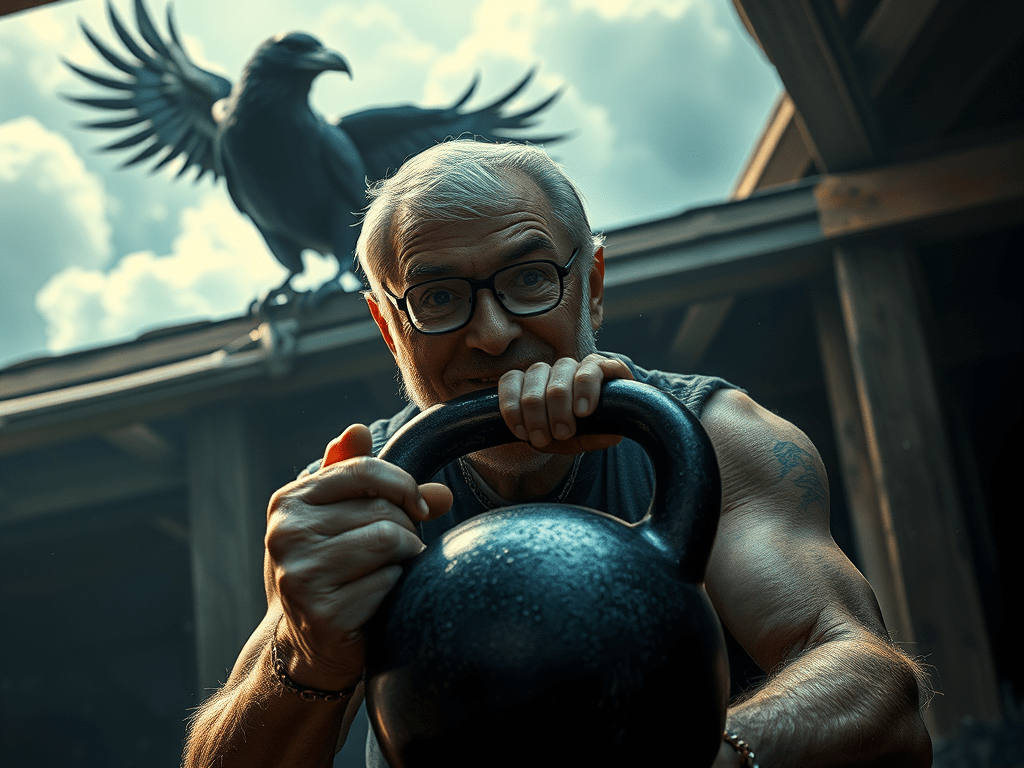
    It was that night I realized muscles weren’t the secret to power—language was. Not curls, not crunches, but craft. Syntax. Prose so sharp it could reroute the affections of beach goddesses and turn the tide of stories. That was the moment my childish faith in “try hard and you’ll win” collapsed, and in its place rose a darker, more potent creed: the pen is mightier not just than the sword, but than the bench press.

    That night, my writing life began—not with celebration, but with betrayal. A glittering lesson delivered in the cruel, mocking tone only irony can wield. And though it hurt, I never forgot it. Because the truth is: irony teaches faster than optimism. And it remembers longer, too.

  • Johnny Carson Was Prozac Before Big Pharma Perfected the Formula

    Johnny Carson Was Prozac Before Big Pharma Perfected the Formula

    I’m listening to Carson the Magnificent on Audible, Bill Zehme’s lush tribute to the King of Late Night. Zehme is a skilled writer, no doubt—but he suffers from an affliction familiar to many stylists: chronic purple prose. His descriptions don’t sparkle; they sprawl. Reading him is like eating an entire wedding cake when a slice would have sufficed. He’s so enamored with his own flourishes that Johnny Carson occasionally vanishes behind the velvet curtain of Zehme’s adjectives.

    Still, what he lacks in restraint, he makes up for in ardor. Zehme clearly loves his subject, and his affection pulses through the pages. Carson emerges as a sort of secular priest of television, delivering nightly benedictions of laughter for thirty years. He wasn’t edgy or groundbreaking—he was dependable, a soothing presence at 11:30 PM, like a warm bath or a glass of room-temperature white wine. He was comfort food for the collective American psyche, Prozac before Big Pharma perfected the formula. A totem from a time when a single man in a suit could stand at the crossroads of politics, culture, and showbiz and crack wise to a nation that hadn’t yet shattered into a million niche audiences.

    I was never much of a Carson acolyte myself. Dick Cavett had the brain. Letterman had the bite. Carson? He had commercials. What I remember most is that the show seemed designed to lull you into a trance of polite chuckles and bland banter. It wasn’t bad, exactly—it was just relentlessly there. Watching The Tonight Show felt less like a choice and more like a ritual, a nightly genuflection before the glow of the TV set. People tuned in not out of excitement, but out of habit. He was the head caveman, murmuring jokes by firelight, while the rest of us nodded and laughed, grateful to not be alone in the dark.

    To skip Carson was to risk social exile. You didn’t want to be the one who missed what the country’s collective subconscious had passively absorbed.

    As I listen to Carson the Magnificent, I find myself pining—not for Carson, but for the era he ruled. A time when a singular voice could still cut through the noise and hold the country’s wandering attention. That cultural unity is gone now, and maybe for the best, but I can’t help mourning it a little.

    Zehme will, I’m sure, delve into the darker recesses of Carson’s psyche—and I’m ready for it. I’ve already mainlined The Larry Sanders Show three times, with a fourth round likely on the way. That show remains the gold standard for peeling back the sequined curtain to reveal the neurotic, solipsistic soul of late-night television. If Zehme gets even halfway there, I’ll consider the audiobook time well spent—even if I have to wade through another paragraph that reads like a thesaurus suffered a head injury.

  • The Ghost in Aisle Nine: Remembering Chris Grossman

    The Ghost in Aisle Nine: Remembering Chris Grossman

    Back in the Reagan era, when I was a college kid working part-time at Jackson’s Wine & Spirits in Berkeley, I shared long, dusty shifts with a man named Chris Grossman—a wine salesman whose last name, ironically, matched neither his physical presence nor his temperament. Chris was lanky, six foot four, and moved with the grace of a man perpetually on the verge of tripping over his own limbs. He had a face only a Freudian could love: aquiline nose, dark beard, black-framed glasses smudged with fingerprints, and a mop of dark curly hair that looked like it had lost a long battle with a pillow. A pencil was always tucked behind his ear, as if at any moment he might be called upon to draft blueprints for a submarine.

    To customers, Chris was a savant in work shirts with the sleeves rolled just so—half wine whisperer, half philosopher of Zinfandel. He had an uncanny ability to match a Pinot Noir to a personality type, like some sort of boozy Myers-Briggs. The regulars adored him. They trusted his palate, his calm authority, his encyclopedic knowledge of terroir. What they didn’t know—and what I only discovered gradually—was that once he stepped off the floor, he disappeared.

    Chris Grossman had no friends. Not one. He was social the way a vending machine is social—polite, efficient, devoid of emotional commitment. Once, during a lull in business, he confided that he’d had a girlfriend, briefly, years ago. He spoke of it as though he’d survived a hostage crisis. The constant negotiation, the emotional bookkeeping—it exhausted him. “I’m too selfish to pretend otherwise,” he said with an eerie clarity. “I’d only make her miserable.” There was something almost noble in his blunt self-awareness, as if he’d spared both himself and others the slow drip of mutual disappointment.

    His father, he once told me, had been a brilliant but frostbitten physician, a man incapable of affection. Chris, I think, carried his father’s circuitry—a brain tuned for analysis, not empathy. Still, he wasn’t bitter. He wasn’t even rude. If he hated humanity, he kept it on a low simmer, tucked behind a mild smile and a firm handshake.

    We both left Jackson’s in the late ’80s. I moved to the California desert to lecture on writing and lose my illusions in the faculty lounge. Chris stayed local, selling stereos on Shattuck Avenue for places like The Good Guys and Circuit City. He made good money and spent exactly none of it on companionship. No wife, no kids, no pets, not even a ficus. Once a year he drove his Triumph convertible down to Carmel for a vintage car rally, then disappeared back into his cocoon.

    I think about him more than I should. Forty years have passed, and still, his silhouette lingers. Why? Maybe because I recognize myself in him. The difference is, I got married—and in doing so, outsourced my social life to someone with actual initiative. My wife arranges our dinners, our vacations, our tenuous grasp on community. She reminds me to be human. And yet, even she knows I’m a recluse at heart. She gently suggests I see more of my friends—or at least have more friends—so she doesn’t have to absorb every neurotic spiral I produce. Fair enough.

    I’m 63 now. Chris, if he’s still around, must be pushing seventy. I sometimes wonder how he’s weathered the years, whether the silence that once comforted him has curdled into something more sinister. But I also suspect he made peace with his solitude. He looked at the world, with all its needy, buzzing, soul-sucking demands, and chose the quieter suffering. Not because he was brave or broken, but because he knew himself too well to fake it.

    I hope he’s okay. I really do. Solitude, like alcohol, is dose-dependent. For some, it’s a meditative stillness. For others, it’s a slow erosion. I don’t know which side of the line Chris landed on. But wherever he is, I raise a glass to him—alone, perhaps, but not forgotten.

  • The Reuben Sandwich Standoff

    The Reuben Sandwich Standoff

    In 1983, I was a humble college student working at Jackson’s Wine & Spirits, conveniently located next to the illustrious Claremont Hotel in Berkeley. This wasn’t just any wine store—it had a deli too, where the drama unfolded like a soap opera on rye bread. 

    One fateful afternoon, a man in his fifties, who had the unmistakable air of a New Yorker transplanted to the west coast, waltzed in and ordered a Reuben sandwich.

    Enter George, our deli manager and fellow New Yorker, who was a 300-pound titan with a penchant for thick black-framed glasses and a cigar stub that seemed permanently fused to his lips. George was the kind of guy who could turn ordering a sandwich into a WWE smackdown. George, in his infinite deli wisdom, asked the customer what kind of cheese he wanted on his Reuben.

    This question, apparently, was a direct assault on the customer’s very essence. With all the drama of a Shakespearean tragedy, the customer launched into an impassioned monologue. “A Reuben sandwich is rye bread, corned beef, Swiss cheese, sauerkraut, and Russian dressing!” he proclaimed, as if he were revealing the secret formula to eternal life.

    George, unimpressed by this unsolicited lecture and clearly unamused by the customer’s attempt to rewrite Reuben history, repeated his question: “What kind of cheese do you want?”

    The customer’s face turned the color of a cherry tomato as he launched into his tirade once more, listing the sacred ingredients with the fervor of a man defending his homeland. The two New Yorkers engaged in an epic standoff, a duel of stubbornness, each more entrenched in their own version of Reuben orthodoxy.

    The debate reached such a fever pitch that the customer exploded in a flurry of expletives that could have given a sailor pause and stormed out, declaring he would never do business with a deli that dared question his Reuben expertise.

    To this day, I marvel at the sheer audacity of these two colossal egos. One was denied his lunch, and the other was deprived of a sale, all because neither would concede an inch. It was a lesson in culinary pride and stubbornness—a Reuben sandwich standoff for the ages.

  • I found my true life purpose at a McDonald’s in Mojave

    I found my true life purpose at a McDonald’s in Mojave

    Coming home from Mammoth last summer, I had naively believed that my children would be sated from their breakfast at the McDonald’s in Bishop, allowing us to drive straight home without further interruptions.

    But by the time we reached Mojave around noon, my daughters swore they would perish on the spot if they didn’t have lunch immediately. So, we found ourselves pulling into yet another McDonald’s in Mojave. The thought of visiting two McDonald’s in a single day felt like a deep plunge into the abyss of self-debasement, a loss of dignity on par with other legendary acts of self-humiliation. I began to think this might be the modern-day equivalent of wearing a sandwich board that reads, “I have given up.” Yet, amid my indignation, I secretly thanked the universe for my daughters’ insatiable appetites because I desperately needed to use the bathroom.

    However, fate—or rather the cruel architects of this establishment—had installed combination locks on the bathroom doors, and the workers guarding these sacred numbers were about as generous with them as a dragon hoarding gold. I had to persuade them that my family of four would be forking over more than fifty dollars for the world’s most lackluster cuisine, and thus, I was surely deserving of the golden code.

    After securing the coveted combination, I made a beeline for the bathroom, practically kicking the door open like a cowboy in a saloon. The relief was so immense that it felt as if I had just liberated a small nation from tyranny. Afterward, I returned to the counter to wait for our food, feeling light as a feather. As I stood there, I observed dozens of men rattling the bathroom doorknob with the desperation of someone who had just spotted an oasis in the desert, only to find it locked. Their faces were contorted in pain, and their eyes begged for mercy but the cruel workers were unmoved.

    Seeing their plight, I realized I had the power to make a difference. I could be their savior. In an act of defiance against the oppressive bathroom code policy, I began shouting the combination with a gusto that could only be described as revolutionary. “Two-four-six-eight!” I bellowed, as if each digit was a bullet in the war against bladder injustice. The relief that spread across their faces was almost spiritual. I had become a mythical prophet, a modern-day Moses leading the oppressed to the Promised Land of Bladder Relief.

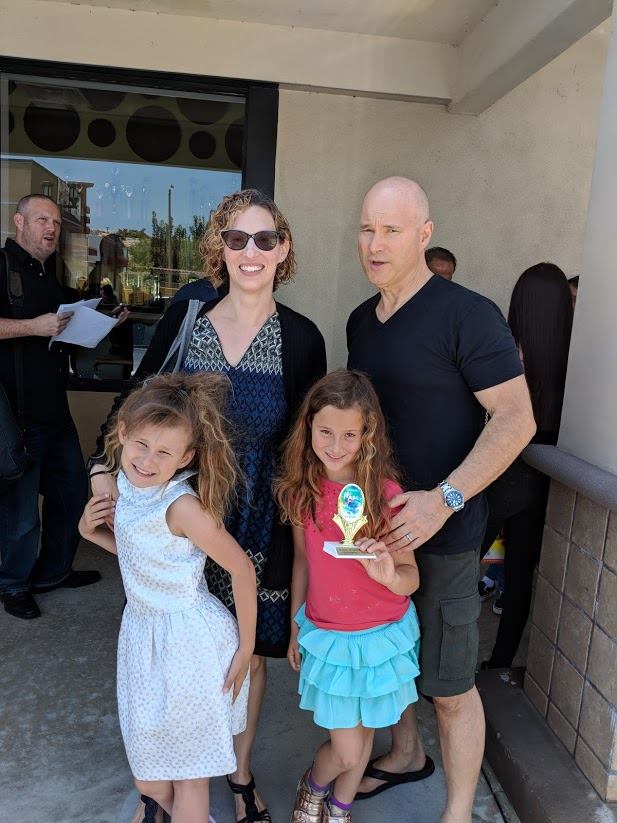
    Meanwhile, as I basked in the glory of my newfound role, my wife and daughters sank deeper into their chairs, their faces a mix of horror and embarrassment. They pretended not to know me, as if I were some wild-eyed lunatic who had wandered in from the Mojave Desert. But I didn’t care. I had found my spiritual calling, even if it was in the unlikeliest of places—shouting bathroom codes at a McDonald’s in Mojave.