Tag: short-story

  • The Cake and the Crumbs: A Toddler’s Origin Story of Maximalust

    The Cake and the Crumbs: A Toddler’s Origin Story of Maximalust

    I was a bright-eyed two-year-old growing up in the surreal surroundings of VA housing in Gainesville, Florida. My home, a repurposed army barracks known as Flavet Villages, was nestled near an alligator swamp where the air was thick with the smell of low-tide alligator dung, a stench so potent it could knock out a grown man. Yet, amidst this pungent atmosphere lay an enchanting routine: visiting a Mynah bird perched on the same tree branch in a nearby forest. This mystical bird, almost a local deity, engaged in nightly conversations with my father and me, its wisecracking voice echoing in the twilight. On my second birthday, my father, ever the hero, carried me on his shoulders for our evening visit to the Mynah bird. As we journeyed through the swampy landscape, the scent of celebration wafted from our small apartment, where my mother was busily preparing birthday decorations. In the distance, the melancholic tune of “Bali Ha’i” drifted from a neighbor’s radio, adding a cinematic touch to our adventure. We returned home, greeted by the excitement of neighbors and the promise of birthday cake. The neighbor’s child, a frail wisp of a boy who looked like he might be blown away by the next strong gust of wind, sat in his high chair, a throne of pity contrasting starkly with my robust presence. I, the towering giant of toddlers, was presented with a slice of cake so large it could double as a life raft. The cake, an Everest of chocolate decadence, was all mine to conquer. Then, I glanced at the poor child beside me. His mother, apparently convinced he was a baby bird rather than a human toddler, meticulously pinched off cake crumbs and fed them to him out of the palm of her hand. Each crumb, delivered with the precision of a jeweler setting a diamond, highlighted the stark disparity between my cake feast and his crumb diet. My eyes widened in disbelief. Was this real? Was I witnessing a Dickensian nightmare unfold at my birthday party? My horror magnified as I chewed through my colossal slice of cake, each bite a triumphant celebration of my toddlerhood. Meanwhile, the other child nibbled at his crumbs, a tragic figure resigned to his fate. In my young mind, the situation escalated to epic proportions. I envisioned myself as a benevolent king, feasting on a banquet, while the other boy was a destitute peasant, scrabbling for scraps in my opulent court. That moment, seared into my memory, became a symbol of the great injustices of the world. How could a child, on my birthday no less, be subjected to such cruel cake inequity? The image of his mother, delicately inserting crumbs into his mouth, haunted me like a ghost of birthdays past. It was as if I had witnessed the greatest travesty of my young life, a Shakespearean tragedy played out in frosting and crumbs. Years have passed, and many birthdays have came and went, but the memory remains vivid. I have tasted many cakes since then, each one a reminder of that fateful day when I first encountered true pity. In my exaggerated recollection, the event has grown more fantastical. The crumbs have became smaller, my cake slice grander, and the emotional weight of that moment ever heavier. So here I stand, a veteran of countless birthday celebrations, carrying with me the bittersweet lesson that not all cake experiences are created equal. And perhaps, in my heart of hearts, I’ve learned to savor every slice of cake with the gratitude of one who knows that somewhere, someone might be living on crumbs.

    The deeply embedded, early-life memory resulted in the belief that more food is always better—more validating, more righteous, more deserved. Born in toddlerhood and fed by birthday cakes the size of rafts, Maximalust is not just a craving—it’s a worldview. It equates abundance with virtue and scarcity with shame. It’s the toddler id that sees a normal portion and thinks, “Who hurt you?” It’s the pathology that makes buffets feel like moral high ground and crumbs like moral failure. Maximalust is the primal belief that to be loved is to be laden with frosting.

    In addition to Maximalust, I discovered the notion of Crumbpassion–the emotional dissonance that arises when your plate is Mount Olympus and theirs is a cautionary tale. It is not kindness—it’s existential discomfort wrapped in frosting empathy. The crumb-fed child becomes a Dickensian ghost, a living allegory of restraint, and you, the overfed protagonist, must reckon with the unfairness of cake distribution and your own frosting-fueled privilege.

    Together, Maximalust and Crumbpassion form a tragicomic framework of early appetite mythology—a toddler’s origin story of food, power, and pity that lives rent-free in your adult relationship with dessert.

  • Floating on FOMO: My Personal Waterbed Fiasco

    Floating on FOMO: My Personal Waterbed Fiasco

    I spent my early childhood in VA housing—decommissioned army barracks optimistically rebadged “Flavet Villages”—in Gainesville, Florida. These were no-frills dwellings nestled near an alligator swamp and a patch of forest where a Mynah bird with the patience of a Zen master perched on the same branch every evening like it was punching a time clock. It became a ritual: before bed, my father and I would wander out to talk with the bird, who responded with eerie, robotic mimicry, as if channeling some extraterrestrial intelligence trapped in a tropical feather suit.

    At dusk, the low tide would pull back just enough to let the aroma of fermented alligator dung waft through the air—a stench so strong it could thin paint. Most people would gag. I inhaled deeply. Something about that swampy, putrid tang made me feel alive, elemental, cosmically tethered. It wasn’t beautiful, but it was real. And standing beside my father, breathing in swamp funk and chatting with a talking bird, I felt no lack. No longing. No itch. I was in paradise, the kind not found in brochures or Instagram feeds—though we didn’t yet have the latter to weaponize our dissatisfaction.

    Then came I Dream of Jeannie in 1965, and with it, the slow-burn tragedy of FOMO. Barbara Eden lived inside a jewel-toned genie bottle—a plush, circular sanctum upholstered in royal purples and pinks, encrusted with glass baubles and satin pillows. It was luxury wrapped in fantasy, and I wanted in. Badly. Suddenly, my swamp lost its sparkle. I began to ache—not for something real, but for something better. Something else.

    The cruelest part? Jeannie’s bottle was a repainted Jim Beam whiskey decanter. A piece of throwaway Americana converted into a portal of impossible longing. That detail says everything: desire is often just repackaged delusion. And once I tasted that kind of fantasy, the swamp and the Mynah bird—once holy—became mere prelude.

    By 1974, I was barely thirteen and neck-deep in my search for substitutes. The object of obsession that year? Waterbeds. Several friends and neighbors had them, and after a few demo flops onto their undulating surfaces, I became convinced that waterbeds were the gateway to pleasure, sophistication, and sensual repose. Surely, I reasoned, the waterbed was Jeannie’s bottle in disguise—fluid, decadent, vaguely erotic.

    I lobbied my parents hard. They relented. Victory tasted like vinyl and faint mildew.

    What followed was not paradise but an ongoing science experiment in disappointment. The temperature was always wrong—Sahara one night, Arctic the next. It leaked with the consistency of a bad marriage. The smell? Somewhere between wet dog and pond scum. And then there was the sensation: if I moved, the bed retaliated. A slow-motion punch of resistance, as if Poseidon himself were shoving back. I wasn’t cradled—I was stalked by unseen waves. One night it leaked so catastrophically that my bedroom floor bowed like a sinking schooner. I woke up in what felt like Act II of Hurricane Katrina: The Bedroom Years.

    This, I realized, was the fool’s errand of FOMO: chasing after glossy substitutes for longing we barely understand. Jeannie’s bottle wasn’t just a dream—it became the prototype for every ill-fated quest for magic in mundane form. Every waterbed, every gadget, every trend promising comfort, coolness, or connection is just another glittering bottle with no genie inside.

    The Mynah bird never promised me anything. It never asked me to chase or wish or want. It just sat, unbothered, mimicking the world as it was. And perhaps that’s what I miss most: the pre-FOMO clarity of being content beside a swamp, before marketing told me I was supposed to want more.

  • The Night Irony Beat the Monkees

    The Night Irony Beat the Monkees

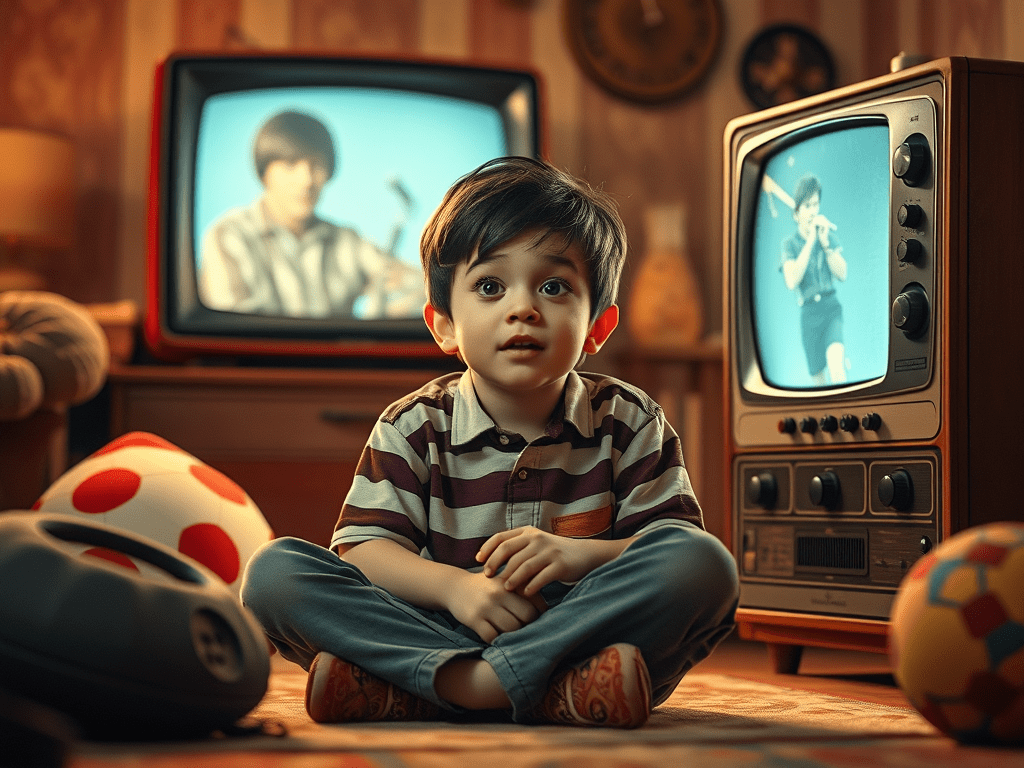
    On the night of October 16, 1967—just twelve days shy of my sixth birthday—the universe shoved my head in the toilet and flushed. I could hear the sound of childhood innocence circling the drain. Up to that moment, I was a full-time subscriber to the gospel of positive thinking. Life was fair. Good guys won. If you tried hard and smiled big, the world smiled back. Norman Vincent Peale had basically written the owner’s manual for my inner world.

    That illusion shattered during an episode of The Monkees.

    The episode was called “I Was a 99-lb. Weakling,” and I had parked myself cross-legged in front of the TV, popcorn in lap, expecting hijinks and musical numbers. Instead, I got a masterclass in betrayal and the savage laws of ironic detachment. My hero, Micky Dolenz—the clumsy, lovable soul who made failure seem like a jazz solo—was brutally outmuscled by Bulk, a flexing monolith of a man played by real-life Mr. Universe, Dave Draper. Bulk didn’t walk—he heaved himself through scenes, a sculpted rebuke to every noodle-armed dreamer in America.

    And right on cue, Brenda—the beachside Aphrodite with hair that shimmered like optimism—dropped Micky like a sack of kittens for Bulk, never once looking back.

    This wasn’t just sitcom plot; this was emotional sabotage. I watched, frozen, as Micky enrolled in “Weaklings Anonymous,” embarking on a training montage so grotesquely absurd it veered into tragedy. He lifted dumbbells the size of moon rocks. He drank something called fermented goat milk curd, a substance that looked like it had been skimmed off a medieval wound. He even sold his drum set—his very soul—to chase the delusion that muscles would win her back.

    And then came the twist.

    Just as Micky completed his protein-fueled crucible, Brenda changed her mind. She didn’t want Bulk anymore. She wanted a skinny guy reading Remembrance of Things Past. A man whose pecs had clearly never met resistance training, but whose inner life pulsed with French ennui. The entire narrative pirouetted into absurdity, and I watched my belief system crack like a snow globe under a tire.

    That’s when I first met irony.

    Not the schoolyard kind where someone says “nice shirt” and means the opposite—but the bone-deep realization that the universe isn’t fair, that effort doesn’t guarantee reward, and that life doesn’t play by the moral arithmetic taught in Saturday morning cartoons.

    It was that night I realized muscles weren’t the secret to power—language was. Not curls, not crunches, but craft. Syntax. Prose so sharp it could reroute the affections of beach goddesses and turn the tide of stories. That was the moment my childish faith in “try hard and you’ll win” collapsed, and in its place rose a darker, more potent creed: the pen is mightier not just than the sword, but than the bench press.

    That night, my writing life began—not with celebration, but with betrayal. A glittering lesson delivered in the cruel, mocking tone only irony can wield. And though it hurt, I never forgot it. Because the truth is: irony teaches faster than optimism. And it remembers longer, too.

  • Johnny Carson Was Prozac Before Big Pharma Perfected the Formula

    Johnny Carson Was Prozac Before Big Pharma Perfected the Formula

    I’m listening to Carson the Magnificent on Audible, Bill Zehme’s lush tribute to the King of Late Night. Zehme is a skilled writer, no doubt—but he suffers from an affliction familiar to many stylists: chronic purple prose. His descriptions don’t sparkle; they sprawl. Reading him is like eating an entire wedding cake when a slice would have sufficed. He’s so enamored with his own flourishes that Johnny Carson occasionally vanishes behind the velvet curtain of Zehme’s adjectives.

    Still, what he lacks in restraint, he makes up for in ardor. Zehme clearly loves his subject, and his affection pulses through the pages. Carson emerges as a sort of secular priest of television, delivering nightly benedictions of laughter for thirty years. He wasn’t edgy or groundbreaking—he was dependable, a soothing presence at 11:30 PM, like a warm bath or a glass of room-temperature white wine. He was comfort food for the collective American psyche, Prozac before Big Pharma perfected the formula. A totem from a time when a single man in a suit could stand at the crossroads of politics, culture, and showbiz and crack wise to a nation that hadn’t yet shattered into a million niche audiences.

    I was never much of a Carson acolyte myself. Dick Cavett had the brain. Letterman had the bite. Carson? He had commercials. What I remember most is that the show seemed designed to lull you into a trance of polite chuckles and bland banter. It wasn’t bad, exactly—it was just relentlessly there. Watching The Tonight Show felt less like a choice and more like a ritual, a nightly genuflection before the glow of the TV set. People tuned in not out of excitement, but out of habit. He was the head caveman, murmuring jokes by firelight, while the rest of us nodded and laughed, grateful to not be alone in the dark.

    To skip Carson was to risk social exile. You didn’t want to be the one who missed what the country’s collective subconscious had passively absorbed.

    As I listen to Carson the Magnificent, I find myself pining—not for Carson, but for the era he ruled. A time when a singular voice could still cut through the noise and hold the country’s wandering attention. That cultural unity is gone now, and maybe for the best, but I can’t help mourning it a little.

    Zehme will, I’m sure, delve into the darker recesses of Carson’s psyche—and I’m ready for it. I’ve already mainlined The Larry Sanders Show three times, with a fourth round likely on the way. That show remains the gold standard for peeling back the sequined curtain to reveal the neurotic, solipsistic soul of late-night television. If Zehme gets even halfway there, I’ll consider the audiobook time well spent—even if I have to wade through another paragraph that reads like a thesaurus suffered a head injury.

  • The Ghost in Aisle Nine: Remembering Chris Grossman

    The Ghost in Aisle Nine: Remembering Chris Grossman

    Back in the Reagan era, when I was a college kid working part-time at Jackson’s Wine & Spirits in Berkeley, I shared long, dusty shifts with a man named Chris Grossman—a wine salesman whose last name, ironically, matched neither his physical presence nor his temperament. Chris was lanky, six foot four, and moved with the grace of a man perpetually on the verge of tripping over his own limbs. He had a face only a Freudian could love: aquiline nose, dark beard, black-framed glasses smudged with fingerprints, and a mop of dark curly hair that looked like it had lost a long battle with a pillow. A pencil was always tucked behind his ear, as if at any moment he might be called upon to draft blueprints for a submarine.

    To customers, Chris was a savant in work shirts with the sleeves rolled just so—half wine whisperer, half philosopher of Zinfandel. He had an uncanny ability to match a Pinot Noir to a personality type, like some sort of boozy Myers-Briggs. The regulars adored him. They trusted his palate, his calm authority, his encyclopedic knowledge of terroir. What they didn’t know—and what I only discovered gradually—was that once he stepped off the floor, he disappeared.

    Chris Grossman had no friends. Not one. He was social the way a vending machine is social—polite, efficient, devoid of emotional commitment. Once, during a lull in business, he confided that he’d had a girlfriend, briefly, years ago. He spoke of it as though he’d survived a hostage crisis. The constant negotiation, the emotional bookkeeping—it exhausted him. “I’m too selfish to pretend otherwise,” he said with an eerie clarity. “I’d only make her miserable.” There was something almost noble in his blunt self-awareness, as if he’d spared both himself and others the slow drip of mutual disappointment.

    His father, he once told me, had been a brilliant but frostbitten physician, a man incapable of affection. Chris, I think, carried his father’s circuitry—a brain tuned for analysis, not empathy. Still, he wasn’t bitter. He wasn’t even rude. If he hated humanity, he kept it on a low simmer, tucked behind a mild smile and a firm handshake.

    We both left Jackson’s in the late ’80s. I moved to the California desert to lecture on writing and lose my illusions in the faculty lounge. Chris stayed local, selling stereos on Shattuck Avenue for places like The Good Guys and Circuit City. He made good money and spent exactly none of it on companionship. No wife, no kids, no pets, not even a ficus. Once a year he drove his Triumph convertible down to Carmel for a vintage car rally, then disappeared back into his cocoon.

    I think about him more than I should. Forty years have passed, and still, his silhouette lingers. Why? Maybe because I recognize myself in him. The difference is, I got married—and in doing so, outsourced my social life to someone with actual initiative. My wife arranges our dinners, our vacations, our tenuous grasp on community. She reminds me to be human. And yet, even she knows I’m a recluse at heart. She gently suggests I see more of my friends—or at least have more friends—so she doesn’t have to absorb every neurotic spiral I produce. Fair enough.

    I’m 63 now. Chris, if he’s still around, must be pushing seventy. I sometimes wonder how he’s weathered the years, whether the silence that once comforted him has curdled into something more sinister. But I also suspect he made peace with his solitude. He looked at the world, with all its needy, buzzing, soul-sucking demands, and chose the quieter suffering. Not because he was brave or broken, but because he knew himself too well to fake it.

    I hope he’s okay. I really do. Solitude, like alcohol, is dose-dependent. For some, it’s a meditative stillness. For others, it’s a slow erosion. I don’t know which side of the line Chris landed on. But wherever he is, I raise a glass to him—alone, perhaps, but not forgotten.

  • The Reuben Sandwich Standoff

    The Reuben Sandwich Standoff

    In 1983, I was a humble college student working at Jackson’s Wine & Spirits, conveniently located next to the illustrious Claremont Hotel in Berkeley. This wasn’t just any wine store—it had a deli too, where the drama unfolded like a soap opera on rye bread. 

    One fateful afternoon, a man in his fifties, who had the unmistakable air of a New Yorker transplanted to the west coast, waltzed in and ordered a Reuben sandwich.

    Enter George, our deli manager and fellow New Yorker, who was a 300-pound titan with a penchant for thick black-framed glasses and a cigar stub that seemed permanently fused to his lips. George was the kind of guy who could turn ordering a sandwich into a WWE smackdown. George, in his infinite deli wisdom, asked the customer what kind of cheese he wanted on his Reuben.

    This question, apparently, was a direct assault on the customer’s very essence. With all the drama of a Shakespearean tragedy, the customer launched into an impassioned monologue. “A Reuben sandwich is rye bread, corned beef, Swiss cheese, sauerkraut, and Russian dressing!” he proclaimed, as if he were revealing the secret formula to eternal life.

    George, unimpressed by this unsolicited lecture and clearly unamused by the customer’s attempt to rewrite Reuben history, repeated his question: “What kind of cheese do you want?”

    The customer’s face turned the color of a cherry tomato as he launched into his tirade once more, listing the sacred ingredients with the fervor of a man defending his homeland. The two New Yorkers engaged in an epic standoff, a duel of stubbornness, each more entrenched in their own version of Reuben orthodoxy.

    The debate reached such a fever pitch that the customer exploded in a flurry of expletives that could have given a sailor pause and stormed out, declaring he would never do business with a deli that dared question his Reuben expertise.

    To this day, I marvel at the sheer audacity of these two colossal egos. One was denied his lunch, and the other was deprived of a sale, all because neither would concede an inch. It was a lesson in culinary pride and stubbornness—a Reuben sandwich standoff for the ages.

  • I found my true life purpose at a McDonald’s in Mojave

    I found my true life purpose at a McDonald’s in Mojave

    Coming home from Mammoth last summer, I had naively believed that my children would be sated from their breakfast at the McDonald’s in Bishop, allowing us to drive straight home without further interruptions.

    But by the time we reached Mojave around noon, my daughters swore they would perish on the spot if they didn’t have lunch immediately. So, we found ourselves pulling into yet another McDonald’s in Mojave. The thought of visiting two McDonald’s in a single day felt like a deep plunge into the abyss of self-debasement, a loss of dignity on par with other legendary acts of self-humiliation. I began to think this might be the modern-day equivalent of wearing a sandwich board that reads, “I have given up.” Yet, amid my indignation, I secretly thanked the universe for my daughters’ insatiable appetites because I desperately needed to use the bathroom.

    However, fate—or rather the cruel architects of this establishment—had installed combination locks on the bathroom doors, and the workers guarding these sacred numbers were about as generous with them as a dragon hoarding gold. I had to persuade them that my family of four would be forking over more than fifty dollars for the world’s most lackluster cuisine, and thus, I was surely deserving of the golden code.

    After securing the coveted combination, I made a beeline for the bathroom, practically kicking the door open like a cowboy in a saloon. The relief was so immense that it felt as if I had just liberated a small nation from tyranny. Afterward, I returned to the counter to wait for our food, feeling light as a feather. As I stood there, I observed dozens of men rattling the bathroom doorknob with the desperation of someone who had just spotted an oasis in the desert, only to find it locked. Their faces were contorted in pain, and their eyes begged for mercy but the cruel workers were unmoved.

    Seeing their plight, I realized I had the power to make a difference. I could be their savior. In an act of defiance against the oppressive bathroom code policy, I began shouting the combination with a gusto that could only be described as revolutionary. “Two-four-six-eight!” I bellowed, as if each digit was a bullet in the war against bladder injustice. The relief that spread across their faces was almost spiritual. I had become a mythical prophet, a modern-day Moses leading the oppressed to the Promised Land of Bladder Relief.

    Meanwhile, as I basked in the glory of my newfound role, my wife and daughters sank deeper into their chairs, their faces a mix of horror and embarrassment. They pretended not to know me, as if I were some wild-eyed lunatic who had wandered in from the Mojave Desert. But I didn’t care. I had found my spiritual calling, even if it was in the unlikeliest of places—shouting bathroom codes at a McDonald’s in Mojave.

  • Bill Burr’s Drop Dead Years: Rage, Reflection, and the Long Road to Emotional Literacy

    Bill Burr’s Drop Dead Years: Rage, Reflection, and the Long Road to Emotional Literacy

    At 56 years old, Bill Burr strides onto the stage looking like a man who hasn’t just survived middle age but has trained for it—lean, sharp, and decked out in a blue sweatshirt, jeans, and sneakers, the unofficial uniform of a guy who’s seen some things but hasn’t yet gone full sweatpants. His latest special, Drop Dead Years (streaming on Hulu), finds him at a crossroads: He’s entered the danger zone—the phase of life where men his age can drop dead at any second. And so, standing before a Seattle crowd, a city he awards first prize in rain-soaked despair, he does what any man staring down mortality would do—he takes stock of his life.

    Burr has baggage, and he knows it. Anger issues? Check. Outdated, offensive language? His wife is on him about it. Emotionally repressed male conditioning? Oh, absolutely. For decades, he’s kept his demons on a leash by staying busy, but when the work stops, his personal hellscape begins. He decides to test a theory: After returning from a tour, instead of distracting himself with projects, he sits in a corner, stares at the TV, and marinates in his own misery. His wife, alarmed, asks if he’s okay. For the first time in his life, he admits the truth: I’m sad. A historic moment for a man raised on the doctrine of shut up and push through.

    But does Burr actually offer any solutions for his emotional demolition derby? Not really—at least not in the special. While he drops breadcrumbs in radio interviews about his self-improvement quest, including the occasional reference to psilocybin therapy, the special mostly stays in the realm of self-awareness rather than self-help. And don’t worry—the fangs are still sharp. Burr unloads on racist conservatives and hypocritical, self-congratulatory liberals with equal fervor, and despite the obvious political leanings of his Seattle audience, no one seems too offended. Maybe that’s part of Burr’s charm—he’s an equal-opportunity agitator, and the crowd knows they’re getting a sermon with a punchline, not a TED Talk.

    Here’s the thing: While I love Burr, I found Drop Dead Years a little… safe. The premise—that wisdom comes with age, that unchecked emotions can consume us, and that kindness and patience improve relationships—is undeniably true but hardly groundbreaking. The performance is solid, his honesty is refreshing, and his intelligence undeniable, but I couldn’t shake the feeling that he was more compelling when I heard him on Terry Gross’ Fresh Air a couple of weeks earlier. There, in a rare good-natured sparring match with the NPR icon, Burr revealed more of himself—and in funnier ways—than he did in his actual special.

    That said, Bill Burr is always worth watching. Even when he’s not at his absolute peak, he’s still one of the sharpest, most brutally honest voices in comedy. So, do I recommend Drop Dead Years? Absolutely. But if you want peak Burr, you might want to queue up that Fresh Air interview right after.

  • The Day My Piano Playing Annoyed a Russian Commander

    The Day My Piano Playing Annoyed a Russian Commander

    After breakfast inside the newly-constructed Moscow Olympic Hotel, I spotted a grand piano in the lobby, and I began to play a sad piece that I had composed myself. My fellow tourists surrounded me and when I was done with my short piece, they asked me to play another song. Being a ham with an insatiable appetite for attention, I was happy to oblige.

    I could tell by my audience’s response that they were impressed, but to be honest, I am technically a subpar pianist, and worse I compensate for my lack of technical prowess by playing my compositions in a style that tends to be mawkish, self-indulgent, and lugubrious. 

    As my fellow tourists and other hotel guests surrounded me, there were at a distant table several Soviet military men sitting down to breakfast and room-temperature beer. They were watching me with curiosity. Most notably, the Commander, a tall husky man in his forties with thick eyebrows, dark hair, and a broad chin, was staring at me. I turned from him and continued to play my drawn-out piano ballade.

    In the middle of the piece, I saw out of the corner of my eye the same woman from the Moscow zoo, and like the day before she was dressed in the same elegant black outfit. She was standing over the piano’s soundboard and smiling at me. I was thinking of cutting my piece short so I could converse with her, but before I could do so, the slack-jawed Commander, his uniform festooned with medals and epaulets, approached the woman and gave her a lurid stare. His presence seemed to spook her. She abruptly exited the hotel, and the Commander was now staring at me with an amused smile. To make sure I knew that he was mocking me for my ham performance, he puckered his lips and placed his hand next to his chest, and waved his hand up and down while wiggling his fingers in an exaggerated fashion. His military subordinates at the nearby table were laughing. 

    When I was finished playing my composition, he invited me to sit with him and his fellow soldiers at the distant table. Listening to his heavy black military boots squeak as he walked, I followed him to the table and scanned the faces of jeering soldiers. The commander outstretched his arm toward an empty chair, his way of ordering me to sit. He then poured me a tall glass of warm beer. I was trying to construct a polite way of telling him that I didn’t care for any type of beer, especially warm beer, but before I could get out the words, the Commander shouted, “Drink!”

    Noticing my reluctance to take the warm beer, he repeated this command two more times. I could see now that I was being punished for being a piano dandy. I am convinced that the Commander knew that my piano playing was both vulgar and inferior. I say this because I know enough about musicianship to know that I am more of a piano poseur than a true musician. I also know that in Russia many children are forced to take rigorous piano and violin lessons with strict supervision so that the average Russian eight-year-old has better technical acquisition than I do. So I am convinced the officer and his fellow soldiers knew that I was a musical fraud. Also because I was deeply immersed in the novels and essays of Russian emigre Vladimir Nabokov, I knew that in Russia there was the concept of poshlost, the affectations and vulgarities of a charlatan who aspires to be grand but merely flops and reveals himself to be crass and pretentious. In other words, I was an American charlatan in Russia, and I would have to pay the penalty. The price I would pay would be to be forced to drink a pint of Russian warm beer at the behest of the Soviet military. The Commander surely knew that as an American I was accustomed to ice-cold beverages and that warm beer in the morning would not be to my liking. 

    I forced the entire glass of bitter hoppy beer down my throat. My grimacing sour face and my being overcome by nausea elated the soldiers who engaged in thigh-slapping laughter. Witnessing the American Charlatan reduced to size was cause for triumph and celebration. 

    After I was done with my beer, I thanked them for the refreshment and returned to my hotel room. I undressed, showered, then prepared to brush my teeth. When I twisted the cold-water knob, the entire sink came out of the wall and the sink’s sharp edge cut me in the chest so that I had a three-inch-long vertical cut down my torso. I was bleeding. A sink from a newly-constructed hotel in Moscow had just fallen out of the wall and cut me. 

    The cut wasn’t that deep, but I was angry that I had missed two opportunities with the mysterious Russian woman and that the Russian Commander and his soldiers had mocked me, so I spent the rest of the day lifting my shirt and showing my fellow travelers the “ugly cut” I had received as a way of venting my resentment at my perceived adversaries.

    That wasn’t the last I saw of the Commander and his coterie of soldiers. They were in a nearby cabin on the train to Novgorod. When the Commander was putting his duffel bag above his cabin bunk bed, he saw me, gave me a familiar nod, and laughed as if still feeding off my humiliation from drinking warm beer at the Moscow Olympic Hotel. Part of me was grateful that he found me to be a source of joyful entertainment because I could imagine worse alternatives. 

    Inside my own cabin, which I was sharing with Jerry Gold, I told him the Commander was nearby. 

    “He’s probably trailing us,” Jerry said.

    “Why?”

    “We’re on their radar. Or it just might be the protocol for them to keep close tabs on us.”

    “We’re just American tourists.”

    “That’s not what they think. For all they know, we’re CIA. Not to mention they saw you with a copy of A Clockwork Orange at the airport. Thanks to you, we’re all being followed.”

    “You’re paranoid.”

    “We’ll see.”

    By the time we got to Novgorod and Jerry and I were settled in our hotel room by Lake Ilmen, I had what felt like either a cold or the flu. Natasha came in to ask if I felt good enough to go on the tour of the museum. 

    “I’m not sure,” I said while lying on the bed.

    “We’ll get you a doctor,” Natasha said. 

    “I don’t need one,” I said.

    “But I insist.”

    Barely a half-hour had passed when a beautiful doctor with her light brown hair in a bun and a white medical coat came into my hotel. She was accompanied by two nurses holding leather apothecary bags. My fellow travelers, all twelve of them, were so curious they inched their way into the small hotel room to watch my examination.

    The unsmiling doctor had me sit in a chair and take off my shirt. She listened to my chest, looked inside my mouth, and proclaimed that I had a cold. 

    “Just a cold,” I announced to everyone standing in the room.

    But at that very moment, the doctor ordered me to lie face down on the bed and to pull down my pants. I was going to get a shot in the ass. 

    “In my country, we don’t get shots for the common cold,” I protested.

    “Shut up and do as you’re told,” Natasha said. 

    “If you insist.”

    No one cleared out. Watching me get a shot in the right butt cheek was apparently something everyone felt entitled to see. A Soviet-style shot in the ass was too good of an opportunity to miss, I guess. The shot hurt like hell as if some thick viscous molasses was being injected into my flesh.  

    Afterward, I went to the museum, and for some reason, we were standing in a barn surrounded by overgrown grass and weeds and Natasha was giving us a lecture about farming and trade routes in Russia. It was close to a hundred degrees, we were miserable, hungry, and impatient for Natasha to end her lecture. That’s when the Commander and his subordinates approached. They stood next to Natasha and watched us. The message was clear. We were to listen attentively to our tour guide.

    As Natasha walked around the barn and found a place that was in the shade, Jerry Gold found a long stalk of dried hay and positioned himself behind the Commander. Slyly, Jerry brushed the dry straw against the back of the Commander’s neck causing the officer to think he was besieged by a mosquito, and he gave his neck a mighty slap. After Jerry performed the prank three times successfully unnoticed by the Commander, about a half dozen of my fellow tourists had caught on and we were doing our best to stifle our laughter. 

    On one hand, I was terrified that Jerry would get caught. On the other, I was enjoying the spectacle of the Commander’s vexation.

    My good spirits were gone the next day when I woke up with a bruised ass from the mysterious “cold” shot. The pain and swelling were so bad that I had to walk with a severe limp. My fellow travelers said I walked like a Soviet soldier with a war injury.   

    Part of our itinerary that day was to visit a toy factory, which was located on the edge of a forest. I don’t know why it was so important to walk around a factory full of cheap plastic figurines. The factory was uninhabited by employees except for the attendant, but I looked out the factory window and saw several buses full of children between the ages of ten and fourteen. Some of the children were getting out of the buses and approaching the factory. I asked Natasha if the children were about to start a work shift at the factory. She consulted with the factory attendant and he whispered something into the ear of the security guard. The guard, a silver-haired man in his fifties, rushed outside and shepherded the children back into the buses. I even saw the guard give one boy a kick in the rear. It was clear to me and some of the others that Natasha and her cohorts didn’t want to create the impression that the Soviet Union violated child labor laws. 

    We returned to the hotel by the lake and had dinner in an affixed dining area that was crowded with other tour groups. The staff was so busy they had to stagger us inside the restaurant based on our status. We were at the bottom. The first tier was a group of North Korean children and teenagers dressed in blue uniforms with hats. They looked happy and confident that in the Soviet Union they were special and belonged. Their meals came first, were larger, and served by the staff with more enthusiasm. 

    We on the other hand were looked at as a painful obligation. Our portions were smaller, our food colder, and our service more perfunctory. They were throwing scraps to dogs. I was ready to leave Novgorod and go to Leningrad.

  • Where I Could Forever Be a Man-Child–Walt’s Gym

    Where I Could Forever Be a Man-Child–Walt’s Gym

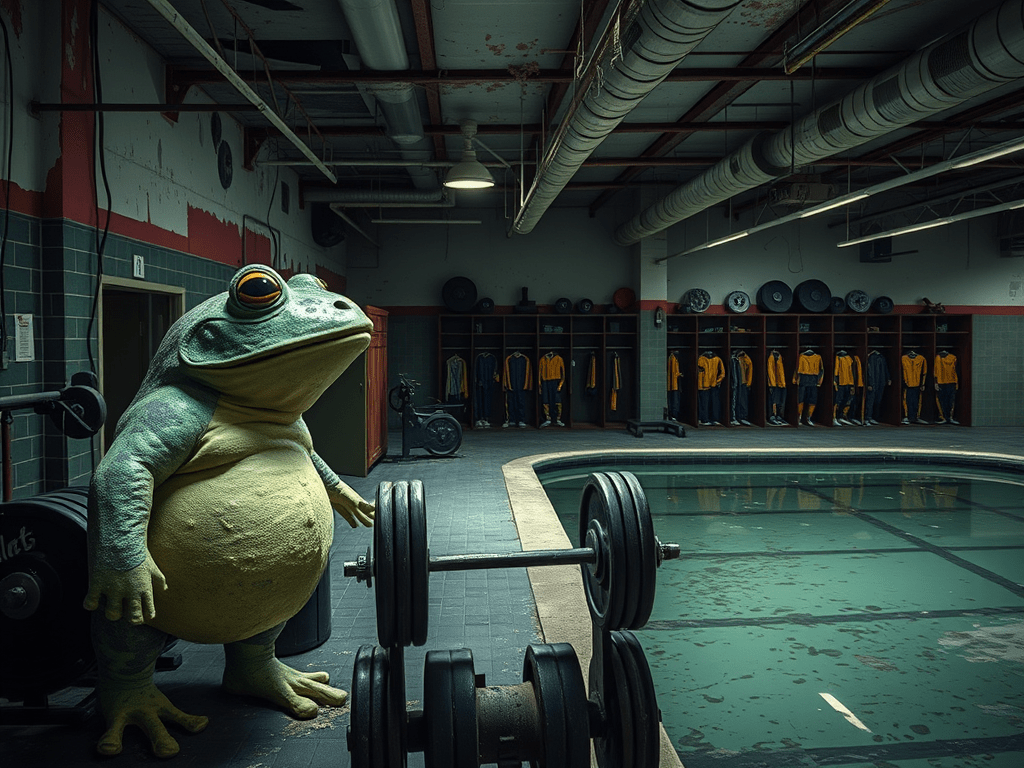
    By the time I hit fourteen, my sacred sanctuary was none other than Walt’s Gym in Hayward, California—a temple of iron that had started its inglorious life as a chicken coop in the 1950s. The place was a veritable swamp of fungus and bacteria, a thriving petri dish of maladies eager to latch onto the unsuspecting. Members whispered in hushed tones about incurable athlete’s foot, the kind that made dermatologists throw up their hands in defeat. Some swore that the strains of fungus and mold festering in the corners were so exotic they had yet to be classified by the most intrepid of mycologists. Roosting among the fungal shower stalls was an oversized frog that the pro wrestlers had affectionately named Charlie. I never saw Charlie myself, but I often wondered if he was a real creature or a figment of the wrestlers’ imagination, birthed by too many concussions and late-night benders.

    The locker room was perpetually occupied by a rotating cast of characters who looked like they’d been plucked straight out of a grimy noir film. There was always some bankrupt divorcee draped in a velour tracksuit and a gold chain thick enough to anchor a ship, hogging the payphone for marathon sessions with his attorney. He’d discuss his sordid life choices and the staggering attorney fees required to sweep his past under a rug large enough to cover the entire state of California.

    Out back, an unused swimming pool lurked, its water murky and black—a cauldron of plague, dead rats, and God knows what else. Walt, the gym’s owner and part-time crypt keeper, had a peculiar ritual. Every so often, he’d saunter outside, brandishing a pool net like a scepter, and scoop up some unfortunate deceased creature. He’d hold it aloft for all to see, like a demented priest presenting an unholy sacrament. This grim ceremony was invariably met with a thunderous round of applause from the gym-goers, who treated Walt’s rodent exorcisms like a halftime show. Walt would then toss the cadaver into a nearby dumpster with all the flourish of a Shakespearean actor delivering a monologue, bowing deeply as if he’d just conquered a dragon.

    Walt’s Gym showcased a walking fossil named Wally, an octogenarian who swore he was the original model for human anatomy textbooks—perhaps ones etched on cave walls. We all loved Wally. He was a beloved gym fixture even though he could be a pain in the butt. Wally’s routine was the stuff of myth: He’d righteously correct everyone’s form whether they asked for his advice or not. He’d monopolize the gym for hours, his workout punctuated by monologues worthy of an Oscar about his deadbeat relatives who “borrowed” money, his former lovers who once graced the silver screen, and his eternal battle with arthritis. Between sets, he’d often deliver a Ted Talk on muscle inflammation and the sorry state of the national economy. He delivered these soliloquies with the gravitas of a news anchor, then spent an eternity in the sauna and shower, emerging like a phoenix from the ashes only to douse himself head-to-toe in talcum powder, turning into a spectral beacon of gym dedication. When Wally spoke, he was engulfed in such a thick talcum haze you’d swear a lighthouse was about to blare its foghorn warning.

    The radio played the same hits on a relentless loop, as if the DJ had been possessed by the spirit of a broken record. Elvin Bishop’s “Fooled Around and Fell in Love,” The Eagles’ “New Kid in Town,” and Norman Connors’ “You Are My Starship” echoed through the gym like a soundtrack to my personal purgatory. As a kid navigating this adult world, the gym was my barbershop, my public square, where I eavesdropped on conversations about divorces, hangovers, gambling addictions, financial ruin, the exorbitant costs of sending kids to college, and the soul-sucking burdens of caring for elderly parents.

    It dawned on me then that I was at fourteen the perfect age: old enough to start building biceps like bowling balls, yet young enough to be spared the drudgery and tedium of adult life. The Road to Swoleville, I realized, was all about sidestepping the real world entirely. Why bother with mortgages and 401(k)s when I could disappear into my true paradise, the gym? As Arnold himself wrote in Arnold: The Education of a Bodybuilder, the gym was the ultimate Happy Place: “The weight lifters shone with sweat; they were powerful looking. Herculean. And there it was before me—my life, the answer I’d been seeking. It clicked. It was something I suddenly just seemed to reach out and find, as if I’d been crossing a suspended bridge and finally stepped off onto solid ground.”

    My “solid ground” was the 1976 incarnation of Walt’s Gym, a germ-infested, rat-plagued wonderland where dreams of muscle-bound glory were forged—and quite possibly the greatest place I’ve ever visited on this planet.