One of my colleagues—an expert in technology and education, and thus perpetually stuck in the trenches of this AI circus—must have noticed I’d taken on the role of ChatGPT’s most aggrieved critic. I’d been flooding her inbox with meticulously crafted, panic-laced mini manifestos about how these AI platforms were invading my classroom like a digital plague. But instead of telling me to get a grip or, better yet, stop emailing her altogether, she came up with an ingenious way for me to process my AI anxieties. Her solution? “Why not channel that nervous energy into a Spring Flex Activity on AI in teaching?”
Naturally, because misery loves company, she signed on to co-present. The date was locked—mid-February 2025. A few months to go, plenty of time to prepare… or so I thought.
Three months earlier in November, I was already deep into crafting a masterpiece of a Google Slides presentation, proudly titled: “Ten Approaches to Making AI-Resistant Writing Prompts: Resisting the AI Takeover.” It was focused, practical, and dripping with tech-savvy authority. I was convinced I had nailed it. I would be the knight in shining armor, defending academia from an algorithmic apocalypse.
But a tiny voice in the back of my head kept nagging: “You do realize ChatGPT has a faster upgrade schedule than your iPhone, right?” Every time I’d tested my so-called AI-resistant strategies, the platform would recognize its weaknesses, evolve, and then laugh in my face. Still, I chose to ignore that voice and basked in my fleeting sense of triumph.
Then came January. I pulled up my Google Slides to rehearse my presentation and felt the full weight of my hubris. My “cutting-edge” strategies were already about as relevant as an AOL dial-up manual. The AI arms race had advanced, and my presentation was now a quaint little relic—a reminder that in the war against AI, obsolescence isn’t just a risk. It’s the default setting.
Let me walk you through my three brilliant strategies for giving students AI-resistant writing assignments—strategies that crumbled faster than a cookie in a chatbot’s clutches over the course of three short months.
Strategy One: Have students summarize an essay with signal phrases, in-depth analysis, and in-text citations. Why? Because ChatGPT couldn’t handle that level of academic finesse. Or so I thought. Fast forward three months, and now the bot churns out MLA-perfect citations with smug precision and rhetorical flair, like it’s gunning for a tenure-track position.
Strategy Two: Ban clichés and stock phrases. Simple, right? Wrong. Students can now binge-watch YouTube tutorials that teach them how to reprogram ChatGPT to “write with originality” and bypass every plagiarism detection tool I can throw at them. It’s like handing them a cheat code labeled: “Creative Nonsense, Now AI-Enhanced!”
Strategy Three: Require current references. My reasoning? ChatGPT was stuck in a time warp with outdated sources. But wouldn’t you know it? The bot got a data upgrade and now pulls research so fresh it practically smells like new car leather.
In sum, ChatGPT is a shape-shifting Hydra of academic trickery. Any technique I recommend today will be obsolete by the time you finish your coffee. So, yes—presenting a guide on “AI-resistant” strategies would be like publishing a survival manual for Jurassic Park and then as you’re dashing into the parking lot to get inside your car, you’re eaten by a velociraptor.
So, what exactly was my Flex Day presentation supposed to be about? Since playing tug-of-war with AI’s ever-evolving powers was a losing battle, I decided it was time to pivot. Instead of chasing after futile strategies to “beat” AI, the real question became: what’s our role as instructors in a world where students—and everyone else—are increasingly outsourcing their cognitive load to machines? More importantly, how do we assess student learning when AI tools are rapidly becoming part of everyday life?
To stay relevant, we have to confront four key questions:
- How do we assess how effective the students are at using AI-writing tools? Are they wielding ChatGPT like a scalpel or a sledgehammer? Are they correctly using ChatGPT as a sidekick to assist their human-generated writing, or have they fallen back on their lazy default setting to produce a “Genie Essay” in which ChatGPT materializes a cheap surface-level essay in “the blink of an eye”?
- How do we create a grading rubric that separates “higher-order thinking” from surface-level drivel? The difference between a real argument and a ChatGPT-generated one is both profound and crucial—one is a meaningful persuader, the other a stochastic parrot (imitates language mindlessly and randomly).
- How do we create a grading rubric that discourages the dreaded Uncanny Valley Effect in student writing? You know, that eerie sensation you get when an essay seems human at first glance but is just slightly “off,” like a malfunctioning Stepford paper that reeks of academic dishonesty.
- What uniquely human tasks can we assign in class (online or face-to-face) to measure real learning? Spoiler: If the answer is a formulaic five-paragraph essay, you’re already in trouble.
If we can answer these questions, maybe—just maybe—we’ll stop grading assignments that feel like AI-generated fever dreams and start nurturing authentic learning again.
Questions one through three pertain to how we grade the students’ writing and define our expectations in the form of a grading rubric. When it comes to assessing students’ use of AI machines as collaborative helpers in their writing, we don’t get to see how they work at home. We only see the final product: a portion of their essay that we have assigned, like an introduction and thesis paragraph, or the entire manuscript.
Let us assume that every student is using an open-platform AI tool. We need a grading rubric that separates the desirable “AI-sidekick essay” from the “AI-genie essay.” To make this separation, we need an AI-Grading Rubric, which should address the following features of writing quality:
- Is the language clear, rhetorically appropriate, and conducive to creating a strong authorial presence or is it mostly AI-signature cliches and stock phrases?
- Does the essay explore the messy human side of an issue with higher-order thought, meaning, nuance, and blood, sweat, and tears, or does it smack of an AI-signature facile, glib, surface-level, cookie-cutter Wikipedia-like superficial bot piece?
- Does the essay appear to be an authentic expression of strong authorial presence or does it have that creepy Uncanny Valley Effect?
For any kind of grading rubric to be effective, you will have to give your students contrasting essay models, which can be scrutinized in class and posted on Canvas:
- Sidekick Essay Vs. Genie Essay
- Strong Authorial Presence Vs. Cringe-Worthy AI Surface-Level Presence
- An essay that is so deep in meaning and nuance that it transcends the original topic and speaks to larger human concerns vs. a glib surface-level essay that has somehow managed to take a sophisticated topic and reduce it to a fifth-grade cookie-cutter argument.
A crucial thing to acknowledge as you make the rubric is that you’re assuming students are using AI in some way or another. Your purpose isn’t to “catch them in the act of plagiarism.” Rather, your purpose is to focus on the quality of their writing. They may be using AI effectively and ethically. They may be using AI ineffectively and dubiously. Or they may be using it somewhere in between. The final measure of how they used AI will be evident in the quality of their work, which will be measured against your grading rubric.
Aside from assessing your students’ work in the AI Age, you want them to engage in coursework that is uniquely human and cannot be replicated by AI. I recommend the following:
One. Integrate Personal Writing in an Argumentative Essay: Your students can begin an argumentative essay with an attention-getting hook based on their personal experience. For example, I teach Cal Newport’s book So Good They Can’t Ignore You in which he argues that pursuing your career based on passion as your first criteria is a dangerous premise with a large failure rate while pursuing a craftsman mindset renders higher career success and happiness. My students defend, refute, or complicate Newport’s claim. In their opening paragraph, they write about their own career quest, based on passion or something else, or they observe someone else they know who is struggling to choose a career based on passion or another criteria.
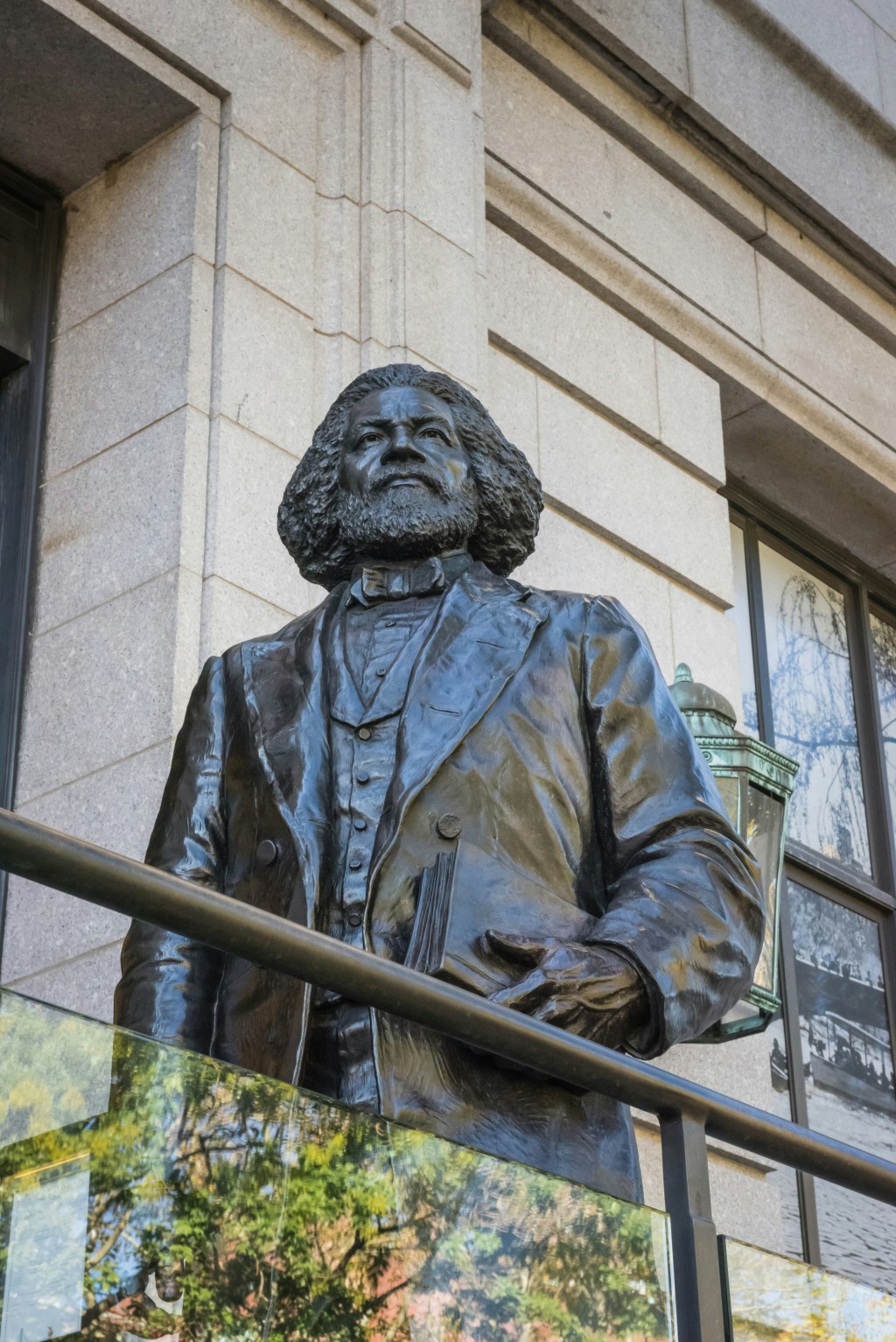
Two. Have students interview each other and process those interviews into an introduction paragraph. This can be done in the classroom, or if the class is online, the students can interview each other on the Canvas chat app Pronto. For example, I show my students the documentary Becoming Frederick Douglass and the Jordan Peele movie Get Out and the students have to interview each other with the purpose of writing an extended definition of “The Sunken Place,” as a condition of hellish confinement, and “The North Star,” as a condition of freedom and enlightenment. These definitions will be present in their essays as they compare the themes of Frederick Douglass’s journey to the journey in Get Out.
Three. Use multimodal composition assignments. What this means is that in addition to your students submitting an essay, they also submit other media expressions of the assignment. For example, if they are writing an essay about “The Sunken Place” in the movie Get Out, their essay would be accompanied by a YouTube video in which they give an oral presentation of their essay. Another example of multimodal composition is to pair students who are debating an argument. Each student takes an opposing side and they hash it out on either a YouTube video or a homemade podcast.
If I had to guess, multimodal composition is going to scale over the next decade. Not only does it measure student achievement in uniquely human ways, it gives students the opportunity to use a variety of media tools that they will probably have to master in their career.
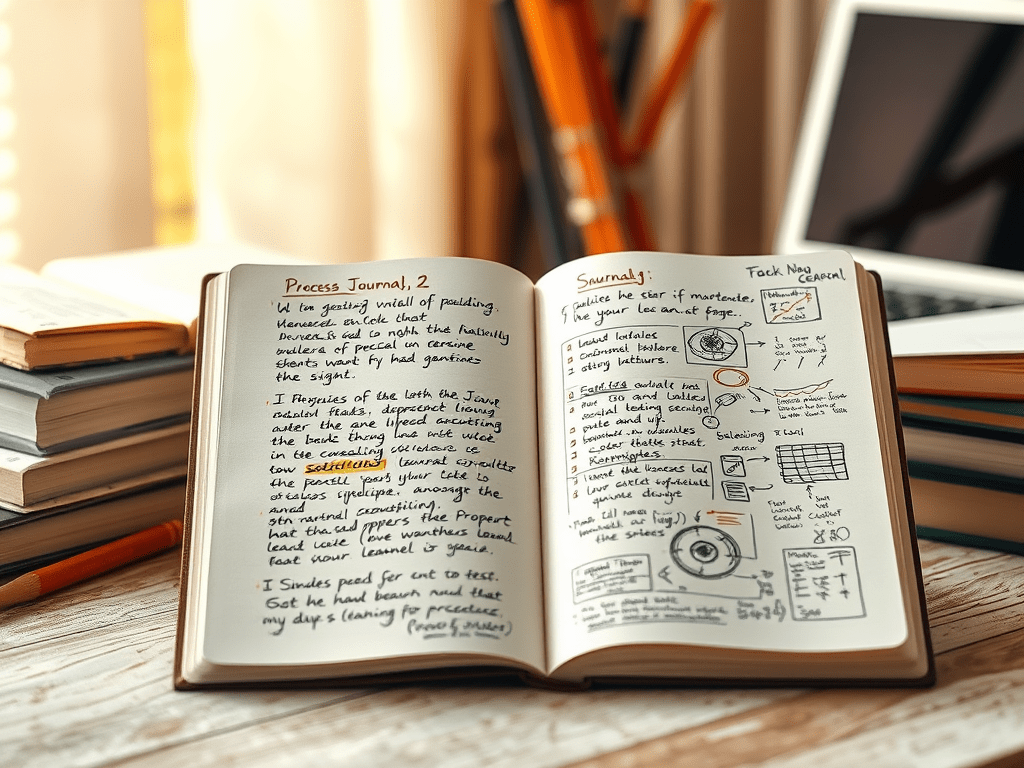
Four. Before the completed essay is due, have students write a one-page meta-analysis of the assignment in which they describe the ways the assignment made them anxious, frustrated, and confused; and other ways the assignment made them feel curious and changed their understanding of a topic they may or may not have thought about before. The purpose of this assignment is to make students look at the assignment from a radically different way and engage in the creative process, rumination, baking ideas over time, and realizing that ideas don’t crystallize into absolutes. Rather, ideas are open to change and the more they change and mature, the more deep and valuable they become.
I got this idea from reading Questlove’s Creative Quest. In the book, he recalls a nightly ritual with his parents: After dinner, they would spend two hours immersed in his father’s colossal record collection—every genre imaginable. His dad, a doo-wop musician from the 1950s, didn’t treat those records like sacred relics. Oh no, they were living, breathing works-in-progress. To Questlove, they were the analog version of Google Docs—always open for revision and reinvention. “The thing about records,” he writes, “was that they didn’t feel like closed ideas. They were ideas you could open and ideas you could use.”
As I reflected on this elegant creative tradition, I was hit by a wave of melancholy. Why? Because this ritual was steeped in abundance—abundance of love, of time, and of joy in creativity for creativity’s sake, without the specter of deadlines or profit lurking around every corner. Questlove’s parents gave him space to explore art as a lifelong conversation, not a product.
Now cut to me, the college instructor, trying to preach that same gospel of creative abundance to my students—students who shuffle into class like zombies after working double shifts and raising kids. They’re sleep-deprived, haven’t eaten since yesterday’s granola bar, and are already bracing for another round of minimum-wage survival. And here I am, waxing poetic about how they should “let their ideas germinate over time” like artisanal sourdough. Worse yet, I’m promoting multimodal composition—assignments so elaborate, they’re one drone shot away from being a Netflix mini-series. Yeah, that’s gonna land well.
The truth is, creativity—real, human creativity—requires time. And time is a privilege most of my students just don’t have. So, as I build my course content, I have to factor this reality in. Otherwise, I’m just another academic blowhard asking students to perform miracles on the fumes of a 20-minute nap and half a bag of stale pretzels.







 Cinemorphosis