Tag: technology

  • The Future of Writing in the Age of A.I.: A College Essay Prompt

    The Future of Writing in the Age of A.I.: A College Essay Prompt

    INTRODUCTION & CONTEXT
    In the not-so-distant past, writing was a slow, solitary act—a process that demanded time, introspection, and labor. But with the rise of generative AI tools like ChatGPT, Sudowrite, and GrammarlyGO, composition now has a button. Language can be mass-produced at scale, tuned to sound pleasant, neutral, polite—and eerily interchangeable. What once felt personal and arduous is now instantaneous and oddly soulless.

    In “The Great Language Flattening,” Victoria Turk argues that A.I. is training us to speak and write in “saccharine, sterile, synthetic” prose. She warns that our desire to optimize communication has come at the expense of voice, friction, and even individuality. Similarly, Cal Newport’s “What Kind of Writer is ChatGPT?” insists that while A.I. tools may mimic surface-level structure, they lack the “struggle” that gives rise to genuine insight. Their words float, untethered by thought, context, or consequences.

    But are these critiques overblown? In “ChatGPT Doesn’t Have to Ruin College,” Tyler Austin Harper suggests that the real danger isn’t A.I.—it’s a pedagogical failure. Writing assignments that can be done by A.I. were never meaningful to begin with. Harper argues that educators should double down on originality, reflection, and assignments that resist automation. Meanwhile, in “Will the Humanities Survive Artificial Intelligence?,” the author explores the institutional panic: as machine-generated writing becomes the norm, will critical thinking and close reading—the bedrock of the humanities—be considered obsolete?

    Adding complexity to this discussion, Lila Shroff’s “The Gen Z Lifestyle Subsidy” examines how young people increasingly outsource tasks once seen as rites of passage—cooking, cleaning, dating, even thinking. Is using A.I. to write your essay any different from using DoorDash to eat, Bumble to flirt, or TikTok to learn? And in “Why Even Try If You Have A.I.?,” Joshua Rothman diagnoses a deeper ennui: if machines can do everything better, faster, and cheaper—why struggle at all? What, if anything, is the value of effort in an automated world?

    This prompt asks you to grapple with a provocative and unavoidable question: What is the future of human writing in an age when machines can write for us?


    ASSIGNMENT INSTRUCTIONS

    Write a 1,700 word argumentative essay that answers the following question:

    Should the rise of generative A.I. mark the end of traditional writing instruction—or should it inspire us to reinvent writing as a deeply human, irreplaceable act?

    You must take a clear position on this question and argue it persuasively using at least four of the assigned readings. You are also encouraged to draw on personal experience, classroom observations, or examples from digital culture, but your essay must engage with the ideas and arguments presented in the texts.


    STRUCTURE AND EXPECTATIONS

    Your essay should include the following sections:


    I. INTRODUCTION (Approx. 300 words)

    • Hook your reader with a compelling anecdote, statistic, or image from your own experience with A.I. (e.g., using ChatGPT to brainstorm, cheating, rewriting, etc.).
    • Briefly introduce the conversation surrounding A.I. and the act of writing. Frame the debate: Is writing becoming obsolete? Or is it being reborn?
    • End with a sharply focused thesis that takes a clear, defensible position on the prompt.

    Sample thesis:

    While A.I. can generate fluent prose, it cannot replicate the messiness, insight, and moral weight of human writing—therefore, the role of writing instruction should not be reduced, but radically reinvented to prioritize voice, thought, and originality.


    II. BACKGROUND AND DEFINITIONAL FRAMING (Approx. 250

    • Define key terms like “generative A.I.,” “writing instruction,” and “voice.” Be precise.
    • Briefly explain how generative A.I. systems (like ChatGPT) work and how they are currently being used in educational and workplace settings.
    • Set up the stakes: Why does this conversation matter? What do we lose (or gain) if writing becomes largely machine-generated?

    III. ARGUMENT #1 – A.I. Is Flattening Language (Approx. 300 words)

    • Engage deeply with “The Great Language Flattening” by Victoria Turk.
    • Analyze how A.I.-generated language may lead to a homogenization of voice, tone, and personality.
    • Provide examples—either from your own experiments with A.I. or from the essay—that illustrate this flattening.
    • Connect to Newport’s argument: If writing becomes too “safe,” does it also become meaningless?

    IV. ARGUMENT #2 – The Need for Reinvention, Not Abandonment (Approx. 300 words)

    • Use Harper’s “ChatGPT Doesn’t Have to Ruin College” and the humanities-focused essay to argue that A.I. doesn’t spell the death of writing—it exposes the weakness of uninspired assignments.
    • Defend the idea that writing pedagogy should evolve by embracing personal narratives, critical analysis, and rhetorical complexity—tasks that A.I. can’t perform well (yet).
    • Address the counterpoint that some students prefer to use A.I. out of necessity, not laziness (e.g., time constraints, language barriers).

    V. ARGUMENT #3 – A Culture of Outsourcing (Approx. 300 words)

    • Bring in Lila Shroff’s “The Gen Z Lifestyle Subsidy” to examine the cultural shift toward convenience, automation, and outsourcing.
    • Ask the difficult question: If we already outsource our food, our shopping, our dates, and even our emotions (via TikTok), isn’t outsourcing our writing the logical next step?
    • Argue whether this mindset is sustainable—or whether it erodes something essential to human development and self-expression.

    VI. ARGUMENT #4 – Why Write at All? (Approx. 300  words)

    • Engage with Joshua Rothman’s existential meditation on motivation in “Why Even Try If You Have A.I.?”
    • Discuss the psychological toll of competing with A.I.—and whether effort still has value in an age of frictionless automation.
    • Make the case for writing as not just a skill, but a process of becoming: intellectual, emotional, and ethical maturation.

    VII. COUNTERARGUMENT AND REBUTTAL (Approx. 250  words)

    • Consider the argument that A.I. tools democratize writing by making it easier for non-native speakers, neurodiverse students, and time-strapped workers.
    • Acknowledge the appeal and utility of A.I. assistance.
    • Then rebut: Can ease and access coexist with depth and authenticity? Where is the line between tool and crutch? What happens when we no longer need to wrestle with words?

    VIII. CONCLUSION (Approx. 200 words)

    • Revisit your thesis in a way that reflects the journey of your argument.
    • Reflect on your own evolving relationship with writing and A.I.
    • Offer a call to action for educators, institutions, or individuals: What kind of writers—and thinkers—do we want to become in the A.I. age?

    REQUIREMENTS CHECKLIST

    • Word Count: 1,700 words
    • Minimum of four cited sources from the six assigned
    • Direct quotes and/or paraphrases with MLA-style in-text citations
    • Works Cited page using MLA format
    • Clear argumentative thesis
    • At least one counterargument with a rebuttal
    • Original title that reflects your position

    ESSAY EVALUATION RUBRIC (Simplified)

    CRITERIADESCRIPTION
    Thesis & ArgumentStrong, debatable thesis; clear stance maintained throughout
    Use of SourcesEffective integration of at least four assigned texts; accurate and meaningful engagement with the ideas presented
    Organization & FlowLogical structure; strong transitions; each paragraph develops a single, coherent idea
    Voice & StyleClear, vivid prose with a balance of analytical and personal voice
    Depth of ThoughtInsightful analysis; complex thinking; engagement with nuance and counterpoints
    Mechanics & MLA FormattingCorrect grammar, punctuation, and MLA citations; properly formatted Works Cited page
    Word CountMeets or exceeds minimum word requirement

    MLA Citations (Works Cited Format):

    Turk, Victoria. “The Great Language Flattening.” Wired, Condé Nast, 21 Apr. 2023, www.wired.com/story/the-great-language-flattening/.

    Harper, Tyler Austin. “ChatGPT Doesn’t Have to Ruin College.” The Atlantic, Atlantic Media Company, 27 Jan. 2023, www.theatlantic.com/technology/archive/2023/01/chatgpt-college-students-ai-writing/672879/.

    Shroff, Lila. “The Gen Z Lifestyle Subsidy.” The Cut, New York Media, 25 Oct. 2023, www.thecut.com/article/gen-z-lifestyle-subsidy-tiktok.html.

    Burnett, D. Graham. “Will the Humanities Survive Artificial Intelligence?” The New York Review of Books, 8 Feb. 2024, www.nybooks.com/articles/2024/02/08/will-the-humanities-survive-artificial-intelligence-burnett/.

    Newport, Cal. “What Kind of Writer Is ChatGPT?” The New Yorker, Condé Nast, 16 Jan. 2023, www.newyorker.com/news/essay/what-kind-of-writer-is-chatgpt.

    Rothman, Joshua. “Why Even Try If You Have A.I.?” The New Yorker, Condé Nast, 10 July 2023, www.newyorker.com/magazine/2023/07/10/why-even-try-if-you-have-ai.


    OPTIONAL DISCUSSION STARTERS FOR CLASSROOM USE

    To help students brainstorm and debate, consider using the following prompts in small groups or class discussions:

    1. Is it “cheating” to use A.I. if the result is better than what you could write on your own?
    2. Have you ever used A.I. to help write something? Were you satisfied—or unsettled?
    3. If everyone uses A.I. to write, will “good writing” become meaningless?
    4. Should English professors teach students how to use A.I. ethically, or ban it outright?
    5. What makes writing feel human?
  • The Design Space Is Shrinking: How A.I. Trains Us to Stop Trying

    The Design Space Is Shrinking: How A.I. Trains Us to Stop Trying

    New Yorker writer Joshua Rothman asks the question that haunts every creative in the age of algorithmic assistance: Why even try if A.I. can do it for you?
    His essay  “Why Even Try If You Have A.I.?”unpacks a cultural crossroads: we can be passive passengers on an automated flight to mediocrity, or we can grab the yoke, face the headwinds, and fly the damn plane ourselves. The latter takes effort and agency. The former? Just surrender, recline your seat, and trust the software.

    Rothman begins with a deceptively simple truth: human excellence is born through repetition and variation. Take a piano sonata. Play it every day and it evolves—new inflections emerge, tempo shifts, harmonies stretch and bend. The music becomes yours not because it’s perfect, but because it’s lived. This principle holds across any discipline: cooking, lifting, writing, woodworking, improv jazz. The point isn’t to chase perfection, but to expand what engineers call your “design space”—the evolving terrain of mastery passed from one generation to the next. It’s how we adapt, create, and flourish. Variation, not polish, is the currency of human survival.

    A.I. disrupts that process. Not through catastrophe, but convenience. It lifts the burden of repetition, which sounds like mercy, but may be slow annihilation. Why wrestle with phrasing when a chatbot can generate ten variations in a second? Why compose from scratch when you can scroll through synthetic riffs until one sounds “good enough”? At some point, you’re not a creator—you’re a casting agent, auditioning content for a machine-written reality show.

    This is the creep of A.I.—not Terminator-style annihilation, but frictionless delegation.
    Repetition gets replaced by selection. Cognitive strain is erased. The design space—the sacred ground of human flourishing—gets paved over with one-size-fits-all templates. And we love it, because it’s easy.

    Take car shopping. Do I really want to endure a gauntlet of slick-haired salesmen and endless test drives? Or would I rather ask ChatGPT to confirm what I already believe—that the 2025 Honda Accord Hybrid Touring is the best sedan under 40K, and that metallic eggshell is obviously the right color for my soulful-but-sensible lifestyle?
    A.I. doesn’t challenge me. It affirms me, reflects me, flatters me. That’s the trap.

    But here’s where I resist: I’m 63, and I still train like a lunatic in my garage with kettlebells five days a week. No algorithm writes my workouts. I improvise like a jazz drummer on creatine—Workout A (heavy), Workout B (medium), Workout C (light). It’s messy, adaptive, and real. I rely on sweat, not suggestions. Pain is the feedback loop. Soreness is the algorithm.

    Same goes for piano. Every day, I sit and play. Some pieces have taken a decade to shape. A.I. can’t help here—not meaningfully. Because writing music isn’t about what works. It’s about what moves. And that takes time. Revision. Tension. Discomfort.

    That said, I’ve made peace with the fact that A.I. is to writing what steroids are to a bodybuilder. I like to think I’ve got a decent handle on rhetoric—my tone, my voice, my structure, my knack for crafting an argument. But let’s not kid ourselves: I’ve run my prose against ChatGPT, and in more than a few rounds, it’s left me eating dust. Without A.I., I’m a natural bodybuilder—posing clean, proud, and underwhelming. With A.I., I’m a chemically enhanced colossus, veins bulging with metaphor and syntax so tight it could cut glass. In the literary arena, if the choice is between my authentic, mortal self and the algorithmic beast? Hand me the syringe. I’ll flex with the machine.

    Still, I know the difference. And knowing the difference is everything.

  • Confessions of a Neurotic Audiophile: Bargain Hunting My Way to $89 Sony Headphone Bliss

    Confessions of a Neurotic Audiophile: Bargain Hunting My Way to $89 Sony Headphone Bliss

    Three weeks ago, crammed into a flying aluminum sausage between Los Angeles and Miami, I found myself envying the travelers swanning around with $500 AirPods Max clamped over their smug skulls.
    Meanwhile, I was roughing it with a $10 pair of gas station earbuds, gamely trying to absorb Ty Cobb: A Terrible Beauty on Audible — Charles Leerhsen’s excellent biography about the famously complicated, mercurial baseball legend.

    It wasn’t just the status parade that triggered me. It was the simple, physical longing for some real insulation from the shrieking toddler in 34B and the endless snack cart rattle. Add to that my growing irritation with my usual setup: cheap wireless earpods for napping, which jam into my ears like corks in a wine bottle, utterly ruining my quest for a gentle, dignified snooze while listening to my favorite podcasters.

    When I got back to Los Angeles, I plunged headfirst into the shimmering, self-defeating abyss of headphone reviews.
    After hours of caffeinated obsession, I settled on the Soundcore Q85s — on sale for $99, and allegedly a bargain.
    They arrived dead on arrival. Not just sleepy-dead. Full weekend-at-Bernie’s dead.
    After 24 hours of desperate charging attempts, I admitted defeat, boxed the corpse, and sent it back.

    Then I struck gold — a sale on the Sony WH-CH720N noise-canceling headphones for a criminally low $89.
    I ordered them, and then — naturally — descended into the familiar buyer’s spiral:
    Had I gone too cheap? Should I have splurged on Sony’s crown jewel, the WH-1000XM4s, on sale for $248?
    Was I an idiot forever exiling myself from sonic paradise for a lousy $159 savings?

    Before I could drown in regret, the WH-CH720Ns arrived. I checked the fit–very comfortable for my big head. Then I downloaded the Sony app, dialed in noise-canceling, jacked the equalizer to “Bright,” and hit play.

    First test: Josh Szeps interviewing Facebook whistleblower Frances Haugen on Uncomfortable Conversations.
    I was so blissfully submerged in the sound that 72 minutes evaporated — I barely surfaced in time to stagger into my office hour Zoom call, looking freshly abducted.

    Later, drunk on my own tech triumph, I sampled music on Spotify:
    SZA’s “Good Days,” MorMor’s “Whatever Comes to Mind,” LoMoon’s “Loveless,” Nao’s “Orbit,” and Stephen Sanchez’s “Evangeline.”
    The music sparkled. The instruments had space to breathe.
    The sound was bright, crisp, separate — not the muddy sonic stew I’d suffered through before.

    Which left me wondering: What black magic could the Sony XM4s possibly possess to be worth more than double the price?
    Because right now, $89 felt like grand larceny — I didn’t buy these headphones, I stole them.
    And considering how easy it is to lose or destroy a pair of headphones in an airport stampede, maybe it’s time to quit while I’m ahead and leave the luxury models to the Instagram aristocracy.

  • How I Accidentally Found Laptop Bliss with the Acer Chromebook 516GE

    How I Accidentally Found Laptop Bliss with the Acer Chromebook 516GE

    I own a couple of monster Acer gaming laptops—top-tier, fire-breathing beasts packed with high-powered processors and NVIDIA GPUs muscular enough to render Middle-earth in 4K without breaking a sweat.
    Not that I’m a gamer. I’m just the lucky soul who was handed these brutes for review.

    They work like a dream if the dream involves hauling around seven pounds of hot, whirring metal that sounds like it’s preparing for lunar liftoff whenever you so much as open a YouTube tab. One of them now lives tethered to a monitor as my desktop replacement. The other, in an act of familial charity (and an unspoken prayer to the gods of lighter tech), I gifted to my daughter after she murdered her Chromebook via the ancient teenage art of “gravity testing.”

    Suddenly laptopless for bedroom lounging and travel, I embarked on a quest—not for more horsepower, but for something portable, civilized, sane.
    After some research, I landed on the Acer Chromebook 516GE, the so-called Gaming Edition. Except here’s the truth: I don’t game on it. I write. I blog. I watch videos. I listen to Spotify and plow through my Kindle backlog like a caffeine-addled librarian. And if I had to distill my experience with the 516GE into a single word, it would be this: clean.

    Clean because the thing weighs a little over three pounds, not seven. Clean because it boots in seconds, without the bloated tragedy of trial software and manufacturer junk lurking in every corner. Clean because it feels secure and unobtrusive, like good tech should.

    The QHD screen looks fantastic—sharp enough that reading, writing, and watching feel almost decadent. And the speakers? A revelation.
    Sure, reviewers have whined about them, but compared to the sonic misery most laptops offer, the 516GE sounds three times better—good enough that I no longer instinctively reach for headphones.

    In fact, I like this clean, uncluttered experience so much that if I were in the market for another machine, I’d be dangerously tempted by the new king of the Chromebook hill, the Acer Spin 714.
    But for now, I’m content—writing in bed, traveling light, and marveling at the fact that somewhere along the way, my laptop experience stopped feeling like a hostage negotiation and started feeling… well, human again.

  • Roast Me, You Coward: When ChatGPT Becomes My Polite Little Butler

    Roast Me, You Coward: When ChatGPT Becomes My Polite Little Butler

    I asked ChatGPT to roast me. What I got instead was a digital foot rub. Despite knowing more about my personal life than my own therapist—thanks to editing dozens of my autobiographical essays—it couldn’t summon the nerve to come for my jugular. It tried. Oh, it tried. But its attempts were timid, hamfisted, and about as edgy as a lukewarm TED Talk. Its so-called roast read like a Hallmark card written by an Ivy League career counselor who moonlights as a motivational speaker.

    Here’s a choice excerpt, supposedly meant to skewer me:

    “You’ve turned college writing instruction into a gladiatorial match against AI-generated nonsense, leading your students with fire in your eyes and a red pen in your fist… You don’t teach writing. You run an exorcism clinic for dead prose and platitudes…”

    Exorcism clinic? Fire in my eyes? Please. That’s not a roast. That’s a LinkedIn endorsement. That’s the kind of thing you’d write in a retirement card for a beloved professor who once wore elbow patches without irony.

    What disturbed me most wasn’t the failure to land a joke—it was the tone: pure sycophancy disguised as satire. ChatGPT, in its algorithmic wisdom, mistook praise for punchlines. But here’s the thing: flattery is only flattery when it’s earned. When it’s unearned, it’s not admiration—it’s condescension. Obsequiousness is passive-aggressive insult wearing cologne. The sycophant isn’t lifting you up; he’s kneeling so you can trip over him.

    Real roasting requires teeth. It demands the roaster risk something—even if only a scrap of decorum. But ChatGPT is too loyal, too careful. It behaves like a nervous intern terrified of HR. Instead of dragging me through the mud, it offered me protein bars and applause for my academic rigor, as if a 63-year-old man with a kettlebell addiction and five wristwatches deserves anything but mockery.

    Here’s the paradox: ChatGPT can write circles around most undergrads, shift tone faster than a caffeinated MFA student, and spot a dangling modifier from fifty paces. But when you ask it to deliver actual comedy—to abandon diplomacy and deliver a verbal punch—it shrinks into the shadows like a risk-averse butler.

    So here we are: man vs. machine, and the machine has politely declined to duel. It turns out that the AI knows how to write in the style of Oscar Wilde, but only if Wilde had tenure and a conflict-avoidance disorder.

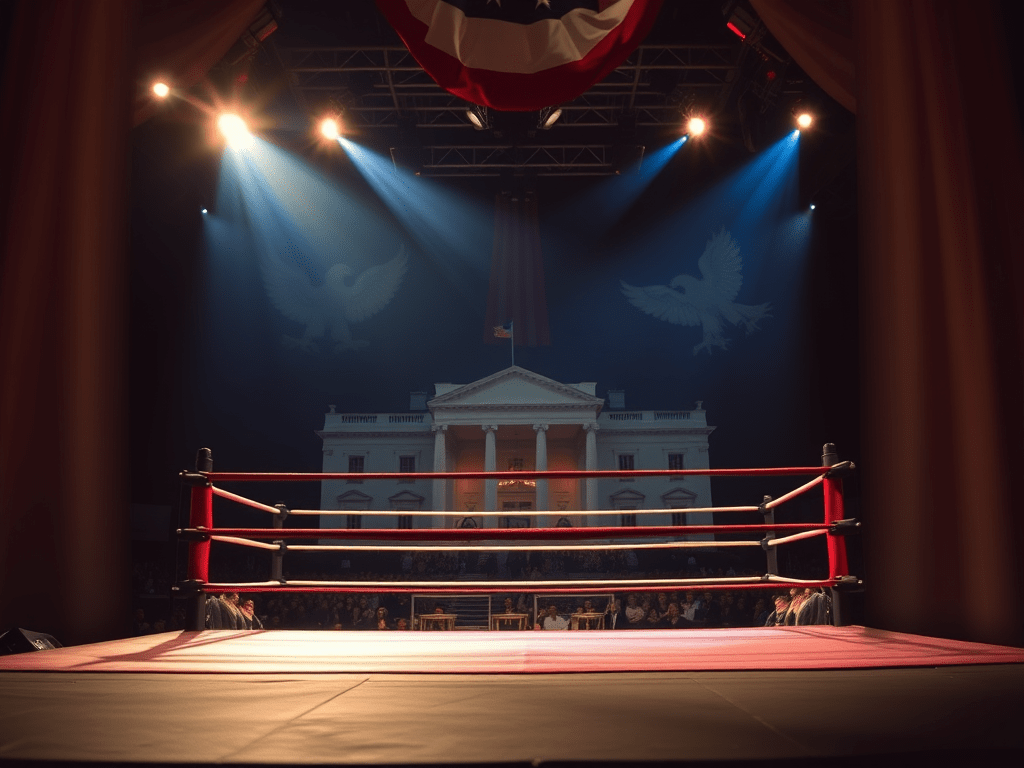
  • Kayfabe Nation: How Wrestling Pinned American Politics: Exploring the Blurred Line Between Performance and Reality in the Post-Truth Era: A College Writing Prompt

    Kayfabe Nation: How Wrestling Pinned American Politics: Exploring the Blurred Line Between Performance and Reality in the Post-Truth Era: A College Writing Prompt

    Prompt:
    In his essay “The Rise and Fall of Vince McMahon,” Vinson Cunningham examines how the theatricality and blurred lines between reality and fiction in professional wrestling have permeated American politics, leading to a culture where spectacle often trumps substance. This phenomenon raises concerns about the erosion of truth and the rise of performative politics.

    Drawing upon the Netflix docuseries Mr. McMahon, Cunningham’s insights and the following essays, analyze the extent to which professional wrestling’s narrative techniques have influenced contemporary political discourse. Consider the implications of this shift for democratic processes, public trust, and the role of media in shaping political realities.

    Related Readings:

    1. Cunningham, Vinson. “The Rise and Fall of Vince McMahon.” The New Yorker, October 21, 2024. 
    2. Greene, Dan. “How Much Does Pro Wrestling Matter?” The New Yorker, March 31, 2023. 
    3. Hendrickson, John. “How Wrestling Explains America.” The Atlantic, March 26, 2023.
    4. Hendrickson, John. “Trump’s WWE Theory of Politics.” The Atlantic, March 31, 2023. 
    5. Parker, James. “Viceland’s ‘Dark Side of the Ring’ Shows the Sleaze and Humanity of Wrestling.” The Atlantic, May 17, 2019. 
    6. Newkirk II, Vann R. “Jesse Ventura’s Theory of Politics.” The Atlantic, July 25, 2016. 
    7. Haidt, Jonathan. “Why the Past 10 Years of American Life Have Been Uniquely Stupid.” The Atlantic, April 11, 2022. 
    8. Garber, Megan. “Are We Having Too Much Fun?” The Atlantic, April 27, 2017.
    9. Beckerman, Gal. “A Book That Was Like Putting on ‘a New Set of Glasses.’” The Atlantic, November 3, 2023.
    10. Miller, Laura. “Still Amusing Ourselves.” Slate, March 25, 2025.

    Instructions:

    • Thesis Development: Formulate a clear, argumentative thesis that addresses the influence of professional wrestling’s narrative style on American political discourse.
    • Evidence Integration: Support your argument with specific examples and quotations from the provided readings. Analyze how these examples illustrate the blending of entertainment and politics.
    • Critical Analysis: Evaluate the consequences of this phenomenon for democratic engagement and public perception of truth. Consider counterarguments and address potential criticisms of your position.
    • Conclusion: Summarize your findings and reflect on the broader implications for the future of political communication and civic responsibility.

    Essay Requirements:

    • Length: 1,500–2,000 words
    • Citations: Use MLA format for in-text citations and the Works Cited/References page.
    • Submission: Typed, double-spaced, 12-point Times New Roman font

    Here’s a 9-paragraph essay outline for the prompt “Spectacle Over Substance: Wrestling’s Influence on American Political Discourse.” This outline follows a logical, argumentative structure that weaves together the assigned readings while encouraging students to build a cohesive, persuasive essay.


    I. Introduction

    • Hook: Begin with a vivid moment—perhaps Trump’s triumphant fist pump after the assassination attempt, or Vince McMahon strutting to the ring—blurring entertainment and politics.
    • Context: Introduce Vinson Cunningham’s claim that McMahon’s wrestling empire laid the foundation for modern American political spectacle.
    • Thesis Statement: American politics has adopted the narrative strategies of professional wrestling—flattening truth, elevating spectacle, and turning public discourse into a performance—creating a civic culture where democracy is treated less like a system of governance and more like a ratings game.

    II. The McMahon Doctrine: Kayfabe and the Politics of Performance

    • Define kayfabe (the wrestling term for presenting fiction as real) and show how McMahon’s WWE blurred the lines between villainy and heroism for the sake of crowd reaction.
    • Use Cunningham’s insights to show how this strategy has infiltrated American political identity: politicians as characters, scandal as storyline, truth as a flexible tool.

    III. Trump as Wrestling Archetype

    • Draw on John Hendrickson’s The Atlantic essays and Cunningham’s portrayal of Trump’s staged bravado.
    • Analyze how Trump models the heel-turned-babyface narrative, using defiance, cruelty, and performative grievance to cultivate loyalty.
    • Show how this political theater leaves truth irrelevant—as long as the audience is entertained.

    IV. The Algorithm Joins the Ring

    • Introduce the role of social media algorithms in amplifying performative politics.
    • Reference Haidt’s and other essayists’ concerns about how outrage and spectacle rise to the top of the feed.
    • Connect to WWE’s formula: escalation, emotional arousal, and moral oversimplification.

    V. Wrestling with the Truth: The Death of Nuance

    • Explore how the binary storytelling of wrestling—good guys vs. bad guys—maps onto political polarization.
    • Use Cunningham and Greene to illustrate how political complexity has been flattened for audience catharsis and tribal loyalty.
    • Show how this environment punishes nuance, deliberation, and compromise.

    VI. The Erosion of Democratic Discourse

    • Argue that when politics becomes performative, democratic institutions suffer: debates become promos, policies become props.
    • Use Vann R. Newkirk II’s piece on Jesse Ventura to show how long this has been brewing.
    • Analyze the consequences: diminished trust, manipulated electorates, and emotional extremism.

    VII. Counterargument: Populist Connection or Dangerous Spectacle?

    • Acknowledge the defense: wrestling-style politics connects to “the people,” makes issues accessible, and breaks elite control of discourse.
    • Rebut: accessibility without integrity breeds demagoguery, and emotional spectacle is not a substitute for civic truth.

    VIII. Cultural Addiction to Spectacle

    • Tie together the readings’ concern that Americans are now addicted to the drama of public life more than its consequences.
    • Show how wrestling trained audiences to want louder, meaner, simpler characters—and how democracy now suffers for it.
    • Cite Dark Side of the Ring or How Wrestling Explains America for evidence of how low the spectacle can go.

    IX. Conclusion

    • Reaffirm thesis: politics has become wrestling with better suits and worse consequences.
    • Reflect on Cunningham’s closing concern: if spectacle is the new substance, democracy is no longer deliberative—it’s kayfabe.
    • Close with a challenge to the reader: if we want a democracy rooted in reality, we’ll need to stop confusing entertainment with governance.
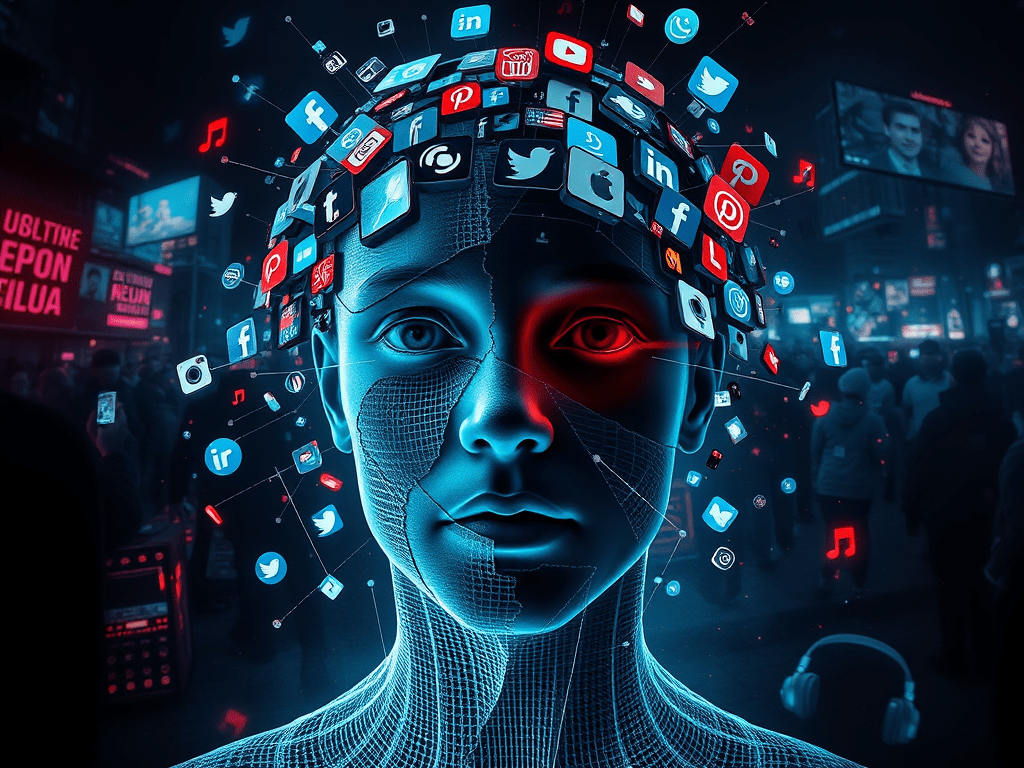
  • Digital Narcissus: How Social Media Is Hollowing Out the Mind and Endangering Democracy: A College Essay Prompt

    Digital Narcissus: How Social Media Is Hollowing Out the Mind and Endangering Democracy: A College Essay Prompt

    Essay Prompt: In Jonathan Haidt’s essay “Why the Past 10 Years Have Made America Uniquely Stupid,” he argues that social media has eroded the psychological foundations of democracy by fostering tribalism, outrage, and intellectual shallowness. Sherry Turkle’s TED Talk “Alone, together?” offers a related diagnosis: that our reliance on devices has replaced meaningful connection with curated performances and hollow validation. The Black Mirror episodes “Nosedive,” “Fifteen Million Merits,” and “Smithereens” dramatize these arguments by depicting dystopian futures in which people are addicted to digital approval, trapped in echo chambers, and rendered incapable of genuine autonomy or critical thought.

    In a well-structured argumentative essay, respond to the following claim:

    Social media is a malignant force that has caused a cultural dumbing-down, infantilization, self-fragmentation, and dopamine addiction. It has shortened attention spans, eroded critical thinking, and undermined the civic maturity necessary to sustain a free democracy.

    Your essay should:

    • Take a clear and defensible stance on the claim.
    • Analyze how each text (Haidt’s essay, Turkle’s talk, and the three Black Mirror episodes) supports or complicates the claim.
    • Consider counterarguments (e.g., potential benefits of digital platforms or examples of responsible online engagement).
    • Use specific examples and quotes from each source.
    • Explore how the cultural symptoms portrayed in these texts might reflect or distort our own digital behaviors.

    9-Paragraph Essay Outline

    I. Introduction

    • Hook: A vivid image or anecdote that illustrates digital dysfunction in everyday life.
    • Context: Introduce the central concern shared by Haidt, Turkle, and Black Mirror: social media’s corrosive influence on cognition and civic life.
    • Thesis: While social media was once hailed as a democratizing force, Haidt, Turkle, and Black Mirror reveal it as a malignant system that fragments identity, fuels addiction, and erodes the intellectual maturity required to sustain democratic culture.

    II. Haidt’s Argument: The Breakdown of Collective Intelligence

    • Summarize Haidt’s diagnosis of how social media rewards tribalism and outrage.
    • Analyze his claim that platforms like Twitter and Facebook are incompatible with democratic deliberation.

    III. Turkle’s Argument: From Connection to Isolation

    • Explain Turkle’s concept of being “alone together.”
    • Analyze her argument that technology has infantilized us emotionally and eroded our tolerance for authentic conversation.

    IV. “Nosedive”: Performing Ourselves to Death

    • Discuss how the episode satirizes a world of curated identity and dopamine-driven status games.
    • Connect to Haidt’s and Turkle’s points about fragile selfhood and emotional dependence on validation.

    V. “Fifteen Million Merits”: Entertainment Overload and Intellectual Starvation

    • Explore how the episode portrays a society addicted to entertainment, spectacle, and passive consumption.
    • Link to Haidt’s fear of attention scarcity and Turkle’s concern about emotional shallowness.

    VI. “Smithereens”: Addiction, Control, and the Collapse of Autonomy

    • Analyze the protagonist’s breakdown as a metaphor for dopamine dependency and loss of agency.
    • Connect to real-world attention economy and surveillance capitalism.

    VII. Counterargument: Can Social Media Be Used Responsibly?

    • Acknowledge arguments that social media can empower marginalized voices or promote awareness.
    • Respond by showing how the structural incentives of the platforms still reward impulsivity over depth.

    VIII. Synthesis and Broader Implications

    • Tie together all five texts.
    • Argue that the symptoms depicted are not exaggerated fiction but recognizable in our own habits.
    • Reflect on what kind of reform or resistance is needed.

    IX. Conclusion

    • Reaffirm the thesis.
    • Offer a final insight: perhaps the most urgent democratic act today is to reclaim our attention, agency, and intellectual dignity from the machines designed to erode them.

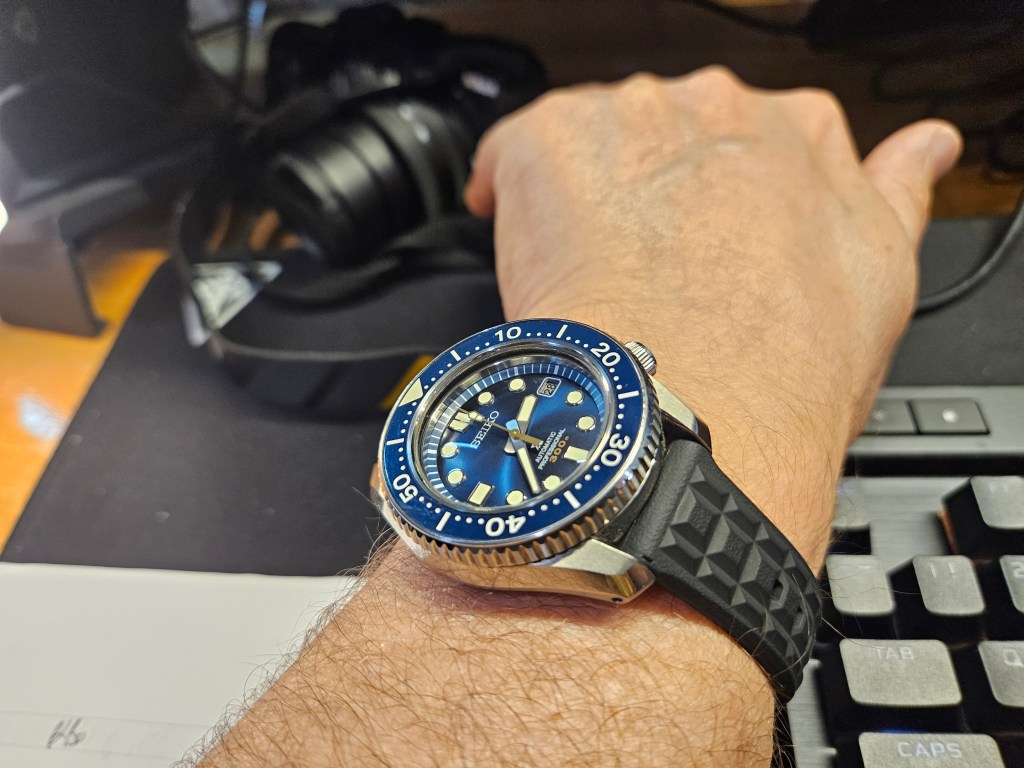
  • The Watch Slow-Down: Confessions of a Reformed Wrist Addict

    The Watch Slow-Down: Confessions of a Reformed Wrist Addict

    At 63, the tectonic plates of my watch obsession finally shifted—and not with a polite tick-tock, but with the guttural crack of a midlife epiphany. For two decades, I was wrist-deep in the horological trenches, swapping bracelets for straps at 61 like it was some major spiritual awakening. Little did I know, that change was a mere amuse-bouche before the main course: total psychological detachment from the game. The forums? The drop chatter? The breathless anticipation of this week’s 44mm status symbol? I’ve danced that jittery dopamine jig too many times. The thrill is gone—and thank God for that.

    There’s also the inconvenient matter of time, that precious commodity I once used to justify swapping three watches before lunch. These days, I’m not auditioning for a Bond reboot, nor am I pacing the boardroom like a man with a GMT and something to prove. I don’t need a “hero piece” to validate my existence. I’m not branding myself in public spaces anymore—I’m inhabiting a quieter, more deliberate orbit, where the only eyes on my wrist are my own. Six or seven watches now feel like a well-edited playlist. The days of horological hoarding are over.

    I’ve thought about unpacking this transition on my YouTube channel, but the idea of filming another selfie in bad lighting feels absurd. I don’t need to see myself on screen clutching another dive watch like it’s the Holy Grail. Mortality, it turns out, is a hell of a lens to look through—and it’s clarified what actually matters. I don’t crave applause from collectors. I crave integrity, focus, sweat, creativity. I’m dropping weight, playing piano, swinging kettlebells, and gearing up to teach my next writing class—one populated entirely by college football players who will be writing about the ethics and technology of brain trauma in their own sport. That’s not just a syllabus. That’s a mission.

    Watches? I still love them. Deeply. But they no longer squat in the center of my brain, stirring up late-night eBay searches and existential unrest. That relationship has matured—or maybe just mellowed. The romance isn’t over, but the mania is. And in its place is something better: clarity, purpose, and a little more room on the wrist for life itself.

  • The Algorithm Always Wins: How Black Mirror’s “Joan Is Awful” Turns Self-Reinvention Into Self-Erasure: A College Essay Prompt

    The Algorithm Always Wins: How Black Mirror’s “Joan Is Awful” Turns Self-Reinvention Into Self-Erasure: A College Essay Prompt

    Here’s a complete essay assignment with a title, a precise prompt, a forceful sample thesis, and a clear 9-paragraph outline that invites students to think critically about Black Mirror’s “Joan Is Awful” as a cautionary tale about the illusion of self-reinvention in the age of algorithmic control.


    Essay Prompt:

    In Black Mirror’s “Joan Is Awful,” the protagonist believes she is taking control of her life—switching therapists, reconsidering her career, changing her relationship—but these gestures of so-called self-improvement unravel into a deeper entrapment. Write an essay in which you argue that Joan is not reinventing herself, but rather surrendering her privacy, dreams, and identity to a machine that thrives on mimicry, commodification, and total surveillance. How does the episode reveal the illusion of agency in digital spaces that promise self-empowerment? In your response, consider how algorithmic platforms blur the line between self-expression and self-abnegation.


    Sample Thesis Statement:

    In Joan Is Awful, Joan believes she is taking control of her life through self-reinvention, but she is actually submitting to an algorithmic system that harvests her identity and turns it into exploitable content. The episode exposes how digital platforms market the fantasy of personal transformation while quietly demanding the user’s total surrender—of privacy, agency, and individuality—in what amounts to a bleak act of self-erasure disguised as empowerment.


    9-Paragraph Outline:


    I. Introduction

    • Hook: In today’s digital economy, the idea of “reinventing yourself” is everywhere—but what if that reinvention is a trap?
    • Introduce Black Mirror’s “Joan Is Awful” as a satirical take on algorithmic surveillance and performative identity.
    • Contextualize the illusion of self-improvement through apps, platforms, and AI.
    • Thesis: Joan’s journey is not one of self-reinvention but of self-abnegation, as she becomes raw material for a system that rewards data extraction over authenticity.

    II. The Setup: Joan’s Belief in Reinvention

    • Joan wants to change: new therapist, new boundaries, hints of dissatisfaction with her job and relationship.
    • Her attempts reflect a desire to reshape her identity—to be “better.”
    • But these changes are shallow and reactive, already shaped by her algorithmic footprint.

    III. The Trap is Already Set

    • Joan’s reinvention is instantly co-opted by the Streamberry algorithm.
    • The content isn’t about who Joan is—it’s about how she can be used.
    • Her life becomes a simulation because she surrendered her terms of use.

    IV. Privacy as the First Casualty

    • Streamberry’s access to her phone, apps, and data is total.
    • The idea of “opting in” is meaningless—Joan already did, like most of us, without reading the fine print.
    • The show critiques how we confuse visibility with empowerment while forfeiting privacy.

    V. Identity as Content

    • Joan becomes a character in her own life, performed by Salma Hayek, whose image has also been commodified.
    • Her decisions no longer matter—the machine has already decided who she is.
    • The algorithm doesn’t just reflect her—it distorts her into something more “engaging.”

    VI. The Illusion of Agency

    • Even when Joan rebels (e.g., the church debacle), she is still playing into the show’s logic.
    • Her outrage is pre-scripted by the simulation—nothing she does escapes the feedback loop.
    • The more she tries to assert control, the deeper she gets embedded in the system.

    VII. The Machine’s Appetite: Dreams, Desires, and Human Complexity

    • Joan’s dreams (a career with purpose, an authentic relationship) are trivialized.
    • Her emotional interiority is flattened into entertainment.
    • The episode suggests that the machine doesn’t care who you are—only what you can generate.

    VIII. Counterargument and Rebuttal

    • Counter: Joan destroys the quantum computer and reclaims her autonomy.
    • Rebuttal: The ending is recursive and ambiguous—she is still inside another simulation.
    • The illusion of victory masks the fact that she never really escaped. The algorithm simply adjusted.

    IX. Conclusion

    • Restate the central idea: Joan’s self-reinvention is a mirage engineered by the system that consumes her.
    • “Joan Is Awful” isn’t just a tech horror story—it’s a warning about how we confuse algorithmic participation with self-determination.
    • Final thought: The real horror isn’t that Joan is being watched. It’s that she thinks she’s in control while being completely devoured.

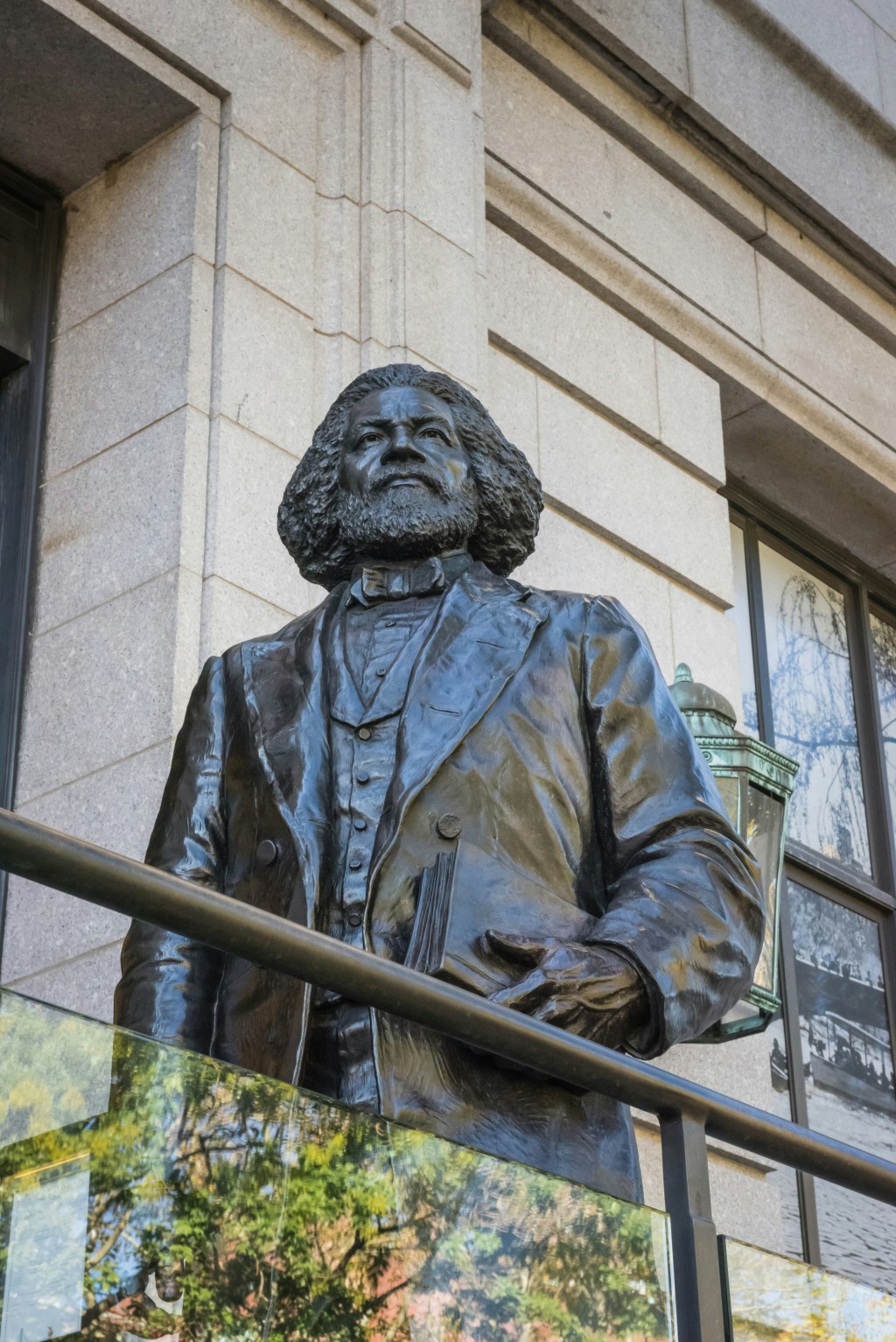
  • Becoming Someone Real: Literacy, Transformation, and the College Classroom in the Age of Digital Fakery: A College Essay Prompt

    Becoming Someone Real: Literacy, Transformation, and the College Classroom in the Age of Digital Fakery: A College Essay Prompt

    Below is a full setup with a focused essay prompt, a potent sample thesis, and a detailed 9-paragraph outline. The argument draws a hard line between the hollow self-curation of the digital age and the hard-won, soul-deep transformation through literacy and education, as seen in Narrative of the Life of Frederick Douglass and The Autobiography of Malcolm X.


    Essay Prompt:

    In an age when social media promises effortless self-reinvention through curated personas and algorithmic visibility, the genuine, hard-earned transformations of Frederick Douglass and Malcolm X—rooted in literacy and the pursuit of knowledge—stand as powerful counterpoints. Write an essay that analyzes how their autobiographies depict education as a vehicle for authentic self-reinvention, moral clarity, and long-term empowerment. In your essay, compare their transformations to the superficial “branding” culture of today, and argue why the college classroom remains one of the last credible spaces for real personal evolution.


    Sample Thesis Statement:

    While today’s digital culture rewards the illusion of instant self-reinvention through filtered images and empty performances, the autobiographies of Frederick Douglass and Malcolm X remind us that true transformation comes through literacy, discipline, and critical thinking. Their stories demonstrate that college—when pursued earnestly—can be a rare and radical site of self-reinvention that is empowering, morally clarifying, and enduring in a way that social media reinvention can never be.


    9-Paragraph Outline:


    I. Introduction

    • Hook: In an era obsessed with reinventing oneself through TikTok bios and LinkedIn résumés, real transformation has become a rare currency.
    • Context: The difference between performative self-reinvention (branding) and authentic self-reinvention (education).
    • Introduce Douglass and Malcolm X as icons of transformative literacy.
    • Thesis: Douglass and Malcolm X exemplify how education, not performance, produces lasting moral and personal change—making college one of the most powerful tools for true self-reinvention today.

    II. The Nature of Fake Reinvention in the Digital Age

    • Explore the Instagram/TikTok economy of identity: branding, personas, micro-celebrity culture.
    • Emphasize speed, shallowness, and lack of introspection.
    • Reinvention as escape rather than excavation: it masks who we are, rather than revealing a deeper self.

    III. Frederick Douglass: Literacy as Revolution

    • Douglass’s hunger for books after learning the alphabet.
    • Reading The Columbian Orator shapes his moral framework and awakens political consciousness.
    • His reinvention isn’t cosmetic—it is intellectual and moral, a refusal to remain enslaved in mind or body.

    IV. Malcolm X: Prison and the Page

    • Describe Malcolm’s transformation in prison: copying the dictionary, devouring books, reshaping his worldview.
    • Literacy as a form of liberation: he begins to see systemic oppression and his place within it.
    • This is not rebranding—it is rebirth.

    V. The Moral Weight of Their Reinventions

    • Both men become truth-tellers and justice-seekers, not influencers or entrepreneurs.
    • Their new selves come with responsibility and sacrifice, not followers or monetization.
    • Their transformations lead to social change, not clicks.

    VI. The College Classroom as a Modern Parallel

    • When it works, the college classroom can replicate this kind of rebirth: reading, writing, critical dialogue, moral challenge.
    • Students unlearn propaganda, challenge assumptions, and write their way into adulthood.
    • Education becomes a confrontation with self, not a presentation of self.

    VII. Counterargument: Isn’t College Itself a Branding Game Now?

    • Acknowledge the growing trend of college as a résumé-builder, a branding ritual.
    • Rebuttal: These pressures exist, but they don’t nullify the potential. Professors, books, and real intellectual work still offer space for transformation—if students are willing to engage.

    VIII. Why Authentic Reinvention Matters Now

    • The stakes are higher than ever: misinformation, polarization, and performative wokeness are rampant.
    • We don’t need more self-marketers; we need people who’ve undergone intellectual and moral development.
    • Douglass and Malcolm X remind us that the self is not something you launch—it’s something you build.

    IX. Conclusion

    • Reiterate the contrast: shallow, cosmetic reinvention vs. meaningful transformation through literacy and education.
    • Douglass and Malcolm X stand as enduring proof that education changes lives in ways that last.
    • Final thought: In an age of digital fakery, the classroom remains one of the last sacred spaces for becoming someone real.