Tag: travel

  • Why Good Salsa Matters

    Why Good Salsa Matters

    In 1967, my father took me to the grand opening of a Taco Bell in San Jose, California. This was my first encounter with fast food as spectacle—and with teenagers as a category of human being. They stood behind the registers in a loose formation, and every one of them appeared to be afflicted with the same alarming facial condition. Spots everywhere. An outbreak.

    I was five. I did the math available to me. Had a disease swept through the workforce? Did Taco Bell exposure cause lesions? Were the refried beans radioactive?

    I asked my father what was wrong with their faces.

    “They’re pimples,” he said. Then, without hesitation, he added, “According to Aristotle, God gives pimples to teenagers to teach them humility.”

    I knew immediately this was untrue. Not because I had read Aristotle—I hadn’t—but because I knew my father. This was him doing what he loved most: inventing authority on the spot. He also harbored a low-grade contempt for teenagers, whom he regarded as overconfident and undercooked. Acne, in his view, was divine pushback. Cosmic slapstick.

    The pimples unsettled me, but they did not interfere with my appetite. I ate my tacos and frijoles under the Taco Bell canopy, admiring the beige stone “Mexican” architecture—the aesthetic equivalent of a sombrero on a filing cabinet. The food itself was a novelty. We didn’t eat Mexican food, and Taco Bell certainly wasn’t Mexican food, but it was a portal. A gateway drug.

    Within a few years, my mother was making tacos, burritos, and enchiladas at home. Our Mexican-American neighbors, Mike and Felice Orozco, made salsa from ingredients grown in our own backyards. The salsa lived on the coffee table in a volcanic tureen, like something sacred and faintly dangerous. You could smell it the moment you walked into the living room—chilies, onions, garlic, alive and unapologetic.

    The color stopped you. A deep ruby red. Not restaurant red. Not industrial red. Real red. I have eaten excellent salsa over the decades, but nothing has ever matched the salsa Felice Orozco taught my mother to make in the late 1960s. Even now, if a Mexican restaurant brings out a pre-meal salsa that approaches that standard—even halfway—I take it as a sign of moral seriousness.

    Felice Orozco’s salsa wasn’t just delicious. It was philosophical. It carried an unspoken argument about what survives and what matters. When families pass down food traditions, they’re saying something quietly radical: some knowledge deserves care, repetition, and fidelity. This isn’t about novelty or performance. It’s not about artisanal swagger or bragging rights. It’s about love made practical. Wisdom with onions.

    So what was Taco Bell to me as a child? A desecration of Mexican food? No. It was a signpost. A crude outpost with a faint aroma of the real thing. It pointed toward a richer city beyond itself—a place where food meant connection, where flavors carried memory and generosity.

    The sign didn’t point south.
    It pointed to Felice Orozco’s house.

  • Living in the Bottle: A Life Spent Building Cozy Universes

    Living in the Bottle: A Life Spent Building Cozy Universes

    My parents like to remind me that I grew up poor in a cockroach-infested assisted-living situation in Gainesville, Florida. The place was called Flavet Villages—Flavet, if you lived there, which everyone did because there was nowhere else to go. These were not “villages” in any meaningful sense. They were World War II–era Camp Blanding army barracks, uprooted from Jacksonville and dropped into North Florida like surplus history.

    What I love, even now, is the audacity of the name. Flavet Villages. It’s a master class in rebranding: take a barracks crawling with roaches and give it a pastoral plural noun. It’s the real-estate equivalent of dabbing Vicks VapoRub on your neck and calling it Menthol d’Après-Minuit.

    Flavet sat near an alligator swamp and a stretch of forest that felt mythic to me, even then. A Mynah bird lived there—always on the same branch, like a sentry or an oracle—and before bedtime my father and I would walk to the edge of the woods and talk to it. At dusk, the tide dropped, and the swamp revealed itself. Alligator dung, fully expressed. The smell was feral and unmistakable. While most people would recoil, I found it oddly soothing—bracing, even. As if the universe were saying, You’re here. This is real.

    As a native Floridian, I sometimes wonder—with a perverse sense of pride—whether my early exposure to fecal alligator swamps permanently rewired my sensory thresholds in ways outsiders could never understand.

    One evening, as my father and I stood at the forest’s edge, we heard a distant radio playing Juanita Hall’s rendition of “Bali Ha’i” from South Pacific. The song is about an island paradise that seems achingly close yet forever unreachable, and it’s meant to induce longing and melancholy. But I felt none of that. Paradise was already present. I was standing in an enchanted forest with my storytelling father, a talking bird, mythical alligators nearby, and music drifting in like a siren call. This was not longing; this was habitation. I lived in a fairy tale and had no interest in leaving it.

    That same ache—for a magical enclosure—returned when I was five and living in the Royal Lanai Apartments in San Jose. The grounds were landscaped with sunflowers and volcanic rock, and as I walked to the playground I would stare at the flower beds and wish I could shrink myself down to Lilliputian size and live inside them forever. That was my first lesson in coziness: the idea that a small, bounded world could feel safer, richer, and more alive than the vast one surrounding it.

    Then came I Dream of Jeannie. Barbara Eden’s blonde goddess lived inside a genie bottle—a jewel-lined cocoon with a purple circular sofa and pink satin pillows glowing like some erotic reliquary. More than anything, I wanted to live in that bottle with her. The impossibility of that wish crushed me with the same quiet sadness as “Bali Ha’i.” That the bottle was, in reality, a painted Jim Beam decanter only deepened the metaphor. I was intoxicated by fantasy long before I understood the word.

    Flavet Village, the swamp forest, the Royal Lanai flower beds, Jeannie’s bottle—these were all variations on the same theme: cozy ecosystems that stood apart from the real world while quietly shaping how I understood it. Without those parallel universes, reality would have been flatter, harsher, less survivable.

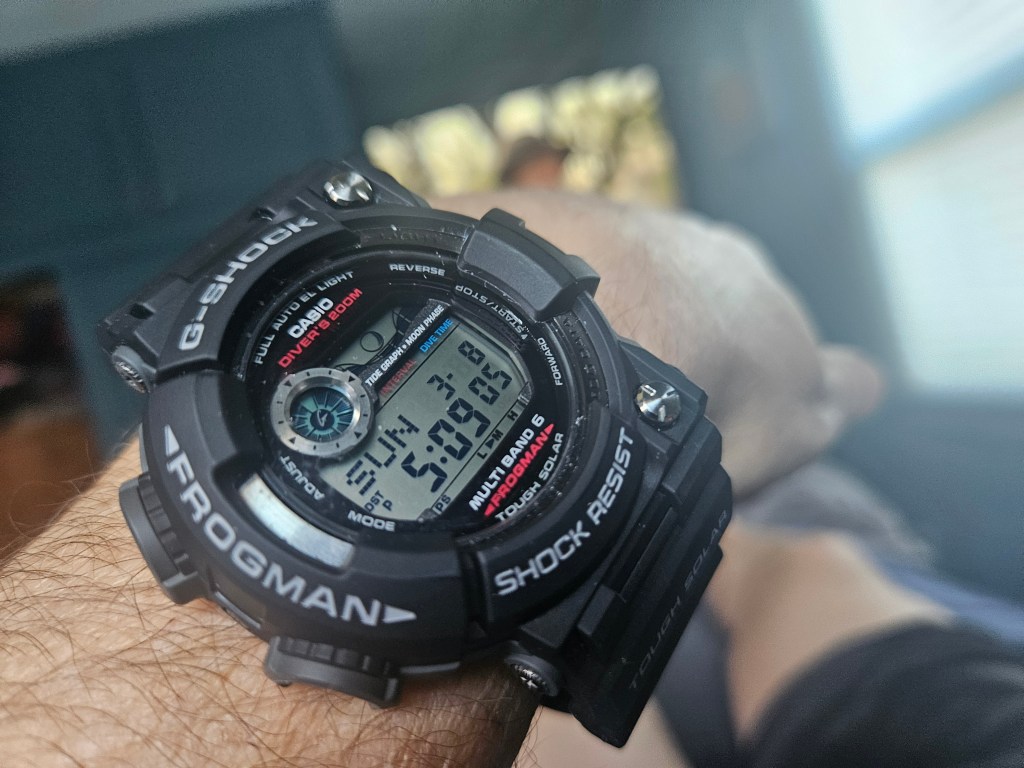
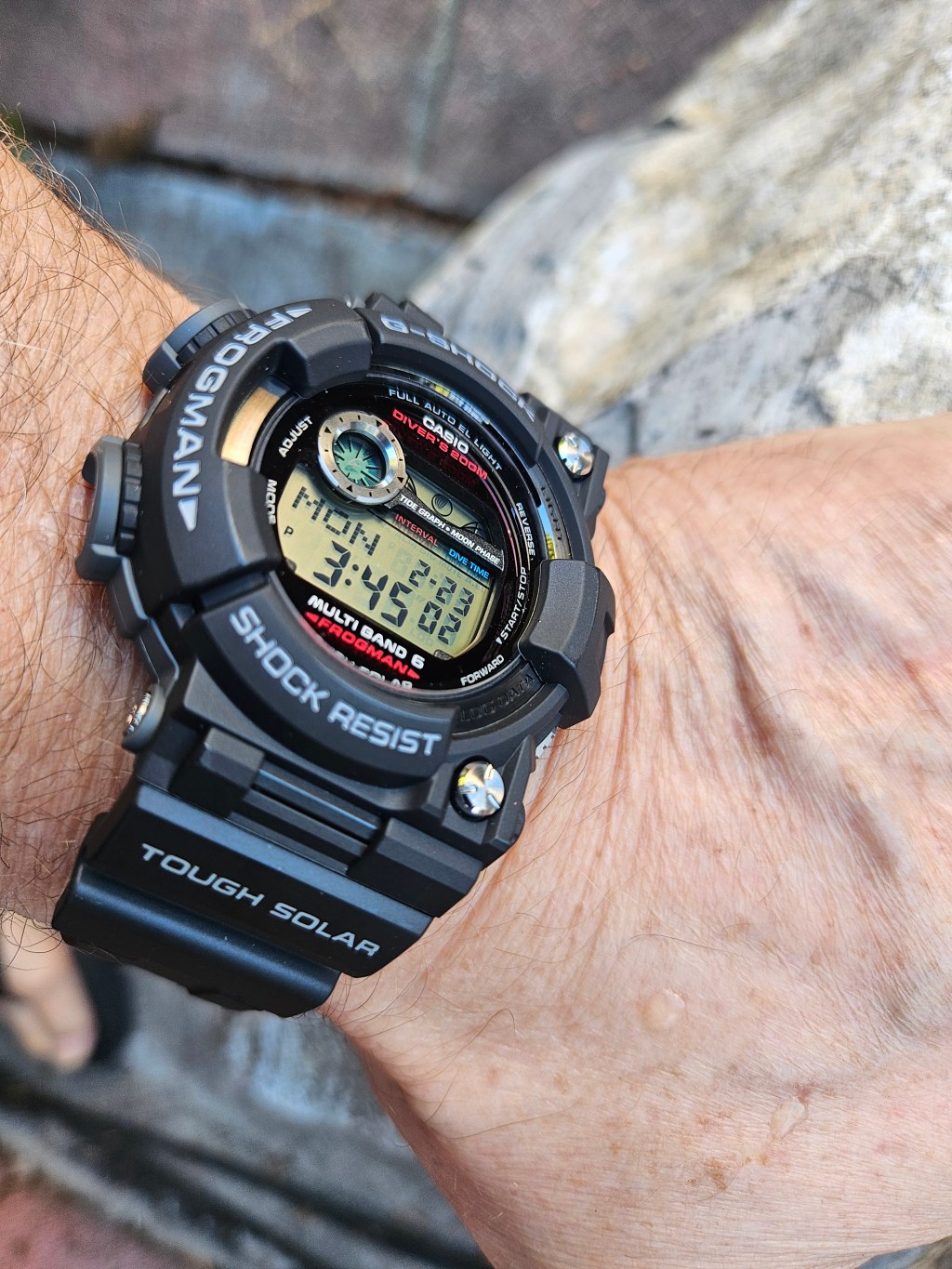
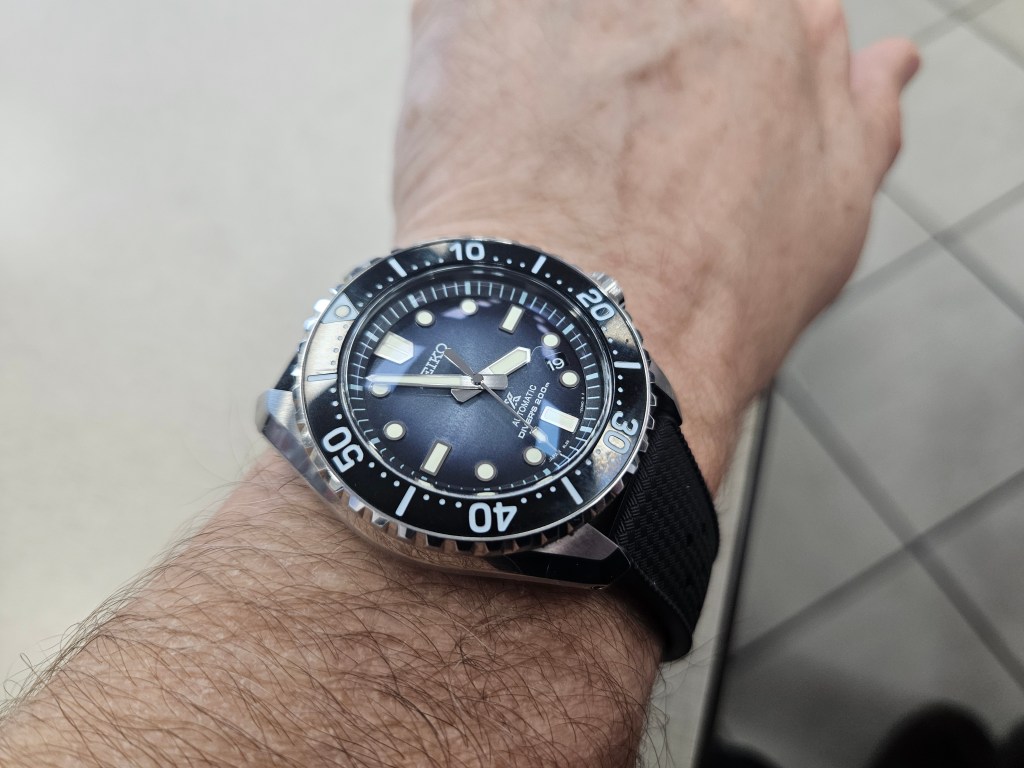
    Now, in my sixties, I’ve built a new ecosystem: my watch world. A watch box holding seven watches that I tend like a mother hen, fretting over straps and bracelets, endlessly optimizing the rotation to extract maximum pleasure from time itself. It’s a controlled universe, one I can enter when the outside world becomes too loud or incoherent. I always come back—but I’m aware of the danger. The pull can be strong. Swapping a Tropic strap for a Waffle may calm me in the moment, but eventually I have to step out of the bottle, leave the forest, and reenter a world that demands attention, judgment, and responsibility.

    The fantasy sustains me. It just can’t replace the world.

  • The Shingles Shot, the Vanishing Kettlebell Workout, and a Brief Descent Into Strap Madness

    The Shingles Shot, the Vanishing Kettlebell Workout, and a Brief Descent Into Strap Madness

    I got my shingles vaccine yesterday at noon and felt absolutely nothing afterward—so nothing, in fact, that I woke up the next morning feeling smugly invincible. I went to Trader Joe’s, bantered with the employees about the collective psychosis surrounding their limited-edition mini tote bags, came home, unloaded the groceries, and mentally penciled in a righteous kettlebell session in the garage. Then, right around 10 a.m., my immune system cleared its throat. A slow, heavy wave of fatigue rolled in, the kind that doesn’t ask permission. I took what I told myself was a “precautionary” nap. I made a deal with my body: if I felt fine in an hour, the kettlebells were back on. By 11, the aches had arrived, lethargy had unpacked its bags, and the deal was quietly voided. The iron would have to wait.

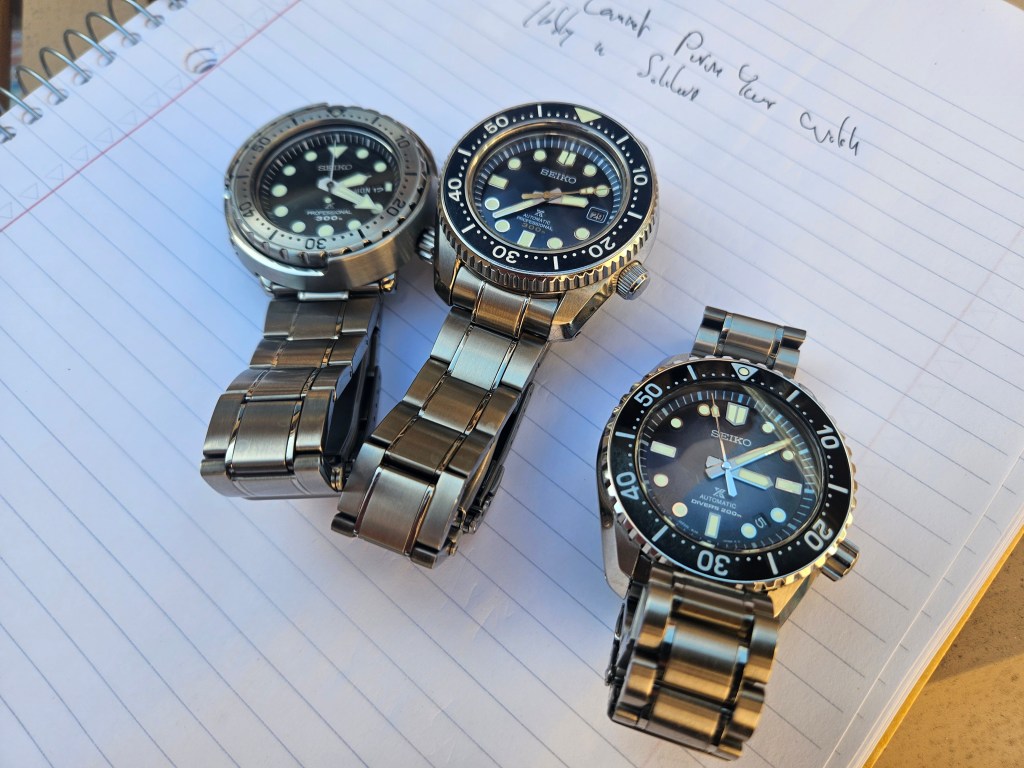
    Now, 28 hours post-shot, I’m more tired than I was this morning, which feels like a violation of some unspoken contract. In what I can only describe as a low-grade vaccine fever fugue, I apparently decided this was the perfect moment to perform strap surgery on my watch collection. The Seiko SLA051, 055, and 023 all lost their OEM waffle straps and emerged reborn on Divecore FKM. Yes, I’m aware that FKM is rumored to whisper chemical lullabies into the bloodstream. No, I’m not persuaded that wearing these watches a few hours a week is going to tip me into a Superfund site.

    In any case, I’m already planning to swap the FKMs for Divecore’s hydrogenated waffle straps in a few months. If there’s any exposure happening, it’s brief, intermittent, and vastly overshadowed by whatever biochemical fireworks the shingles vaccine is currently setting off inside me. For now, I’ll rest, hydrate, and let my immune system do its thing—apparently with a side hobby in horological rearrangement.

  • Flying First Class Is a State of Mind

    Flying First Class Is a State of Mind

    I was born in America in 1961, and if I had to explain this country to a foreigner in one image, I wouldn’t reach for the flag or the Statue of Liberty. I’d point to flying first class. Not the policy of it, not the logistics—just the concept. First class is America in an airline cabin. It grabs you by the collar and says, This is how we do hierarchy. We don’t hide it. We parade it down the aisle.

    Yes, we have our obnoxious luxury cars and coastal dream houses, but nowhere is class difference so intimate as on an airplane. You’re breathing the same recycled air as the people sipping champagne up front. You share the same narrow aisle, the same claustrophobic bathrooms, the same airborne flu incubator. 

    The difference is ceremonial. The first-class passenger is already settled—wrapped in a sherpa blanket, nibbling brie, greeted by flight attendants who address them the way courtiers addressed minor royalty. 

    Then comes the procession: coach passengers filing past, stealing glances, marching toward the back where crying babies, bare feet with ambitious toenails, and circulation-threatening seat pitch await. This is the real luxury—not the champagne, but the ceremony and the choreography. The pleasure is sharpened by contrast. As a first-classer, you’re not cruel. You don’t wish misery on anyone. But your comfort glows brighter because someone else is uncomfortable ten feet away.

    And that glow whispers. Not “you’re lucky.” Not “you’re comfortable.” It whispers the more dangerous phrase: you’re special. That’s the real drug of first class—not legroom, but psychological elevation. The sense that you cracked some hidden code of life, that you’ve unlocked a cheat mode where ordinary frustrations can’t touch you. 

    I once heard a comedian joke that in a plane crash, first-class passengers would survive while the rest of us perished. It’s absurd. And yet… it sounds exactly like something we want to believe.

    This is America. You don’t just earn money here. You earn the right to hear that whisper.

    I’ll confess something anticlimactic: I flew first class once, in 1994, thanks to my father, who sent me to his condo in Maui. I remember almost nothing about it. No ecstasy. No glow. Maybe I suffer from flight anhedonia—the inability to experience joy at 30,000 feet. 

    But I have felt the first-class sensation elsewhere. A friend once let me borrow his Omega Planet Ocean. I wore it to Trader Joe’s and found myself standing in line with organic arugula and the faint, ridiculous thrill of superiority. A luxury watch did what a luxury airline seat never could.

    I could afford such a watch. I owned a Tudor Black Bay once. I sold it quickly, like someone who realized halfway through a costume party that he’d come dressed as the wrong person.

    Now I’m sixty-four, and the urge to gloat has evaporated. I don’t want status anymore. I want clarity. I want restraint. I want a temperament that doesn’t need applause from inanimate objects. Wearing an expensive watch I don’t need feels less like success and more like cosplay—me auditioning for the role of a man who’s made it. The problem is, I know the actor too well. Under the costume is not a titan of confidence but an anxious, fractured soul with the spiritual DNA of Franz Kafka and the comedic timing of Richard Lewis. No amount of Swiss engineering is going to fix that. And pretending otherwise would only make me feel like a fool in very fine clothes.

  • “Raindrops Keep Fallin’ On My Head” and the Art of Being Nine

    “Raindrops Keep Fallin’ On My Head” and the Art of Being Nine

    When I was nine, in the summer of ’71, my family and three others camped on a tiny island near Mount Shasta—an experiment in frontier optimism that involved water skiing, fishing, and waging daily war against yellow jackets. We built traps from jars and funnels, which is what passes for science when you’re a child and the enemy has wings. Whenever the social noise became too loud, I retreated into a tent with Archie comics and a portable radio, my private bunker of paper jokes and AM static. Outside, the sun blazed and my friends howled with laughter. Inside, I lay on my stomach, flipping pages, while two songs drifted through the thin canvas walls—“Riders on the Storm” and “Uncle Albert/Admiral Halsey.” They were gorgeous. They were devastating. Their beauty did nothing to soften their sadness. They didn’t cheer me up; they baptized me into melancholy.

    I survived that summer gloom by clinging to the holy trinity of comic-book escapism: X-ray vision glasses, Sea Monkeys, and Charles Atlas promising to turn scrawny boys into beach legends. But I had known a better kind of sadness before that—eighteen months earlier, in fourth grade, when B.J. Thomas’s “Raindrops Keep Fallin’ on My Head” became the soundtrack to a winter of biblical rain in San Jose. That rain didn’t feel like inconvenience; it felt like permission. We walked in it. We built forts in it. We sang in it. Wet sneakers were badges of honor. Mud was a small price to pay for enchantment.

    After school, we took the longest possible route home, not because we were lost, but because we didn’t want the day to end. I think children are natural pantheists. We don’t worry about tracking dirt through the house; we worry about missing the miracle. One afternoon, in a downpour that looked like it had been personally arranged by the weather gods, I saw two middle school girls walking arm in arm, kicking their legs and singing like they were auditioning for joy itself. They weren’t performing happiness. They were inhabited by it. I don’t think I’ve seen human beings that unselfconsciously alive since.

    We eventually reached the edge of Anderson Elementary, where a park spilled into trees and bushes and, hidden like contraband, our cardboard fort waited. I crawled underneath it, stared through a gap in the walls at the rain-swollen sky, and sang “Raindrops Keep Fallin’ on My Head” to no one in particular. I remember feeling drunk on the depth of that sky, stunned by the sheer extravagance of being alive. I wasn’t happy because something good had happened. I was happy because everything had happened—and I was inside it. For a moment, I felt infinite. And, at nine, infinite felt the same as immortal.

  • Aura Farming in the Age of the Priority Pass

    Aura Farming in the Age of the Priority Pass

    Zach Helfand’s New Yorker piece “The Airport-Lounge Wars” reads like the natural sequel to John Seabrook’s “How the Sports Stadium Went Luxe.” Both writers chart America’s drift into a soft feudalism—an economy built on velvet ropes, curated vanity, and the tyranny of creature comforts. Exclusivity is our reigning civic religion. Helfand opens with a thesis as blunt as a boarding announcement: “Airport lounges are about who gets in and who does not.” In today’s America, you must cultivate an aura—what my teenage daughters call “aura farming,” the strategic cultivation of mystique, importance, and manufactured nonchalance. Airports have become the perfect stage for this theater of status. You either inhabit the drab terminal with its cracked vinyl seats and public coughing contests, or you ascend to the glowing Xanadu behind frosted glass. My own family acts out the class divide: my wife and daughters breeze through TSA with their PreCheck halos while I shuffle through the cattle chute, sacrificing my bottled water, removing my belt, and enduring laptop shaming before rejoining them, a humbler, poorer man.

    These airport Xanadus have grown so seductive that some travelers go full pilgrim. One Malaysian businessman, drunk on his Priority Pass privileges, missed his flight to Kuala Lumpur and drifted through lounges for eighteen days, forging boarding passes like a monk copying sacred texts—until he was arrested and relocated to the Prison Lounge, where the amenities are famously lacking.

    Wanting a taste of this strange devotion, Helfand spent a week touring New York’s airport lounges with his own Priority Pass. At the HelloSky Lounge at JFK, he marinated in what historian Kevin James calls “an enhanced experience of stasis.” Translation: high-thread-count boredom. Even this, Helfand notes, is aspirational—CBS travel editor Peter Greenberg says lounges aim for nothing more noble than inspiring customers to murmur, “Well, it’s better than nothing.” Indeed, the holy trinity of “better than nothing” turns out to be fruit-infused water, padded leather walls, and chandeliers in the bathroom. Civilization marches on.

    Airports are designed to grind the soul down to a nub, so perhaps this “slightly better than nothing” aesthetic is our cultural Valium. A tranquilizer bubble for people waiting to be herded onto aluminum tubes. Pay the fee, flash the pass, and anesthetize the existential dread of a three-hour layover. As Helfand puts it, “Waiting can make one feel needy, like a baby.” Maybe that’s why lounges feel like nurseries for adults: dim lighting, soft chairs, snacks within arm’s reach. The more infantile we become, the grander the titles on the door—V.I.P., Admiral, Ambassador. It’s a fantasy nobility designed to distract us from the truth: we are tired, displaced, sleep-deprived, and longing for our beds, our routines, and—let’s be honest—our blankies.

  • The Man of Rotation

    The Man of Rotation

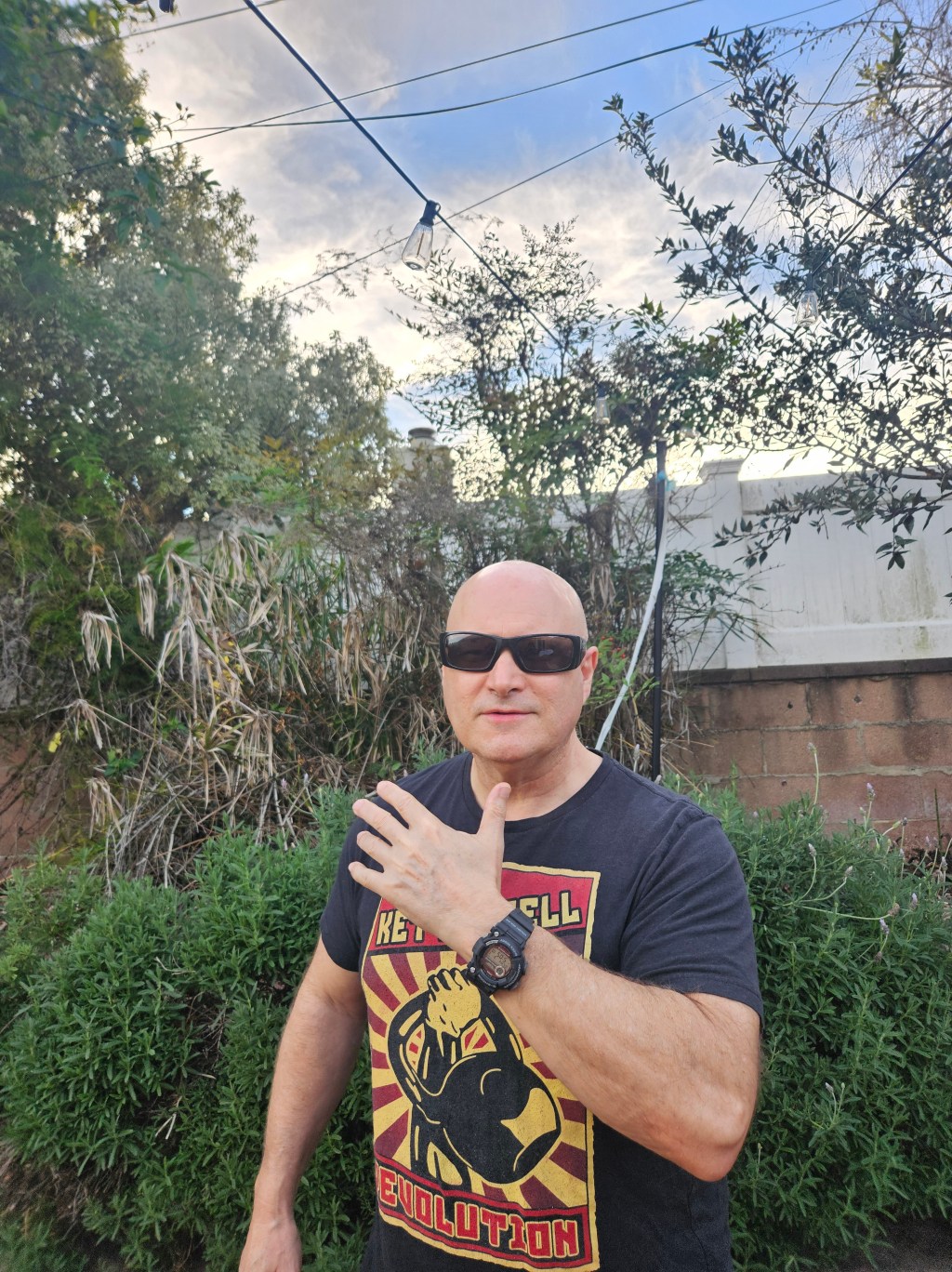
    My family gave me a custom T-shirt last Christmas emblazoned with “Man of Rotation.” It wasn’t a compliment; it was a diagnosis. They were mocking the fact that I rotate everything like a monk tending sacred relics.

    I wear a different watch every day from my seven-piece Seiko harem. I rotate three kinds of medium-to-dark roasts as if the coffee beans need equal custody time. I alternate between my Gillette Fatboy and Slim razors with the solemnity of a Cold War arms treaty. Astra blades on Monday, Feather blades when I feel reckless. Even my soaps—triple-milled rose, triple-milled almond—take scheduled turns, like aristocrats queuing for a royal audience.

    It gets worse. Quilted and fleece sweatshirts take their laps. Knit caps cycle through the week as if they were a jury pool. My radios each get a “shift” in the garage during my kettlebell workouts, which is the closest they’ll ever get to military service. Even my podcasts rotate, governed by a sliding scale of how much political despair I can tolerate without bursting into flames. Hoka tennis shoes? They march in formation. My pairs of dark-washed boot-cut jeans—virtually indistinguishable to the human eye—are treated like unique Renaissance tapestries. Golf shirts and T-shirts are matched to the day of the week because my synesthesia demands order, not chaos. And breakfast? A solemn liturgy of alternation: buckwheat groats one day, steel-cut oats the next—my personal Eucharist of complex carbs.

    What is rotation, exactly? A philosophy? A pathology? Maybe it’s my attempt to mimic the cosmic cycles of life: moons, tides, seasons, me choosing a different razor. Maybe it’s a counterfeit sense of forward motion for a man who often feels marooned in his own stagnation. Maybe it’s ritual as a pressure valve, keeping the anxieties from boiling over.

    Or perhaps these rotations are my charm against the rising madness of the world—a tiny pocket of structure in a universe that increasingly behaves like it’s had too much caffeine and too little therapy. A way of keeping my Jungian Shadow from dragging me into the basement and locking the door behind me.

    Forgive me: I’m no oracle. I don’t have definitive answers. I have suspicions, hunches, and a working familiarity with amateur psychoanalysis.

    What I do know is this: it’s time to get up, get ready for work, and select today’s Hoka. The wheel must turn.

  • Essay Prompt: Innovation, Identity, and the Meaning of “Authentic” Food

    Essay Prompt: Innovation, Identity, and the Meaning of “Authentic” Food

    In Chef’s Table: Pizza, Ann Kim rebuilds her life after a failed acting career by reinventing pizza through the lens of her Korean-American identity. Her dishes fold together memory, rebellion, shame, pride, and the complicated love between immigrant parents and their children. Yet the moment she alters traditional recipes or refuses rigid cultural expectations, she steps into a debate that surrounds many immigrant chefs:
    Does innovation honor one’s heritage—or distort it?

    In this 1,700-word argumentative essay, you will explore that tension by comparing Ann Kim’s story with the themes found in Ugly Delicious (Season 1, “Tacos”), selected episodes of The Taco Chronicles, Gustavo Arellano’s “Let White People Appropriate Mexican Food,” and Kelley Kwok’s “‘Not Real Chinese’: Why American Chinese Food Deserves Our Respect.” Your goal is to craft an argument that responds to the following question:

    When immigrant chefs remix, adapt, or modernize traditional dishes, are they betraying cultural authenticity—or creating a new form of belonging that honors their past in a more personal way?

    To answer this question, analyze how each show or essay portrays the cultural meaning of food—its connection to heritage, shame, pride, memory, and the immigrant experience. Pay close attention to visual rhetoric (music, tone, pacing, imagery), and consider how these choices shape our sense of what counts as “authentic.”

    Include at least two scholarly secondary sources on food studies, cultural identity, or immigrant narratives to deepen your analysis. These sources should help you place the shows and essays within broader academic conversations about authenticity, assimilation, and innovation.

    Your essay must include a counterargument-rebuttal section. Address the view that innovation leads to “tourist food” or watered-down Americanization, and explain whether these cases justify a purist stance toward food traditions—or whether purity itself is an illusion shaped by nostalgia, nationalism, or fear of cultural loss.

    Ultimately, your task is to show how food becomes a form of storytelling—and to argue whether storytelling requires faithful preservation, bold revision, or something in between.

  • Dream Exam for a Retiring Professor in the Bedroom of Time

    Dream Exam for a Retiring Professor in the Bedroom of Time

    Last night I found myself back in the primary bedroom of my parents’ 1970s house—a room fossilized in memory but somehow updated to the present day. I was perched on their king-sized bed, the same monolithic slab of furniture that once seemed big enough to host the United Nations, scribbling notes about my long, bruised, oddly tender career as a college instructor. It was the kind of dream where the past and present shake hands awkwardly, unsure who invited whom.

    Outside, I heard the rumble of a moving truck. A couple had arrived next door, and before I could finish a sentence in my notebook, they had already unpacked their lives, established themselves as the new neighborhood aristocracy, and decided—God help me—to visit. Instead of knocking at the front door like terrestrial beings, they wandered from their backyard onto a dirt trail, crossed into my parents’ yard like friendly invaders, and slipped through the sliding glass doors behind the beige curtains as if they were stepping into a beachfront Airbnb.

    Their names were Dan and Deidre, early forties, both in education—the D & D Couple. I wrote their names down immediately because even in dreams I have the short-term memory of a concussed squirrel, and I didn’t want to fail the basic decency test of remembering the names of unexpected houseguests. They asked my age. I told them sixty-four. I told them I was still lifting weights, still teaching after thirty-eight years, still clinging to the last threads of my profession with a mix of pride, resignation, and the kind of melancholy that whispers, It’s almost time to go.

    They listened politely, heads tilted just enough to convey admiration without actually committing to it. Then Dan—the more mischievous half of the D & D Duo—decided to spring a quiz on me. “Do you remember our names?” he asked, as if I were auditioning for senior citizenship.

    For one horrifying second, my mind decided their names were Karl and Kathy—the K & K Couple. But before I committed social suicide, I dropped my gaze to my notebook, where my handwriting—half cryptic scrawl, half cry for help—reminded me: Dan and Deidre. D & D. Not K & K.

    I delivered the correct answer, and the couple beamed at me as if I had passed a cosmic entrance exam for the next stage of my life. Their smiles weren’t just approval; they were a benediction, assuring me that even as one chapter closed, another waited—stranger, softer, intruded upon, but somehow welcoming.

  • Blogging in the Belly of the Whale Has Its Perils

    Blogging in the Belly of the Whale Has Its Perils

    For those of us who can’t shell out $150 a week for therapy—and who would rather confess our shadow selves to strangers on the Internet than to a licensed professional—blogging becomes a kind of bargain-bin psychoanalysis. We know it’s not perfect, but it’s cheap, available, and gives us the illusion that we’re sorting out the world’s madness and our own with nothing more than sentences on a glowing screen.

    But there’s a catch. When we talk only to ourselves long enough, the echo becomes comforting. Too comforting. We stop listening to other voices and drift into a form of digital solipsism, a state where we’re the sole inhabitant of our private universe. It’s Jonah in the whale—except the whale has Wi-Fi and ergonomic seating. We settle into the warm bath of a frictionless existence, the kind of life where nothing challenges us, nothing interrupts us, and nothing demands that we grow.

    My students write about this same seduction when discussing AI and the Black Mirror episode “Joan Is Awful,” where the promise of absolute control mutates into the loss of identity. The frictionless life—everything tailored, curated, predictable—slowly erodes our individuality until we’re no longer people but users. And blogging can slip into that same trap: so cozy, so insulated, that we begin sipping our own Kool-Aid and calling it intellectual hydration.

    So what’s the antidote? Certainly not brawling on social media. Those aren’t arguments; they’re moral-outrage bacchanals dressed up as discourse. Trading the frictionless void of a blog for the poisoned well of tribal rage is not an upgrade—it’s simply chaos with a comment section.

    There is a kind of healthy friction, though—the ordinary back-and-forth you get between two friends arguing about life over coffee. The Internet can mimic that if we’re deliberate. My YouTube channel has taught me as much. For over a decade, I’ve posted videos about watch obsession, addiction, identity, and everything connected to them. Making those videos demands more from me than a blog ever could. I have to generate compelling content, communicate clearly, keep people engaged, and then face their responses—praise, critique, confusion, all of it. It forces rigor. It forces presence. It won’t let me get lazy.

    That’s why I’m reluctant to quit. Yes, I’m 64. Yes, mental health matters. Yes, I worry that staying in the YouTube world might stir up my watch addiction and pressure me to flip watches just to feed the algorithm. But abandoning the channel completely in favor of the blog feels like retreating into the frictionless void I’m trying to escape.

    So I’ll keep experimenting with “video essays,” starting with a brief nod to my watch collection before pivoting into whatever topic is actually on my mind. Fortunately, viewers seem willing to follow me into this new territory. And for now, that’s enough. Because I’m tired of the soft trap of writing into silence. I need the friction. I need the challenge. I need the reminder that I’m not alone in the whale.