Tag: weight-loss

  • The First Rule of Diet Club

    The First Rule of Diet Club

    The first rule of dieting is beautifully simple: don’t talk about dieting. The moment you begin enthusiastically recounting your Fourth of July bacchanal—how you mainlined salami, slabs of Muenster cheese, triple-fudge brownies, and vanilla bean ice cream until you were convinced you had one foot in the grave and the other in a podiatrist’s office diagnosing gout—you have already begun sabotaging yourself. Soon your audience will be treated to your target weight, your macros, your supplement stack, your Mediterranean meal plan, and your newly acquired expertise in insulin sensitivity, fibermaxxing, and protein optimization. You will sound like someone who completed an online doctorate in nutrition sometime between dessert and midnight. Unfortunately, the odds that you will still be following the plan by next weekend hover somewhere around the lifespan of a mayfly.

    The irony is that talking about dieting feels suspiciously like dieting. You receive the emotional reward before earning the physical result. Friends nod approvingly while you bask in the warm glow of your imminent transformation. The fantasy becomes so satisfying that the actual work begins to feel almost optional. Meanwhile, everyone else quietly wonders why they have become unwilling participants in your nutritional TED Talk. Like nearly every worthwhile endeavor, dieting rewards execution rather than narration. Calories are indifferent to speeches. Fat cells are unimpressed by declarations of intent. Biology has never once accepted enthusiasm as a substitute for consistency.

    Then comes the humbling realization that your revolutionary plan is neither revolutionary nor particularly new. You have saddled this horse before—roughly a hundred and twenty times. Your success rate for reaching your target weight, less than 5%, is discouraging enough; your success rate for keeping it there is indistinguishable from zero. 

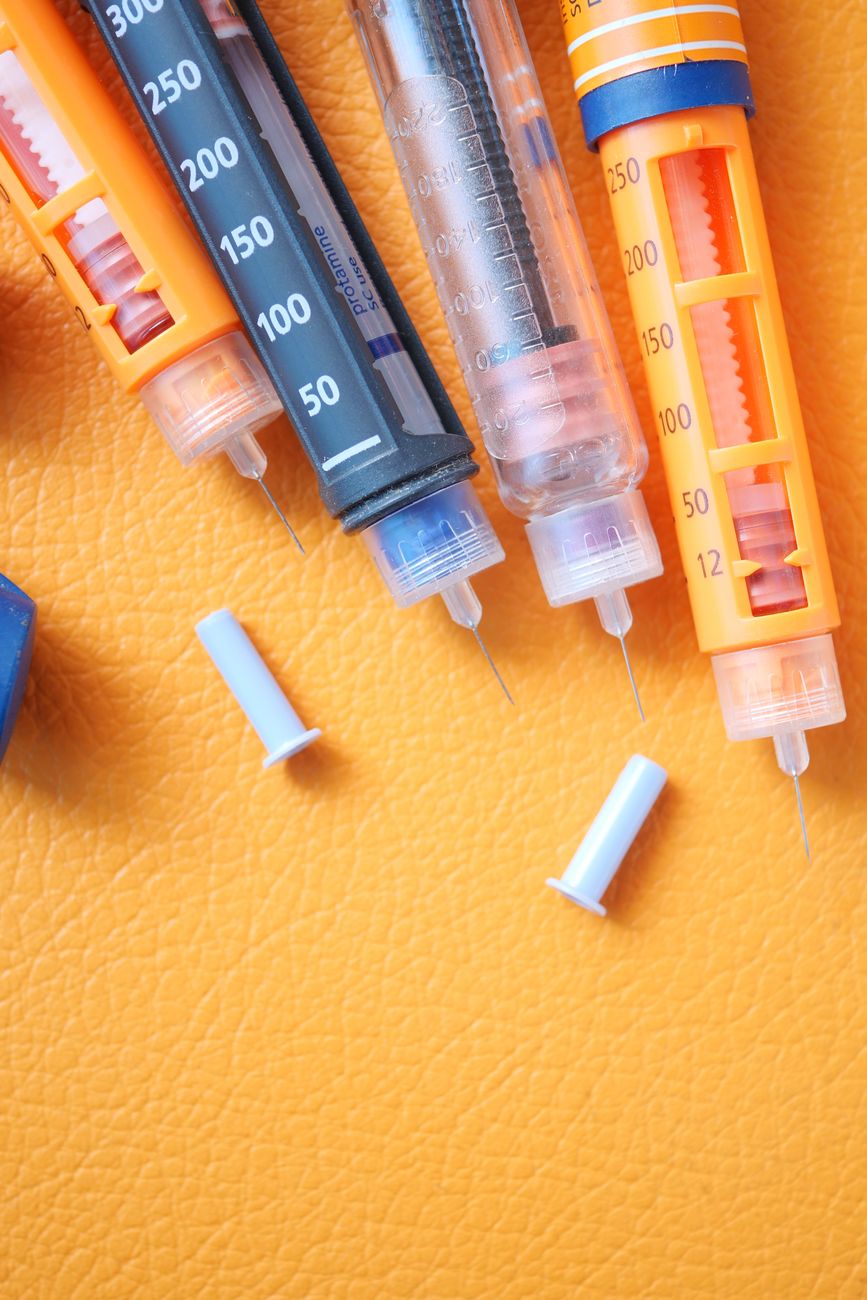
    With this in mind, you briefly entertain the modern miracle of GLP-1 medications, only to discover that the price, potential side effects, and your physician’s reluctance to prescribe them leave you unconvinced. So, in the colorful language of the internet, you decide to raw-dog the process. 

    Beneath all these failed diets lies a more subtle addiction. You are not merely addicted to food. You are addicted to self-reinvention. Every new eating plan promises not simply a smaller waistline but a new identity—a wiser, leaner, more disciplined version of yourself who will finally silence the persistent suspicion that you have somehow fallen short of your own expectations. The tragedy is that this future self often functions less as a destination than as a mirage shimmering just beyond the horizon.

    And yet, abandoning the effort altogether is hardly an attractive alternative. Better to struggle toward health than surrender to gluttony with theatrical resignation. So make your plan. Count your calories. Work out with the kettlebells. Ride the bike. Eat the vegetables. Decline the brownies. But keep your mouth shut. Announce nothing. Promise nothing. Let your bathroom scale and your belt become your only press secretaries. The instant you begin proclaiming your impending metamorphosis, your words become dietary Kryptonite, knocking Superman out of the sky and sending him headfirst into a vat of vanilla bean ice cream. Silence, it turns out, may be the most underrated weight-loss supplement of all.

  • My Diet Revolution Will Not be Livestreamed

    My Diet Revolution Will Not be Livestreamed

    Today marks my first day of abandoning snacks and eating only three meals.

    I’m already making minor adjustments. I think I’ll add a couple of eggs to lunch to help carry me through the long stretch between 11:30 and 5:00. After dinner, I’ll finish with a small crystal bowl of Greek yogurt, berries, and a drizzle of honey—not as a fourth meal, but as a civilized period at the end of the sentence. It softens the psychological blow of eliminating my beloved post-nap yogurt-and-protein-powder ritual without turning dessert into another calorie ambush.

    As I write this, about four and a half hours after lunch, I won’t pretend it’s effortless.

    I notice the absence of the snack.

    My stomach notices it.

    My brain notices it even more.

    It keeps floating little suggestions.

    “You know, one handful of almonds wouldn’t count.”

    “A spoonful of peanut butter is practically medicine.”

    “Surely Greek yogurt exists outside the jurisdiction of snacks.”

    My appetite has hired an exceptionally creative attorney.

    But the discomfort is remarkably ordinary.

    I’m not suffering.

    I’m not wandering the Sahara with cracked lips and hallucinations.

    I’m simply a little hungry.

    If tolerating that mild inconvenience helps me lose twenty pounds, it strikes me as an excellent bargain.

    The larger lesson has nothing to do with nutrition.

    It’s about refusing to become a baby.

    Modern life encourages us to interpret every minor discomfort as an emergency requiring immediate relief. Hungry? Eat. Bored? Snack. Tired? Caffeinate. Restless? Scroll. We have become connoisseurs of eliminating even the slightest irritation before it has a chance to teach us anything.

    Perhaps that’s why ordinary self-discipline now gets marketed as though it were a heroic expedition.

    Someone skips dessert for three days and suddenly there’s a podcast, a YouTube channel, and a line of merchandise celebrating their “journey.”

    I have no interest in becoming that guy.

    You will not see me posting a dramatic video titled How I Defeated Hunger and Reclaimed My Life.

    There will be no livestream documenting my courageous decision to survive the dangerous interval between lunch and dinner.

    No inspirational soundtrack.

    No slow-motion footage.

    No sermon about embracing pain.

    Because there is no pain.

    There is only structure.

    There is only routine.

    There is only a modest reduction in calories.

    Sometimes common sense is refreshingly unglamorous. It doesn’t require a manifesto, a support group, or a motivational speech. It merely asks us to tolerate a small amount of discomfort in exchange for a much larger reward.

    That hardly qualifies as heroism.

    It’s just growing up.

  • Chasing Nirvana on the Misery Machine

    Chasing Nirvana on the Misery Machine

    For the past three years, I have climbed aboard the Schwinn Airdyne AD7—better known in my household as the Misery Machine—two or three times a week for fifty to sixty minutes. It complements my three weekly kettlebell workouts by providing just enough suffering to convince me that my life choices deserve constant reevaluation. On a typical ride I burn between 600 and 750 calories. About once a month I have a monster workout that sails past 800 calories. About once a month I have the opposite experience, when my body feels as though it has been poured full of wet concrete and refuses every command I issue. On those days I wave the white flag around the 500-calorie mark.

    The workouts embody the old saying, “It hurts so good,” though that cliché hardly captures what actually happens. On my best days, the ride unfolds in two distinct psychological stages that I have come to call Nirvana I and Nirvana II.

    Nirvana I usually arrives around the 400-calorie mark, roughly thirty to thirty-three minutes into the workout. By then my shirt has surrendered completely to perspiration. Sweat drips from my elbows, pools beneath the bike, and convinces any reasonable observer that the plumbing has failed. My breathing settles into a steady rhythm, the static disappears from my mind, and I feel as though I have been lowered into a warm bath of endorphins. The outside world recedes. My obligations disappear. There is only the machine and me. About eighty percent of my workouts reach this stage.

    Nirvana II is another matter entirely.

    It cannot be scheduled, negotiated, or bullied into existence. It appears only on those rare mornings when physiology, mood, sleep, and providence decide to cooperate. I continue sweating rivers, but fatigue never quite catches me. My cadence remains smooth. My breathing stays controlled. Instead of counting down the remaining minutes, I begin believing absurd things.

    “I’m unstoppable.”

    The Misery Machine no longer owns me.

    I own it.

    The fan roars. My legs keep driving. Every revolution of the pedals reinforces the illusion that I have temporarily escaped the ordinary laws of aging and entropy. For twenty glorious minutes I become convinced I could ride forever. Nirvana II is the Holy Grail of my fitness life. It is the workout equivalent of pitching a perfect game.

    Unfortunately, every heaven has its corresponding hell.

    I call it Shut Down.

    Unlike Nirvana, Shut Down announces itself almost immediately. Within the first fifteen minutes I can tell something is wrong. My breathing becomes shallow. My legs feel leaden. The usual RPMs suddenly resemble Olympic qualifying standards. Every minute feels borrowed.

    Years of yoga have taught me not to argue with these days.

    When Shut Down arrives, resistance is futile. I simply acknowledge reality.

    “Today is not my day.”

    I lower the intensity, keep pedaling, and allow my body to dictate the terms of surrender. Most Shut Down workouts end around forty minutes and 450 calories. They leave me discouraged, though experience has taught me not to overreact. Ninety-nine percent of the time the next workout restores me to normal, as though my body merely needed to remind me who actually runs the operation.

    Oddly enough, the existence of Nirvana II is what keeps drawing me back.

    Every workout carries the possibility of discovering that elusive state again. It is exercise’s version of Christmas morning. Will today be the day? Will I feel invincible? Will I conquer the Misery Machine instead of merely surviving it?

    I never know.

    That uncertainty is precisely what makes me keep climbing back aboard.

  • Restraint Is the Superpower You Need

    Restraint Is the Superpower You Need

    In a few months I will turn sixty-five, and at first glance I appear to be doing everything right. I swing kettlebells. I pedal my Schwinn Airdyne with the determination of a man trying to escape a prison camp. I accumulate sweat at an industrial scale. My workouts are filled with muscle, stamina, grit, and a willingness to suffer that borders on the theatrical.

    Yet I deserve no bragging rights.

    In fact, I deserve a large serving of Humble Pie with a side dish of Contrition.

    Why?

    Because after decades of lifting, pedaling, sweating, straining, and pretending to be a rugged disciple of physical culture, I somehow missed the memo about the true superpower of fitness.

    The superpower is restraint.

    Not deadlifts. Not kettlebells. Not interval training. Not grit.

    Restraint.

    The real challenge arrives not during a workout but fifteen minutes before one, when a tiny twinge of hunger appears and whispers seductive nonsense into your ear.

    “Perhaps a small snack?”

    The suggestion seems harmless enough. Maybe some apple slices. A few crackers. A little hummus. Nothing excessive. Nothing worthy of a confession.

    But this is where adulthood enters the arena.

    The inner child says, “I’m hungry.”

    The inner adult replies, “You’ll survive.”

    The child says, “Let’s eat something.”

    The adult says, “No. This feeling is temporary.”

    The child says, “But I’m uncomfortable.”

    The adult says, “A little discomfort is not an emergency.”

    The child says, “What if I starve?”

    The adult says, “You weigh 230 pounds. Starvation is not currently on the agenda.”

    The child says, “I need fuel.”

    The adult says, “You need self-control.”

    The child says, “You’re mean.”

    The adult says, “Finish your workout.”

    This conversation, repeated thousands of times over a lifetime, turns out to matter far more than any exercise program.

    Unfortunately, while I spent decades cultivating muscle and stamina, I neglected to cultivate authority over my rapacious inner child. The result is that I carry roughly thirty extra pounds around like a monument to unfinished business.

    My doctor wants me to get my annual blood work done—cholesterol, triglycerides, glucose, and the rest of the alphabet soup. But I find myself reluctant.

    Why?

    Because the last time I took the test I weighed 230 pounds.

    A year later, I still weigh 230 pounds.

    Why spend money confirming what I already know?

    Part of me wants to send my doctor a message:

    “Dear Doctor,

    I am currently too fat to appreciate another blood test. The numbers will simply inform us that I remain exactly as fat as I was last year. Instead, I am attempting to acquire the superpower of restraint. Once I possess it, I shall happily report for blood work so that both of us may enjoy the pleasant novelty of improved results.”

    The power of restraint is difficult to overstate.

    Right now I train six days a week and hover around 230 pounds. I suspect I consume something close to 3,000 calories a day.

    If I consistently reduced that intake to around 2,200 calories, I could probably eliminate half my training volume. I could abandon hours of cardio, keep a few weekly kettlebell sessions, and gradually become a lean, muscular 200-pound version of myself.

    That realization is both liberating and humiliating.

    For years I treated exercise as the hero of the story.

    Exercise is important, but restraint is the executive producer.

    Exercise burns calories.

    Restraint prevents them from arriving in the first place.

    Exercise can strengthen your body.

    Restraint changes your body.

    Exercise can improve your health.

    Restraint determines whether the improvements are visible.

    Training can carry you only so far. At some point you arrive at a fork in the road where sweat stops being the limiting factor and appetite takes over.

    That is where the battle is won or lost.

    Restraint is the exit sign leading away from adiposity and self-reproach.

    Restraint is the quiet force that makes training matter.

    Restraint is what allows effort to cash its check.

    And so, as I prepare for today’s workout, there will be no pre-exercise snack. No crackers. No apple slices. No hummus.

    Just a tall glass of Contrition.

    And perhaps, if I am fortunate, a small sip of adulthood.

  • Leanmaxxing and the New Fantasy of Frictionless Medicine

    Leanmaxxing and the New Fantasy of Frictionless Medicine

    As a boy watching Star Trek, I was transfixed by the Tricorder–that tidy slab of certainty doctors waved over a body the way a priest might wave incense over a mystery. No scalpels, no tubes, no anxious waiting rooms with their stale magazines and fluorescent despair. A quick scan, a soft chirp, and the problem surrendered. The body, usually so coy and uncooperative, became a readable document–its secrets itemized, its fate clarified. It was medicine without friction, diagnosis without drama. In that universe, ignorance lasted seconds.

    For decades, the Tricorder sat where all good fantasies sit: just out of reach, gleaming with impossible efficiency. But reality has a way of cheating. The future did not arrive as a handheld scanner; it arrived as chemistry–specifically, a class of drugs that seems to negotiate directly with the body’s most stubborn impulses. If the Tricorder promised instant knowledge, GLP-1 drugs promise something more unnerving: the quiet rewriting of appetite, metabolism, and behavior from the inside out.

    In her New York Times essay “The Great Ozempic Experiment,” Julia Belluz catalogs the early returns, and they read less like a drug profile than a wish list that forgot to edit itself. Yes, there’s weight loss–the headline act–but the understudies keep stealing the show: concussion recovery, addiction dampening, relief from menopause symptoms, long COVID, alopecia, inflammation, arthritis, IBS, anxiety, brain fog. The list grows with the confidence of a rumor that keeps being confirmed. By the time you finish reading, you suspect the drug might also fix your credit score.

    The catch, for now, is almost comically modest: nausea and paperwork. The body may revolt briefly; the insurance company may revolt permanently. Yet demand surges, fueled by users who report not just slimmer bodies but upgraded lives–better mood, sharper focus, revived social calendars, improved fertility. It’s less a medication than a lifestyle intervention with a prescription pad.

    Clinicians, watching this unfold, have begun to reach for a new framework–the “root-cause” theory–because the old boxes no longer hold. These drugs don’t respect the tidy borders between endocrine, cardiovascular, and neurological disease; they trespass, improve, and move on. Even more disorienting, benefits appear in patients who don’t lose weight at all: better heart, liver, and kidney function, as if the drug were quietly tuning systems we didn’t know were connected.

    And here is where the story turns from miracle to question mark. As GLP-1 use spreads–along with the culture’s sudden enthusiasm for “leanmaxxing”–we risk trading one distortion for another: the cartoon body, now achieved pharmacologically rather than cosmetically. It is far too early to crown these drugs the real-world Tricorder, and just as premature to condemn them as a Faustian bargain. Like AI, they are moving faster than our ability to narrate them. We are watching a technology outrun our categories, and the only honest response, for now, is attention without prophecy.

  • Grazing My Way to Nowhere—and Learning to Stop

    Grazing My Way to Nowhere—and Learning to Stop

    At sixty-four, I’m attempting a late-life renovation project: replace a few durable bad habits with better ones before they fossilize into personality. Chief among them is my relationship with hunger, which I’ve treated for decades as a medical emergency requiring immediate intervention—preferably in the form of a calorie-dense snack. I was raised to believe that hunger is unnecessary suffering, a small indignity that can be smothered with a tasty morsel or two. If I feel it, I fix it. If I might feel it later, I preempt it. I’ve spent years grazing my way out of imaginary famines, topping off the tank before the harrowing ordeal of being without food for four hours. I call this Preemptive Feeding Syndrome: the habitual practice of eating in anticipation of future hunger, based on an exaggerated fear of discomfort, resulting in chronic overconsumption and stalled weight management.

    This approach has produced a familiar cycle. I’ve lost weight half a dozen times—descending heroically from 245 to 200—only to regain it with equal conviction. The pattern is almost admirable in its symmetry. The problem wasn’t the diet. The problem was that the moment hunger appeared, I panicked. I treated every pang like a fire alarm. And when you live that way, fat loss becomes a series of interruptions, each one justified, each one fatal to the larger goal.

    At 231 pounds as I write this, with a modest but persistent halo of fat around my midsection and joints that file quiet complaints during exercises like the Farmer’s Walk, I’ve reached a conclusion that is both obvious and inconvenient: the decisive factor in my weight loss is not willpower. It is interpretation. Specifically, how I interpret hunger.

    For most of my life, I’ve read hunger as danger. Something is wrong. Fix it now. But I’m beginning to suspect that hunger is not a malfunction; it’s a message. Often, it’s the message that the system is finally doing what I’ve asked it to do—burn stored energy. The problem isn’t the signal. It’s my reaction to it.

    So I’m attempting a small but radical shift: treat hunger as information, not alarm.

    A brief pang is not a crisis. It’s a wave. It rises, it lingers, it passes—especially if I don’t chase it down with peanut butter and honey. When I leave it alone, something surprising happens: it weakens. When I don’t treat it as a threat, it stops behaving like one. In that shift—from emergency to data point—I gain leverage. Meals taste better because I arrive at them honestly hungry, not pre-satiated by a trail of defensive snacking. My appetite becomes cleaner, less frantic. What once felt urgent now feels negotiable.

    None of this came naturally. It had to be learned, which is to say, unlearned first. Each time I resist the reflex to patch over a pang with calories, I loosen the old wiring and lay down a better circuit. It’s slow work. It’s also effective. My threshold for discomfort has widened. I’m less reactive, more deliberate. My body will follow, but my mind has to lead.

    Frank Zane understood this decades ago. He treated hunger not as an enemy but as evidence—proof that his diet was doing its job. He didn’t try to abolish hunger; he put it in its place. Years later, he still eats with restraint, having trained himself to live comfortably inside that signal. That’s the model: not a life without hunger, but a life in which hunger has been demoted from tyrant to messenger.

    If I can complete this renovation—if I can rewire my response to hunger—I solve the central problem. If I don’t, no amount of planning, tracking, or good intentions will save me from another well-executed relapse.

  • Pedaling Through the Voice That Says Quit

    Pedaling Through the Voice That Says Quit

    Ninety percent of the time, the Schwinn Airdyne—known in honest circles as the Misery Machine—treats me like a competent operator. I settle into a rhythm and burn roughly 730 calories an hour, sometimes pushing past 800 over a 51–58 minute stretch. It’s hard work, but it feels governed, almost cooperative. The Rate Select hovers around 52, climbs to 58 when I press it, and rewards effort with visible progress. Numbers rise, and with them, morale.

    Then there is the other ten percent—the mutiny.

    You know it immediately. The first minute betrays you. The legs feel like they’ve been filled with wet cement. The lungs are slow to negotiate. The machine, once a willing accomplice, turns indifferent. No matter how much you push, the Rate Select stalls in the high 40s, as if it has quietly downgraded your status. Today was one of those days. Fifty-eight minutes of negotiation yielded 601 calories—an 18 percent deficit from my usual output. I clawed my way past 600 not out of strength, but out of stubborn bookkeeping: at least I could claim I burned off breakfast.

    The real struggle, of course, isn’t physical. It’s narrative. When the numbers climb, the mind becomes a cheerleader—faster, harder, more. But when they sag, a different voice takes the microphone. You’re finished. You’ve lost it. This is a young man’s game, and you’re trespassing. The body tires, but the mind drafts a eulogy.

    That’s the moment that matters. Not the calories, not the pace, but the argument. Today, I didn’t win cleanly, but I held the line. I kept pedaling. I refused the early exit. Six hundred calories is not a triumph, but it is a refusal to collapse.

    These lag days arrive like monthly audits. They expose the fault lines—the impatience, the vanity, the dependence on numbers for validation. The task is not to dominate the machine, but to manage the voice that wants to quit. The reasonable adult has to step in, take the whining child by the shoulders, and say: Not today.

  • The Taco Bell Effect: How Fast Food and Watches Keep You Hungry

    The Taco Bell Effect: How Fast Food and Watches Keep You Hungry

    My daughters wanted Taco Bell for dinner. I could have abstained, assembled a respectable salad, and preserved my nutritional dignity. Instead, I chose the chicken soft tacos—modest, reasonable, practically virtuous by fast-food standards. And Taco Bell, as always, performed its engineered magic. Somewhere in Irvine, a laboratory of flavor chemists continues its quiet mission: maximize salt, fat, texture, and novelty until the brain lights up like a slot machine. The tacos tasted fantastic. Dopamine rang the bell. I walked away feeling disciplined, even proud—two tacos and a side of sliced bell peppers. Look at me, a responsible adult navigating fast food with restraint.

    Then, about an hour later, the bill came due.

    My appetite didn’t return politely. It kicked the door in. Hunger surged with a strange urgency, as if the meal had not fed me but awakened something restless and unfinished. I ate an apple. Still hungry. I opened a bag of Trader Joe’s Organic Elote Corn Chip Dippers. Still hungry. I cut a thick slice of sourdough and buried it under peanut butter. The sensation wasn’t indulgence—it was pursuit, as though my metabolism were trying to collect a debt the tacos had promised but never paid.

    I was still hungry when I finally surrendered—not to satiety, but to sleep, the only reliable way to close the kitchen.

    Clearly, I had suffered from the Taco Bell Effect: the paradoxical state in which a highly engineered, intensely satisfying experience delivers maximum sensory pleasure and minimum lasting fulfillment, triggering a rebound surge of appetite shortly after consumption. Designed for flavor density, salt, fat, and rapid dopamine, the meal convinces you—briefly—that you’ve eaten well and even responsibly. Then, an hour later, your metabolism files a formal protest. Hunger returns louder than before, prowling the kitchen like a debt collector. The Taco Bell Effect isn’t overeating; it’s under-satiation disguised as satisfaction—a culinary confidence trick in which the experience feels indulgent, the calories look reasonable, and the aftermath sends you negotiating with apples, chips, and peanut butter while wondering how two tacos opened a hunger portal instead of closing one.

    The Taco Bell Effect and the compulsive watch purchase run on the same psychological circuitry: both deliver stimulation without closure. Taco Bell gives you flavor, salt, fat, and novelty, but not satiety; the experience excites the appetite rather than resolving it. A compulsive watch purchase works the same way. You get the hit—research, tracking, unboxing, wrist shots, forum validation—but the emotional hunger remains untouched. Instead of quieting desire, the purchase sharpens it. Within days, you’re browsing again, comparing again, chasing the next micro-difference the way a fast-food meal sends you back to the pantry. In both cases, the problem isn’t excess; it’s insufficient psychological fullness.

    The illusion that traps people is the calorie logic of the hobby: “It’s only one watch,” just as “It’s only two tacos.” But the real metric isn’t the size of the purchase—it’s the behavior that follows. A healthy acquisition produces satiety: you stop looking, you forget the market, you wear the piece without agitation. A Taco Bell watch, by contrast, is engineered for stimulation—limited editions, countdown drops, spec debates, influencer hype. It tastes intense but digests poorly. The result is the horological equivalent of metabolic whiplash: the dopamine spike fades, and the mind, still unsatisfied, starts hunting again.

  • When Self-Improvement Makes Your Watch Addiction Worse

    When Self-Improvement Makes Your Watch Addiction Worse

    Here is an unpleasant truth about watch addiction: you don’t eliminate it.
    You replace it.

    Let that sit for a moment.

    Now here’s the second unpleasant truth: self-improvement—the very thing you hope will save you—may actually make your watch addiction worse.

    Consider Exhibit A: December, 2017.

    I was at a Christmas party feeling miserable. Two hundred forty-five pounds. Feet aching. Energy low. I found myself talking to a celebrity chef and former powerlifter—the kind of man who treats body composition like a moral philosophy. His advice was simple: lose the weight.

    So I went to war.

    Yogurt for breakfast. Protein and salad for lunch. Protein and vegetables for dinner. At night, a tiny apple—my “satiety apple,” the culinary equivalent of a ration in a survival bunker.

    Eight months later, I was down forty-five pounds.

    At 200, I wasn’t lean so much as economized. Sitting on a piano bench hurt because the butt padding was gone. But I looked sharp. Very sharp.

    And that’s when the trouble began.

    The fitness journey was supposed to quiet my watch obsession. Instead, it fed it. The slimmer I became, the more I noticed how watches looked on my wrist. I wasn’t just wearing timepieces anymore. I was curating a silhouette.

    Health had quietly mutated into performance.

    This is the Identity Optimization Spiral—the moment self-improvement stops being about function and becomes aesthetic management. Body, clothes, watches, posture, lighting—everything coordinated into a single ongoing presentation of the self.

    I told myself I was pursuing discipline.
    What I was really pursuing was approval.

    And approval requires accessories.

    So the watches multiplied—not because I needed them, but because my “new body” deserved the right visual punctuation.

    The story, of course, did not end in triumph. Weight rarely leaves permanently; it negotiates. Mine drifted back upward over time—not all the way, but enough to remind me that maintenance is not a phase. It’s a permanent job.

    And that’s the real parallel between dieting and watch restraint.

    Both run on willpower.
    Both require constant vigilance.
    Both demand energy.

    Imagine riding an exercise bike at full speed, indefinitely. You can do it for a while. You sweat. You grind. You feel heroic.

    Then you slow down.

    Then you stop.

    And the moment you stop pedaling, gravity returns. The diet loosens. The browsing begins. The credit card warms up. Worse, the exhaustion from all that heroic restraint makes the relapse stronger.

    This is the cruel math of self-control: willpower is a fuel tank, not a personality trait.

    The more you burn, the more violently you eventually refuel.

    Looking honestly at addiction—whether to watches, food, or the fantasy of perfect self-management—is humbling. It suggests something most improvement culture refuses to admit:

    We are not systems to be optimized.
    We are appetites trying to manage other appetites.

    Sometimes we succeed.
    Sometimes we substitute one obsession for another.
    And sometimes the search for the cure becomes just another addiction wearing a healthier costume.

  • How a Toilet Seat Ruined My Workout

    How a Toilet Seat Ruined My Workout

    Eighteen months ago, when I tore my rotator cuff, I made the first of several reluctant concessions to age and anatomy. My one-hour kettlebell workouts dropped from five days a week to three. In their place, I resurrected the Schwinn Airdyne—a machine I trust because it does not care about my feelings. I rode it for 50 to 60 minutes, three or four days a week, and in the early going I had to work hard to burn 600 calories in 54 minutes. Progress came slowly, then grudgingly, then reliably. Soon it took only 48 minutes to hit 600. In the last month, I was regularly landing around 700 calories in 56 minutes.

    Then came yesterday.

    I burned 825 calories in 61 minutes. Nearly 800 calories per hour. That’s not training; that’s an episode. That’s one of those rare days when the body cooperates, the mind goes feral, and the machine quietly accepts its role as accomplice.

    But we need to talk about today.

    Today, I slogged. I crawled. I negotiated with myself minute by minute. I finished with a humiliating 500 calories in 56 minutes—a meager 535 calories per hour. That’s roughly a third less output than yesterday. As someone who motivates himself through numbers, benchmarks, and internal scorekeeping, this wasn’t just disappointing. It was existential.

    Gamification cuts both ways.

    There were, however, mitigating factors. Last night I spent three hours locked in mortal combat with an old toilet seat, sweating through three T-shirts while attempting to remove plastic wing nuts that had apparently fused with time itself. During this campaign, I punched myself in the face with a pair of pliers, opening a respectable gash across my nose. I woke up sore in places no exercise program claims credit for.

    I suspected today’s ride would be compromised. I just didn’t anticipate how compromised. Working out this morning after last night’s ordeal felt like an NFL linebacker playing Monday Night Football and then being asked to suit up again on Thursday night. The schedule was punitive. What I needed was rest—another full day of it.

    To console myself, I did what any reasonable person would do: I cooked the books. Surely that three-hour ordeal burned at least 400 calories. Add that to today’s 500 on the Airdyne and—there it is—900 calories. A full 200 calories over my goal.

    Victory.

    The ledger balances. My bragging rights are being processed. All that remains is a warm bathtub and the quiet satisfaction of knowing that even on an off day, I still managed to win the argument with myself.