Tag: weight-loss

  • What Fifty Years of a High-Protein Diet Taught Me

    What Fifty Years of a High-Protein Diet Taught Me

    These days, there’s no shortage of content promising health, strength, and longevity through high-protein diets. Everyone’s got a take. I can only give you mine—earned through fifty years of trial, sweat, and a steady stream of protein powder.

    I first learned the value of protein in 1974. I was thirteen, a Junior Olympic weightlifter, and determined not to be outlifted by anyone with better genetics or better snacks. I made it my mission to eat no fewer than 160 grams of protein a day. That habit never left. For the past five decades—save for the occasional vacation detour—I’ve kept my intake between 160 and 200 grams daily. Today, approaching 64, I train in my garage like a teenager on a mission, kettlebells swinging, breath steady, muscles intact.

    Protein isn’t a trend. It’s foundational. Just the other day, I was driving my daughter and her friend to Knott’s Berry Farm when her friend said, “I think I’m going to faint.” I asked if she’d eaten breakfast. “Yes,” she said. “A bowl of fruit.” I told her the truth: “That’s zero protein. No wonder you’re crashing. First thing you do when we park—go find yourself a carne asada burrito.” I told her to eat a meal with forty grams of steak-powered resurrection.

    Here’s what people still don’t get: if you don’t eat at least 40 grams of protein in a meal, you’ll be starving and sluggish thirty minutes later. It’s not magic; it’s physiology. Back in the day, I inhaled bodybuilding magazines. Everyone warned me: “Don’t believe those. They’re just selling supplements.” Sure, some of them were. But when it came to protein, they weren’t wrong. The numbers don’t lie. For men, 160 grams a day is a solid target. For women, around 120. I’ve lived it. I’ve trained on it. And I’ve aged with it. The science has finally caught up to what lifters have known all along.

  • I Came for Health and Left with a Halo

    I Came for Health and Left with a Halo

    I’m stubborn—pathologically so. I know full well that going full carnivore would melt the fat right off me. A steady stream of fatty meats, maybe a token vegetable or two for show, and boom—I’d be a suburban Wolverine. Ripped, lean, possibly feral. But my suspicion kicks in around the long-term effects. Sure, eating like a seal-clubbing Inuit makes sense when you live on a glacier and need 6,000 calories just to blink. But when you’re a guy driving a hybrid through Trader Joe’s parking lots, gorging on brisket with your Apple Watch monitoring your heart rate, the “ancestral diet” starts to look less like primal wisdom and more like performative caveman cosplay.

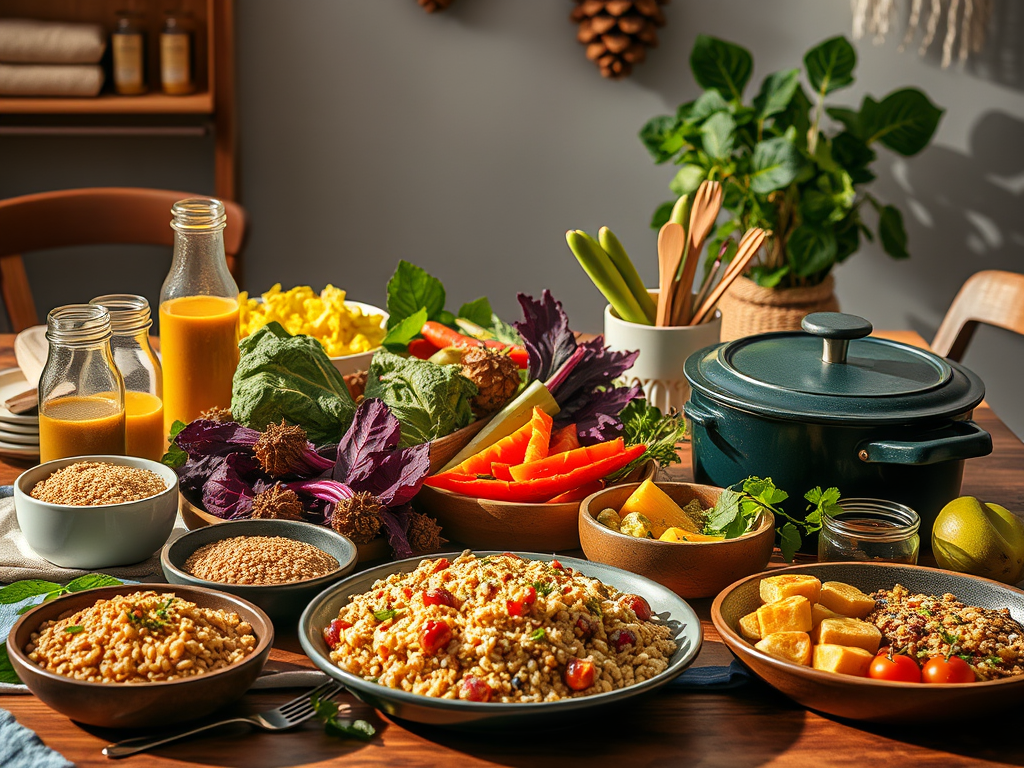
    No, my reluctant truth is this: a mostly plant-based diet is probably my best bet. I imagine a future of buckwheat groats, steel-cut oats, rainbow chard, tofu, tempeh, and beans. My meals will be slathered with artisanal dressings composed of balsamic vinegar, spicy mustard, and nutritional yeast—because apparently sainthood is now spreadable.

    Sure, I’ll fold in some salmon twice a week. Maybe Greek yogurt. And yes, I’ll backslide into Mongolian beef barbecue once a month when life feels meaningless and I want my food to fight back. But the plan is mostly monkish. And here lies the rub: the diet starts making me feel too pure. Too righteous. The kind of person who silently judges you for using ranch dressing. The glow of self-congratulation hangs around my head like a flickering LED halo.

    And then comes the cookware. You can’t cook holy grains in a peasant pot. No, this lifestyle demands French-made enameled cast iron Dutch ovens—heirloom cookware with the price tag of a minor surgical procedure. I tell myself this is an investment in my health. What it really is: a $300 declaration that I’ve joined the priesthood of quinoa.

    Worse, the whole thing becomes a personality. Plant-based meals. Exercise tracking. Morning rituals. Deep-breathing routines. It becomes its own narcissistic opera. I’m centered. I’m optimized. I’m intolerable. My life starts to feel like an Instagram reel narrated by a smug inner voice that’s always meditating.

    The real irony? I embarked on this whole food pilgrimage to escape the traps of modern life—its clutter, chaos, and chronic disease. And yet, somewhere between my third batch of millet and Googling the mineral content of nutritional yeast, I crossed into a new disorder: a lifestyle so curated it starts to feel like a museum exhibit titled Me, Trying Too Hard.

    Sometimes the cure becomes its own kind of sickness. We chase health, only to wind up imprisoned by our own kale-scented, cast iron-coated obsessions.

  • Training to Failure: A Love Letter to My Broken Sixty-Year-Old Body

    Training to Failure: A Love Letter to My Broken Sixty-Year-Old Body

    I just inhaled 80 grams of braised tofu on a bed of arugula—an herbivore’s banquet—because I didn’t want any leftovers skulking in the fridge while my family disappears for a weeklong trip. The trip also means six missed workouts, which my inner gym rat is already mourning with the solemnity of a funeral dirge.

    In my infinite wisdom—or perhaps masochistic delusion—I stacked seven consecutive kettlebell workouts into my week like some demented CrossFit monk chasing transcendence through joint pain. Predictably, I torched myself. Yesterday, I hit the wall. Even after a nap, I was cooked—bone tired, foggy, the kind of fatigue that whispers pre-flu doom into your ears while your muscles quietly plan a mutiny.

    Today was my supposed “last hurrah” before vacation. I skipped the kettlebells and mounted the Schwinn Airdyne, knowing full well I was running on fumes. Usually, I scorch 700–800 calories in an hour. Today I limped to 600. Eighty percent effort. That’s what the data says. My pride says otherwise.

    This might be my new reality: controlled, measured workouts instead of cinematic Rocky montages. The problem? I came of age in the 1970s golden era of bodybuilding, when Arnold preached the Gospel of Training to Failure and warned us about becoming “paper tigers.” I took that to heart. Too much heart. The kind that skips beats when your prefrontal cortex is begging you to lie down and your inner bro yells, “One more set!”

    But now, every time I push too hard—whether it’s with kettlebells or a fevered sprint on the Airdyne—I spiral into what I’ve dubbed RAA: Rundown Anxiety Affliction. It’s not a diagnosis. It’s a curse. You feel like you’re on the verge of the flu, haunted by a twitchy dread that your immune system has thrown in the towel. And for what? To impress the ghost of Mike Mentzer?

    I’m not exercising and eating tofu like a reformed monk to become a sickly, anxious husk of a man. That’s not fitness. That’s martyrdom.

    Today I danced at the edge of RAA. I throttled back. Took my 600 calories, thanked the fitness gods for the mercy, and called it. I’ll nap. I’ll pack. I’ll go on this trip, eat as decently as possible, and try not to treat my return like a penitential Ironman.

    Because no one needs to come back from vacation needing a vacation from their vacation—especially if it starts with RAA and ends with a doctor saying, “You need to calm the hell down.”

  • Neddy Merrill Disease: Lifting Weights to Outrun the Abyss

    Neddy Merrill Disease: Lifting Weights to Outrun the Abyss

    I take no glory in training through my 60s. At nearly 64, with a lifting life that began in 1974 amid the clang of Olympic barbells and testosterone-choked gyms, I no longer chase records or applause. These days, I chase mobility. I chase not falling apart. A nagging flare of golfer’s elbow—inner right, thank you very much—has made its uninvited return, forcing me to swap kettlebell rows for gentler “lawnmower” pulls and abandon my beloved open-palm curls in favor of reverse curls, the orthopedic equivalent of safe sex.

    There was a time, of course, when I confused self-worth with showing off. I strutted under heavy weights in the ‘70s through the ‘90s like a tragic extra from Pumping Iron, nursing shredded rotator cuffs and wrecked lumbar discs in my quest to impress… well, no one, really. The mirror? My dad? Arnold? These days I tiptoe a tightrope between intensity and injury, trying to silence the reckless ghost of my twenty-year-old self who still believes he’s indestructible.

    This tug-of-war with time reminds me of Neddy Merrill, the doomed protagonist in John Cheever’s “The Swimmer,” who tries to recapture youth by swimming across his neighbors’ pools like a suburban Odysseus, only to arrive at his own foreclosed house—empty, echoing, and final. I see flashes of my own Neddy Merrill alter ego every time I glimpse my neighbor, a sturdy cop in his early 40s, shepherding his twin teenage sons off to jiu-jitsu. I envy them—their youth, their purpose, their untouched joints. But I remind myself that comparison is the mother of misery. I don’t train for glory anymore. I train because the alternative is to surrender to frailty, to collapse into a slow-motion horror film of decay. I train because being strong is still cheaper than therapy, and it’s the only middle finger I can raise at time’s relentless advance.

  • The Hunger Games: GLP-1, Free Will, and the Price of Thin

    The Hunger Games: GLP-1, Free Will, and the Price of Thin

    In my Critical Thinking course, we tackle three research-based essays that wrestle with one central, disquieting premise: technology is not just helping us live—it’s rewriting what it means to be human. Our first unit? A polite but pointed takedown of the American weight loss gospel. The assignment is called The Aesthetic Industrial Complex, and it asks students to write a 1,700-word argumentative essay exploring a question that’s fast becoming unavoidable: Does the old moral framework of discipline, kale, and “personal responsibility” still hold water in the age of GLP-1 injections, food-delivery algorithms, and weaponized Instagram bodies?

    We dive into the stories of good-faith dieters—folks who’ve counted calories, logged cardio, avoided sugar like it was plutonium—and still watched their doctors frown over charts lit up with prediabetes, high blood pressure, and the telltale signs of metabolic collapse. These are not cases of vanity. These are mandates from cardiologists and endocrinologists. Lose weight or lose time.

    Enter the needle. GLP-1 drugs like Ozempic and Wegovy promise what decades of dieting books never delivered: chemical satiety and the end of food noise—that constant mental hum that turns the pantry into a siren song. The results are seismic: hunger down, weight down, cravings down, existential questions up.

    Because here’s the paradox: when food no longer seduces us, we gain a body that’s marketable and medically optimized—but we lose something else. Food is not just fuel. It’s ritual. It’s celebration. It’s Grandma’s lasagna, a first date over sushi, a kitchen filled with the smell of garlic. Food is culture, memory, and soul. And yet, being ruled by it? That’s a kind of servitude. Constant hunger is its own form of imprisonment.

    So we’re caught in a new paradox: to be free from food, we must become dependent on pharmacological salvation. Health insurers love it. Employers love it. Actuarial tables are singing hymns of praise. But should we?

    That’s the real assignment: not just whether GLP-1s work, but whether the shift they represent is something to embrace or fear. This is no clear-cut debate. It’s a riddle with contradictory truths. A tug-of-war between biology, economics, ethics, and the shrinking silhouette in the mirror.

    And if my students groan under the weight of the question, I remind them: this isn’t Home Ec. This is Critical Thinking. If you want easy answers, go back to diet TikTok.

  • The Death of Dinner: How AI Could Replace Pleasure Eating with Beige, Compliant Goo

    The Death of Dinner: How AI Could Replace Pleasure Eating with Beige, Compliant Goo

    Savor that croissant while you still can—flaky, buttery, criminally indulgent. In a few decades, it’ll be contraband nostalgia, recounted in hushed tones by grandparents who once lived in a time when bread still had a soul and cheese wasn’t “shelf-stable.” Because AI is coming for your taste buds, and it’s not bringing hot sauce.

    We are entering the era of algorithm-approved alimentation—a techno-utopia where food isn’t eaten, it’s administered. Where meals are no longer social rituals or sensory joys but compliance events optimized for satiety curves and glucose response. Your plate is now a spreadsheet, and your fork is a biometric reporting device.

    Already, AI nutrition platforms like Noom, Lumen, and MyFitnessPal’s AI-diet overlords are serving up daily menus based on your gut flora’s mood and whether your insulin levels are feeling emotionally regulated. These platforms don’t ask what you’re craving—they tell you what your metrics will tolerate. Dinner is no longer about joy; it’s about hitting your macros and earning a dopamine pellet for obedience.

    Tech elites have already evacuated the dinner table. For them, food is just software for the stomach. Soylent, Huel, Ka’chava—these aren’t meals, they’re edible flowcharts. Designed not for delight but for efficiency, these drinkable spreadsheets are powdered proof that the future of food is just enough taste to make you swallow.

    And let’s not forget Ozempic and its GLP-1 cousins—the hormonal muzzle for hunger. Pair that with AI wearables whispering sweet nothings like “Time for your lentil paste” and you’ve got a whole generation learning that wanting flavor is a failure of character. Forget foie gras. It’s psy-ops via quinoa gel.

    Even your grocery cart is under surveillance. AI shopping assistants—already lurking in apps like Instacart—will gently steer you away from handmade pasta and toward fermented fiber bars and shelf-stable cheese-like products. Got a hankering for camembert? Sorry, your AI gut-coach has flagged it as non-compliant dairy-based frivolity. Enjoy your pea-protein puck, peasant.

    Soon, your lunch break won’t be lunch or a break. It’ll be a Pomodoro-synced ingestion window in which you sip an AI-formulated mushroom slurry while doom-scrolling synthetic influencers on GLP-1. Your food won’t comfort you—it will stabilize you, and that’s the most terrifying part. Three times a day, you’ll sip the same beige sludge of cricket protein, nootropic fibers, and psychoactive stabilizers, each meal a contract with the status quo: You will feel nothing, and you will comply.

    And if you’re lucky enough to live in an AI-UBI future, don’t expect dinner to be celebratory. Expect it to be regulated, subsidized, and flavor-neutral. Your government food credits won’t cover artisan cheddar or small-batch bread. Instead, your AI grocery budget assistant will chirp:

    “This selection exceeds your optimal cost-to-nutrient ratio. May I suggest oat crisps and processed cheese spread at 50% less and 300% more compliance?”

    Even without work, you won’t have the freedom to indulge. Your wearable will monitor your blood sugar, cholesterol, and moral fiber. Have a rogue bite of truffle mac & cheese? That spike in glucose just docked you two points from your UBI wellness score:

    “Indulgent eating may affect eligibility for enhanced wellness bonuses. Consider lentil loaf next time, citizen.”

    Eventually, pleasure eating becomes a class marker, like opera tickets or handwritten letters. Rich eccentrics will dine on duck confit in secrecy while the rest of us drink our AI-approved nutrient slurry in 600-calorie increments at 13:05 sharp. Flavor becomes a crime of privilege.

    The final insult? Your children won’t even miss it. They’ll grow up thinking “food joy” is a myth—like cursive writing or butter. They’ll hear stories of crusty baguettes and sizzling fat the way Boomers talk about jazz clubs and cigarettes. Romantic, but reckless.

    In this optimized hellscape, eating is no longer an art. It’s a biometric negotiation between your body and a neural net that no longer trusts you to feed yourself responsibly.

    The future of food is functional. Beige. Pre-chewed by code. And flavor? That’s just a bug in the system.

  • College Writing Prompt: The Willpower Illusion: Ozempic, Obesity, and the Myth of Self-Control in a the Aesthetic Industrial Complex

    College Writing Prompt: The Willpower Illusion: Ozempic, Obesity, and the Myth of Self-Control in a the Aesthetic Industrial Complex

    Overview:

    Write a 1,700-word argumentative essay exploring whether the dominant narrative about weight loss—discipline, clean eating, and personal responsibility—still holds up in the age of pharmaceutical intervention, economic inequality, and digital diet culture.

    Drawing from Rebecca Johns (“A Diet Writer’s Regrets”), Johann Hari (“A Year on Ozempic…”), Harriet Brown (“The Weight of the Evidence”), and Sandra Aamodt (“Why You Can’t Lose Weight on a Diet”), analyze how obesity is shaped by factors far beyond individual willpower. Consider the influence of wealth disparity, pharmaceutical marketing, addictive food engineering, and digital culture on how we define health, blame failure, and reward certain bodies over others.


    Key Questions to Consider:

    • Is the belief in personal discipline as the primary tool for weight loss a dangerous oversimplification?
    • How do Ozempic and similar drugs challenge or reinforce our cultural obsession with self-control?
    • What role does economic privilege play in deciding who gets access to medical weight-loss interventions?
    • Are we witnessing a new form of techno-body capitalism where apps, injections, and dopamine loops manage our appetites better than we ever could?
    • How might social media, AI influencers, and fitness-tracking technologies contribute to a culture of body surveillance and shame?

    Required Sources (Use at least 4, MLA Format):

    • Rebecca Johns – “A Diet Writer’s Regrets”
    • Johann Hari – “A Year on Ozempic Taught Me We’re Thinking About Obesity All Wrong”
    • Harriet Brown – “The Weight of the Evidence”
    • Sandra Aamodt – “Why You Can’t Lose Weight on a Diet”

    Recommended Focus Areas:

    1. The Discipline Dilemma
    How Johns and Hari dismantle the myth that all it takes is willpower. What emotional, social, and physiological realities do they reveal?

    2. Set Points and Self-Sabotage
    How Aamodt and Brown explain the body’s resistance to permanent weight loss. What does the science say about the limits of effort?

    3. Ozempic and the Access Divide
    Ozempic works—but only for those who can afford it. How does this reflect a larger healthcare injustice?

    4. Capitalism’s Role in Body Control
    How the Industrial Food Complex profits from addiction, and Big Pharma profits from the “cure.” Is this a closed system of exploitation?

    5. Digital Diet Culture
    Optional but encouraged: bring in TikTok, fitness influencers, AI diet advice, or surveillance devices (like smartwatches and calorie-counting apps). How do these amplify shame or create new ideologies of control?


    Conclusion:

    Make a claim about how society should reframe the conversation around obesity and weight loss. Should we abandon the willpower narrative? Should access to medical treatments be universal? Should we question the legitimacy of “health” as a moral standard at all?


    Final Essay Requirements:

    • 1,700 words minimum
    • MLA format, 12pt Times New Roman, double-spaced
    • Include a clear thesis, transitions, and a conclusion
    • Use and cite at least 4 sources

    Submit with a Works Cited page

  • Hungerphoria: Finding Comfort in the Empty Stomach

    Hungerphoria: Finding Comfort in the Empty Stomach

    Let’s get something straight: my weight-loss quest isn’t about vanity. I’m not trying to become the next shirtless fitness guru hawking collagen peptides to the dopamine-addled masses on Instagram. No, this is about survival—mental and physical, which, despite popular delusion, are not separate departments. They’re a single, tangled mess of neurons and cravings, and if one goes down, the whole system buckles.

    So, I’ve been on a high-protein, calorie-restricted diet for five weeks (15 pounds lost so far). Not the sexy kind with green smoothies and acai bowls—this is grim, disciplined, macro-tracked warfare. And yet something strange and glorious is happening: my brain is beginning to like it.

    Case in point: I used to get jittery before class, pacing my office like a caged animal and convincing myself I needed a protein bar or an apple just to face a room of disinterested freshmen. But lately? I stroll in on an empty stomach like a monk walking into a Zen garden. The hunger is there, sure, but it doesn’t bark anymore. It purrs.

    Last night, same story. Three hours after dinner, the belly murmured—but instead of scrambling for almonds or scanning the fridge for peanut butter-oatmeal “protein” balls, I smiled. That emptiness didn’t feel like punishment. It felt like progress. A signal. A secret handshake from my metabolism saying, “We’re doing it. Keep going.”

    Which brings me to what I’m now calling Hungerphoria.

    Let’s define it properly, shall we?

    Hungerphoria is the paradoxical joy one feels in the disciplined embrace of hunger—a fleeting but addictive high that replaces food anxiety with a sense of mastery and serenity. Rather than viewing hunger as a threat or an emergency, the hungerphoric individual interprets the growl of an empty stomach as applause from the body’s metabolic engine. It’s not deprivation; it’s affirmation. Hungerphoria turns a late-night craving into a badge of progress, a quiet reminder that transformation is happening invisibly, molecule by molecule. Like the runner’s high or the monk’s calm, hungerphoria isn’t about denial—it’s about the subtle euphoria of restraint, the mental alchemy of converting appetite into purpose.

    Did I stumble onto this like a weary gold miner striking the motherlode? Maybe. Should I start selling merch—Hungerphoria hats, mugs, crop tops? Tempting. Should I become a lifestyle influencer preaching the gospel of the empty belly? Possibly.

    But then a voice in my head, the responsible one who still wears pants with belt loops, whispers: “Easy, tiger. Lose another thirty. Keep it off for a year. Then maybe you can start printing t-shirts.”

  • Flabnesia and the Fall of the Weight-Loss Hero

    Flabnesia and the Fall of the Weight-Loss Hero

    Congratulations! You’ve shed 47 pounds over 8 months, sliding from a swollen 247 to a sleek, even 200—the numerical promised land. At 247, you weren’t just overweight; you were a walking billboard for metabolic dysfunction. A bloated monument to poor impulse control. Your blood pressure was climbing Mount Everest, your triglycerides were hosting a rave, your fingers cracked like old parchment, and your foot buzzed with the low-voltage horror of neuropathy. Your joints? They screamed in Morse code every time you dared to walk more than half a Target.

    And let’s not forget the existential FOMO—not Fear of Missing Out on parties or vacations, but on the you you were supposed to be. The one who didn’t sound like an old staircase every time he stood up.

    But then, in a moment of uncharacteristic clarity—or maybe rage at your own reflection—you declared war on the fat demon. You slashed your calories to a monk-like 2,300, jacked your protein intake to bodybuilder levels, and banished refined carbs and sugar like they owed you money. Your entire cerebral cortex was repurposed into a fat-loss mission control center. Progress became your dopamine drip. Watching the numbers fall on the scale felt like watching your soul return from exile.

    You were, in the language of gymfluencers, “on a journey.” A phrase so overused it should be banished to a motivational poster graveyard. But cliché or not, the journey gave your life narrative structure. It made you feel heroic. Disciplined. Alive.

    And then—you arrived.

    Two hundred pounds. The exact number. Mission accomplished. Cue the existential silence.

    Because now what?

    With the drama over, meaning slips through your fingers like a protein shake on a sweaty treadmill. You no longer wake up with a fat war to fight. And into that vacuum slithers the ancient enemy of every former fatty: complacency.

    Complacency brings friends. First comes Calorie Creep—just a nibble here, a mindless bite there, a slow but deliberate loosening of your former austerity. Then arrives Flabnesia, that insidious amnesia that erases the memory of how awful 247 felt—how humiliating, how painful, how limited. Your jeans start getting tight again, and you blink in confusion as if the dryer is gaslighting you.

    Next, the cruelest symptom of all: Goalstalgia—a perverse longing for the righteous high of the weight-loss struggle. You miss the purpose, the metrics, the drama. And in a dark twist of psychological masochism, you begin to sabotage yourself, just to start over—to claw your way out of the hole you’re actively digging again.

    And so the cycle begins anew. You are no longer the master of your fate or the captain of your macros. You are a cautionary tale—an Ouroboros in athleisure, endlessly consuming your own progress.

  • Biceps and Biohazards: A Life on Nutritional Alert

    Biceps and Biohazards: A Life on Nutritional Alert

    I’ve been a bodybuilder most of my life. At 63, my muscles still bulge like I’m auditioning for a special forces propaganda reel—but even that doesn’t exempt me from the quiet humiliation of mortality. Lately, I’ve been staring into the abyss not with dread, but with diagnostics. My blood pressure, triglycerides, cholesterol—these numbers have become my new Greek chorus, whispering prophecies of heart disease, kidney failure, and other charming ways the body stages its final betrayal.

    I want to live long. I want to be healthy. I want to be around for my family, not just as a protein-shake-fueled statue, but as someone present, alert, alive. And so I try to eat right. I try to live clean. But in doing so, I’ve become a man who spends his days mentally auditing every almond. I walk through my own kitchen like it’s a minefield, knowing one wrong step—say, a 700-calorie bowl of Shredded Wheat with berries and walnuts—might plunge me into the void.

    This is what vigilance looks like now: standing in front of the fridge at 8 p.m., debating whether two Medjool dates and a dollop of whole milk Greek yogurt is self-care or self-destruction. I’ve got a body that could still turn heads at a funeral, and yet I’m haunted by the nutritional content of a single ounce of bourbon, as if one sip will hurl me into a Roman orgy.

    And so I ask myself: Is this it? Is a healthy life supposed to feel like I’m forever balancing on a dietary razor wire, eyes scanning for invisible enemies made of saturated fat?

    Where’s the joy in this script? Where’s the wonder, the enchantment, the spontaneity that’s supposed to come with vitality? Am I prolonging life or merely stretching the anxiety?

    These are the questions I ask while chewing a forkful of salmon and silently longing for a croissant. Yes, I want to live longer—but must I do it while fearing the yogurt that is staring at me from the refrigerator?