Tag: wellness

  • Against Becoming a Whole Food Absolutist

    Against Becoming a Whole Food Absolutist

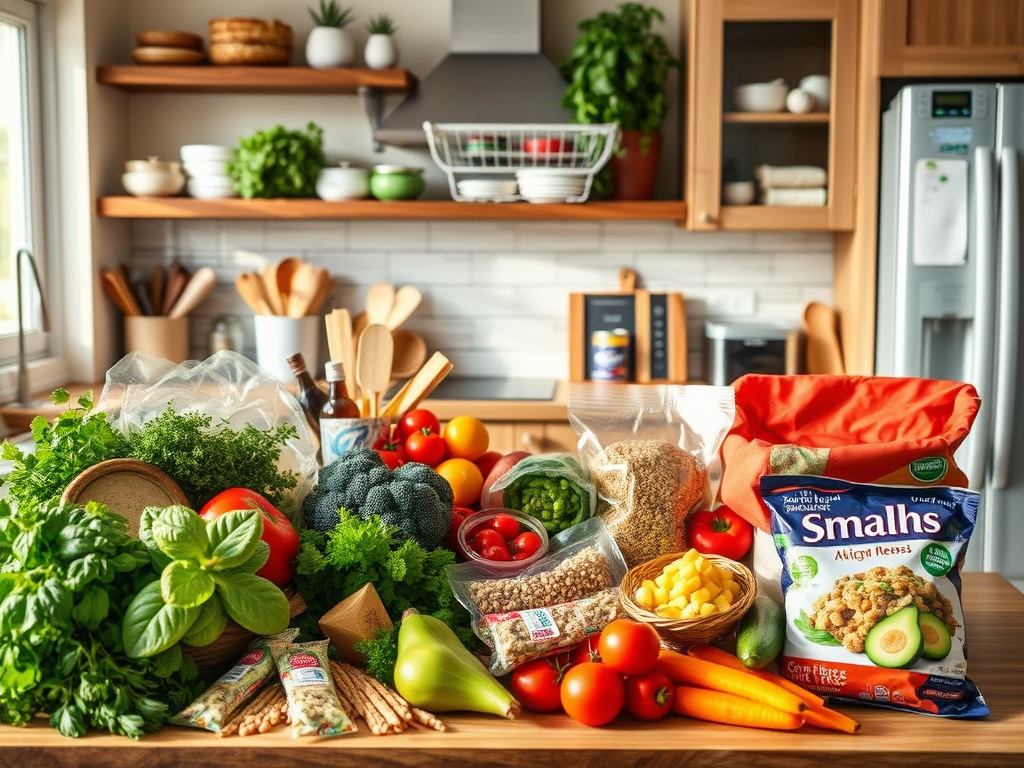
    I admonish my teen daughters for their “high school” diet–80% of which is ultra-processed. I tell them to learn to prepare and enjoy whole foods, and as I speak these words, I can feel a self-righteous halo glowing over my head. My rectitude is rooted in my knowledge that whole foods are more dense, nutritious and fibrous than processed foods, and as a result whole foods help us achieve satiety–the word for feeling full, an important condition to help us avoid overeating. 

    The problem, however, with self-recitude, is that it can encourage us to become absolutists, zealous, and true believers who drink our own Kool-Aid with such relish that we fail to see how blind and rigid we have become. As whole food absolutists, we may find that our worldview and lifestyle doesn’t align with reality.

    This misalignment is discussed in Olga Khazan’s essay “Avoiding Ultra-Processed Foods Is Completely Unrealistic.” The title is followed by the parenthetical “Especially if you have kids.” 

    As a health reporter, Khazan interrogates her own food choices for her son, some of which she understands will be questionable: peanut-butter puffs, grape-jelly Uncrustables sandwich, mixed-berry oat bites–all ultra-processed. 

    She understands that “hyperpalatable” Ultra-Processed Foods (UPFs) are linked to obesity, glucose spikes, insulin resistance, type 2 diabetes, and other afflictions so serious that UPFs should be treated like cigarettes and labeled with surgeon general warnings. 

    In light of UPF’s dangers, Khazan observes there is a myriad of health mommy influencers making videos on how to make your own healthy versions of goldfish crackers and chicken nuggets and how to prepare toothsome steamed cauliflower and carrot salad for your toddlers.

    In this aspirational world, preparing whole foods may give us bragging rights, but it doesn’t align with the real world: Getting stuff done. When you consider how busy a working parent is in our ultra-competitive Hunger Games society, you realize that taking the time to prepare whole foods is an opportunity cost: Yes, you made homemade goldfish crackers, but you didn’t have time to go to the dry cleaners, drop off a return package of undersized garments to Temu, and stand in line at the pharmacy to pick up your medications. In other words, when you’re living in the real world, you have to capitulate to some UPFs regardless of the fitness mommies wagging their scolding fingers at you.

    But Khazan points out that all this food shaming is making us fail to see the complexity of the ultra-processed food category, which is “too broad and difficult” for us to understand. Bran flakes and candy bars are both considered UPFs, but are they equal? Tofu is often categorized as a UPF, but is it really? Is soy milk bad for you in the same way sugary soda is? In other words, can we put all UPFs in the same category?

    To complicate UPFs further, some are even good for you, including some yogurts, breads, and breakfast cereals. Additionally, some people have food restrictions, because of special dietary needs and food allergies, and their health benefits from some UPFs in their diet. For example, I use Splenda and liquid stevia for my coffee and tea, and my insulin thanks me for it.

    The Shaming Whole Food Mommies should stop wagging their fingers for another reason: Being a parent entails unexpected crises that create time-management problems, which can only be solved with a quick meal, such as putting chicken nuggets in the toaster-oven. To make whole foods palatable can take several hours of preparation. Unless you’re rich and home all day, the time required for this type of preparation may elude you. 

    We’re not just talking about the time to prepare whole foods. We’re talking about cognitive drain. The amount of mental energy to bake chicken nuggets and a plate of celery stalks smeared with peanut butter is infinitesimal compared to prepping for chicken Tikka masala over basmati rice followed by cleaning ten times more dishes than microwaving a quick meal.  

    If you’re rich and you can spend time shopping in the morning and the rest of the day in the luxury of your spacious, state-of-the art home, you have the money, time, and cognitive energy to make tasty whole food dishes. Congratulations, you’re a member of the one percent. The rest of us have to work for a living. Unlike you, we’ve got chicken nuggets in the freezer for emergencies. 

    Have we even talked about the cost of whole foods vs. UPFs? A jar of organic pasta sauce cost more than double the one larded with high-fructose corn syrup. The same goes for salsa, nut butters, tomato sauce, pesto, bone broth, and the list goes on. 

    The Whole Foods Mommy Influencers shamelessly lard us with toxic positivity to “educate” us on healthy eating, but what they’re really doing is a muscle flex–showing us how great their lives are and wanting us to suffer FOMO because we don’t have their time and resources. They’re rubbing our noses in their glorious lifestyle knowing deep down that we don’t have the time and resources to join their rarified tribe. They’re more toxic than a case of UPFs. 

    A saner approach is simple: choose your battles. Cook whole meals when you can. Use common sense. Avoid the truly catastrophic diet—the frappuccino-and-bear-claw lifestyle that leads straight to endocrinological ruin. And when you inevitably reach for a UPF shortcut, don’t flagellate yourself or watch a Mommy Influencer video for penance. Just eat, breathe, and move on. The real world is hard enough without adding shame to the grocery bill.

  • Raising Teens in the Age of Doritos and Doom

    Raising Teens in the Age of Doritos and Doom

    In Food Intelligence, Julia Belluz and Kevin Hall deliver a bleak data point: since 2018, ultra-processed foods—UPFs, the junk with marketing degrees—account for 60 percent of the calories consumed by American adults and nearly two-thirds of what children eat. These edible Frankensteins are now being linked to depression, type 2 diabetes, and early-onset colorectal cancer.

    I have twin daughters in high school who live on donuts, chips, energy drinks, and iced coffees that taste like dessert in a cup. This is their food pyramid of joy. I tread carefully: I don’t want to sound like a puritan in a lab coat or a prophet of intestinal doom. I just want to help without becoming the household killjoy.

    But what is “helpful” when their entire social ecosystem runs on UPFs? If I had to guess, 75 percent of their peer group’s calories come from things that never met a farm or field. Processed food isn’t just addictive—it’s tribal. Sharing snacks is a social contract; refusing one is like rejecting friendship itself.

    Convincing teenagers to stop eating UPFs is about as effective as warning them about “too much screen time.” They’ll nod politely, roll their eyes invisibly, and continue scrolling while demolishing a bag of Flamin’ Hot somethings. Still, I’ll try. I’ll cite the studies, stock the fridge with hummus, guacamole, nut butters, whole-grain crackers, chickpea puffs, trail mix, and protein shakes—an arsenal of virtue they’ll likely ignore.

    Because youth isn’t about balance or moderation. It’s about belonging—through food, fashion, memes, and caffeine. Their need for connection will always outweigh my nutritional sermons. So I’ll do what I can: lay out the facts, offer alternatives, and accept that fighting pop culture is a noble but largely hopeless act of parental theater.

  • Have I Gone Overboard with My Protein Obsession?

    Have I Gone Overboard with My Protein Obsession?

    Five nights ago, I dreamed I was trapped at a houseboat party. The decks heaved with music and laughter; people swayed, bottles clinked, lights shimmered across the water. Somewhere between the bass thump and the spray of cheap champagne, I decided it was time to save everyone. I climbed onto a railing and began lecturing on the virtues of a high-protein diet.

    The crowd ignored me. The more I shouted about the glory of amino acids, the louder the DJ turned the volume. My words scattered across the lake like crumbs for fish. I tried compromise—lowering the daily requirement from 200 grams to 120—but no one cared. Eventually, hoarse and defeated, I realized I’d become a mad prophet of whey protein, screaming into the void. When I woke, I asked myself the obvious question: Had I gone overboard on my protein obsession?

    That question lingered until this morning, when I read Julia Belluz and Kevin Hall’s Food Intelligence: Protein, the “Only True Nutrient.” They argue that our worship of protein is centuries old. In 1853, a Parisian newspaper mocked vegetarians as gaunt weaklings too frail to walk out of a restaurant unaided. A hundred years later, Arnold’s gospel of 250 grams a day turned protein into a civic duty for gym rats. Now, with Google searches and supplement sales hitting record highs—an industry worth $28 billion—protein has become both religion and racket. Everyone preaching its holiness seems to be selling tubs of it.

    Protein has always been marketed as a competitive edge: animal protein supposedly bestows power, plant protein supposedly punishes you with mediocrity. Yet Belluz and Hall dismantle this myth. Plant eaters, they write, can easily get all essential amino acids from a diverse diet—no powders, no “meat extract,” no panic required.

    Even more humbling, they admit that no one actually knows the optimal daily dose. Our bodies, they say, have a built-in governor called “protein leverage,” which drives us to crave roughly what we need. Too little protein and we lose muscle, which shortens life. Too much—especially at the expense of a balanced diet—and we hasten the same end. Somewhere between the extremes lies the sweet spot, but it’s not a round number you can print on a supplement label.

    That answer frustrated me. I like numbers. I like goals. “More” has always felt safer than “enough.” Reading their chapter, I remembered the summer of 1978, when I was sixteen and backstage with Mr. Universe Mike Mentzer before his posing exhibition set to 2001: A Space Odyssey. I asked how much protein he ate. “About a hundred grams,” he said, barely looking up from his shake. I was stunned. Arnold had taught us to eat at least 250.

    “Why not more?” I asked. Mentzer shrugged. “It’ll just make you fat.” Then, with equal candor, he mentioned his steroid stack—Deca-Durabolin included. Even then I could tell: genetics, not shakes, were the true miracle. At five-foot-eight and 225 pounds, he was carved from marble, but it was marble under pressure. He died of heart failure at 49, just five miles from where I live.

    Now I’m 64, taking in 180 grams a day and wondering if I’ve turned protein into a creed. I’m strong for my age but heavier than I’d like. Maybe the excess that built my muscle also built my burden. That houseboat dream feels less like absurdity and more like warning. It’s time to stop shouting about protein and start listening—to appetite, to reason, and maybe to the quiet voice reminding me that balance, not bulking, is the real art form.

  • How Not To Turn Into a Pillar of Salt in the Internet Age

    How Not To Turn Into a Pillar of Salt in the Internet Age

    Anna Lembke’s Dopamine Nation didn’t teach me anything comforting. It confirmed what I already suspected: addiction isn’t a habit; it’s a ravenous creature with a bottomless stomach. The more you feed it, the louder it howls. It storm-raids your mental vaults, looting the energy you need for your work, your relationships, and your sense of self. And your family feels the theft—spiritually, emotionally, domestically. Addiction doesn’t just eat you; it nibbles at everyone near you.

    Even with self-awareness, even with a clear understanding of triggers and a sincere desire for freedom, you don’t get a clean fight. The casino is rigged. Modern dopamine doesn’t drip from a bottle or a needle—it streams through fiber-optic cable. Our phones and laptops, the same devices we use to create, to earn, and to connect, also serve as the slot machines we keep in our pockets. The house never closes, and the drinks are free.

    Lembke tells us to avoid triggers, but what do you do when your trigger is baked into your professional life, disguised as “productivity” and “connection”? Avoidance becomes theater. You can only tiptoe around the swamp for so long before some lonely hour arrives, and curiosity knocks like an old vice with freshly polished shoes. A hit of self-pity, a twitch of boredom, a flicker of FOMO—and suddenly you’re back in the feed trough, gulping pixels like syrup. The crash comes fast: shame, exhaustion, vows of purity. Then the next impulse, the next relapse, the same ancient ritual. Lot’s wife didn’t want to look back; she simply couldn’t resist. Neither can we, sometimes. Salt is surprisingly modern.

    So the task becomes stark: learn to live in this world without turning yourself into a monument of regret. Train your gaze forward. Build the strength to resist that backward glance. The modern life mission isn’t to slay the demon—he regenerates too easily. It’s to starve him, inch by inch, while protecting the scarce, bright energy that makes you human.

    Becoming a human being is a high-stakes game. Learning to live a life in which you don’t become a pillar of salt is one of life’s chief endeavors.

  • Will Optimization Kill the Joy of Mechanical Watches?

    Will Optimization Kill the Joy of Mechanical Watches?

    Sometimes I wonder how technology might assassinate my love for timepieces. Picture this: a $200 spool of 3-D printer feedstock spits out your $10,000 grail watch. Eight years later, when the mechanical movement needs servicing, you don’t take it to a watchmaker—you print another.

    If watch-printing is as easy as making pancakes, I’d have thousands. Would I be happy? No. I’d be the spoiled rich kid sulking in his palatial bedroom because Mom and Dad bought him every toy but a bazooka.

    “Son, I bought you everything.”
    “But I want a bazooka.”
    “They’re illegal.”
    “I don’t care!”

    When everything is instant, the “holy grail” becomes an inside joke. The magic dies in the flood of abundance. Just ask the diamond industry. Lab-grown stones are flawless, cheap, and undetectable to the human eye—obliterating the romance of bankrupting yourself for an engagement ring. Watches could be next.

    And that’s just one front. On another, tech billionaires are funding biohackers to keep us ticking for 900 years. If I’m going to live to 85, time feels urgent. If I’m going to live to 900, time is a leisurely brunch. Chronological time starts to matter less than biological time—the wear and tear written in my cells.

    In that world, your Rolex Submariner won’t tell you what matters. Your doctor-prescribed smartwatch will, tracking cardiovascular vitality, antioxidant levels, and the sorry truth of your lifestyle choices. Refuse to wear it, and your insurance premiums explode tenfold or you’re cut off entirely. Privacy? Gone. Your vitals are known to your insurer, employer, spouse, dating app matches, and the guy at your gym checking your actuarial risk.

    When the mechanical watch dies, so does your privacy. And somewhere, Dale Gribble from King of the Hill is finding the conspiracy angle.

    Give it five years. Our “watch collector meet-up” will look more like group therapy for mechanical-watch dinosaurs funding their therapists instead of their ADs. But fear not—obsession never dies, it just changes costume. Post-watch, your new drug will be optimization.

    You’ll strap on your OnePlus Watch 3, buy a $2,600 CAROL resistance bike, and simulate being chased by a saber-toothed tiger because “hormesis”—that holy word—demands mild ordeals to make you live forever. Resistance intervals, intermittent fasting, cold plunges. Goodbye winding bezels; hello gamified cell stress.

    Our poster boy? Bryan Johnson—the billionaire fasting himself pale, zapping his groin nightly to maintain the virility of a high school quarterback. Critics say he looks like a vampire who’s just failed a blood test. I say he’s the future. Picture him at 200, marrying a 20-year-old and siring a brood. Male Potency and Reproductive Success: the distilled recipe for happiness.

    Except I’m kidding. The truth: peer-reviewed science says we might beat the big killers before 90—heart disease, cancer, stroke, Alzheimer’s—but the biological ceiling is still ~100. Eventually your organs quit. All the optimization in the world won’t rewrite that.

    As a watch obsessive, I know the tyranny of time. The biohackers are fixated on biological time as if it’s the only kind that matters. But the Greeks knew a third: kairos—the moment saturated with meaning, purpose, connection. All the Bryan Johnsons in the world can’t 3-D print that.

    Live 200 years without kairos and you’re not a winner; you’re a remake of Citizen Kane with a garage full of exotic cars and no friends.

    A long time ago, a friend told me about the night cocaine hollowed him out so completely that he didn’t care his best friend was kissing his girlfriend. Then a voice in his head said, “Dude, you should care.” He went to rehab the next day. That’s soul work.

    And that’s what’s missing from the longevity cult: soul work. Without it, all the tech, watches, and optimized mitochondria in the world are just a shiny grift.

  • Hawaiian Vacations Are About Stepping Outside the Clock and Cheating Death

    Hawaiian Vacations Are About Stepping Outside the Clock and Cheating Death

    Spend a week with your family in Hawaii and you slip into a parallel time zone—one that ignores clocks altogether.

    It starts the moment you survive five airborne hours in a 400-million-dollar jet. You land feeling like Superman, minus the cape and plus a mild dehydration headache. Within 24 hours, you’re barefoot, in swim trunks, marinating in mai tais, spooning loco moco into your face, and demolishing lilikoi pies. The weather is so perfect it feels like it was made to flatter you personally. Sunsets become private screenings. You have no deadlines, no alarms, no reason to measure the day except by the height of the tide or the level in your glass.

    In this dimension, you’re not just on vacation—you’ve stepped outside of time. And outside of time means outside of death. Some corner of your brain starts whispering that you’re untouchable. Immortal.

    That’s when the trouble starts.

    The thought of getting back on a plane becomes revolting. It’s not just leaving Hawaii—it’s leaving Sacred Time and returning to Profane Time. Back to the grind where schedules nag and mortality hides in every bathroom mirror.

    Even after you land at home, you’re not really home. You’re in a kind of sun-drunk denial, still hearing the ocean in your ears while the neighbor’s leaf blower whines outside. The older you get, the worse the hangover—because you know the clock is running, and the illusion of timelessness is an intoxicant more potent than any cocktail with a paper umbrella.

    And then it’s over. You reenter the machine. Days are counted in emails, not waves. The tan fades, and with it the fantasy that you’ve cheated the countdown. That’s the real brutality of reentry—not the weather, but the eviction notice from the one place that convinced you, however briefly, that you could live forever.

    So yes, I’m already searching for Big Island resorts. It’s not wanderlust—it’s a hunt for my next fix of immortality. And I know the danger. One day I might just stay.

  • The Unspeakable Miracle of the Clean Break

    The Unspeakable Miracle of the Clean Break

    I stopped buying toilet paper three months ago. Not as an act of rebellion or eco-virtue—just as a natural consequence of no longer needing it. At first, I thought it was a fluke. But week after week, the same strange reality: quick, frictionless exits from the bathroom with nothing left to wipe. Naturally, I retraced my steps. What had changed?

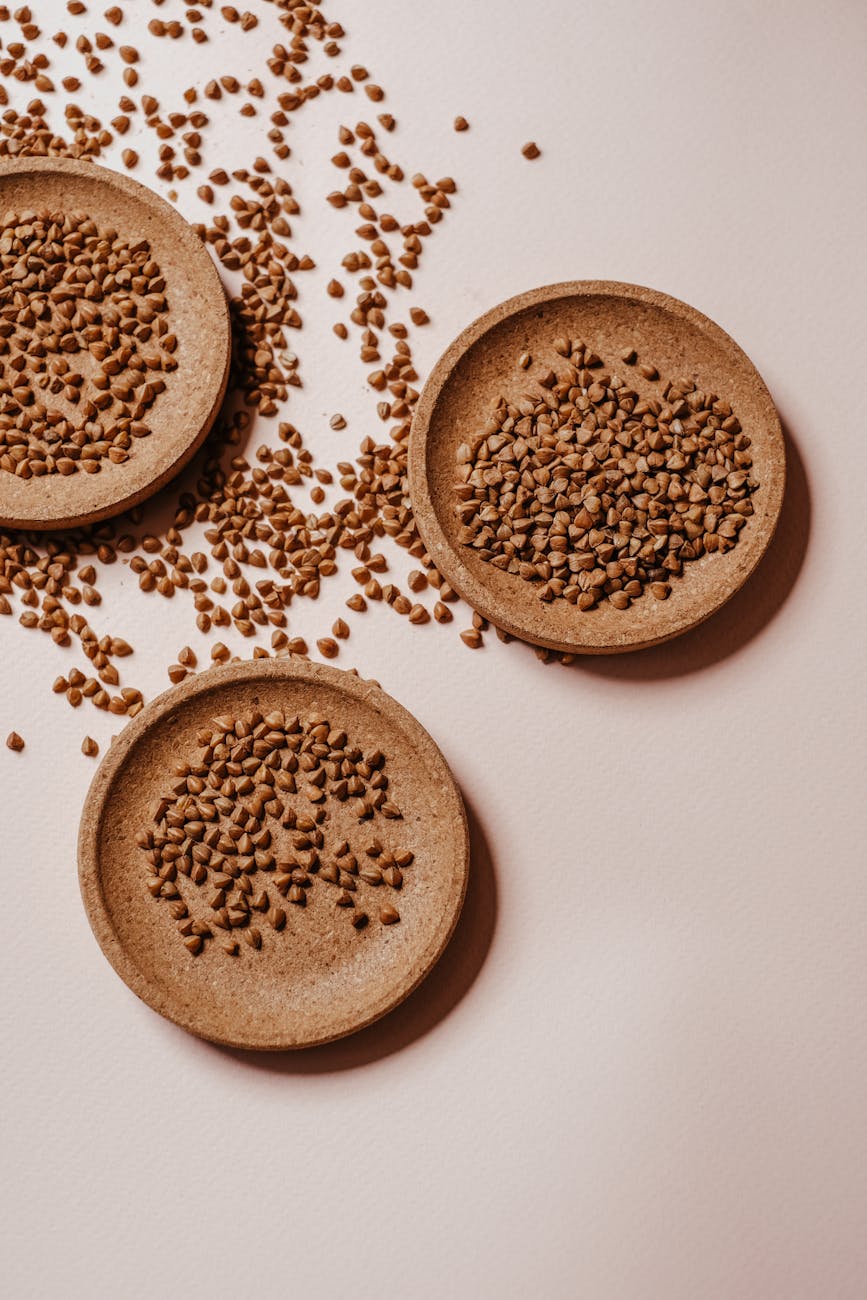
    Breakfast, for starters. I began eating buckwheat groats—just under half a cup—bathed in soy milk, whey protein, and a handful of berries. Think monk breakfast with gym-bro toppings. At lunch, I ditched meat and tinned fish in favor of twelve ounces of super-firm tofu atop a cucumber salad, dressed with Greek yogurt, nutritional yeast, and whatever herbs made me feel like I was living in Tuscany.

    Dinner? Whatever my wife cooks. I’m not a monster.

    Of course, the hero here is the buckwheat. It isn’t wheat, not really—it’s a seed masquerading as a grain, gloriously gluten-free and loaded with insoluble fiber and resistant starch. In less science-y terms: it bulks, it sweeps, it feeds your gut’s good guys, and it delivers the elusive clean break. The kind of bathroom visit where nothing lingers—physically or emotionally.

    Then there’s the tofu. It doesn’t showboat. It doesn’t need to. Its gift is its non-disruption. High in protein, low in drama, tofu is the digestive equivalent of a self-driving electric car. It quietly replaces the gut’s old sputtering engine, the one bogged down by greasy meats and dairy sabotage, and makes everything hum.

    Put the two together, and suddenly, bathroom time became… efficient. Minimal. Almost elegant. No TP required. Just a moment of stunned gratitude, a small prayer to the intestinal gods, and a confused gaze into the middle distance: Did I just hack the human body?

    And then came the real question: Do I tell people?

    Because while we’ll chat endlessly about protein macros, creatine, cholesterol, and God help us, cold plunges—we go silent on the topic of TP use and the miracle of no longer needing it. And yet, so many are secretly miserable. The bloating, the straining, the endless wiping. And here I am with the holy grail—and I’m supposed to stay quiet?

    No, I won’t promise this will work for everyone. But if you’re even slightly intrigued by the promise of digestive liberation, consider the humble buckwheat. Consider the tofu. And maybe, just maybe, you’ll find yourself typing from a place of lightness, efficiency, and radiant intestinal peace.

  • The Dopamine Dial: Why Your Grail Watch Can’t Make You Happy

    The Dopamine Dial: Why Your Grail Watch Can’t Make You Happy

    To understand the madness of the modern watch addict, you’d do well to consult Dopamine Nation by Stanford psychiatrist Anna Lembke, a book that should be shelved somewhere between philosophy, neuroscience, and quiet screaming. Her central thesis? In an age of relentless indulgence, the line between pleasure and pain is not only blurry—it’s the same neurological pathway. You’re not escaping pain with your latest acquisition. You’re feeding it.

    “The smartphone,” she writes, “is the modern-day hypodermic needle.” And the drug? Dopamine—delivered in neat little parcels: TikToks, tweets, memes, and yes, wrist shots of watches you don’t own (yet). If you haven’t met your poison of choice, don’t worry. It’s just a click away.

    Lembke makes the uncomfortable truth clear: The more dopamine hits we seek, the more our brain adapts by reducing our baseline pleasure response. What once thrilled you—your grail watch, your Rolex Explorer, your Seiko with the Wabi-Sabi patina—now barely registers. You’re not chasing pleasure anymore. You’re just trying to feel something.

    Watch addicts, of course, understand this intimately. The pursuit of horological perfection starts out innocent enough: a G-Shock here, a vintage diver there. But soon you’re tumbling into the abyss of boutique limited editions and message board enablement, haunted by the need to stay relevant. Because here’s the twist: It’s not just about the watches. It’s about being seen. You post, you review, you flex because if you stop, you vanish. No new watches = no new content = digital extinction.

    And extinction, in a social-media world, feels like death.

    Lembke warns us that addiction thrives in secrecy, in the exhausting double life. The watch addict may present as a tasteful minimalist to family and friends, while secretly rotating 19 watches, five straps deep, waiting for the next “drop.” The addiction is fed by access, and we live in an access economy. New releases are no longer annual events—they’re hourly temptations. The vortex is bottomless. The supply creates the demand.

    Even worse, modern society normalizes this behavior. Everyone is scrolling. Everyone is upgrading. Our addiction to novelty is passed off as taste. Our frenzied consumption masquerades as identity. Lembke borrows from Philip Rieff to explain the deeper shift: “Religious man was born to be saved; psychological man is born to be pleased.” The modern watch collector doesn’t believe in salvation. He believes in configuration.

    But here’s the cruel irony: The more you seek to be pleased, the less capable you are of being pleased. In Lembke’s words: “Hedonism, the pursuit of pleasure for its own sake, leads to anhedonia—the inability to enjoy pleasure of any kind.”

    What’s the solution? A dopamine fast. Lembke prescribes it like a bitter medicine: Remove the source. Reset the brain. Let it reestablish homeostasis. For the watch addict, this means one thing: a watch fast.

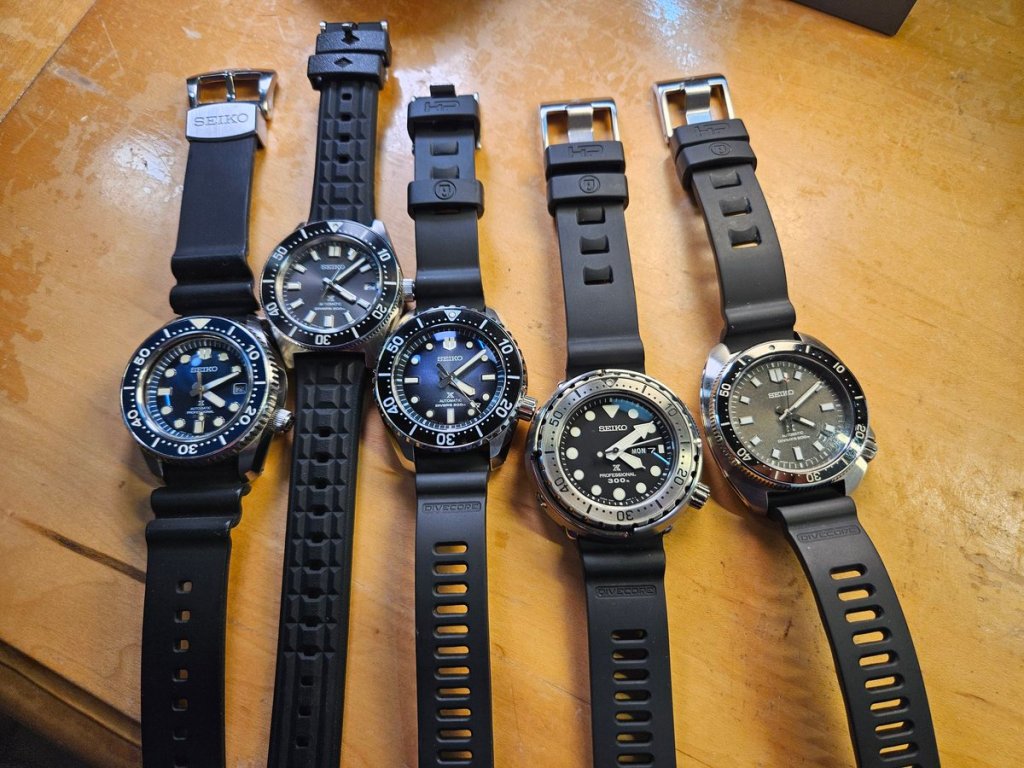
    And yes—it’s brutal. I’ve been a watch obsessive for over twenty years. My longest fast? Six months. And I nearly went feral. New releases tempt. Friends enable. Algorithms whisper. Strap swaps and vintage reissues beckon like sirens. Even the FedEx truck starts to look like a personal tormentor.

    So you get creative. You stash watches in the safe and “rediscover” them. You buy new straps instead of new watches. You try to redirect the compulsion toward something productive: fitness, music, sourdough, monkish austerity. Anything but another chronograph.

    But the real cure, oddly enough, may be conversation—actual human connection. At watch meet-ups, we start out discussing bezels and spring bars, but within ten minutes we’re talking about life: real estate, parenting, knee surgeries, emotional burnout, dinner recipes. We talk for hours. But barely about watches.

    The truth slips out in these moments: we want to be free. We crave community more than we crave sapphire crystals. What began as a shared obsession has become a trap, and these conversations, paradoxically, offer relief from the very addiction that brought us together.

    Imagine a bunch of watch enthusiasts at a watch meet-up and we’re talking about everything but watches. Wrap your head around that.

  • The Gospel According to Arnold

    The Gospel According to Arnold

    At thirteen, you weren’t just growing—you were bulking. You launched yourself headfirst into the gladiatorial quest for muscle supremacy, wolfing down 200 grams of protein a day in four frenzied “feedings,” as if you were a ravenous prehistoric beast on a cutting-edge strength cycle. While other kids were figuring out how to talk to girls without combusting from nerves, you were busy calculating amino acid ratios and chasing the elusive state of protein-muscle synthesis like it was the Holy Grail.

    Your kitchen became a makeshift laboratory of gains. You blended protein shakes with powders hawked by the beefy prophets in Strength and Health magazine—chalky concoctions that tasted like regret mixed with drywall. You drank them anyway. Satiety was sacred.

    After a year of racking up Junior Olympic Weightlifting trophies—hoisting iron like a Cold War super-soldier on state-sponsored hormones—your well-meaning mother tried to support your calling. On your fourteenth birthday, she handed you what you assumed would be a Soviet-tier weightlifting manual. Instead, it was Pumping Iron—a glossy coffee-table tome filled with baby-oiled men in banana hammocks. Bodybuilders. Flexing. Posing. Pouting.

    You had to sit her down.

    “Mom,” you said, as diplomatically as a hormonal adolescent can, “weightlifters move heavy things. Bodybuilders pose in sequined underwear and shave their armpits.”

    To you, weightlifters were Spartans. Bodybuilders were Vegas lounge acts with glutes.

    Still, curiosity got the better of you. You flipped through Pumping Iron with a mixture of revulsion and wonder. The men on those pages didn’t look human. They looked like sculptures that got bored and decided to bench press.

    You imagined them living in their parents’ houses, drinking protein sludge while their heat-addled mothers babbled to parakeets and dabbed their foreheads with cold washcloths. They were carnival beasts. You, however, were a noble practitioner of Olympic Weightlifting—a sport so pure it belonged in the actual Olympics, unlike the oiled-up beauty pageants you now held in low regard.

    Your hero was Vasily Alekseyev, the 350-pound Russian colossus who looked like he ate livestock for brunch. You watched him waddle onto the platform, glare at a loaded barbell like it owed him money, and launch it overhead like a man tossing furniture in a domestic dispute. When that barbell hit the floor, it echoed through your ribcage. That, you told yourself, was true strength.

    But then… Arnold happened.

    You’d seen him before, sure. But when you saw Pumping Iron—saw him—something shifted. It wasn’t just admiration. It was conversion. Arnold wasn’t a man. He was a solar flare with biceps. A deity with an accent.

    Soon, you were hanging around Walt’s Gym, where the walls smelled like testosterone and chalk dust, and where the guys wore cutoffs like they were Roman togas. One afternoon, you spotted a bodybuilder straight out of central casting: a tall, tanned fireman who had just placed in the Mr. California competition. Blond hair, thick broom-handle mustache, horn-rimmed glasses that screamed “Clark Kent just deadlifted a Buick.”

    He bench-pressed over 300 pounds, stood up, and stared into the mirror like Narcissus on creatine. “The first time I saw Arnold,” he said with reverence, “I felt I was in the presence of the Lord. I said to myself, ‘There stands the Messiah. There stands God Almighty, come to bring good cheer to this world.’”

    And you believed him.

    Because Arnold wasn’t just jacked—he was divine. He was the Pied Piper of Pecs, leading you out of your ordinary life and into a new religion: Bodybuilding Fever. There was no vaccine. No mercy. Just the cure: protein shakes, gym mirrors, and relentless flexing.

    You no longer lifted just to be strong. You lifted to be seen. To be admired. To become an icon. You drank from the sacred chalice of the dumbbell and chased the gleam of your own reflection. You weren’t just lifting—you were becoming.

  • Cling to Your Lead and You’ll Lose: A Midlife Playbook

    Cling to Your Lead and You’ll Lose: A Midlife Playbook

    I don’t take the Life Force lightly. It’s the mysterious voltage that animates us, that flicks the switch from sloth to spark. One minute you’re groggy and half-dreaming, the next you’re lacing up your sneakers, firing up the espresso machine, and attacking your kettlebell workout like you’re in a Rocky montage scored by Miles Davis. The Life Force says: Get up. Get after it. Drink, eat, laugh, lift, love, live—before the curtain drops.

    Even when we’re slumped in a funk, sulking like a teenager who just discovered Camus, the Life Force doesn’t vanish. It simply retreats, muffled beneath layers of melancholy and cheap self-pity, waiting for the clouds to lift so it can slip back in with a jolt.

    I’ve been thinking about this lately as I inch toward sixty-four. The aging brain doesn’t hide its compromises. The body offers new aches like parting gifts from yesterday’s workout. And I keep reading about public figures—my age or younger—dropping dead from heart attacks and cancer, as if the universe is whispering, “You’re next.”

    The awareness of mortality, while useful in the Stoic-philosopher sense, has a dark gravitational pull. It makes you want to swaddle yourself in self-pity, curl up with grim hypotheticals, and mentally prewrite your own eulogy. I’m no sage, but I’ve noticed: the older you get, the easier it is to start thinking about death instead of living your life.

    And that’s where the football metaphor barges in—uninvited, but apt. Picture a team nursing a small lead. Instead of playing their usual game, they start playing not to lose. They abandon boldness, creativity, and flow. They tighten up. They stall. They cling. And then they lose.

    That’s what obsessing over death becomes: Playing Not to Lose Syndrome. You stop being you. You start tiptoeing through your own damn life, hands over your eyes, praying not to fall. But life’s not won through timid pacing. You win by doing what got you here in the first place—living like hell, moving the ball down the field, trusting your strength, and swinging the kettlebell with fury and joy.

    Yes, I’ll admit it: the fearful doppelgänger lives in me too. He bites his nails and speaks in doomsday whispers. But so does the joyful lifer, the one who’s still in love with breakfast, jazz, hard workouts, and writing rants like this one. Maybe being fully human means acknowledging both—the brave and the cowardly—and choosing, as often as possible, to side with the one who gets up and dances anyway.

    Life doesn’t reward those who cling. It rewards those who play to win—until the final whistle.