Tag: wellness

  • Hawaiian Vacations Are About Stepping Outside the Clock and Cheating Death

    Hawaiian Vacations Are About Stepping Outside the Clock and Cheating Death

    Spend a week with your family in Hawaii and you slip into a parallel time zone—one that ignores clocks altogether.

    It starts the moment you survive five airborne hours in a 400-million-dollar jet. You land feeling like Superman, minus the cape and plus a mild dehydration headache. Within 24 hours, you’re barefoot, in swim trunks, marinating in mai tais, spooning loco moco into your face, and demolishing lilikoi pies. The weather is so perfect it feels like it was made to flatter you personally. Sunsets become private screenings. You have no deadlines, no alarms, no reason to measure the day except by the height of the tide or the level in your glass.

    In this dimension, you’re not just on vacation—you’ve stepped outside of time. And outside of time means outside of death. Some corner of your brain starts whispering that you’re untouchable. Immortal.

    That’s when the trouble starts.

    The thought of getting back on a plane becomes revolting. It’s not just leaving Hawaii—it’s leaving Sacred Time and returning to Profane Time. Back to the grind where schedules nag and mortality hides in every bathroom mirror.

    Even after you land at home, you’re not really home. You’re in a kind of sun-drunk denial, still hearing the ocean in your ears while the neighbor’s leaf blower whines outside. The older you get, the worse the hangover—because you know the clock is running, and the illusion of timelessness is an intoxicant more potent than any cocktail with a paper umbrella.

    And then it’s over. You reenter the machine. Days are counted in emails, not waves. The tan fades, and with it the fantasy that you’ve cheated the countdown. That’s the real brutality of reentry—not the weather, but the eviction notice from the one place that convinced you, however briefly, that you could live forever.

    So yes, I’m already searching for Big Island resorts. It’s not wanderlust—it’s a hunt for my next fix of immortality. And I know the danger. One day I might just stay.

  • The Unspeakable Miracle of the Clean Break

    The Unspeakable Miracle of the Clean Break

    I stopped buying toilet paper three months ago. Not as an act of rebellion or eco-virtue—just as a natural consequence of no longer needing it. At first, I thought it was a fluke. But week after week, the same strange reality: quick, frictionless exits from the bathroom with nothing left to wipe. Naturally, I retraced my steps. What had changed?

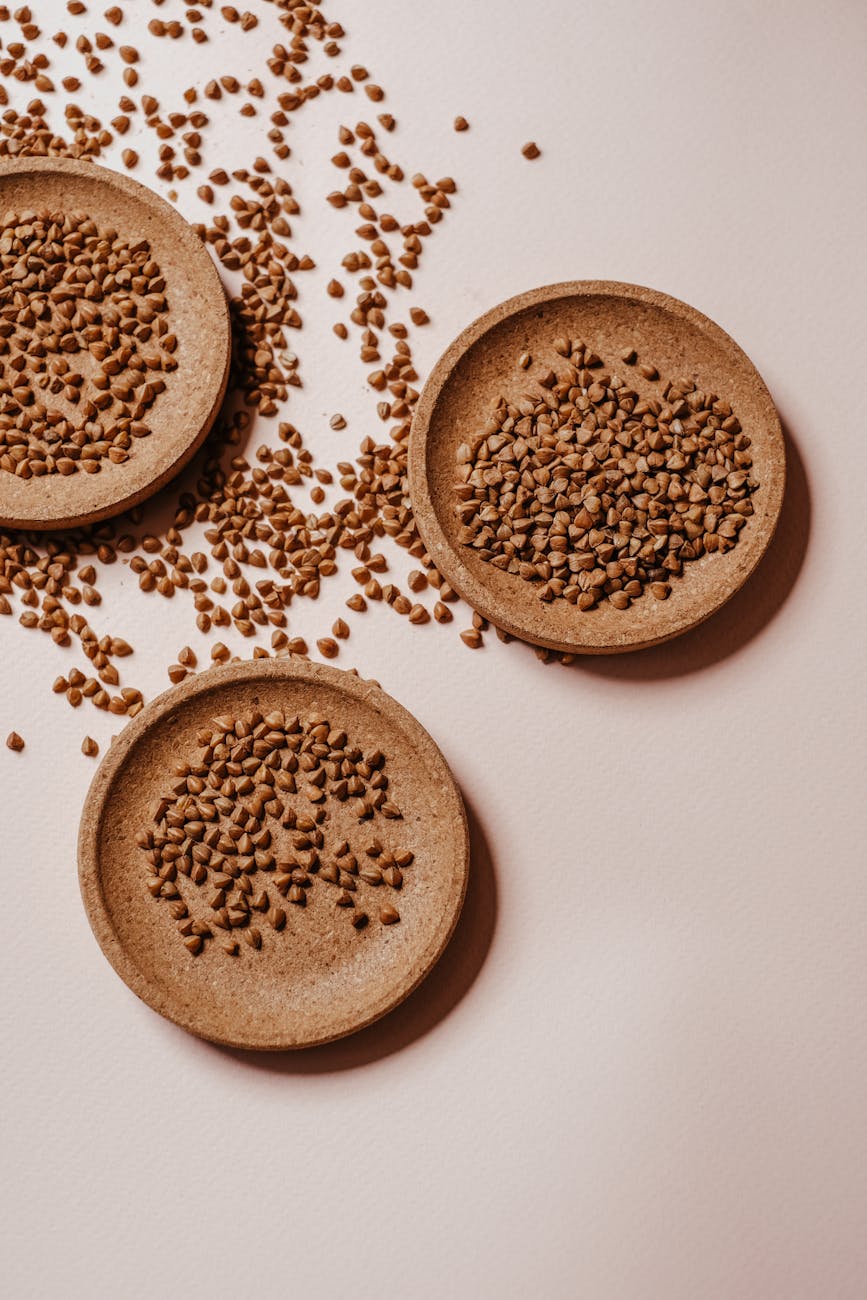
    Breakfast, for starters. I began eating buckwheat groats—just under half a cup—bathed in soy milk, whey protein, and a handful of berries. Think monk breakfast with gym-bro toppings. At lunch, I ditched meat and tinned fish in favor of twelve ounces of super-firm tofu atop a cucumber salad, dressed with Greek yogurt, nutritional yeast, and whatever herbs made me feel like I was living in Tuscany.

    Dinner? Whatever my wife cooks. I’m not a monster.

    Of course, the hero here is the buckwheat. It isn’t wheat, not really—it’s a seed masquerading as a grain, gloriously gluten-free and loaded with insoluble fiber and resistant starch. In less science-y terms: it bulks, it sweeps, it feeds your gut’s good guys, and it delivers the elusive clean break. The kind of bathroom visit where nothing lingers—physically or emotionally.

    Then there’s the tofu. It doesn’t showboat. It doesn’t need to. Its gift is its non-disruption. High in protein, low in drama, tofu is the digestive equivalent of a self-driving electric car. It quietly replaces the gut’s old sputtering engine, the one bogged down by greasy meats and dairy sabotage, and makes everything hum.

    Put the two together, and suddenly, bathroom time became… efficient. Minimal. Almost elegant. No TP required. Just a moment of stunned gratitude, a small prayer to the intestinal gods, and a confused gaze into the middle distance: Did I just hack the human body?

    And then came the real question: Do I tell people?

    Because while we’ll chat endlessly about protein macros, creatine, cholesterol, and God help us, cold plunges—we go silent on the topic of TP use and the miracle of no longer needing it. And yet, so many are secretly miserable. The bloating, the straining, the endless wiping. And here I am with the holy grail—and I’m supposed to stay quiet?

    No, I won’t promise this will work for everyone. But if you’re even slightly intrigued by the promise of digestive liberation, consider the humble buckwheat. Consider the tofu. And maybe, just maybe, you’ll find yourself typing from a place of lightness, efficiency, and radiant intestinal peace.

  • The Dopamine Dial: Why Your Grail Watch Can’t Make You Happy

    The Dopamine Dial: Why Your Grail Watch Can’t Make You Happy

    To understand the madness of the modern watch addict, you’d do well to consult Dopamine Nation by Stanford psychiatrist Anna Lembke, a book that should be shelved somewhere between philosophy, neuroscience, and quiet screaming. Her central thesis? In an age of relentless indulgence, the line between pleasure and pain is not only blurry—it’s the same neurological pathway. You’re not escaping pain with your latest acquisition. You’re feeding it.

    “The smartphone,” she writes, “is the modern-day hypodermic needle.” And the drug? Dopamine—delivered in neat little parcels: TikToks, tweets, memes, and yes, wrist shots of watches you don’t own (yet). If you haven’t met your poison of choice, don’t worry. It’s just a click away.

    Lembke makes the uncomfortable truth clear: The more dopamine hits we seek, the more our brain adapts by reducing our baseline pleasure response. What once thrilled you—your grail watch, your Rolex Explorer, your Seiko with the Wabi-Sabi patina—now barely registers. You’re not chasing pleasure anymore. You’re just trying to feel something.

    Watch addicts, of course, understand this intimately. The pursuit of horological perfection starts out innocent enough: a G-Shock here, a vintage diver there. But soon you’re tumbling into the abyss of boutique limited editions and message board enablement, haunted by the need to stay relevant. Because here’s the twist: It’s not just about the watches. It’s about being seen. You post, you review, you flex because if you stop, you vanish. No new watches = no new content = digital extinction.

    And extinction, in a social-media world, feels like death.

    Lembke warns us that addiction thrives in secrecy, in the exhausting double life. The watch addict may present as a tasteful minimalist to family and friends, while secretly rotating 19 watches, five straps deep, waiting for the next “drop.” The addiction is fed by access, and we live in an access economy. New releases are no longer annual events—they’re hourly temptations. The vortex is bottomless. The supply creates the demand.

    Even worse, modern society normalizes this behavior. Everyone is scrolling. Everyone is upgrading. Our addiction to novelty is passed off as taste. Our frenzied consumption masquerades as identity. Lembke borrows from Philip Rieff to explain the deeper shift: “Religious man was born to be saved; psychological man is born to be pleased.” The modern watch collector doesn’t believe in salvation. He believes in configuration.

    But here’s the cruel irony: The more you seek to be pleased, the less capable you are of being pleased. In Lembke’s words: “Hedonism, the pursuit of pleasure for its own sake, leads to anhedonia—the inability to enjoy pleasure of any kind.”

    What’s the solution? A dopamine fast. Lembke prescribes it like a bitter medicine: Remove the source. Reset the brain. Let it reestablish homeostasis. For the watch addict, this means one thing: a watch fast.

    And yes—it’s brutal. I’ve been a watch obsessive for over twenty years. My longest fast? Six months. And I nearly went feral. New releases tempt. Friends enable. Algorithms whisper. Strap swaps and vintage reissues beckon like sirens. Even the FedEx truck starts to look like a personal tormentor.

    So you get creative. You stash watches in the safe and “rediscover” them. You buy new straps instead of new watches. You try to redirect the compulsion toward something productive: fitness, music, sourdough, monkish austerity. Anything but another chronograph.

    But the real cure, oddly enough, may be conversation—actual human connection. At watch meet-ups, we start out discussing bezels and spring bars, but within ten minutes we’re talking about life: real estate, parenting, knee surgeries, emotional burnout, dinner recipes. We talk for hours. But barely about watches.

    The truth slips out in these moments: we want to be free. We crave community more than we crave sapphire crystals. What began as a shared obsession has become a trap, and these conversations, paradoxically, offer relief from the very addiction that brought us together.

    Imagine a bunch of watch enthusiasts at a watch meet-up and we’re talking about everything but watches. Wrap your head around that.

  • The Gospel According to Arnold

    The Gospel According to Arnold

    At thirteen, you weren’t just growing—you were bulking. You launched yourself headfirst into the gladiatorial quest for muscle supremacy, wolfing down 200 grams of protein a day in four frenzied “feedings,” as if you were a ravenous prehistoric beast on a cutting-edge strength cycle. While other kids were figuring out how to talk to girls without combusting from nerves, you were busy calculating amino acid ratios and chasing the elusive state of protein-muscle synthesis like it was the Holy Grail.

    Your kitchen became a makeshift laboratory of gains. You blended protein shakes with powders hawked by the beefy prophets in Strength and Health magazine—chalky concoctions that tasted like regret mixed with drywall. You drank them anyway. Satiety was sacred.

    After a year of racking up Junior Olympic Weightlifting trophies—hoisting iron like a Cold War super-soldier on state-sponsored hormones—your well-meaning mother tried to support your calling. On your fourteenth birthday, she handed you what you assumed would be a Soviet-tier weightlifting manual. Instead, it was Pumping Iron—a glossy coffee-table tome filled with baby-oiled men in banana hammocks. Bodybuilders. Flexing. Posing. Pouting.

    You had to sit her down.

    “Mom,” you said, as diplomatically as a hormonal adolescent can, “weightlifters move heavy things. Bodybuilders pose in sequined underwear and shave their armpits.”

    To you, weightlifters were Spartans. Bodybuilders were Vegas lounge acts with glutes.

    Still, curiosity got the better of you. You flipped through Pumping Iron with a mixture of revulsion and wonder. The men on those pages didn’t look human. They looked like sculptures that got bored and decided to bench press.

    You imagined them living in their parents’ houses, drinking protein sludge while their heat-addled mothers babbled to parakeets and dabbed their foreheads with cold washcloths. They were carnival beasts. You, however, were a noble practitioner of Olympic Weightlifting—a sport so pure it belonged in the actual Olympics, unlike the oiled-up beauty pageants you now held in low regard.

    Your hero was Vasily Alekseyev, the 350-pound Russian colossus who looked like he ate livestock for brunch. You watched him waddle onto the platform, glare at a loaded barbell like it owed him money, and launch it overhead like a man tossing furniture in a domestic dispute. When that barbell hit the floor, it echoed through your ribcage. That, you told yourself, was true strength.

    But then… Arnold happened.

    You’d seen him before, sure. But when you saw Pumping Iron—saw him—something shifted. It wasn’t just admiration. It was conversion. Arnold wasn’t a man. He was a solar flare with biceps. A deity with an accent.

    Soon, you were hanging around Walt’s Gym, where the walls smelled like testosterone and chalk dust, and where the guys wore cutoffs like they were Roman togas. One afternoon, you spotted a bodybuilder straight out of central casting: a tall, tanned fireman who had just placed in the Mr. California competition. Blond hair, thick broom-handle mustache, horn-rimmed glasses that screamed “Clark Kent just deadlifted a Buick.”

    He bench-pressed over 300 pounds, stood up, and stared into the mirror like Narcissus on creatine. “The first time I saw Arnold,” he said with reverence, “I felt I was in the presence of the Lord. I said to myself, ‘There stands the Messiah. There stands God Almighty, come to bring good cheer to this world.’”

    And you believed him.

    Because Arnold wasn’t just jacked—he was divine. He was the Pied Piper of Pecs, leading you out of your ordinary life and into a new religion: Bodybuilding Fever. There was no vaccine. No mercy. Just the cure: protein shakes, gym mirrors, and relentless flexing.

    You no longer lifted just to be strong. You lifted to be seen. To be admired. To become an icon. You drank from the sacred chalice of the dumbbell and chased the gleam of your own reflection. You weren’t just lifting—you were becoming.

  • Cling to Your Lead and You’ll Lose: A Midlife Playbook

    Cling to Your Lead and You’ll Lose: A Midlife Playbook

    I don’t take the Life Force lightly. It’s the mysterious voltage that animates us, that flicks the switch from sloth to spark. One minute you’re groggy and half-dreaming, the next you’re lacing up your sneakers, firing up the espresso machine, and attacking your kettlebell workout like you’re in a Rocky montage scored by Miles Davis. The Life Force says: Get up. Get after it. Drink, eat, laugh, lift, love, live—before the curtain drops.

    Even when we’re slumped in a funk, sulking like a teenager who just discovered Camus, the Life Force doesn’t vanish. It simply retreats, muffled beneath layers of melancholy and cheap self-pity, waiting for the clouds to lift so it can slip back in with a jolt.

    I’ve been thinking about this lately as I inch toward sixty-four. The aging brain doesn’t hide its compromises. The body offers new aches like parting gifts from yesterday’s workout. And I keep reading about public figures—my age or younger—dropping dead from heart attacks and cancer, as if the universe is whispering, “You’re next.”

    The awareness of mortality, while useful in the Stoic-philosopher sense, has a dark gravitational pull. It makes you want to swaddle yourself in self-pity, curl up with grim hypotheticals, and mentally prewrite your own eulogy. I’m no sage, but I’ve noticed: the older you get, the easier it is to start thinking about death instead of living your life.

    And that’s where the football metaphor barges in—uninvited, but apt. Picture a team nursing a small lead. Instead of playing their usual game, they start playing not to lose. They abandon boldness, creativity, and flow. They tighten up. They stall. They cling. And then they lose.

    That’s what obsessing over death becomes: Playing Not to Lose Syndrome. You stop being you. You start tiptoeing through your own damn life, hands over your eyes, praying not to fall. But life’s not won through timid pacing. You win by doing what got you here in the first place—living like hell, moving the ball down the field, trusting your strength, and swinging the kettlebell with fury and joy.

    Yes, I’ll admit it: the fearful doppelgänger lives in me too. He bites his nails and speaks in doomsday whispers. But so does the joyful lifer, the one who’s still in love with breakfast, jazz, hard workouts, and writing rants like this one. Maybe being fully human means acknowledging both—the brave and the cowardly—and choosing, as often as possible, to side with the one who gets up and dances anyway.

    Life doesn’t reward those who cling. It rewards those who play to win—until the final whistle.

  • College Essay Prompt That Addresses Food and Economic Class: Ozempification, AI, and the Class Divide in the End of Food Culture

    College Essay Prompt That Addresses Food and Economic Class: Ozempification, AI, and the Class Divide in the End of Food Culture

    Prompt Overview:
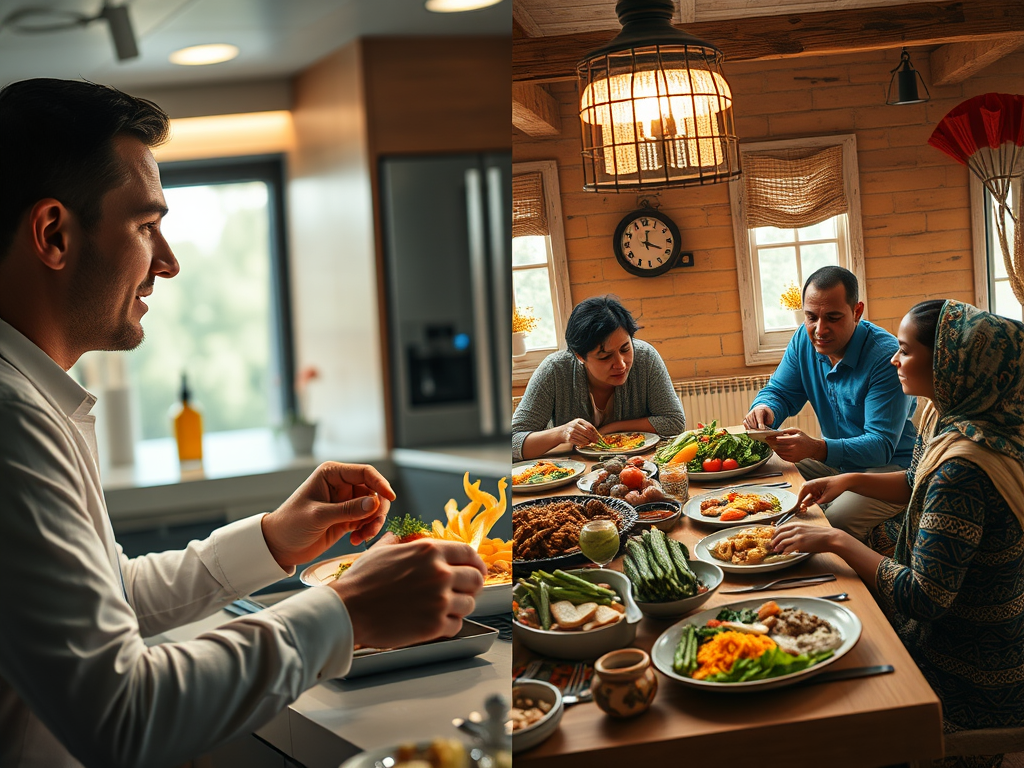
    As GLP-1 drugs like Ozempic suppress hunger and artificial intelligence tailors hyper-personalized, nutrient-optimized meals, our relationship with food is undergoing a radical transformation. But not all communities are experiencing this shift equally. While affluent professionals embrace biotech and AI to streamline their eating, working-class and immigrant communities often continue to practice food as culture, tradition, and emotional ritual.

    Your Task:
    Write an 8-paragraph argumentative essay that responds to the following claim:

    Claim:
    GLP-1 drugs and artificial intelligence are ending the traditional notion of food and eating as cultural, emotional, and communal experiences—but primarily for the educated upper-middle class, creating a new kind of class-based food divide.

    Instructions:

    1. Introduction (Paragraph 1):
      Open with a compelling hook. Present the claim and your thesis—whether you agree, disagree, or take a nuanced stance.
    2. Background (Paragraph 2):
      Briefly explain what GLP-1 drugs do and how AI is influencing food production and personalization. Introduce the concept of “Ozempification.”
    3. First Argument (Paragraph 3):
      Argue how the professional-managerial class is disproportionately embracing GLP-1 and AI technologies as part of a broader trend toward self-optimization.
    4. Second Argument (Paragraph 4):
      Show how this new model of eating—quantified, detached, and efficient—erodes traditional food practices like communal meals, emotional eating, or ritual cooking.
    5. Third Argument (Paragraph 5):
      Examine the contrasting experience of working-class and immigrant communities who, whether by choice or necessity, retain deeper connections to cultural food practices.
    6. Counterargument and Rebuttal (Paragraph 6):
      Acknowledge the argument that biotech and AI could democratize health and nutrition. Then challenge this by exploring accessibility, affordability, or cultural loss.
    7. Cultural Reflection (Paragraph 7):
      Reflect on the long-term cultural implications of this class-based divide. Will we see a future where the elite biohack their appetites while the working class clings to endangered food rituals?
    8. Conclusion (Paragraph 8):
      Reassert your thesis and end with a provocative insight, question, or forecast about the future of food and class.

    Source Requirement:
    Use at least 4 credible sources, including recent journalism, scholarly articles, or reports (2023 or later). Cite sources in MLA format.

    Suggested Angles to Explore:

    • How does Silicon Valley’s culture of optimization affect food rituals?
    • Is “Ozempification” a privilege or a necessity?
    • What happens when food stops being a shared story and becomes a solo algorithm?

    Here is a curated reading list for your revised prompt on Ozempification, AI, and the Class Divide in the End of Food Culture. These selections balance journalism, research, and cultural commentary, providing accessible and provocative sources for students at various reading levels:


    READING LIST

    1. Ozempic and GLP-1 Drugs

    • “Scientists Find Why Ozempic Changes the Types of Food People Eat”
      Prevention Magazine, 2024
      Explains how GLP-1 drugs alter appetite and food preferences.

    • “Ozempic’s Effect on Food Innovation”
      Institute of Food Technologists (IFT), May 2024
      Discusses how food manufacturers are shifting products in response to Ozempic-driven consumer changes.

    2. AI and the Personalization of Food

    • “AI-Driven Transformation in Food Manufacturing”
      Frontiers in Nutrition, 2025
      An in-depth research article on AI’s impact on food production, sustainability, and consumer targeting.
      PDF Download
    • “AI Is Hacking Your Hunger: How the Food Industry Engineers Addiction”
      Forbes, March 2025, by Jason Snyder
      A bold look at how AI and biotech are reprogramming consumer desire and food experience.

    3. Food, Class, and Culture

    • “The Labor of Lunch: Why We Need Real Food and Real Jobs in American Public Schools”
      By Jennifer E. Gaddis, University of California Press, 2019
      Offers a clear view of how food, labor, and class intersect in institutional settings like schools.
    • “Cultural Appropriation in Food: Is It a Problem?”
      The New York Times, by Ligaya Mishan
      Reflects on food, culture, and who gets to profit from culinary traditions—good for contrast with bioengineered food trends.
    • “You Can’t Eat Optimized Food with Your Grandma”
      The Atlantic, speculative title suggestion (hypothetical essay you might write or assign students to mimic stylistically)
      Encourages reflection on the emotional and generational disconnect caused by hyper-personalized, tech-driven diets.
  • We Must Combat Gluttirexia

    We Must Combat Gluttirexia

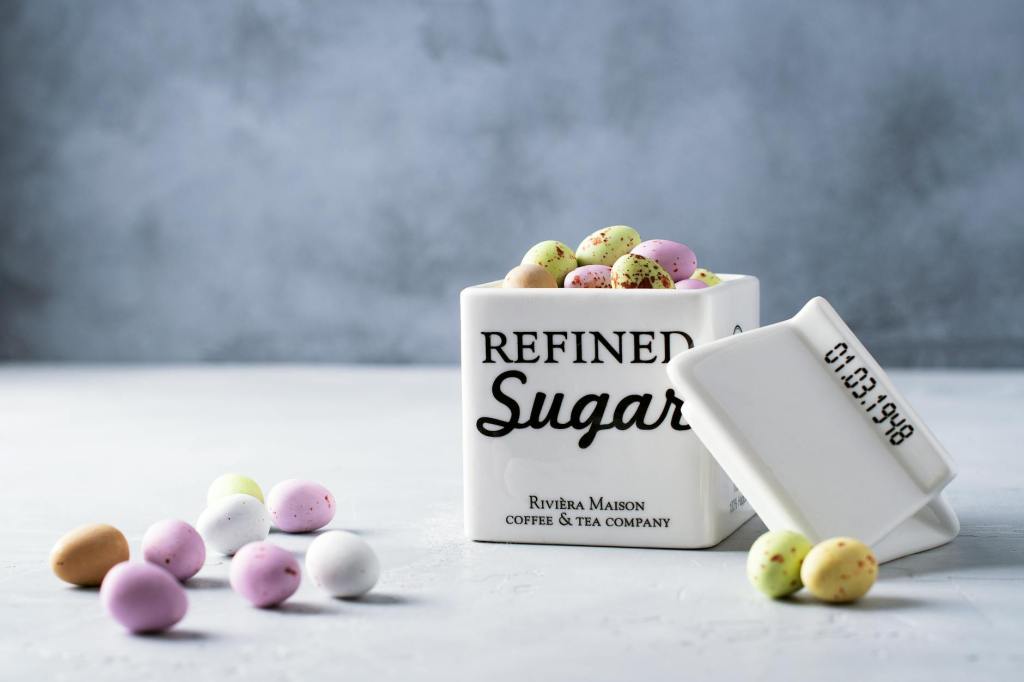
    In his biting essay “The Intellectual Obesity Crisis,” Gurwinder Bhogal delivers a warning we’d be wise to tattoo on our dopamine-blasted skulls: too much of a good thing can turn lethal. Whether it’s sugar, information, or affirmation, when consumed in grotesque, unrelenting quantities, it warps us. It becomes less nourishment and more self-betrayal—a slow collapse into entropy, driven by the brain’s slavish devotion to short-term gratification.

    Bhogal cites a study showing that the brain craves information like it craves sugar: both deliver a dopamine jolt, a hit of synthetic satisfaction, followed by the inevitable crash and craving. It’s the biological equivalent of that old Russian proverb: “You feed the demon only to find it’s hungrier.” Welcome to the age of Gluttirexia—a condition I’ve coined to describe the paradox of overconsumption that leaves us spiritually, intellectually, and emotionally starved. We’re stuffed to the gills, yet empty at the core.

    Demonically famished, we prowl the Internet for sustenance and instead ingest counterfeits: ragebait, influencer slop, and weaponized memes. It’s not just junk food for the mind—it’s spoiled junk food, fermented in grievance and algorithmic manipulation. The information that lights up our brains the fastest is also the most corrosive: moral outrage, clickbait trauma, tribal hysteria. It’s psychological Cheetos dust—and we are licking our fingers like addicts.

    Reading Bhogal’s work, I pictured the creature we’ve become: not a thoughtful citizen or curious learner, but a whirling, slobbering caricature straight out of Saturday morning TV—the Tasmanian Devil with Wi-Fi. And it tracks. In a moment so self-aware it feels scripted, Bhogal notes that “brain rot” was Oxford’s 2024 Word of the Year. Fitting. We gorge ourselves on intellectual cud and become bloated husks—distracted, indignant, and dumb.

    This condition—what Bhogal terms intellectual obesity—is not a joke, though it often looks like one. It’s a cognitive disorder characterized by mental bloat, sensory chaos, and a confused soundtrack of half-remembered factoids screaming over each other for attention. You don’t think. You stagger.

    As a college writing instructor trying to teach critical thinking in a post-literate era, I am in triage mode. My students—through no fault of their own—are casualties of this cognitive arms race. They arrive not just underprepared but neurologically disoriented, drowning in an ocean of noise and mistaking it for knowledge.

    Meanwhile, AI accelerates the descent. Everyone is outsourcing their cognition to silicon brains. The pace is no longer quick—it’s quantum. I’m dizzy from the whiplash, stunned by the sheer speed of the collapse.

    To survive, I’ve started building a personal lexicon—a breadcrumb trail through the algorithmic inferno. Words to name what’s happening, so I don’t lose my mind entirely:

    • Lexipocalypse: the shrinking of language into emojis, acronyms, and SEO sludge
    • Mentalluvium: the slurry of mental debris left after hours lost in the online casino
    • Chumstream: the endless digital shark tank of outrage and influencer chum
    • Gluttirexia: the grotesque irony of being overfed and undernourished—bloated with junk info and spiritually famished

    I keep this list close, like a man at sea clinging to his life vest in the middle of a storm. I sense the hungry oceanic sharks circling beneath me. 

  • Biceps and Biohazards: A Life on Nutritional Alert

    Biceps and Biohazards: A Life on Nutritional Alert

    I’ve been a bodybuilder most of my life. At 63, my muscles still bulge like I’m auditioning for a special forces propaganda reel—but even that doesn’t exempt me from the quiet humiliation of mortality. Lately, I’ve been staring into the abyss not with dread, but with diagnostics. My blood pressure, triglycerides, cholesterol—these numbers have become my new Greek chorus, whispering prophecies of heart disease, kidney failure, and other charming ways the body stages its final betrayal.

    I want to live long. I want to be healthy. I want to be around for my family, not just as a protein-shake-fueled statue, but as someone present, alert, alive. And so I try to eat right. I try to live clean. But in doing so, I’ve become a man who spends his days mentally auditing every almond. I walk through my own kitchen like it’s a minefield, knowing one wrong step—say, a 700-calorie bowl of Shredded Wheat with berries and walnuts—might plunge me into the void.

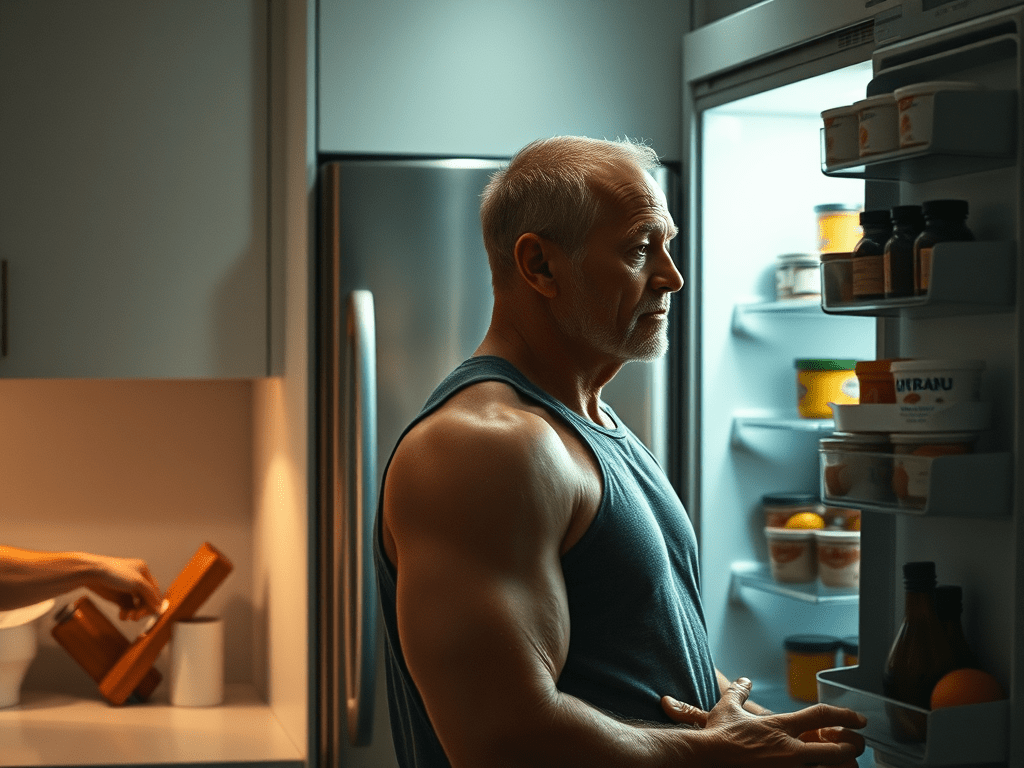
    This is what vigilance looks like now: standing in front of the fridge at 8 p.m., debating whether two Medjool dates and a dollop of whole milk Greek yogurt is self-care or self-destruction. I’ve got a body that could still turn heads at a funeral, and yet I’m haunted by the nutritional content of a single ounce of bourbon, as if one sip will hurl me into a Roman orgy.

    And so I ask myself: Is this it? Is a healthy life supposed to feel like I’m forever balancing on a dietary razor wire, eyes scanning for invisible enemies made of saturated fat?

    Where’s the joy in this script? Where’s the wonder, the enchantment, the spontaneity that’s supposed to come with vitality? Am I prolonging life or merely stretching the anxiety?

    These are the questions I ask while chewing a forkful of salmon and silently longing for a croissant. Yes, I want to live longer—but must I do it while fearing the yogurt that is staring at me from the refrigerator?

  • Cerealphilia

    Cerealphilia

     Cereal is more than a grain; it’s an existential dream of happiness and the maternal embrace. As kids, we didn’t just eat cereal—we engaged in epic love affairs with cartoon mascots, played mind-bending board games on the back of the box, and embarked on treasure hunts for plastic trinkets buried deep within the sugary abyss. We sent box tops to claim submarines, shirts, hats, and other merchandise that, in hindsight, had all the utility of a chocolate teapot.

    My cereal obsession reached such dizzying heights that I fantasized about growing up to be a Major League baseball star who exclusively dined on cereal for breakfast, lunch, and dinner. In my dreams, I was a grocery store legend, cart packed to the brim with Cap’n Crunch, Franken Berry, Count Chocula, Froot Loops, and Lucky Charms. Cereal was my ticket to mindless self-gratification, whisking me away with Pinocchio to Paradise Island, where we’d lose our minds, sprout donkey ears, and bray like beasts in a symphony of sugary delirium.

    In the 1970s, cereal spun tales of the good life and ultimate success. We gorged on granola, wheat germ, Wheaties, and Special K, convinced we were one spoonful away from becoming paragons of health, fitness, and suburban nirvana. One of the era’s cereal prophets was Euell Gibbons, the outdoor enthusiast who, with a straight face, asked us in Grape-Nuts ads, “Ever eat a pine tree? Many parts are edible.” Gibbons spun a yarn about Grape-Nuts that promised to ground us in the Earth, bestow vitality, and arm us with survival skills fit for a post-apocalyptic rainforest escapade equipped with nothing but a buck knife and a loincloth. In reality, eating the gravel-like cereal resulted in thousands of dentist visits for chipped teeth and a crunch so deafening, it drowned out the morning radio.

    Despite all this, Grape-Nuts still haunt my cravings. The crunch and malty flavor have me hooked. I’ve read that Grape-Nuts are the only store-bought cereal that hasn’t been subjected to extrusion, that nefarious heating process that murders nutrients. Instead, Grape-Nuts are baked like a loaf of bread, ensuring that each bite is a dense, jaw-breaking tribute to my childhood.

    There was a time in my adult life when I raged against the societal norms that prevented me from consuming cereal for all three meals. I longed for cold store-bought cereal for breakfast, oatmeal for lunch, and buckwheat for dinner. I envisioned my cereals adorned with peanut butter, walnuts, chia seeds, hemp seeds, and berries to pack in nutrients and calories. But my plan was thwarted by my wife and twin daughters, who, in their maddeningly rational mindset, refused to partake. Clearly, I was on the brink of an eating disorder, or perhaps my subconscious was grasping for the lost comfort and convenience of my cereal-drenched youth.

    Yuval Noah Harari has plenty to say about our destructive quest for comfort and convenience in Sapiens. He argues that as foragers, hunting animals and gathering fruits, we were sharp, alert, fit like Special-Ops fighters, and generally happy. But when we settled down to farm, convinced we were making life easier, we fell for history’s biggest con. Agriculture, which brought us mountains of grains and cereals, was the dawn of obesity, tooth decay, impotence, arthritis, hernias, scoliosis, rampant thievery, economic disparity, starvation, infectious disease, mass animal cruelty, and misogyny. We weren’t duped by people but by wheat, rice, and potatoes—plants that manipulated us into cultivating them, chaining us to the fickle rhythms of the harvest, and inflicting more misery than any human could.

    Maybe I was getting played by cereal. It wormed its way into my psyche, hijacked my thoughts, and turned me into a zombie who couldn’t watch TV without retreating to the kitchen for a bowl of cold cereal by 7 p.m., seeking the soothing crunch as I stared, glassy-eyed, at the screen.

    My excessive thoughts on cereal point to Cerealphilia–a condition in which love for cereal evolves from innocent childhood affection into a full-blown emotional dependency masquerading as nutritional strategy. Cerealphilia sufferers don’t just eat cereal—they commune with it, fantasize about it, and defend it with the fervor of a late-stage cult member. Symptoms include justifying cold cereal for dinner as “wholesome,” craving the cardboard crunch of Grape-Nuts like a Pavlovian hit, and resenting anyone who dares suggest you diversify your diet. At its core, Cerealphilia is comfort-seeking disguised as health enlightenment, a warm milky bath for the soul stirred with nostalgia, rebellion, and a sprinkle of dietary delusion.

    Diagnostic Checklist for Cerealphilia:

    1. Box-top Hoarding: You’ve considered raiding your attic for vintage box tops in case the Cap’n ever reopens the mail-order treasure vault.
    2. Cereal Monogamy: You’ve eaten Cap’n Crunch in more variations than you’ve had actual romantic partners.
    3. Midnight Communion: Your idea of unwinding involves a mixing bowl of cereal and a trance-like TV binge by 7 p.m.—without fail.
    4. Grape-Nuts Evangelism: You’ve told someone, without irony, that “many parts of a pine tree are edible” while crunching through Grape-Nuts like a woodland druid.
    5. Multi-Box Illusionism: You “rotate” between six cereal boxes to simulate dietary variety while consuming 99% corn and sugar in slightly different shapes.
    6. Mascot Emotional Investment: You’ve had an existential crisis over the retirement of Quake the Coal Miner.
    7. Snack Shame Evasion: You justify an evening bowl by claiming it’s your “light dinner” or “a superior protein vehicle.”
  • The Kettlebell Monk and the Return of the Yoga Cult

    The Kettlebell Monk and the Return of the Yoga Cult

    I’ve been lifting weights since I was 12 years old—long enough to have calluses older than some of my students. My loyalty has always been to iron, not incense. And yet, twice in my life I’ve flirted with the cult of yoga. First from 2005 to 2008, when Power Yoga made me sweat like a sinner in a sweat lodge, and again recently, from 2023 to 2024, when something primal in me remembered the bliss of holding Warrior Two while the room turned into a personal rainforest.

    But iron always calls me back. Resistance training, especially kettlebells, is my native language. It’s the blunt poetry of movement: swing, squat, grind. There’s no chanting, no ambient whale noises—just the thud of steel against gravity and the holy ache of delayed-onset muscle soreness. Still, yoga lingered in my subconscious like a forgotten lover with a very flexible spine.

    Then came the dream.

    I was living in what could only be described as a monastic exercise gulag perched high in the Swiss Alps—imagine if The Sound of Music were choreographed by a CrossFit cult and everyone smelled faintly of magnesium chalk and regret. My cell was a minimalist slab of concrete, colder than a Russian novel and just as unforgiving. There I was, hammering out kettlebell swings with the grim dedication of a prisoner serving a life sentence for crimes against rest days, when it hit me—not just a muscle cramp, but a full-body epiphany.

    I missed the sweat.

    But not just any sweat. Not the stoic, industrial, man-against-iron kind that kettlebells demand. I missed yoga sweat. That slow, creeping, mind-liquefying ooze you earn by holding Crescent Lunge for six minutes while your brain gently transitions from “I am one with the universe” to “I am dying alone on this mat.” It’s the kind of sweat that doesn’t just leave the body—it evacuates your ego with it.

    The sense of FOMO hit me like a rogue medicine ball to the face. I wasn’t just missing out on yoga—I was exiled from it, cast into the outer darkness where there is weeping, gnashing of teeth, and tight hip flexors. The regret was theological. Yoga wasn’t just an option anymore. It was a spiritual ventilator.

    In the dream, I staggered from my training cell like a sinner leaving the confessional. I entered my quarters—bare except for a desk, a lamp, and the faint scent of despair—and rearranged it like a man staging his own resurrection. Then, with the urgency of a convert and the shame of a backslider, I Googled yoga poses. Warrior. Triangle. Pigeon. All the old apostles.

    I wandered the grounds like a deranged prophet in compression leggings, possessed by a holy compulsion to evangelize. I whispered gospel truths: “Downward Dog is deliverance,” “You are your breath,” “Meat is a distraction.” People followed. Of course they did. We began practicing together, flowing through vinyasas with cult-like synchronicity. We ate vegan three times a day, spoke only in Sanskrit-inflected aphorisms, and achieved a level of hamstring enlightenment most people only dream about.

    It was utopia, with better posture.

    Then I woke up.

    Still in a fog of sacred revelation, I marched to my computer, opened my long-neglected list of yoga sequences in Google Docs, and committed to the third phase of my yoga life: twice a week, no excuses. Five days of kettlebell discipline to keep me grounded, two days of yoga to unlock whatever transcendental weirdness lives in my hips.

    Because as much as I love kettlebells—and I do—they’ve never given me that hallucinatory bliss, that euphoric disintegration of self, that only comes from holding Triangle Pose until your consciousness starts leaking out of your ears.

    Iron builds the body. Yoga does something else. And I’m not going to miss out this time.