Tag: writing

  • Losing My Classroom Key and Finding the End of the World

    Losing My Classroom Key and Finding the End of the World

    Twenty-six years ago, I lost my classroom key at a university. This was not treated as a minor inconvenience. It was treated as a moral failure.

    I was summoned before a college administrator whose demeanor suggested I had been caught shoplifting ideas from Plato. She informed me—slowly, with relish—that the one thing a college instructor does not do is lose his key. She scanned me from head to toe the way a customs agent inspects a suitcase that smells faintly of contraband. My carelessness, she implied, had finally revealed my true identity: a professional bum, a sloth masquerading as an educator, a man unfit to shepherd students through anything more complex than a vending machine.

    Once she had finished anatomizing my character, I asked—meekly—how one went about replacing a lost key.

    “You don’t just get a replacement,” she said. “It’s a process.”

    The word process landed like a sentence.

    She explained that I would need to drive to a remote outpost on the edge of campus called Plant-Ops. There, I would meet a locksmith. I would give him my personal information and twenty dollars in cash. No check. No receipt. The arrangement sounded less like facilities management and more like a back-alley transaction involving counterfeit passports.

    “How will I know who the locksmith is?” I asked.

    “You’ll know him,” she said. “He’s the only person there.”

    “What’s the place called again?”

    “Plant-Ops.”

    I repeated the name aloud, hoping to brand it into my memory. She looked at me as one looks at a child who has accidentally set fire to a jungle gym and informed me that I was dismissed.

    Shamed and slightly afraid, I drove east from campus. The pavement gave way to dirt, then rubble, then something that barely qualified as a road. My car bucked and rattled as I passed cow skulls bleaching in the sun and tumbleweeds drifting like omens. Buzzards circled overhead. I was no longer in Southern California. I had crossed into a grim pocket dimension where entropy had been fast-forwarded and everything was quietly rehearsing its own ending. If someone had told me I would die there, I would not have argued.

    At last, I reached Plant-Ops: a dilapidated hangar that looked one strong gust away from becoming a weather event. Inside stood the locksmith. He was short, grouchy, bespectacled, and gaunt, with a bushy mustache and a few desperate strands of black hair clinging to his bald skull. He wore a grease-splattered apron. Wind howled through the corrugated metal walls, and I half-expected the structure to lift off and spin into the sky like Dorothy’s house.

    The man stood over a battered wooden workbench, glaring at me while eating cold SpaghettiOs straight from the can. His eyes bulged with irritation. My presence had clearly ruined his meal. Worse, it confirmed his theory of the world: incompetents abound, and today one had wandered into his hangar.

    I explained that I had lost my key. I apologized as though I had personally engineered his inconvenience. He demanded twenty dollars in cash—up front—made the key, and then leaned in to warn me that he was retiring soon. His replacement, he said, was a complete idiot, incapable of making a functional key. I took this prophecy seriously.

    I fled the hangar, drove directly to a hardware store, and purchased a Kevlar keychain with a tether reel, a high-density nylon belt loop, and enough industrial reinforcement to secure a small boat. From that day forward, my keys were attached to my body like an ankle monitor.

    I have done worse things in my life—objectively worse—but for reasons I still don’t fully understand, losing that key put me briefly at odds with the universe. I had been consigned to a shame dungeon, escaped it by the skin of my teeth, and sworn never to return.

  • I Lost a Fight With a Toilet Seat (and Won, Barely)

    I Lost a Fight With a Toilet Seat (and Won, Barely)

    This morning, as I brushed my teeth and my daughters gathered their backpacks for the drive to school, I stared into the mirror and took inventory. There it was: a respectable gash carved into the crown of my nose. A souvenir. A reminder of last night’s three-hour descent into domestic warfare.

    The catalyst was banal. For reasons known only to entropy, the American Standard elongated toilet seat in my daughters’ bathroom had cracked. I bought a replacement immediately. Then I let it sit in my office for two weeks, radiating quiet menace. I told myself the job would be simple. My instincts told me it would be biblical.

    My instincts were correct.

    The hinge bolts on top were buried beneath a geological formation of rust. The plastic wing nuts underneath were no better—coated in a crusty patina that suggested they had been forged during the Eisenhower administration. First, I scraped and cleaned. Then I sprayed. Then I tried to loosen. Nothing moved. The bolts might as well have been welded to the bowl.

    So I escalated. Tools came out. Space disappeared. The cabinet loomed. There was no leverage, no angle, no dignity. I hammered. I wedged a flathead screwdriver against the bolt and struck it like I was trying to extract a confession. I attacked the wing nut with a wrench. Forty-five minutes passed. Sweat pooled. Hope thinned.

    I called my best friend’s son, a preternaturally calm handyman with three young children screaming in the background. We FaceTimed. He studied the situation and said, serenely, “You’re going to twist the bottom bolt back and forth like a paperclip. Eventually it’ll snap.”

    I thanked him and wedged myself beneath the toilet, contorting my body into a shape last attempted during Cold War espionage. I twisted. I rocked. At one point, my locking pliers slipped and I punched myself in the face, opening up my nose like a badly sealed envelope. Blood. Rage. Progress: none.

    An hour had passed. I had mutilated one plastic wing nut into modern art. While I was assessing my wound in the mirror, my wife calmly removed the right wing nut. Half the job was done.

    The left side, however, had ideas.

    Two more hours vanished. Every tool failed. The space was tighter. My left shoulder—home to a torn rotator cuff—began to flare. Each push sent a warning shot of inflammation through my arm. I was exhausted. I was furious. I was within a centimeter of victory and flirting with surrender.

    And then the thought arrived, dark and unforgivable: Call a plumber.

    He would charge $150. He would finish in three minutes. He would charge $150 even if I stood there and wept. The fact that I had already invested two hours, blood, and cartilage made calling him impossible. Layered on top of that was wounded masculinity. Sixty-four years old. Fit. A lifetime of lifting. I could not—would not—summon a professional to do a man’s job while I watched.

    Fueled by pride and spite, I ripped the toilet seat free, gaining better access but no relief. Then, in a moment of clarity bordering on madness, I reached for the wire-cutting pliers. I attacked the plastic wing nut with savage intent. Shards flew. The nut began to yield. This was not finesse. This was attrition.

    Three hours in, shoulder inflamed, nose split, I finished the job.

    What will I do next time? I will spend $99 on a Dremel with a cut-off wheel and end the ordeal in five minutes. That’s what I’ll do. When it comes to home repairs, knowledge is power—and ignorance is a slow bleed across your own bathroom floor. If I had known about the Dremel beforehand, it would have been worth every penny.

  • While Others Fell in Love, I Was Benching

    While Others Fell in Love, I Was Benching

    In 1975, when I was fourteen and already grooming myself for eventual induction into the House of Schwarzenegger, I was struck with existential terror by an article in The San Francisco Chronicle. Futurists, it announced, were preparing us for the inevitable: Earth would soon be too crowded, too exhausted, too used up. Humanity would have to evacuate—via lunar shuttles—and establish solar-powered colonies in outer space.

    The article leaned heavily on the ideas of Gerard K. O’Neill, a Princeton physicist whose vision would later crystallize in The High Frontier. We would live, he proposed, in “artificial, closed-ecology habitats in free orbit,” powered by vast solar arrays. Don Davis supplied illustrations: cottages, rolling green hills, fountains, happy citizens strolling through a weightless Eden that looked suspiciously like a New Age brochure for upscale suburbia.

    Then I noticed something horrifying.

    Everyone in the drawings was skinny. Not lean. Not athletic. Skinny in a faint, undernourished, anemic way. It dawned on me with the force of revelation: no gravity meant no resistance. No resistance meant no gyms. No iron. No pumping. My muscles would dissolve. I would become what I most feared—a tomato with toothpicks stuck into it, drifting through space in orthopedic sandals.

    A forced relocation to an orbital colony wouldn’t just end bodybuilding. It would end me.

    That moment revealed two durable truths about my character. First, I did not like change. Even minor disruptions—replacing stereo components, finding a new health club—felt borderline traumatic. The idea of being compelled to move to space was not exciting; it was annihilating. Second, bodybuilding wasn’t a hobby. It was a containment field. Anything that threatened it threatened my psychic infrastructure.

    This may explain why girls confused and frightened me.

    A few tried, valiantly, to breach my defenses. One was Mary Claybourne, a high school sophomore who had a very obvious crush on me. One afternoon at my locker, she handed me a birthday card. On the front it read: If It Feels Good, Do It! Inside, she had written a note inviting me to ask her out.

    I remember standing by a pillar near the courtyard, reading her card, while Mary sat at a picnic table with her friends, looking at me with naked hope. The look was unmistakable. She wanted me to stride across the concrete, tear open my street clothes, emerge in a cape, and sweep her into a romance worthy of daytime television.

    Instead, I stared at her beautiful eyes and thought only this: How can I possibly love this girl when civilization is on the brink of relocating to a gravity-free space colony where I won’t be able to bench press?

    The question was absurd. Knowing it was absurd did nothing to soften the dread.

    Looking back now, it’s clear I wasn’t ready for intimacy. Some teenagers arrive relatively intact, with enough internal coherence to connect to others without panic. I was not one of them. I was fragmented. Provisional. A self still under construction. I wasn’t merely a bodybuilder—I was a builder in the most literal sense. I had to assemble myself first. An embryo cannot date.

    And yet, I sometimes wonder if that’s a convenient story. Maybe I should have waded into the shallow end of teenage romance and learned to flail. Maybe sinking a little would have strengthened muscles bodybuilding couldn’t touch. Maybe the gym wasn’t just discipline—it was refuge. A retreat from the unpredictable demands of real life.

    What I know now is this: girls represented the same threat as space colonies. I liked them too much. I sensed that if I surrendered to romance, my monastic devotion to iron would falter. I had no talent for balance. If I served one master, I would resent the other.

    So, overwhelmed by choice, I chose the one world I could control.

    On Friday night, I did not date Mary Claybourne.

    I dated the bench press.

  • Living in the Bottle: A Life Spent Building Cozy Universes

    Living in the Bottle: A Life Spent Building Cozy Universes

    My parents like to remind me that I grew up poor in a cockroach-infested assisted-living situation in Gainesville, Florida. The place was called Flavet Villages—Flavet, if you lived there, which everyone did because there was nowhere else to go. These were not “villages” in any meaningful sense. They were World War II–era Camp Blanding army barracks, uprooted from Jacksonville and dropped into North Florida like surplus history.

    What I love, even now, is the audacity of the name. Flavet Villages. It’s a master class in rebranding: take a barracks crawling with roaches and give it a pastoral plural noun. It’s the real-estate equivalent of dabbing Vicks VapoRub on your neck and calling it Menthol d’Après-Minuit.

    Flavet sat near an alligator swamp and a stretch of forest that felt mythic to me, even then. A Mynah bird lived there—always on the same branch, like a sentry or an oracle—and before bedtime my father and I would walk to the edge of the woods and talk to it. At dusk, the tide dropped, and the swamp revealed itself. Alligator dung, fully expressed. The smell was feral and unmistakable. While most people would recoil, I found it oddly soothing—bracing, even. As if the universe were saying, You’re here. This is real.

    As a native Floridian, I sometimes wonder—with a perverse sense of pride—whether my early exposure to fecal alligator swamps permanently rewired my sensory thresholds in ways outsiders could never understand.

    One evening, as my father and I stood at the forest’s edge, we heard a distant radio playing Juanita Hall’s rendition of “Bali Ha’i” from South Pacific. The song is about an island paradise that seems achingly close yet forever unreachable, and it’s meant to induce longing and melancholy. But I felt none of that. Paradise was already present. I was standing in an enchanted forest with my storytelling father, a talking bird, mythical alligators nearby, and music drifting in like a siren call. This was not longing; this was habitation. I lived in a fairy tale and had no interest in leaving it.

    That same ache—for a magical enclosure—returned when I was five and living in the Royal Lanai Apartments in San Jose. The grounds were landscaped with sunflowers and volcanic rock, and as I walked to the playground I would stare at the flower beds and wish I could shrink myself down to Lilliputian size and live inside them forever. That was my first lesson in coziness: the idea that a small, bounded world could feel safer, richer, and more alive than the vast one surrounding it.

    Then came I Dream of Jeannie. Barbara Eden’s blonde goddess lived inside a genie bottle—a jewel-lined cocoon with a purple circular sofa and pink satin pillows glowing like some erotic reliquary. More than anything, I wanted to live in that bottle with her. The impossibility of that wish crushed me with the same quiet sadness as “Bali Ha’i.” That the bottle was, in reality, a painted Jim Beam decanter only deepened the metaphor. I was intoxicated by fantasy long before I understood the word.

    Flavet Village, the swamp forest, the Royal Lanai flower beds, Jeannie’s bottle—these were all variations on the same theme: cozy ecosystems that stood apart from the real world while quietly shaping how I understood it. Without those parallel universes, reality would have been flatter, harsher, less survivable.

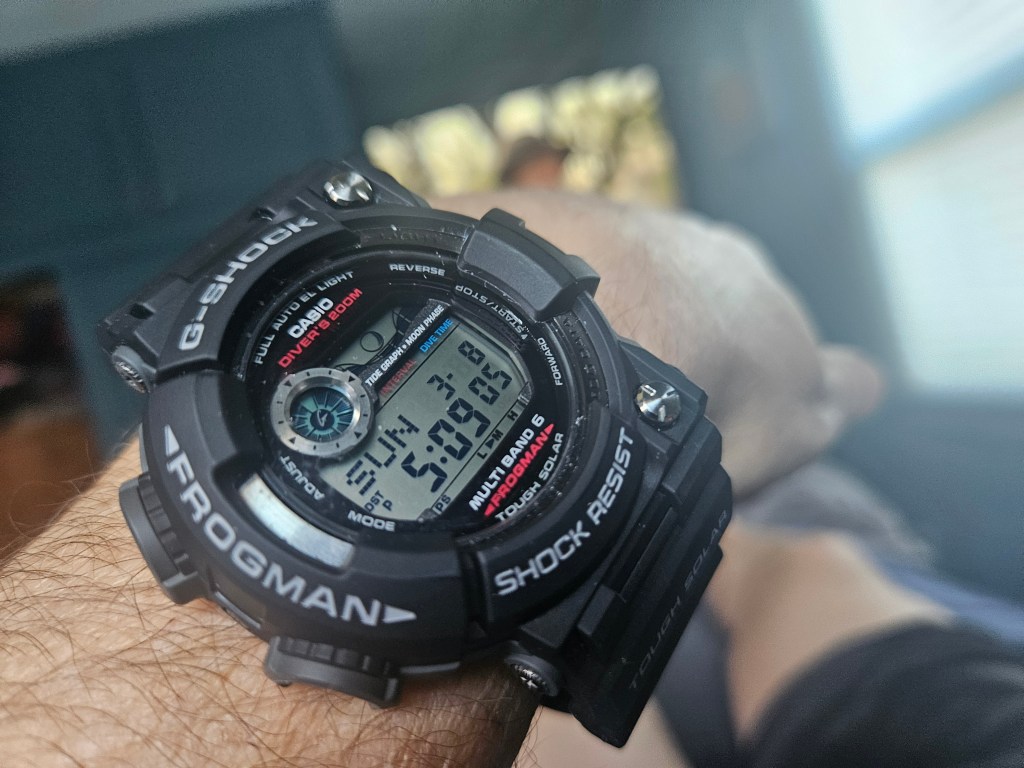
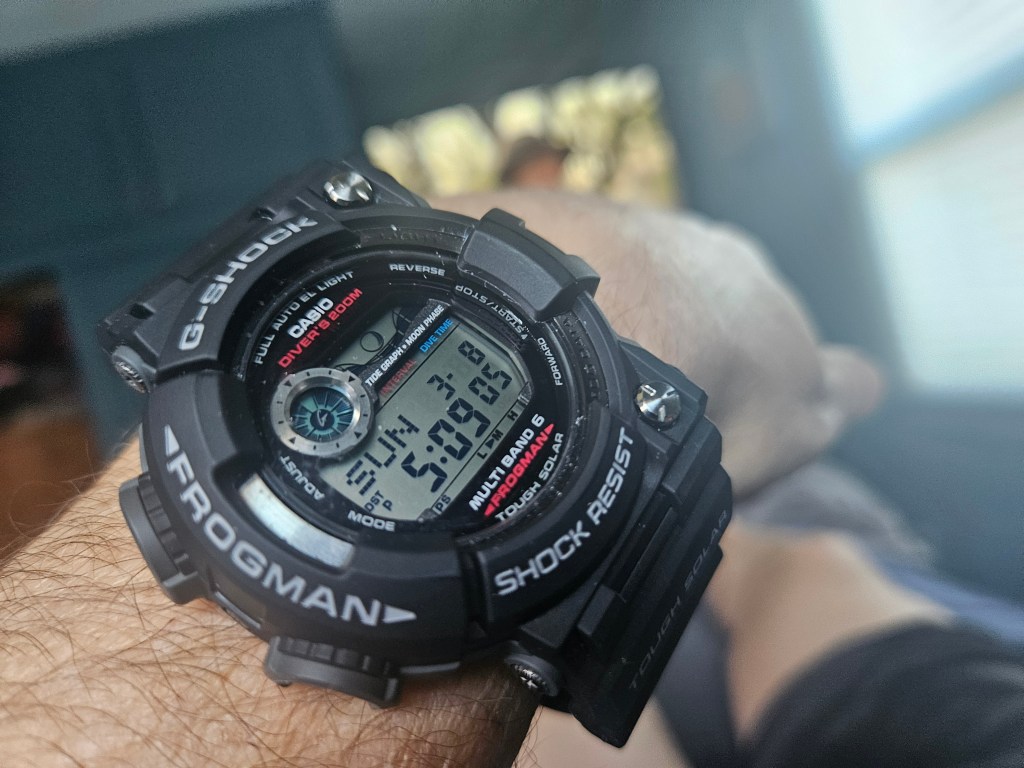
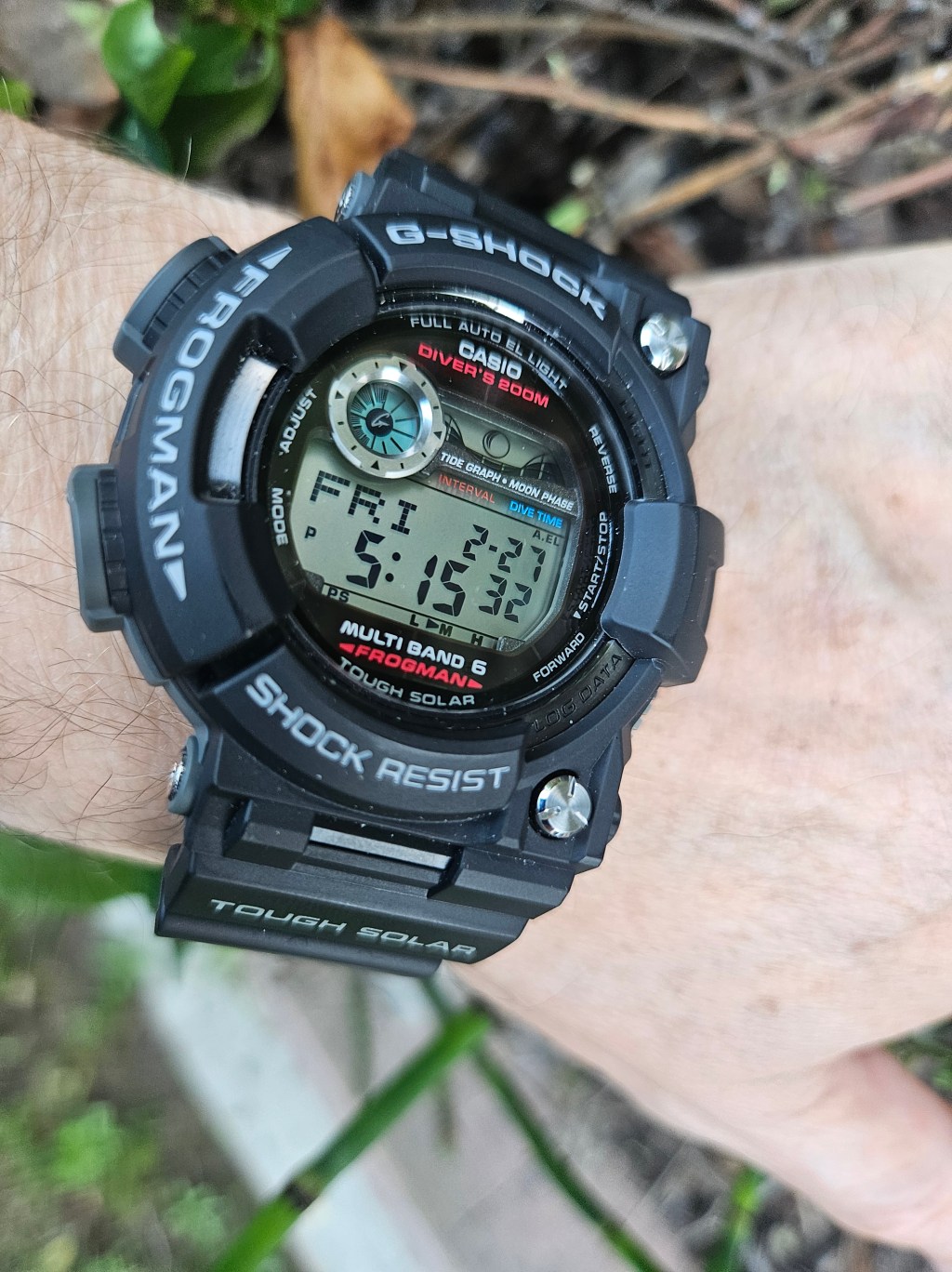
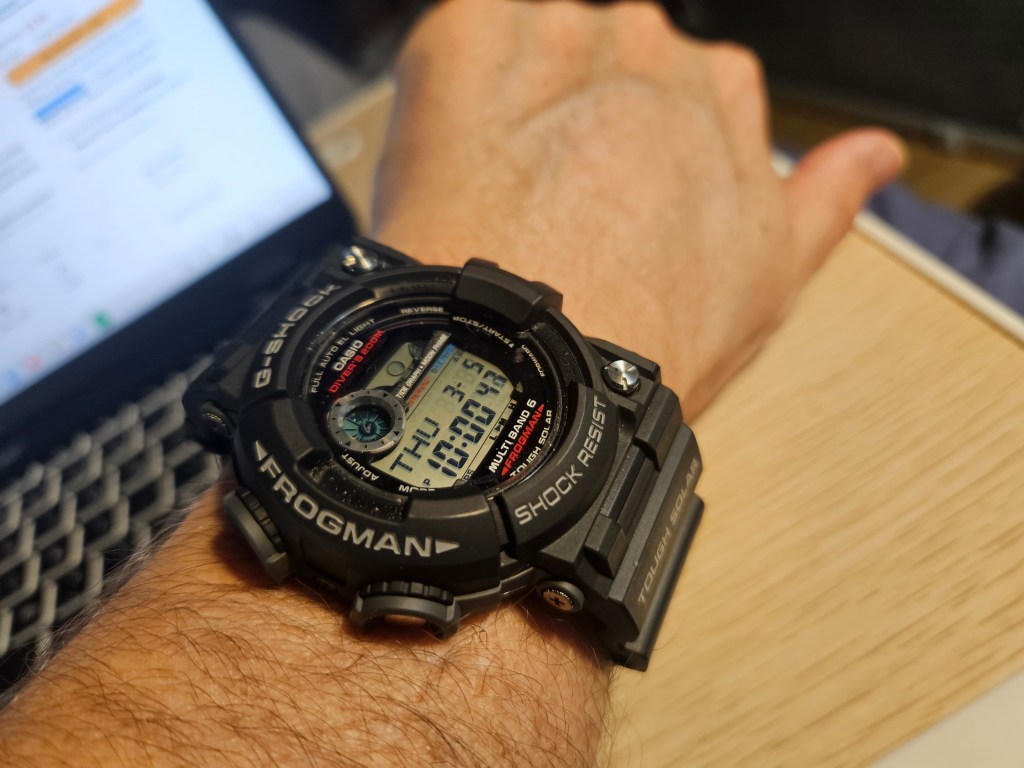
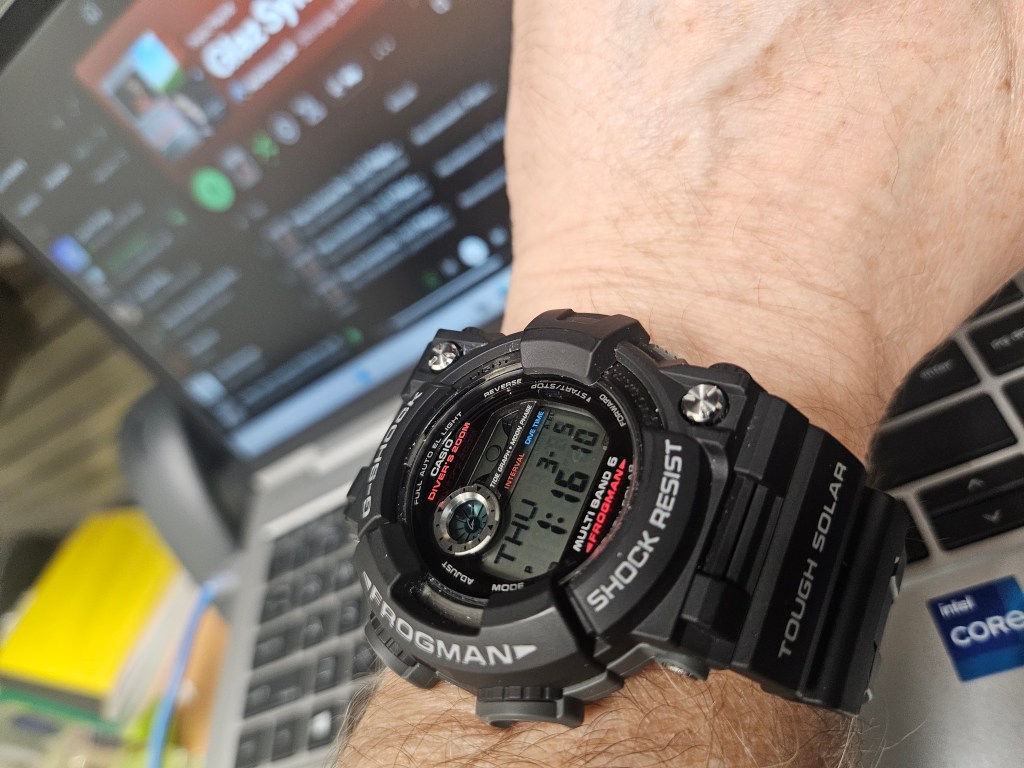
    Now, in my sixties, I’ve built a new ecosystem: my watch world. A watch box holding seven watches that I tend like a mother hen, fretting over straps and bracelets, endlessly optimizing the rotation to extract maximum pleasure from time itself. It’s a controlled universe, one I can enter when the outside world becomes too loud or incoherent. I always come back—but I’m aware of the danger. The pull can be strong. Swapping a Tropic strap for a Waffle may calm me in the moment, but eventually I have to step out of the bottle, leave the forest, and reenter a world that demands attention, judgment, and responsibility.

    The fantasy sustains me. It just can’t replace the world.

  • How Pain Turns Writers Into NPCs. 

    How Pain Turns Writers Into NPCs. 

    Writers love to repeat this creed: writers write. Every day. They sit down, stare at the blank page, and through sheer ritual force the gears to turn. In The War of Art, Stephen Pressfield insists on this daily discipline and warns of the inevitable adversary—Resistance. Resistance whispers that your writing is vain, repulsive, predictable, and hollow. Why bother? Go online. Look at shoes. Browse wristwatches. Watch YouTube reviews of sedans you’ll never buy. Burn the day on frictionless nonsense. It’s all equally meaningless, right?

    Pressfield and therapist Phil Stutz argue that this internal battle is the whole point of being alive. Pressfield calls the enemy Resistance. Stutz calls it Part X. Different names, same parasite. Its goal is not laziness but annihilation—to grind you into a nihilist, a Non Player Character who anesthetizes himself with consumer trinkets and cheap pleasures while his self-respect quietly decomposes.

    This morning, Part X arrived early and well-fed. My left shoulder throbbed from a five-month war with a torn rotator cuff and biceps tendon. Two days ago, I committed the cardinal sin: light pec flyes. Light. Humane. Respectful. Wrong. My shoulder throbbed. Apparently my shoulder has revised the Geneva Convention. I’m furious. A pec pump feels like a constitutional right. Don’t take that from me.

    But reason—cold, joyless, correct—has entered the chat. It says: you don’t need a pec pump; you need healing. If the weight room has turned hostile, pivot. Yoga. The bike. Calisthenics that whisper instead of shout. I’ve lifted my entire life, but at sixty-four my shoulder has submitted its closing argument, and it’s persuasive.

    The real danger isn’t losing bench presses. It’s waking up sore, cranky, and vulnerable—exactly the emotional state Part X thrives on. Injury lowers your defenses. Pain invites despair. Despair opens the door to distraction, and distraction is how the demon eats.

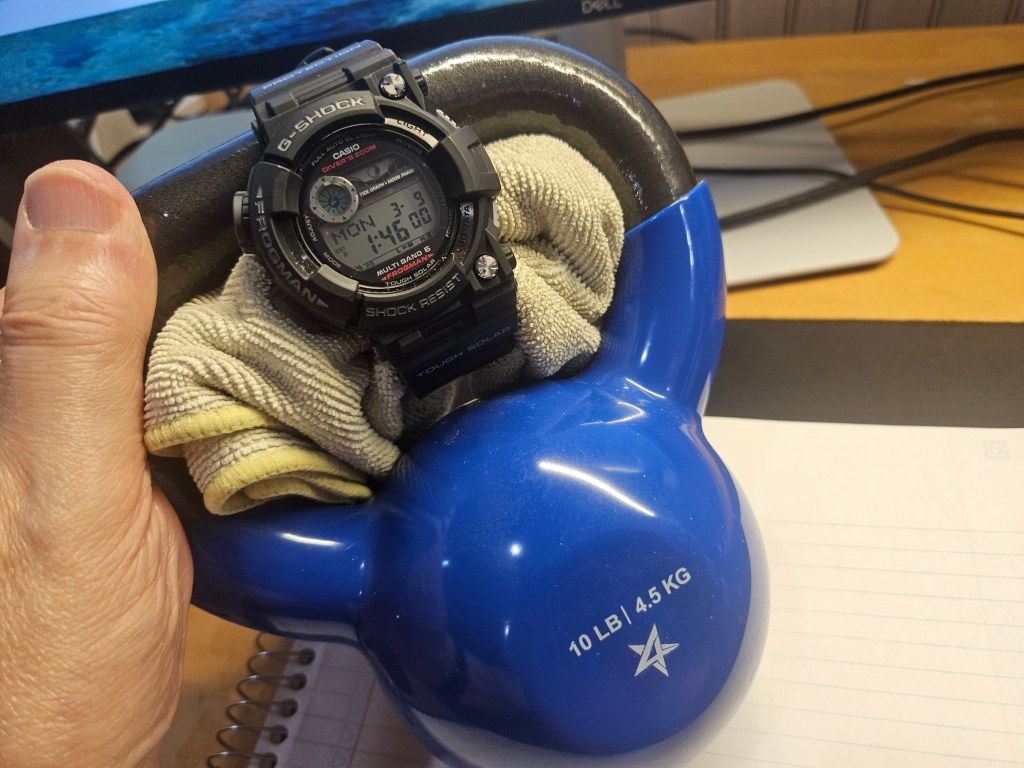
    So today I’ll keep it modest. Trader Joe’s. Groceries. Lower-body kettlebells. Rehab work that looks unimpressive but feels like loyalty to the future. May my shoulder accept this offering. More importantly, may it keep Part X from getting its teeth in me before breakfast.

  • The Man Who Broke Time: A Watch Obsession Goes Viral

    The Man Who Broke Time: A Watch Obsession Goes Viral

    Because I am known around The New Yorker offices as someone whose interest in watches occasionally elicits polite concern and the kind of side-eye usually reserved for men who won’t stop explaining cable management, it was perhaps inevitable that I would be assigned the Jeff McMahon story. When word spread that a 64-year-old writing instructor at Prospect College in Redondo Beach had triggered a watch-related disturbance of almost mythic proportions—drawing hundreds, then thousands of people into a crusade to “fix” his collection—I was dispatched to investigate how a private obsession metastasized into a civic emergency.

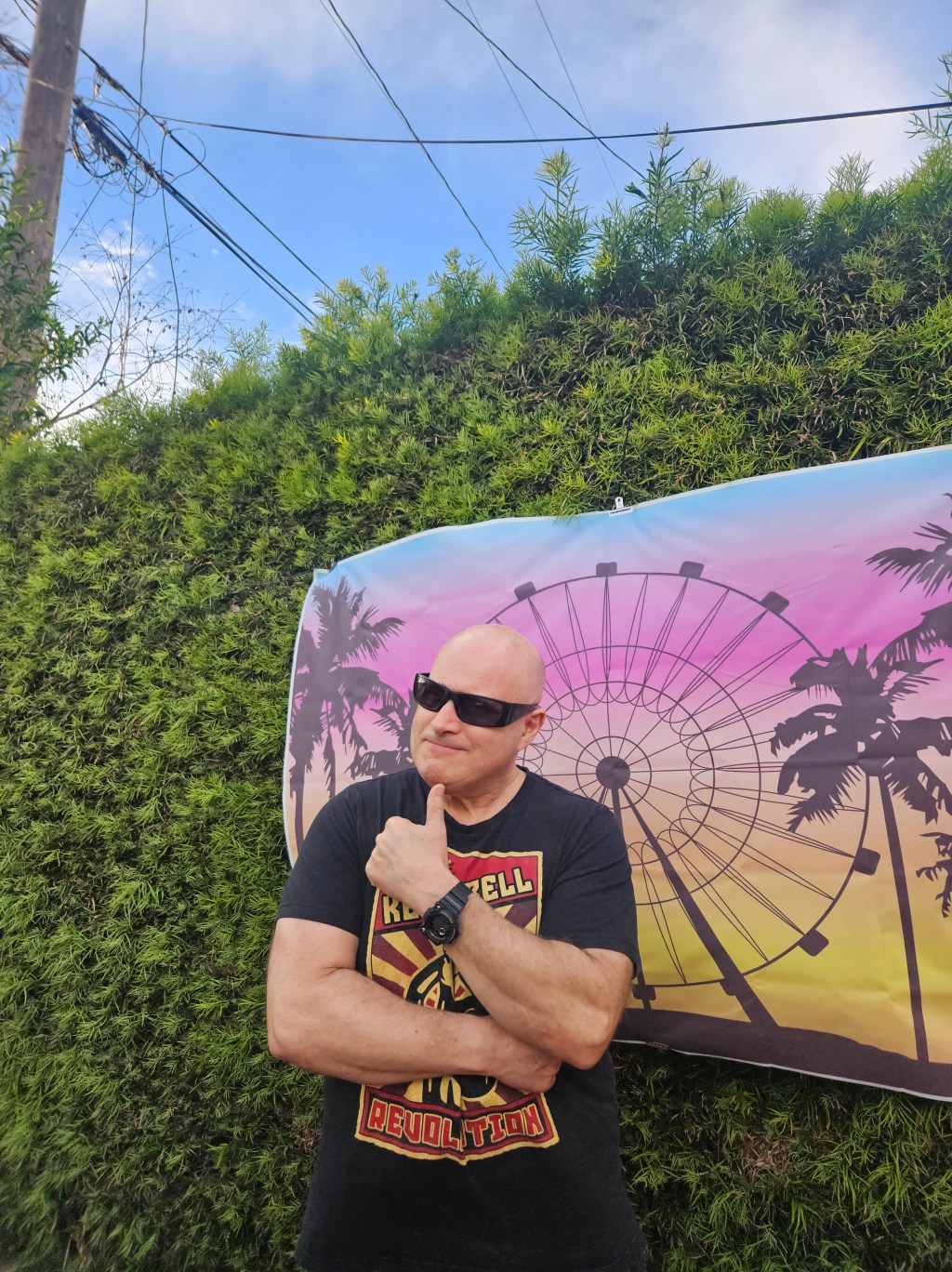
    I visited McMahon during winter break. His wife, a middle-school teacher, and his twin daughters, high-school sophomores, were safely elsewhere, leaving him alone with his thoughts, his watches, and whatever demons had learned to tell time. He answered the door wearing black travel pants with zippered pockets and a black T-shirt. Nearly six feet tall, close to 230 pounds, bald, square-jawed, with the squint of a man perpetually assessing lug-to-lug ratios, McMahon resembled a retired linebacker who had traded blitz packages for forum debates.

    Naturally, I clocked the watch immediately: a third-generation Seiko MM300 with a blue dial on a waffle strap.

    “It looks right on you,” I said, gesturing toward his forearm. “Especially given your build.”

    He shrugged. “It’s too late for me. I’m past swag. And honestly, the watch makes me miserable. I can’t decide if it belongs on a strap or a bracelet. I’ve switched so many times I no longer trust my own judgment. The only thing consistent about me is my inconsistency.”

    He led me into a bright, tile-heavy kitchen flooded with Southern California light. On the windowsill sat several shortwave radios, arranged among scattered lemons like some improvised altar.

    “Not just watches,” I observed. “Radios too.”

    He nodded, as if admitting to a second addiction was no longer worth defending.

    We sat at the kitchen table eating garlic hummus and rye crackers, drinking dark-roast coffee with soy milk and molasses.

    “Welcome,” he said with a tired smile, “to the House of Seiko. My man cave of madness.”

    I asked him why an entire community had mobilized to help solve his watch problem.

    “I have no idea,” he said. “It’s ridiculous. There are causes that matter. This doesn’t. I’m useless, over the hill, and fully Gollumified.”

    The saga began, he explained, at monthly meetups at Mimo’s Jewelry and Watches in Long Beach—friendly gatherings that escalated when he confessed the hobby no longer brought him joy. He wasn’t short on money; he was paralyzed by decision. Every choice felt wrong. The cognitive load became unbearable. He went to bed thinking about watches. He woke up thinking about watches.

    “Why not walk away?” I asked.

    “Because obsession doesn’t issue exit visas,” he said. “Once you’re in, the riddle feels existential. Solving it felt as urgent as founding a religion. I wanted to crack the code and then preach the gospel of happiness.”

    The intervention only made things worse. Camps formed. Seiko purists. Swiss loyalists. Minimalists. Maximalists. Arguments erupted. Then fights. A friend named Manny filmed the altercations. The videos went viral. Suddenly McMahon was a cause célèbre.

    “That’s when the watches started arriving in the mail,” he said.

    Luxury pieces worth more than his cars. None of them helped. He sold them and donated the money to charity. This, too, became content. More watches arrived. Then robberies. Burglaries. A P.O. box. A manager to process donations and deflect thieves.

    Millions eventually went to good causes. The silver lining, as they say.

    McMahon stared into his coffee. “I wish I felt redeemed. Mostly I feel disturbed—not just by my obsession, but by how easily the internet turned it into a farce. Sometimes I wonder if it had been anything else—stamps, guitars, fountain pens—would it have played out the same? Or is there something uniquely deranged about watches? Time itself? Father Time? Somehow my fixation feels disrespectful to him.”

    He paused, then added, “I have a friend who sold all his luxury watches. He wears a twenty-dollar Casio. Every day he thanks it for keeping him humble. He’s sane. That makes him my hero.”

    “You could follow his example,” I suggested. “Salvation is just a Casio away.”

    “And sell my divers?” he said flatly. “Not happening.”

    “You’d rather be miserable with expensive watches than happy with a cheap one.”

    “Exactly. Happiness is irrelevant now.”

    I studied him. “I don’t buy it,” I said. “This misery feels performative. A kind of cosplay.”

    He nodded slowly. “You’re right. But if I stop playing the miserable man, I have no idea who I’m supposed to be next. And that scares me more than any watch ever could.”

  • It Took a Village to Buy My Watch

    It Took a Village to Buy My Watch

    Last night I dreamt I was presiding over a vast communal effort devoted to a project of enormous importance—though no one, least of all me, could say what the project actually was. It had the gravity of a cathedral build or a moon launch, but the specifics were conspicuously absent. People just knew it mattered. My daughter’s childhood therapist, Olivia, was there, radiating purpose. She had invested a great deal of money into the endeavor, and I could hear others murmuring that I ought to reimburse her, which struck me as both reasonable and vaguely ominous.

    The house filled with people. Then it overflowed. There was so much movement, discussion, and civic enthusiasm that I slipped out, went to the gym, exercised—as one does in dreams when overwhelmed by responsibility—and returned to find the situation had escalated. Now there were dozens of neighbors on the lawn, standing around with the earnest posture of volunteers waiting to be assigned meaning. The sheer body heat inside the house had become an issue, so an air-conditioning repairman was summoned, as if climate control were now a municipal concern.

    I stood on the front lawn waiting for the repairman when Olivia emerged from the house and calmly announced that the project was complete. No speeches. No ribbon-cutting. Just resolution. She approached me holding a velvet pillow, and on it rested a three-thousand-dollar Seiko MM300 diver—white dial, blue markings, mounted on a sumptuous bracelet. I accepted it, stunned. I had believed myself to be in a strap-only phase, a man past bracelets, past flash. But there it was, on my wrist, and I knew instantly that this was the watch. The Holy Grail. Bracelet and all.

    The joy was real—but so was the shame. It dawned on me that I had apparently mobilized an entire community, generated heat waves, summoned tradesmen, and absorbed financial investment…all to solve a problem that was, at its core, exquisitely trivial. A watch. Beautiful, yes. All-consuming, certainly. But narcissistic? Undeniably. I woke with the uneasy recognition that even my unconscious mind knows how absurdly far I’m willing to go in pursuit of the right object—and how many people I’m prepared to inconvenience along the way.

  • How Zombies Taught Me to Do the Dishes

    How Zombies Taught Me to Do the Dishes

    I was in sixth grade when I made the worst procrastination decision of my young life: I watched Night of the Living Dead instead of doing the dishes.

    I didn’t even want to watch it. My parents were out for the evening and issued a single, modest commandment: Do whatever you want—just do the dishes. The sink was stacked with plates, bowls, pots, and pans, a greasy jungle daring me to enter. I took one look and decided I deserved a short rest before battle. I collapsed into a yellow bean bag chair, turned on the TV, and landed on Creature Features, which was broadcasting one of the most psychologically devastating films ever made.

    I’d heard about the movie at school. Kids spoke of it in hushed, reverent tones, as if surviving it were a rite of passage. Fear, apparently, was proof of greatness. How bad could it really be? I told myself this while enjoying the immediate relief of not scrubbing forks. Then the movie started: a brother and sister visiting a grave. The atmosphere curdled instantly. Something was wrong. I should have changed the channel. I didn’t. I couldn’t. Fear and curiosity locked arms and dragged me forward.

    Minutes turned into hours. I watched bodies fall apart, social order dissolve, and hope get eaten alive. The gore wasn’t just gross—it was existential. By the time the credits rolled, something essential in me had been misplaced. Innocence, for starters.

    It was nearly midnight. My parents still weren’t home. I wandered into the kitchen and stared at the sink, now radiating menace of a different kind. I was in no psychological condition to clean anything. Zombies had ruined that option. I retreated to my room, crawled into bed, and slept with the covers pulled over my head like a man hiding from the apocalypse.

    Morning arrived with consequences. My parents were furious. The dishes remained undone. I tried to explain that I had endured profound trauma at the hands of George A. Romero, but this defense carried no legal weight. I had failed on all fronts: my psyche was scarred, my parents were enraged, and the dishes were still filthy.

    That night taught me a lesson I’ve never forgotten. Procrastination lies. It promises comfort and ease but delivers a punishment far worse than the task you avoided. I could have spent thirty dull minutes cleaning plates. Instead, I spent the night traumatized by the collapse of civilization and woke up grounded. Avoiding the dishes cost me about a hundred times more than doing them ever would have.

  • How I Tried to Shrink Time to Survive

    How I Tried to Shrink Time to Survive

    In mid-December of 1967, when I was six years old, my mother had a severe bipolar episode, attempted to take her own life, and was hospitalized for a year. My brother was eighteen months old. My father was overwhelmed. The decision was made that I would live with my grandparents in Long Beach while my mother disappeared behind hospital walls and locked doors.

    I was enrolled in a new elementary school where I had no friends and made no effort to find any. I was distant and guarded, already practiced in withdrawal. I was preoccupied with my mother’s absence and with the unanswered question that haunted me daily: what version of her, if any, would come back. My grandparents were loving, steady, and kind, but Long Beach felt foreign and provisional, like a place you wait in, not a place you live. All I talked about was going home to San Jose.

    One afternoon, my grandmother tried to help me endure the waiting. She gave me a calendar and a red pen. She told me I would be going home on June 15, 1968. “Every day,” she said, “you can circle the date, and you’ll know you’re one day closer.” I flipped through the pages and felt something tighten in my chest. The calendar reminded me of movies where prisoners lie on cots in damp cells, carving days into stone, counting time as if it were a sentence rather than a passage.

    After about a week of dutiful circling, patience failed me. I circled every remaining day at once, all the way to June 15, as if the red pen were not just a marker but a lever, something that could force time to lurch forward. When my grandmother saw what I had done, she didn’t scold me. She smiled, but there was sadness in it. “You thought the pen could move time itself,” she said. “It doesn’t work that way.”

    That instinct—to accelerate the calendar, to force arrival—never left me. It hardened into a temperament. When I feel overwhelmed, I reach for control. I measure, schedule, ritualize. I distrust spontaneity. I cling to routines and clocks and daily structures as if they were railings on a narrow bridge. In many ways, I am still that six-year-old boy, circling days, believing that orderly time might tame a chaotic universe and keep me from falling apart.

    The cost of this way of living is distance from life itself. I’m reminded of Ariel Leve’s memoir An Abbreviated Life, which I’ve read twice. Leve describes growing up with a psychologically volatile mother and coping by shrinking the world—by narrowing experience, limiting exposure, contracting life until it feels survivable. That’s what I was doing with the calendar. I wasn’t counting days so much as trying to reduce terror to something measurable.

    I think I’ll listen to Leve’s book again, this time on Audible. Some stories need to be revisited, not because they change, but because you finally recognize yourself inside them.

  • Chuck Klosterman, Joe Montana, and the Shape of Greatness

    Chuck Klosterman, Joe Montana, and the Shape of Greatness

    I’ve been reading—and now listening to—Chuck Klosterman on music and culture for over a decade. He’s a rare specimen: a true hipster precisely because he has no interest in being cool and too much interest in ideas to waste time polishing his image. His new essay collection, Football, keeps that streak alive. I’m consuming it on Audible while trying to erase myself on the Schwinn Airdyne, pedaling hard enough to regret my life choices. Every so often, Klosterman drops a line that forces me to slow the bike, release the upper-body levers, and frantically thumb notes into Google Docs like a deranged monk copying scripture mid-martyrdom.

    Today’s line stopped me cold: “Greatness is about the creation of archetypes.” He was talking about the Beatles. Not record sales. Not chart dominance. Greatness, he argued, is the act of filling an archetypal mold so completely that everyone who follows can only approximate it. They may be talented, even brilliant, but they’re echoes, not origins. The mold has already been cast.

    That idea made me think of Klosterman as a fourth grader, devastated when the Cowboys lost the 1982 NFC Championship to the 49ers on Joe Montana’s pass to Dwight Clark. I was living in the Bay Area then, and Montana instantly became something more than a quarterback. He wasn’t a flamethrower like Elway or a mythic warhorse like Staubach. He was smaller, calmer, unnervingly steady. He slew the Goliath that had humiliated the Niners for years. Montana wasn’t just great—he was David with a slingshot. That archetype mattered more than his stat line, and for a time it made him the greatest quarterback alive.

    I’m not a Beatles devotee, but I understand why people place them on that pedestal. Archetypes don’t require personal devotion; they require recognition. You can see the mold even if you don’t want to live inside it.

    Earlier in the book Klosterman expressed his genuine, hard-earned contempt for Creed—contempt earned the old-fashioned way, through actually listening—and my mind wandered to the opposite of greatness: a strange kind of cultural infamy where a band becomes a symbol rather than a sound. That’s when I realized I’d mixed up Creed with Nickelback, which led me down a brief but intense psychological spiral when I couldn’t find the documentary Hate to Love: Nickelback on Netflix. That film makes it painfully clear that Nickelback’s “crime” is not incompetence or fraud. They’re talented, professional, and wildly successful at pleasing their audience. Their real achievement is unwanted: they became the most socially acceptable band to hate.

    Nickelback’s loathing isn’t sincere. It’s ritualized. Once social media weaponized contempt for them, sneering became a form of virtue signaling—a low-effort way to broadcast cultural superiority without doing the work of listening. Most of the haters probably couldn’t name three songs. The scorn isn’t about music; it’s about belonging.

    Which is why I’d love to talk this through with Klosterman. He’s the right mind for it. Also, he might help me straighten out my chronic band confusion. This isn’t new. When I was five, I used to confuse the Monkees with the Beatles. Apparently, my brain has always had trouble keeping its mop-tops and punchlines in their proper bins.