
Tag: writing

  • Streamberry, Self-Loathing, and the Algorithmic Abyss: How “Joan Is Awful” Skewers the Curated Life

    Streamberry, Self-Loathing, and the Algorithmic Abyss: How “Joan Is Awful” Skewers the Curated Life

    In Black Mirror’s “Joan Is Awful,” Charlie Brooker offers more than a dystopian farce—he serves up a wickedly accurate satire of the curated lives we present online. It’s not just Joan who’s awful. It’s us. All of us who’ve filtered our flaws, outsourced our personalities to engagement metrics, and whittled ourselves down to algorithm-friendly avatars. The episode doesn’t critique Joan alone—it roasts the whole rotten architecture of social media curation and shows, with brutal clarity, how the pursuit of digital perfection transforms us into insufferable parodies of our former selves.

    First, let’s talk about performance. Joan, like any good social media user, lives her life as if auditioning for a role she already occupies—one shaped not by authenticity but by optics. She performs “relatable misery,” complete with awkward office banter, fake smiles, and passive-aggressive salad orders. Social media rewards this pantomime, demanding we be palatable, aspirational, and vaguely miserable all at once. The result? A version of ourselves designed to please an audience we secretly resent. Joan is what happens when your curated self becomes the dominant narrative—when branding overtakes being. Her AI-generated counterpart doesn’t misrepresent her; it distills her curated contradictions into a grotesque caricature that somehow feels… accurate.

    Second, there’s the fact that Joan—like all of us—is under constant surveillance. In Joan Is Awful, it’s not just the NSA snooping in the background—it’s the entire viewing public, binge-watching her daily descent into algorithm-approved degradation. This is what we’ve signed up for with every “I accept” click: to become content, voluntarily and irrevocably. Our data, behaviors, and digital crumbs are fed into the algorithmic sausage grinder, and what comes out is a grotesque mirror held to our worst instincts. The AI Joan is not a stranger; she’s the monster we’ve been molding through every performative tweet, selfie, and humblebrag. In a world where perception is currency, she’s our highest-valued coin.

    Then comes the psychological shrapnel: identity fragmentation. Joan can no longer tell where she ends and Streamberry’s Joan begins, just as many of us can’t quite remember who we were before the algorithm gave us feedback loops in the form of likes, retweets, and dopamine pings. This curated self isn’t just a mask—it becomes the default setting. The dissonance between public persona and private truth breeds an existential malaise. Joan’s real tragedy isn’t that her life is on TV—it’s that she’s lost the plot. She’s a passenger in her own narrative, outsourced to a system that rewards spectacle over substance.

    Let’s not forget the moral rot. Watching your AI double destroy your reputation while millions tune in might seem horrifying—until you remember we do this willingly. We doomscroll, rubberneck scandals, and serve our digital idols on platters made of hashtags. Joan, sitting slack-jawed in front of her TV, is no different from us—addicted to her own collapse. It’s not the horror of exposure that eats her alive; it’s the realization that her own worst self is exactly what the algorithm wanted. And that’s what it rewarded.

    Ultimately, Joan Is Awful is a break-up letter with social media—if your ex were a manipulative narcissist with access to all your personal data and a flair for psychological torture. Escaping the curated self, as Joan tries to do, is like fleeing an abusive relationship. You know it’s toxic, you know it’s killing you—but part of you still misses the attention. The episode doesn’t end with a triumphant reinvention; it ends with Joan in fast food purgatory, finally unplugged but still wrecked. Because once you’ve sold your soul to the algorithm, the buyback price is steep.

    So yes, Joan is awful. But only because she reflects what happens when we let the curated life take the wheel. In the Streamberry age, we aren’t living—we’re streaming ourselves into oblivion. And the worst part? We’re giving it five stars.

  • Kleptobite

    Kleptobite

    When I was six years old in 1968, I lived for a year with my grandparents in Belmont Shore. One day after school, a distraught neighbor, a 79-year-old widow named Mrs. Davis, said she locked herself out of her house. Could she borrow me to climb through her bedroom window and unlock the front door for her? With my grandmother’s approval, I did just that. I pretended to be a cat burglar, slithered through the ajar window, and walked through her house. With great curiosity, I examined the interior of the living room.  The floor was covered with a plush, floral-patterned rug. The centerpiece of the room was a large, floral-patterned couch. It was flanked by two wingback chairs, upholstered in a velvety red fabric. Each chair had a lace doily draped over the backrest. A coffee table with spindly legs sat in front of the couch, its surface crowded with an assortment of knickknacks: a porcelain figurine of a ballerina, a small crystal bowl filled with wrapped candies, and a couple of framed photos. The walls were adorned with family portraits, framed cross-stitch samplers, and a large, oval mirror with a gold frame. A grandfather clock ticked methodically in the background, its pendulum swinging with a steady rhythm that made me feel lost in time. Something came over me. Being alone, I felt possessed with a transgressive spirit, and I lifted the candy jar’s lid and, even though I disdained hard candy, I stuffed a butterscotch candy in my pocket before opening the front door for Mrs. Davis. I felt guilty for my act of theft because Mrs. Davis proclaimed me to be her newly-minted hero and handed me a crisp one-dollar bill, which I would later spend on Baby Ruth and Almond Joy Bars. I had difficulty sleeping that night. I worried that Mrs. Davis might feel inclined to take inventory of her candies and discover that one was missing, prompting her to demote me from hero to villain. My career as a thief had come to a quick end. On the other hand, I had a glimpse of what it was like to be a superhero entering houses and saving people in distress. I convinced myself that my career as Superman was just beginning. 

    My act of thievery points us to the lexicon term: Kleptobite–the act of stealing a food item not for its flavor or nutritional value, but purely for the electric thrill of transgression. A Kleptobite is less about appetite and more about theater—the petty larceny of a Werther’s Original lifted like a crown jewel, the pilfered peppermint filched under the nose of a trusting septuagenarian, not for the tongue, but for the adrenaline. Often committed in plush-carpeted living rooms with doilies and ticking clocks, this culinary crime wave is fueled by a cocktail of boredom, childhood hubris, and vague superhero delusions. Side effects include guilt-induced insomnia, paranoia about candy audits, and overcompensating acts of heroism.

  • Chewtality

    Chewtality

    Every morning during my teenage years, I’d stagger out of bed and make my daily plea to the heavens: “God, please grant me the confidence and self-assuredness to ask a woman on a date without suffering from a full-blown cerebral explosion.” And every morning, God’s response was as subtle as a sledgehammer to the forehead: “You’re essentially a walking emotional landfill, a neurotic mess doomed to wander the planet bereft of charm, romantic grace, and any semblance of healthy relationships. Get used to it, buddy.” And thus commenced my legendary odyssey in the land of perpetual non-dating.

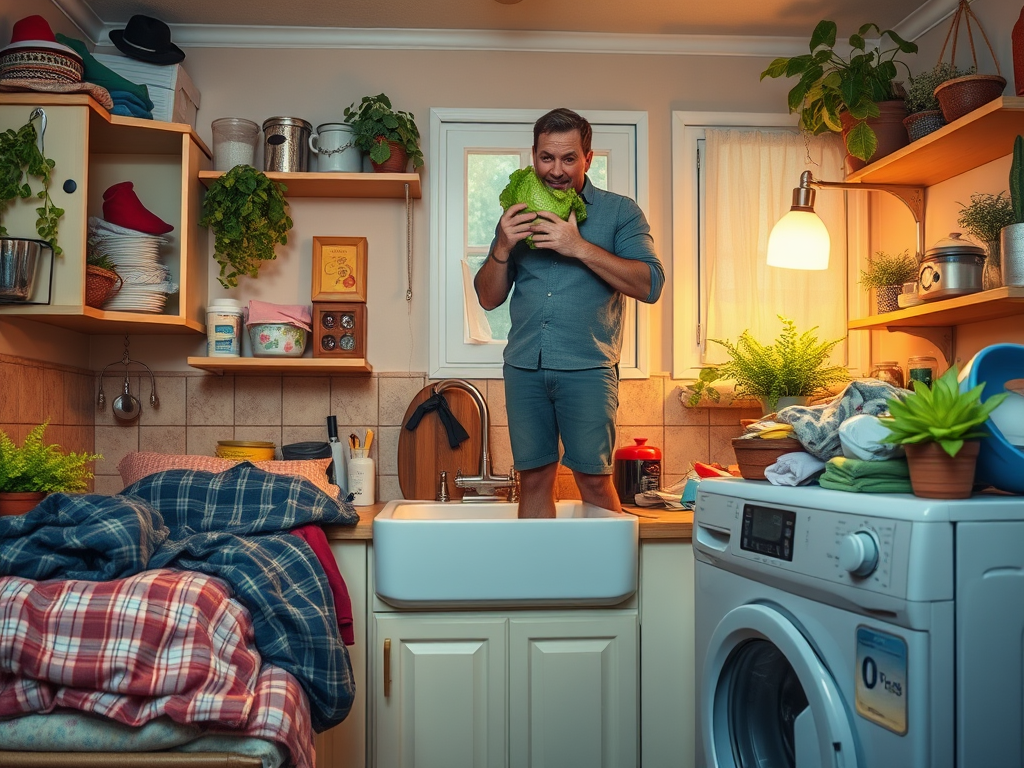
    This was not the grand design I had envisioned. No, the blueprint was to be a suave bachelor, just like my childhood idol, Uncle Norman from The Courtship of Eddie’s Father. At the ripe age of eight, I watched in awe as Uncle Norman demonstrated his revolutionary kitchen hack: why bother with dishes when you can devour an entire head of lettuce while standing over the sink? He proclaimed, “This way, you avoid cleanup, dishes, and the pesky inconvenience of sitting at a table.” In that glorious moment, I was struck with a revelation so profound it reshaped my entire existence. The Uncle Norman Method, as I would grandiosely dub it, became my life’s guiding principle, my personal beacon of satisfaction, and the defining factor of my existence for decades.

    Channeling my inner Uncle Norman, I envisioned a life of unparalleled convenience. My bed would be perpetually unmade because who needs sheets when you have a trusty sleeping bag? I’d never waste time watering plants—plastic ones were far superior. Cooking? Please. Cereal, toast, bananas, and yogurt would sustain me in perpetuity. My job would be conveniently located within a five-mile radius of my house, and my romantic escapades would be strictly zip code-based. Laundry? My washing machine’s drum would double as my hamper, and I’d simply press Start when it reached capacity. Fashion coordination? Not a concern, as all my clothes would be in sleek, omnipresent black. My linen closet would be repurposed to stash protein bars, because who needs linens anyway?

    I’d execute my grocery shopping like a stealthy ninja, hitting Trader Joe’s at the crack of dawn to dodge crowds, while avoiding those colossal supermarkets that felt like traversing a grid of football fields. 

    Embracing the Uncle Norman Way wasn’t just a new approach to dining; it was a radical overhaul of my entire lifestyle. The world would bow before the sheer efficiency and unadulterated convenience of my new existence, and I would remain eternally satisfied, basking in the glory of my splendidly uncomplicated life.

    Of course, it didn’t take long for my delusion to expand into a literary empire—or at least, that was the plan. The world, I was convinced, desperately needed The Uncle Norman Way, my magnum opus on streamlining life’s most tedious inconveniences. It would be part manifesto, part self-help guide, and part fever dream of a man who had spent far too much time contemplating the finer points of lettuce consumption over a sink. Each chapter would tackle a crucial element of existence, from the philosophy of single-pot cooking (aka, eating directly from the saucepan) to the art of strategic sock re-wearing to extend laundry cycles. I even envisioned a deluxe edition featuring tear-out coupons for discounted plastic plants, a fold-out map of the most efficient grocery store layouts, and, for true devotees, a companion workbook to track their progress toward the ultimate goal: Maximum Laziness with Minimum Effort™.

    Naturally, I imagined its meteoric rise to cultural dominance. Talk show hosts would marvel at my ingenuity, college professors would weave my wisdom into philosophy courses, and minimalists would declare me their messiah. Young bachelors, overwhelmed by the burden of societal expectations, would turn to my book in their darkest hour, finding solace in the knowledge that they, too, could abandon the tyranny of dishware and lean fully into sink-based eating. The revolution would be televised, one head of lettuce at a time.

    Uncle Norman’s “system” introduced me to Chewtality–the ruthless prioritization of caloric input over culinary pleasure, a lifestyle doctrine where taste, ambiance, and social norms are discarded like expired salad dressing. It’s the stoic efficiency of consumption that transforms meals into mechanical refueling sessions, often while hunched over a sink, shirtless, chewing with the urgency of a man on parole from dignity.

    Rooted in the gospel of Uncle Norman, Chewtality celebrates the unsentimental art of eating for sustenance and speed. Why savor when you can shovel? Why sit when you can hover? Why use plates when God invented hands and the stainless steel basin? This isn’t just a meal strategy—it’s a worldview: one where the blender pitcher is a chalice, the saucepan is a throne, and the lettuce head is both entree and ideology.

    In its highest form, Chewtality produces a false sense of superiority—an unshakable belief that your Spartan choices signify enlightenment, when in reality, you’ve just spent dinner crouched over the sink eating raw spinach like a raccoon with a library card.

  • Appetyranny

    Appetyranny

    One of the most memorable TV ad campaigns of my youth in the late 1960s was “How Do You Handle a Hungry Man?” The stakes were sky-high. Imagine the scene: a harried housewife in her perfectly pressed apron, hair teased to high heaven, facing off against her husband, the archetypal Hungry Man. He enters the kitchen with the imposing gait of a lumberjack who’s felled a forest, his appetite as vast as the Grand Canyon. He casts a skeptical eye over the bubbling pot on the stove, nostrils flaring like a bloodhound on the scent. The tension is palpable. But fear not! With a dramatic flourish, she opens a can of Campbell’s Manhandlers soup, the magical elixir that transforms her kitchen into a culinary Colosseum. She pours the contents into a pot, and it’s as if she’s summoned the culinary gods themselves. The soup is no ordinary broth; it’s a veritable cornucopia of steak chunks, peas, and potatoes, swimming in a rich, hearty base that promises to tame even the most insatiable of appetites. As the aroma wafts through the kitchen, her husband’s eyes widen in delight. He grabs a spoon and dives in, and the transformation is instantaneous. His previously skeptical demeanor melts away, replaced by pure bliss. He slurps the soup with the gusto of a Viking at a medieval banquet, and she watches, triumphant. The jingle plays in the background, a triumphant anthem to her victory over hunger.

    The food industry at the time was relying on Appetyranny–the 1970s advertising-driven psychosis in which a woman’s entire self-worth was measured by her ability to quell the beastly hunger of her man. Fueled by jingles and canned soup, Appetyranny framed female failure not in terms of character or intellect, but in spoonfuls: if he’s still hungry, you’re unlovable.

    It was the golden age of culinary gaslighting, where a man’s growling stomach was treated like a ticking bomb, and your job—housewife, mother, woman—was to neutralize it with sodium-laced beef sludge. Fail, and you risked suburban scandal. Succeed, and you were serenaded by baritone jingles that implied your marriage had been saved by soup.

    Side effects of Appetyranny include:

    • The belief that men turn feral without starch by 6 p.m.
    • Buying food with names like Manwich, Sloppy Joe, or Hearty Beef ‘n’ Barley
    • Mistaking Campbell’s labels for emotional validation
    • A lifelong association between love and ladles

    Appetyranny wasn’t just marketing. It was a meat-chunk manifesto from the patriarchal pantry, where the kitchen timer doubled as a ticking bomb of feminine adequacy.

  • The Curse of the Shamewich

    The Curse of the Shamewich

    I remember the day well. I was six years old as I trudged to Katherine R. Smith Elementary in San Jose, California, with three boys who would’ve made excellent talent scouts for the smell police. Usually, a Hostess Fruit Pie or pink Sno Ball made lunch a bright spot in my otherwise bleak existence, but not today. Today, the stench of rotten tuna wafting from my Captain Kangaroo lunch box was so potent it could’ve been classified as a biological weapon. My companions, gagging and accusing me of harboring a dead sea creature, demanded an explanation.

    Finally, I surrendered. We stopped in a field separating the Stop & Go Market from the school, and I opened the lunch box. There it was: the festering tuna sandwich, now a slimy, mayonnaise-coated abomination that had broken free from its plastic baggie and redecorated the inside of my lunchbox like a Jackson Pollock painting from a nightmare. We stared in horror at the black tuna juices, streaks of inky malevolence, and chunks of something unholy smeared all over the tin pail’s lining.

    “How could you eat that?” one boy asked, his voice a mix of pity and revulsion. I shrugged, resigned to my fate. It was my lunch, after all. So, I closed the lunch box, sealing the miasma inside, and we continued our grim march to school. I placed my lunch box alongside everyone else’s in the designated coat closet, a ticking olfactory time bomb among the innocent.

    Then came the Duck-and-Cover Drill. We crawled under our desks, awaiting the end-of-the-world announcement from the principal. But instead of nuclear annihilation, Mrs. Corey and the entire class were assaulted by a stench so vile it made everyone question their will to live. “Who brought a dead creature into my classroom?” she demanded, her forehead crinkling, nostrils flaring. Students squeezed their noses and made mock gagging noises, adding to the apocalyptic ambiance.

    The boys I’d walked to school with pointed at my lunch box, the source of the olfactory Armageddon. Mrs. Corey approached it like a bomb disposal expert, slowly opening the lid to reveal the horror within. She gazed at the contents as if she had just uncovered a portal to the underworld. “Did your mom pack this?” she asked, her voice tinged with disbelief and horror.

    I nodded. Mrs. Corey winced, a look of cosmic condemnation crossing her face, as if my entire bloodline was responsible for this culinary atrocity. She closed the lunch box with a finality that suggested she was sealing away a great evil, handed it to the teacher’s aide to place outside, and announced that my food was unfit for consumption. She then solicited volunteers to donate a part of their lunch to me, the pariah of the playground.

    Too mortified to eat, I sat on my blanket, avoiding the curious and horrified stares of my classmates. My appetite was dead, much like the tuna that had ruined my day. I remained on my blanket, and imagined I looked like David Draper in that Monkees episode. Rather than be a pathetic figure in need of charity, I would be a vision of glory and strength, the focal point of everyone’s admiration. My fantasy of walking like a Skyscraper among the Shacks of Mediocrity at the beach was interrupted by my stomach growling in protest at the cruel hand fate had dealt me.

    Little did I know, I had been cursed by the Shamewich–the deep, haunting sense of culinary disgrace one feels when a packed lunch goes rancid, rogue, or just plain weird—and becomes the epicenter of public ridicule. A Shamewich isn’t always a sandwich, but it’s always a moment—a sensory trauma in which your identity is temporarily replaced by the aroma of failure.

    It’s the rank stench of black tuna juice wafting from your Captain Kangaroo lunchbox. It’s the entire class gagging under their desks while your lunch gets escorted out like a radioactive crime scene. A Shamewich is not just what you eat—it’s who you become in the eyes of your peers: the one whose mother packed a biohazard in bread.

    Symptoms include:

    • Desire to sink into the floor or self-immolate
    • Permanent suspicion of mayonnaise
    • Fantasies of reinvention as a muscle-bound hero from The Monkees
    • Never bringing tuna to school again unless you’re ready to own the nickname “Fish Bomb”

    A Shamewich leaves an emotional stain long after the mayonnaise has been wiped clean. It’s not just a bad lunch—it’s a rite of passage.

  • Chocotrickery

    Chocotrickery

    When I wasn’t honing my superhero powers, I was a rock star—at least in the hallowed halls of Katherine R. Smith Elementary. Every Friday during Show and Tell, I transformed into Micky Dolenz from The Monkees. I strutted into Mrs. Gilarde’s kindergarten class in my emerald green corduroy flares, aka the “Monkees pants,” ready to dazzle. My friends and I performed the “Theme Song” with such confidence that we shunned instruments, relying solely on the raw, unfiltered power of our vocals. The girls’ ear-piercing screams nourished my hungry self-esteem. Show and Tell Fridays became my therapy, where I reveled in the adoration of my screaming fans. I’d come home giddy, the shrieks of the girls still ringing in my ears like a symphony of validation. Exhausted from the grueling demands of being a five-year-old rock god, I devoured snacks like a tiny, ravenous beast. Oscar Mayer liverwurst sandwiches on Wonder Bread, meatloaf sandwiches drowning in ketchup, grilled cheese oozing butter, Rice Krispy Squares, Hostess berry pies, and Ovaltine-laced milk by the gallon—all disappeared down my gullet.

    Ah, Ovaltine. Marketed as a nutritional elixir but clearly a placebo in a milkshake’s clothing—a clever ruse setting the stage for future food gimmickry. They could’ve sold me anything with that chocolatey lie, and I’d have believed it was manna from heaven. Looking back, my daily ritual of inhaling these calorie bombs was a prelude to a life of chasing comfort in sugary deceit and processed delights.

    Ovaltine introduced me to Chocotrickery–the food industry’s sleight of hand in disguising dessert as “nutritional fuel” for growing kids—most notoriously embodied in the form of chocolate milk powder like Ovaltine, Nesquik, or other faux health elixirs disguised as academic performance enhancers and muscle juice for tiny rock stars.

    Chocotrickery is the corporate wizardry that convinced millions of children (and their exhausted, hopeful parents) that dumping sugar-cocoa dust into milk transformed it into a brain-boosting, bone-fortifying superdrink. In reality, it was more like chocolate frosting in liquid drag.

    Children caught in the throes of Chocotrickery didn’t just drink a beverage—they drank the fantasy: that they’d grow taller, smarter, cooler, and possibly even become Micky Dolenz if they stirred it long enough. It’s the original bait-and-sip scheme, the gateway to a lifetime of falling for healthwashed comfort foods wrapped in the sparkle of cartoon endorsements and pseudo-scientific promises.

    Chocotrickery is how nostalgia tastes when it’s spiked with glucose and lies.

  • Snackjection

    Snackjection

    When I was five, my father constructed a treehouse that stood like a beacon of childhood ambition in the Flavet Villages Apartments in Gainesville, Florida. It was a fortress, a palace, a skyscraper reaching for the heavens—at least in my young mind. In this realm of wood and nails, I sought to assert my dominion, and what better way than with the power of Sun-Maid raisins? One fateful day, I lured Tammy Whitmire to ascend the tree’s wooden slats by brandishing the ultimate weapon: a box of Sun-Maid raisins. This wasn’t just any box; it featured the Sun-Maiden herself, a radiant figure holding a colossal tray of grapes. Her red bonnet and the halo of yellow light marked with white triangles around her head made her look like the Great Raisin Angel, a deity of dried fruit. Tammy, captivated by the angelic glow of the Sun-Maiden, climbed up to join me. Victory seemed imminent until Zane Johnson, lurking in a nearby tree, emerged from a leafy cluster and shattered my triumph. With a smug grin, he declared he had something far superior to my measly raisins: Captain Kangaroo Cookies. These weren’t just cookies; they were double-fudge, cream-centered cookie sandwiches, the culinary equivalent of Excalibur. In the brutal marketplace of childhood affections, my raisins didn’t stand a chance. Tammy, seduced by the allure of Zane’s superior snacks, descended my tree faster than a squirrel on espresso and sprinted to Zane’s treehouse. There, they feasted on the decadent cookies, leaving me alone with my pitiful box of raisins. My reign had ended before it began. Crushed by the betrayal, I reclined in my treehouse and sobbed myself to sleep. But the universe wasn’t done with me yet. I awoke hours later to a stinging horror: my body was swarmed by red fire ants, drawn to the sweet raisins. My skin felt like it had been lashed by a thousand stinging nettles. In agony, I bolted to my apartment where my mother, horrified, gave me a scalding bath to rid me of the ants. In the battle between Sun-Maid Raisins and Captain Kangaroo Cookies, the cookies had won, and I had learned a painful, itchy lesson about the power of snacks and the fickleness of friends.

    This traumatic memory was my introduction to Snackjection–the  soul-bruising humiliation that occurs when your lovingly curated snack—especially one featuring wholesome packaging like a bonneted raisin maiden—is publicly rejected in favor of a rival’s more brand-name, sugar-slicked treat. Often inflicted during the high-stakes snack diplomacy of childhood, Snackjection delivers a one-two punch: the collapse of your social standing and the realization that Captain Kangaroo cookies wield more romantic sway than your dried fruit ever will.

    Symptoms may include:

    • Sudden loss of confidence in your snack brand identity
    • Emotional exile to a solo treehouse
    • Uncontrollable sobbing followed by an insect siege
    • Existential questioning of why the Sun-Maid looks holy but delivers only heartbreak

    Snackjection is the snacktime equivalent of being left at the altar for someone with a lunchbox full of TV tie-in sugar bombs.

  • The Cake and the Crumbs: A Toddler’s Origin Story of Maximalust

    The Cake and the Crumbs: A Toddler’s Origin Story of Maximalust

    I was a bright-eyed two-year-old growing up in the surreal surroundings of VA housing in Gainesville, Florida. My home, a repurposed army barracks known as Flavet Villages, was nestled near an alligator swamp where the air was thick with the smell of low-tide alligator dung, a stench so potent it could knock out a grown man. Yet, amidst this pungent atmosphere lay an enchanting routine: visiting a Mynah bird perched on the same tree branch in a nearby forest. This mystical bird, almost a local deity, engaged in nightly conversations with my father and me, its wisecracking voice echoing in the twilight. On my second birthday, my father, ever the hero, carried me on his shoulders for our evening visit to the Mynah bird. As we journeyed through the swampy landscape, the scent of celebration wafted from our small apartment, where my mother was busily preparing birthday decorations. In the distance, the melancholic tune of “Bali Ha’i” drifted from a neighbor’s radio, adding a cinematic touch to our adventure. We returned home, greeted by the excitement of neighbors and the promise of birthday cake. The neighbor’s child, a frail wisp of a boy who looked like he might be blown away by the next strong gust of wind, sat in his high chair, a throne of pity contrasting starkly with my robust presence. I, the towering giant of toddlers, was presented with a slice of cake so large it could double as a life raft. The cake, an Everest of chocolate decadence, was all mine to conquer. Then, I glanced at the poor child beside me. His mother, apparently convinced he was a baby bird rather than a human toddler, meticulously pinched off cake crumbs and fed them to him out of the palm of her hand. Each crumb, delivered with the precision of a jeweler setting a diamond, highlighted the stark disparity between my cake feast and his crumb diet. My eyes widened in disbelief. Was this real? Was I witnessing a Dickensian nightmare unfold at my birthday party? My horror magnified as I chewed through my colossal slice of cake, each bite a triumphant celebration of my toddlerhood. Meanwhile, the other child nibbled at his crumbs, a tragic figure resigned to his fate. In my young mind, the situation escalated to epic proportions. I envisioned myself as a benevolent king, feasting on a banquet, while the other boy was a destitute peasant, scrabbling for scraps in my opulent court. That moment, seared into my memory, became a symbol of the great injustices of the world. How could a child, on my birthday no less, be subjected to such cruel cake inequity? The image of his mother, delicately inserting crumbs into his mouth, haunted me like a ghost of birthdays past. It was as if I had witnessed the greatest travesty of my young life, a Shakespearean tragedy played out in frosting and crumbs. Years have passed, and many birthdays have came and went, but the memory remains vivid. I have tasted many cakes since then, each one a reminder of that fateful day when I first encountered true pity. In my exaggerated recollection, the event has grown more fantastical. The crumbs have became smaller, my cake slice grander, and the emotional weight of that moment ever heavier. So here I stand, a veteran of countless birthday celebrations, carrying with me the bittersweet lesson that not all cake experiences are created equal. And perhaps, in my heart of hearts, I’ve learned to savor every slice of cake with the gratitude of one who knows that somewhere, someone might be living on crumbs.

    The deeply embedded, early-life memory resulted in the belief that more food is always better—more validating, more righteous, more deserved. Born in toddlerhood and fed by birthday cakes the size of rafts, Maximalust is not just a craving—it’s a worldview. It equates abundance with virtue and scarcity with shame. It’s the toddler id that sees a normal portion and thinks, “Who hurt you?” It’s the pathology that makes buffets feel like moral high ground and crumbs like moral failure. Maximalust is the primal belief that to be loved is to be laden with frosting.

    In addition to Maximalust, I discovered the notion of Crumbpassion–the emotional dissonance that arises when your plate is Mount Olympus and theirs is a cautionary tale. It is not kindness—it’s existential discomfort wrapped in frosting empathy. The crumb-fed child becomes a Dickensian ghost, a living allegory of restraint, and you, the overfed protagonist, must reckon with the unfairness of cake distribution and your own frosting-fueled privilege.

    Together, Maximalust and Crumbpassion form a tragicomic framework of early appetite mythology—a toddler’s origin story of food, power, and pity that lives rent-free in your adult relationship with dessert.

  • If Blaise Pascal Listened to 10cc’s “I’m Not in Love”

    If Blaise Pascal Listened to 10cc’s “I’m Not in Love”

    If Blaise Pascal listened to 10cc’s “I’m Not in Love”—that haunting anthem of denial, repression, and the unbearable weight of vulnerability—he would recognize a soul attempting to cloak longing in irony, and failing beautifully. Pascal might scribble in his notebook, pen dipped in both skepticism and sorrow:


    1.
    Man denies love not because he is free from it, but because he is enslaved by it. The louder he insists he feels nothing, the more we hear the tremor of devotion in his voice. “I’m not in love” is merely a liturgy of protest against the heart’s verdict.


    2.
    He removes her picture—not to forget her, but to stop trembling at the sight of it. In doing so, he seeks mastery over his affections by performing indifference. But emotion, like God, does not vanish because man has ceased to name it.


    3.
    He insists: “It’s just a silly phase.” But only those who are drowning need to rename the water. The one who plays casual most often suffers the deepest cut, for pride clutches at dignity even as the soul dissolves in yearning.


    4.
    We would rather say, “I don’t care,” than risk the shame of caring too much. Man arms himself with detachment the way cowards wear armor—not to protect the heart, but to avoid ever using it.


    5.
    Every word he utters is a mask stitched by fear. He cannot love openly, for he believes vulnerability is weakness. And yet, in avoiding weakness, he becomes truly pathetic—a captive of what he dares not name.


    6.
    To say “don’t think you’ve won” is to reveal that one has already lost. The war is over. The heart surrendered in the second verse. Only the mind marches on, planting flags on a battlefield already buried in flowers.


    7.
    There is no cruelty greater than pretending not to feel. It is a lie told to oneself in the presence of truth. Love, when denied, becomes not less real—but more dangerous, like a flame hidden under dry cloth. It will burn eventually.

  • If Blaise Pascal Had Listened to “Deacon Blues”

    If Blaise Pascal Had Listened to “Deacon Blues”

    If Blaise Pascal had listened to Deacon Blues by Steely Dan—a song about the seductive dignity of failure, self-invention, and the strange glory of obscurity—he might have jotted down a set of Pensées to dissect the Deacon Blues persona.


    1.
    Man prefers to be a broken genius than an obedient saint. The dream of ruin, if it is romantic enough, intoxicates him more than the dull clarity of success. He calls this rebellion, but it is merely another form of vanity—failure dressed in excessive self-regard.


    2.
    He who calls himself “Deacon Blues” chooses a name of ironic grandeur. He does not wish to be great, but to appear profound in his brokenness. This too is a form of ambition—narcissism inverted and dipped in bourbon.


    3.
    The world offers two false promises: the applause of others and the nobility of being misunderstood. Deacon Blues seeks the latter, not because it is better, but because it hurts less to fail on one’s own terms than to succeed on another’s.


    4.
    To live in the margins and call it freedom—this is man’s trick. He flees from the burden of excellence and cloaks his retreat in poetry. But exile, chosen for aesthetic reasons, is still a form of cowardice.


    5.
    He dreams of learning to work the saxophone, not to make music, but to be seen as one who has suffered for his art. In this, he is like those who wish to be martyrs, not for truth, but for drama.


    6.
    “Drink Scotch whisky all night long and die behind the wheel.” Thus he crowns his life not with virtue, but with stylized destruction. He does not want to be saved—only to be mourned beautifully.


    7.
    Deacon Blues wants a name, not a self. He believes identity is a lyric he can write into being. But names do not change the soul, only the soundtrack to its delusions.