I’ve never forgotten the story one of my students told me in the fall of 1998. She was a re-entry student, a nurse in her early forties juggling UCLA coursework with night shifts at the hospital, and the kind of woman you remember: short, sturdy, bespectacled, with tired eyes that had seen too much and lips that knew how to tell a good story. Most afternoons after class, she’d linger and share dispatches from her Louisiana backwoods childhood or from the VIP wing of her hospital job—tales that ping-ponged between the hilarious and the horrifying.
But one story chilled me to the marrow and stuck in my head like a burr under the skin. It wasn’t about celebrity patients or ER gore. It was about a monster.
She and her cousin Carmen were unsupervised children raised in the heat-choked, school-optional outskirts of rural Louisiana. Left to their own devices, the two girls played what she called “mean games”—tormenting frogs and bugs, and doing other things she refused to describe. They were feral, wild, borderline Lord of the Flies with hair ribbons.
And then came the visitor.
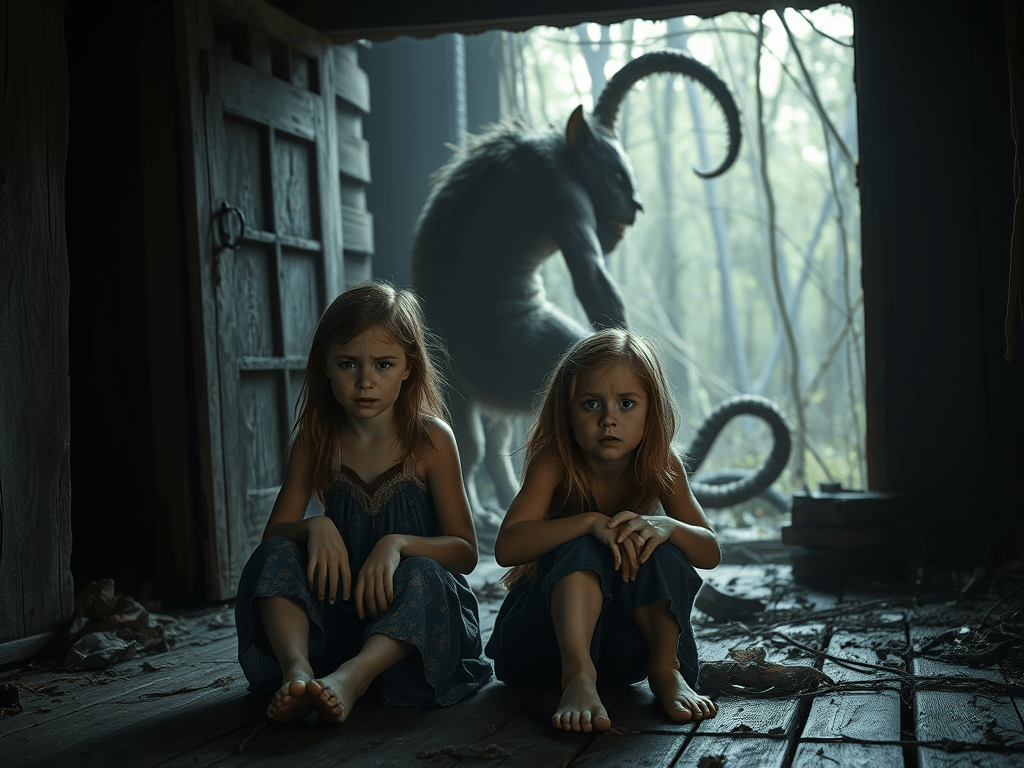
It was an average swampy afternoon when he arrived. The girls were inside an old ramshackle house, probably scheming new atrocities, when the porch door creaked open and in walked a man. Except he wasn’t a man. He had a tail—thick, heavy, and grotesquely alive. It coiled behind him like a muscular question mark, flicking as he made his way into the living room. His body was matted with bristly fur. His voice was low, scratchy, and deeply wrong. He didn’t yell. He didn’t threaten. He spoke, calmly and with dreadful precision, cataloging every evil thing the girls had done to the frogs and insects. Every cruelty committed under the sweltering sun. He ended with a promise: Keep going, and I’ll recruit you.
The thing sat in their house for three hours, its tail twitching as it detailed their future in hell’s internship program. The girls were petrified. When it finally left, slinking back into the thick air and cicada scream of Louisiana summer, they sat in silence. Eventually, Carmen whispered, “Did you see that?” My student nodded, mute.
From that day on, they reformed. Sunday School. Prayer. Fear-based virtue. They never spoke of it again. But the thing had done its job.
My student wasn’t a flake or a mystic. She was a veteran nurse—sharp, sane, and not prone to flights of fantasy. That’s what made it worse. She wasn’t selling me a ghost story. She was delivering testimony.
To this day, I can’t shake the image: two children, alone in a creaky house, visited by a thing with a tail and an agenda. Whether it was a literal demon, a shared hallucination, or a supernatural PSA sent by the universe, I’ll never know. But I do know this: after that story, I never looked at childhood mischief—or Louisiana—in quite the same way again.
 Cinemorphosis
Leave a comment