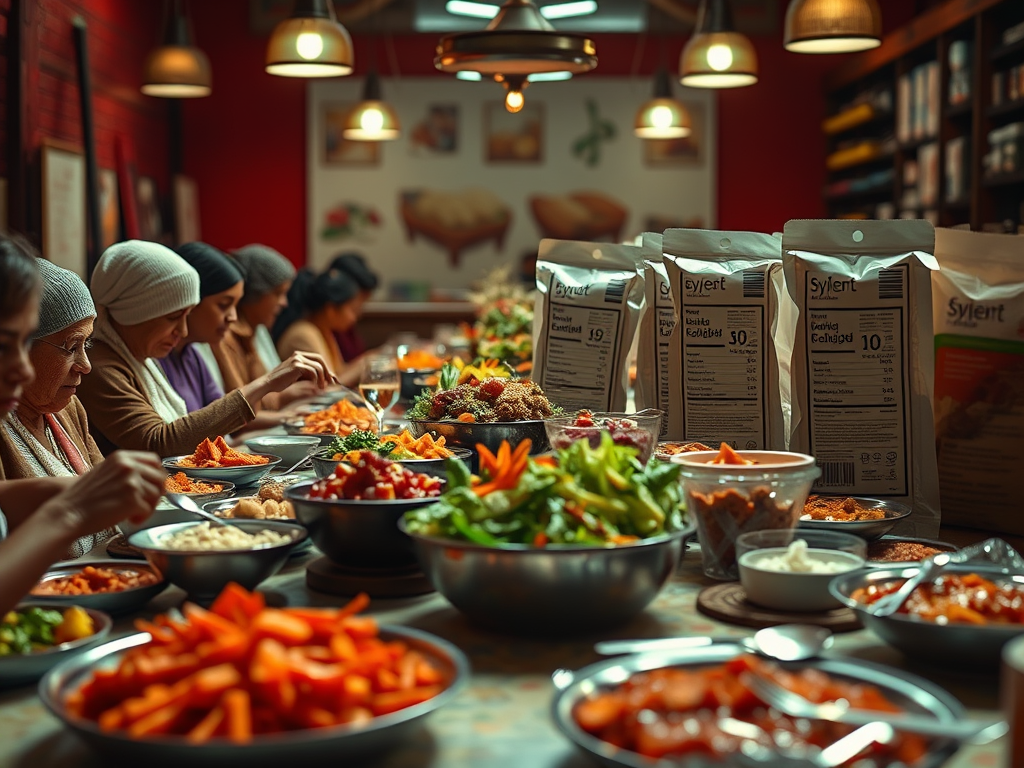
If our first essay examined how GLP-1 drugs alter our humanity by suppressing hunger, our second essay takes us deeper into the culinary uncanny valley—where food, as we’ve known it for millennia, is quietly vanishing. In its place? “Foodstuffs”—a sterile word for whatever futuristic slop keeps our bodies upright and insurance premiums low.
Here’s the prompt:
GLP-1 drugs like Ozempic are already dulling the primal scream of hunger, while artificial intelligence promises to spoon-feed us algorithmically tailored, nutrient-optimized meals. Together, these forces threaten to end food as a sensory, emotional, and cultural experience. In its place: hyper-efficient eating designed for health metrics, economic survival, and corporate convenience.
Write a 1,700-word argumentative essay that responds to the following claim:
We are shifting from being Pleasure Creatures who gather, share, and celebrate food to Optimized Creatures—pharmaceutically sedated, algorithmically fed, and culturally detached from eating as anything but fuel.
In your response, examine both the promises and the perils of this transformation. What’s gained in the name of longevity, affordability, and controlled weight? What’s lost when shared meals, sensual pleasure, and culinary identity are reduced to biometric feedback and calorie quotas?
Also consider this grim possibility: What if the Optimized future isn’t a choice? What if remaining a Pleasure Creature means disqualifying yourself from affordable health care, workplace perks, or state-sponsored insurance? Can anyone really resist this transition when optimization becomes not just encouraged but economically mandated?
You’re not here to write a dystopian novel or a eulogy for artisanal bread. You’re here to think critically. Engage with nuance. Acknowledge contradictions. If your reader finishes your essay feeling uncomfortable, you’re probably doing something right.
 Cinemorphosis
Leave a comment