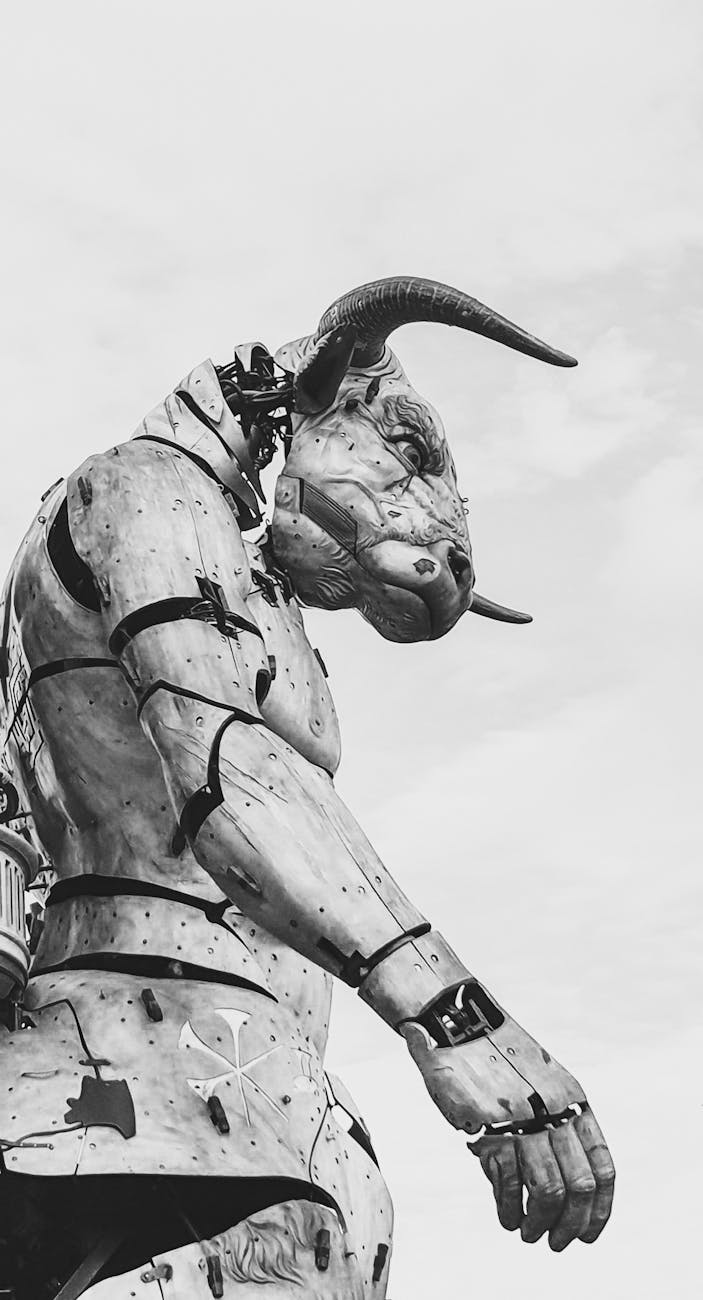
Recursive Mimicry
noun
Recursive Mimicry names the moment when imitation turns pathological: first the machine parrots human language without understanding, and then the human parrots the machine, mistaking fluent noise for thought. As linguist Emily Bender’s “stochastic parrot” makes clear, large language models do not think, feel, or know—they recombine patterns with impressive confidence and zero comprehension. When we adopt their output as a substitute for our own thinking, we become the parrot of a parrot, performing intelligence several steps removed from intention or experience. Language grows slicker as meaning thins out. Voice becomes ventriloquism. The danger of Recursive Mimicry is not that machines sound human, but that humans begin to sound like machines, surrendering authorship, judgment, and ultimately a sense of self to an echo chamber that has never understood a word it has said.
AI Affected Disorder
noun
A cognitive and existential malaise brought on by prolonged reliance on generative AI as a substitute for original thought, judgment, and voice. AI Affected Disorder emerges when Recursive Mimicry becomes habitual: the individual adopts fluent, machine-generated language that feels productive but lacks intention, understanding, or lived reference. The symptoms are subtle rather than catastrophic—mental fog, diminished authorship, a creeping sense of detachment from one’s own ideas—much like Seasonal Affective Disorder under artificial light. Work continues to get done, sentences behave, and conversations proceed, yet thinking feels outsourced and oddly lifeless. Over time, the afflicted person experiences an erosion of intellectual agency, mistaking smooth output for cognition and ventriloquism for voice, until the self begins to echo patterns it never chose and meanings it never fully understood.
***
It is almost inevitable that, in the AI Age, people will drift toward Recursive Mimicry and mistake it for thinking. The language feels familiar, the cadence reassuring, and—most seductively—it gets things done. Memos are written, essays assembled, meetings survived. Academia and business reward the appearance of cognition, and Recursive Mimicry delivers it cheaply and on demand. But to live inside that mode for too long produces a cognitive malaise not unlike Seasonal Affective Disorder. Just as the body wilts under artificial light and truncated days, the mind grows dull when real thought is replaced by probabilistic ventriloquism. Call it AI Seasonal Disorder: a gray fog in which nothing is exactly wrong, yet nothing feels alive. The metaphors work, the sentences behave, but the inner weather never changes.
Imagine Disneyland in 1963. You’re seated in the Enchanted Tiki Room, surrounded by animatronic birds chirping about the wonders of modern Audio-Animatronics. The parrots speak flawlessly. They are cheerful, synchronized, and dead behind the eyes. Instead of wonder, you feel a low-grade unease, the urge to escape daylight-starved into the sun. Recursive Mimicry works the same way. At first it amuses. Then it unsettles. Eventually, you realize that a voice has been speaking for you—and it has never known what it was saying.
 Cinemorphosis
Leave a comment