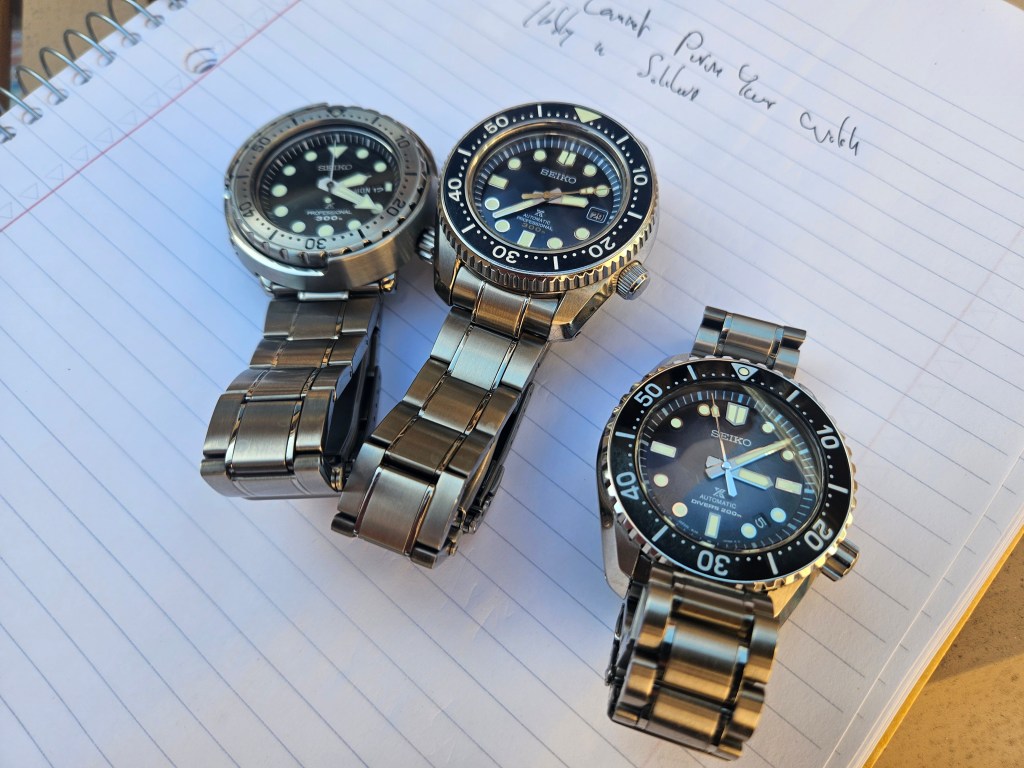
You wake up, shuffle to the coffee maker, and open the watch box.
Inside, a dozen small mechanical personalities stare back at you, each silently asking the same question: Why not me?
You freeze.
The seconds tick. Your coffee overflows. Your toast burns. Your heart rate climbs. This is not a simple accessory choice. This is a moral decision. Identity is at stake. Judgment will be rendered.
Welcome to Watch-Rotation Anxiety, a condition built from four reliable pressures.
First, the cognitive load: the sheer mental friction of choosing one watch from many. What should be a two-second decision becomes a committee meeting.
Second, the creeping suspicion that whatever you choose is wrong. The diver feels too casual. The dress watch feels pretentious. The field watch feels underdressed for a meeting that probably won’t matter but might.
Third, the guilt. The untouched watches sit in the box like neglected pets. You imagine them fading, unloved, wondering what they did to deserve exile.
Fourth, the compensation ritual: multiple swaps. Morning diver. Midday GMT. Afternoon chronograph. Evening dress piece. By dinner you’ve worn four watches and bonded with none. The day becomes horological speed-dating—lots of introductions, no relationships.
Some collectors attempt to outsmart the anxiety with systems. They create rotation schedules—actual calendars mapping two- or three-week cycles. Monday: black dial. Tuesday: titanium. Wednesday: vintage. The calendar decides so the mind doesn’t have to.
Others rely on a more mystical framework. If Tuesday feels blue, a blue dial must be worn. If Sunday carries a gray mood, only gray will do. The week becomes a chromatic destiny, and the watch simply obeys.
And then there are the cautionary tales.
A friend of mine in Laguna Beach—successful, disciplined, financially immune to consequences—once owned a dozen Swiss luxury pieces. Each morning he would lay them out, tilt them toward the light, evaluate them against his suit, his meetings, his mood. What began as appreciation became ritual. What began as ritual became burden. What began as burden became madness.
One day he solved the problem decisively.
He gave them all away.
He still wears watches now—but only those given to him by clients. Which has created a new, more specialized condition. Before every business lunch he must ask himself: Which watch did this person give me?
In his case, Watch-Rotation Anxiety has not disappeared.
It has simply evolved into something more professional.
Client-Recognition Anxiety: the quiet fear that the wrong wrist might cost you the account.
 Cinemorphosis
Leave a comment